The pie smelled like lavender, and Nathan Cole went completely still.
Nathan did not open the envelope.
For a long moment, he simply stood there with it in his hand, staring at the cracked red wax as though it might begin speaking if he waited long enough.
Bess could hear the old clock above the fireplace.
Tick.
Tick.
Tick.
Outside, a horse stamped against the cold.
“What does it mean?” she asked.
Nathan’s eyes remained fixed on the envelope.
“I don’t know.”
“You expect me to believe that?”
“I don’t know what it means,” he repeated. “That’s different.”
Bess stepped closer.
“Your mother knew my name.”
“My mother knew a lot of people.”
“She wrote it down.”
Nathan finally looked at her.
“She died eighteen years ago.”
“So did mine.”
Neither of them moved.
The room seemed suddenly smaller.
Nathan turned the envelope over in his palm.
“Where did you find it?”
“In an old cedar chest in the attic.”
“And you never opened it?”
“No.”
“Why?”
His expression tightened.
“Because it was addressed to someone who wasn’t me.”
Bess stared at the envelope.
“Then why did you keep it?”
Nathan gave a humorless smile.
“Because after my mother died, I became very good at keeping things I didn’t understand.”
He placed the envelope on the desk.
Bess reached for it.
Nathan stopped her.
“Not yet.”
Her eyes flashed.
“You don’t get to decide that.”
“I do when it concerns my family.”
“And what about me?”
That silenced him.
Bess pointed at the words beneath the name.
“Your mother wanted me found before winter. If that letter is about me, I have a right to know.”
Nathan’s jaw worked.
Finally, he broke the seal.
The paper inside had browned around the edges, but the handwriting remained clear.
He unfolded it.
His eyes moved across the first line.
Then the second.
His face changed.
Bess watched the color drain from it.
“What does it say?”
Nathan did not answer.
“Nathan.”
He handed her the letter.
Bess read.
Bess Merritt,
If you are reading this, then I have failed to speak to you myself.
You were six years old when I first saw you beside your mother’s garden. You were holding a purple flower and crying because you believed it had died.
Your mother told you otherwise.
She said some things only sleep beneath the soil.
She was right.
There are truths about Willow Creek that your mother and I carried together for many years. We believed there would be time to explain them.
There wasn’t.
Your mother asked me to protect something that belonged to you.
I promised her I would.
Nathan does not know.
He must not be blamed for that.
If he has found this letter, the time for silence has ended.
Before the first hard snow, go to the old north barn.
There is something beneath the floorboards.
Take the iron key from the cedar chest.
Trust Nathan, even if he tells you not to.
And Bess—
Your mother never abandoned you.
The last line was smudged.
Bess read it twice.
Then a third time.
Her hands began to shake.
“My mother never abandoned me?”
Nathan’s voice was barely audible.
“That sounds like something my mother would say.”
Bess looked up.
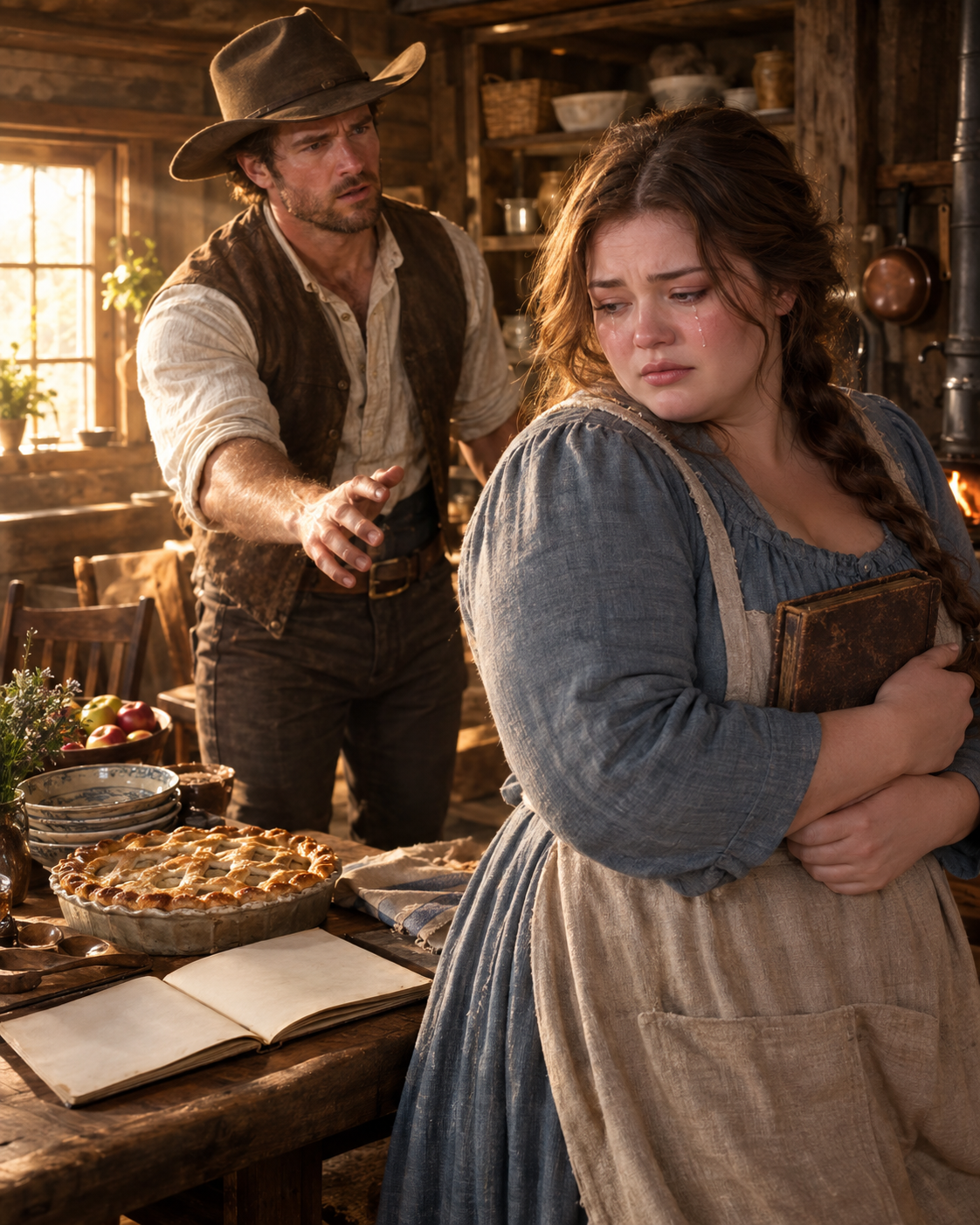
“You knew she was involved?”
“No.”
“Then what did you know?”
Nathan turned toward the window.
“I knew my mother had secrets.”
“That’s not an answer.”
“I knew she used to disappear for hours.”
“Where?”
“The Merritt farm.”
Bess stopped breathing.
Nathan continued.
“I was sixteen. I followed her once.”
“And?”
“She was standing in your mother’s garden.”
The kitchen seemed to tilt beneath Bess’s feet.
“What happened?”
“She saw me.”
Nathan’s mouth twisted.
“She told me never to come there again.”
“Did she say why?”
“She said some things belonged to grown people.”
Bess laughed once, bitterly.
“Everyone always says that when children are inconvenient.”
Nathan looked at her.
“I was a child too.”
The anger left her face.
For the first time, Bess understood that whatever secret had existed, Nathan had been standing outside it just as much as she had.
That afternoon, they rode together toward the north barn.
The sky was turning the pale gray that came before snow.
The barn had not been used in years.
Its roof sagged.
One door hung from a single hinge.
Inside, the smell of old hay and damp wood filled the air.
Bess held the iron key.
Nathan carried a lantern.
They searched for nearly an hour before they found a narrow lock beneath a beam.
The key turned.
A section of flooring lifted.
Underneath was a wooden box wrapped in oilcloth.
Nathan pulled it out.
Bess knelt beside him.
Inside were letters.
Dozens of them.
Some were addressed to Nathan’s mother.
Some to Bess’s mother.
Some had no names at all.
At the bottom lay a small silver locket.
Bess picked it up.
The moment she opened it, she stopped.
Inside was a faded photograph.
Two young women stood beside a lavender garden.
One was Nathan’s mother.
The other was Bess’s mother.
Between them stood a little girl.
Bess.
She touched the photograph with one trembling finger.
“I don’t remember this.”
“You were six.”
“I remember the garden.”
Nathan looked at the picture.
“You remember the flower.”
“I remember my mother crying.”
He turned toward her.
“Why?”
Bess shook her head.
“I don’t know.”
They began reading.
The letters told a story that had been hidden for nearly two decades.
Nathan’s father had not built Willow Creek alone.
Bess’s father had helped him.
The two families had worked together through drought, debt, and bad winters.
Then, seventeen years earlier, Nathan’s father had discovered that a neighboring landowner intended to buy Willow Creek through a fraudulent debt claim.
The documents proving the fraud disappeared.
Nathan’s father was accused of stealing money.
He died before the matter could be settled.
Bess’s father left town shortly afterward.
Everyone assumed he had run away because he was guilty.
But the letters told something else.
He had left to find the missing records.
He had been followed.
And before he disappeared, he gave the original documents to Bess’s mother.
She hid them.
Then she died unexpectedly.
Bess had been sent away to relatives.
Nathan’s mother kept searching.
But she never found the documents.
Until now.
Bess stared at the final letter.
“Where are the records?”
Nathan scanned the box.
“They aren’t here.”
“Then why did they hide everything here?”
“Maybe this wasn’t the hiding place.”
He picked up the silver locket again.
It felt heavier than it should have.
He examined the back.
There was a tiny seam.
Nathan pressed his thumbnail into it.
The locket opened.
A strip of paper fell into his hand.
On it were three words.
Under the lavender.
Bess’s heart began pounding.
“The garden.”
They rode back before dark.
The first snow began as they reached the ranch.
Bess went straight to the garden.
Nathan followed with a shovel.
The old lavender plants bent beneath the wind.
For nearly an hour they searched.
Nothing.
Then Bess remembered the wooden marker.
The little flower carved into it.
She pulled it from the soil.
“Turn it over.”
Nathan did.
There was a narrow groove on the underside.
He inserted the iron key.
A hidden compartment in the marker opened.
Inside was a small brass key.
Bess stared at it.
“Why would my mother hide a key inside a garden marker?”
Nathan answered quietly.
“Because she knew no one would look there.”
The brass key fit a lock on an old stone well behind the garden.
They lifted the cover.
A wooden ladder disappeared into darkness.
Nathan grabbed the lantern.
“You stay here.”
“No.”
“Bess—”
“You don’t get to protect me by leaving me outside every time something becomes dangerous.”
He stared at her.
Then nodded.
They climbed down.
At the bottom was a narrow passage leading beneath the kitchen.
The air smelled of earth and stone.
The passage ended at an iron door.
Nathan used the brass key.
The door opened.
Inside was a small room.
And on a shelf sat a leather folder.
Bess reached for it.
Before she could open it, they heard footsteps above them.
Nathan blew out the lantern.
Silence.
Then a man’s voice drifted through the passage.
“They found it.”
Bess froze.
Nathan grabbed her wrist.
Another voice answered.
“Search the garden.”
The men above began moving toward the hidden passage.
Nathan pulled Bess behind a stone wall.
His breathing was slow.
Controlled.
Bess’s heart hammered against her ribs.
A lantern appeared at the end of the passage.
Two shadows stretched across the floor.
Nathan’s hand closed around a loose iron bar.
The first man stepped through the doorway.
Nathan struck.
The lantern crashed.
Someone shouted.
The second man lunged forward.
Bess grabbed the leather folder and ran.
Nathan fought behind her.
They raced through the passage until they reached the ladder.
Bess climbed first.
Snow whipped across the garden.
She turned.
Nathan emerged seconds later with blood on his cheek.
“Run.”
They ran for the house.
A gunshot cracked behind them.
The bullet struck the garden fence.
Nathan shoved Bess through the kitchen door and slammed it shut.
He locked it.
Then another shot struck the window.
Glass exploded across the floor.
“Down!”
They dropped behind the table.
The ranch hands came running from the bunkhouse.
Nathan shouted for them to stay inside.
Then he looked at Bess.
“Do you have the folder?”
She held it against her chest.
“Yes.”
“Then we’re not staying here.”
They escaped through the back cellar door and hid in an abandoned equipment shed until dawn.
Neither slept.
When morning came, the snow had covered every track.
Nathan opened the folder.
Inside were the missing land records.
And one final letter.
This one was from Bess’s father.
He had not run away.
He had been murdered.
The records had been hidden because the men who wanted Willow Creek had threatened his family.
Bess read the letter with tears running silently down her face.
Her father had written that he hoped one day she would understand why he left.
He had written that every decision he made afterward had been to keep her alive.
At the bottom was a sentence that broke her completely.
If she grows up believing I abandoned her, then I will carry that pain wherever I am. But let her live.
Bess lowered the paper.
For eighteen years, she had built her life around one belief.
People left.
People lied.
Trust was a weakness.
Now she understood that the story she had been told was not the whole story.
Nathan sat beside her.
“You don’t have to forgive him.”
“I don’t know if he’s alive.”
Nathan said nothing.
She wiped her face.
“I spent half my life angry at a man who may have been trying to save me.”
“That anger kept you alive too.”
She looked at him.
“Did you know that?”
“No.”
“But you understand.”
Nathan stared toward the snow-covered ranch.
“My father died believing everyone had betrayed him.”
He swallowed.
“Maybe he wasn’t angry at the right people either.”
They returned to Willow Creek at noon.
The two men from the night before were gone.
But they had taken something.
The supply ledger.
Nathan understood immediately.
“They’re going to use the ranch’s debt against us.”
Bess opened the folder.
“Not if these records prove the original debt was fraudulent.”
“They’ll say the records are forged.”
“Then we need someone who can verify them.”
Nathan thought for a moment.
“Judge Ellison.”
“He lives three days away.”
“Not in this weather.”
Bess looked toward the barn.
“Then we don’t have three days.”
They left that afternoon.
The journey became a battle against snow, ice, and darkness.
Halfway through the second night, Nathan’s horse went down.
They had to abandon it.
Bess wanted him to rest.
He refused.
Then, near dawn, he collapsed.
She dragged him into an old hunting cabin and built a fire.
“You are the most stubborn man I’ve ever met.”
Nathan managed a faint smile.
“And you’re the most impossible woman.”
“Good.”
She wrapped a blanket around his shoulders.
“Then we’re even.”
He looked at her for a long moment.
“Bess.”
“What?”
“If we don’t make it—”
“We will.”
“But if we don’t.”
She sat beside him.
“I’ve spent years believing survival meant never needing anyone.”
Nathan looked into the fire.
“And now?”
“Now I think surviving alone isn’t the same as living.”
His eyes met hers.
The silence that followed was not empty.
It was full of everything neither had said.
They reached Judge Ellison’s home the following evening.
He examined the records for hours.
When he finally looked up, his expression was grave.
“These are genuine.”
Bess closed her eyes.
Nathan leaned back.
“Can they save the ranch?”
“They can prove the debt was fraudulent.”
“That’s not what I asked.”
The judge hesitated.
“They can save the ranch if you file before the foreclosure hearing.”
“When?”
“Tomorrow morning.”
They returned to Willow Creek before sunrise.
The men who had been hunting them were waiting.
Six riders stood outside the ranch house.
At their center was Silas Vane, the land agent who had handled the original debt.
He held Nathan’s stolen ledger.
“You’re too late,” Vane said.
Nathan stepped forward.
“It’s over, Silas.”
Vane smiled.
“You’ve got nothing.”
Bess walked beside Nathan.
“We have the records.”
Vane’s smile disappeared.
He reached for his gun.
Nathan raised his hand.
“Don’t.”
For a moment, no one moved.
Then one of the ranch hands stepped from behind the barn.
Another appeared near the stable.
Then another.
Nathan had spent years believing Willow Creek belonged to him.
Only now did he understand it belonged to everyone who had kept it alive.
Vane looked around.
“You think these men are going to die for you?”
“No,” Nathan said.
“They’re standing here because this is their home too.”
The sheriff arrived before the first shot was fired.
Judge Ellison had sent word ahead.
Vane was arrested.
The records were entered into evidence.
The foreclosure was stopped.
And the truth about Bess’s father finally came into the open.
Weeks later, spring came slowly to Willow Creek.
The snow melted into the fields.
The damaged fence was repaired.
The north barn received a new roof.
The garden began to bloom.
Bess found the old lavender returning stronger than before.
One afternoon, she stood beside the garden marker and planted new flowers around it.
Nathan approached carrying two cups of coffee.
“You’re going to turn this whole place into a garden.”
“Maybe.”
He handed her a cup.
“You know, there’s something you never asked me.”
“What?”
“Why my mother wanted you found before winter.”
Bess looked at him.
“I think I know.”
Nathan waited.
“She knew the truth would be harder to uncover after another winter buried everything.”
He smiled.
“That sounds like her.”
Bess touched the lavender.
“My mother was right too.”
“About what?”
“Some things only sleep beneath the soil.”
Nathan looked at the garden.
“Do they always come back?”
Bess shook her head.
“No.”
She smiled.
“But the ones worth saving sometimes do.”
They stood together as the wind moved through the lavender.
For years, Bess had believed the safest way to live was to leave first.
Nathan had believed the safest way to survive was to keep every wound locked away.
Both had been wrong.
The past could not be changed by pretending it had never happened.
It could only be faced, understood, and carried differently.
That evening, Bess baked another lavender pie.
She placed it on the kitchen table.
Nathan entered and stopped.
She laughed.
“You still do that.”
“What?”
“Freeze every time you smell it.”
He looked at the pie.
“I think I’m getting used to it.”
“No, you’re not.”
“No.”
He sat down.
Neither of them touched the pie immediately.
Outside, the ranch breathed with the quiet sounds of evening.
Horses shifted in their stalls.
Wind moved through the trees.
Somewhere behind the kitchen, lavender flowers brushed against one another.
Nathan reached across the table.
Bess looked at his hand.
Then she placed hers in it.
Neither promised forever.
Neither needed to.
Some promises were not made with words.
They were made by staying.
And when Bess finally cut the pie, the scent of lavender filled the kitchen once again.
This time, it did not smell like grief.
It smelled like home.
For three weeks, Willow Creek knew peace.
It was the kind of peace that made a person suspicious.
The fields had begun to turn green.
The creek ran high with melted snow.
The ranch hands laughed again during supper, and even Nathan seemed to have forgotten what it felt like to wake expecting trouble.
Bess almost allowed herself to believe the worst was over.
Almost.
Then, one morning, she found a horse standing alone at the edge of the property.
Its saddle was empty.
A strip of red cloth had been tied around the reins.
Bess knew that cloth.
She had seen it on Silas Vane’s coat the night he was arrested.
She ran for the house.
Nathan was already coming out the door.
He saw the horse.
His expression changed immediately.
“Where did you find it?”
“By the south field.”
Nathan walked toward the animal.
There was dried mud on its legs and a dark stain beneath the saddle.
Blood.
Bess felt the old fear return.
“What happened?”
Nathan examined the saddle.
“Someone wanted us to find this.”
“Who?”
He looked toward the distant hills.
“I don’t know.”
A voice called from the barn.
“Nathan!”
One of the ranch hands came running.
“There’s someone at the north gate.”
Nathan reached for his rifle.
Bess followed him.
A man stood beyond the gate with his hands raised.
He was old.
Thin.
His coat was torn.
He looked as though he had walked for days.
When Nathan saw his face, he stopped.
The man stared back.
Neither spoke.
Then Bess heard him whisper a single word.
“Bess.”
Her breath caught.
She knew that voice.
Not because she remembered hearing it.
But because she had spent eighteen years imagining it.
“Father?”
The man lowered his hands.
Bess could not move.
Nathan looked from her to the stranger.
“Is that—”
“My father.”
The word came out broken.
The man took one step forward.
“Bess.”
She backed away.
“No.”
He stopped.
“I didn’t know if I’d ever find you.”
“You were dead.”
“I was supposed to be.”
The world seemed to narrow around her.
Nathan quietly lowered his rifle.
Bess stared at the man who had occupied the darkest corner of her childhood.
“You left me.”
“I know.”
“You let me believe you abandoned me.”
“I know.”
“You let me hate you.”
His eyes filled with tears.
“I know.”
Bess shook her head.
“Then why did you come back?”
The man looked toward Willow Creek.
“Because the men who killed my friend never stopped looking for the records.”
Nathan’s face hardened.
“What records?”
“The ones you found.”
Silence fell.
Bess understood.
The documents had proved the old fraud.
But they had not revealed everything.
Her father reached inside his coat and pulled out a small notebook.
“The records you found proved your father’s debt was false.”
He looked at Nathan.
“But they didn’t prove who ordered the fraud.”
Nathan stepped closer.
“Who?”
The old man’s voice dropped.
“The man who owned the bank.”
Nathan’s eyes narrowed.
“He’s dead.”
“His son isn’t.”
Bess felt cold despite the morning sun.
“Who?”
Her father looked directly at her.
“Caleb Vane.”
Silas’s younger brother.
The man who had purchased properties across the county after the old scandal.
The man who had never appeared at the foreclosure hearing.
The man who had disappeared when Silas was arrested.
Nathan swore under his breath.
“How did you survive?”
Bess’s father looked down.
“I ran.”
“For eighteen years?”
“I changed names. Worked in places where no one knew me. Every time I thought it was safe to return, someone found me.”
“Why didn’t you send a letter?”
“I did.”
Bess froze.
“What?”
“Several.”
Her father looked at her with unbearable sadness.
“Your aunt never gave them to you.”
Bess felt as though the ground had disappeared beneath her.
“All these years…”
“I believed you hated me.”
“I did.”
“I deserved some of it.”
Bess’s eyes filled.
“But not all of it.”
Her father nodded.
“No.”
Nathan stepped between them.
“We can talk about the past later.”
Bess looked at him.
He was staring toward the hills.
“Because if Caleb Vane is coming for the records, he’ll come here.”
As if summoned by the words, a gunshot echoed from far beyond the creek.
The ranch horses screamed.
Nathan shouted.
“Inside!”
Everything happened at once.
The ranch hands ran for cover.
Bess pulled her father behind the stone wall.
Another shot struck the barn.
Then another.
They were not shooting at people.
They were shooting at the buildings.
At the hay.
At the grain stores.
They wanted Willow Creek to burn.
Nathan saw the first flame rise near the stable.
“Fire!”
Men scattered with buckets.
Bess ran toward the barn.
Smoke rolled across the yard.
The wind was rising.
If the fire reached the hayloft, the entire ranch would go up.
Nathan caught her arm.
“You can’t go in.”
“My father is inside.”
Nathan turned.
The old man had disappeared.
“Bess!”
She pulled free.
She ran into the smoke.
Inside the barn, visibility vanished.
Horses kicked against their stalls.
Bess covered her mouth and called out.
“Father!”
No answer.
Then she heard coughing.
She followed the sound.
Her father was trapped beneath a fallen beam.
Bess tried to lift it.
It would not move.
“Go,” he rasped.
“No.”
“Bess, go!”
“I spent eighteen years without you.”
She grabbed the beam again.
“I am not losing you now.”
A shadow appeared through the smoke.
Nathan.
He lifted the beam with both hands.
Bess pulled her father free.
They stumbled toward the door.
The roof groaned above them.
“Run!”
They escaped seconds before part of the roof collapsed.
Flames swallowed the hayloft.
Outside, Nathan dropped to his knees, coughing.
Bess held her father’s hand.
For a moment, no one spoke.
Then a horse screamed.
Nathan looked toward the hill.
A rider was disappearing into the trees.
“Caleb,” Bess’s father whispered.
Nathan stood.
“We’re not chasing him.”
Bess looked at him.
“Why?”
“Because that’s what he wants.”
He pointed toward the burning barn.
“He wants us angry. He wants us to leave the ranch.”
Nathan’s gaze moved to the fields.
“He knows the evidence is here.”
Bess suddenly understood.
“The records.”
Nathan nodded.
“We need to move them.”
But before they could act, her father shook his head.
“There’s more.”
He opened the notebook.
“The original contract wasn’t the only thing I kept.”
Inside the back cover was a small map.
Nathan studied it.
“What is this?”
“A tunnel.”
“Where?”
“Under the old bank.”
Bess frowned.
Her father continued.
“Caleb has been using it to move stolen documents and money. The proof of what he did is there.”
Nathan looked toward town.
“If we expose him—”
“He’ll come after us before we get there.”
Bess took the notebook.
“Then we go first.”
Nathan looked at her.
“No.”
She raised an eyebrow.
“You’ve said that before.”
“And you ignored me.”
“I’m learning consistency.”
Despite everything, Nathan smiled.
They left at dusk.
Bess, Nathan, her father, and two ranch hands rode into town through the back roads.
The old bank stood dark at the end of Main Street.
Caleb Vane had already returned.
They found the tunnel entrance behind the abandoned storehouse.
The passage smelled of dust and damp stone.
At the end was a locked room.
Nathan forced the door.
Inside were ledgers.
Contracts.
Letters.
Names.
Payments.
Enough evidence to destroy Caleb’s entire operation.
Then they heard applause.
Slow.
Deliberate.
Caleb Vane stepped from the shadows.
Three armed men stood behind him.
“You’ve always been a difficult family,” he said.
Bess’s father moved forward.
“You killed my friend.”
Caleb smiled.
“And you survived.”
“For eighteen years.”
“Yes.”
Caleb’s eyes shifted to Bess.
“And you brought the daughter.”
Bess felt Nathan move beside her.
Caleb raised his gun.
“Give me the notebook.”
“No.”
“You don’t understand.”
Bess looked around the room.
“I understand perfectly.”
She pointed toward the ledgers.
“You’re afraid.”
Caleb laughed.
“You think evidence will save you?”
“No.”
Bess looked at Nathan.
“I think people will.”
The ranch hands stepped forward.
Caleb’s smile vanished.
He had not noticed the second entrance.
The sheriff stood behind them.
And Judge Ellison.
And half a dozen townsmen.
Nathan had sent one rider ahead.
Caleb stared at the gathering crowd.
“How—”
Bess’s father smiled faintly.
“People talk.”
The sheriff raised his weapon.
“Caleb Vane, step away from the gun.”
Caleb fired.
The shot struck the ceiling.
Chaos erupted.
Nathan tackled him.
The gun slid across the floor.
One of Caleb’s men ran.
Another surrendered.
The third was caught by the sheriff.
Caleb fought like a cornered animal.
Nathan finally pinned his wrist.
For a moment, the two men stared at each other.
Caleb whispered,
“You don’t know what you’re fighting for.”
Nathan answered quietly.
“I do now.”
He stood and handed Caleb to the sheriff.
Outside, the town gathered beneath the lanterns.
The truth that had poisoned two families for eighteen years finally had a name.
And witnesses.
And evidence.
But for Bess, the hardest part came afterward.
Her father stood beside the courthouse steps.
“I don’t expect you to forgive me.”
She looked at him.
“I don’t know if I can.”
He nodded.
“That is fair.”
“I don’t know how to be your daughter.”
His eyes softened.
“I don’t know how to be your father anymore.”
They stood in silence.
Then Bess took one step forward.
She did not hug him.
Not yet.
Instead, she reached out and took his hand.
It was enough.
For now.
Months passed.
The ranch was rebuilt.
The north barn received new beams.
The garden grew wild and beautiful.
Bess’s father stayed in a small cabin near the creek.
He did not try to reclaim the years he had lost.
He simply became present for the ones he still had.
Nathan never asked Bess to forget.
He never told her what she should feel.
That was one of the reasons she trusted him.
Trust, she learned, was not a promise that someone would never hurt you.
It was the knowledge that when the truth became difficult, they would not run from it.
One evening, Bess found Nathan repairing the old garden marker.
“You’re fixing it?”
“It survived eighteen years underground.”
He brushed dirt from the carved flower.
“Seems worth fixing.”
Bess sat beside him.
“Do you ever wonder what would have happened if my mother had never written that letter?”
Nathan considered it.
“I’d probably still be eating terrible food.”
She laughed.
“That is what you took from all of this?”
“No.”
He looked at her.
“I think I’d still be living in a house full of ghosts.”
Bess’s smile faded.
“So would I.”
Nathan placed the repaired marker back into the soil.
“What are you going to do now?”
Bess looked across the garden.
“For the first time?”
“Yes.”
“I don’t know.”
“That sounds frightening.”
“It is.”
She glanced at him.
“But it’s also wonderful.”
Nathan took her hand.
They walked toward the kitchen together.
The old clock was still there.
The same table.
The same stove.
The same cracked window.
But the house no longer felt haunted.
That night, Bess made a lavender pie.
Her father sat at the table.
Nathan sat beside her.
The ranch hands crowded around the kitchen.
Someone complained that there wasn’t enough coffee.
Someone else stole a piece of crust.
For the first time, Bess heard laughter in the same room where she had once believed memories could only hurt.
She cut the pie.
The scent of lavender rose into the warm air.
Her father closed his eyes.
“My mother used to make this,” he said.
Bess looked at him.
“She taught me.”
“I know.”
He smiled.
“She always said lavender survives because it learns how to bend.”
Bess glanced toward Nathan.
Outside, the flowers moved beneath the evening wind.
They bent.
They did not break.
Years later, people in Willow Creek would tell different versions of what happened.
Some would remember the missing records.
Some would remember the fire.
Some would remember Caleb Vane standing in chains outside the courthouse.
But Bess remembered something else.
She remembered a small wooden marker beneath a garden.
A letter written by a woman who had died believing the truth would eventually find its way home.
She remembered a father who had been gone too long.
A man named Nathan who had been afraid to open an old envelope.
And a lavender pie that had somehow brought two broken families back to the same table.
Bess finally understood that healing did not mean pretending the past had never happened.
It meant refusing to let the past decide what happened next.
Some wounds never disappeared completely.
Some questions never received perfect answers.
Some lost years could never be returned.
But a person could still choose what to do with the years that remained.
She had spent most of her life preparing to leave.
Now, when the wind came through Willow Creek and rattled the windows, she no longer listened for the sound of an approaching goodbye.
She listened for the sound of home.
And home, she discovered, was not a place that promised nothing would ever be lost.
It was the place where people chose to stay after they had learned how much there was to lose.
That winter, the first hard snow came late.
It covered the fields, the fences, the barn, and the old garden.
But beneath the white earth, the lavender slept.
Waiting.
Not dead.
Waiting.
And when spring finally arrived, green shoots pushed through the soil.
Bess knelt beside them.
Nathan stood behind her.
Her father watched from the porch.
No one spoke.
They didn’t need to.
The flowers had already said everything.
Some things are buried because they are meant to disappear.
Others are buried because they are meant to survive.
The difference is not always obvious.
Sometimes it takes years to learn.
Sometimes it takes courage.
Sometimes it takes another person willing to stay long enough to help you uncover what was hidden.
Bess touched the first purple flower of the season.
Then she smiled.
The lavender smelled like spring.
And for the first time in her life, it smelled exactly like hope.
THE END.