The moment Josiah Granger saw me step onto the Oak Haven station platform, he laughed at my body, unaware I carried evidence of his darkest crime.
“Your father gave me this the night he died,” Josiah said, smiling as he revealed a secret I was never meant to hear.
I stared at the silver pocket watch dangling from his fingers, its familiar chain swinging gently in the bitter mountain wind.
My father had carried that watch every day of my childhood, and I still remembered the soft clicking sound it made beside my bed when he read me stories.
“You told everyone my father died of a fever,” I whispered, struggling to keep the rifle steady.
Josiah’s smile widened as he pressed his pistol harder against Eleanor’s trembling temple.
“People believe whatever a wealthy man pays them to believe, Clara.”
Margaret made a broken sound beside me, but I couldn’t take my eyes from the frightened woman standing beside my father’s murderer.
Eleanor Cross looked painfully thin beneath her torn coat, and blood had soaked through the fabric around her shoulder.
Yet her eyes remained fierce, even with a gun pressed against her head.
“Don’t give him the papers,” she said suddenly.
Josiah struck her across the face, sending her stumbling against a pine tree.
“Another word, and your brother will be burying what’s left of you.”
Something hot and dangerous rose inside my chest.
I remembered Boston, where cruel laughter had followed me through crowded streets.
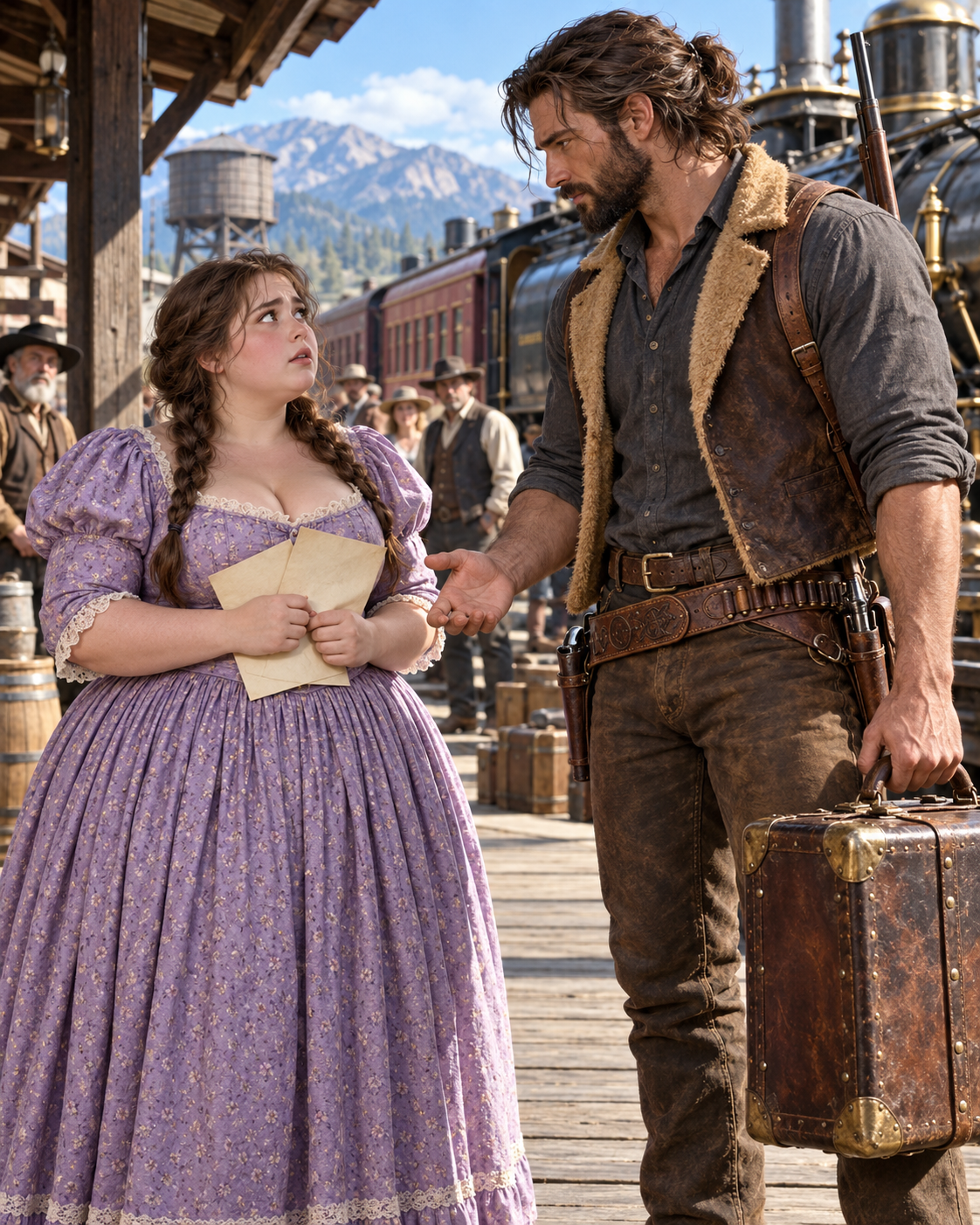
I remembered the station platform, where Josiah had humiliated me before strangers.
But standing beneath those frozen trees, I finally understood that cruelty survived because frightened people were taught to remain silent.
“Let her go,” I said, forcing my voice to remain calm.
Josiah laughed.
“And what will you do, Clara, shoot me while I stand behind her?”
I lowered the rifle slightly, pretending that fear had finally defeated me.
“What do you want?”
“The original deeds, your father’s records, and the little inheritance your family never knew existed.”
“Then you’ll leave us alone?”
His silence answered before his mouth did.
I saw it in his eyes, the same emptiness I had witnessed at the railroad station.
He wasn’t planning to leave anyone alive.
Margaret suddenly stepped forward, her old boots sinking into the deep snow.
“Josiah, you’ve taken enough from these families.”
His expression changed.
For the first time, something resembling fear flickered across his face.
“You should have stayed buried with the others, Margaret.”
She straightened her shoulders.
“I spent seventeen years protecting your secrets, and I won’t protect another one.”
Josiah raised his pistol toward her.
Before he could fire, Eleanor drove her elbow into his ribs.
The gun exploded, sending a bullet through the branches above our heads.
I fired my rifle into the ground beside his horse, frightening the animal into a violent sideways leap.
Josiah lost his footing, and Eleanor tore herself free.
“Run!” I screamed.
Margaret grabbed Eleanor’s hand, and we plunged through the trees as another gunshot cracked behind us.
Snow swallowed my boots while branches scraped my face.
My lungs burned, but I refused to stop.
Somewhere behind us, Josiah was shouting for his surviving men.
Then Eleanor collapsed.
I dropped beside her, discovering that blood was pouring from a wound beneath her coat.
“Leave me,” she gasped.
I stared at her in disbelief.
“Your brother has waited three years to see you again, and I am not bringing him another grave.”
With Margaret supporting one side, I lifted Eleanor beneath her arms and dragged her toward the narrow ravine.
Every step felt like pulling a mountain.
At the edge of the frozen creek, Margaret stopped and pointed toward a dark opening hidden behind tangled roots.
“There’s an old miners’ passage beneath that ridge.”
We crawled inside as the distant thunder of horses echoed through the forest.
The tunnel smelled of damp earth, rust, and forgotten years.
Margaret struck a match, revealing wooden beams and abandoned mining tools.
Eleanor leaned against the wall, her breathing shallow.
“Clara,” she whispered, reaching weakly into her coat.
She pulled out a small leather notebook wrapped in oilcloth.
“These are the original surveyor’s records.”
I accepted it carefully.
Inside were measurements, boundary descriptions, and handwritten statements bearing signatures I recognized from my father’s papers.
But tucked between the pages was something even more disturbing.
A list of names.
Seven men.
Beside six names, someone had written the word “dead.”
The seventh name was my father’s.
Beside it were two words that made my stomach twist.
“Not confirmed.”
I looked at Margaret.
“What does this mean?”
Her face turned gray.
For several seconds, she seemed unable to speak.
Then Eleanor whispered something that made the tunnel feel suddenly smaller.
“Your father may have survived.”
I shook my head.
“No. I buried him.”
Margaret closed her eyes.
“You buried a sealed coffin, Clara.”
The memory struck me with terrible force.
I had been twenty-three when two railroad officials appeared at our Boston home.
They told me my father had died while investigating company accounts in Wyoming.
They warned that his illness had been contagious and insisted the coffin remain closed.
I remembered pressing my hands against the polished wood, begging for one final look.
Nobody had allowed it.
“Why didn’t you tell me?” I demanded.
Margaret’s voice cracked.
“Because I didn’t know whether keeping you ignorant would save your life.”
I wanted to hate her.
I wanted to scream until the mountains answered.
Instead, I stared at my father’s name, written in fading ink, and felt five years of grief shift beneath my feet.
“Where is he?”
Eleanor shook her head.
“The last time anyone saw him alive was near the old territorial prison.”
Before I could ask another question, footsteps sounded at the tunnel entrance.
Margaret extinguished the match.
We sat in darkness, scarcely daring to breathe.
A man’s voice drifted through the opening.
“They went toward the creek.”
Another answered.
“Granger wants the Whitmore woman alive.”
“And the others?”
A terrible silence followed.
Then the first man said, “He didn’t say anything about the others.”
My fingers tightened around the rifle.
The men moved closer.
Suddenly, Eleanor touched my wrist and pointed toward a thin line of daylight at the far end of the tunnel.
We began crawling through the darkness.
Behind us, a lantern appeared.
“There!” someone shouted.
A bullet struck the wooden beam above my head.
The tunnel shuddered.
“Keep moving!” Margaret cried.
I shoved Eleanor toward the daylight while rotten timber cracked around us.
Another bullet tore through the support beside me.
The ceiling collapsed with a sound like thunder.
Dust and darkness swallowed everything.
For one horrifying moment, I believed we had been buried alive.
Then fresh air struck my face.
I rolled onto the snow outside, coughing until my chest ached.
Margaret emerged behind me, followed by Eleanor.
The entrance had vanished beneath tons of rock and timber.
No voices came from the other side.
We were alive.
But the mountain had taken away our only easy path home.
By the time we reached Gideon’s cabin, night had swallowed the valley.
A single lamp burned in the window.
Gideon opened the door before I knocked.
His face was pale with fear, and his wounded arm hung uselessly against his chest.
Then he saw Eleanor.
For several seconds, neither of them moved.
“Ellie?” he whispered.
His sister tried to smile.
“I’m sorry I took so long coming home.”
Gideon stumbled forward and caught her as her knees buckled.
He held her with such desperate tenderness that I had to turn away.
I heard him whisper her childhood nickname again and again.
I watched his shoulders shake as three years of grief finally broke apart.
When he looked toward me, tears were streaming down his face.
“Thank you,” he whispered.
Those two words meant more than any promise Josiah Granger had ever written.
We brought Eleanor inside and laid her beside the fireplace.
Margaret cleaned her wound while Gideon held her hand.
I placed the notebook and the old map on the table.
Then I told Gideon everything.
When I reached the possibility that my father might still be alive, he went completely still.
“Clara, the territorial prison closed years ago,” he said.
“Some buildings remain, but no prisoners were supposed to be held there.”
Margaret hesitated.
“Granger bought part of the property through a man named Silas Mercer.”
Gideon’s jaw tightened.
“Mercer is the county sheriff.”
The realization settled over the room like another winter storm.
The man responsible for enforcing the law was protecting the crimes we needed exposed.
“Then who can we trust?” I asked.
Nobody answered.
That night, I sat beside Gideon’s bed while he struggled against a fever.
His wound had reopened when he rescued Eleanor from collapsing beside the door.
I changed the bandage carefully, trying not to let him see my trembling hands.
“You should rest,” he murmured.
“So should you.”
He smiled faintly.
“You always were stubborn.”
I lowered my eyes.
“In Boston, they called it an unpleasant temperament.”
Gideon reached for my hand.
“They were fools.”
I looked at our joined fingers.
“Josiah made me believe nobody would ever choose me unless he wanted something.”
Gideon slowly sat upright.
“Clara, the first morning you were here, I watched you carry firewood through snow deep enough to swallow your boots.”
I laughed weakly.
“That hardly sounds romantic.”
“Then you fed a half-starved fox behind the cabin, even though we barely had enough meat ourselves.”
He paused.
“And when my nightmares woke me, you never asked me to explain them.”
His voice softened.
“I didn’t fall in love with you because you needed rescuing.”
My breath caught.
“I fell in love with the woman who made this lonely place feel like home.”
For years, I had imagined love arriving with grand declarations and beautiful promises.
Instead, it came through a scarred mountain man’s trembling confession beside a dying fire.
I leaned forward and kissed him.
When I pulled away, his forehead rested gently against mine.
“I love you too,” I whispered.
And for one precious moment, the world beyond our cabin disappeared.
At dawn, Eleanor woke with new strength.
She asked us to gather around the table.
“There is something you haven’t seen,” she said.
From the lining of her coat, she removed a narrow strip of paper covered in tiny numbers.
“These are the payments Mercer received for keeping prisoners alive.”
My heart began hammering.
“Prisoners?”
Eleanor nodded.
“Granger used the abandoned prison to hide witnesses until he could force them to sign false statements.”
She pointed toward one entry.
A payment made just six weeks earlier.
Beside it was a name.
Thomas Whitmore.
My father.
I covered my mouth.
For five years, I had mourned a man who might still be breathing behind locked doors.
Gideon studied the figures.
“The prison sits beyond Blackwater Pass.”
Margaret shook her head.
“Mercer has guards there, and Granger will be expecting us.”
I stood and folded the paper.
“Then we’ll give him something he isn’t expecting.”
The plan took shape slowly.
Margaret knew a federal land investigator named Nathaniel Reed who was traveling through Oak Haven to examine disputed railroad property.
Unlike the sheriff, Reed answered to officials outside Granger’s influence.
If we could place the original deeds and Eleanor’s testimony in his hands, Granger’s empire might finally collapse.
But first, we needed to reach my father.
Gideon refused to remain behind.
His fever had broken, though his shoulder still pained him.
Eleanor insisted she could ride.
Margaret prepared supplies while I cleaned the buffalo rifle.
By afternoon, we were moving toward Blackwater Pass beneath a heavy gray sky.
The journey took us through narrow ledges and forests where the wind sounded like distant voices.
We traveled without speaking much.
Every mile carried the possibility of discovery.
Near sunset, we saw the prison.
Its dark stone walls rose from the snow like the remains of a ruined fortress.
Two armed guards stood beside the iron gate.
A third watched from a wooden tower.
Gideon guided us toward an abandoned drainage channel beneath the eastern wall.
“It flooded years ago,” he whispered.
“But the winter freeze might have made it passable.”
We crawled beneath the stone foundations, dragging ourselves through mud and broken ice.
At the far end, Gideon forced open a rusted iron grate.
We emerged inside an empty storage room.
The smell struck me immediately.
Mold, old straw, and human suffering.
We passed three empty cells before hearing a faint cough.
I stopped.
Something inside me recognized that sound before my mind understood.
“Father?” I whispered.
Silence followed.
Then a weak voice answered from the darkness.
“Clara?”
My knees almost gave way.
Behind a barred door sat a thin, white-haired man whose face had been hollowed by years of captivity.
But his eyes were the same gentle brown eyes I remembered.
“Papa?”
He gripped the bars.
“My little girl.”
I fell against the door, sobbing as his shaking fingers touched my face.
He stared at me as though he feared I might disappear.
“They told me you were dead,” he whispered.
“They told me Boston burned.”
I shook my head, unable to find words.
“They lied.”
He pressed his forehead against the iron bars.
“I prayed every night that somehow you were alive.”
Gideon found the keys hanging in the corridor.
When the lock finally opened, my father stepped forward and collapsed into my arms.
He weighed almost nothing.
I held him as tightly as I dared.
Five years of birthdays, lonely Christmas mornings, and unanswered prayers seemed to fold into that single embrace.
“I came for you,” I whispered.
He touched my cheek.
“You always were braver than you knew.”
We might have escaped quietly if the guard tower had not spotted our horses.
A bell began ringing.
Shouts erupted across the courtyard.
Gideon pulled us toward the drainage channel, but armed men blocked the corridor.
At their center stood Sheriff Silas Mercer.
His silver badge gleamed beneath his coat.
“Well,” he said coldly, “the entire collection of troublesome witnesses.”
His gaze settled on my father.
“You should have signed the confession, Whitmore.”
My father straightened despite his weakness.
“I will never confess to stealing land that belonged to my family.”
Mercer raised his pistol.
“Then I suppose your daughter can watch you die.”
I stepped between them.
“No.”
He laughed.
“You think being brave will stop a bullet?”
“No,” I answered.
“But I think greed might.”
I held up Eleanor’s notebook.
“These records prove Granger paid you to imprison innocent people.”
Mercer’s expression hardened.
“If I die, this evidence still reaches the federal investigator,” I continued.
He hesitated.
That moment was enough.
Gideon struck the sheriff’s gun hand with the butt of his rifle.
The pistol clattered across the stones.
Eleanor kicked it beneath an empty cell.
Mercer lunged at Gideon, driving him against the wall.
I heard Gideon cry out as his wounded shoulder struck the stone.
Then my father seized the sheriff’s coat, pulling him backward with the last of his strength.
I grabbed the fallen keys and locked Mercer inside the nearest cell.
His curses followed us down the corridor.
We reached the courtyard as two guards came running.
Margaret fired her small revolver into the air.
“Federal witnesses!” she shouted.
“Stand aside unless you want your names added to the charges!”
One guard hesitated.
The other lowered his weapon.
Neither appeared eager to die protecting a sheriff who was now screaming behind bars.
We mounted our horses and rode into the falling snow.
For nearly an hour, nobody spoke.
Then my father began crying quietly behind me.
I reached backward and held his hand as we rode.
I had imagined rescuing him would feel like victory.
Instead, it felt like carrying something fragile out of a burning house.
We reached Oak Haven shortly after midnight.
Lights glowed inside the hotel, where Nathaniel Reed was staying.
But before we could dismount, Josiah Granger stepped into the street.
Six armed riders formed a line behind him.
The entire town seemed to hold its breath.
“You’ve caused me considerable trouble, Clara,” he said.
I looked at the man who had once made me feel smaller than the dirt beneath his boots.
Strangely, I felt no shame.
Only exhaustion and anger.
“Move aside, Josiah.”
He smiled.
“Give me the documents, and perhaps I’ll allow your companions to leave.”
Gideon reached for his rifle.
I gently touched his arm.
“Let me.”
Josiah’s eyes narrowed.
“You’ve become awfully confident for a woman nobody wanted.”
I stepped forward.
“You were right about one thing at the station.”
He looked surprised.
“I was never the bride you wanted.”
I lifted my chin.
“Because you never wanted a wife, Josiah. You wanted a signature.”
A few townspeople began emerging from their houses.
Windows opened.
Whispers spread.
Josiah noticed them too.
“Careful, Clara.”
I raised my voice.
“Tell them why my father spent five years imprisoned.”
His face darkened.
“Your father is a criminal.”
“Then why did your sheriff lock him away without a trial?”
The crowd grew larger.
I saw the stationmaster, the blacksmith, and several women who had watched Josiah humiliate me upon my arrival.
For the first time, they were listening instead of laughing.
Josiah drew his pistol.
Gideon stepped forward, but I remained where I stood.
“Put it down,” I said.
Josiah aimed directly at my chest.
“You should have stayed in Boston.”
A shot rang out.
I flinched, expecting pain.
But Josiah’s pistol fell from his hand.
Nathaniel Reed stood on the hotel steps holding a smoking revolver.
Behind him were two federal marshals.
“Josiah Granger,” Reed announced, “you are under arrest for kidnapping, fraud, unlawful imprisonment, and conspiracy to commit murder.”
Josiah stared at the marshals.
Then he began laughing.
“You think you can take me? I own half this territory!”
Reed descended the steps.
“That’s precisely what we’re here to investigate.”
One marshal stepped forward with handcuffs.
Josiah suddenly seized a young stable boy standing nearby and dragged him backward.
He pressed a knife against the child’s throat.
The boy couldn’t have been older than twelve.
His terrified eyes found mine.
“Nobody moves!” Josiah screamed.
The crowd froze.
Gideon slowly lowered his rifle.
Reed held up both hands.
“Don’t hurt the child.”
Josiah backed toward his horse.
“Bring me the papers, Clara.”
I looked at the boy’s trembling face and knew there was no time for clever plans.
I placed the notebook on the snowy ground.
“Take it.”
Josiah shoved the child away and lunged for the records.
The boy fell beside the water trough.
At that instant, Gideon pulled him clear.
Josiah snatched the notebook and jumped onto his horse.
But he had barely reached the edge of town when a second figure stepped into his path.
My father.
He stood in the snow, leaning on a walking stick, his weakened body shaking beneath his coat.
“Enough, Josiah.”
Granger pulled the reins.
For a moment, the two men stared at each other.
“You should have died in that prison,” Josiah hissed.
My father looked at him without hatred.
“Perhaps. But then my daughter would never have learned what courage looks like.”
Josiah raised his pistol again.
Before he could fire, a marshal struck his arm from behind.
The weapon discharged into the night.
Josiah fell from the saddle and hit the frozen street.
The marshals seized him before he could stand.
This time, no one came to his rescue.
As they dragged him away, he twisted toward me.
“You’ll lose everything when this goes to court!”
I looked down at the notebook he had dropped.
“No, Josiah.”
I picked it up.
“I’ve already found everything that matters.”
The months that followed were harder than any of us expected.
The investigation uncovered stolen ranches, murdered witnesses, and years of corruption stretching far beyond Oak Haven.
Sheriff Mercer confessed after learning that several of Granger’s former employees had agreed to testify.
Eleanor gave evidence about the forged deeds and the men who had threatened her life.
Margaret told the investigators everything she knew, including the terrible mistakes she had made while working for Granger.
My father testified from a chair because he still couldn’t stand for long.
Some nights, he woke screaming from dreams of iron doors and empty corridors.
I sat beside him through those nights, just as he had once sat beside me when childhood storms frightened me.
Recovery, I learned, did not happen simply because the danger had passed.
It happened slowly, in moments nobody else could see.
Eventually, the court recognized the Whitmore family’s ownership of the mountain property and surrounding valley.
Josiah’s stolen deeds were declared invalid.
Many families received land that had been taken from them.
The cattle baron who once controlled Oak Haven was sentenced to spend the rest of his life in prison.
Yet the greatest surprise came after the trial.
I returned to the cabin one evening and found Gideon standing beside the creek.
Spring had finally reached the mountains.
Wildflowers were beginning to bloom between patches of melting snow.
He seemed nervous.
I had never seen him nervous before.
“Clara,” he began, removing his hat.
I smiled.
“What’s wrong?”
He looked toward the cabin, where my father was laughing with Eleanor and Margaret.
“When you arrived, I thought I was giving you somewhere to stay.”
His voice softened.
“But you gave me a family.”
He took a small wooden box from his pocket.
Inside lay a simple silver ring.
“I can’t promise you an easy life.”
I stepped closer.
“I’ve never needed an easy life, Gideon.”
He smiled through sudden tears.
“Then will you marry me?”
I thought of the blue wedding dress I had worn to Oak Haven, and the cruel laughter that had greeted me.
For years, I had believed that dress represented the last chance anyone would ever give me.
Now I understood how wrong I had been.
“Yes,” I whispered.
Gideon slipped the ring onto my finger.
Then he kissed me beneath the open Wyoming sky.
We married that summer beside the creek.
My father walked me through the wildflowers, moving slowly but smiling with every step.
Eleanor stood beside Gideon.
Margaret cried so openly that even the stern old minister began smiling.
I wore the same blue dress I had worn at the station.
I had altered the sleeves and sewn tiny white flowers along the hem.
This time, I wore it because I loved how I looked in it.
Not because I hoped someone else would approve.
When Gideon saw me, his eyes filled with tears.
“Beautiful,” he whispered.
And for once, I believed him without hesitation.
We turned part of the recovered land into a refuge for travelers and families who had nowhere else to go.
Women abandoned by their husbands, children orphaned by harsh winters, and workers cheated out of their wages found warm meals beneath our roof.
My father kept the accounts.
Eleanor managed the horses.
Margaret taught the children to read.
And Gideon built another cabin when our little house became too crowded.
One evening, nearly a year after our wedding, I stood outside watching the sunset turn the mountains gold.
Gideon came behind me and wrapped his arms around my waist.
“Do you ever wish you hadn’t come to Wyoming?” he asked.
I looked toward the valley, where laughter drifted from the open windows of our home.
I remembered every insult, every lonely night, and every moment when I had believed my life was already over.
Then I touched the silver ring on my finger.
“No,” I said softly.
“Because I finally learned something I wish every lonely woman could understand.”
Gideon rested his chin against my shoulder.
“What’s that?”
I watched my father helping a little girl plant flowers beside the porch.
“Being rejected doesn’t mean you’re worthless.”
My voice trembled.
“Sometimes it means you’ve been standing before someone too small-hearted to recognize what you’re worth.”
Gideon kissed my temple.
Far beyond the valley, the mountains stood silent and beautiful.
Once, I had believed they were the place where my life would end.
Instead, they had become the place where I learned to begin again.
And whenever a frightened stranger arrived at our door, ashamed of their scars, their poverty, or the way the world had treated them, I welcomed them inside.
I offered warm bread, a place beside the fire, and the words I had once desperately needed to hear.
“You don’t have to earn the right to be treated with kindness.”
Years later, people in Oak Haven would still tell stories about the woman who had brought down Josiah Granger with a buffalo rifle and the courage to stand against him.
But that was never the part of my story I cherished most.
What mattered was the man who saw my humanity when others saw only my size, the father I refused to stop searching for, and the home we built for people the world had forgotten.
I had crossed the country believing marriage would finally make me worthy of love.
Instead, I discovered that my worth had never depended on being chosen.
It had been mine all along.
And the greatest victory of my life wasn’t watching a cruel man lose his fortune.
It was standing on my own land, surrounded by people I loved, knowing that no stranger’s laughter could ever make me feel small again.
Because sometimes the world closes a door so violently that you mistake the sound for the end of your story.
But beyond that door, there may be a mountain, a second chance, and a life more beautiful than anything you once begged to receive.
And if my journey taught me anything, it was this: never measure your value by the cruelty of those who reject you, because the right people will never ask you to become less in order to deserve their love.
THE END.