The little girl hadn’t spoken a single word in two years. But when the new ranch cook walked into the kitchen, she did something that made her father stop in his tracks.
Nelly’s small fingers tightened around her father’s hand.
For a moment, she seemed to be fighting something invisible, something that had kept her voice locked away for two long years.
Then she looked up at Walter with frightened blue eyes.
“Mama didn’t fall.”
The words were barely louder than a whisper, but they struck Walter harder than a horse’s kick.
Grace went completely still.
Walter slowly lowered himself to his knees.
“What did you say, sweetheart?”
Nelly’s eyes filled with tears. She looked toward the kitchen window, where the last light of evening stretched across the wooden floor.
“Mama didn’t fall,” she repeated.
Walter felt the blood drain from his face.
For two years, everyone at Red Willow Ranch had believed Elizabeth Mercer died after falling from her horse near Black Creek Crossing. Her body had been found beneath a steep embankment, her horse wandering nearby with a broken rein.
The sheriff had called it a terrible accident.
Walter had never questioned him.
Until now.
“Nelly,” he said carefully, “what do you remember?”
The little girl’s breathing quickened.
Grace immediately knelt beside her.
“You don’t have to tell us tonight, sweetheart.”
But Nelly shook her head.
She reached for her doll and pressed its worn face against her cheek.
Then she whispered three words.
“The bad man.”
Walter felt something cold settle inside his chest.
“What bad man?”
Nelly’s gaze moved toward the kitchen door.
Her lips trembled.
“The man with the silver star.”
Grace and Walter exchanged a horrified glance.
In Willow Bend, only one man regularly wore a silver star.
Sheriff Daniel Crowley.
Walter stood so suddenly that his chair scraped against the floor.
“That can’t be right.”
Nelly flinched.
Grace pulled the girl gently against her.
“Walter,” she said firmly, “lower your voice.”
He looked at his daughter, saw the terror on her face, and immediately regretted his reaction.
He crouched beside her again.
“I’m not angry with you, pumpkin. I promise.”
But Nelly had already buried her face against Grace’s shoulder.
And for the first time, Walter wondered whether his daughter’s silence had been grief at all.
Perhaps it had been fear.
That night, after Nelly finally fell asleep, Walter sat across from Grace at the kitchen table.
The lamp between them flickered in the darkness.
“Elizabeth went into town that morning,” he began. “She said she needed to speak with someone about ranch business.”
“Did she tell you who?”
Walter shook his head.
“We’d argued the night before. I thought she was upset with me.”
Grace waited patiently.
“After she died, I found a letter she’d started writing. She said she’d discovered something wrong with our land records. I assumed she meant a mistake in the taxes.”
“Where’s the letter?”
“In my desk.”
Walter stood, then hesitated.
“Grace, Crowley has been my friend for fifteen years.”
Grace met his eyes.
“Then finding the truth should matter to him, too.”
Neither of them slept much that night.
The following morning, Walter rode into Willow Bend while Grace remained at the ranch with Nelly.
Before leaving, he made one thing clear.
“Don’t tell anyone what Nelly said.”
Grace nodded.
“Be careful.”
Walter gave her a troubled look.
It was the first time in years someone had said those words to him with such genuine concern.
He wanted to say something in return.
Instead, he mounted his horse and rode away.
At the sheriff’s office, Daniel Crowley greeted him with his usual easy smile.
“Walter Mercer. What brings you into town?”
Crowley was a broad-shouldered man with gray at his temples and a polished silver badge pinned to his vest.
Walter sat across from him.
“I’ve been thinking about Elizabeth’s accident.”
Crowley’s smile faded slightly.
“After all this time?”
“Something’s been bothering me.”
“Grief has a way of doing that.”
Walter studied his old friend.
“Did Elizabeth come to see you the day she died?”
Crowley leaned back.
“Can’t say I remember.”
“Think carefully.”
A long silence followed.
Then Crowley smiled again, though the warmth had disappeared from his eyes.
“Walter, you know what I think? You’ve been alone too long. A man starts digging up ghosts when he doesn’t have enough living people around him.”
Walter’s jaw tightened.
“I’m asking a simple question.”
“And I’m giving you advice.”
Crowley leaned forward.
“Let your wife rest in peace.”
Something in his voice made Walter’s skin crawl.
He left without another word.
But as he stepped onto the boardwalk, he noticed a familiar horse tied outside the sheriff’s office.
A black stallion with a white scar across its nose.
It belonged to Silas Pike, a wealthy cattle buyer who had spent the previous year trying to purchase Red Willow Ranch.
Walter had refused every offer.
Now he wondered why Pike was meeting privately with the sheriff.
Back at the ranch, Grace was preparing supper when Nelly suddenly appeared beside her.
The child held her mother’s blue ribbon in one hand and a folded piece of paper in the other.
Grace crouched.
“What have you got there?”
Nelly handed her the paper.
It was a drawing.
A little girl stood beneath a tree beside a woman in a blue dress. Nearby, a man wearing a silver star held something long and dark.
Grace recognized the shape.
A rifle.
Her stomach tightened.
“Did you see this happen?”
Nelly nodded.
Grace studied the drawing again.
There was another figure standing beside the sheriff.
A tall man wearing a black hat.
“Who is this?”
Nelly pointed toward the window, beyond which the western pasture stretched toward the mountains.
Then she whispered a name.
“Pike.”
Grace had heard the cowboys mention Silas Pike. She knew he wanted the ranch.
But she also knew a six-year-old child could misunderstand pieces of a frightening memory.
They needed evidence.
Not accusations.
“Nelly, did your mama tell you anything that day?”
The girl looked down at her doll.
For several seconds, she said nothing.
Then she touched the doll’s stitched belly.
“Mama said keep Rosie safe.”
Grace glanced at the doll.
“Rosie?”
Nelly nodded.
“Don’t let bad men take her.”
Something about the words unsettled Grace.
She carefully examined the doll.
Its body was made from faded yellow cloth, sewn with tiny stitches. One seam along its back looked slightly different from the others.
Grace ran her fingers across it.
Something stiff was hidden inside.
Before she could investigate further, a horse galloped into the yard.
Walter had returned.
He entered the kitchen looking grim.
When Grace showed him the drawing, he stared at it for a long time.
Then he told her about Crowley’s strange behavior and Pike’s horse.
Grace placed Rosie on the table.
“Walter, I think Elizabeth hid something inside this doll.”
He looked up sharply.
“What?”
Grace showed him the uneven stitching.
Walter picked up the doll with trembling hands.
“Elizabeth made this for Nelly’s fourth birthday.”
He swallowed.
“She was always sewing little surprises into her toys. Buttons, ribbons, tiny notes.”
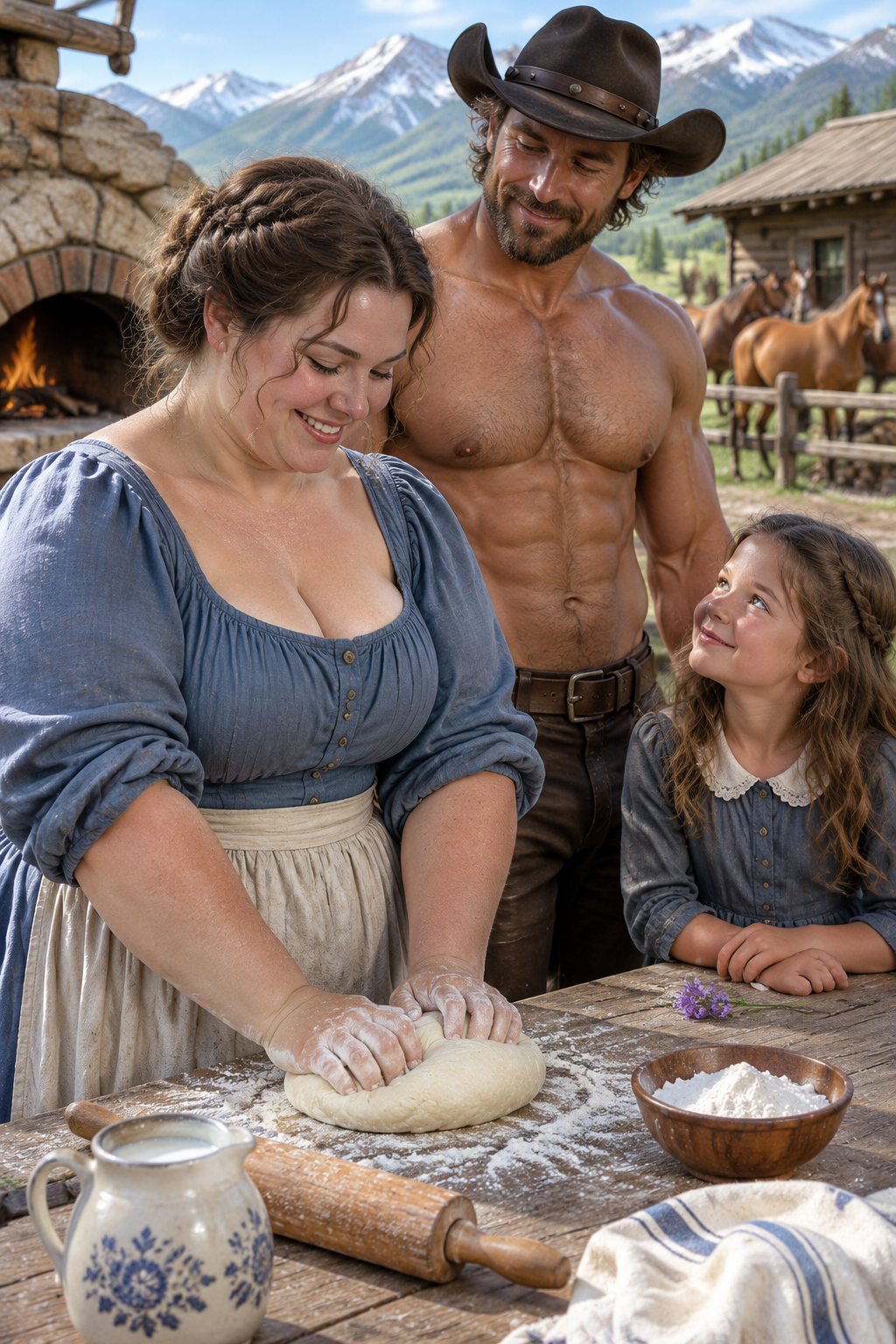
Grace reached for her sewing scissors.
“May I?”
Nelly, who had been watching silently, nodded.
Grace carefully opened the seam.
A small bundle wrapped in oilcloth slipped into Walter’s palm.
Inside were three folded documents and a narrow silver key.
Walter unfolded the first page.
His expression changed immediately.
“Good Lord.”
Grace leaned closer.
The papers contained records of cattle sales, property transfers, and forged signatures.
One document claimed Walter had borrowed eight thousand dollars from Silas Pike.
Another transferred ownership of Red Willow’s northern grazing land to Pike’s company if the supposed debt remained unpaid.
At the bottom were two signatures.
Walter Mercer’s.
And Sheriff Daniel Crowley’s.
Walter’s hands began shaking.
“I never signed this.”
Grace examined the papers.
“Elizabeth must have discovered the forgery.”
Walter opened the second document.
It was a handwritten statement from Elizabeth.
She described finding fraudulent records in the county land office. She believed Crowley had used his authority to help Pike acquire ranches from struggling families through manufactured debts.
Several smaller ranches had already been taken.
Elizabeth intended to expose them.
The final sentence made Walter’s heart nearly stop.
“If anything happens to me, the proof is where the red willow bends over the water.”
Walter stared at the words.
He knew exactly where she meant.
A giant willow tree stood beside Black Creek, not far from the place Elizabeth had died.
The same place he had avoided for two years.
“We need to go there,” Grace said.
Walter folded the papers.
“Not tonight.”
But before he could explain, a sharp noise sounded outside.
A horse whinnied.
Then someone knocked on the kitchen door.
Three slow, deliberate knocks.
Walter quietly moved toward the window.
A rider sat outside beneath the moonlight.
Sheriff Crowley.
And behind him stood two armed deputies.
“Walter!” Crowley called. “Open up. We need to talk.”
Grace instinctively pulled Nelly behind her.
Walter tucked the documents inside his shirt and opened the door halfway.
“What do you want, Daniel?”
Crowley smiled.
“Just checking on an old friend.”
His gaze slipped past Walter toward Grace and Nelly.
“Funny thing happened today. Heard your daughter has started talking again.”
Walter felt his chest tighten.
“She’s making progress.”
“Wonderful news.”
Crowley’s smile widened.
“Children remember the strangest things, don’t they?”
Walter stepped onto the porch, blocking the doorway.
“What are you getting at?”
Crowley’s expression hardened.
“I’d hate for old memories to trouble that little girl.”
For several seconds, neither man moved.
Then Crowley tipped his hat.
“Sleep well, Walter.”
He rode away with his deputies.
Only when the hoofbeats faded did Walter realize his hands were clenched into fists.
Grace stood behind him.
“He knows.”
Walter nodded.
“And now he knows we know.”
Before midnight, Walter gathered his most trusted ranch hands in the barn.
There was Thomas Reed, his elderly foreman; Benjamin Carter, a young cowboy who had grown up on the ranch; and Samuel Price, the stable master.
Walter showed them Elizabeth’s papers.
Thomas read them twice.
Then he took off his hat.
“I always knew something smelled wrong about Mrs. Mercer’s death.”
Walter looked at him sharply.
“What do you mean?”
Thomas hesitated.
“The day they brought her home, I noticed mud on the back of her dress. Not creek mud. Red clay.”
“Where would that come from?”
“Only one place near Black Creek. The old quarry road.”
Walter’s stomach turned.
“Why didn’t you tell me?”
“I did, boss. You were barely standing from grief. Sheriff Crowley said she’d slipped near the quarry before falling down the embankment.”
Thomas lowered his eyes.
“I believed him.”
Walter closed his eyes.
How many signs had he missed because trusting an old friend seemed easier than questioning a terrible loss?
“We ride at first light,” he said.
But dawn never came peacefully.
An hour before sunrise, a gunshot shattered the silence.
Then another.
Walter rushed outside.
Flames were climbing the walls of the hay barn.
Horses screamed inside.
“Fire!” Benjamin shouted.
The ranch erupted into chaos.
Cowboys ran with buckets while Thomas fought to open the stable gates.
Walter grabbed an ax and charged toward the burning barn.
Through the smoke, he saw Samuel struggling beneath a fallen beam.
Walter pulled him free just as part of the roof collapsed.
Across the yard, Grace stood holding Nelly.
The little girl was crying silently.
Then Grace noticed movement near the eastern fence.
Three riders disappearing into the darkness.
One wore a black hat.
“Walter!” she shouted. “Someone set this fire!”
Before he could answer, a rifle cracked.
A bullet struck the water barrel beside him.
Walter threw himself behind a wagon.
The ranch hands returned fire.
The riders vanished beyond the pasture.
By sunrise, half the hay barn was gone.
Two horses had died, Samuel’s arm was badly burned, and the winter feed supply had been nearly destroyed.
Walter stood among the ashes, staring at everything he’d worked twenty years to build.
Then Benjamin approached him.
“Boss, there’s something else.”
He held up a scrap of paper found nailed to the fence.
Five words had been written in black ink.
“Sell the ranch. Save the girl.”
Walter crushed the paper in his fist.
For the first time, he understood.
This wasn’t only about stolen land.
Someone was willing to destroy his family to keep a secret buried.
Grace found him sitting alone behind the barn later that morning.
“Walter.”
He didn’t look up.
“You should leave.”
Grace froze.
“What?”
“Take Nelly somewhere safe. I’ll pay you everything I owe.”
She stepped closer.
“Where would we go?”
“Anywhere away from here.”
“That’s not what I asked.”
Walter raised his head.
“Grace, these men killed my wife. Now they’re threatening my daughter. I won’t let them hurt you, too.”
Grace sat beside him.
“Do you know why I came to Red Willow?”
He shook his head.
“My father was a railroad accountant. He discovered his employer was stealing wages from workers. When he tried to report it, they accused him of the theft instead.”
Walter listened.
“He died before he could clear his name. Afterward, nobody wanted to employ the daughter of a supposed criminal.”
Her voice tightened.
“I spent years wishing someone had stood beside him.”
Walter looked at her.
“So when you ask me to run because powerful men are frightening us, understand something.”
She took his hand.
“I’ve already lived through what happens when good people are left to face bad men alone.”
Walter’s throat tightened.
He wanted to tell her how much her presence meant to him.
How the house had begun feeling like a home again.
How Nelly laughed now because Grace had taught her that happiness didn’t betray the people she’d lost.
But all he managed was a quiet, “Thank you.”
Grace squeezed his hand.
“Then let’s finish what Elizabeth started.”
That afternoon, Thomas rode to bring back Deputy U.S. Marshal Nathaniel Brooks, who was investigating land fraud in a neighboring county.
Meanwhile, Walter, Grace, and Benjamin traveled toward Black Creek.
Nelly remained at the ranch under Samuel’s protection.
Before they left, she caught Grace’s sleeve.
“Come back.”
Grace knelt.
“I will do everything I can, sweetheart.”
Nelly pressed the blue ribbon into her hand.
“For courage.”
Grace kissed her forehead.
The journey to Black Creek took nearly two hours.
Dark clouds gathered over the mountains, and a cold wind swept through the valley.
When they reached the old willow tree, Walter dismounted slowly.
The place was just as he remembered.
The creek still whispered over smooth stones.
The branches still dipped toward the water.
And somewhere nearby, his wife had taken her final breath.
Grace touched his arm.
“We can do this together.”
Walter nodded.
They searched beneath the roots, around the trunk, and among the stones lining the creek.
Finally, Benjamin noticed a small iron box wedged inside a hollow beneath one of the tree’s enormous roots.
A rusted lock secured its lid.
Grace produced the silver key.
It fit perfectly.
Inside were account books, original property deeds, and letters documenting years of fraud.
There was also a small leather notebook.
Walter recognized Elizabeth’s handwriting immediately.
He opened it.
The final entry had been written on the morning she died.
“I am frightened, but I cannot allow these men to steal homes from families who trust the law to protect them. If Walter finds this, I hope he knows I never stopped loving him, even when we disagreed. Everything I have done is for him and our little girl.”
Walter’s vision blurred.
Grace gently took the notebook before it slipped from his hands.
For two years, he had believed Elizabeth’s last memory of him was an argument.
Now he knew her final thoughts had been of love.
But their moment of grief was interrupted by a familiar voice.
“Well, isn’t this touching?”
Sheriff Crowley stepped from behind the trees.
Silas Pike stood beside him.
Four armed men emerged from the brush.
Benjamin reached for his revolver.
“Don’t,” Crowley warned, raising his rifle.
Walter slowly lifted his hands.
“You murdered Elizabeth.”
Crowley’s face remained expressionless.
“Your wife should have minded her own business.”
Walter lunged forward, but Grace caught his arm.
Pike chuckled.
“She was stubborn, just like you.”
Walter stared at him.
“What happened that day?”
Crowley glanced toward the creek.
“She confronted us near the quarry. Threatened to expose everything. I told her to hand over the papers.”
His mouth twisted.
“She refused.”
Grace felt sick.
“And Nelly?”
Pike’s smile disappeared.
“We didn’t know the child was following her mother.”
Walter’s hands trembled.
“You saw my daughter?”
Crowley nodded.
“Elizabeth hid her behind some rocks. When things turned ugly, the girl ran.”
Walter remembered finding Nelly that evening, shivering beside the porch, unable to speak.
“She witnessed it,” he whispered.
“Enough to become a problem,” Crowley replied.
He pointed his rifle toward Grace.
“Now give me the box.”
Walter stepped forward.
“Leave her out of this.”
Pike pulled a revolver from his coat.
“I’m tired of bargaining with you, Mercer.”
Suddenly, Benjamin threw himself toward the nearest gunman.
A shot rang out.
The horses reared.
Grace dropped behind the willow tree as Walter tackled Crowley.
They crashed into the wet stones.
The sheriff’s rifle discharged into the sky.
Benjamin wrestled with another man while Pike raised his revolver toward Walter.
Grace saw him aim.
Without thinking, she swung the heavy iron box into Pike’s wrist.
He screamed, dropping the gun.
Grace grabbed it and backed away.
“Don’t move!”
Pike turned toward her with murderous fury.
Before he could charge, another gunshot echoed across the creek.
Everyone froze.
“Federal marshal! Drop your weapons!”
Nathaniel Brooks rode into the clearing with Thomas and six armed men.
Crowley’s accomplices surrendered immediately.
Pike tried to flee but Benjamin brought him down.
Walter held Crowley against the ground until the marshal secured his hands.
Brooks examined the iron box.
Then he looked at Walter.
“Your wife may have just helped us uncover the biggest land fraud operation this territory has seen in years.”
Walter looked toward the willow tree.
For the first time, the place no longer felt like a monument to his failure.
It felt like somewhere Elizabeth had left behind a final act of courage.
But when they returned to Red Willow that evening, something was terribly wrong.
The ranch house stood silent.
The front door was open.
Samuel lay unconscious near the stairs, blood staining his forehead.
Walter rushed inside.
“Nelly!”
No answer.
Grace searched the kitchen, then the bedrooms.
Nelly was gone.
On the dining table lay a note.
“Crowley talks, the girl dies. Bring the evidence to the abandoned mill by midnight.”
Walter’s knees nearly gave way.
One of Crowley’s remaining men had taken her.
The marshal read the note.
“We need to plan this carefully.”
Walter grabbed his coat.
“There isn’t time.”
Grace stepped in front of him.
“Walter, listen to me.”
“My daughter is out there!”
“I know.”
He looked at her, breathing hard.
Grace placed both hands against his chest.
“Nelly needs her father alive.”
Those words reached him.
For several painful seconds, he closed his eyes.
Then he nodded.
They made a plan.
The abandoned mill stood along the eastern ridge, surrounded by dense pine trees and a narrow stream.
Walter would approach carrying the iron box.
Brooks and his men would circle behind the building.
Grace insisted on coming.
Walter protested, but she refused.
“Nelly knows my voice,” she said. “If she’s frightened, I may be able to help her stay calm.”
At eleven forty-five, they reached the mill.
Moonlight spilled through the broken roof.
Walter entered first.
“Nelly!”
A lantern flared inside.
A man emerged from the shadows.
It was Deputy Frank Hollis, one of Crowley’s closest associates.
He held Nelly by the shoulder, a revolver pressed against her side.
The little girl’s cheeks were wet with tears.
“Daddy!”
Walter’s heart broke at the sound.
“I’m here, sweetheart.”
Hollis grinned.
“Drop the box.”
Walter placed it on the floor.
“Let her go.”
“Not yet.”
Hollis kicked the box open, exposing the documents.
Then he pulled a small bottle of kerosene from his coat.
Grace stepped into the doorway.
“Frank, you don’t have to do this.”
He aimed the gun at her.
“Stay back.”
Grace raised her hands.
“You can still walk away.”
“Not after what I’ve done.”
Nelly began trembling.
Grace looked directly at her.
“Sweetheart, remember our biscuits?”
The child blinked through her tears.
“Remember how you said the crooked ones tasted best?”
Hollis tightened his grip.
“Shut up!”
But Grace continued calmly.
“Remember what I told you?”
Nelly’s lips moved.
“It’s okay to make mistakes,” she whispered.
Grace nodded.
“And what else?”
Nelly looked toward her father.
“You can try again.”
For one brief moment, Hollis seemed distracted.
Walter saw his chance.
He kicked the lantern from its crate.
Darkness swallowed the room.
Nelly screamed.
Walter lunged toward her voice.
A gunshot exploded.
Grace felt something strike her shoulder.
She stumbled backward.
Then a second gunshot rang out from outside.
Hollis collapsed.
Marshal Brooks burst through the doorway.
Walter gathered Nelly into his arms, shielding her with his body.
“Daddy,” she sobbed. “I was so scared.”
“I know, pumpkin. I’ve got you.”
She clung to him desperately.
Then she whispered something that nearly stopped his heart.
“I tried to tell you about Mama.”
Walter closed his eyes.
“Oh, sweetheart.”
“I thought the bad man would hurt you.”
He held her tighter.
“Nelly, none of this was your fault.”
Her small body shook.
“I saw him push Mama. I hid. Mama told me to run.”
Tears streamed down Walter’s face.
“You did exactly what she wanted, darling. You survived.”
Nelly touched his cheek.
“Are you mad because I didn’t talk?”
Walter shook his head fiercely.
“Never. Not for one second.”
Then he buried his face against her hair.
“I only wish I’d understood how frightened you were.”
Behind them, Grace sank against the wall.
Walter noticed the blood.
“Grace?”
She tried to smile.
“I’m all right.”
But when she attempted to stand, her knees buckled.
Walter caught her before she fell.
Blood soaked the sleeve of her dress.
The bullet had torn through her shoulder.
“Stay with me,” he whispered.
Grace looked toward Nelly.
“Is she safe?”
Walter nodded, tears gathering again.
“She’s safe.”
Grace exhaled.
“Then that’s enough.”
Her eyes closed.
“Grace!”
Walter’s voice echoed through the mill.
For one terrible moment, he felt himself falling back into the nightmare he’d survived two years earlier.
The fear.
The helplessness.
The unbearable thought of losing someone he loved.
But this time, he was not alone.
Brooks immediately called for his men.
Benjamin helped carry Grace to a wagon.
And Walter held her hand throughout the long journey home.
The doctor arrived shortly after dawn.
He worked for nearly an hour.
Walter waited outside Grace’s room with Nelly asleep against his chest.
Finally, the doctor emerged.
Walter stood.
“Is she going to live?”
The doctor gave a tired smile.
“The bullet passed through without striking anything vital. She lost blood, but she’s strong.”
Walter nearly collapsed with relief.
“She’ll need plenty of rest.”
The doctor glanced toward the bedroom.
“And judging from her stubbornness, you’ll have your hands full keeping her in bed.”
For the first time in what felt like an eternity, Walter laughed.
Over the following weeks, Red Willow Ranch slowly recovered.
The burned barn was rebuilt with help from neighboring ranchers.
The stolen land deeds were returned to their rightful owners.
Sheriff Crowley and Silas Pike were convicted after Elizabeth’s documents exposed their crimes, along with the testimony of several former accomplices.
Deputy Hollis survived his wound and faced trial for kidnapping and attempted murder.
But the greatest changes happened quietly, inside the Mercer home.
Nelly began speaking more often.
At first, she used only a few words.
Then questions.
Then entire sentences.
Sometimes she became frightened and fell silent again.
Grace never pushed her.
Walter learned not to, either.
Instead, they listened when she wanted to speak and stayed beside her when she didn’t.
One afternoon, Walter found Nelly sitting beneath the porch, holding Rosie.
“Daddy?”
“Yes, sweetheart?”
“Did Mama know I loved her?”
Walter sat beside her.
He thought about Elizabeth’s final notebook entry.
About the courage she’d shown.
About the little girl she’d died trying to protect.
“Oh, Nelly,” he said softly. “Your mama knew.”
The child leaned against him.
“Do you think she’s happy?”
Walter looked toward the distant mountains.
“I think she’d be happy knowing you’re safe.”
Nelly considered this.
Then she asked, “Would she be sad if I loved Grace, too?”
Walter felt tears sting his eyes.
He gently brushed a strand of hair from her face.
“No, sweetheart.”
He kissed her forehead.
“Love doesn’t work that way. Loving someone new doesn’t mean loving someone else any less.”
Nelly smiled.
“Good. Because I love Grace a whole lot.”
Walter laughed softly.
“So do I.”
He realized what he’d said only after the words escaped.
Nelly looked up with wide eyes.
“Really?”
Walter glanced toward the kitchen window.
Inside, Grace was attempting to roll biscuit dough with one arm while Thomas argued that she should be resting.
A warmth spread through Walter’s chest.
“Yes,” he whispered. “I really do.”
That evening, Grace found a small bouquet of wildflowers on the kitchen table.
Beside it lay a note written in Walter’s careful handwriting.
“You gave my daughter back her laughter. You gave this house back its warmth. And somehow, when I thought my heart had nothing left to offer, you reminded me that it could still love.”
Grace read the words twice.
Then she turned.
Walter stood in the doorway, looking more nervous than she’d ever seen him.
“I didn’t know how to say it,” he admitted.
Grace smiled through her tears.
“You just did.”
He approached slowly.
“I loved Elizabeth. I always will.”
“I know.”
“And I don’t want you to feel like you’re replacing her.”
Grace took his hand.
“I wouldn’t want to.”
Walter swallowed.
“But somewhere along the way, I fell in love with you.”
Grace’s eyes filled.
“I think I fell in love with you the first time I saw you trying not to frighten your daughter with your happiness.”
He laughed shakily.
“That’s an unusual reason.”
“Maybe.”
She stepped closer.
“But it told me everything I needed to know about your heart.”
Walter gently kissed her.
Outside the kitchen doorway, a tiny gasp sounded.
They turned.
Nelly stood there, grinning from ear to ear.
“I knew it!”
Grace covered her face, laughing.
Walter raised an eyebrow.
“Knew what?”
“That you were going to marry Grace!”
Walter looked at Grace.
Then, slowly, he dropped to one knee.
“Well,” he said, “since my daughter has already decided…”
Grace gasped.
Walter took her hand.
“Grace Holloway, would you do me the honor of making this ranch your home? Not because we need a cook. Not because Nelly needs someone to care for her.”
His voice softened.
“But because I can’t imagine growing old without you.”
Grace looked at the man kneeling before her.
Then at the little girl bouncing with excitement beside him.
She thought about every door that had closed in her face.
Every person who had judged her because of her father’s disgrace.
Every lonely night she’d wondered whether she would ever belong anywhere.
And now, here was a family offering her something she’d almost stopped believing existed.
A place where she was wanted.
Not for what she could provide.
But for who she was.
“Yes,” she whispered.
Walter blinked.
“Yes?”
Grace laughed through her tears.
“Yes, Walter Mercer. A thousand times yes.”
Nelly shrieked with joy and threw herself into their arms.
The following spring, Red Willow Ranch celebrated its first wedding in nearly twenty years.
The cowboys decorated the barn with wildflowers.
Thomas wore his best suit and cried openly throughout the ceremony, though he insisted afterward that dust had gotten into his eyes.
Benjamin played the fiddle.
And Nelly walked down the aisle carrying a basket of yellow flowers, Rosie tucked carefully beneath one arm.
Grace wore a simple ivory dress.
Pinned near her heart was Elizabeth’s blue ribbon.
It had been Nelly’s idea.
“Because Mama helped bring us together,” she explained.
Walter had cried when he heard that.
During the ceremony, Nelly stood between Walter and Grace, holding both their hands.
When the preacher asked whether anyone had anything to say, the little girl raised her hand.
Everyone laughed gently.
The preacher smiled.
“Well, Miss Nelly?”
She looked around at the gathering.
Then she spoke clearly enough for every person in the barn to hear.
“My mama was very brave. She loved me and Daddy, and she kept us safe.”
Walter squeezed her hand.
Nelly turned toward Grace.
“And Grace helped me find my words again.”
Her voice trembled slightly.
“But she never made me talk when I was scared.”
The barn fell completely silent.
Nelly smiled.
“She just stayed until I was ready.”
Grace began crying.
Walter lifted his daughter into his arms.
And beneath the warm Wyoming sunlight, surrounded by friends and the family they’d chosen, they promised to spend their lives together.
Years later, travelers passing through Red Willow Ranch would often hear laughter drifting from the kitchen.
They would find a tall rancher carrying firewood, a woman preparing biscuits, and a growing girl who had more stories to tell than anyone could possibly count.
But above the kitchen doorway hung something unusual.
A small wooden frame containing a faded blue ribbon.
Beneath it, Grace had carved a sentence.
“Love does not demand a voice. Sometimes it simply waits until one is ready to speak.”
And whenever someone asked about the ribbon, Nelly would smile.
Then she would tell them about her mother, whose courage had protected a family even after death.
About her father, who had learned that strength sometimes meant admitting fear.
And about the cook who had walked into their kitchen with nothing but a worn suitcase and a willingness to stay.
Because the greatest gift Grace had given Nelly was never the ability to speak.
It was the freedom to feel safe enough to try.
And the greatest gift Nelly had given Grace was not a home, a family, or even a new beginning.
It was the knowledge that a person could arrive somewhere feeling unwanted by the entire world and still become the reason that someone else’s world began healing.
For Walter, the lesson was one he carried for the rest of his life.
Grief could change the shape of a family, but it did not have to end its story.
The people we lose remain part of us.
And the people who come afterward do not erase them.
They simply teach our hearts that there is still room for more love.
Because sometimes the miracle we spend years praying for does not arrive with thunder, grand promises, or extraordinary signs.
Sometimes it arrives quietly, before sunrise, in a flour-covered kitchen.
With a crooked biscuit.
A patient smile.
And a little girl who finally finds the courage to whisper one simple word.
“Stay.”
But the story of Red Willow Ranch did not end with a wedding, a blue ribbon, or a little girl finding her voice.
Because sometimes, the truest measure of love comes years after the danger has passed, when life asks us to prove that the promises we made were more than beautiful words.
Seven years after Grace first walked into the Mercer kitchen, Red Willow Ranch faced the harshest winter Wyoming had seen in a generation.
Snow buried the fences, rivers froze solid, and a bitter wind swept across the valley for weeks without mercy.
By then, Nelly was thirteen, a bright-eyed girl with her mother’s courage and her father’s stubbornness.
She had grown into a wonderful storyteller, often entertaining the ranch hands with tales of daring rescues, mysterious strangers, and impossible adventures.
But there was one story she rarely told.
The story of the day her mother died.
Not because she was ashamed.
Not because she had forgotten.
But because some memories remained painful even after they had lost their power to control her.
One evening, as the family gathered around the fireplace, Walter noticed Nelly staring at the blue ribbon displayed above the mantel.
“Something on your mind, sweetheart?”
Nelly hesitated.
“Daddy, do you ever wonder what our lives would have been like if Mama had lived?”
The question settled over the room.
Grace looked up from the shirt she was mending.
Walter considered his answer carefully.
“Sometimes,” he admitted.
“Would you have been happier?”
Grace’s needle stopped moving.
Walter reached for his daughter’s hand.
“Nelly, your mother gave me years of happiness I’ll always treasure. And Grace has given me happiness I never expected to find again.”
He looked toward his wife.
“One doesn’t take away from the other.”
Nelly nodded thoughtfully.
Then she asked something neither adult expected.
“Do you think Mama would be proud of me?”
Grace set her sewing aside.
“Oh, sweetheart. I think she’d be proud of the young woman you’re becoming.”
Nelly looked down.
“Even though I couldn’t save her?”
Walter felt his heart twist.
After all those years, a small part of his daughter was still carrying the terrible burden of that afternoon.
He moved closer.
“Nelly, you were four years old. Your mother saved you because protecting you was the most important thing in her world.”
“But I ran away.”
“Because she told you to.”
Tears filled Nelly’s eyes.
Walter gently lifted her chin.
“You didn’t fail your mother by surviving, darling. You honored her.”
Grace moved beside them.
“And you honor her every time you stand up for someone who needs help.”
Nelly wiped her cheeks.
Outside, the wind howled against the windows.
Then, somewhere beyond the barn, a desperate bell began ringing.
Walter rose immediately.
It was the emergency bell at the eastern gate.
Someone was coming through the storm.
Benjamin, now the ranch foreman, rushed into the house moments later.
“Walter! There’s a wagon outside. A woman and two children. Their horses are nearly frozen.”
Walter grabbed his coat.
Grace hurried toward the kitchen.
“Bring them inside. I’ll heat some water.”
Nelly followed her father into the bitter night.
Near the gate, a wagon stood crooked in the snow.
A young woman sat slumped beneath a thin blanket, clutching a little boy against her chest. Beside her, a girl of about five stared silently at the strangers approaching.
The woman could barely speak.
“Please,” she whispered. “My children.”
Walter lifted the boy while Benjamin helped the mother down.
Nelly approached the little girl.
“Hello,” she said gently. “My name’s Nelly.”
The child didn’t answer.
She only tightened her grip around a small wooden horse.
Nelly recognized the look in her eyes.
She had seen it in mirrors years earlier.
Fear so deep that even speaking seemed dangerous.
Without asking another question, Nelly held out her hand.
The girl stared at it.
Then, slowly, she reached forward.
By morning, they learned the woman’s name was Clara Bennett.
Her husband had died in a mining accident near Laramie. With no money and nowhere to go, she had tried to reach relatives in Montana.
The storm had forced her off the main road.
She had been traveling for three days with almost no food.
Walter listened quietly as Clara explained.
“I can work,” she said desperately. “I can wash clothes, clean floors, anything. Just let my children rest before we go.”
Grace glanced at Walter.
He was already smiling.
“We happen to need help with the laundry,” he said.
Clara’s eyes widened.
“You mean…?”
“I mean you and your children are welcome to stay until you find your footing.”
Clara covered her mouth as tears spilled down her cheeks.
Nelly watched from the doorway.
Then she turned toward Grace.
“Is this what you felt when you first came here?”
Grace looked at the frightened family sitting beside the fire.
“In some ways, yes.”
“Did you think Daddy would send you away?”
Grace laughed softly.
“I was certain of it.”
Nelly smiled.
“I’m glad he didn’t.”
“So am I.”
Over the following weeks, Clara regained her strength, and her son began helping Samuel care for the horses.
But her daughter, Lucy, remained silent.
The little girl followed Nelly everywhere, watching her with enormous brown eyes.
She never answered questions.
Never laughed aloud.
And whenever a door slammed, she covered her ears and hid.
One afternoon, Grace found Nelly sitting beside Lucy at the kitchen table.
Between them lay two pieces of biscuit dough.
Nelly was showing the little girl how to make tiny shapes.
“You don’t have to get it perfect,” Nelly said. “Mine never were.”
Lucy watched.
Nelly formed a crooked heart and placed it on a baking tray.
“My Grace says the funny-looking ones taste the best.”
Grace stood quietly in the doorway.
For a moment, she was no longer looking at a thirteen-year-old girl.
She was seeing a frightened six-year-old child sitting beside her for the first time, learning that silence could be met with kindness instead of pressure.
Nelly noticed Grace and smiled.
“I’m teaching Lucy our secret.”
Grace raised an eyebrow.
“What secret?”
“That biscuits don’t have to be beautiful to be loved.”
Grace laughed, though tears glistened in her eyes.
Then Lucy did something unexpected.
She picked up a piece of dough and pressed it carefully into the shape of a tiny horse.
Nelly gasped dramatically.
“Well, that’s better than anything I’ve ever made!”
A faint smile appeared on Lucy’s face.
It was small.
Almost invisible.
But it was there.
And Grace understood that something precious was beginning again.
The winter eventually softened.
Snow melted from the pastures, and the first wildflowers appeared beside Black Creek.
Clara decided to remain at Red Willow, helping Grace manage the increasingly busy household.
Lucy slowly became more comfortable around the family.
She still spoke very little, but she laughed when Nelly made silly faces, and sometimes she sang softly to herself while feeding the chickens.
One morning, Nelly found Walter standing beside Elizabeth’s old willow tree.
He held a small bouquet of flowers.
“Daddy?”
He turned.
“Hello, pumpkin.”
She stood beside him for a while, listening to the creek.
Then she asked, “Do you still miss her?”
“Every day.”
“Does it hurt?”
Walter thought carefully.
“Not the way it once did.”
He looked at the flowers in his hand.
“At first, remembering your mother felt like touching a wound. Now, most days, it feels like opening a window and letting sunshine into a room.”
Nelly leaned against him.
“I think I understand.”
Walter placed the flowers beneath the tree.
Then Nelly reached into her pocket.
She removed a small piece of blue ribbon, cut from the original with Grace’s permission.
She tied it around a low branch.
“What are you doing?”
“Making sure Mama knows I haven’t forgotten.”
Walter smiled.
“She knows.”
Nelly watched the ribbon move in the breeze.
“And I want her to know something else.”
“What?”
“That I’m happy.”
Her father put an arm around her shoulders.
Nelly looked toward the distant ranch house, where smoke rose from the chimney and laughter drifted across the spring air.
“For a long time, I thought being happy meant leaving her behind.”
Walter kissed the top of her head.
“And now?”
Nelly smiled through her tears.
“Now I think she’d want me to have a thousand happy days.”
Walter held her close.
“I think you’re right.”
That summer, Nelly made an important decision.
She wanted to become a teacher.
Not just any teacher.
She wanted to help children who were frightened, lonely, or struggling to find their place in the world.
“I want them to know they matter,” she told Grace one evening.
Grace smiled.
“That’s a wonderful reason.”
Nelly hesitated.
“But what if I’m not good enough?”
Grace reached for her hand.
“Do you remember the first biscuit you made?”
Nelly laughed.
“It looked like a dead frog.”
“And did we throw it away?”
“No. You said it was special.”
“Exactly.”
Grace squeezed her fingers.
“You don’t have to begin perfectly. You only have to begin with love and be willing to learn.”
Years passed.
Nelly studied hard, first at the small school in Willow Bend and later at a teachers’ college farther east.
Leaving Red Willow frightened her more than she expected.
On the morning of her departure, Walter stood beside the wagon pretending to inspect the harness while secretly wiping his eyes.
Grace packed enough food for a journey twice as long.
And Lucy, now ten, handed Nelly a tiny cloth doll she had sewn herself.
“For when you miss us,” Lucy whispered.
Nelly hugged her.
“I’ll miss you every day.”
Then Lucy added, “But you’ll come back.”
Nelly smiled.
“Of course I will.”
Grace embraced her daughter tightly.
“You know something, sweetheart?”
“What?”
“The first time you asked me to stay, you changed my entire life.”
Nelly’s eyes filled.
“And you changed mine.”
Grace brushed her hair back.
“Now it’s your turn to go out into the world and make someone else feel less alone.”
Nelly climbed into the wagon.
As the horses started forward, she turned for one final look at the ranch.
At the porch where she’d once hidden behind her father’s coat.
At the kitchen where she’d rediscovered her laughter.
At the people who had taught her that a broken heart could heal without forgetting what it loved.
Then she waved.
And for the first time, leaving home didn’t feel like losing it.
It felt like carrying it with her.
Five years later, Nelly Mercer returned to Willow Bend as a qualified teacher.
The town had changed.
New buildings lined the main street, and the railway had brought more families into the valley.
But the little schoolhouse remained old and overcrowded.
Nelly accepted a position there and soon discovered that several children were being turned away because their parents couldn’t afford supplies.
Others missed lessons because they needed to work.
And a few had stopped attending altogether after being mocked for their difficulties.
Nelly knew what she wanted to do.
With Walter and Grace’s help, she opened a small classroom in a renovated building near Red Willow.
She called it Willow House.
There were no expensive uniforms.
No punishments for children who struggled to speak.
And no child was turned away because their family lacked money.
At first, only six students attended.
Then twelve.
Then twenty.
Nelly taught reading, writing, arithmetic, and history.
But she also taught something that mattered just as much.
She taught her students to listen.
To be patient.
To understand that silence didn’t mean stupidity, that fear wasn’t weakness, and that every person deserved the dignity of being heard when they were ready.
One autumn afternoon, a boy named Henry arrived at Willow House.
He was nine years old, withdrawn and angry after losing his father.
He refused to participate in lessons and often sat alone beside the window.
Other teachers had called him troublesome.
Nelly saw something different.
One morning, she placed a piece of paper beside him.
“You can draw if you’d like.”
Henry stared at her suspiciously.
“I don’t know how.”
“Neither did I when I started.”
He shrugged.
Nelly returned to her work.
The next day, the paper was covered with a drawing of a horse.
The day after that, Henry drew a barn.
And one week later, he quietly asked Nelly whether she thought his father would have liked his pictures.
Nelly sat beside him.
“I think someone who loved you would be glad to see you creating something beautiful.”
Henry began crying.
Nelly didn’t rush him.
She simply stayed.
And somewhere deep inside her heart, she understood that Grace’s kindness had never truly ended.
It had been passed from one person to another, like a candle lighting another candle without losing its own flame.
When Walter and Grace grew older, they often visited Willow House to watch Nelly teach.
Walter would stand near the doorway, his weathered hands resting on his walking stick.
Grace would sit beside the children and help them with their reading.
Sometimes, after lessons, Nelly baked crooked biscuits with her students.
And whenever a child complained that theirs looked terrible, she would smile and say, “Those are the special ones.”
One warm evening, many years after Grace first arrived at Red Willow, Walter sat on the porch watching the sunset.
His hair had turned almost entirely white.
Grace sat beside him, her hand resting comfortably in his.
Beyond the fields, Nelly’s children were running through the grass, laughing as Lucy chased them with a basket of freshly baked bread.
Walter looked at his wife.
“Do you ever think about that first morning?”
Grace smiled.
“The morning I nearly burned the biscuits?”
“The morning you gave my daughter a piece of dough and asked for nothing in return.”
Grace leaned against him.
“I remember.”
Walter watched his grandchildren tumble across the lawn.
“I used to think that day was when our lives changed.”
“Wasn’t it?”
He considered the question.
“Maybe. But I think it began changing the moment you decided not to give up on her.”
Grace gently squeezed his hand.
“She wasn’t someone to give up on.”
Walter turned toward her.
“Neither were you.”
They sat together as the last sunlight disappeared behind the Wyoming mountains.
Inside the house, Elizabeth’s blue ribbon remained carefully displayed, a reminder not of sorrow alone, but of the courage that had protected them and the love that had grown afterward.
And at Willow House, above the classroom door, Nelly had hung a simple wooden sign.
It carried the words she hoped every child would remember.
“Your voice matters, even on the days you cannot find it.”
Beneath those words was a smaller sentence, written in Grace’s handwriting.
“You are worthy of love long before you learn how to ask for it.”
Years later, when Nelly was asked what had inspired her to devote her life to children who struggled, she never spoke first about tragedy or the terrible men who had once threatened her family.
Instead, she told a much simpler story.
About a kitchen.
About a woman who did not demand answers.
About a father who learned to listen.
And about a little girl who discovered that she did not need to become fearless before she could begin living again.
Then Nelly would smile and say, “People often believe that healing happens when someone finally speaks about their pain. But sometimes healing begins much earlier, when somebody makes them feel safe enough to remain silent.”
That was the legacy of Red Willow Ranch.
Not its cattle, its land, or the wealth the Mercer family eventually built.
Its greatest treasure was the kindness that continued traveling beyond its fences, touching lives its owners would never know.
Because one patient act of love can become the beginning of a hundred others.
One person who chooses to stay can change the direction of an entire life.
And sometimes, the people who seem to have lost their voices are not waiting for someone to tell them what to say.
They are waiting for someone to show them that they are safe, that they are loved, and that they will not be abandoned when the words refuse to come.
That was what Grace had understood from the very beginning.
And that was why, long after the original ranch house had weathered and the old willow tree had grown wider beside the creek, people in Willow Bend still told the story of the little girl who hadn’t spoken for two years.
Not because her silence had been extraordinary.
But because the love that finally helped her move beyond it had never asked for anything in return.
And perhaps that is the most meaningful truth of all.
We cannot always save the people we love from pain.
We cannot undo their losses, erase their memories, or make every frightening thing disappear.
But we can sit beside them.
We can offer kindness without conditions.
We can remind them, through patience and ordinary acts of care, that they do not have to face the darkness alone.
And sometimes, that is enough to help a wounded heart find its way home.
THE END.