The cattle came thundering down the mountain in the middle of the night, destroying everything in their path.
“There’s something about my father that nobody here knows,” Peter whispered.
Laura set down the piece of bread in her hand.
“What is it, Peter?”
The boy stared at his boots. His fingers twisted nervously around the edge of his jacket.
“Everyone says he was the best cowboy who ever worked at Red Elk. Frank tells stories about how he could ride any horse, rope any steer, and never back down from a storm. Mr. McCall says there hasn’t been another man like him.”
Laura waited.
“But I don’t remember him being that way,” Peter continued. “I was only six when he died. I remember him carrying me on his shoulders. I remember him laughing when I fell off my little pony. I remember him burning pancakes because he was terrible at cooking.”
A faint smile appeared on his face, but it disappeared almost immediately.
“Everyone keeps telling me I have to become the man he was. I thought if I worked harder than everyone else, rode faster, and never complained, maybe they’d finally see him in me.”
He swallowed.
“But I’m scared, Laura. I’m scared I’ll never be good enough.”
The camp grew quiet.
Even the wind seemed to soften around them.
Laura pulled a wooden crate closer and sat beside him.
“Peter, look at me.”
He reluctantly raised his eyes.
“Your father didn’t become a good man because he could rope cattle faster than everyone else. And you don’t have to become him to make him proud.”
“But what if everyone is disappointed?”
“Then they’ll have to learn something important, too.”
She placed a small piece of bread in his hand.
“Your father had his own life, Peter. You have yours. You can respect the man he was without spending every day trying to become someone else.”
Peter looked down at the bread.
“Do you really think that?”
“I know it.”
For the first time since the stampede, his shoulders relaxed.
Across the camp, Daniel McCall had heard enough to understand what the boy had been carrying.
He didn’t interrupt.
He simply turned away and walked toward the damaged corral.
The following morning, the mountain looked different.
The storm clouds had moved east, revealing pale sunlight over the ridges. But the destruction remained. Several tents had been flattened, cooking equipment was scattered across the slope, and a section of the temporary cattle enclosure had collapsed.
The men gathered around Daniel.
Frank stood with his arms folded.
“We’ve lost too much time,” he said. “The animals are scattered, and we don’t have enough supplies to stay out here another week. We should head back to the ranch.”
Nobody argued.
They were tired, hungry, and still shaken by what had happened during the night.
Daniel studied the men.
“Frank’s right about one thing. We can’t continue the way we planned.”
He paused.
“But that doesn’t mean we’re abandoning everything.”
Frank shook his head.
“Boss, we’ve got injured horses, damaged equipment, and sixteen-year-old boys who shouldn’t be sleeping in the mountains after a night like that.”
“Peter isn’t the only reason we’re staying or leaving,” Daniel replied. “We’ll assess the damage, count the cattle, and decide what can safely be recovered.”
Laura stepped forward.
“I can take inventory of the food and supplies. We may have enough to manage if we reorganize.”
Frank gave her a doubtful look.
“Cooking for sixteen hungry cowboys is one thing. Managing a damaged roundup is another.”
Laura met his eyes.
“Good thing I’m not planning to do it alone.”
A couple of the men laughed.
Even Frank almost smiled.
Daniel looked at her for a moment before nodding.
“Make a list of what we have. I’ll organize the recovery teams.”
The camp slowly came back to life.
The next two days were among the hardest Laura had experienced since arriving at Red Elk Ranch.
The men worked from sunrise until sunset. They recovered supplies, repaired damaged fencing, and searched the nearby slopes for missing horses.
Daniel divided the crew into smaller groups, making sure nobody worked alone in dangerous areas.
Laura turned an overturned supply wagon into a temporary storage station. She salvaged flour, dried beans, coffee, and whatever vegetables hadn’t been ruined.
She also kept a careful eye on Peter.
The boy had begun to change.
He still worked hard, but he no longer raced everyone to finish a task. When he didn’t know how to repair a piece of equipment, he asked for help instead of pretending he understood.
One afternoon, Laura found him sitting beside the cooking area with the battered tin in his lap.
“What are you doing?” she asked.
“Checking the starter.”
“And?”
“It’s alive.”
He opened the lid and showed her the mixture.
Laura smiled.
“Looks like it survived better than most of our equipment.”
Peter laughed.
It was a small sound, but Laura realized she hadn’t heard him laugh like that since before the stampede.
“Can you show me how to feed it?” he asked.
“Of course.”
She brought over a small bowl of flour and water.
“Remember what I told you? You don’t just feed it and forget about it. You have to pay attention. Some days it grows quickly. Other days it needs more time.”
“Like people?”
Laura looked at him.
“Exactly like people.”
He carefully mixed the ingredients.
“I think I’m getting better at this.”
“You are.”
“And I think I’m getting better at riding, too.”
“You are definitely getting better at knowing when not to show off.”
Peter grinned.
That evening, Daniel returned to camp with a sack of wild onions and a handful of berries.
He placed them on Laura’s worktable.
“Found these near the western ridge.”
Laura looked at the food, then at him.
“You’re becoming quite the supplier.”
“Someone has to keep the cook happy.”
“Is that an official ranch responsibility?”
“Starting to look like one.”
She laughed.
Daniel lingered beside the table.
For a moment, neither spoke.
Then he glanced toward Peter, who was helping Frank repair a broken harness.
“He seems different.”
“He’s beginning to understand that he doesn’t have to prove himself every minute.”
Daniel nodded.
“I should have noticed sooner.”
Laura wiped her hands on her apron.
“You can’t expect a boy to carry a man’s reputation without feeling the weight.”
Daniel looked toward the distant mountains.
“His father was a good man. One of the finest I’ve known.”
“I believe you.”
“But people forget that being remembered as a great cowboy isn’t the same as being a father to a boy who misses him.”
Laura’s expression softened.
“Then perhaps it’s time someone started remembering the second part.”
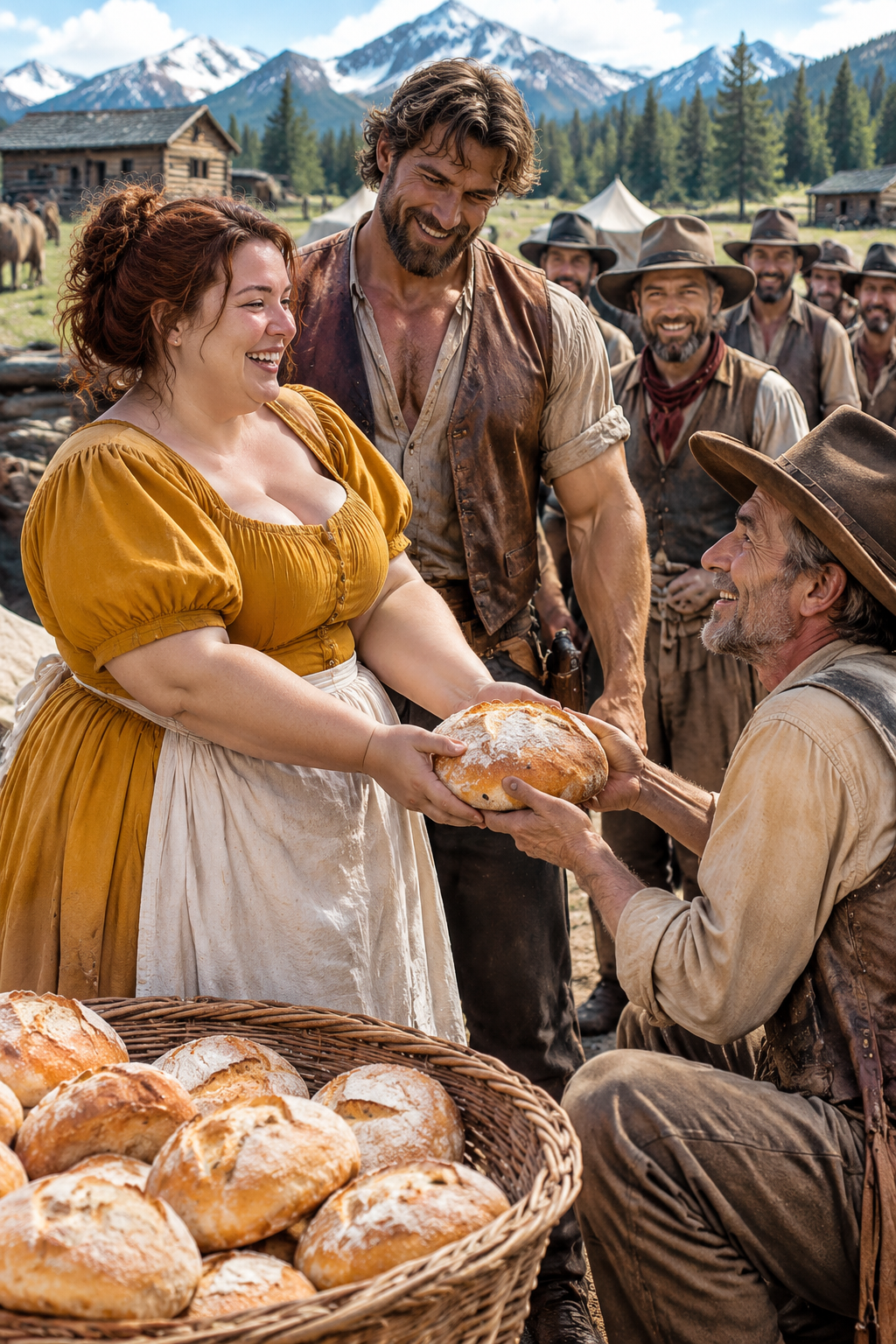
Daniel looked at her.
There was something in his eyes that she hadn’t seen before. Something quieter than gratitude and deeper than simple respect.
“I’m glad you’re here, Laura.”
She lowered her gaze, pretending to inspect the onions.
“Someone has to make sure you men eat something besides coffee and dried beef.”
Daniel smiled.
It was the first time she had seen him smile without immediately hiding it.
By the fourth morning, the crew had recovered most of the missing horses and located the largest groups of cattle.
But the roundup was still far from complete.
A significant portion of the herd had moved into a narrow section of the northern valley. The terrain was steep, and the cattle had become nervous after the stampede.
Frank studied the map with Daniel.
“We should leave that section alone until the weather settles.”
Daniel nodded.
“We’ll send a small team to observe. No one approaches the herd until we know where they’re moving.”
Laura overheard them while preparing breakfast.
“What’s wrong with the northern valley?”
Frank looked at her.
“Nothing you need to worry about.”
“That usually means something everyone should worry about.”
Daniel pointed to the map.
“The cattle are near a narrow pass. If they get frightened again, they could move toward the cliffs.”
Laura studied the markings.
“Is there another way around?”
“There’s an old service trail,” Daniel replied. “But it hasn’t been used in years.”
She remembered something from the first week of the roundup.
During one of her supply trips, she’d noticed a line of old fence posts disappearing behind a stand of pine trees.
“Does that trail pass the abandoned stone shelter?”
Daniel looked up.
“You’ve seen it?”
“I passed it while gathering firewood. There were old wagon tracks leading toward the ridge.”
Frank frowned.
“That trail is probably blocked.”
“Maybe,” Laura said. “But it might be worth checking before you send men into that valley.”
Daniel studied the map again.
“She’s right. We’ll inspect it first.”
Frank sighed.
“Are we really taking trail advice from the cook now?”
Laura turned toward him.
“Only when the cook happens to be paying attention.”
One of the younger cowboys laughed.
Frank shook his head, but he didn’t argue.
Daniel sent two experienced riders to inspect the old trail.
They returned that afternoon with encouraging news.
The trail was narrow but passable. It provided a safer approach to the northern valley and offered a route away from the cliffs.
For the first time since the stampede, the men began to believe the roundup might still be completed.
Daniel called the crew together.
“We’ll move carefully tomorrow. Nobody takes unnecessary risks. If the cattle turn, we fall back.”
The men nodded.
Then Frank stepped forward.
“I’ll take the lead.”
Daniel considered him.
“Peter knows the western boundary better than most of us. He’ll ride with you.”
Frank looked surprised.
“Peter?”
The boy stood straighter.
“I know the trail, sir.”
Frank studied him for a moment.
“You understand that this isn’t a race?”
“Yes, sir.”
“And if I tell you to fall back, you fall back.”
Peter nodded.
“Understood.”
Frank looked at Daniel.
“Fine. But he’ll stay close.”
Laura watched the exchange from beside the supply wagon.
She wanted to feel proud.
Instead, a small knot of worry settled in her stomach.
That night, she found Peter checking his saddle beneath the lantern.
“Getting ready for tomorrow?” she asked.
He nodded.
“Frank says I can ride with the lead group.”
“I heard.”
Peter tightened a strap.
“I don’t want to disappoint him.”
Laura crouched beside him.
“Then don’t try to impress him.”
Peter looked confused.
“What’s the difference?”
“Impressing someone makes you think about how they see you. Doing your job makes you think about what needs to be done.”
She tapped the saddle.
“Tomorrow, your job is to stay alert, listen, and come back safely.”
Peter nodded.
“I will.”
She reached into her apron and took out a small cloth pouch.
Inside was a little flour.
“What’s that for?” he asked.
“Something to remind you that you have responsibilities beyond proving how brave you are.”
He smiled.
“I’ll keep it.”
Laura stood.
“Good. Now get some sleep.”
The following morning began quietly.
The men mounted their horses before sunrise. A thin layer of mist covered the valley, and the mountain peaks glowed pink in the early light.
Daniel rode at the front with Frank.
Peter followed a few lengths behind.
Laura watched them disappear along the trail.
She didn’t know why, but she felt that the day would test more than their riding skills.
For several hours, everything went according to plan.
The riders reached the northern valley, located the cattle, and began guiding them toward the safer passage.
The animals moved slowly at first.
Then a sharp crack echoed across the mountains.
A loose section of rock broke away from the hillside.
The cattle startled.
One animal bolted.
Then another.
Within seconds, the herd began shifting toward the narrowest part of the pass.
Daniel raised his arm.
“Hold your positions! Don’t push them!”
Frank rode toward the western edge to block the first group.
Peter saw a smaller group moving toward a broken section of fencing.
He knew exactly where the animals were headed.
“Mr. Doyle!” he shouted. “They’re turning toward the old trail!”
Frank looked over.
“Stay back!”
But Peter had already spotted something else.
A young calf was trapped near the fence, separated from its mother. The frightened animal struggled against the wire as the herd moved closer.
Peter pulled on his reins.
For one terrible second, he looked toward the calf.
Then he remembered Laura’s words.
His job wasn’t to prove he was brave.
His job was to make the right decision.
He didn’t charge into the herd.
Instead, he shouted to Frank and pointed toward the trapped calf.
Frank immediately understood.
“Daniel! We need to close the western opening!”
Daniel turned his horse and signaled two riders to move into position.
Together, they guided the cattle away from the dangerous section.
Once the herd was under control, Frank dismounted and freed the calf.
Peter remained where he was, breathing hard.
Frank walked over.
“You did well.”
Peter blinked.
“I didn’t do anything.”
“You noticed the danger. You warned us. And you didn’t do something foolish just to look brave.”
Frank placed a hand on his shoulder.
“Your father would have been proud of that.”
Peter looked down.
For once, the words didn’t feel like a burden.
They felt like a gift.
The riders returned to camp that evening with most of the cattle accounted for.
The crew celebrated with a larger supper than usual.
Laura had managed to make a thick stew from the remaining supplies. She served it with another loaf of sourdough bread.
Peter came straight to the cooking area.
“Laura!”
She turned.
“You’re back.”
He nodded enthusiastically.
“And I didn’t fall off my horse.”
“That’s a wonderful improvement.”
“I also didn’t try to rescue the entire herd by myself.”
Laura smiled.
“I heard.”
Peter reached into his jacket and pulled out the small cloth pouch.
“I kept it.”
She took it and looked inside.
There was a little flour left.
“You remembered.”
“I think I’m starting to understand what you meant.”
Laura placed a hand on his shoulder.
“That’s all anyone can ask.”
Across the camp, Frank was talking with Daniel.
After a moment, Frank approached Laura.
He stood awkwardly beside the table.
“About what I said when you first arrived.”
Laura raised an eyebrow.
“You’ll have to be more specific. You said quite a few things.”
Frank cleared his throat.
“I wasn’t convinced you belonged on this roundup.”
“I noticed.”
“I thought you were just another cook who’d never understand what it takes to work in the mountains.”
Laura folded her arms.
“And now?”
Frank looked toward the crew.
“Now I know better.”
He paused.
“You saved more than our supper after that stampede. You helped keep this crew together.”
Laura’s expression softened.
“Everyone did their part.”
Frank nodded.
“Maybe. But you reminded us why we were doing it.”
He held out his hand.
Laura shook it.
“Thank you, Frank.”
He gave a small smile.
“Don’t let it go to your head.”
“Wouldn’t dream of it.”
The men laughed.
For the first time, Laura felt that she wasn’t simply tolerated at Red Elk Ranch.
She belonged.
The roundup continued over the following days.
There were still difficult climbs, long hours, and more than a few arguments over stubborn cattle.
But the crew worked differently now.
They listened to one another.
They asked for help.
And they no longer treated every mistake as a reason to question someone’s worth.
Daniel also began changing.
He spent more time talking with the men instead of carrying every responsibility alone. He checked on Peter regularly and occasionally shared stories about the boy’s father.
One evening, he found Peter sitting near the corral.
“Mind if I sit?”
Peter shook his head.
Daniel settled beside him.
“Your father was one of my closest friends.”
Peter looked up.
“You knew him before he worked here?”
“For years.”
“What was he really like?”
Daniel smiled.
“He was stubborn. Terrible at keeping his boots clean. And he once managed to get himself trapped in a hayloft because he was trying to rescue a chicken.”
Peter laughed.
“Really?”
“Your father had a way of making a difficult day feel lighter.”
Daniel’s smile faded slightly.
“He was also afraid sometimes. He worried about being a good father. He worried about making mistakes. But he never let those fears stop him from loving you.”
Peter was silent.
“Did he ever talk about me?”
“All the time.”
Daniel looked toward the mountains.
“He wanted you to have choices. He wanted you to find something you loved, even if it had nothing to do with cattle or horses.”
Peter rubbed his eyes.
“I wish I remembered more.”
Daniel placed a hand on his shoulder.
“You don’t have to remember every moment to carry his love with you.”
For a long time, neither spoke.
Then Peter asked, “Do you think I could become a good cowboy?”
Daniel looked at him.
“I think you already have the beginning of it.”
Peter smiled.
“And if I decide I don’t want to be one?”
“Then I’ll help you find something else worth doing.”
The boy nodded.
It was the first time he had heard an adult say that his future belonged to him.
Meanwhile, Laura had begun noticing how often Daniel found reasons to visit the cooking area.
Sometimes he brought fresh herbs.
Sometimes he brought firewood.
Once, he appeared with an entire basket of berries and claimed he had collected too many by accident.
Laura knew better.
“You seem to have a remarkable talent for finding things I need,” she told him.
Daniel leaned against the wooden post.
“Perhaps I pay attention.”
She looked at him.
“That’s a rare quality around here.”
“I’m trying to improve.”
Their eyes met.
For a moment, the noise of the camp seemed far away.
Daniel lowered his voice.
“I’d like to talk to you when we return to the ranch.”
Laura felt her heart beat a little faster.
“About what?”
“Something that shouldn’t be discussed beside a cooking pot.”
She smiled.
“Then I suppose I’ll have to wait.”
Daniel nodded.
“I hope you will.”
The last major task of the roundup came two days later.
The cattle had been moved into a broad meadow near the eastern ridge. All that remained was to guide them down toward the lower ranch land.
The weather was clear, and the men were confident.
But as they approached the meadow, they discovered that a section of the old boundary fence had collapsed.
The cattle were already gathering near the opening.
Frank examined the broken posts.
“We’ll need at least half a day to repair this.”
Daniel looked at the herd.
“If we leave them here too long, they’ll start moving toward the timber.”
Laura was unloading supplies when she noticed several old wooden rails stacked beside the trail.
She also spotted a narrow drainage ditch running along the edge of the meadow.
“Why don’t we use those rails to make a temporary barrier?” she asked.
Frank turned.
“Those won’t hold a full herd.”
“They don’t have to. They just need to guide the cattle away from the opening until you finish repairing the fence.”
Daniel studied the ditch.
“She has a point.”
Frank looked at the available timber.
“We’d need more hands.”
“Then let’s use the hands we’ve got,” Laura replied.
Within minutes, the crew was working.
Peter helped carry the lighter rails. Frank directed the older men, while Daniel organized the placement of the posts.
Laura brought water and food to the workers, then joined them in tying the temporary barriers together.
By late afternoon, the opening was secured.
The cattle moved safely toward the lower pasture.
Daniel watched the final group pass through.
“That’s it,” he said.
Frank looked around at the men.
“We did it.”
A cheer rose from the crew.
Peter raised both arms.
Laura laughed.
For the first time since the stampede, she felt the tension leave her body.
They had survived the disaster.
They had finished the roundup.
And somehow, they had become more than a group of people working for the same ranch.
They had become a family.
The journey back to Red Elk Ranch took two days.
When the familiar buildings finally appeared in the distance, the men rode in with tired smiles and stories already beginning to grow.
The ranch hands came out to welcome them.
Mrs. Bell, the ranch housekeeper, hurried toward Laura.
“Thank goodness you’re back! I’ve been wondering whether those mountain men remembered how to wash their own clothes.”
Laura laughed.
“Not a chance.”
The crew dismounted, unloaded supplies, and settled into the familiar rhythm of the ranch.
That evening, Daniel asked Laura to meet him near the old oak tree behind the main house.
She found him standing with his hat in his hands.
“Long day?” she asked.
“Long three weeks.”
She smiled.
“That’s one way to describe it.”
Daniel looked at her.
“I’ve been thinking about what happened on the mountain.”
“Which part?”
“The stampede. The camp. Peter. Everything.”
He paused.
“I’ve spent years believing that being a good ranch boss meant having an answer for every problem. If something went wrong, I thought I had to fix it myself.”
Laura listened quietly.
“But when things fell apart, you didn’t try to pretend everything was fine. You found one small thing you could save, and you gave everyone a reason to keep going.”
She glanced toward the house.
“It was only bread.”
“No,” Daniel said. “It was much more than bread.”
He took a breath.
“You reminded me that people don’t always need someone to give orders. Sometimes they need someone who sees them.”
Laura looked down.
Daniel continued.
“I don’t want you to leave Red Elk Ranch.”
She looked up.
“I wasn’t planning to.”
“I know. But I’d like you to stay because you want to. Not because you feel you owe us anything.”
He stepped closer.
“I’d also like the chance to know you better, if you’d allow it.”
Laura smiled.
“Daniel McCall, are you asking me to spend time with you when there’s no cattle to chase and no broken camp to repair?”
A small smile appeared on his face.
“I believe that’s exactly what I’m doing.”
She pretended to consider it.
“Do I get wild berries?”
“As many as you want.”
“And no arguments about how much flour I use?”
“I’ll leave that entirely to you.”
“Then I suppose we can discuss it.”
Daniel laughed.
It was a warm, genuine sound.
He reached for her hand, and Laura let him take it.
Neither of them rushed to say anything more.
They simply stood beneath the oak tree, watching the last light fade over the ranch.
The weeks that followed brought a different kind of happiness to Red Elk.
Peter continued learning the work, but he also began spending more time studying maps and reading books from the ranch library.
Sometimes he helped Frank with the horses.
Other times, he sat with Laura in the kitchen, learning how to feed and maintain the sourdough starter.
He became remarkably good at it.
One afternoon, he brought her a small loaf he had baked himself.
The crust was uneven, and the shape was far from perfect.
But the inside was soft and smelled wonderful.
Laura broke off a piece.
“Well, look at that.”
Peter watched her anxiously.
“Is it good?”
She took another bite.
“It’s excellent.”
“Really?”
“Really.”
He grinned.
“I want to learn everything about baking.”
“Then we’ll start with the basics.”
Peter glanced at the tin on the shelf.
“Do you think Aunt Martha would have liked it?”
Laura felt something tighten in her chest.
“I think she would have loved it.”
Peter smiled.
“Then I’ll keep practicing.”
Months passed.
The mountain disaster slowly became a story the cowboys told around the fire. But Laura never allowed them to turn it into a tale about one hero saving everyone.
She reminded them that Frank had led the recovery teams, Daniel had kept the crew organized, Peter had learned when to act and when to wait, and every man had contributed.
The roundup had survived because they had worked together.
One autumn evening, Laura opened the old tin and noticed that the starter had grown thick and healthy.
She remembered her aunt Martha standing in a little kitchen years earlier, teaching her that sourdough was never truly finished.
It needed care.
It needed patience.
And if treated well, it could be passed from one person to another.
Laura took a small portion and placed it in a clean jar.
She handed it to Peter.
“What’s this?” he asked.
“A gift.”
He looked at the jar.
“Are you giving me the starter?”
“Not the original. That one stays with me. But this is yours.”
Peter held it carefully.
“What should I call it?”
Laura smiled.
“That’s up to you.”
He thought for a moment.
“Hope.”
Laura blinked.
“Hope?”
“Because it survived the stampede. And because you didn’t give up looking for it.”
He paused.
“And because you taught me that I don’t have to be my father to become someone worth remembering.”
Laura felt tears gathering in her eyes.
She reached over and hugged him.
“Your father would be proud of the person you’re becoming.”
Peter held the jar close.
“I hope so.”
“I know so.”
Across the yard, Daniel watched them.
He approached with two cups of coffee and handed one to Laura.
“Something important happening?”
“Peter has named his starter.”
Daniel looked at the jar.
“Hope. That’s a good name.”
Peter nodded.
“I’m going to bake bread for everyone tomorrow.”
Frank, who had been passing nearby, overheard.
“Make sure it’s better than that first loaf you gave me.”
Peter grinned.
“You ate three pieces.”
“Because I was hungry.”
The yard erupted in laughter.
That evening, the ranch gathered for supper.
Laura served a large pot of stew, fresh vegetables, and several loaves of sourdough bread.
Daniel sat beside her.
Peter sat across from them, proudly watching everyone enjoy the food he had helped prepare.
Frank raised his cup.
“I’d like to say something.”
The table quieted.
“When we left for that roundup, I thought the hardest part would be moving cattle through the mountains. I was wrong.”
He looked toward Laura.
“The hardest part was remembering that a crew isn’t just a collection of workers. It’s people. People who get tired, make mistakes, lose confidence, and sometimes need someone to remind them why they’re there.”
He raised his cup a little higher.
“To Laura. For keeping us fed, keeping us together, and reminding a stubborn old cowboy that he doesn’t know everything.”
Laughter filled the room.
Laura shook her head.
“I’ll accept the compliment, Frank. But only because you finally admitted you were wrong.”
The men laughed again.
Daniel reached beneath the table and gently took her hand.
Laura looked at him.
For a moment, she thought about the woman who had arrived at Red Elk Ranch three weeks before the stampede.
She remembered the doubtful looks, the quiet whispers, and the men who had assumed she couldn’t belong in their world.
She had come to the mountains believing her greatest contribution would be cooking meals.
Instead, she had discovered that sometimes the smallest things could hold people together.
A warm loaf of bread.
A patient conversation.
A kind word at the right moment.
A hand offered when someone was afraid.
And a place where a young boy could finally stop trying to live up to a legend and begin becoming himself.
Later that night, after the others had gone to bed, Laura returned to the kitchen.
The old tin sat on the shelf.
She opened it, stirred the starter, and added a little flour and water.
Then she covered it carefully.
Daniel appeared in the doorway.
“Still working?”
“Just taking care of something important.”
He stepped closer.
“Will it ever be finished?”
Laura smiled.
“No. That’s the beauty of it.”
She looked at the small jar Peter had left beside the tin.
“Something like this only survives if someone keeps caring for it. And when you share it, it can keep growing long after you’ve passed it on.”
Daniel looked at the jars.
“Sounds like a good way to live.”
Laura leaned against him.
“I think it is.”
Outside, the mountains stood silent beneath a sky filled with stars.
The same mountains that had once threatened to destroy their camp now seemed almost peaceful.
Laura thought about Aunt Martha, about Peter’s father, and about all the people whose kindness continued to shape lives even after they were gone.
She finally understood that a legacy wasn’t measured by how many cattle a person could drive, how fast they could ride, or how many stories others told about them.
A legacy was measured by what they left behind in the hearts of people they loved.
Peter was learning that lesson.
Daniel was learning it, too.
And Laura knew she had found something she hadn’t even realized she was searching for when she first arrived at Red Elk Ranch.
She had found a home.
The next morning, the smell of fresh sourdough drifted through the ranch house.
Peter stood proudly beside the oven, watching the bread rise.
Frank appeared at the kitchen door.
“Is that breakfast?”
“It’s bread,” Peter replied.
Frank picked up a piece and took a bite.
He chewed slowly.
Then he reached for another.
Peter smiled.
“Good?”
Frank nodded.
“Not bad, kid.”
Laura laughed.
Daniel entered carrying a basket of wild berries and placed it beside the bread.
The kitchen filled with voices, laughter, and the comforting sounds of another ordinary morning.
There would be more storms.
There would be difficult days, unexpected losses, and moments when the people of Red Elk Ranch would have to find their courage all over again.
But they had learned something in those mountains.
They had learned that strength wasn’t always loud.
It wasn’t always found in the strongest rider or the most experienced cowboy.
Sometimes strength looked like a woman searching through wreckage for a little tin.
Sometimes it looked like a boy choosing not to take a dangerous risk just to prove himself.
Sometimes it looked like an old cowboy admitting he had been wrong.
And sometimes, it looked like a loaf of bread shared among people who had almost given up.
Because a family isn’t always formed by blood, and a legacy isn’t always something inherited.
Sometimes, it’s something you build together, one small act of kindness at a time.
And at Red Elk Ranch, that legacy would continue to rise, just like the sourdough starter Laura had refused to abandon.
And from that day forward, whenever the smell of freshly baked sourdough filled the kitchen at Red Elk Ranch, everyone remembered the night the mountains nearly took everything from them.
They remembered the woman who refused to give up, the boy who finally found the courage to be himself, and the people who learned that a family could be built through kindness, loyalty, and love.
Laura never forgot Aunt Martha’s lesson: something precious doesn’t survive because it is strong. It survives because someone cares enough to keep it alive.
And perhaps that was the greatest lesson the mountains had ever taught them.
A person’s legacy isn’t about becoming someone else’s shadow. It’s about leaving behind enough love, courage, and kindness to help others find their own way.
At Red Elk Ranch, that legacy would live on—not in gold, not in stories of bravery, but in every loaf of bread shared around the table.