The ballroom of a historic Boston mansion glittered beneath crystal chandeliers, the kind of room where old money spoke softly and everyone seemed to know exactly where they belonged.
Elena stepped through the marble entrance of the Belandi Foundation with the silver iris pendant hidden beneath the collar of her black dress.
For a moment, nobody noticed her.
The gala was already in full motion. Waiters moved between guests carrying champagne and miniature plates of lobster tartlets. A string quartet played near the grand staircase. Beyond the tall windows, Boston glittered beneath a cold September sky, the lights of Beacon Hill and the Charles River stretching into the distance.
This was exactly the kind of evening Victoria Belandi had built her reputation around.
Powerful names.
Expensive clothes.
Quiet conversations about philanthropy, finance, universities, museums, and political connections.
Nothing ugly was supposed to enter this room.
Elena had come to bring something ugly.
Not revenge.
Not a scene.
Evidence.
She touched the pendant through the fabric of her dress and kept walking.
Across the room, Victoria was speaking to three members of the foundation board. She wore an ivory gown and the same effortless smile Elena remembered from the dinner weeks earlier.
The smile of someone who believed the room belonged to her.
Then Victoria saw Elena.
Her smile disappeared.
Only for a second.
But Elena saw it.
Victoria leaned toward the man beside her and whispered something.
The man looked at Elena.
Then another guest followed his gaze.
Within moments, the attention began spreading.
Elena could almost feel the room rearranging itself around her.
She kept walking.
“Miss Marlo.”
Victoria’s voice came from behind her.
Elena stopped.
She turned slowly.
“Victoria.”
Several people nearby became very interested in their champagne glasses.
Victoria approached with a smile that had returned, but this time it was tighter.
“I didn’t realize you were attending tonight.”
“I wasn’t sure I would.”
Victoria’s eyes briefly dropped toward Elena’s collar.
“Yet here you are.”
“Yes.”
“And I assume you came to discuss your… concerns.”
Elena studied her.
“No. I came to discuss my mother.”
The air seemed to change.
Victoria’s expression remained composed.
Almost.
“I think this is neither the place nor the time.”
“I used to think that too.”
Before Victoria could answer, a familiar voice came from across the room.
“Let her speak.”
Dante Moretti stood beside the fireplace.
He had arrived without announcement, as powerful people often did. The room had subtly shifted around him since his entrance.
Victoria looked at him.
“Dante, this is a private family matter.”
Dante’s expression was calm.
“Then perhaps your family should have handled it privately.”
A few guests looked away.
Elena almost smiled.
Almost.
Victoria took a breath.
“You seem unusually interested in Elena’s accusations.”
“I’m interested in facts.”
“And you believe she has facts?”
“I believe she has something you are afraid of.”
Silence.
Victoria’s eyes hardened.
Elena reached into her small handbag.
She removed a thin envelope.
“I found this among my mother’s belongings.”
Victoria stared at it.
Dante did not move.
Elena placed the envelope on a nearby table.
“I haven’t opened the final section yet.”
Victoria frowned.
“Then what exactly are you doing here?”
“Giving you one opportunity to tell me the truth before someone else does.”
Victoria laughed softly.
It was the kind of laugh designed to make another person feel childish for speaking.
“You still don’t understand how serious this is.”
“I understand exactly how serious it is.”
Elena looked around the room.
“I spent years believing my mother abandoned me. I believed Caroline when she told me Sophia chose to leave. I believed the photographs were gone because my mother didn’t want to be remembered.”
Her voice remained steady.
“But none of that was true.”
Victoria said nothing.
“Why?”
For the first time, Victoria looked genuinely unsettled.
Then someone behind Elena spoke.
“Because Sophia knew what they were doing.”
Elena turned.
Dante was no longer beside the fireplace.
He stood only a few feet away.
“You knew her?” Elena asked.
“I knew enough.”
“What did she know?”
Dante glanced toward the envelope.
“She knew money was moving through charitable trusts that were never supposed to touch private accounts.”
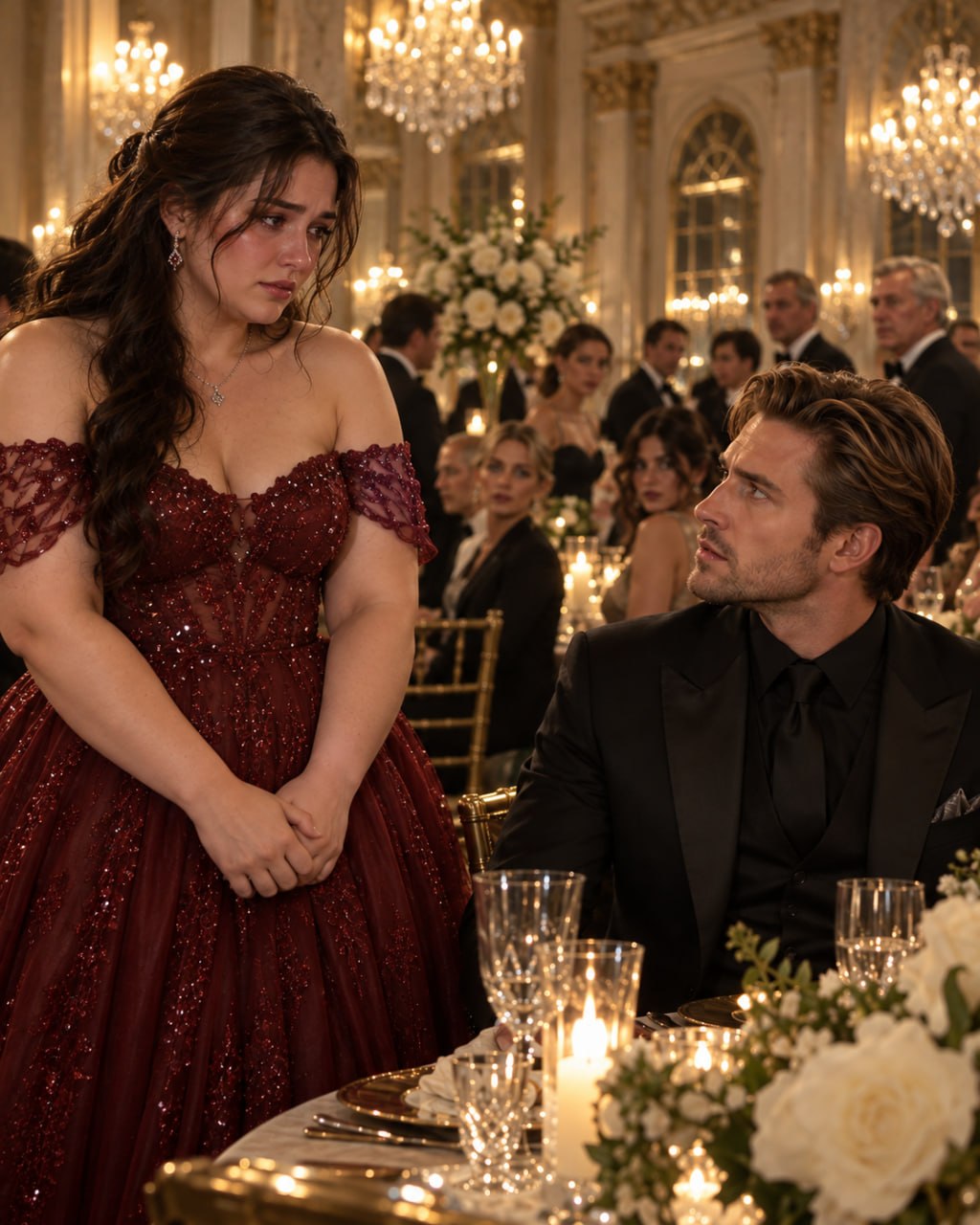
Elena’s heart tightened.
“The Belandi Foundation?”
Dante did not answer immediately.
“That is one name.”
“One?”
“There were others.”
Victoria stepped forward.
“This is absurd.”
Dante looked at her.
“Then prove it.”
Victoria’s face went pale.
The quartet continued playing.
Somehow, the ordinary music made the silence more disturbing.
Elena opened the envelope.
Inside was a single sheet of paper and a strip of microfilm.
The paper contained only one sentence.
She recognized her mother’s handwriting immediately.
If Elena ever reads this, she must know that the person who kept her from me was not acting alone.
Below the sentence were three initials.
V.B.
C.M.
And D.R.
Elena froze.
D.R.
She looked at Dante.
He read the page.
For the first time that evening, his composure cracked.
“Your mother knew about me,” he said quietly.
Elena felt the room closing around her.
“Were you involved?”
“No.”
“Then why did she write your initials?”
“I don’t know.”
Victoria suddenly reached for the paper.
Elena pulled it back.
“Don’t.”
Victoria stopped.
Something passed between them.
Fear.
Recognition.
And something else Elena couldn’t identify.
Then a voice came from the staircase.
“Because your mother didn’t know which side Dante was on.”
Everyone turned.
A man in a dark suit descended the stairs.
Elena recognized him from the archive photographs.
Arthur Bell.
Former legal adviser to the Belandi Foundation.
A man whose name appeared beside several questionable transfers in the ledger.
Victoria whispered, “You weren’t invited.”
Arthur smiled.
“Neither was the truth.”
He reached the bottom step.
Elena tightened her grip on the envelope.
Arthur looked directly at her.
“Your mother was careful, Elena. Much more careful than anyone gave her credit for.”
“Then why did she disappear?”
Arthur’s smile faded.
“Because she realized the money was only one part of it.”
“What was the other part?”
Arthur glanced at Victoria.
“People.”
No one spoke.
He continued.
“The trusts weren’t simply being used to move money. They were being used to control people. Employees. Witnesses. Families. Anyone who discovered too much could suddenly find a debt paid off, a job threatened, a reputation damaged, or a relative offered an irresistible settlement.”
Elena thought of Caroline.
The hospital room.
The car crash.
The years of silence.
“You paid my aunt.”
Arthur didn’t answer.
Victoria did.
“Caroline made her own choices.”
Elena stared at her.
“Did she?”
Victoria’s eyes narrowed.
“You have no idea what your mother put people through.”
“My mother saved your friend’s life.”
“She caused problems.”
“She saved someone from a burning hotel.”
Victoria’s voice sharpened.
“And then she refused to understand what she had become involved in.”
Elena stepped closer.
“What did she become involved in?”
Victoria said nothing.
Dante answered.
“A ledger.”
Elena looked at him.
“The archive ledger.”
Dante nodded.
“The original records were never destroyed. They were moved.”
“To where?”
Dante looked at the walls.
“Somewhere your mother knew no one would think to search.”
Elena’s mind raced.
The archive.
The Belandi Foundation had donated thousands of documents to the Boston Historical Records Center over the decades.
But one collection had always seemed strangely incomplete.
The Marston Financial Archive.
A collection from 2003.
She suddenly remembered the ledger she had found.
A missing section.
A page cut cleanly from the binding.
And a tiny pencil mark in the margin.
Iris.
Her mother’s flower.
Elena opened her handbag again.
She removed photographs of the ledger pages.
She placed them on the table.
“Look.”
Dante leaned over them.
Arthur went still.
Victoria stared.
One of the pages contained a sequence of transfers.
Trust.
Trust.
Consulting fee.
Legal settlement.
Private donation.
Then Caroline’s name.
Not as a beneficiary.
As a recipient.
Elena felt her throat tighten.
“That’s why she lied.”
Victoria looked at the page.
“No.”
“You paid her.”
“No.”
“You paid her to tell me my mother abandoned me.”
Victoria shook her head.
“You think money explains everything.”
“Doesn’t it?”
“No.”
Victoria stepped closer.
“Your mother was going to expose people who had far more power than I did.”
“Who?”
Victoria didn’t answer.
Arthur did.
“The hotel.”
Elena’s breath caught.
The hotel fire.
2003.
The night Sophia had supposedly disappeared.
“What happened that night?”
Arthur looked at Dante.
Dante’s jaw tightened.
“My mother was inside.”
Elena stared at him.
“You told me Sophia saved her.”
“She did.”
“What happened afterward?”
Dante looked toward the windows.
“People assumed my mother was lucky. They didn’t know she had seen something before the fire.”
“What?”
“A meeting.”
Elena waited.
Dante continued.
“Two men entered a service corridor carrying boxes. My mother saw them arguing. Sophia saw them too.”
“What was in the boxes?”
“Documents.”
Arthur spoke quietly.
“Documents from the trusts.”
Elena suddenly understood why the pendant mattered.
Sophia had not carried a sentimental object through that fire.
She had carried a record.
A key.
A message.
Something small enough to hide.
Something no one would think to search for.
The microfilm.
Elena looked down at the strip in her hand.
“That’s what’s on this.”
Arthur shook his head.
“Not all of it.”
“What does that mean?”
“Your mother divided the evidence.”
“Why?”
“Because she knew if one piece was found, the rest would survive.”
Elena stared at him.
“How many pieces?”
Arthur looked at Victoria.
Victoria’s face had become completely expressionless.
“Three,” he said.
“Where are the other two?”
“One was destroyed.”
“And the last?”
Arthur looked directly at Elena.
“You have it.”
Elena frowned.
“No.”
“Yes.”
He pointed toward her pendant.
“The pendant isn’t only a container.”
Elena touched it.
Her fingers trembled.
“What is it?”
“A key.”
The room seemed to disappear.
Elena remembered the tiny indentation on the back of the pendant.
She had always assumed it was part of the design.
A decorative line beneath the silver petals.
She removed the pendant.
Dante immediately said, “Don’t open it here.”
Too late.
Victoria had seen it.
She moved.
Fast.
Elena stepped backward.
A waiter dropped a glass.
Someone shouted.
Dante caught Victoria’s wrist before she could reach Elena.
For one second, nobody moved.
Then Victoria whispered, “You don’t know what you’re carrying.”
Elena looked into her eyes.
“Then tell me.”
Victoria’s voice dropped.
“Your mother was supposed to disappear quietly.”
The words landed harder than a confession.
Elena’s face went cold.
“Supposed to?”
Victoria released a breath.
“You were a child. Caroline was frightened. Sophia wouldn’t cooperate.”
“What did you do to her?”
“I didn’t hurt her.”
“Then who did?”
Victoria looked away.
That was enough.
Elena felt something inside her finally settle.
Not anger.
Not fear.
Certainty.
She turned to Dante.
“Where can I open this safely?”
Dante looked at Arthur.
Arthur nodded toward a side corridor.
“There is an old records room beneath the east wing.”
Elena followed them.
The records room was almost untouched.
Dust covered the shelves. Old foundation documents were stacked in boxes bearing dates from decades earlier.
Dante locked the door behind them.
Elena placed the pendant on the table.
There was a tiny screw beneath the iris.
She used the edge of a coin to loosen it.
The back opened.
Inside was a second layer.
And beneath that layer was a folded strip of translucent film.
Elena stared at it.
Her mother’s final secret.
Dante found an old microfilm reader in the corner.
It still worked.
They inserted the film.
A series of documents appeared.
Bank transfers.
Trust agreements.
Names.
Dates.
Signatures.
Then one page made Elena stop breathing.
Sophia Marlo.
Witness statement.
Hotel fire.
September 17, 2003.
The statement described the meeting her mother had witnessed.
But the next page was worse.
It listed payments made after the fire.
Caroline Marlo.
Victoria Belandi.
Arthur Bell.
And several other names.
Elena read the dates.
One transfer had been made three days after Sophia disappeared.
Another six months later.
Another years afterward.
The payments had continued.
Not just to Caroline.
To people who had helped bury the story.
Elena whispered, “They kept paying.”
Dante looked at the screen.
“For years.”
Then the final image appeared.
A handwritten note.
Sophia’s handwriting.
Elena leaned closer.
If you are reading this, then they failed to erase everything.
The next sentence made her eyes fill with tears.
I did not leave you.
I left because I believed distance was the only way to keep you alive.
Elena covered her mouth.
For years, she had imagined her mother choosing freedom over her.
Now she finally understood.
Sophia had been trying to protect her.
The next line was shorter.
Trust the person who remembers the fire.
Elena looked at Dante.
His eyes were wet.
“My mother,” he said.
Elena nodded.
“She remembered.”
Dante swallowed.
“She remembered Sophia.”
The door suddenly rattled.
Everyone froze.
Someone tried to open it.
Dante moved toward the entrance.
“Who is it?”
No answer.
Then came three knocks.
Slow.
Deliberate.
Arthur whispered, “We’re not alone.”
The handle moved.
Dante opened the door.
A woman stood outside.
Elena recognized her immediately.
Caroline.
Pale.
Weak.
Still wearing the hospital bracelet around her wrist.
Elena couldn’t speak.
Caroline looked at the microfilm reader.
Then at the pendant.
“I knew you would find it.”
Elena’s voice broke.
“You lied to me.”
Caroline lowered her eyes.
“Yes.”
“Why?”
“Because they came to me.”
“Who?”
“Victoria first.”
Caroline looked toward the hallway.
“Then other people.”
She stepped into the room.
“They showed me what would happen if I told you the truth.”
Elena shook her head.
“You could have told me.”
“I was afraid.”
“You let me believe my mother abandoned me.”
“I know.”
“You let me hate her.”
Caroline’s eyes filled with tears.
“I know.”
Elena turned away.
For years she had imagined this moment.
She had thought she would scream.
Instead, she felt exhausted.
“Did you know she was alive?”
Caroline closed her eyes.
“For a while.”
Elena turned back.
“Alive?”
Caroline nodded.
“She survived the fire.”
Dante stepped forward.
“Where did she go?”
Caroline looked at Elena.
“She left Boston.”
“Where?”
“I don’t know.”
“You’re lying.”
“No.”
Caroline’s voice shook.
“She made me promise not to follow.”
“Why?”
“Because she knew they were watching me.”
Elena looked at the final image on the screen.
“Then why did she leave clues?”
“Because she knew one day you would be strong enough to understand them.”
Silence filled the room.
Then Caroline reached into her coat.
She pulled out a small photograph.
She handed it to Elena.
It showed Sophia standing outside a train station.
Beside her was a little girl.
Elena.
The photograph had been taken years after the fire.
Elena stared at it.
Her entire childhood seemed to rearrange itself in a single instant.
On the back, Sophia had written:
One day, she will know.
Elena closed her eyes.
“I want to find her.”
Caroline shook her head.
“You may never.”
“Then I’ll spend the rest of my life looking.”
Dante looked at Elena.
“First, you need to decide what to do with the evidence.”
Elena looked at the microfilm.
Then at the door.
Then toward the gala upstairs.
“No.”
She understood now.
The evidence could not remain hidden.
But neither could she simply walk into the ballroom and throw accusations into the air.
She needed the truth documented.
Verified.
Protected.
And witnessed.
So they returned upstairs.
The music was still playing.
Guests were laughing.
Waiters were still moving through the crowd.
For a few seconds, nobody realized anything had changed.
Then Elena walked to the center of the room.
Victoria saw her.
Her face changed.
Elena raised the microfilm.
“I think everyone here deserves to know what this foundation was built to protect.”
The room fell silent.
Arthur stepped beside her.
Dante followed.
Caroline remained near the doorway.
Elena spoke carefully.
She named the documents.
The dates.
The transfers.
The archived records.
She did not exaggerate.
She did not invent motives.
She simply read what had been written.
One by one, the names appeared on the screen.
The guests began whispering.
Some left.
Others stayed.
A board member demanded that the presentation stop.
Another asked for legal counsel.
Victoria stood perfectly still.
Finally, she spoke.
“You think exposing this will destroy me?”
Elena looked at her.
“No.”
Victoria frowned.
“It will destroy the illusion that protected you.”
That was the moment Victoria finally looked afraid.
Not because Elena had shouted.
Not because she had threatened her.
But because Elena had brought the truth into a room where everyone could see it.
By midnight, the gala had ended.
The foundation board had suspended several pending transactions.
Lawyers had arrived.
Investigators were expected the following morning.
Reporters gathered outside the building as guests slipped away through the side entrance.
Elena stood on the front steps.
Boston’s night air was cold against her face.
Dante joined her.
“You could have walked away,” he said.
Elena looked toward the city lights.
“I almost did.”
“What changed?”
She touched the silver iris pendant.
“My mother.”
Dante nodded.
“She would be proud.”
Elena looked at him.
“You don’t know that.”
“I think I do.”
For the first time that night, Elena smiled.
Not because everything was fixed.
It wasn’t.
Victoria’s story was not over.
The financial investigation would take months.
Caroline still had to answer for what she had done.
And Sophia remained somewhere beyond the reach of every archive Elena knew.
But Elena no longer carried the weight of believing she had been abandoned.
She had something better than an answer.
She had the truth.
Weeks later, the first official review of the Belandi Foundation’s records began.
The old ledger became evidence.
The microfilm became evidence.
Caroline gave a statement.
Arthur did too.
Dante provided everything he remembered about the hotel fire.
And Elena returned to the archive where the story had begun.
She placed the silver iris pendant on a clean sheet of paper.
For years, she had treated it as a relic of someone who had left.
Now she understood it differently.
It was not a symbol of absence.
It was proof of connection.
A reminder that sometimes the past does not disappear.
Sometimes it waits.
Quietly.
Patiently.
For someone brave enough to ask the question everyone else was afraid to answer.
Elena opened a new archival file.
On the cover she wrote:
Sophia Marlo — The Complete Record.
Then she paused.
Underneath it, she added one final sentence.
The truth belongs to the person who keeps looking.
Outside the archive windows, Boston continued as it always had.
Cars moved through the streets.
The Charles River reflected the city lights.
People hurried home without knowing that, inside a quiet room, a decades-old lie had finally lost its hiding place.
Elena closed the file.
She did not know whether she would ever find her mother.
But she knew something else now.
She would never again allow someone else’s fear to become her version of the past.
And sometimes, that is where the first real chapter of a life begins.
Three months passed before Elena received the letter.
It arrived on an ordinary Tuesday morning at the Boston Historical Records Center, mixed among grant applications, university correspondence, and invoices for archival supplies.
There was no return address.
Only her name.
Elena Marlo.
The handwriting on the envelope made her stop breathing.
She knew it.
She had seen it in old photographs.
She had traced it on the margins of childhood birthday cards.
She had spent years believing she would never see it again.
Sophia.
Elena carried the envelope into the reading room and closed the door.
For several minutes, she simply stared at it.
Then she opened it.
My dearest Elena,
If this letter has reached you, then you have already discovered more than I ever wanted you to know.
I am sorry.
Not for leaving you.
For making you believe that I wanted to.
Elena pressed her hand against her mouth.
The letter continued.
After the hotel fire, I realized that the people involved were not interested in money alone. They were interested in control. They had lawyers, bankers, connections, and enough influence to make ordinary people doubt what they had seen with their own eyes.
I knew I could not protect you by fighting them directly.
So I disappeared.
Not because I stopped loving you.
Because I loved you enough to let you hate me if hatred kept you alive.
Elena closed her eyes.
For years, those words would have destroyed her.
Now they healed something.
Slowly.
The letter explained that Sophia had left Boston under another name and spent years moving between small towns in Vermont, Maine, and New Hampshire.
She had never been far.
She had simply remained invisible.
But there was one final reason she had waited.
She wanted Elena to become a person who could choose the truth for herself.
Not someone forced into it by fear.
At the bottom of the letter was an address.
A small coastal town in Maine.
Elena read it three times.
Then she stood.
She did not call Dante.
She did not call Caroline.
She did not tell anyone.
For the first time in her life, Elena wanted one moment that belonged entirely to her.
Two days later, she drove north from Boston.
The city disappeared behind her.
The highway narrowed.
The buildings became smaller.
Pine trees replaced office towers.
The Atlantic appeared beyond the cliffs, gray beneath a pale morning sky.
Elena followed the address until she reached a quiet road overlooking the water.
At the end stood a modest white house.
There was a garden beside it.
Lavender.
Rosemary.
And, near the front steps, a cluster of irises.
Elena stopped walking.
The front door opened.
An older woman stood there.
Her hair was silver now.
Her shoulders were thinner.
Time had changed her face.
But Elena knew her immediately.
Sophia.
Neither woman moved.
Twenty-three years of silence stood between them.
Then Sophia whispered her daughter’s name.
“Elena.”
Elena’s eyes filled with tears.
She wanted to say something meaningful.
Something worthy of all those years.
Instead, she said the only thing that mattered.
“Mom.”
Sophia covered her mouth.
She began to cry.
Elena crossed the distance between them.
They held each other on the porch while the Atlantic wind moved through the garden.
No explanation could repair twenty-three years.
No apology could return the birthdays.
The school plays.
The ordinary mornings.
The countless moments when Elena had needed her mother and believed she had been forgotten.
But there was something powerful about finally holding the person she had spent half her life mourning.
They sat together that afternoon.
Sophia told her everything.
Not the polished version.
Not the version Caroline had invented.
Not the version Victoria had tried to bury.
Everything.
In 2003, Sophia had been working with a Boston financial institution that managed several charitable trusts.
She noticed irregular transfers.
At first, they looked like accounting mistakes.
Then she noticed the pattern.
Money moved from charitable accounts into shell companies.
Those companies paid consultants.
The consultants paid private settlements.
The settlements went to people who had witnessed questionable transactions.
The system was designed to look legitimate.
Sophia discovered that the Belandi network was larger than Victoria herself.
Victoria had inherited a structure already in motion.
But she had chosen to preserve it.
And once Sophia discovered the hotel meeting, she became a liability.
The fire was supposed to destroy records.
Instead, Sophia escaped with part of the evidence.
Dante’s mother had seen the meeting.
Sophia saved her from the fire.
Then Sophia disappeared.
But she never stopped collecting evidence.
The microfilm had been only one piece.
The ledger had been another.
And the final records were still in her possession.
Elena stared at her mother.
“You had all of this?”
Sophia nodded.
“I was waiting for the right person.”
“You mean me?”
“Yes.”
“Why didn’t you come back?”
Sophia looked toward the ocean.
“Because coming back would have been easy.”
Elena frowned.
“Easy?”
“To walk into your life and say I was sorry. To ask you to forgive me. To make my pain your responsibility.”
She turned toward Elena.
“I didn’t want that.”
Elena remained silent.
“I wanted you to grow up without becoming part of my war.”
Elena looked down.
“I spent years thinking you didn’t love me.”
“I know.”
“That was worse than any danger you were trying to protect me from.”
Sophia’s eyes filled with tears.
“I know that too.”
The silence between them was different now.
It was no longer the silence of abandonment.
It was the silence of two people learning each other again.
Over the following weeks, Elena stayed in Maine.
She and Sophia walked along the shoreline.
They cooked together.
They looked through old photographs.
They argued over small things.
They laughed over even smaller things.
And slowly, Elena discovered that reconciliation was not a single moment.
It was a collection of ordinary moments.
A cup of coffee.
A shared memory.
A story repeated twice because the first time neither person was ready to hear it.
Meanwhile, back in Boston, the Belandi investigation continued.
The foundation’s financial records were reviewed.
Several trusts were frozen pending further examination.
People who had remained silent for years began speaking.
Some came forward voluntarily.
Others were contacted by investigators.
The old network began collapsing not because one person had defeated it, but because secrecy had finally stopped protecting it.
Victoria Belandi resigned from every foundation position she held.
Arthur Bell entered into a formal cooperation agreement with investigators.
Caroline gave a full statement.
Her testimony did not erase what she had done.
It did, however, explain how fear had slowly turned into complicity.
Elena never pretended otherwise.
When Caroline later asked if Elena could forgive her, Elena did not answer immediately.
“I don’t know,” she said.
Caroline lowered her head.
“But I don’t want to spend the rest of my life carrying your choices either.”
It was not forgiveness.
Not yet.
It was something more honest.
A boundary.
A beginning.
Months later, Elena returned to Boston.
She brought Sophia with her.
They walked into the historical records center together.
The archivists stopped what they were doing.
Everyone knew who Sophia was.
For years, she had been a missing name in a story everyone thought they understood.
Now she stood in the doorway.
Alive.
Older.
Real.
Elena led her to the archive room.
The original ledger rested inside a protective case.
The microfilm was stored in a secure evidence box.
The pendant was around Elena’s neck.
Sophia looked at it and smiled.
“You still wear it.”
“Every day.”
“You know what it means now?”
Elena touched the silver iris.
“Yes.”
“What?”
Elena thought for a moment.
“It means you came back.”
Sophia shook her head.
“No.”
Elena looked at her.
“It means I never really left.”
For the first time, Elena understood the difference.
The pendant had never been proof of a missing mother.
It had been proof of a mother who had spent years trying to leave a path home.
One year after the gala, Elena helped establish a small archival program for families searching for lost records and missing histories.
She named it the Iris Project.
Its purpose was simple.
Preserve evidence.
Protect personal histories.
And make sure powerful institutions could never erase ordinary people’s stories simply because they had the resources to do so.
At the opening ceremony, Elena stood before a small audience in Boston.
Dante was there.
Caroline sat quietly near the back.
Sophia stood beside Elena.
The old ballroom where Victoria had once humiliated her was no longer the center of the story.
Elena had chosen a public library instead.
A place where anyone could walk through the doors.
No invitations.
No private membership.
No velvet ropes.
Just books.
Records.
History.
Elena looked at the audience.
“For a long time,” she said, “I thought the past was something other people controlled.”
She paused.
“I thought whoever possessed the documents possessed the truth.”
Sophia watched her from the front row.
“But I learned something different.”
Elena placed the silver iris pendant on the podium.
“Documents matter. Evidence matters. Records matter. But so does the courage to ask why a record is missing.”
The room was silent.
“Because sometimes the most important part of a story is not what was preserved.”
She looked at her mother.
“It is what someone tried to erase.”
The audience applauded.
Elena smiled.
But she knew the applause was not the point.
The point was that the story had finally become bigger than the Belandi family.
Bigger than Victoria.
Bigger than Caroline.
Bigger than the hotel fire.
It had become a reminder that silence can be inherited, but so can courage.
That evening, Elena and Sophia walked along the Charles River.
Boston’s skyline reflected in the dark water.
The city looked almost exactly as it had on the night everything began.
But Elena was different.
She no longer looked at Boston as the place that had taken her mother away.
It was simply the place where the truth had eventually found its way back to her.
Sophia slipped her hand into Elena’s.
“I missed so much,” she said.
Elena looked at her.
“So did I.”
“I can’t give those years back.”
“I know.”
“I wish I could.”
“I know.”
They continued walking.
After a while, Elena stopped.
“Mom?”
“Yes?”
“If you could change one thing, would you still disappear?”
Sophia looked across the river.
For a long time, she said nothing.
Then she answered honestly.
“I would find another way.”
Elena nodded.
“That is enough.”
They walked on.
Behind them, Boston continued to glow.
Ahead of them, the river carried the city’s reflections toward the harbor.
And somewhere in an archive, inside a carefully preserved box, rested a piece of silver shaped like an iris.
It had survived fire.
Fear.
Lies.
And years of silence.
But perhaps its greatest meaning was not that it had survived.
Perhaps its greatest meaning was that someone had finally understood what it was trying to say.
The past does not always return to punish us.
Sometimes it returns because something unfinished is waiting to be understood.
And sometimes the truth arrives quietly—not with a courtroom, not with a dramatic confession, but with a letter, a photograph, a forgotten ledger, or a small object someone loved enough to hide.
Elena had spent years believing her story began with abandonment.
Now she knew it began with a choice.
Her mother had chosen to protect her.
Caroline had chosen fear.
Victoria had chosen silence.
Others had chosen money.
And Elena had finally chosen truth.
That choice did not erase the past.
It did something more important.
It gave her the power to decide what the past would mean.
Years later, when young archivists asked Elena why she had dedicated her life to preserving difficult histories, she never mentioned Victoria Belandi.
She never talked about the gala.
She rarely spoke about the financial investigation.
Instead, she would touch the silver iris pendant and tell them:
“Never assume a missing page means there was nothing there.”
Then she would smile.
“Sometimes a missing page is the reason you need to keep reading.”
And that became the final lesson of Sophia Marlo’s story.
Not every secret is worth protecting.
Not every silence deserves to survive.
And no matter how powerful the people who bury a truth may be, there is always a chance that one day, someone will find the thread they missed.
Someone will pull it.
Someone will keep pulling.
Until the entire story comes into the light.
For Elena, that someone had finally been herself.
And for the first time in her life, she no longer wondered where she belonged.
She had her mother.
She had her history.
She had the truth.
And she had finally found her way home.
THE END.