In a secluded corner of upstate New York, where winding roads disappear behind towering iron gates and old-money mansions hide stories no one dares to repeat,
“The dead were never meant to stay silent.”
Gina read the six words again, her fingers trembling against the yellowed photograph.
Beside her, Marco stared at the handwriting with an expression she had never seen on his face before.
For a man who had spent four decades commanding fear throughout New York and New Jersey, he suddenly looked like someone confronting a nightmare from childhood.
“Where did you get this photograph?” Gina whispered.
Marco did not answer immediately.
Instead, he reached for the brass key, its faded red ribbon hanging between his fingers.
“My grandfather kept it in a locked cabinet,” he finally said. “My father warned me never to touch it.”
Another metallic crash echoed from beneath the mansion.
The chandelier trembled slightly, and somewhere beyond the study, a security alarm began ringing.
Marco grabbed his phone.
“Seal every exit,” he ordered. “Nobody leaves this property until I say so.”
Gina looked toward the antique chair, now surrounded by evidence bags and the security team Marco had summoned.
Only an hour earlier, she had believed her greatest problem was explaining an unusual restoration bill to a wealthy client.
Now she was standing inside a mafia estate, holding a photograph that connected her grandmother’s family to a secret buried nearly a century ago.
“That woman,” Gina said, pointing at the photograph. “I think she’s my great-grandmother.”
Marco turned toward her.
“That’s impossible.”
“My grandmother owned that brooch. She kept it wrapped in a handkerchief and never let anyone touch it.”
Gina swallowed.
“She told me it belonged to a woman who disappeared while working for a wealthy family during Prohibition.”
For the first time, Marco seemed genuinely disturbed.
Before he could respond, his head of security, Vincent, entered the study.
Vincent was a broad-shouldered former Marine with silver hair and a reputation for never asking unnecessary questions.
“Boss, we’ve got a problem downstairs.”
“How serious?”
“Someone cut the security cameras outside the old cellar. Two guards are missing, and the entrance has been forced open.”
Marco tightened his grip on the brass key.
“Leo?”
“He’s still being held in the east wing. The doctor is separated from him.”
“Then who opened the cellar?”
Vincent hesitated.
“That’s what worries me. The security system shows someone entered through a passage that isn’t on the building plans.”
A cold silence settled over the room.
Gina remembered the warning in the photograph.
The dead were never meant to stay silent.
She had assumed it referred to some forgotten tragedy.
Now she wondered whether it was a warning about something still hidden inside the mansion.
Marco looked at Vincent.
“Bring three men. We’re going downstairs.”
Gina stepped forward.
“I’m coming.”
“No.”
“You hired me because I understand antique furniture. Whatever is down there may be connected to that chair.”
Marco studied her face.
“You’re already involved in something dangerous. I won’t make it worse.”
Gina met his gaze.
“With respect, Mr. Moretti, someone tried to destroy the evidence I found, and your brother apparently knew why. Walking away doesn’t guarantee I’m safe.”
Vincent glanced at Marco, waiting for the decision.
Finally, the mob boss nodded.
“Stay close to me.”
They descended through a narrow staircase behind the mansion’s original kitchen.
The polished marble upstairs gave way to rough stone walls, exposed pipes, and the damp smell of underground air.
The farther they walked, the colder the passage became.
Gina noticed that the architecture changed near the bottom.
The newer brickwork ended abruptly, revealing hand-cut limestone blocks that looked older than the mansion itself.
“These foundations were built in 1891,” Marco explained. “My grandfather expanded the cellar in 1928.”
“Why?”
“He said it was for storing imported wine.”
Gina glanced at the heavy iron door ahead.
“No one builds a door like that just to protect wine.”
Marco gave a humorless smile.
“That’s what my father used to say.”
The door stood partially open.
Fresh scratches marked its ancient lock.
Vincent examined the damage.
“Someone used modern tools.”
Inside, the cellar stretched farther than Gina expected.
Rows of dusty wooden crates lined the walls, alongside covered furniture, shipping trunks, and old machinery.
At the center stood a massive oak wardrobe with intricate carvings.
Nearby rested three leather chairs, a writing desk, and a large wooden chest bearing a faded Chicago shipping label.
Gina approached the nearest chair.
Its upholstery was cracked but remarkably well preserved.
She ran her flashlight across the stitching.
Then she stopped.
The seam pattern was identical to the poisoned wingback upstairs.
“Marco,” she said quietly. “Look at this.”
He joined her.
“What am I looking at?”
“These chairs were restored by the same workshop. See the diagonal hand stitching beneath the armrest? It’s unusual, especially for furniture from that period.”
She inspected another seam.
“And there’s something else.”
Using a small inspection tool, she lifted a loose corner of fabric.
Beneath it was a tiny embroidered symbol.
A silver needle crossing a crescent moon.
Gina’s breath caught.
“My grandmother used to draw that symbol.”
Marco frowned.
“Are you certain?”
“She said it was the mark of the Bellamy workshop. My great-grandmother’s maiden name was Eleanor Bellamy.”
Vincent suddenly raised his hand.
Everyone stopped moving.
A faint sound came from somewhere beyond the far wall.
Three slow knocks.
Then silence.
One of the guards reached for his weapon.
Marco motioned for him to lower it.
“Who’s there?”
No answer.
Gina studied the wardrobe.
Its carved surface looked ordinary, but the floor beneath it showed recent scratches.
“Someone moved this,” she whispered.
Vincent approached carefully and pulled the wardrobe forward.
Behind it stood a narrow wooden door.
The door was slightly open.
And from inside came a woman’s frightened voice.
“Please. Don’t close it again.”
The guards rushed forward.
Inside the cramped chamber, they found a young woman sitting against the wall, her wrists tied with electrical cable.
She was pale, exhausted, and wearing a torn security uniform.
Vincent recognized her immediately.
“Emily?”
The woman looked up.
“Thank God.”
Emily Carter had worked on Marco’s security staff for almost three years.
She explained that someone wearing a maintenance uniform had attacked her while she investigated a malfunctioning cellar camera.
When she regained consciousness, she was locked inside the hidden room.
“Did you see his face?” Marco asked.
Emily shook her head.
“But I heard him talking on the phone.”
“What did he say?”
“He said the chair had been discovered. He said they needed to get the ledger before the old man found it.”
Marco’s expression hardened.
“What ledger?”
Emily hesitated.
“He mentioned a name. Bellamy.”
Gina felt the blood drain from her face.
Suddenly, the family connection was no longer a coincidence.
Someone knew exactly what Eleanor Bellamy had left behind.
And someone was desperate to retrieve it.
Vincent helped Emily toward the staircase, ordering two guards to escort her upstairs.
Marco remained with Gina and the remaining security team.
“We find that ledger,” he said.
Gina turned back toward the furniture.
“If Eleanor hid something here, she would have chosen a place other people overlooked.”
She inspected the underside of the old writing desk.
Nothing.
Then the wooden chest.
Nothing unusual.
Finally, she approached the largest leather chair.
Its frame was made of walnut, and the seat cushion had clearly been replaced decades after the original construction.
But the underside told another story.
A narrow strip of fabric had been sewn beneath the wooden support.
Gina carefully separated the weakened threads.
A folded piece of oilcloth slipped into her hand.
Inside was a small leather notebook.
Across its cover, someone had written:
E. BELLAMY — OCTOBER 1928.
Marco leaned closer.
“Open it.”
Gina turned the first page.
The writing was elegant but hurried.
The early entries described ordinary restoration work performed for wealthy clients in New York, Chicago, and Philadelphia.
Eleanor had been hired to repair furniture belonging to a businessman named Antonio Moretti.
Marco’s grandfather.
But the later entries were different.
They described midnight deliveries, coded transactions, and strange requests to conceal documents inside furniture.
Then Gina reached an entry dated October 17, 1928.
She began reading aloud.
“Mr. Moretti says I am only a seamstress and should not ask questions. But I have seen what is inside the crates. There are records of money taken from families who trusted his promises.”
Marco’s jaw tightened.
Gina continued.
“Some of the names belong to men who are already dead. Others belong to women whose husbands never returned home. I believe these papers are the only proof of what happened.”
Vincent exchanged a grim look with Marco.
Gina turned another page.
“My employer has demanded that I destroy the records. Instead, I have hidden copies in the chair frames. If anything happens to me, someone must eventually know the truth.”
The next page contained a drawing.
It showed the same wingback chair Gina had restored upstairs.
But the illustration included a hidden compartment beneath the wooden armrest.
Gina stared at it.
“That’s why they wanted the chair destroyed.”
Marco looked toward the staircase.
“Leo wasn’t only hiding the poisoning.”
“He was searching for something Eleanor concealed.”
Gina continued turning pages.
Near the end, Eleanor had written about a second ledger containing the original financial records.
It was supposed to be hidden in a place where no outsider would think to search.
Then came the final entry.
“If the truth is buried beneath this house, perhaps my daughter will one day discover why I never came home.”
Gina pressed a hand against her mouth.
Her grandmother had been that daughter.
For decades, she had believed her mother abandoned her.
But Eleanor’s final words suggested something entirely different.
Marco watched Gina struggle to contain her emotions.
“I’m sorry,” he said quietly.
Gina shook her head.
“Don’t apologize yet. We still don’t know what happened to her.”
A sudden gunshot cracked through the cellar.
The sound echoed violently against the stone walls.
Vincent shoved Marco behind a stack of crates.
Another shot struck the wooden desk, sending splinters across the floor.
“Down!” Vincent shouted.
Gina dropped beside the leather chair.
Through the dim light, she saw a figure standing at the opposite entrance.
It was the family physician.
Dr. Samuel Whitmore.
He held a handgun with both hands, his expensive suit stained with dust.
Behind him stood Leo Moretti.
The guards who had been assigned to hold them were nowhere in sight.
Marco rose slightly behind the crates.
“Leo!”
His brother smiled.
“You always did love dramatic discoveries.”
Vincent kept his weapon trained on the intruders.
“Drop the gun, Doctor.”
Whitmore ignored him.
Leo stepped forward.
“Give me the notebook, Gina.”
She tightened her grip on the leather ledger.
“You knew about Eleanor Bellamy.”
“I knew she was a problem eighty years before you became one.”
Marco stared at his brother.
“You poisoned me.”
Leo’s smile disappeared.
“You left me no choice.”
“No choice?”
“For thirty years, I stood beside you while everyone called you the king of New York. I handled the problems you never wanted to see, and you treated me like a servant.”
Marco’s voice remained dangerously quiet.
“So you decided to kill me?”
Leo shook his head.
“Slowly enough to make it look natural. Whitmore was supposed to keep you comfortable until the business passed into my hands.”
Gina felt sick.
The scheme had not been spontaneous.
It had been carefully planned.
The contaminated chair had become an instrument of betrayal because Marco trusted the people closest to him.
“But then you hired a woman who actually understood the furniture,” Leo continued bitterly.
Whitmore raised his weapon toward Gina.
“Give us the book.”
She looked down at Eleanor’s handwriting.
The woman had risked everything to preserve the truth.
Gina could not surrender it now.
Before she could respond, Marco spoke.
“Leo, listen carefully.”
His brother turned.
“If you hurt her, there will be nothing left for you to inherit.”
Leo laughed.
“You think you’re still in control?”
A low mechanical hum suddenly filled the cellar.
Then the lights went out.
Darkness swallowed the room.
Someone screamed.
A gun fired.
Gina crawled behind the wardrobe as heavy footsteps thundered across the stone floor.
She heard Vincent shouting orders, followed by the crash of breaking glass.
Then emergency lighting flickered on.
The room glowed red.
Whitmore lay on the ground, his weapon several feet away.
Vincent had disarmed him during the confusion.
Leo was backing toward the hidden passage.
Marco stood between his brother and the exit.
For one terrible moment, neither man spoke.
They looked less like powerful criminals and more like two aging brothers standing in the ruins of everything they had once shared.
“You could have walked away,” Marco said.
Leo’s face twisted.
“And leave you everything?”
Marco shook his head.
“That’s what you never understood. You already had more than enough.”
Leo suddenly lunged for the fallen gun.
Vincent moved first.
A single shot rang out.
Leo collapsed beside the old wooden chest.
The cellar fell silent.
Gina turned away, her heart pounding.
Whitmore was taken into custody by Marco’s security team, and emergency medical assistance was requested.
The doctor immediately began begging for protection, promising to reveal everything he knew.
Marco looked at his brother lying motionless on the cold stone.
There was no victory in his expression.
Only exhaustion.
For years, he had believed power could protect him from every enemy.
He had never imagined that his greatest danger would come from someone who shared his childhood memories.
Gina approached him carefully.
“Marco.”
He did not look up.
“Find out what happened to Eleanor.”
The request surprised her.
“What?”
“Whatever my grandfather did, whatever my family buried here, I want the truth.”
For the first time, Gina believed him.
Not because he was suddenly innocent.
But because something inside him had finally broken.
And sometimes the collapse of a powerful illusion creates the first opportunity for an honest decision.
They spent the following hours examining Eleanor’s drawings and the furniture remaining in the cellar.
Whitmore, now under guard, admitted that Leo had discovered references to the Bellamy ledger in old family correspondence.
The original records could expose property transfers, stolen inheritances, and financial arrangements connected to several influential American families.
Leo intended to use those documents to secure his position after Marco’s death.
But the notebook Gina found was only a guide.
The original ledger remained missing.
By dawn, federal authorities had been contacted through Marco’s attorney, and the estate was being prepared for a formal investigation.
Gina insisted that all recovered evidence be properly documented and preserved.
Marco agreed.
Then she returned to Eleanor’s final drawing.
Something about it bothered her.
The illustration of the wingback chair included a small decorative flower carved into the right armrest.
Yet the chair upstairs had no such ornament.
Unless someone had covered it during a later restoration.
Gina hurried back to the study.
The morning sun was beginning to rise over the Hudson Valley, casting pale light across the mansion’s long windows.
The chair sat exactly where she had left it.
She examined the right armrest.
Beneath a thin layer of dark varnish, she detected the outline of a carved flower.
With Marco’s permission and the investigator’s documentation, she carefully exposed a narrow seam around the ornament.
A concealed wooden panel came loose.
Inside was a small metal cylinder wrapped in aged cloth.
Gina opened it with extraordinary care.
It contained several folded documents, a sealed letter, and a narrow handwritten ledger.
The missing records.
Marco stood beside her as she unfolded the letter.
It was addressed to Eleanor’s daughter.
“My dearest Rose,
If you are reading this, then someone has finally found the courage to open what I was forced to hide.
I did not leave because I stopped loving you.
I stayed because I believed I could save enough proof to prevent these men from taking everything from the families they had harmed.
I was promised safe passage home, but I no longer trust that promise.
Whatever becomes of me, remember that a person’s worth is never measured by how much power they possess.
It is measured by what they choose to protect when protecting it becomes difficult.
Forgive me for the years I could not give you.
All my love,
Mother.”
Gina could barely finish reading.
Rose had been her grandmother.
A woman who died believing she had been abandoned.
The realization struck Gina harder than anything that had happened during the previous night.
Eleanor had not disappeared because she stopped caring about her child.
She had disappeared while trying to protect people who had been robbed and threatened into silence.
Marco quietly stepped away, allowing Gina a moment alone.
For several minutes, she sat beside the old chair, holding the letter against her chest.
She thought about her grandmother teaching her to sew.
About afternoons spent repairing old cushions at the kitchen table.
About the silver brooch that Rose wore only on special occasions.
And about the sadness that always entered her grandmother’s eyes whenever someone mentioned her mother.
All those years, the truth had been waiting inside a piece of furniture.
Not lost.
Not forgotten.
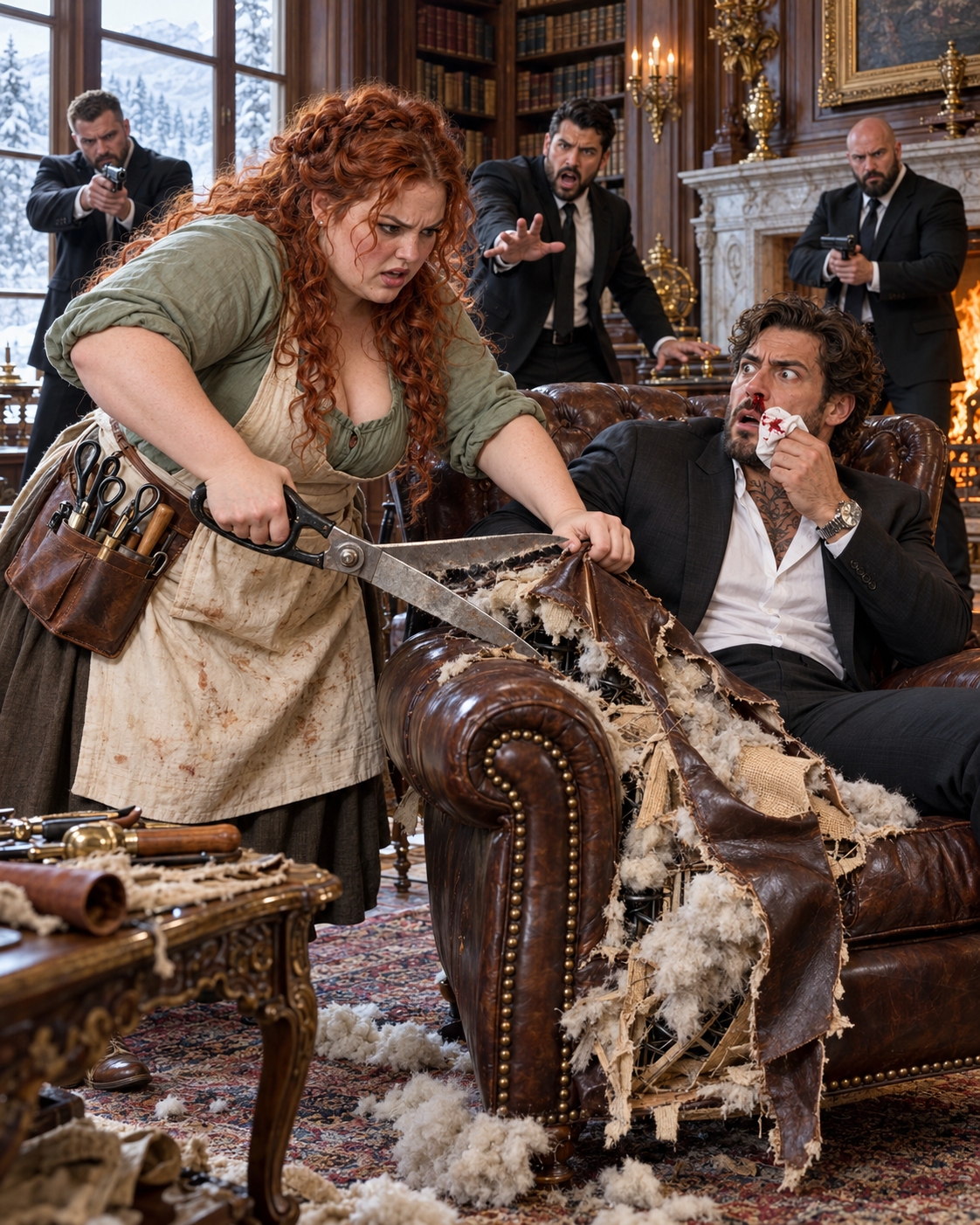
Simply hidden by people who believed their wealth could keep the past buried forever.
The investigation that followed uncovered a disturbing history.
Antonio Moretti had operated an elaborate financial scheme during Prohibition, using threats and fraudulent transactions to acquire properties from vulnerable families.
Eleanor had discovered the records while restoring furniture used to conceal important documents.
When she threatened to expose the operation, Antonio ordered her confined inside the hidden cellar chamber.
But Eleanor had managed to distribute copies of the evidence throughout the furniture before her disappearance.
Her final fate remained uncertain until investigators examined a sealed section of the original cellar wall.
There, they discovered a small compartment containing personal belongings, letters, and documents identifying the people who had been imprisoned or threatened.
Among the possessions was a silver thimble engraved with Eleanor’s initials.
Further records suggested that she had died in captivity during the winter of 1928.
Gina received the news quietly.
There was grief, but there was also relief.
At last, her family had an answer.
Eleanor had not simply vanished.
She had been silenced because she refused to surrender the truth.
The recovered ledgers also exposed decades of hidden financial wrongdoing.
Several properties were traced to families whose ancestors had lost their homes through fraudulent arrangements.
Marco’s attorneys began cooperating with investigators to review the claims.
The process was complicated, and no amount of money could undo the suffering that had passed from one generation to another.
But for the first time, the descendants of those families had evidence that their stories were real.
Whitmore eventually agreed to cooperate with prosecutors in exchange for consideration during sentencing.
He revealed how Leo had arranged the gradual poisoning scheme and manipulated medical reports to conceal Marco’s deteriorating condition.
Independent laboratory testing confirmed that the chair’s padding had been deliberately contaminated with a hazardous arsenic compound.
Marco received medical treatment, and his condition slowly improved.
Yet the most important change in his life had nothing to do with his health.
It came from the realization that the empire he had inherited was built partly upon suffering his family had concealed.
For decades, he had defended the Moretti name as though loyalty required protecting every secret.
Now he understood that loyalty without conscience was simply another form of imprisonment.
Several months later, Gina received an unexpected invitation to return to the mansion.
She considered refusing.
The estate held memories she would never entirely escape.
But the letter came with a photograph that changed her mind.
It showed the old cellar entrance.
The iron door had been removed.
In its place stood a newly restored oak doorway beneath a bronze inscription.
THE ELEANOR BELLAMY ARCHIVE.
Gina arrived on a crisp autumn afternoon, nearly one year after the night that changed everything.
The mansion looked different.
The security gates remained, but the atmosphere no longer carried the same oppressive silence.
Several rooms had been converted into offices for historical researchers and independent archivists.
The cellar, once hidden from the world, was now being transformed into a preservation center documenting the experiences of families affected by the Moretti operation.
Marco greeted Gina in the entrance hall.
He appeared older.
His hair had turned almost completely silver, and he walked with a cane.
But there was an unfamiliar peace in his expression.
“I wasn’t sure you’d come,” he said.
“Neither was I.”
He nodded.
“That’s fair.”
They walked toward the restored study.
The antique wingback chair stood near the window, no longer beside the fireplace.
Its contaminated materials had been removed by specialists and retained as evidence, while its original frame had been carefully preserved.
A small plaque stood beside it.
GINA BELLAMY’S DISCOVERY — THE CHAIR THAT REVEALED A HIDDEN HISTORY.
Gina smiled faintly.
“You didn’t need to put my name on it.”
Marco shook his head.
“For once, I wanted the right person to receive the credit.”
He handed her a folder.
Inside were legal documents establishing an independent restoration foundation in Eleanor Bellamy’s name.
The foundation would provide scholarships for young craftspeople, fund preservation training, and support research into forgotten American working-class histories.
Gina looked up.
“Why are you showing me this?”
“Because I want you to direct it.”
She stared at him.
“Marco, I repair furniture.”
“That’s what you said when I first hired you.”
“And it’s still true.”
He smiled.
“Perhaps. But you also saw something everyone else refused to see.”
Gina studied the documents.
The foundation would operate independently, with its own trustees and financial oversight.
It would not require her involvement in Marco’s businesses.
For the first time, she saw an opportunity to transform the tragedy into something lasting.
“I have one condition,” she said.
Marco raised an eyebrow.
“Only one?”
“No secrets. No hidden agreements. If this foundation carries Eleanor’s name, everything about its work must be transparent.”
Marco extended his hand.
“Agreed.”
Gina shook it.
A few weeks later, the Eleanor Bellamy Foundation officially opened in a restored brick workshop in Albany.
Its first scholarship went to a young woman who had dropped out of college to support her family and had taught herself furniture restoration using secondhand tools.
Gina recognized something of her younger self in the student.
During the opening ceremony, she stood before a small audience of craftspeople, historians, and descendants of the families whose stories had been recovered.
She carried Eleanor’s silver thimble in her pocket.
“I used to believe that restoring furniture meant making old things beautiful again,” Gina began.
“But I’ve learned that restoration isn’t always about covering the damage.”
She paused.
“Sometimes it’s about understanding where the damage came from, preserving what matters, and refusing to pretend the past never happened.”
Across the room, Marco listened without speaking.
For once, he was not the center of attention.
And that seemed to suit him.
Gina continued.
“My great-grandmother believed the truth was worth protecting, even when powerful people wanted it erased. She couldn’t finish what she started, but she left enough behind for someone else to continue.”
Her voice grew steadier.
“That’s what we hope this foundation will do. Give people the tools to preserve the things that matter, especially the stories that might otherwise disappear.”
The audience rose in applause.
Later that evening, after the guests had departed, Gina returned to the workshop alone.
On her workbench sat a small walnut chair that had belonged to her grandmother.
Its upholstery was faded, its joints were loose, and one armrest carried a tiny scratch made by Gina when she was seven years old.
For years, she had considered repairing that scratch.
Now she decided to leave it untouched.
Some marks were not flaws.
They were evidence that something had been lived in, loved, and carried through time.
Gina picked up Eleanor’s silver thimble and placed it beside her grandmother’s sewing scissors.
Three generations of women had touched those tools.
One had hidden the truth.
One had spent her life searching for it without knowing where to look.
And one had finally brought it into the light.
Outside, the autumn wind moved gently through the streets of Albany.
Traffic passed, church bells rang in the distance, and ordinary families continued their evening routines.
The world had not stopped because a century-old mystery had been solved.
But for Gina, everything had changed.
She understood now that courage rarely arrived looking extraordinary.
Sometimes it appeared in the form of a tired woman refusing to abandon a difficult task.
Sometimes it lived inside a grandmother who taught a child to repair what others had thrown away.
And sometimes it began with a simple question about something that didn’t belong inside an old chair.
Gina switched off the workshop lights and stepped outside.
Above the entrance, Eleanor’s name gleamed beneath the streetlamps.
For nearly a hundred years, that name had existed only in whispers, faded photographs, and the memories of a little girl who never understood why her mother failed to return home.
Now it belonged to something no locked cellar could contain.
A place of learning.
A place of honesty.
A place where forgotten stories could finally be heard.
And as Gina walked toward her car, she remembered the words Eleanor had written in her final letter.
A person’s worth is never measured by how much power they possess.
It is measured by what they choose to protect when protecting it becomes difficult.
Gina smiled through her tears.
Her great-grandmother had left behind no fortune, no mansion, and no empire.
But she had protected something that outlived the men who tried to silence her.
The truth.
And in the end, that was the inheritance worth keeping.
THE END.