“Five hundred dollars says I can make your wife dance with me before midnight.”
“Delete it,” Rose said.
Anel looked at her, surprised. “Rose, Cosmo deserves to be exposed.”
“Maybe he does. But I won’t let him turn our marriage into another one of his games.”
She took the phone from her husband’s hand and studied the message. It contained enough information to ruin Cosmo Ferrante’s reputation before the evening ended. His unpaid debts, his increasingly desperate financial situation, and the evidence that he had deliberately arranged her humiliation were all there.
One touch would send everything to the chairman of the Firefighters’ Ball.
Rose could almost imagine the satisfaction of watching Cosmo’s smug expression disappear.
But something about that satisfaction frightened her.
For four years, she had wanted one thing from this evening. Not revenge. Not attention. Not the admiration of a room full of strangers.
She had wanted her husband to choose her.
And now, standing beneath the terrace lights, she realized that humiliating another person would not heal the loneliness she had carried into this ballroom.
“I’m not protecting Cosmo,” she continued. “Tomorrow morning, my company will take the appropriate steps to recover every dollar he owes. But tonight, I refuse to make him the center of our lives.”
Anel slowly lowered his phone.
“Then what do you want?”
Rose looked through the glass doors.
Inside, the orchestra had resumed playing. Couples moved beneath the chandeliers, their silhouettes turning gracefully across the polished floor.
“I want you to understand something,” she said. “I didn’t marry you because you were powerful. I married you because you once made me feel like the safest woman in the world.”
Anel’s jaw tightened.
“And somewhere along the way,” Rose whispered, “I became the loneliest woman standing beside the most admired man in the room.”
He closed his eyes.
There were accusations he could have defended himself against. There were business disputes he could have resolved with a phone call, enemies he could have silenced with a single carefully chosen sentence.
But there was no defense against the truth in his wife’s voice.
“Rose—”
“Please don’t promise me another dance.”
He stopped.
“I don’t need another promise. I need to know whether the man I fell in love with is still somewhere inside the man everyone else admires.”
Before he could answer, the terrace doors opened.
Cosmo Ferrante stepped outside, carrying two glasses of champagne.
“Well,” he said pleasantly, “this is touching.”
Rose stiffened.
Cosmo glanced at Anel, then at the phone in his hand.
“Private negotiations? Should I be worried?”
“You should leave,” Anel replied.
Cosmo smiled wider.
“Careful, Brandt. People might think you’re threatening me.”
He offered Rose a glass.
She ignored it.
“Did you enjoy your little performance?” she asked.
“Performance?”
“The spotlight. The announcement. The bet.”
For the first time, Cosmo’s smile faltered.
Only slightly.
Then he laughed.
“Come on, Rose. It was harmless entertainment.”
“Humiliation is only harmless to the person who isn’t being humiliated.”
Cosmo’s eyes narrowed.
“Your husband has certainly taught you how to deliver a speech.”
“No,” Rose answered. “He taught me what silence costs.”
Anel turned toward her.
There was no bitterness in her voice now. Only certainty.
Cosmo set both glasses on the terrace railing.
“You know, Brandt, this is exactly why I admire you. You’ve built an empire, and somehow you still let a woman make your decisions.”
Anel took one step forward.
Rose touched his arm.
Not to restrain him.
To remind him that she was there.
Anel looked down at her hand, then back at Cosmo.
“My wife makes her own decisions,” he said evenly. “You should try respecting one.”
Cosmo gave a dismissive shrug.
“Fine. Keep your little fairy tale.”
He started toward the doors, then paused.
“By the way, Rose, you might want to check how much your husband really knows about your company.”
Rose frowned.
“What does that mean?”
Cosmo’s expression changed.
For one brief moment, he looked genuinely pleased.
“Ask him about the offer from Westbridge Holdings.”
Then he disappeared into the ballroom.
The terrace fell silent.
Rose turned slowly toward Anel.
“What offer?”
Anel did not answer immediately.
And that hesitation told her more than any explanation could have.
“Anel.”
He exhaled.
“Westbridge approached me six weeks ago.”
“About my company?”
“They wanted to acquire Calder Linen.”
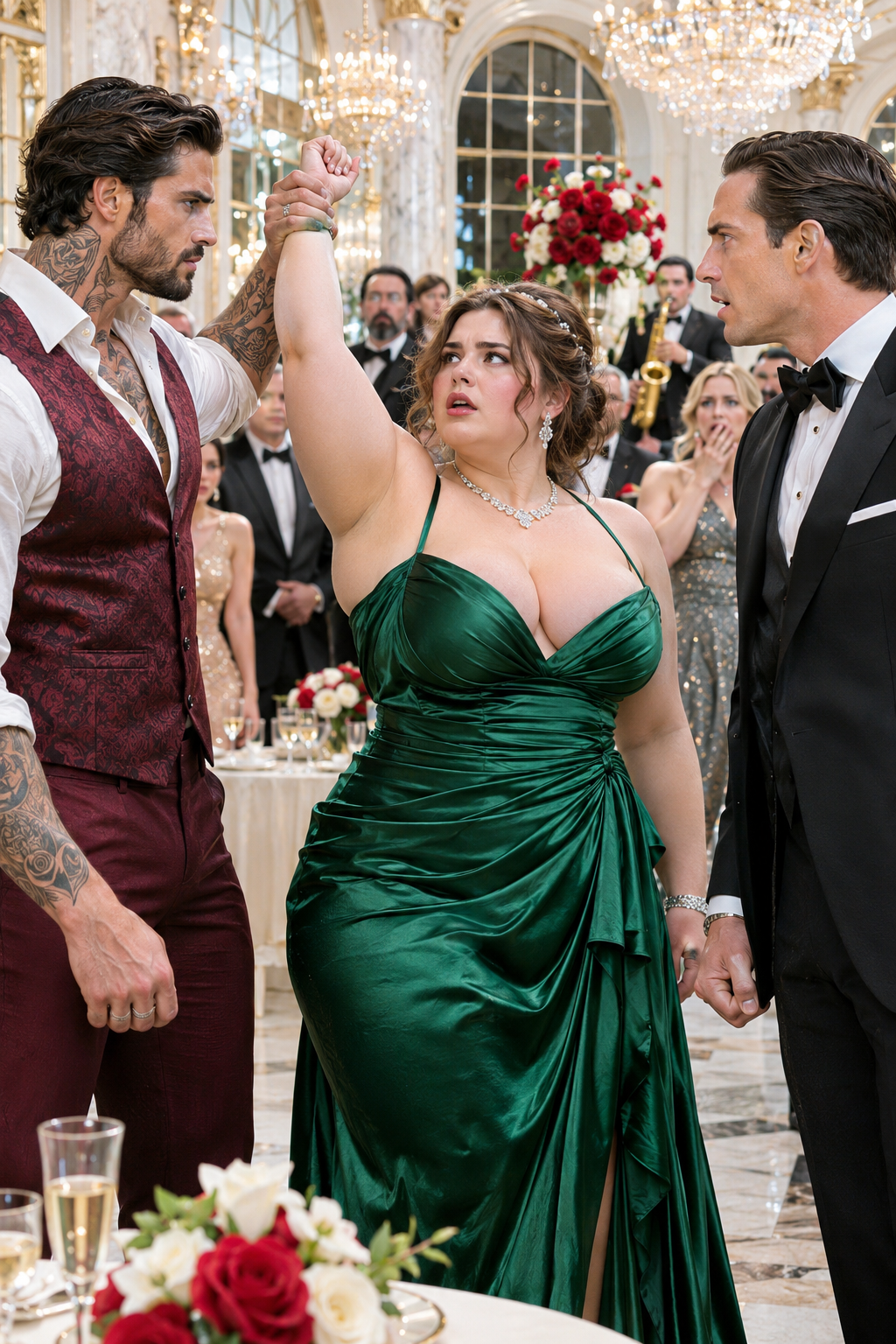
Rose stared at him.
Calder Linen was not simply a business. It was the company her father had built with two sewing machines, a delivery van, and a stubborn belief that honest work could change a family’s future.
After his death, Rose had inherited debts, outdated equipment, and twelve employees who depended on her.
She had spent seven years rebuilding it.
Now it supplied linens to hotels, restaurants, hospitals, and several major event venues across the city.
It was the one part of her life where nobody introduced her as Anel Brandt’s wife.
They introduced her as Rose Calder, the owner.
“And you didn’t tell me?”
“I knew you would refuse.”
“That’s not an answer.”
Anel looked away.
“Westbridge was prepared to pay almost three times the company’s current valuation.”
“Then why didn’t they approach me?”
“Because they believed I could convince you.”
Rose’s face went pale.
“And could you?”
“No.”
The answer came quickly.
But Rose no longer trusted quick answers.
“Did you speak to them again?”
Anel remained silent.
Her stomach dropped.
“How many times?”
“Three.”
Rose stepped backward.
“Three meetings?”
“I was trying to understand their intentions.”
“You were discussing the future of my company without me.”
“I never agreed to anything.”
“That isn’t the point!”
Her voice cracked sharply enough to make him flinch.
“You keep saying you want to protect me, but you never ask whether I need protecting. You decide what I should know. You decide what might hurt me. You decide which battles are worth fighting.”
She pressed a trembling hand against her chest.
“And then you wonder why I feel invisible.”
Anel had faced burning buildings and financial disasters without losing his composure.
But watching Rose struggle to breathe through her disappointment terrified him.
“There’s more,” he admitted.
Rose stared at him.
“Of course there is.”
“Westbridge is backed by Ferrante Capital.”
The name hung between them.
Cosmo.
Rose suddenly understood.
The unpaid invoices. The unusual interest in her company’s financial condition. The cruel performance on the dance floor.
Cosmo had not simply been entertaining himself.
He had been testing her.
Trying to determine whether she could be intimidated, whether Anel would intervene, and whether their marriage contained weaknesses he could exploit.
“Why would Cosmo want my company?” she asked.
Anel hesitated.
“Because Calder Linen has something he needs.”
“What?”
“A municipal service contract. The one your father negotiated before he died.”
Rose frowned.
The contract provided emergency linen supplies to temporary shelters during fires, floods, and other disasters. It had never been particularly profitable, but her father considered it the most important work the company performed.
“We’ve renewed that contract every year,” she said.
“Exactly. Westbridge is bidding on a much larger emergency housing project. Your supply network would give them an advantage.”
Rose looked toward the ballroom.
Beyond the glass, Cosmo was laughing with a group of businessmen.
For the first time that evening, she saw something different beneath his confidence.
Desperation.
“He doesn’t want my company,” she murmured. “He wants what my father built.”
Anel nodded.
“And he wants it before the city announces the new contracts next month.”
Rose was quiet for several seconds.
Then she straightened.
“I’m going back inside.”
“Rose, wait.”
She turned.
Anel’s expression was troubled.
“I should have told you.”
“Yes,” she said. “You should have.”
“I thought keeping the negotiations away from you would give you room to run your business without pressure.”
“You took away my chance to recognize the pressure myself.”
He swallowed.
“I know.”
Rose studied him.
It was the first time in years she had heard him admit he was wrong without immediately explaining why.
“Then don’t follow me to rescue me,” she said. “Walk beside me because you trust me.”
Anel nodded.
And together, they returned to the ballroom.
The atmosphere had changed.
Whispers traveled between tables. Several guests looked away when Rose passed, embarrassed by what they had witnessed earlier.
Others watched with undisguised curiosity.
At table fourteen, Rose found her purse and slipped the worn dance card inside.
She had barely sat down when a woman approached.
Margaret Vale, the sixty-eight-year-old chairwoman of the Firefighters’ Relief Foundation, was known for two things: her extraordinary generosity and her complete intolerance for dishonesty.
“Mrs. Brandt,” Margaret said quietly. “May I have a word?”
Rose rose immediately.
“Of course.”
Margaret glanced toward Anel.
“Privately, if you don’t mind.”
Anel stepped aside without objection.
Margaret guided Rose toward a small sitting room beyond the ballroom.
Once the door closed, her expression hardened.
“I owe you an apology.”
Rose blinked.
“For what?”
“The announcement. The spotlight. I approved a special dedication because Mr. Ferrante told our entertainment coordinator that your husband had arranged a surprise dance.”
Rose stared at her.
“He said Anel arranged it?”
Margaret nodded.
“He claimed your husband wanted to celebrate your anniversary.”
“Our anniversary was four months ago.”
Margaret’s lips tightened.
“I suspected something was wrong when I saw your face.”
Rose sat down slowly.
“Why are you telling me this?”
“Because I won’t allow this foundation to become a playground for wealthy men who mistake cruelty for entertainment.”
Margaret opened a leather folder.
“And because there’s something else you need to see.”
Inside was a printed sponsorship agreement.
Rose recognized Cosmo’s signature at the bottom.
The agreement promised a substantial donation to the foundation, payable within thirty days of the ball.
The amount made her sit straighter.
Two hundred and fifty thousand dollars.
“Has he paid it?” Rose asked.
“No.”
“Is the deadline tonight?”
“Midnight.”
Rose glanced at the clock.
Eleven seventeen.
Margaret folded her hands.
“Mr. Ferrante has been encouraging us to announce the donation publicly. He believes the publicity will improve his standing with the city.”
Rose understood immediately.
A charitable pledge could make Cosmo appear generous and trustworthy at precisely the moment his companies were seeking lucrative municipal contracts.
“And if he doesn’t pay?”
“We’ll have to adjust our funding plans. The money was intended to replace equipment for three volunteer fire stations.”
Rose felt a familiar ache.
Her father had been a volunteer firefighter before he started Calder Linen.
She remembered him coming home smelling of smoke, exhausted but smiling because everyone had survived.
“Those stations need that equipment,” she said.
“They do.”
Margaret studied her.
“I heard about the wager, Rose. And I know your company has business dealings with Ferrante’s restaurants.”
Rose looked up sharply.
“How much do you know?”
“Enough to suspect that his generosity may be more complicated than it appears.”
Rose thought carefully.
Then she asked, “Would you be willing to let me speak at the next fundraising announcement?”
Margaret raised an eyebrow.
“What are you planning?”
“Something my father would have approved of.”
Twenty minutes later, the orchestra finished a lively number.
Margaret stepped onto the stage.
“Ladies and gentlemen, before our final dance, I’d like to invite a remarkable local business owner to say a few words.”
Cosmo looked up from his table.
“Mrs. Rose Calder.”
A murmur moved through the crowd.
Anel stood beside Rose.
“Are you certain?”
“No,” she admitted.
Then she smiled faintly.
“But I’m going anyway.”
She walked toward the stage.
This time, there was no unwanted spotlight.
No outstretched hand.
No man trying to turn her into a prize.
She stepped behind the microphone and looked across the ballroom.
“Good evening. Most of you know me as Anel Brandt’s wife.”
A few people smiled.
“But before I became Mrs. Brandt, I was Rose Calder. And before I owned a linen company, I was the daughter of a man who believed that firefighters should never have to worry about what happens to the families they rescue.”
The room grew quiet.
“My father used to say that when a house catches fire, nobody asks whether the person inside is rich, poor, important, or forgotten. They simply open the door and carry them out.”
Several firefighters nodded.
Rose continued.
“Tonight, we’ve celebrated courage. We’ve raised money. We’ve applauded people who risk their lives for strangers.”
She paused.
“But courage isn’t always dramatic. Sometimes it’s telling the truth when silence would be easier. Sometimes it’s refusing to humiliate someone even when you have every opportunity.”
Cosmo stopped smiling.
“And sometimes,” Rose said, “it’s admitting that the people we love deserve to be treated as equals, not possessions.”
Across the room, Anel lowered his head.
Rose took a breath.
“Calder Linen will donate fifty thousand dollars toward the volunteer stations’ equipment fund. We’ll also provide emergency shelter linens at cost for the next two years.”
Applause erupted.
Margaret’s eyes filled with tears.
Rose waited until the room settled.
“And I hope every business owner here will consider supporting the foundation with commitments they can genuinely fulfill.”
Her eyes briefly met Cosmo’s.
She did not mention his name.
She didn’t need to.
When she stepped down, Margaret embraced her.
“Your father would be proud.”
Rose swallowed the sudden lump in her throat.
“Thank you.”
But the evening was not finished.
As she returned to table fourteen, Cosmo intercepted her.
His face was flushed.
“Very clever,” he said.
Rose stopped.
“Excuse me?”
“You think I don’t know what that little speech was about?”
“I spoke about the foundation.”
“You embarrassed me.”
Rose looked at him steadily.
“I never mentioned you.”
Cosmo leaned closer.
“You should have accepted Westbridge’s offer. Now I might have to make sure your company isn’t worth buying.”
Before Rose could respond, Anel appeared beside her.
But Rose lifted one hand.
She would handle this.
“Are you threatening my business, Mr. Ferrante?”
Cosmo glanced around.
Several guests were watching.
“I’m explaining how competitive markets work.”
“Then you won’t mind putting your concerns in writing.”
His expression hardened.
“You have no idea who you’re dealing with.”
“Actually,” Rose said, “I’m beginning to understand perfectly.”
She walked away.
Anel followed silently.
At their table, Rose took out her phone and sent a message to her accounts manager.
She requested a complete review of Ferrante’s outstanding invoices, copies of all correspondence, and a meeting with the company’s attorney the following morning.
Then she contacted her operations director and asked for an audit of Calder Linen’s emergency supply contracts.
No dramatic threats.
No public accusations.
Just careful, deliberate action.
Anel watched her.
“You’re extraordinary,” he said.
Rose gave a tired laugh.
“I’m exhausted.”
“Both can be true.”
She looked at him.
There was something different in his expression.
Not pride in having a beautiful wife.
Not satisfaction at seeing Cosmo defeated.
Respect.
And somehow, that mattered more.
At eleven fifty-two, Margaret returned to the microphone.
“Ladies and gentlemen, we have one final announcement.”
The ballroom quieted.
“Tonight’s fundraising total has exceeded our expectations, thanks to the generosity of our community.”
Applause followed.
Margaret continued.
“Unfortunately, one previously announced sponsorship remains unfulfilled. We will not count unreceived pledges as funds available to our firefighters.”
Cosmo’s face drained of color.
His two companions exchanged uncomfortable looks.
Margaret never named him.
But his own earlier boasting had made the truth obvious to several people in the room.
Rose watched him push back his chair.
For a moment, she expected him to approach her again.
Instead, he walked quickly toward the exit.
Then something unexpected happened.
One of the men who had laughed at the five-hundred-dollar wager stood and followed him.
The other remained seated, staring at the folded bill in his hand.
After a moment, he approached Rose.
“Mrs. Brandt?”
She looked up.
He appeared deeply uncomfortable.
“My name is Daniel Mercer. I was standing with Cosmo earlier.”
“I remember.”
He nodded miserably.
“I laughed. I shouldn’t have.”
Rose said nothing.
Daniel placed the folded five-hundred-dollar bill on the table.
“Cosmo gave me this before the announcement. He said I’d be holding the money when he won.”
Rose stared at it.
“I don’t want it.”
“I know. But I thought perhaps you could give it to the foundation.”
Rose considered him.
“Why don’t you give it yourself?”
Daniel looked confused.
“Because you deserve—”
“What I deserve is an apology. What the firefighters deserve is support. Those are two different things.”
Daniel’s cheeks reddened.
Then he nodded.
“You’re right. I’m sorry, Mrs. Brandt.”
He took the money and walked toward Margaret.
Rose watched him go.
Anel sat beside her.
“You could have made him feel much worse.”
“He already felt ashamed.”
“Cosmo wouldn’t have shown him the same kindness.”
“Then it’s fortunate I’m not Cosmo.”
Anel smiled.
It was a small smile, but Rose recognized it.
It belonged to the man who had once waited outside her father’s workshop in the rain because she was working late and he wanted to make sure she got home safely.
The man who had eaten terrible homemade soup without complaint.
The man who had proposed with a simple ring because, at the time, he could afford nothing more.
Somewhere beneath the expensive suits and carefully controlled expressions, that man still existed.
The orchestra began its final song.
A slow waltz.
Rose glanced at the clock.
Eleven fifty-six.
Four minutes until midnight.
Anel stood.
Her heart gave an involuntary leap.
But he didn’t immediately extend his hand.
Instead, he pulled out the chair beside her and sat again.
“Rose,” he said, “there’s something I need to tell you.”
She waited.
“When my mother was dying, she made me promise something.”
Rose’s expression softened.
“What?”
“That I would never let fear make my decisions.”
He looked down at his hands.
“I thought I kept that promise by becoming strong. By building a business nobody could threaten. By making myself impossible to hurt.”
His voice grew rough.
“But somewhere along the way, I confused being untouchable with being safe.”
Rose listened without interrupting.
“My mother loved dancing because she said it was the only time my father stopped worrying about the world. They could have a hundred problems, but for three minutes, they belonged only to each other.”
He swallowed.
“After she died, I couldn’t bear to hear the music they used to dance to. Then I convinced myself that never dancing again was a way of honoring her.”
He looked at Rose.
“But I think she’d be heartbroken to know I used her memory as an excuse to stop living.”
Rose’s eyes filled.
“Anel…”
“I don’t expect one dance to repair four years of neglect.”
He reached into his jacket.
“I also don’t expect you to forgive me tonight.”
He placed a small folded paper on the table.
Rose opened it.
It was a dance card.
Not hers.
His.
Twelve lines had been carefully drawn across the page.
On the first line, he had written:
Rose Calder — whenever she’s ready.
The remaining eleven lines were empty.
Rose pressed her lips together.
“Why twelve?”
“Because I owe you forty-eight dances,” he said. “And I thought twelve might be a reasonable place to begin.”
A tear slipped down her cheek.
Anel’s expression turned serious.
“But I don’t want to spend the rest of our marriage repaying a debt. I want to build something better. If you’ll let me.”
Rose studied the card.
Then she reached for her purse and removed her own.
The paper was worn where she had erased his name year after year.
She placed the two cards side by side.
“You can’t repair this with beautiful words,” she whispered.
“I know.”
“And I won’t pretend everything is fine tomorrow.”
“I don’t want you to.”
“We’ll need to talk about Westbridge. About your meetings. About why you thought it was acceptable to make decisions around my business.”
“Yes.”
“And if we need help learning how to talk to each other again, I want us to get it.”
Anel nodded.
“Whatever it takes.”
Rose looked into his eyes.
“No. Not whatever it takes. I need you to want this, too.”
His answer came without hesitation.
“I do.”
For a moment, neither spoke.
Then Rose picked up a pencil.
She wrote her husband’s name on the first line of her dance card.
This time, she pressed hard enough that the letters would not easily disappear.
Anel looked at the card, his eyes shining.
“May I have this dance?” he asked.
Rose smiled through her tears.
“Yes.”
He offered his hand.
And she took it.
When they stepped onto the dance floor, the room seemed to hold its breath.
Anel Brandt, the man who had refused every dance invitation for years, was finally dancing with his wife.
At first, he was awkward.
He missed a step.
Then another.
Rose laughed softly.
“You’re terrible at this.”
“I’ve been told I’m a fast learner.”
“By people who were afraid to disagree with you?”
“Probably.”
She laughed again.
The sound loosened something in his chest.
He placed one hand carefully at her waist, and she rested hers on his shoulder.
For the first time that evening, Anel stopped watching the room.
He wasn’t studying potential rivals.
He wasn’t calculating business opportunities.
He wasn’t wondering who might use his happiness against him.
He was looking at Rose.
Only Rose.
“You know,” she murmured, “I never needed you to be a perfect dancer.”
“I gathered that from your patience.”
“I just wanted you to want to dance with me.”
Anel pulled her a little closer.
“I’ve wanted to for years.”
“Then why didn’t you?”
He considered the question.
“Because wanting something means admitting you could lose it.”
Rose’s smile faded.
“And refusing to enjoy it doesn’t prevent you from losing it.”
He nodded slowly.
“No. It only guarantees you miss it while it’s here.”
The clock struck midnight.
Around them, guests began applauding.
Someone called Anel’s name.
Another person raised a champagne glass.
But he barely noticed.
He was too busy remembering the warmth of his wife’s hand.
And when the music ended, he didn’t immediately release her.
“Rose?”
“Yes?”
“Would you dance with me again?”
She smiled.
“Tomorrow?”
“Tomorrow. Next week. In our kitchen while dinner burns. Whenever you’ll have me.”
Rose laughed.
“Then you’d better learn how to lead without stepping on my feet.”
“I’ll practice.”
And for the first time in four years, she believed him.
The following morning, Rose arrived at Calder Linen before eight.
Her accounts manager had already prepared the Ferrante file.
The evidence was clear: overdue invoices, ignored payment requests, and several attempts to pressure the company into accepting unfavorable contract terms.
Rose instructed her attorney to begin formal recovery proceedings.
She also rejected Westbridge’s acquisition proposal in writing.
But she didn’t stop there.
Over the next several weeks, she strengthened the company’s financial safeguards, diversified its client base, and renegotiated key supplier agreements.
She made sure no single customer could ever threaten the livelihood of her employees again.
Cosmo’s troubles, meanwhile, grew worse.
His unpaid charitable pledge damaged his credibility, and his business partners began demanding greater transparency.
When his restaurant group eventually entered restructuring, Rose felt no pleasure.
She had already received the money her company was owed through a negotiated settlement.
She had no interest in watching him fall further.
One afternoon, Margaret called with surprising news.
Cosmo had anonymously donated a portion of the proceeds from selling one of his restaurants to the foundation.
Rose listened quietly.
“Do you think he’s changed?” Margaret asked.
“I don’t know,” Rose replied. “But perhaps he’s finally beginning to understand that generosity isn’t a performance.”
Margaret chuckled.
“Your father really did raise you well.”
Rose smiled.
“He tried.”
At home, changes came more slowly.
Anel still worked long hours.
He still struggled to express his feelings.
Sometimes he caught himself making plans without consulting Rose, and sometimes she had to remind him that marriage wasn’t a business arrangement requiring one executive decision-maker.
But now he listened.
They began having breakfast together every Sunday.
They took walks without phones.
They attended counseling sessions where Anel discovered that saying “I’m afraid” required more courage than saying “I’ve got everything under control.”
And on Thursday evenings, they took dance lessons.
Their instructor, a cheerful woman named Elena, had absolutely no patience for Anel’s commanding personality.
“Mr. Brandt,” she told him during their third lesson, “your wife is not a company you’re trying to acquire. Stop dragging her across the floor.”
Rose laughed so hard she nearly fell.
Anel looked offended for approximately three seconds.
Then he laughed too.
It became their favorite evening of the week.
Six months after the ball, Rose found Anel standing alone in their living room.
He was holding an old photograph.
In it, a young woman with kind eyes was dancing with a smiling man beneath a string of garden lights.
“Your parents?” Rose asked.
Anel nodded.
“My mother loved this picture.”
Rose stood beside him.
“She looks happy.”
“She was.”
He traced the edge of the photograph.
“I used to think remembering her meant holding on to everything I lost.”
Rose slipped her arm around his waist.
“And now?”
He looked at her.
“Now I think it means living the way she hoped I would.”
He set the photograph down.
Then he turned on the small radio beside the window.
A familiar waltz filled the room.
Rose smiled.
“Anel, dinner’s almost ready.”
“It can wait three minutes.”
He held out his hand.
She took it.
And there, in their ordinary living room, without chandeliers, expensive gowns, powerful guests, or anyone watching, they danced.
Not perfectly.
Not dramatically.
But happily.
A year later, the Firefighters’ Ball returned.
Rose entered the ballroom wearing a deep emerald dress.
Anel walked beside her, his hand resting gently against hers.
The room was filled with familiar faces.
Margaret greeted them warmly, and several firefighters thanked Rose for the emergency supplies her company had provided after a devastating winter storm.
When they reached table fourteen, Rose stopped.
A fresh dance card lay beside her plate.
Twelve empty lines.
She picked it up, smiling at the memory.
Anel noticed.
“Something wrong?”
“Not at all.”
He leaned closer.
“May I?”
She handed him the card.
He took out a pen and wrote his name on the first line.
Then he paused.
“Actually, no.”
Rose raised an eyebrow.
“What?”
He crossed out his name.
For one terrible second, her heart tightened with an old, familiar fear.
Then Anel wrote something else.
Whoever Rose chooses.
She stared at the words.
He handed the card back.
“I hope it’s me,” he said. “But I never want you to feel that your choices belong to anyone else.”
Rose looked up at him.
“You really have changed.”
“I’m still changing.”
She smiled.
“Good. So am I.”
The orchestra began playing.
Anel extended his hand.
“Mrs. Brandt, would you do me the honor?”
Rose pretended to consider.
“Well, Mr. Brandt, I hear you’ve become a rather good dancer.”
“I’ve had an exceptional teacher.”
She slipped her hand into his.
And together, they walked onto the dance floor.
This time, nobody was watching to see whether Anel would claim his wife.
Nobody was waiting for Rose to be embarrassed.
And nobody was making bets.
They were simply two people who had learned, painfully and beautifully, that love was not something to be possessed or protected behind walls.
It was something to be practiced.
In apologies.
In difficult conversations.
In ordinary mornings.
In the willingness to change.
And in the courage to let another person see your heart.
As Anel guided Rose into the first turn, she rested her head against his shoulder.
“Do you remember what you told me on the terrace last year?” she whispered.
“That I was afraid people would discover what mattered to me?”
“Yes.”
He kissed her forehead.
“I remember.”
“Are you still afraid?”
Anel looked around the ballroom.
At the businessmen.
At the cameras.
At the people who once knew him only as a man who never showed weakness.
Then he looked back at his wife.
“Sometimes,” he admitted.
Rose smiled.
“Me too.”
He held her a little closer.
“But I’m not letting fear make my decisions anymore.”
And as the music carried them across the floor, Rose realized something she wished she had understood years earlier.
The happiest marriages weren’t the ones where nobody ever made mistakes.
They were the ones where two people were willing to recognize those mistakes, take responsibility, and choose each other again—not out of obligation, but out of love.
She had spent four years writing Anel’s name on a dance card and erasing it before anyone could see.
Now, she no longer needed a dance card at all.
Because the greatest gift Anel had finally given her wasn’t a dance.
It was the freedom to be fully herself beside him.
And the greatest gift Rose had given Anel wasn’t forgiveness without conditions.
It was the opportunity to become a man who no longer confused control with love.
As the final notes faded, Anel whispered something against her hair.
“Thank you for not giving up on us.”
Rose lifted her head.
“I almost did.”
“I know.”
“And if things hadn’t changed, I would have.”
He nodded, accepting the truth without flinching.
Then she smiled.
“But I’m glad we both decided to do the work.”
Anel kissed her hand.
“So am I.”
Outside, midnight approached once more.
Inside, the music continued.
And at table fourteen, beneath the soft glow of the chandeliers, a dance card rested untouched.
Its twelve lines were still almost empty.
Not because Rose was waiting for someone to choose her.
But because she had finally learned that she never needed anyone’s permission to step onto the dance floor.
And Anel had finally learned that the strongest man in the room was not the one who could command everyone’s attention.
It was the one brave enough to give his attention, completely and freely, to the person he loved.
Because love is not proven by how fiercely we defend someone when the world is watching.
It is proven by how faithfully we cherish them when nobody is watching at all.
The following spring, Rose received a letter that brought her back to the beginning of everything.
It came from a young woman named Emily, whose husband had recently joined the fire department.
Emily wrote that she had attended the previous Firefighters’ Ball and watched Rose and Anel dance together. She had been married for only two years, but already she felt herself disappearing behind her husband’s demanding career.
“I thought being a good wife meant never complaining,” Emily wrote. “But when I saw the way your husband looked at you, I realized I wanted more than a marriage that simply survived. I wanted one that felt alive.”
Rose read the letter twice.
Then she showed it to Anel.
He sat quietly for a moment before speaking.
“Do you think we should invite them to dinner?”
Rose smiled.
“I think that’s a wonderful idea.”
Two weeks later, Emily and her husband, Thomas, arrived at the Brandt home.
At first, Thomas seemed uncomfortable. He spoke proudly about his work but struggled whenever Emily mentioned feeling lonely.
Anel recognized the expression immediately.
It was the same guarded look he had worn for years.
After dinner, the two men stepped into the garden.
“Can I give you some advice?” Anel asked.
Thomas nodded.
“Don’t make the mistake of believing that providing for your wife is the same as being present for her.”
Thomas looked down.
“I work hard because I love her.”
“I know. But she needs to experience that love, not just understand why you’re absent.”
Inside, Rose and Emily were talking over tea.
“Did you ever think about leaving?” Emily asked.
Rose considered her answer carefully.
“Yes.”
Emily looked startled.
“Even though you loved him?”
“Especially because I loved him. It hurt to keep reaching for someone who never seemed to reach back.”
“What made you stay?”
Rose glanced through the window.
Anel was listening intently as Thomas spoke.
“Not a grand gesture,” she answered. “It was seeing him take responsibility for what he’d done, then watching him change his behavior when nobody was applauding.”
Emily nodded slowly.
“And what if Thomas doesn’t change?”
Rose took her hand.
“Then you still deserve a life where your feelings matter. Loving someone doesn’t mean abandoning yourself.”
Later that evening, after their guests had gone, Anel found Rose standing beside the living room window.
“Do you think we helped them?” he asked.
“Maybe. But they’ll have to find their own way.”
Anel slipped his arms around her.
“You know what frightens me now?”
Rose turned.
“What?”
“That I might forget how close I came to losing you.”
She touched his cheek.
“Then don’t forget. Just don’t spend your life being afraid of it.”
He smiled.
“Another lesson from my very wise wife.”
“An expensive one,” she teased.
“Worth every penny.”
A familiar melody drifted from the radio.
Anel extended his hand.
“One dance?”
Rose glanced toward the kitchen, where their dishes still waited in the sink.
Then she looked at the man standing before her.
“Yes,” she said. “But afterward, you’re washing the dishes.”
Anel laughed.
“Agreed.”
They danced beneath the warm light of their living room, moving together with the easy confidence of two people who no longer needed to pretend they were perfect.
And Rose understood that their greatest victory had never been defeating Cosmo, recovering the money, or proving anything to the people at the ball.
It was discovering that a marriage could become stronger when both people stopped defending their mistakes and started learning from them.
Years earlier, she had stood alone beneath a spotlight, surrounded by strangers who expected her to accept humiliation with a smile.
That night, she had chosen her dignity.
Anel had chosen to confront his fear.
And together, they had chosen to build a different future.
Now there were no spotlights, no wagers, and no audience.
Only a quiet home, a familiar song, and two people who understood the value of what they had almost lost.
Rose rested her head against Anel’s chest and listened to his heartbeat.
For the first time in a long time, she wasn’t wondering whether he would choose her tomorrow.
She knew that tomorrow would bring another opportunity for both of them to choose each other.
And that was enough.
Because lasting love is not a promise that two people will never hurt each other. It is the daily decision to listen, to grow, to repair what has been damaged, and to never take a willing heart for granted.
And sometimes, the most beautiful love story begins not when two people fall in love, but when they finally learn how to love each other well.
The End.