At the Helena courthouse, I watched a woman being dragged away while a wealthy man called her a liar, never knowing she carried proof that could destroy him.
“We know what happened to your brother, Ethan.”
I lowered my rifle for one terrible second.
Margaret grabbed my arm.
“Don’t listen to them.”
But I already knew the truth was standing on the other side of that door, and somehow, Margaret’s father’s stolen ranch was connected to the reason I had disappeared twelve years ago.
The cabin fell silent.
Even the wind seemed to hold its breath.
Then the man outside knocked once.
Not hard.
Not impatient.
Almost politely.
“Ethan,” he called again. “You have five seconds to put the rifle down.”
I looked at Margaret.
She was staring at me now, confusion replacing fear.
“You know them.”
“I know the voice.”
“Who is he?”
I didn’t answer.
Because suddenly I was twelve years younger, standing in a courthouse hallway in Helena, Montana, with blood on my hands and my younger brother Daniel lying unconscious behind a locked door.
I remembered the smell of smoke.
The shattered window.
The sound of someone screaming my name.
And Charles Whitmore standing at the end of the hallway in an expensive black coat, watching me as if he had already won.
I had spent twelve years trying to forget that face.
I couldn’t.
I raised the rifle again.
“How many?”
A pause.
“Three.”
“Tell the other two to step away from the windows.”
Silence.
Then boots moved through the snow.
I counted them.
One.
Two.
Three.
I glanced at Margaret.
“There’s a back door.”
She nodded.
“What about you?”
“I’m going to make them believe we’re still here.”
Her eyes hardened.
“No.”
“Margaret—”
“No. I’m done running while other people decide whether I live.”
There was something in her voice that stopped me.
She opened the leather folder and removed a small envelope.
“I didn’t show you everything.”
My eyes narrowed.
“What is that?”
“My father mailed it to me three days before he died.”
“Why didn’t you tell me?”
“Because I didn’t know whether I could trust you.”
The honesty hurt more than the accusation.
She opened the envelope.
Inside was a photograph.
A younger Charles Whitmore stood beside Margaret’s father, Samuel Hayes.
But that wasn’t what made my blood turn cold.
Standing behind them was Daniel.
My brother.
Alive.
Smiling.
And wearing the uniform of the Helena County Sheriff’s Office.
I stared at the photograph until the edges blurred.
“Where did you get this?”
“My father sent it.”
“When?”
“Three days before he died.”
I took the photograph from her.
On the back, written in Samuel Hayes’s handwriting, were six words.
HE KNOWS WHAT THEY DID TO DANIEL.
A gunshot shattered the window.
Margaret screamed.
I dragged her to the floor as glass exploded across the room.
“Back door. Now.”
This time she didn’t argue.
We crawled through the narrow opening behind the stove and disappeared into the trees.
The storm swallowed us within seconds.
Behind us, the ranger station erupted with gunfire.
I didn’t look back.
We ran downhill through waist-deep snow until Margaret stumbled.
I caught her.
“Keep moving.”
“My ankle.”
“Can you walk?”
She tried.
Pain crossed her face.
“Yes.”
“Then walk.”
We pushed through the forest until the shooting faded.
After nearly an hour, we reached a frozen creek.
I stopped beneath a cluster of pine trees.
Margaret leaned against a trunk, breathing hard.
“Who was your brother?”
“My only family.”
She waited.
I finally gave her the truth I had carried for twelve years.
“Daniel was twenty-six when he died.”
Her eyes widened.
“He was a deputy in Helena. Honest. Stubborn. The kind of man who believed rules mattered even when everyone around him stopped believing.”
I looked at the photograph again.
“One night, he called me. He said he’d found evidence that someone was buying ranches using forged signatures.”
“Whitmore.”
“Yes.”
I swallowed.
“He said there was a second man helping him. Someone inside the courthouse.”
“Your brother knew who it was?”
“I think he did.”
“What happened?”
“Daniel was supposed to meet me the next morning.”
I stared into the darkness.
“He never came.”
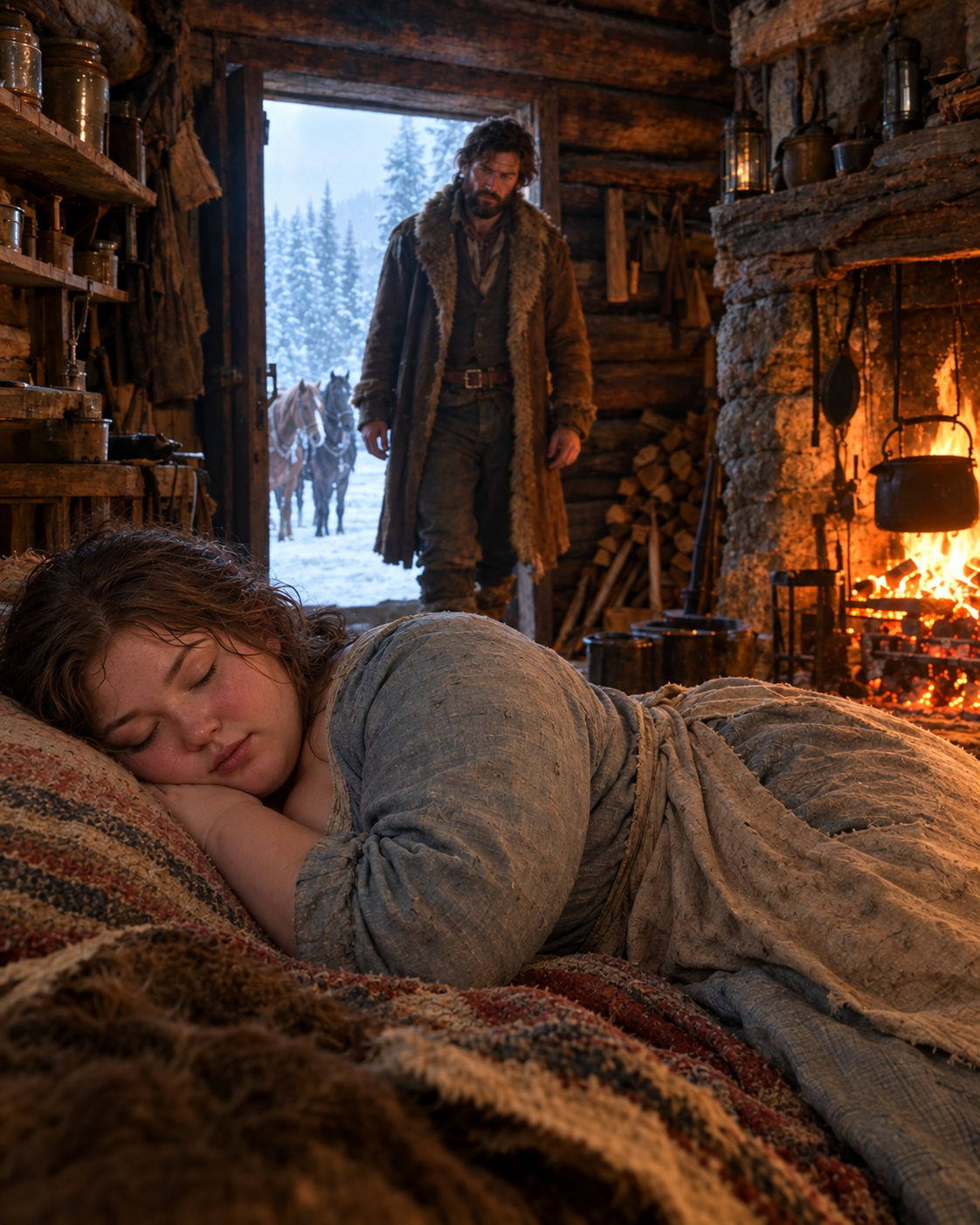
I told her about the courthouse fire.
About the evidence room burning.
About Daniel being found unconscious near the back entrance.
About the official report claiming he had been drinking.
About the missing files.
And finally, about the part I had never told anyone.
“I found him before the ambulance arrived.”
Margaret’s expression softened.
“He was still breathing.”
I nodded.
“He grabbed my shirt and said one thing.”
“What?”
“‘Don’t trust the judge.'”
Margaret went completely still.
“Judge?”
“Judge Harold Vance.”
She looked down at the folder.
“My father wrote his name once.”
I stared at her.
Neither of us spoke.
Then Margaret whispered, “The man helping Whitmore prepare the papers wasn’t a lawyer.”
My stomach tightened.
“He was a judge.”
She nodded.
“And Daniel found out.”
For twelve years, I had believed my brother died because he had discovered something dangerous.
Now I understood.
He had died because he had discovered something powerful.
And Margaret’s father had died for the same reason.
The two deaths were not separate.
They were part of the same crime.
We reached the main road just before sunrise.
An old logging truck sat abandoned near a bend.
Its engine was dead, but the cab was intact.
I forced the door open.
Inside, beneath the seat, I found an emergency radio.
I turned it on.
Static filled the cab.
Then a voice broke through.
“All units, search the western ridge. Suspects are believed to be traveling toward Helena.”
Margaret looked at me.
“Suspects.”
“They’re telling the story already.”
“What story?”
“That we’re criminals.”
She closed her eyes.
“Of course.”
I stared at the radio.
“That’s how they win.”
She looked at me.
“How?”
“They don’t have to prove you’re guilty.”
I turned the radio off.
“They just have to make everyone afraid to believe you’re innocent.”
We walked until noon.
Then we found an old gas station that had been closed for years.
Behind it was a telephone booth.
Miraculously, the line still worked.
I called the only person in Helena I trusted.
Or at least the only person I hoped I could trust.
Her name was Ruth Mercer.
She had been a court reporter twelve years earlier.
She had been in the courthouse the night Daniel died.
When she answered, neither of us spoke for several seconds.
Then she whispered my name.
“Ethan?”
“Yes.”
Silence.
“You’re alive.”
“So are you.”
Her breathing changed.
“Where are you?”
“On the old road near Black Pine.”
“You need to get away from there.”
“Ruth, listen to me. Margaret Hayes is with me.”
Another silence.
Then she said something that made my skin crawl.
“I’ve been waiting twelve years for someone to say that name.”
“Why?”
“Because your brother left something with me.”
I closed my eyes.
“What?”
“A recording.”
Margaret stepped closer.
“Of what?”
Ruth hesitated.
“Of Judge Vance and Charles Whitmore discussing the land contracts.”
My heart began pounding.
“Where is it?”
“In the courthouse.”
“Why?”
“Because after Daniel died, I was threatened. I hid the recording inside an old case file.”
“Which one?”
“The Hayes property case.”
I looked at Margaret.
“Can you get it?”
“No.”
“Why?”
“Because Judge Vance is still there.”
The line went dead.
Margaret stared at me.
“She hung up.”
“No.”
I looked toward the road.
“Someone made her.”
We had no choice.
We needed Helena.
But we needed more than the courthouse.
We needed proof that could survive whatever happened to us.
That night, we reached a small farmhouse belonging to an elderly man named Walter Pike.
He didn’t ask many questions.
He simply looked at Margaret’s injured ankle, then at my rifle, and opened his door.
“Come in.”
Inside, the house smelled like wood smoke and old books.
Walter gave us food and a place to sleep.
Before dawn, he entered the kitchen carrying a newspaper.
He dropped it on the table.
Margaret picked it up.
Her photograph was on the front page.
UNDER SUSPICION IN HAYES RANCH FRAUD CASE.
Beneath it was a statement from Charles Whitmore.
“Margaret Hayes has stolen confidential documents and attacked several of my employees.”
Margaret’s hands began to shake.
“I never attacked anyone.”
“I know,” I said.
She looked at me.
“What if he’s already convinced everyone?”
“Then we don’t ask everyone to believe us.”
I took the newspaper.
“We give them something they can’t explain away.”
Walter watched us from the doorway.
“You planning to walk into Helena?”
“Yes.”
“That’s a bad idea.”
“I know.”
He studied me.
Then he reached into a cabinet and removed an old sheriff’s badge.
He placed it on the table.
“My son was a deputy once.”
I looked at him.
“He was one of the men who signed the report about your brother.”
I froze.
Walter sighed.
“He regretted it until the day he died.”
“Why?”
“Because he knew the report was false.”
Margaret leaned forward.
“What happened to him?”
“Whitmore bought his silence.”
Walter’s eyes filled with shame.
“My son took the money. Then he spent the rest of his life trying to undo what he had done.”
He pushed the badge toward me.
“Take it.”
I didn’t understand.
“Why?”
“Because sometimes people need to remember who they are before they can tell the truth.”
We reached Helena two days later.
The courthouse stood exactly as I remembered it.
Stone walls.
Tall windows.
The same steps where Daniel had once waited for me.
I stood across the street for nearly a minute.
Margaret touched my shoulder.
“You don’t have to do this.”
“I do.”
We entered through the front doors.
The guards recognized Margaret immediately.
Hands reached for weapons.
I raised my voice.
“Don’t touch her.”
Every head in the lobby turned.
Charles Whitmore appeared at the end of the hall.
He looked older.
But his smile was the same.
Cold.
Confident.
“You should have stayed in the mountains, Ethan.”
Margaret stepped beside me.
“You killed my father.”
Whitmore laughed softly.
“Your father destroyed himself.”
“Then why did he write everything down?”
The smile disappeared.
I pulled the leather folder from my coat.
“Contracts.”
I placed them on the reception desk.
“Bank transfers.”
Another stack.
“Letters.”
Another.
“Photographs.”
And finally, the photograph of Whitmore standing beside Daniel.
The courthouse went silent.
Whitmore stared at it.
Then he looked at me.
“That proves nothing.”
“No.”
I smiled for the first time.
“But this does.”
A small recorder sat on the desk.
I pressed play.
The voice of Charles Whitmore filled the lobby.
“If Hayes refuses to sign, we’ll make it look like he did.”
Then another voice.
Judge Harold Vance.
“Once the papers are filed, ownership becomes a matter of record.”
People began whispering.
Whitmore lunged for the recorder.
I stepped in front of him.
He shoved me.
I hit the floor.
Margaret screamed.
Then the courthouse doors opened.
Ruth Mercer walked inside.
She was carrying a box.
She looked terrified.
But she kept walking.
“I have the originals.”
Judge Vance appeared behind her.
“Ruth, put that down.”
She didn’t.
She placed the box on the clerk’s desk.
Inside were old case files.
Photographs.
Payment records.
And a tape marked with Daniel’s name.
Vance’s face changed.
For the first time, I saw fear in his eyes.
Ruth looked at me.
“Your brother recorded everything.”
She handed me the tape.
“He knew they were coming for him.”
I looked at Margaret.
She was crying.
Not because she was weak.
Because after all these years, someone had finally brought the truth into the light.
The courthouse doors opened again.
This time, federal investigators entered.
Ruth had contacted them before we arrived.
She had not trusted the local authorities.
Neither had I.
Whitmore was arrested.
Judge Vance was arrested beside him.
The investigation lasted nearly a year.
Bank records were traced.
Forged signatures were examined.
Land transfers were overturned.
Families who had lost their ranches came forward one by one.
Some had been silent for decades.
Others had believed they were alone.
They weren’t.
Margaret eventually returned to her father’s ranch.
The court restored the property to her.
She could have sold it.
Instead, she kept it.
She turned the old ranch house into a legal aid center for families facing land fraud and intimidation.
She called it the Samuel Hayes Center.
I went back to my cabin in the mountains.
For a while, I thought that was where the story ended.
But three months later, Margaret came to visit.
She stood on my porch holding a coffee cup.
My coffee cup.
The handle was still held together by the thin strip of wire and resin she had used that first night.
“You kept it,” she said.
“I tried throwing it away.”
“And?”
“I couldn’t.”
She smiled.
“Broken things can still be useful.”
I looked toward the mountains.
“For twelve years, I thought disappearing was the same thing as surviving.”
Margaret said nothing.
“I thought if I stayed alone long enough, the past couldn’t reach me.”
“And now?”
I looked at her.
“Now I think the past doesn’t disappear.”
The wind moved through the pines.
“It waits until you’re strong enough to face it.”
Margaret sat beside me.
Neither of us spoke for a long time.
Then she handed me a letter.
It was from Daniel.
The original.
The one he had written the night before he died.
I had never seen it.
My hands trembled as I opened it.
Ethan,
If you’re reading this, something has gone wrong.
Don’t spend your life trying to avenge me.
Find the truth.
Then let the truth do what anger never can.
I folded the letter carefully.
For the first time in twelve years, I cried for my brother.
Not because I had lost him.
Because I finally understood him.
Daniel had never wanted me to punish the people who killed him.
He wanted me to make sure they could never do it to someone else.
That difference changed everything.
Years later, people would sometimes ask why I helped Margaret.
They expected a complicated answer.
They expected revenge.
They expected some heroic reason.
The truth was much simpler.
She came to my door during a storm.
She was afraid.
So was I.
She carried evidence in a leather folder.
I carried twelve years of guilt.
Neither of us knew that surviving the night would require us to confront everything we had spent our lives running from.
Margaret once told me that broken things could still be useful.
I finally understood what she meant.
A broken cup can still hold coffee.
A broken family can still hold love.
A broken man can still stand up.
And a broken truth can still be repaired, if someone is brave enough to gather every piece.
The mountains are quiet again now.
Sometimes, when the wind becomes loud against the cabin walls, I remember the night Margaret first knocked on my door.
For a moment, I can still see her standing there beneath the snow.
A frightened woman with blood on her sleeve and a leather folder pressed against her heart.
Back then, I thought I was the one saving her.
I was wrong.
She saved me too.
She taught me that courage isn’t the absence of fear.
It is the moment you decide fear no longer gets to choose your life.
And sometimes, the person who arrives at your door asking for shelter isn’t there because they need somewhere to hide.
Sometimes, they arrive carrying the truth that will finally lead you home.
THE END.