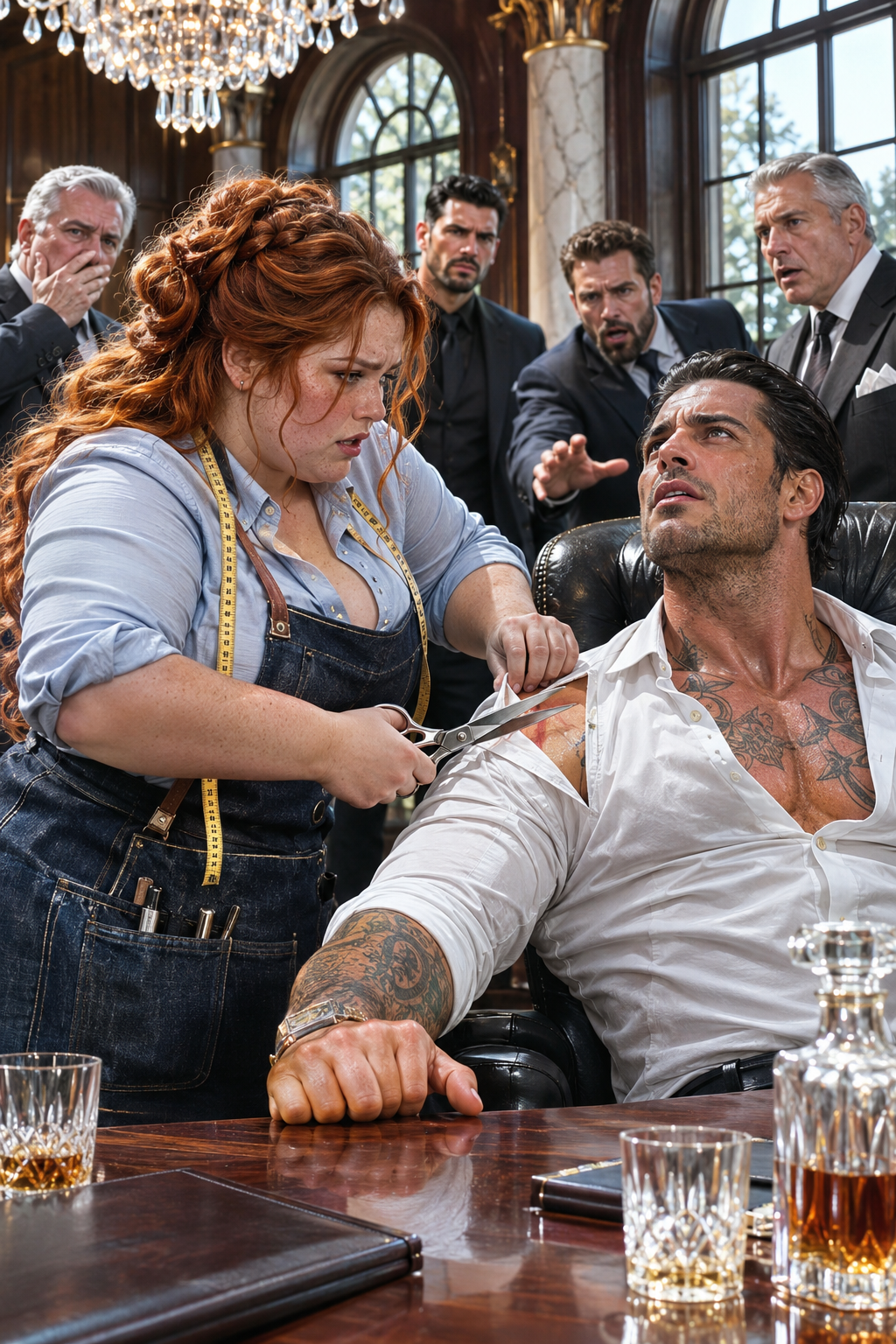
Agatha was pressing a $900 custom shirt when she discovered something hidden inside the collar that was never supposed to be there.
Still, Agatha remembered his expression when she’d first shown him the collar.
He hadn’t looked confused.
He’d looked worried.
She reached for her phone.
Then she stopped.
Accusing Gaspar’s head of security without evidence could put both of them in danger. But ignoring the photograph would mean repeating the very mistake that had nearly cost Gaspar his life.
She made a copy, placed the original in a sealed envelope, and called Gaspar directly.
“I found something you need to see,” she said.
“Another shirt?”
“No. A photograph.”
There was a brief silence.
“Is it important?”
“I don’t know yet. But I think we should find out.”
Gaspar arrived at her shop the following morning without Remo.
He examined the photograph and recognized the SUV immediately.
His face tightened.
“Remo was assigned to another location that day.”
Agatha said nothing.
Gaspar studied the image again.
Then he carefully placed it inside his coat.
“You’ve already saved my life once,” he said. “I won’t ask you to put yourself in danger again.”
“I’m not trying to be brave,” Agatha replied. “I just don’t want you to trust the wrong person twice.”
Gaspar nodded.
He promised to have an independent investigator verify the photograph, the vehicle’s movements, and Remo’s possible connection to Osvaldo.
He made no accusations that morning.
And Agatha never learned what the investigation would ultimately reveal.
But she knew one thing had changed.
Gaspar Valdora, a man who had once believed loyalty could be purchased and guaranteed, had finally begun to understand the difference between obedience and trust.
And Agatha, who had spent years believing her work was ordinary and unimportant, understood something about herself, too.
Her careful eyes, her experience, and her refusal to ignore a small detail had saved a life.
She hadn’t needed power, money, or a famous name.
She had simply paid attention when everyone else looked away.
Sometimes the most valuable thing a person can offer isn’t loyalty promised in grand speeches.
It’s the courage to tell the truth when silence would be easier.
And sometimes, the smallest loose thread is the one that reveals how much has been hidden.
Gaspar Valdora had survived an assassination attempt hidden inside the collars of his expensive shirts, but the photograph Agatha discovered suggested that the man responsible for protecting him might have known about the plot all along.
And this time, the danger was far more complicated than a dishonest butler.
For seventeen years, Osvaldo had been part of Gaspar’s household. His betrayal had been painful, but at least the evidence against him was clear. Remo was different. He controlled the security cameras, selected the drivers, approved visitors, and knew almost every movement Gaspar made.
If Remo had helped arrange the attempted assassination, he also knew exactly how to make evidence disappear.
Agatha understood that the moment Gaspar left her dry-cleaning shop with the photograph tucked inside his coat.
She watched his black sedan disappear into Queens traffic, then locked the front door despite having another hour before closing.
Something about Remo’s reaction to the altered collar had bothered her from the beginning.
He hadn’t asked whether Gaspar was in danger.
He had asked where she found the metal.
At the time, she’d assumed he was simply doing his job.
Now she wasn’t so certain.
The following Monday, Gaspar called her from an unfamiliar number.
“Are you alone?”
Agatha glanced toward her assistant, who was sorting winter coats behind the counter.
“Not entirely.”
“Then listen carefully. Remo has been placed on administrative leave. I’ve hired an independent investigator.”
“Did you tell him about the photograph?”
“No.”
“Good.”
Gaspar hesitated.
“Agatha, has anyone visited your shop asking about me?”
She almost said no.
Then she remembered a man who had come in Saturday afternoon carrying a perfectly clean navy suit.
He’d asked whether she personally handled all of Gaspar’s clothing.
When she explained that customer information was confidential, he’d smiled and left without collecting a receipt.
“Someone came in,” she admitted.
Gaspar’s voice changed.
“Describe him.”
She did.
There was a long silence.
“Lock your doors tonight. I’ll send someone I trust.”
“Gaspar, I don’t want armed men standing outside my business.”
“Neither do I. But I don’t want you becoming another casualty of my mistakes.”
Agatha looked at the framed photograph of her husband beside the register.
Four years earlier, she’d spent every dollar she had trying to save him from an illness neither of them could control.
She had promised herself that afterward, she would live quietly.
Instead, she’d stumbled into a dangerous struggle between powerful men.
“I’ll be careful,” she said.
But that evening, she did something Gaspar hadn’t expected.
She went through every delivery record from the previous three months.
Agatha had always been meticulous about paperwork. Her father used to say that a good tailor could recognize a garment by its stitching, but a good business owner could recognize trouble by its receipts.
She found Osvaldo’s signatures on nearly every delivery.
Then she noticed something strange.
On four occasions, the shirts had been collected by a different driver.
The name written on the collection forms was Daniel Mercer.
Agatha remembered him as a quiet young man who always wore leather gloves, even in warm weather.
She photographed the records and sent them to Gaspar.
His response arrived seven minutes later.
“Daniel Mercer doesn’t work for me.”
Agatha stared at the message.
Then she checked the delivery forms again.
Each contained the same authorization stamp used by Gaspar’s security department.
Someone inside the mansion had approved a stranger to collect his clothing.
And that person had access to Remo’s office.
By Wednesday morning, Gaspar’s investigator had uncovered something even more disturbing.
The black SUV in the photograph had been assigned to Remo on the day Osvaldo visited the tailoring supplier.
Security records placed Remo at a warehouse in Brooklyn, but the vehicle’s electronic toll history showed it entering Manhattan shortly before the photograph was taken.
Someone had altered the assignment log.
Gaspar called Agatha that afternoon.
“I need you to come to the mansion.”
“Why?”
“Because the investigator found something you should see.”
Agatha hesitated.
“Is Remo there?”
“No. And he won’t be.”
She closed the shop early and took a taxi to the estate.
The mansion seemed different without Osvaldo greeting visitors at the entrance.
The hallways were quieter. Several familiar employees were gone, replaced by people Agatha didn’t recognize.
Gaspar met her in his study.
He looked healthier than he had during their first meeting, although dark circles remained beneath his eyes.
A woman in a gray suit stood beside his desk.
“This is Evelyn Price,” Gaspar said. “Former federal investigator. She handles private investigations now.”
Evelyn shook Agatha’s hand.
“I’ve heard quite a bit about your attention to detail.”
Agatha gave an uncomfortable smile.
“I mostly notice when people damage expensive clothes.”
“That may be exactly what we need.”
Evelyn spread several photographs across the desk.
One showed Osvaldo entering the tailoring supplier.
Another showed Remo’s SUV parked nearby.
The third showed a man leaving the building twenty minutes later.
Agatha recognized him immediately.
“That’s the customer who came into my shop Saturday.”
Evelyn nodded.
“Daniel Mercer.”
Agatha felt her stomach tighten.
“So he wasn’t just a driver?”
“No. He appears to have worked as an intermediary between Osvaldo and the person financing the operation.”
Gaspar leaned against his desk.
“The rival associate Osvaldo named has denied everything. His attorneys claim Osvaldo invented the accusation to protect himself.”
“But the payments?” Agatha asked.
“Passed through several businesses. Investigators are still tracing them.”
Evelyn pointed to the photograph.
“We believe Mercer coordinated the clothing alterations. What we don’t know is whether Remo was helping him or watching him.”
Agatha frowned.
“Watching him?”
“Remo may have discovered part of the conspiracy and conducted his own investigation without telling Gaspar.”
“Why would he hide that?”
“That’s what concerns me.”
Gaspar folded his arms.
“Remo has protected me for twelve years. Twice he’s taken serious risks to keep me alive.”
Agatha looked at him.
“So did Osvaldo, probably. Until someone offered him enough money.”
The words landed harder than she intended.
Gaspar turned toward the window.
For a moment, she regretted speaking so directly.
Then he said, “You’re right.”
Evelyn gathered the photographs.
“There’s one more thing.”
She opened a folder containing a copy of Remo’s financial records.
Three months earlier, his mother had been admitted to a private rehabilitation facility after a severe stroke.
The bills were enormous.
Two weeks after her admission, an anonymous company began paying them.
Gaspar stared at the documents.
“I offered to cover her treatment.”
“He declined,” Evelyn replied.
“Because he said his family had savings.”
Evelyn slid another page across the desk.
“The company paying those bills is connected to the same financial network that funded Osvaldo.”
Agatha felt cold.
The situation was beginning to resemble the butler’s confession.
A family member in trouble.
An offer of money.
A trusted employee suddenly vulnerable to manipulation.
Gaspar closed the folder.
“Bring Remo in.”
Evelyn shook her head.
“Not yet.”
“Why?”
“Because if he’s involved, confronting him without knowing what he did could destroy the evidence. And if he’s innocent, we risk warning the actual conspirators.”
Gaspar’s jaw tightened.
“I’ve spent my life surrounded by men who swear loyalty while calculating its price.”
Agatha spoke quietly.
“Then stop asking people to swear. Start asking them to explain.”
Gaspar looked at her.
For the first time that afternoon, his expression softened.
“That’s why I wanted you here.”
Over the next four days, Evelyn reconstructed the movements of everyone involved.
Agatha returned to her shop, but the investigation followed her into every ordinary moment.
She found herself studying customers’ faces when they entered.
She checked the street before leaving at night.
When a delivery van slowed outside her window, her heart raced.
She hated what fear was doing to her.
One evening, while sorting a box of abandoned garments, she discovered an old handwritten note from her husband.
It had been tucked into the pocket of a winter coat he’d worn during his final months.
“Don’t let the hard days convince you that the good ones are finished.”
Agatha sat on a stool and read the sentence three times.
Her husband had written it when the medical bills were piling up and she had begun talking about selling the shop.
He had believed in her ability to rebuild even when she couldn’t imagine surviving without him.
She folded the note carefully and placed it in her wallet.
The following morning, Evelyn called with unexpected news.
“Remo wants to meet.”
“With Gaspar?”
“No. With you.”
Agatha nearly dropped the phone.
“Why me?”
“He says there’s something about the shirts that only you’ll understand.”
Agatha considered refusing.
She had already done more than anyone could reasonably expect.
But curiosity wasn’t the only reason she agreed.
If Remo had been involved, she wanted to know whether the man who’d stood in her shop pretending to investigate the collars had been lying to her face.
The meeting took place at Evelyn’s office in Midtown Manhattan.
Two investigators remained nearby.
Remo arrived wearing a plain gray jacket instead of his usual dark suit.
He looked exhausted.
When Agatha entered, he stood.
“Thank you for coming.”
She remained near the door.
“Tell me why I’m here.”
Remo placed a small plastic evidence bag on the table.
Inside was a narrow strip of fabric.
Agatha recognized the weave immediately.
It matched the expensive Italian cotton used in Gaspar’s custom shirts.
“Where did you get this?”
“From a shirt Osvaldo discarded.”
“When?”
“Six weeks before you found the steel pieces.”
Agatha stared at him.
“You knew?”
“I knew something was wrong. I didn’t know exactly what.”
“Then why didn’t you warn Gaspar?”
Remo lowered his eyes.
“Because I thought I could find the person responsible before anyone got hurt.”
“Gaspar was already fainting.”
“I believed the doctors when they said it might be stress.”
Agatha shook her head.
“That doesn’t explain the SUV.”
Remo glanced at Evelyn.
“I followed Osvaldo to the supplier. I saw Mercer leave with a package. But before I could get close enough to identify him, someone called me about my mother.”
“What happened to her?”
“Her treatment had been suspended over a billing problem. The caller said the account would be settled if I stopped asking questions.”
Agatha watched his face carefully.
“And you agreed?”
Remo swallowed.
“I didn’t answer. But the next morning, the bill was paid.”
“Then you knew someone was buying your silence.”
“Yes.”
“Did you accept it?”
He looked directly at her.
“I didn’t stop investigating. But I didn’t tell Gaspar either.”
Agatha felt anger rise in her chest.
“You let him keep wearing those shirts.”
Remo’s expression crumpled.
“I didn’t know the collars were causing the episodes. I thought Osvaldo was stealing money or passing information.”
“You had enough suspicions to follow him.”
“I know.”
For several seconds, neither spoke.
Then Remo reached into his jacket and removed a sealed envelope.
Evelyn immediately asked him to place it on the table.
Inside were copies of security logs, photographs, and a handwritten account of his movements.
“I kept everything,” he said. “I was afraid someone would erase the records.”
Evelyn examined the papers.
“Why didn’t you give us these when the investigation began?”
“Because one of them makes me look guilty.”
He pointed to a photograph showing him speaking with Daniel Mercer outside a parking garage.
Agatha felt her pulse quicken.
“What were you discussing?”
“Mercer offered me two hundred thousand dollars to make sure Gaspar attended the syndicate meeting wearing one of the altered shirts.”
The room fell silent.
“Did you take the money?” Evelyn asked.
“No.”
“Did you report the offer?”
Remo shook his head.
Agatha stared at him.
“You understood someone wanted Gaspar hurt, and you still stayed quiet?”
Remo’s voice broke.
“I was afraid they’d stop paying for my mother’s treatment. I kept telling myself I could protect both of them.”
Agatha stood.
“You weren’t protecting both of them. You were protecting yourself from having to choose.”
Remo didn’t argue.
For the first time, she saw something more convincing than his explanations.
Shame.
Evelyn collected the evidence and told Remo that everything would be independently verified.
Until then, he would remain away from Gaspar and his security operations.
As Agatha prepared to leave, Remo spoke again.
“There’s something else.”
She stopped.
“Mercer told me the shirts were only the beginning.”
Evelyn looked up sharply.
“What does that mean?”
Remo rubbed his forehead.
“He said the plan wasn’t simply to make Gaspar appear weak. They wanted him removed from leadership before a major property transaction.”
Gaspar’s organization controlled several warehouses along the Brooklyn waterfront.
Some were being considered for a lucrative redevelopment agreement.
If Gaspar lost control, his rivals could redirect the deal and profit enormously.
Evelyn immediately contacted Gaspar.
By evening, the investigation had uncovered a connection between the suspected financier and a development company seeking access to the waterfront properties.
But another discovery changed everything.
A confidential document authorizing the transfer of one warehouse had already been prepared.
It carried Gaspar’s signature.
Gaspar insisted he’d never signed it.
Evelyn examined the document.
The signature appeared genuine.
Agatha studied the photograph of the paperwork.
Then she noticed the date.
It was the same afternoon Gaspar had collapsed during a private meeting.
“Who was in the room that day?” she asked.
Gaspar listed four people.
Osvaldo.
Remo.
A business attorney named Victor Sanz.
And the rival associate now under investigation.
Evelyn immediately requested the original document.
When it arrived, she noticed that the signature had been made with a different pen from the rest of the writing.
A handwriting specialist later found indications that the signature had been transferred from another document rather than written directly onto the page.
The transfer was not legally valid.
But it revealed something important.
The conspirators had been preparing to take control of Gaspar’s property while his health was deteriorating.
And they had nearly succeeded.
Gaspar ordered every pending transaction suspended until independent attorneys could review the documents.
He also instructed Evelyn to provide the relevant evidence to law enforcement.
The decision surprised several of his associates.
They expected Gaspar to handle betrayal privately.
Instead, he chose a process that would preserve the evidence and expose the financial scheme.
“I’ve spent too many years believing that controlling people means controlling the truth,” he told Evelyn. “It doesn’t.”
Two days later, Victor Sanz disappeared.
His office was empty.
His phone had been disconnected.
His assistant claimed he had left for an unexpected family emergency.
Evelyn suspected he was trying to flee.
Investigators traced several large transfers from accounts linked to the development company.
One payment had been made to Osvaldo.
Another to Mercer.
A third had been routed through the company paying Remo’s mother’s medical bills.
But there was no evidence that Remo had personally received money.
That distinction mattered.
He had concealed information, and his silence had endangered Gaspar.
Yet the evidence did not establish that he’d knowingly helped construct the altered collars.
Gaspar struggled with that difference.
He wanted a simple answer.
A traitor or an innocent man.
Someone to punish or someone to forgive.
Instead, the truth was messier.
Remo had been compromised by fear.
He had allowed strangers to influence his decisions.
And he had failed the person he was supposed to protect.
But he had also preserved records that helped expose the conspiracy.
One afternoon, Gaspar asked Agatha to join him for coffee at the mansion.
She arrived carrying a garment bag.
“What’s that?” he asked.
“Your new shirts.”
He raised an eyebrow.
“Should I be worried?”
“Only if you insist on wearing collars two sizes too small.”
Gaspar smiled.
They sat near the library windows while a November rain darkened the gardens.
“Remo wants to apologize,” he said.
“To you?”
“To both of us.”
Agatha stirred her coffee.
“Do you believe him?”
“I believe he’s ashamed.”
“That’s not the same as being trustworthy.”
“No.”
Gaspar looked toward the fireplace.
“I’ve known him twelve years. I know his family. I attended his father’s funeral.”
“And Osvaldo worked for you seventeen years.”
Gaspar nodded slowly.
“That’s what I keep coming back to.”
Agatha set down her cup.
“People can love you and still fail you. Sometimes because they’re selfish. Sometimes because they’re afraid. But you don’t have to pretend the damage didn’t happen just because you understand why.”
Gaspar remained quiet.
She continued.
“You can forgive Remo without giving him back the keys to your house.”
He looked at her for a long moment.
“That’s a distinction I should have learned years ago.”
The following week, law enforcement located Victor Sanz in Florida.
Mercer was arrested shortly afterward.
The investigation established that the rival associate and Victor had coordinated the financial scheme, while Mercer arranged the shirt modifications through the supplier.
Osvaldo had facilitated access and ensured the altered garments reached Gaspar.
The scheme had been designed to make Gaspar appear medically unfit to manage his affairs, creating an opportunity for others to seize control of valuable property interests.
The steel pieces had introduced a dangerous and unpredictable physical risk.
The conspirators had apparently considered that risk acceptable.
Gaspar was furious when he learned how casually they had treated his life.
But his anger no longer controlled his decisions.
He worked with his attorneys to challenge the fraudulent documents and cooperated with the investigation into the attempted takeover.
Several associated businesses came under scrutiny.
The legal process moved slowly, and not every accusation resulted in a conviction.
But the central conspiracy was exposed.
The property transfer was blocked.
Osvaldo’s involvement was documented.
And the men who had expected to profit from Gaspar’s apparent weakness could no longer hide behind private agreements.
Remo’s situation remained more complicated.
His records supported his claim that he’d investigated Osvaldo independently.
They also confirmed that he had met Mercer and failed to report the attempted bribe.
His mother’s medical bills had been paid by a company tied to the conspiracy.
Remo insisted he had never authorized those payments.
Investigators found no proof that he had.
But they established that he’d known about the payments and concealed them.
Gaspar dismissed him from his position.
The decision was final.
When Remo came to collect his belongings, Gaspar met him in the study.
Agatha wasn’t present, but Gaspar later told her what happened.
Remo stood before the desk where he’d received hundreds of assignments over twelve years.
“I’m sorry,” he said.
Gaspar answered quietly.
“I know.”
“I never wanted you hurt.”
“But you knew someone was threatening me.”
Remo lowered his head.
“I was afraid.”
“So was I,” Gaspar replied. “Every time I woke up on the floor without knowing why.”
Remo wiped his eyes.
“Will you ever forgive me?”
Gaspar considered the question.
“I hope so. But forgiveness doesn’t mean I can trust you with my life again.”
Remo nodded.
He surrendered his security credentials and left without argument.
Gaspar arranged for his mother’s treatment to continue through a transparent charitable assistance program administered independently of his household.
It wasn’t a reward for Remo’s silence.
It was a decision Gaspar made because an ill woman shouldn’t be punished for the choices of her son.
When Agatha heard about it, she understood that something inside Gaspar had genuinely changed.
Months earlier, he might have treated mercy as weakness.
Now he understood that kindness could exist alongside firm boundaries.
By the following spring, Agatha’s dry-cleaning business was thriving.
She had hired two additional employees and replaced the ancient pressing machine that had broken down almost weekly.
Her debts were finally manageable.
She no longer dreaded answering the telephone.
But the greatest change wasn’t financial.
For years, Agatha had believed her life had become smaller after her husband’s death.
She’d stopped making plans beyond the next rent payment.
She’d avoided friendships because she felt too exhausted to maintain them.
She’d convinced herself that surviving was the same as living.
Then an altered shirt had forced her to recognize the value of her own judgment.
She had noticed something others missed.
She had spoken when silence would have been safer.
And she’d refused to surrender her integrity even when powerful people tried to draw her into their world.
One Saturday morning, Gaspar arrived at the shop without an entourage.
He carried a paper bag from a nearby bakery.
“Breakfast,” he announced.
Agatha looked up from a customer’s wedding dress.
“You’re interrupting a very important operation.”
Gaspar glanced at the dress.
“More important than mine?”
“Considerably. This bride gets married tomorrow.”
He laughed and placed the bag on the counter.
They ate pastries while Agatha finished her work.
Gaspar told her he’d begun restructuring his business interests, selling several controversial holdings and placing his legitimate companies under independent professional management.
He didn’t pretend that doing so erased his past.
But he had decided that the remainder of his life should be different from the years that came before.
“I spent decades building something I thought made me untouchable,” he said.
“And?”
“It nearly killed me.”
Agatha nodded.
“Power doesn’t make you safe from people who want something from you.”
“No. And fear doesn’t make people loyal.”
He looked around the shop.
“You knew almost nothing about me when you found those collars.”
“I knew you were a customer.”
“And that was enough?”
Agatha thought about her husband.
About the long hospital nights.
About the strangers who had offered small kindnesses when she needed them most.
Then she answered.
“You were a person in danger. That was enough.”
Gaspar looked down at his coffee.
For once, he had no clever reply.
Before leaving, he handed Agatha a small envelope.
She frowned.
“Gaspar, we’ve discussed this. I don’t need another bonus.”
“It’s not money.”
Inside was a photograph of the mansion’s household staff, taken after the investigation ended.
On the back, Gaspar had written a short message.
“To the woman who taught me that trust begins with truth.”
Agatha smiled.
Then she noticed something else inside the envelope.
A second photograph.
It showed the old security team, including Remo and Osvaldo, standing beside Gaspar at a family celebration years earlier.
“Why are you giving me this?”
Gaspar studied the picture.
“Because I don’t want to forget what happened. But I don’t want betrayal to become the only thing I remember about those years, either.”
Agatha understood.
The photograph contained people who had once mattered to him.
Some had made terrible choices.
Others had failed when courage was required.
But the years of shared experiences had still existed.
Recognizing that didn’t excuse their actions.
It simply meant Gaspar was no longer allowing the betrayal to rewrite every memory.
Agatha handed the photograph back.
“Keep this one.”
“Why?”
“Because learning from the past doesn’t mean you have to throw it away.”
Gaspar slipped it into his coat.
Outside, the morning sunlight had begun warming the sidewalk.
He paused at the door.
“Agatha, there’s something I’ve been meaning to ask.”
She looked up.
“What now?”
“Would you consider opening a second shop?”
She laughed.
“Are you offering to buy me a building?”
“No. I’m asking whether you want help finding a commercial space. Your accountant mentioned you might be ready to expand.”
Agatha thought about the woman she’d been a year earlier, counting pennies behind the counter and wondering how long she could keep the lights on.
Then she looked at her employees, working confidently beside the new equipment.
“Maybe,” she said. “But if I do, it’ll be my decision.”
Gaspar smiled.
“I wouldn’t expect anything else.”
That summer, Agatha opened a second location in Brooklyn.
She financed it through a conventional small-business loan, using her improved financial records and established customer contracts.
Gaspar attended the opening, but he wasn’t the guest of honor.
That distinction belonged to Agatha’s employees, who had helped rebuild the business.
She invited the neighboring shop owners, her longtime customers, and several friends she’d gradually welcomed back into her life.
A photograph of her late husband stood near the entrance.
Beside it was the handwritten note she’d found in his old coat.
“Don’t let the hard days convince you that the good ones are finished.”
When the ribbon was cut, Agatha felt tears gather in her eyes.
Not because everything had become perfect.
There were still bills to pay, employees to manage, and difficult days ahead.
But she had stopped believing that hardship was the final chapter of her life.
That evening, after the guests had gone, she returned to her original shop.
The familiar smell of clean cotton and warm steam greeted her.
She walked to the pressing station where she’d first discovered the hidden steel.
For a moment, she could almost see herself standing there months earlier, holding the altered collar beneath the lamp.
She remembered the fear.
The uncertainty.
The knowledge that speaking up might cost her the account that kept her business alive.
She had no idea then how much her decision would change.
She only knew something was wrong.
And she couldn’t ignore it.
Her phone rang.
Gaspar.
“How does it feel?” he asked.
“Exhausting.”
He chuckled.
“I meant opening the new shop.”
“I know.”
She looked around the room.
“It feels like I finally have room to breathe.”
There was a comfortable silence.
Then Gaspar said, “I received the final report about Remo.”
Agatha straightened.
“And?”
“There’s no evidence he helped design the collars or planned my assassination. But he knew enough to warn me and chose not to.”
“I’m sorry.”
“So am I.”
“Does knowing the truth make it easier?”
Gaspar considered his answer.
“No. But it makes it possible to move forward.”
Agatha smiled faintly.
“That’s something.”
“It is.”
Before hanging up, Gaspar added, “Thank you for never telling me what I wanted to hear.”
“Someone has to keep your collars comfortable.”
He laughed.
After the call, Agatha turned off the pressing machine and switched out the lights.
She stepped onto the sidewalk beneath the evening sky.
For years, she’d measured her life by what she’d lost.
Her husband.
Her savings.
Her sense of security.
But standing outside the shop she’d nearly lost, she finally understood that a person’s future wasn’t determined only by what had been taken away.
It was also shaped by what they chose to do with what remained.
Gaspar had possessed wealth, influence, and an army of people who claimed to protect him.
Yet none of those things had saved him.
A struggling dry cleaner had.
Not because she was fearless.
Not because she expected a reward.
But because she refused to look away from something she knew was wrong.
And Gaspar, who had once confused obedience with loyalty, had learned that genuine trust required honesty, accountability, and the willingness to hear uncomfortable truths.
Remo’s failure had taught him that a person could care deeply and still make a dangerous choice.
Osvaldo’s betrayal had taught him that years of service could never replace character.
Agatha’s courage had taught him something neither money nor power could purchase.
Integrity.
As Agatha locked the shop, she glanced through the window at her husband’s photograph.
She could almost hear his voice reminding her that good days were still possible.
For the first time in a long while, she believed him completely.
She slipped the keys into her handbag and walked toward home, where a quiet dinner and an ordinary evening waited.
And after everything she’d survived, ordinary happiness felt like the greatest victory of all.
Because sometimes the people who change our lives aren’t the strongest, the richest, or the most powerful.
Sometimes they’re simply the ones who notice a small wrong, refuse to ignore it, and choose to do what’s right even when no one is watching.
And sometimes saving another person’s life becomes the moment we finally begin reclaiming our own.
Three weeks after Agatha opened her second dry-cleaning shop, a letter arrived that threatened to reopen everything she and Gaspar Valdora believed they had finally put behind them.
It was delivered to her original shop in Queens, inside a plain white envelope with no return address.
Agatha almost threw it into the recycling bin.
Then she recognized the handwriting.
Remo.
She stood behind the counter for several seconds before opening it.
Inside was a single sheet of paper.
“Agatha, I know you have every reason to distrust me. But there’s one thing I never told Gaspar. I found it after I left his service, and I believe it belongs to him. I don’t want forgiveness. I only want the truth to reach the right person.”
Beneath the message was the name of a storage facility in Brooklyn and a locker number.
Agatha read the letter twice.
Her first instinct was to call Gaspar.
Her second was to tear it up.
She had worked hard to reclaim her ordinary life. The new shop was thriving, her employees depended on her, and she had finally begun sleeping through the night without worrying about strangers watching her windows.
She didn’t want another mystery.
But she couldn’t ignore the possibility that Remo had discovered something important.
So she called Evelyn Price.
“Don’t go anywhere near that storage facility,” Evelyn said immediately.
“I wasn’t planning to.”
“Good. Send me a photograph of the letter.”
Agatha did.
Two hours later, Evelyn called back.
“The locker is registered to a company that once employed Daniel Mercer.”
Agatha closed her eyes.
“Of course it is.”
“There’s more. Remo contacted me yesterday. He says the contents may explain why he was approached in the first place.”
“Do you believe him?”
“I believe he wants us to look. That’s different.”
Evelyn arranged for the information to be passed to investigators already handling the conspiracy case.
Agatha returned to work, determined not to let the letter consume her thoughts.
But that evening, Gaspar appeared at her shop.
He looked older than he had a year earlier, though healthier and considerably calmer.
“Evelyn told me,” he said.
Agatha set down a freshly pressed jacket.
“Are you angry?”
“At Remo? I’m not sure anymore.”
“That’s progress.”
Gaspar gave a tired smile.
“I used to know exactly what to do when someone betrayed me.”
“And now?”
“Now I understand that knowing what someone did doesn’t always tell you why.”
He pulled out a chair.
“Will you sit with me for a minute?”
Agatha glanced at the clock. Her assistant had already gone home.
She switched off the pressing machine and joined him.
Gaspar placed an old photograph on the counter.
It showed Remo standing beside a much younger Gaspar outside a hospital.
“That was the night Remo’s daughter was born,” he explained.
“I didn’t know he had a daughter.”
“She died when she was seven.”
Agatha looked up.
Gaspar continued quietly.
“After that, his mother became the only family he had left. I knew how much she meant to him. I should have understood why someone might use her illness against him.”
Agatha studied the photograph.
“Understanding his fear doesn’t make his silence acceptable.”
“I know.”
“But it might help you stop carrying so much anger.”
Gaspar looked toward the darkened street.
“Perhaps.”
The next morning, Evelyn called with news from the storage facility.
The locker contained financial records, photographs, and a small recording device.
Most of the documents concerned payments made through businesses connected to the attempted takeover of Gaspar’s waterfront properties.
But one item stood out.
A handwritten note from Victor Sanz, the attorney who had helped prepare the fraudulent transfer documents.
It listed several people who were considered vulnerable to financial pressure.
Osvaldo’s name appeared beside his son’s debts.
Remo’s name appeared beside his mother’s medical expenses.
There were four other names.
Three belonged to employees of businesses associated with Gaspar.
The fourth belonged to a woman Agatha recognized.
Her own former landlord.
Agatha felt a chill when Evelyn told her.
The landlord had been threatening eviction during the months when Gaspar’s shirts were being altered.
Evelyn explained that investigators had found no evidence Agatha herself had been targeted as part of the original plan.
But someone connected to the conspiracy had apparently examined whether financial pressure could be used to influence the dry cleaner responsible for Gaspar’s clothing.
Agatha sat down slowly.
“They knew about my debts?”
“It appears they gathered information about several people who might have access to Gaspar or his belongings.”
“And they chose Osvaldo.”
“Yes.”
Agatha stared at the wall.
For months, she’d thought of herself as the accidental outsider who discovered the plot.
Now she understood how close she might have come to being approached by the same people who had manipulated Osvaldo and Remo.
“What if they’d offered me enough money?” she whispered.
Evelyn answered carefully.
“Nobody can know how they’d respond to a situation they never faced.”
Agatha thought about her overdue rent, the medical bills, and the nights she’d cried over bank statements.
She had been desperate.
Desperate enough to consider selling the shop her husband had helped her build.
But she also remembered opening that first collar and realizing someone had deliberately placed another person’s life in danger.
Whatever her financial circumstances, she knew she couldn’t have ignored it.
That afternoon, Gaspar visited again.
Agatha showed him the information Evelyn had shared.
He listened without interrupting.
When she finished, he looked genuinely shaken.
“They were looking for someone they could buy.”
“They were looking for someone who needed help,” Agatha corrected. “Then they planned to turn that need into a weapon.”
Gaspar lowered his eyes.
For years, he had operated in a world where money was used to secure cooperation and silence.
He had never considered how easily that same thinking could be turned against him.
“I helped create the kind of world where people believe everyone has a price,” he admitted.
Agatha didn’t reassure him.
Some truths deserved to remain uncomfortable.
Instead, she said, “Then make sure the rest of your life is different.”
Gaspar nodded.
And this time, he did more than promise.
Over the following months, he continued separating himself from the criminal operations that had defined his reputation.
The process was neither simple nor immediate.
His attorneys warned him that cooperation with investigators would not erase his own potential legal exposure.
Some former associates cut ties with him.
Others threatened lawsuits.
He faced scrutiny over transactions that had taken place long before the assassination attempt.
But Gaspar continued.
He began providing records through his attorneys, accepting that accountability could not apply only to the people who had betrayed him.
Meanwhile, Remo’s evidence helped investigators understand how the conspirators had identified and pressured vulnerable employees.
The investigation confirmed that Remo had concealed important information and allowed his mother’s treatment to become leverage against him.
It also confirmed that he had not participated in designing the altered collars.
That finding did not restore his former position.
Gaspar never offered him another security job.
But one afternoon, he agreed to meet him.
The meeting took place in Evelyn’s office.
Remo entered carrying nothing but a folded photograph.
Gaspar remained seated.
For several moments, neither man spoke.
Finally, Remo placed the photograph on the table.
It showed them standing together outside the hospital years earlier.
“I found this while clearing out my apartment,” Remo said.
Gaspar looked at it.
“I remember that night.”
“You stayed until morning.”
“Your daughter had just been born.”
Remo’s eyes filled with tears.
“You were good to my family. And when my mother got sick, I let strangers convince me that losing her would be worse than betraying you.”
Gaspar answered quietly.
“You didn’t have to choose between us. You could have told me.”
“I know that now.”
“You knew it then.”
Remo nodded.
“Yes.”
The admission seemed to cost him more than any excuse would have.
Gaspar studied the man who had once controlled every detail of his personal safety.
“I can’t give you back what we had.”
“I’m not asking.”
“And I can’t pretend your silence didn’t nearly kill me.”
“I understand.”
Gaspar stood.
“But I don’t want to spend the rest of my life hating you.”
Remo covered his face.
For the first time, Gaspar approached him without anger.
He placed a hand on his shoulder.
It wasn’t reconciliation in the old sense.
There would be no return to the mansion, no restored authority, and no assumption that twelve years of loyalty outweighed one devastating failure.
But it was an ending both men could live with.
Remo eventually found work outside the security industry and continued cooperating with investigators when asked.
He also began volunteering with a nonprofit that helped families navigate medical expenses.
It couldn’t undo what he’d done.
But he wanted his mistakes to become useful to someone else.
Agatha learned about the meeting several weeks later.
By then, her second shop had become profitable, and she was considering a training program for people who wanted to learn professional garment care.
She had begun noticing how many capable people struggled to find stable employment because they lacked formal qualifications.
Some were single parents.
Others were older workers starting over after layoffs.
A few had spent years caring for sick relatives and needed a chance to rebuild.
Agatha understood that kind of struggle.
She decided to offer paid apprenticeships at both locations.
Her accountant initially warned her that the program would reduce profits.
Agatha agreed.
“Then we’ll grow a little more slowly.”
Within six months, four apprentices had completed their training.
Two became permanent employees.
One found a position at a luxury hotel.
The fourth eventually opened a small alterations business of her own.
On the day that young woman opened her shop, Agatha brought flowers.
The woman hugged her tightly.
“I don’t know how to thank you.”
Agatha smiled.
“Keep your customers’ clothes in better condition than they brought them.”
They both laughed.
Then Agatha added, “And when you’re able, give someone else a chance.”
That evening, she returned to Queens and found Gaspar waiting outside her original shop.
He held a small package wrapped in brown paper.
“Another mysterious delivery?” she asked.
“Nothing dangerous this time.”
Inside was a beautifully made wooden frame.
Gaspar had placed her husband’s handwritten note inside it.
“Don’t let the hard days convince you that the good ones are finished.”
Agatha touched the glass.
“Where did you get this?”
“You showed me the note once. I asked your assistant to help arrange the framing.”
She looked at him.
“You could have just bought me flowers.”
“Flowers don’t last.”
Agatha smiled through tears.
They stood together in the quiet shop.
Gaspar looked around at the pressing stations, the neatly arranged garments, and the employees’ photographs on the wall.
“You’ve built something remarkable.”
“So have you,” Agatha replied.
He shook his head.
“I’m still trying to repair what I damaged.”
“Repairing something takes skill, too.”
Gaspar considered that.
Then he laughed softly.
“Only a dry cleaner would say that.”
Outside, evening traffic moved along the street.
A delivery driver carried packages into the neighboring bakery.
Someone hurried past holding a child’s hand.
Ordinary life continued, indifferent to the dramatic events that had once nearly destroyed them.
Agatha placed the framed note beside the register.
For a moment, she remembered the woman she’d been when Osvaldo first entered her shop carrying six expensive shirts.
She had been exhausted, frightened of losing everything, and convinced her best years were behind her.
She couldn’t have imagined that a hidden strip of steel would lead her into a dangerous conspiracy.
She certainly couldn’t have imagined becoming someone Gaspar Valdora trusted with the truth.
But perhaps the greatest surprise was what she’d discovered about herself.
She had always believed courage belonged to extraordinary people.
People with wealth, influence, or the confidence to confront danger without hesitation.
Now she understood that courage often looked much smaller.
It was a tired woman examining a collar after a fourteen-hour workday.
It was asking one more question when the easy choice was silence.
It was telling a powerful man something he didn’t want to hear.
And it was choosing to remain compassionate without allowing compassion to erase accountability.
Gaspar had learned that loyalty couldn’t be guaranteed by money, fear, or years of service.
Remo had learned that protecting someone sometimes required risking what mattered most to yourself.
And Agatha had learned that a difficult past did not mean her future had already been decided.
As Gaspar prepared to leave, he paused beside the door.
“Agatha, do you ever regret getting involved?”
She looked at the framed note.
Then at the shop she’d nearly lost.
Then at the man standing before her, alive because she’d refused to ignore what she discovered.
“No,” she answered. “But I wouldn’t mind a few quiet years.”
Gaspar smiled.
“I think we’ve both earned them.”
He stepped outside.
Agatha switched off the lights and locked the door.
The next morning, she would return to work.
There would be stubborn stains, late deliveries, difficult customers, and bills waiting on her desk.
Her life hadn’t become a fairy tale.
It had become something better.
A life she had chosen, rebuilt through honest work, difficult decisions, and the courage to begin again.
And when she walked home beneath the warm evening lights, she no longer wondered whether happiness could return after loss.
She knew it could.
Because the strongest people aren’t always the ones who never fall, never fear, or never make mistakes.
Sometimes they’re the ones who recognize what is broken, take responsibility for what they can repair, and refuse to let the worst thing that happened to them become the final word on who they are.
For Agatha, that truth was worth more than every expensive shirt that had ever passed through her hands.
And for Gaspar Valdora, it was the one lesson his fortune had never been able to buy.
THE END.