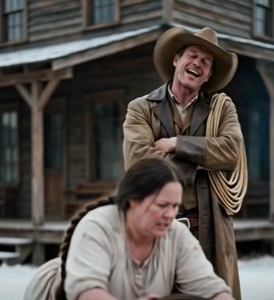
Under the freezing mud while struggling to push a massive wooden barrel past a roaring campfire under the cold mountain sky
Michael’s smile did not belong to the loft. It belonged to the sheriff’s Stetson, borrowed and worse. The tunnel light put a line under his scar and left the rest of his face in the kind of dark that makes bargains. My phone still glowed with the sentence that had named him. Behind us, boots hit the trapdoor. Ahead, the river ice ticked.
“You dropped the grain,” I said.
“I dropped the grain so you would run the direction they paid me to run you,” he said. “Three years is a long time to be the dead son. The syndicate kept me fed. Father’s ledger was the last payment. You carried yourself to it.”
The cracked watch was in my pocket, taken from the cache in the second before the rifles. I closed my hand around it and did not give him the satisfaction of a scream. “The marshals on the payroll. That part was true.”
“Some of them.” He tipped his head at the exit. “The one waiting on the bank is not. He thinks he is collecting a witness. He is collecting a grave they can call exposure. Give me the watch and the phone. Walk out slow. I will tell them you fought. It plays better.”
A shot splintered wood far back in the passage. The deputies were not patient. I thought of the barrel’s false bottom, the deeds I had not moved, the church bells in the valley, the three years of chores designed to make me small enough to sign. Michael had mourned himself in my kitchen and then sold the mourning. The arithmetic was ugly and simple. I needed a witness who was not his.
“The ledger is photographed,” I said. “Every page. I sent them at dusk to a clerk in the next county who does not cash your sheriff’s drafts. Kill me here and the pages still have your scar in the margin where you signed the derailment order. I saw it. Father coded the journal. You were sloppier than he was.”
The smile thinned. He had not known I had seen the margin. The phone was a bluff he had sent. The photographs were a bluff I was inventing. The watch was real. I threw it past his shoulder toward the exit light, a silver spin, and when he turned for it I went sideways into the maintenance alcove the smugglers had cut and the ranch had forgotten. His revolver spoke once. The shot took brick. I crawled until the alcove became a drain and the drain became snow.
The bank was not empty. A man in a federal coat stood by a dark horse with the ledger already in his hands, taken off the deputy the grain had flattened, carried out a different hole by a rider I did not know. He looked up as I came out of the drain bleeding at the palms. Michael came out of the tunnel mouth a second later and stopped when he saw the coat.
“Marshal Quinn,” Michael said, and the hollow smile tried to become a brother’s again.
“Your text arrived late,” Quinn said. “Hers arrived earlier.” He did not look at me when he said it. The dusk clerk had been real. I had sent the pages from the barn in the minute after I found the watch, before the doors burst, a habit my father had written into the journal as if he had known the cache would fail. The bluff had been a memory. The send had been the work.
Deputies spilled onto the ice and met rifles that were not on the payroll. The sheriff came last, Stetson perfect, lasso still coiled, and saw the ledger open to his own confession. He went for the coiled rope as if habit could become a defense. Quinn’s rider took the rope. Michael ran for the tree line and made it twenty yards before the ice and a deputy who had decided the payroll was over caught him. He did not shout my name. He shouted the syndicate’s, which was its own confession.
They held the hearing in the church because the courthouse stove had died. I sat with the watch in my lap and the photographs printed large. The derailment order. The deeds. The sheriff’s cut. Michael’s scar-initial on the margin, which he claimed was a forgery until the ink matched a letter he had sent the syndicate asking for warmer boots. The valley families stood along the pews and heard their sections returned. Quinn testified to the payroll names and did not ask to be loved for it. I testified to the barrel, the cache, the grain sack, the text, the alcove. I did not call Michael a ghost. I called him a bill that came due.
The ranch reverted. I signed the lower pastures back to the names in the grab column and kept the house. The sheriff took the derailment. Michael took the conspiracy and a sentence that did not include the loft. In the thaw I broke the barrel in the yard so the false bottom could not be retold as cleverness. The watch stayed cracked. I did not replace the glass. Some cracks are the record.
What the sleet and the taunt had been built to finish was a signature. What the tunnel failed to finish was me. A brother can drop a grain sack and still be the trap. A ledger can leave the barn in a deputy’s hand and still reach a clerk if you sent it before the doors. The lesson is colder than the yard and cleaner. Do not wait for the mourned to save the evidence. Send the pages while the barrel still rolls. Believe the margin, not the smile at the exit light. The church bells still ring. The land is named correctly. And I am no one’s little bird. I am the one who kept the copy.
The thaw uncovered more than pasture. A section hand from the derailed line came to the house with a lantern glass wrapped in burlap and said he had pulled it from the creek when the ice let go. Inside the glass, sealed with wax my father had used on seed jars, was a second confession the ledger had only pointed at: the engineer paid to slow the train, named, dated, still living in a shack past the bells. Caroline rode there with Quinn because some pages are heavier if you carry them alone. The engineer was old and unsurprised. He had spent three years waiting for a daughter or a bullet. He signed a fresh statement in a hand that shook and asked to be arrested before the syndicate remembered him. Quinn obliged. The arrest looked like mercy if you stood at the right distance.
Michael’s counsel sent a letter in April calling the grain sack a rescue misread by grief. Caroline returned it with the boot-letter copy attached and no note. The sheriff, already convicted, tried to trade the engineer’s name for a softer cell and learned the name was already in the church record. Bargains rot when the copy exists. She wrote that in the margin of her own copy and almost smiled.
In May the valley families raised the first legal fence on the returned bend. Mrs. Ellison, who had lost the water rights in the same week as the derailment, set the post and did not offer a speech. She asked whether the tunnel was filled. Caroline said it was filled with stone from the yard. Ellison nodded. A door that no longer led to a brother’s smile was enough. They ate cold meat on the tailgate and talked about calves. Ordinary talk felt like a verdict that had finally learned to walk.
Quinn came once more before summer with the payroll dismissals in a thin folder. Two deputies gone. One clerk. A marshal from the capital who had never set a boot in the snow and had still taken a cut. Caroline signed the witness supplement and did not ride back with him. Help that lingered became a story the valley would tell wrong. He seemed to know it. He left the folder and took the road.
On the anniversary of the barn doors she did not go into the loft. She rolled no barrels. She stood at the creek with the cracked watch and the lantern glass, both empty of secrets now, and let the water make its small sound. The lesson had already been sent at dusk. What the extra season added was the part after the send: fences, a living engineer in a fair cell, a letter returned, a tunnel full of stone. Survival is the alcove. Justice is the bend replanted under the right name. She keeps the cracked glass. She does not keep the ghost of the man in the rafters. The ranch is a ranch again. The bells ring for time, not for taunts. And when the sleet returns she will not be in the yard performing strength for a sheriff. She will be inside, with the copies, waiting for no one’s permission to own the ground.
Winter came back without the sheriff’s boots in it, and the difference was so plain Caroline almost distrusted it. The creek froze clean. The stone in the tunnel stayed stone. What arrived instead was a survey flag on the north line, planted in the night, tagged with a company that had not been in the ledger because it had been born after the church hearing. The registered agent was the engineer’s sister, a woman who had cried in the pews and then filed papers. Grief, Caroline was learning, could be a costume with a stamp.
She did not roll a barrel at the flag. She photographed it, sent the photograph to Quinn and to Ellison before breakfast, and walked the line with both of them at noon. The sister came out of a rented buggy and talked about a mineral exception the derailment had interrupted. Quinn read the formation date aloud. Eleven days after the engineer’s statement. Ellison read the water clause, which would have put the bend back in a stranger’s bucket. The sister’s cry in the pews had been real. The filing had also been real. Both fit in the cold without canceling.
The hearing was short. The judge who had used the church as a courtroom denied the exception and asked the sister whether she wanted the pew story or the stamp. She chose the stamp and lost. Caroline added the flag photo to the folder with the cracked watch and did not add a speech. Afterward Ellison said the north line needed a post that could be seen from the road. They set it the same day, high enough that a night planting would have to be done in front of it. Visibility was the new cache.
Michael’s name did not appear on the flag. That was its own information. The syndicate’s leftovers had stopped needing the dead son. Caroline slept better for the absence and worse for the reason. She wrote the reason down so it would not become a mood. When the first real snow hid the post, she tied a red rag to it. Ellison did the same on the bend. From the house the two rags looked like a sentence.
In the spring the engineer died in the fair cell of a fever that was only a fever. Quinn sent the notice. Caroline went to the shack and returned the lantern glass to the creek, empty, because the confession no longer needed a vessel. The sister did not attend. The valley did. They spoke about the train and not about forgiveness. Forgiveness had not been on the form.
What the third season settled was the fear that a win is a door left open. Doors can be refiled. The answer was not another brother in a loft. It was a post, a rag, a photograph sent before breakfast, a judge who could tell a pew from a stamp. Caroline keeps the folder. She does not keep a barrel. The ranch holds. The line is visible. And the bitter work, she understands now, is not the pushing in the sleet. It is the ordinary noon when you walk out and read the tag before the tag becomes a deed. That is how the ground stays hers. That is how it stays theirs. The bells ring. The rags show. Nothing important is buried where a sheriff can smile over it again.