The scarred outlaw leader who spat out my first stew with a disgusted curse while rough men laughed
The dispatch lay on the grease-dark boards between a spilled spoon and the giant’s boot. I knew the hand before I turned it over. Director Abel Crane. The man who had sworn me in, who had given me the satchel, who had called my father’s death a case and not a debt. Beside his signature ran a second line, heavier, the outlaw leader’s scrawl: received and agreed, the night the ranch burned.
Marshal Holt, the one who had come through the doors, was still locking cuffs on the foreman. He had not seen the page. The giant, whose name in the warrants was Buford Kane, had. His mouth twisted, not quite a smile.
“There it is,” Kane said. “The stew was only the announcement.”
I set my boot on the paper. “Holt. Evidence. Floor.”
Holt glanced down, saw Crane’s name, and the room changed temperature. The marshals did not lower their weapons. They also did not look at me the way they had when I pulled the ledgers from the flour bin. Kane laughed once, short, and spat the last of the stew at the hearth. It smoked. He had tasted bitter almond and saltpeter because I had wanted him to taste the method, not the dose. The real measure was still in the jar under the counter, labeled as lye for the boards. I had needed the camp to see him stop chewing. I had not needed a corpse to walk into federal court.
“Bag it,” Holt said. A deputy did. Kane watched my hands as if they might still hold a spoon.
They walked the gang into the yard under a hard noon. Horses stamped. Someone’s tin plate kept ringing where it had fallen. I stood at the counter with the satchel open and the taste of three years in my throat: smoke, grease, the particular silence of men who laugh when a cook’s eyes shine. Holt came back alone.
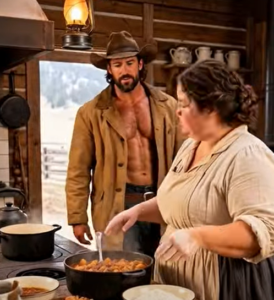
“Crane signed a raid order,” he said. “Joint with Kane. Date matches the fire at your father’s place.”
“I saw.”
“Did you know before you opened the file?”
“I knew the stew recipe. I did not know the partnership.” The lie was small and I hated it. I had suspected for six weeks, since a supply rider brought coffee stamped with the director’s freight mark and Kane told the foreman not to short that particular sack. Suspicion is not a signature. The page was.
Holt rubbed a thumb along his badge. “You’ll ride to the railhead with the evidence. Crane will want a wire. I am not sending one until a judge has this paper.”
“Send the judge the paper. Send Crane nothing.”
“He’s your director.”
“He was my father’s executor on a warrant that was never a warrant.” I closed the satchel. “If I run, log it. If I stay, put me under the same guard as the ledgers. I will not be the gap in your chain.”
He studied me the way Kane had studied the bowl. “Name for the report.”
“Elena Voss. Operative. Daughter of Caleb Voss. Cook, until an hour ago.”
The railhead was a day and a half of dry creek and no talk. Kane rode with his hands chained to the saddle horn and used the time as a weapon. At the first water he said Crane had come to the burned ranch before the ashes cooled and had taken the land book. At the second he said my appointment as cook had been Crane’s idea, so the gang would have a pair of eyes the director could later call compromised. The foreman, listening from the next horse, added that the first illegal raid had not been a raid at all. It had been a clearance. Settlers moved. Titles folded into a company Crane’s brother-in-law administered from Cheyenne. Kane supplied the fear. Crane supplied the stamps.
I did not answer. Answers on a trail become testimony no one wrote down.
At the agency Holt put Kane in the stone room and me in the room across the hall, door barred from the outside with an apology that was also a procedure. I used the hours. The confession in the satchel named mid-level buyers. It did not name Crane. The deeds named a front company. The dispatch named the beginning. What I lacked was the land book Kane had described, and a witness who had seen Crane at the ashes.
On the second morning Holt slid a telegram under the door. Crane, from the capital: Hold all files. Operative Voss exceeded mandate. Poison alleged. Relieve her and ship the prisoner to me. Holt had not answered. He asked through the wood what I wanted done.
“Find the Alden woman,” I said. “She cooked for my father the week of the fire. She saw a city horse at the gate. If she will swear to the brand, we have more than Kane’s mouth.”
Holt found her in a laundry two streets over, older and angrier and willing. She remembered the horse. She remembered Crane’s coat, federal cut, smoke on the sleeve, and a book under his arm that had been my father’s. She had not spoken because the man with the book still signed relief chits for widows. I listened at the door while she gave the statement. When she said my name she said it as Caleb’s girl, not as marshal’s cook. Both were accurate. Only one had been safe.
Kane asked for me before the transfer Crane had demanded. Holt allowed it with two deputies and a table between us.
“You put bitter in the pot to make me flinch,” Kane said. “Cute. Crane put your name on the camp list to make you the flinch later. You played cook. He played owner. I played the gun. The jury will pick one villain if you let them. Give them three and they pick none.”
“They will pick the signatures.”
“Crane has friends who eat paper.” He leaned in until the chain stopped him. “Burn the dispatch. Tell Holt the stew was theater. I plead to the gold ledger and leave your father in the ground as a mystery. You keep the badge. Crane keeps the land company long enough to sell it quiet. Everybody who is still breathing gets a chair.”
“My father does not get a chair.”
“Your father signed a grazing note Crane turned into a deed. Ask the Alden woman whose hand was on the pen. She was in the kitchen. She hears things.”
I left before I asked her for him. I asked her myself, in the laundry steam, Holt at my back. She was quiet a long time. Then she said Caleb had signed a receipt for winter feed, nothing more, and Crane had traced the signature onto a conveyance after the fire with a clerk who owed him rent. She had seen the tracing because the clerk got drunk and cried into her towels a year later. The clerk was alive. His name was Pettit. He worked the land office on Tuesdays.
Pettit did not cry for me. He tried the alley and Holt’s deputy closed it. In the back room he produced the practice sheet, my father’s name written twelve times in Crane’s tighter hand, the last copy good enough to fool a county stamp. He produced the receipt underneath it. Feed. Oats. A price. No acres. I stood with the two pages and felt the camp’s laughter drain out of a place it had lived for three years. The murder was Kane’s crew on Crane’s order. The forgery was Crane’s patience. The note was feed. The story that my father had sold us was another theft, committed so the daughter would doubt the ground she stood on.
We moved at dusk, before Crane’s escort could reach the agency. Holt, myself, Alden, Pettit, the dispatch, the practice sheet, the ledgers, Kane in the middle of the wagon with a sack over his bravado. The land office strongroom gave up the company book under a judge’s night order Holt had woken a honest man to sign. Crane’s brother-in-law was listed as agent. Crane was listed as consultant, fee withheld from settler payouts that had never been paid. My father’s ranch sat on page four, acquisition dated the morning after the fire, consideration listed as prior indebtedness. The indebtedness was the feed receipt, multiplied by a clerk’s fear.
Crane met the train himself at the junction, coat clean, two city deputies who were not in Holt’s wire. He smiled at me the way a director smiles at an operative who has forgotten the chain of command.
“Elena. You look thin. Camp cooking never did agree with you.”
“The dispatch agrees with the book,” I said. “So does Pettit’s practice sheet. So does Mrs. Alden’s statement. Kane is in the second car. He is done bargaining.”
Crane’s smile thinned. “You poisoned a prisoner in custody.”
“I flavored a bowl so a guilty man would stop chewing in front of witnesses. The jar is sealed and labeled. The charge you want is theater. The charge you have is a raid order in your hand beside his.”
He looked at Holt. “You are relieved.”
“Not by you,” Holt said. “By the judge who signed the night order. He will be on the platform in an hour. You can explain the tracing to him, or you can explain it to the car.”
Crane went for the inside pocket. Not a gun. A second dispatch, older, authorizing my insertion and bearing a line I had never been shown: subject may be used to color the Voss file if sentiment interferes. He held it out like a pardon. “You were always the color, Elena. A grieving cook sells a conspiracy better than a ledger. I kept you useful. That is not murder.”
“No,” I said. “The fire was murder. This is the invoice.”
His city deputies looked at the practice sheet in Holt’s hand and did not draw. Calculation left Crane’s face in the same slow way it had left Kane’s when the cuffs closed. The honest judge arrived dusty and out of temper. He read the insertion line, the raid order, the feed receipt, and the company book. He ordered Crane disarmed and seated in the car with his consultant fee underlined. Kane watched from the bench and said nothing worth keeping. Even a gunman knows when the stamp has changed hands.
The hearing ran twelve days. Kane’s crew broke in pieces, each man trading a burning for a year. Kane took the fire and the gold and tried to gift Crane the rest. Crane’s counsel called me a poisoner and a daughter and a plant. The prosecutor set the insertion order on the rail so the jury could see who had planted me. Pettit identified his own fear. Mrs. Alden identified the coat. The feed receipt ended the fable that Caleb Voss had sold his child for winter oats. The jury returned guilty on the raid conspiracy and the forgery. The company book was voided back to page four. The ranch title returned to the estate, which was me and a grave.
I did not take the badge back. Holt argued on the courthouse steps that the service needed operatives who would put a director’s name on the table. I said the service had a director’s name on the table already, and that I had cooked in Kane’s smoke long enough to know what a uniform smells like when it lies. He kept the jar, the ledgers, and the apology. I kept the feed receipt.
In the spring I went back to the valley with Mrs. Alden and a surveyor who did not work for Crane’s brother-in-law. The mess hall was empty. The hearth still held the ghost of grease. We did not rebuild the gang’s kitchen. We staked the old fence where my father had walked the line, and we put the feed receipt in a tin under the new gatepost, not as a relic of shame but as a correction. People who had been moved off neighboring sections came to read the court notice nailed to the post. Some had signed things they did not understand. We showed them the difference between a receipt and a deed until the difference became a habit.
Kane’s last letter from the territorial prison reached me in June. He wrote that the stew still tasted like judgment and that Crane no longer answered notes. I did not reply. Some sentences are complete when the spoon stops.
What I owed the dead was not a cleaner legend. Caleb Voss bought oats. Abel Crane traced a name and ordered a fire. Buford Kane struck the match and laughed when the cook’s eyes shone. I stood in the smoke for three years and nearly let a single signature turn me into the color on someone else’s file. The lesson was not that institutions betray, though they do, or that poison in a bowl is justice, though bitterness can be a signal. The lesson was that a forged beginning depends on the heir agreeing to doubt herself. I stopped agreeing. The ranch is oats again. The gatepost holds the true page. Law is not the crash of a mess-hall door. Law is the decision, after the door, to keep the page that ruins your director and to plant the field the page returns, so the next cook is only a cook and the next signature is only feed.