The rough-hewn timber office of a brutal land baron, while an arrogant cattle owner slammed his heavy fist onto the wooden desk and mocked my worth
The marshal’s patent felt heavier than paper had any right to be.
They dragged Harlan Voss across his own porch with his spurs carving little wounds in the boards he had used as a throne. I stood in the office sunlight with the family grant against my ribs and the coin purse still shut. The ledgers were not in it. He had been meant to think they were.
“Miss Hale,” the marshal said.
“Rowan.”
He had given his name at the door like a warrant needed a human face.
“Voss will say the taxes lapsed. He will say your father died owing the valley. He will say a girl cannot hold a mountain claim.”
“Let him say it in a room without a hidden drawer.”
Deputies emptied the desk. The revolver came out first. Then a second set of patents with my father’s name spelled wrong in the same three places on every copy. Then a letter from a rail survey office thanking Voss for “clearing occupancy ahead of the grade.”
Rowan read that last one twice.
“That is the part he did not put in the foreclosure notice.”
I wiped the tear that had already dried into salt.
“He told me I would not last a week on the claim. He needed me gone before the survey stakes reached the spring.”
“Where are the real ledgers.”
“Where a man who answers to Voss would not crawl.”
We rode before the light failed. The homestead sat against the shoulder of the mountain like a jaw that had refused to unclench. The cabin chimney still drew. The barn lean-to still leaked in the same corner. I walked past the porch where I had last seen my father count coin by lantern and went to the springhouse.
The stone was cold even in afternoon. I lifted the third slab from the north wall, the one that sat a finger higher than the rest. Oilcloth. Three books bound in hide. Tax stamps. Receipts with the county seal that Voss’s clerk had sworn were never issued. A note in my father’s hand, dated a week before the fall from the loft that only Voss’s foreman had witnessed.
If the rail comes, they will call the spring a public need. It is not. It is ours. Do not sign.
Rowan crouched in the damp.
“Loft rail,” I said.
“Sawn?”
“I did not have a marshal then. I had a town that liked Voss’s beef.”
He sent a deputy back to the ranch house with orders to hold the foreman. The mountain threw a long shadow across the claim and for the first time in months the shadow did not feel like a man leaning over a desk.
Night came honest. I cooked nothing fancy. Rowan ate standing, hat off, as if sitting in a dead man’s chair required an invitation I had not decided to give.
“The sheriff,” I said.
“Answers to Voss. We took him at the jail an hour after the office. He had a copy of your foreclosure in his coat like a hymn.”
“And the court.”
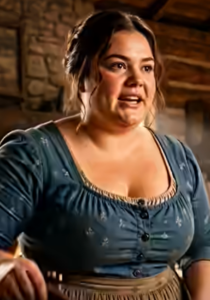
“Territorial judge is on a circuit. He will arrive to find his favorite cattleman in irons and a girl with patents that match the federal book. He can like it or he can like explaining a rail letter to a commissioner.”
I slept in the loft my father had not died in, which was a kind of stubbornness the mountain understood. Dawn came back thin and working.
Voss was held in the stone room behind the jail that he had paid to have pointed. I went because Rowan said a statement from the daughter closed a hole a lawyer would worry like a loose tooth.
Voss sat with dust still on his cuffs.
“You think a springhouse saves a claim,” he said.
“I think a sawn rail and a rail letter hang a man higher than a springhouse.”
“Your father agreed to sell. He got scared of the grade. Men get scared. I finished the paper.”
“You finished him.”
His mouth twitched.
“You cannot prove a loft.”
“I can prove the taxes. I can prove the forged spelling. I can prove you wrote to a survey office like the mountain was already a siding. The loft is a gift I will let a carpenter explain to a jury.”
Rowan stood in the doorway.
“Enough. She is not here to feed you lines.”
Outside, the town had the stunned quiet of a place that had just learned its weather belonged to someone else. Martha at the store counted my coins without the warning she had given me last month. The blacksmith would not meet my eyes. The preacher found a sudden need to speak about theft in the abstract.
I rode the claim fence by myself at midday. The posts were sound. The wire sang. In the far meadow the surveyors’ distant flags already pricked the grass like a rumor. Federal grade would still come. It would come through paper that named Hale, not through a baron who thought a fist on a desk was a deed.
A rider waited at the gate. Not a deputy. A woman in a split skirt with a face I had not seen since the funeral, because she had not come.
“Aunt June,” I said.
“Do not aunt me until you hear why I am on this side of the wire.”
She swung down. Her hands had ink on them.
“I clerked for the circuit judge two seasons. Voss paid me to misfile the Hale receipts. I did it. Then I kept copies because even a coward knows a mountain remembers. I heard the office went down. I brought the copies before I grew a second spine and rode the other way.”
I did not embrace her. The mountain was not a reunion hall.
“You let me stand in that office alone.”
“I let you live long enough to open a springhouse. If I had spoken sooner he would have sawn more than a rail.”
Rowan took her statement as if he had been expecting a ghost with ink stains. The copies matched the hide books. The conspiracy was no longer a girl’s instinct. It was a stack.
The foreman broke before supper. Loft. Wedge. Order from Voss. Pay in beef and silence. He cried in a way that helped no one and still helped the file.
On the third day the circuit judge arrived dusty and displeased. He read. He looked at Voss. He looked at me. He looked at the rail letter as if it had personally insulted his chambers.
“Foreclosure is void,” he said.
“Patents stand. Survey will negotiate easement with the title holder, not with a man in irons. Sheriff is suspended. Clerk June Hale will face a separate paper for the misfile, and the copies she kept will be noted as cooperation. Miss Hale, the claim is yours in the federal book and the territorial book. Try not to shoot anyone before the grade arrives. It makes maps messy.”
June accepted that like weather. I accepted the claim like work.
Voss, when they walked him to the wagon for the territorial seat, found one more sentence.
“A girl your size.”
I stood in the street dust.
“A girl my size opened the wall you never crawled through. Size was never the measurement. You just liked the sound of it over a desk.”
The wagon left. The office at the ranch house became a locked box of exhibits. I did not want his timber. I wanted my spring and my fence and the right to tell a surveyor no unless the terms were written where my father would have signed without a gun in the drawer.
Weeks are slower than arrests. Hands came back who had drifted when Voss’s shadow made wages feel like treason. A few did not come back, which cleaned the roster the way Rowan said courts sometimes cannot. I paid from the coin purse and from a reserve my father had hidden under the same slab, because men who fear rails also fear banks.
June stayed in the lean-to and copied clean books until her ink looked like repentance. I did not call her aunt. I called her clerk. She seemed to understand that names are a kind of fence.
The survey party reached the spring on a morning that smelled of wet stone. Their chief had the rail letter in a satchel and a face prepared to be kind to a girl.
I put the patent on a camp stool.
“Easement possible. Ownership not. You will not call this public need because a cattleman promised you an empty mountain. You will stake around the water or you will go down and read the arrest like everyone else.”
He read. He staked around. Kindness retired from his mouth and professionalism sat down in its chair. That was all I required.
At dusk I sat on the cabin step with the original patent and the hide ledgers and the note about the spring. The wilderness was not silent and free in the way speeches like. It was working. Coyotes. Wind in wire. A horse shifting in the barn. Freedom sounded like chores that belonged to the person who had refused to sign.
Rowan rode up once more with a packet.
“Voss will try a story about a verbal sale. Your ledgers close it. The loft carpenter closes the rest. You may be called to the seat. You may also stay here and let paper ride without you. Both are legal.”
“I will come when they call. I will not live in his office even to watch him shrink.”
“Good.”
He hesitated.
“Your father asked a commissioner, years back, if a daughter could hold if the worst arrived. The commissioner said the book does not measure size. Voss never read that letter. It was in the federal file the whole time.”
I laughed once, surprising myself.
“Then the book was kinder than the town.”
“Books usually are. That is why men like Voss buy sheriffs instead.”
After he left I walked the loft in the barn and put my hand on the new rail. Oak. Honest nails. No dust arranged to fool a glance. I did not say a prayer. I said the sentence I had not been allowed in the timber office.
“I will last longer than a week.”
The mountain did not applaud. It held the fence. That was the contract that mattered.
Winter would come. The grade would argue. June would finish her paper and perhaps earn a first name again. Voss would sit in a room without a drawer. The claim would take my back and my mornings and give back water that no forged signature could drink.
The lesson sat on the step with me, plain as patent language.
A fist on a desk is not title.
A sheriff in a pocket is not law.
A girl alone on a mountain is not a vacancy.
Forged deeds last until someone keeps the real stamps in a wall a thief will not soil his knees to open.
Ultimatums are for men who have already sawn the rail and need you to sign the fall.
You do not sign.
You open the springhouse.
You put the book on the stool.
You let the marshal have the revolver and you keep the water.
I went inside and set the patent on the table where tax notices had once tried to look official. Tomorrow I would ride the east wire. Tonight the homestead was not a nightmare concluded in a speech. It was a place that had kept its name, and I was the size that had been enough.