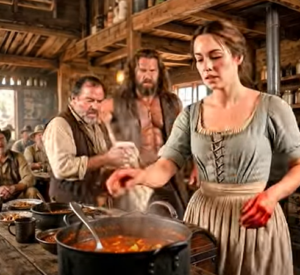
The abusive boss shoved my head toward a boiling iron pot and sneered that I was just a worthless, filthy kitchen maid
The fire did not clear the scars. The marshal—Harlan, he had said on the ride—set the bandage roll on the table and waited while I wrapped my own palms. The cabin smelled of pine and the stew he had warmed from a pot already on the hearth. Outside, the snow kept its own counsel. Walter was in the territorial jail. The iron box from the cellar was in Harlan’s saddlebag. Neither fact returned the two years or the trading post.
“The arrest is clean,” Harlan said. “The letter in the box is not yet matched to Walter’s hand. If you found the panel last night, I need the sequence—how the board gave, who else uses the cellar, whether Grimes knew you had been down there. His lawyer will claim you built the file after the tavern closed. The faster we lock it, the smaller that claim becomes.”
I told him. The panel had shifted when I reached for the salt crock. The box was behind it, locked, the key on a nail Walter thought was only for the root cellar. I had opened it because the key fit and because my father’s survey marks were still in my head from the years he let me copy them. The deeds were forgeries. The surveys had been altered after his signature. The letter was in Walter’s hand, dated the week my father stopped coming home, describing the dose and the man who had helped carry the body to the timber. I had copied the pages onto butcher paper and hidden the copies in the flour barrel before I went upstairs. The originals stayed in the box until Harlan’s deputies took them.
Harlan nodded. “The copies help. The letter’s ink will be tested. You stay here tonight. Tomorrow we do the formal statement at the office. If anyone from the tavern or the land office comes to the door, you do not open it.”
No one came. In the morning I gave the statement on camera in a room that smelled of wet wool. Harlan added the altered surveys and the statement of the clerk who had stamped them—already in custody, already naming Walter’s percentage. Walter, elsewhere in the building, was still shouting that the girl had invented a box. I did not see him.
The lawyer Harlan’s office named met me with coffee and a list. “The theft counts will move faster than the death,” she said. “Walter’s people will try to separate them. The letter helps keep them attached. What I need is whether you want the trading post returned when the forfeiture finishes, or whether you want it sold. The process is not fast either way.”
“Returned,” I said. “He built it. I can keep the books.”
“Then we file the claim. You stay clear of the tavern until the search ends. If anyone from the syndicate contacts you, you call me before you call Harlan. The order matters.”
I stayed in the cabin. The snow eased. On the third day Harlan sent word that the ink matched and the clerk’s percentage matched the ledgers. The man named in the letter was arrested at a waystation with Walter’s second pistol in his coat. None of it returned the trading post overnight. All of it made the dose harder to call a winter fever.
Walter’s first appearance was closed. I watched the later one from the side bench. He did not look at me. His counsel argued the letter was grief and the panel was a maid’s invention. The judge set bail beyond reach and continued the matter. Walter left without the roar. The absence was louder than the threats had been over the pot.
The forfeiture claim moved. By the end of the month I had a provisional order and a key to the post. I walked the main room alone. The counter was scarred. The ledgers Walter had kept were gone. I swept the floor, lit the stove, and slept in the back room because the cabin had begun to feel like waiting. Neighbors came slowly. One asked whether the post would buy furs again. I said it would, at the old rates, once the court finished its count. He left a bundle and a warning that two men had been asking in the tavern about the old survey marks. I sent the description to Harlan. The men were Walter’s remaining hands. They were advised, in writing, that further questions would be treated as contact with a witness. They rode south.
The trial was set for spring. I testified to the panel, the letter, the flour-barrel copies, and the two years of pots and insults. Cross-examination suggested a cook’s revenge. The ink match and the clerk’s statement made the suggestion costly. Walter did not testify. The jury returned guilty on the theft counts and on the murder count. Sentencing was continued to summer. I did not attend the reading. The lawyer sent the outcome. I was mending a shutter at the post when the note arrived. I finished the hinge before I opened it.
Summer sentencing gave him years. The forged deeds were voided. The trading post returned to the estate with a corrected survey that carried my father’s original marks. I kept the books. I kept the bandage habit even after the palms healed. On the anniversary of the night I found the panel I walked to the timber’s edge and did not leave a marker. The lesson that stayed was smaller than the star and harder to counterfeit. A poisoned cup and a stolen grant needed the person scrubbing the pots to stay quiet or stay gone. I had opened the panel and copied the pages. The marshals had done the rest. What remained was the post under its own name, the rates I posted on the door, and the decision to treat every new question about the old marks as something that went to the lawyer before it went to the counter. I set the corrected survey on the shelf, checked the lock, and let the stove find its level. The valley could keep its snow. The books could keep their lines. That was the ending the letter had earned.
The stove held its level. The corrected survey stayed on the shelf. Neighbors brought furs and bought goods at the posted rates. Harlan’s updates arrived by rider every few weeks: Walter’s appeals were proceeding, the remaining hands had left the valley, the clerk’s percentage had been entered into the restitution order. I answered only when a question was attached. The rest I let sit with the ledgers.
In the first winter after sentencing a man rode up to the post and asked whether the old survey marks were still visible on the north line. He carried no badge and no introduction. I told him the marks were recorded with the court and that any question about them could be sent to the territorial office. He looked at the rates on the door, bought a small measure of salt, and left. I sent the description to Harlan the same day. The man was a former associate of the waystation prisoner. He was advised, in writing, that further inquiries at the post would be treated as contact with a witness. He did not return.
The palms healed clean. The bandage habit stayed for another month and then ended because the cloth caught on the counter edge and slowed the entries. I kept the key to the iron box—empty now—in the drawer with the survey. Once, on a night the snow closed the trail, I opened the drawer and looked at both. The box no longer held pages. The survey no longer needed hiding. I closed the drawer and went back to the stove.
Spring brought a request from the territorial land office for a fresh count of the boundaries. Ellis handled the correspondence. Two surveyors arrived with the corrected instrument and walked the lines. I walked with them on the north side because the original marks were clearest there. They confirmed the corners, signed the return, and left the post a copy. The copy went on the shelf beside the first. No one asked about the cellar panel. The tavern had been sold to a couple who painted the sign and did not keep a pistol under the counter.
On the anniversary of the panel I walked to the timber’s edge again. The snow was gone. The ground showed only last season’s growth. I did not leave a marker. The lesson that had moved from the cabin to the post was the one that required the least performance: a forged deed and a poisoned cup could be answered by a copied letter, an ink match, and the decision to send every new question about the old marks outward before it reached the counter. I had made the copies. The marshals had matched the ink. What remained was the rates on the door, the survey on the shelf, and the ordinary work of buying and selling without a false panel behind the salt. I checked the lock, posted the day’s prices, and let the stove find its level once more. The valley kept its weather. The books kept their lines. That was the continuation. It held.
The rates stayed posted. The surveys stayed on the shelf. The couple who bought the tavern sent a note in early summer asking whether the post would supply their kitchen at the same prices the old ledgers showed. I answered that the prices were the ones on the door and that delivery could be arranged twice a week if the trail allowed. They agreed. The first delivery was salt, flour, and a side of bacon. They paid in coin. No one mentioned Walter’s name.
Harlan’s rider brought a different kind of paper in July. A distant claimant had filed a quiet title action in the next territory, asserting that one of the voided deeds had been sold onward before the forfeiture and that the buyer held rights the corrected survey could not erase. Ellis read the filing and said it was thin but required an answer. The answer needed the original marks and the ink-test affidavit. I rode to the territorial office with both. The hearing was a single afternoon. The claimant’s counsel argued good faith. Ellis produced the dates on the letter and the clerk’s percentage. The judge dismissed the action and assessed costs. I rode back with a copy of the dismissal and set it on the shelf with the surveys. The post’s ordinary traffic did not pause for the ruling.
In August a storm took part of the north-line fence. I hired two men from the lower valley to reset the posts. They worked three days, ate at the counter, and asked no questions about the old marks. When they finished I walked the line myself. The corners matched the return the surveyors had signed. I noted the repair in the day book and sent the note to Ellis so the file would show the boundary had been maintained. The men were paid. They did not linger.
The anniversary of the sentencing fell on a market day. I kept the post open, sold the usual goods, and closed at the usual hour. After the last customer left I took the corrected survey from the shelf, checked the seal, and returned it. The ache that had once lived in the palms was now only a memory of heat. The work had replaced it with entries, deliveries, and the small decisions that kept the rates honest. Harlan’s last note of the season confirmed that Walter’s remaining appeals had been denied and that no new filings had appeared in either territory. I wrote the confirmation into the day book and did not add a comment.
Winter closed the trail for a week. I used the time to recopy the boundary return into a second book so the post would have its own record if the territorial copy were ever delayed. The work was slow and exact. When the trail opened, the tavern couple sent their usual order. I filled it. The dismissal stayed on the shelf. The lesson that no longer needed stating was the one the ink and the survey had already carried: a forged claim could be answered once in a courtroom and then answered again, quietly, by keeping the marks walked and the rates posted. I checked the lock, banked the stove, and let the snow fall without treating it as a signal. The books held their lines. The post held its name. That was the next measure of the work, and it was sufficient.