Standing inside the bustling downtown diner under the blinding fluorescent lights
The envelope was heavier than paper had any right to be.
“Is everything ready for tomorrow?” the driver asked.
“No,” I said.
“Good. If it were ready, someone already bought the ending.”
I opened the folder under the sedan’s low light. The first photograph was Mark in a charity tuxedo, smile calibrated for donors. The second was a woman I had buried in a different name seven years ago. The third was a judge whose signature sat on the receivership that had stripped my father’s firm while I was still in a hospital bed learning how to walk without calling it grief.
Mark was only the first name.
The list ran fourteen deep. Accountants. A compliance officer. Two board members who had voted my father “incapacitated” after a stroke that arrived too conveniently after a dinner Mark hosted. A shipping front in another state. A quiet partner who never came to the diner because he did not need to be seen to eat.
Rain hammered the roof. The city smeared past in red and white.
“Where to?” the driver asked.
“The old building on Mercer. The one they sold out from under the estate.”
“It’s sealed.”
“Not to the person on the deed they forged over.”
He did not argue. That was why he drove.
We stopped under a loading canopy that still bore my father’s faded stencil. I sat with the envelope on my knees and replayed the diner because the mind does that when the body finally stops shaking. Mark shattering the mug. The sound like a cheap verdict. The way he said leave as if the counter belonged to him. The way the room looked at my silver hair and worn jacket and decided I was the interruption.
I had let them look. Looking is cheap. Documents are not.
Inside the building the air smelled of dust and old toner. Emergency lighting made everyone look guilty. A junior agent I trusted more than most waited by the freight elevator with a tablet.
“Vance is processed,” she said.
“He’s already asking for a deal that names nobody important.”
“He can ask.”
“He’ll offer you.”
“He always did. That was the business model.”
We rode up to the floor that used to be the war room. The glass was still etched with the firm’s first name, half scraped, like someone had gotten tired halfway through erasing us.
I set the folder on the table that had once been my father’s.
“Tomorrow we freeze the remaining accounts,” I said.
“Not just Vance. The whole chain. If we cut only the man who broke a mug, the rest will call it a personal feud and keep eating.”
The agent scrolled.
“The judge is a problem.”
“The judge is a person who signed a lie. People who sign lies can be asked to sign truths in public.”
“And the woman in the second photo?”
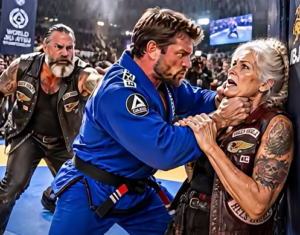
My throat did something I did not permit my face to join.
“She was my father’s counsel. She disappeared after she refused to backdate a transfer. Mark told the world she took a job overseas. The overseas job was a quarry road and a car that did not fail by accident.”
The agent closed the tablet.
“You’re not only taking money back.”
“I’m taking the story back. Money follows.”
We worked until the rain thinned to a hiss. Subpoenas. Preservation letters. A warrant packet that included the diner video, because humiliation is not a legal theory but juries understand a mug hitting tile when the man who threw it is explaining fiduciary duty.
At two in the morning I stood at the window and watched the street that had watched me leave in a downpour with my shoulders finally lighter and my chest still hollow. Putting Mark in a car with steel on his wrists had not returned the decade. It had only stopped the part where he got to narrate it.
The driver brought coffee that did not come in a diner mug.
“You should sleep.”
“Sleep is how they moved papers the last time.”
“Then sit. Sitting is not surrender.”
I sat. I did not sleep. I read the fourteenth name until it stopped being a surprise and became a schedule.
Dawn came dirty and useful. By eight the first accounts locked. By nine Mark’s lawyer was on every channel calling it a vendetta by an unstable daughter. By ten the diner video was playing under a chyron that used my real name, not the one Mark had trained people to forget.
I did not go on camera. The documents did.
At noon the judge called a recess in an unrelated matter and did not come back from chambers on time. At one the compliance officer tried to fly. The flight did not leave the gate. At three the quiet partner’s office produced boxes he had sworn were destroyed.
Mark asked to see me.
I went because refusal would have been another kind of performance.
The interview room was gray on purpose. He looked smaller without the booth and the laptop and the audience.
“Clara.”
“Mr. Vance.”
“Don’t do that.”
“You did that in a diner with a mug. We are only matching tone.”
He leaned forward as far as the chain allowed.
“I built something. Your father was finished. I kept people paid.”
“You kept people quiet. That is not the same building.”
“Your father would have sold anyway.”
“My father would have sold with his own name on the line. You used his while he could not speak and mine while I was supposed to be grateful for scraps.”
He searched my face for the woman who used to flinch.
“What do you want? A confession on camera? A letter? I’ll write that I was cruel in a restaurant. I’ll write that the coffee was a metaphor. Just leave the structure standing.”
“The structure is the crime.”
“Then you’ll burn your own inheritance to make a point.”
I set one page on the table. The page that showed the first transfer out of the estate, dated six days after the stroke, signed with a hand that was not my father’s even if the name was.
“I already inherited the point,” I said.
“You inherited a war.”
“I inherited a ledger. You turned it into a war so you would not have to read it.”
He sat back.
“The list in that envelope. You think they won’t come for you?”
“They already did. For ten years. They just used manners and letterhead.”
An agent opened the door.
“Time.”
I stood.
“Clara.”
I waited.
“I did think I buried you.”
“I know. That was the only honest sentence you said in the diner.”
I left him with the page. Some ghosts you do not have to haunt. You just have to stop pretending they are not in the room.
The next forty hours were not cinema. They were filings, holds, interviews, a press conference I did not attend, a board call I did attend so the remaining names would hear my voice say the accounts were not a rumor. One by one the list shortened. Not because the world became just. Because paper, once it stops being hidden, is very hard to unsee.
On the third night I went back to the diner.
Same counter. Same rain habit on the glass. A different mug. The waitress recognized me and did not ask if I wanted the booth.
“Coffee,” I said.
She poured and left the pot like a truce.
A man two stools down stared too long.
“You’re her.”
“I’m me.”
“He smashed your cup.”
“He smashed a cup. The rest he forged.”
The man nodded as if that settled a bet with himself and went back to his eggs.
I drank slowly. The hollow in my chest was still there. It would stay. Justice does not do joinery on a decade. It only stops the leak.
My phone buzzed. The junior agent.
“Fourteenth name is in custody. He asked if you would take a meeting.”
“No.”
“He said he has more names.”
“They always do. Tomorrow we verify. Tonight we do not buy a sequel with a handshake.”
I hung up.
The driver waited at the curb again. I paid for the coffee with my own card, the one that finally cleared because the accounts were no longer a maze with Mark’s face on every turn.
Outside, the city was still a labyrinth. That part of the last page had been true. Labyrinths do not vanish when you arrest a man in a tailored suit. They just lose one confident liar who thought a diner was a throne.
In the sedan I did not open a new envelope. I watched the wet streets and let the weight stay gone from my shoulders even while the ache kept its seat. Those two things could travel together. They had earned the right.
At a red light the driver spoke without turning.
“What now?”
“We return what can be returned. We bury what cannot with the right names on the stone. We run the firm like it belongs to the people who actually built it. And when someone shatters a mug to teach a room who matters, the room already knows.”
“That’s the speech?”
“That’s the work.”
The light changed. We moved.
Mark would stand in court and talk about vision. The judge would talk about procedure. The quiet partner would talk about complexity. I would sit with the ledger and the diner video and the photograph of a woman who never took an overseas job, and I would not blink when they looked for the pathetic stranger he had tried to invent under fluorescent lights.
I was never the stranger.
I was the signature he forged around.
The rain eased. The city kept its secrets, fewer than yesterday. I rode through them with an empty mug behind me and a list that had finally become a set of closed doors. The lesson did not need a billboard. Money taken with a smile is still theft. A public humiliation is just the sound a thief makes when he thinks the owner has forgotten the combination. And the owner, if she lives long enough to sit still at a counter with her own name, does not need to shout when the door opens. She only needs to have kept the documents, kept the decade, and kept the right to finish her coffee after the handcuffs click.