On the wooden porch of the abandoned frontier cabin with a single leather trunk at my feet
I turned the handle and the door gave the same small protest it had given my father on winter nights.
Light and bourbon and cigar smoke spilled out. Thomas stood by the mantel with a glass raised, as if the house had already agreed to forget me. Two men I did not know sat with ledgers open. Cousin Margaret hovered near the sideboard, jewelry too new for mourning.
Thomas saw me and the glass stopped halfway.
“Eleanor.”
“You paid a driver to dump me on a dead porch with a letter in your hand.”
“You were supposed to take the hint.”
“I took the deed instead.”
Carl remained on the porch like a man waiting to see which version of the house would survive. I let the door stay open. Heat left. Truth liked a draft.
Thomas set the glass down too carefully.
“Father left verbal instructions. You were unwell. The ranch needed a steady hand.”
“Father left a recorded transfer three months before the fall from the hayloft that only you witnessed.”
Margaret found her voice.
“You can’t walk in armed like a bandit.”
“I walked in as the name on the paper you forged over. The revolver is for the part where paper is not enough.”
The two ledger men stood. One reached inside a coat. I did not draw. I did not need to. The bay in the corral stamped once, and from the dark beyond the bunkhouse came the sound of more horses than Thomas had counted on.
Sheriff Rowan stepped into the doorway behind me with two deputies and a look that had never liked my cousin’s smile.
“Evening, Thomas. Miss Blackwood sent word from the ridge an hour after your driver ran his mouth in town. Drivers drink. Drivers talk. Forged letters have a style.”
Thomas laughed once.
“This is family business.”
Rowan held up a folded writ.
“Murder is county business. So is fraud. So is paying a man to abandon a woman on a porch in July.”
The ledger men sat down as if the chairs had claimed them. Margaret’s hand went to her throat.
I set my trunk on the parlor table and opened it. Deeds. Bank books. The original transfer with my father’s seal. A second page listing the loan Thomas had taken against land he did not own. A third, smaller, in my father’s private hand, dated the week he died.
If I fall, do not believe the loft. Believe the books.
Thomas’s face changed color in stages.
“You think a letter makes a hanging.”
“I think a letter plus a driver plus a loft with a rail that was sawn, not worn, makes a trial.”
Rowan nodded at a deputy. The man left for the barn with a lantern. We heard him climb. We heard the pause. We heard him come back faster.
“Rail’s been cut and reset with new nails on the back side,” the deputy said.
“Old dust on top to fool a glance.”
Margaret sat down without being asked.
“Thomas said it was an accident. He cried.”
“He cries on schedule,” I said.
Thomas moved.
Not toward me. Toward the gun cabinet my father had kept locked. He got two steps. Rowan got the rest. The cabinet stayed shut. The bourbon trembled on the mantel.
They cuffed him in the room where he had been toasting a ranch that was never his. He looked at me over the steel.
“You were always the spare. I ran this place while you played at schools and grief.”
“You ran it into a note. I kept the title. That is the whole difference between a steward and a thief.”
They took him out. Margaret followed as far as the porch and stopped, jewelry dull in the yard light. Carl picked up the bucket he had dropped as if work might still save him.
“Miss Eleanor. I didn’t know about the loft.”
“You knew I was not dead. That was enough to say one true sentence and you swallowed it. You’ll stay through the branding and then you’ll find another fence line. I don’t keep men who rehearse funerals for the living.”
He nodded, ashamed in a way that would either grow a spine or a ticket out. I did not wait to learn which.
The ledger men were from a land office two counties over. Their papers showed they had been promised a slice if the title cleared in Thomas’s name. Rowan took their names. I took their copies. Copies are how thieves practice.
Night settled on Blackwood as if the house had been holding its breath since the hayloft. I walked the rooms the way you walk a body, looking for what still belonged. Father’s chair. The scar on the banister. The smell of oil in the gun room. In the study, the desk drawer still had the false bottom he had shown me when I was twelve and too young to need it and exactly old enough to remember.
Inside: a second deed copy. A list of hands he trusted. A note with my name and one line.
The land is not the house. The land is who you refuse to become to keep the house.
I sat in his chair until the lamp burned low.
Rowan returned near midnight with coffee that had given up being coffee.
“Thomas will try a story about your nerves. About a woman with a gun and a grudge.”
“Let him. I have a driver who will like immunity more than a cousin’s coin. I have a sawn rail. I have books that do not cry.”
“And the estate?”
“Mine. Tomorrow I file. The day after I pay the hands who actually worked. The ones who toasted my death can pack.”
Rowan hesitated.
“Your father asked me once, privately, if I would ride if the loft ever looked wrong. I said yes and then I got busy with other graves. That’s on me.”
“You rode tonight. That is on the ledger too.”
He left his hat off until he reached the door, which in this county was as close as some men came to an apology.
Morning came hard and clean. I stood on the front porch that was mine in the ordinary way, not the blazing theatrical way the driver had used as a stage, and watched the crew gather. Some faces opened. Some closed. I read the transfer aloud so no one could say later they had only heard rumors. I named Thomas. I named the loft. I named the forged letter. I did not raise my voice. The plains already knew how to carry sound.
A young hand I barely remembered asked the only useful question.
“Who do we take orders from?”
“From the brand and from the books. If those two disagree, you come to me, not to the nearest man with a glass.”
By noon the land office rider arrived dusty and sour and left paler, with copies that would crawl through courthouses like ants. By supper Thomas’s allies had become scarce as shade. Margaret asked if she could stay in the east room until the stage came. I told her the stage came in three days and the east room was not a hotel for people who tried on mourning like a necklace.
On the second afternoon Rowan brought the driver in a wagon that did not match the one that had left me in the sun. The man would not look at the porch.
“He paid extra if I didn’t look back,” the driver said.
“Said she was simple. Said the letter was kindness.”
“Did the letter look like kindness when you threw it?” I asked.
He swallowed.
“It looked like paper. I needed the coin.”
“You will need a memory in court. Keep the true one. The false one already has a cousin attached.”
Rowan took him away before I spent anger I needed for fence posts.
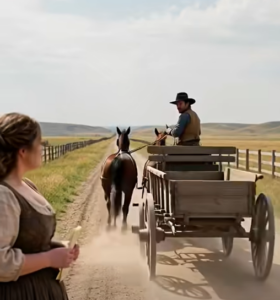
That evening I walked the two miles back to the abandoned cabin because some circles require closing with your own feet. The porch was still empty. The sun was less interested in drama. I stood where the gloved finger had pointed and looked at the road that had been meant to swallow me.
I did not burn the forged letter. I filed it.
A rider came up from town with a telegram. Thomas had named a partner in the loft. A buyer who wanted the river section. The buyer was already on a train that would meet a sheriff at the next water stop. The story was getting less lonely, which is how murder prefers not to travel.
I rode the bay home under a sky that had stopped pretending to be on anyone’s side.
In the parlor I put the revolver back in the cabinet and locked it. A rightful heir who lives by the draw becomes the cousin she came to remove. The weight on my hip had been a sentence for one night. The weight on the desk was the rest of my life.
Carl left at week’s end with wages and no reference that lied. New hands came who had never practiced saying I was dead. The corral stayed noisy. The loft rail was replaced in oak so honest it offended the memory of nails.
I wrote no speech for the grave. Father had already written the only line that mattered.
Weeks later Rowan stopped by with worse coffee and better news.
“Conviction will take months. Title is already clean. The driver turned. The buyer flipped when the river section grew a noose instead of a deed.”
“And Thomas?”
“He asked if you would visit.”
“No.”
“I told him that.”
After Rowan left I sat on the porch with the trunk lid shut and the road two miles back looking like only a road. A hired man’s dust had settled into the same dirt that held my father’s boots and now held mine.
Margaret wrote from a boarding house. She said she had not known about the rail. She said blood ought to count for a spare room. I wrote back one line.
Blood counted when it told the truth in the parlor. Yours waited for a verdict.
She did not write again. That was a kind of mercy.
Autumn came in on the north wind. I rode the river section myself and found the survey marks the buyer had paid for in secret. I left them standing. Evidence likes to stay where it was planted. The water still moved. It did not ask who had tried to own it with a saw.
One Sunday I opened the study false bottom again, not for paper, for the habit of checking that the house still kept its secrets on my terms. Nothing new had crawled in. That was enough.
When the trial date was set I wore black that was not theater. I said the porch, the letter, the trunk, the rail, the books. I said my father’s line about land and becoming. Thomas looked at the jury as if they were hands he could hire. They were not.
The verdict did not bring him back from the loft. It did not need to. It put a name on the fall.
I rode home the same day because hotels make heirs feel temporary. The bay knew the gate. The house lamps were lit by people who had not toasted my death. I walked the parlor once and left the mantel empty of glasses.
The lesson did not need a gavel to finish itself.
A porch can be a cliff if the wrong man holds the reins.
A letter can be a knife if the hand that writes it has already sawn a rail.
Blood is not a deed.
A house is not a throne.
The heir is not the one they toast when they think you are bones on a cabin step.
The heir is the one who opens the trunk they never searched, walks the two miles they called nowhere, and takes back the ground without becoming the kind of person who pays a driver to throw a woman into the sun.
I watched the bay in the corral and the light in the parlor and the empty road that no longer owned me. Then I went inside and turned down the lamp, not like a ghost returning, but like a woman who had arrived the long way and intended to stay.