In a harsh, weather-beaten local rancher who accused me of blocking his cattle trail
The moonlight made the two marks twins.
Hayes’s belt. The sheriff’s vest. Same stamped eye, same cheap gilt that counties use when they want a symbol to look older than the sin.
My hand tightened on the canvas until the buckles bit.
Hayes did not look at me. His hammer stayed back. The sheriff’s smile did not.
“Well now,” the sheriff said.
“The stray has eyes.”
“She has work,” Hayes said.
“You have a road. Use it.”
“Badge or no, you drew on my porch. That is the part I am choosing to hear.”
The sheriff’s gaze slid to the shadows where I stood with the bag.
“Federal paper in an apron. Commissioners missing their copies. A woman pumping water who talks like a brief. You always did pick up broken things, Hayes. This one will hang you.”
“Step off.”
For a breath I thought they would settle it in thunder and I would have to decide which lie to die beside. Then the sheriff laughed that grating laugh again, mounted, and pointed his horse at the dark.
“First snow,” he called.
“I did warn her.”
Hooves faded. The valley went back to mud and cattle and a pump that still needed a hand.
Hayes lowered the hammer last.
“Inside,” he said.
“Not the bunkhouse. Kitchen.”
The kitchen was iron, tin, and a lamp that made every face guilty. He poured coffee that had no interest in being kind. He did not ask for the bag. He set his belt on the table so the burned insignia sat between us like a third party.
“Talk,” he said.
“Or walk at dawn. I do not keep mysteries that draw sheriffs.”
I set the canvas down and did not open it yet.
“My name on the train ticket is not the name on the patents. I have been crossing three states with commissioners’ own ledgers. Foreclosures signed in rooms without owners. Families pushed before winter so the parcels could be bundled for a rail spur and a cattle company that does not exist on honest paper. The sheriff chairs the ring. The mark on your belt is the ring’s private stamp. So either you are the last decent man wearing a dead symbol, or I have pumped water for the other side of the same badge.”
Hayes’s mouth was a straight cut.
“It was a stock association mark before it was a syndicate mark. I sat the association when it still meant strays and fences. I walked when it started meaning widows. I kept the belt because I am old and stubborn and I wanted to remember the minute it changed. That is the whole sermon. If you want a cleaner saint, keep moving toward the marshals you say are hunting you.”
“They are hunting the bag. They are also hunting a homesteader cover that went loud at a depot two counties back. I needed ground. You offered a bunk.”
“I offered a pump.”
“I took both.”
He turned the belt facedown.
“If that bag is real, the sheriff will come back with men who do not laugh. If it is a story, I have drawn on a star for a liar. Either way my week is ruined. Show me one page.”
I showed him one page. A foreclosure on a widow named Peck. His neighbor. Signed by the sheriff, countersigned by a commissioner I had watched take a satchel in a livery. Hayes read it twice. The lamp made a small sound as the wick settled.
“Peck’s boy still sleeps in my loft when the wind is bad,” he said.
“She signed?”
“She marked an X on a paper she thought was seed credit.”
He sat down as if the chair had been arguing with him for years.
“Marshals,” he said.
“When.”
“If they are close, the sheriff knows. If they are not, we are a lamp in a big dark.”
“Then we do not wait for first snow. We move the bag off this ranch tonight and we leave a copy that can burn without killing the case.”
He looked at me the way he had looked at my bruised hands on the road.
“You are bleeding on my road again, just quieter.”
“You decided it troubled you.”
A nod, grudging as weather.
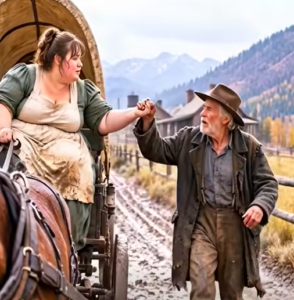
We worked in the kind of silence that is not peace. He saddled a second horse that did not like strangers. I sewed a thin packet of duplicates into the lining of a coat that had belonged to a wife he did not mention. The original canvas went in a flour sack under oats. Some hiding places are insultingly practical.
“North wash,” he said.
“Old line shack. Association built it when the mark still meant something. Sheriff’s men drink in town. They do not like that trail in the wet.”
We rode under a moon that had already betrayed me once. Cattle lifted their heads and decided we were not wolves. The shack was a ribcage of timber and a stove with no generosity. I put the sack under a floor stone. Hayes watched the ridge.
“You can still take the coin back,” he said.
“The one you put in my palm like I was a toll.”
“Keep it. Tolls go both ways tonight.”
We were back in the yard before the rooster, which in that country is a kind of alibi.
The sheriff did not wait for snow. He came at midmorning with four riders and a paper that called itself a search. Hayes read it on the porch and spat into the mud, not at the men, at the wording.
“County warrant on county theft,” he said.
“Poetic.”
“Stand aside, Hayes.”
“Search the bunk. Search the pump. Search my manners. You will not search the woman like a saddlebag.”
The sheriff’s eyes found me at the trough again, sleeves wet, face arranged into hired help.
“The bag.”
“In the kitchen last night,” I said.
“You saw me hold it. Then I cooked. Then I slept. If your ledger grew legs, ask your own pockets.”
They turned the kitchen. They turned the loft. They found Peck’s boy’s extra blanket and a Bible with no deeds in it. One rider found Hayes’s belt on a peg and laughed.
“He still wears the eye.”
“I still remember,” Hayes said.
“Different habit.”
The sheriff stood too close to me on the way out.
“Marshals like live witnesses. Syndicates like quiet ground. Guess which arrives first when the trail is this wet.”
“I guess you have a train to miss,” I said.
His smile flickered. Then the riders took my silence as poverty and left.
Hayes waited until the last hat dropped behind the ridge.
“Shack at dark. I will not ride with you. Two sets of tracks are a sentence. I will ride the opposite fence and be seen.”
“If they take you.”
“Then you still have the stone. That was the point of the oats.”
Dark came early. I rode the wash alone with a heart that made a poor compass. The shack held. The stone held. A figure on the far slope did not.
Not Hayes. Too narrow. A commissioner I knew from a livery satchel, holding a carbine like a man who had lost at cards and come to collect furniture.
“Miss traveling homesteader,” he called.
“The sheriff wants the originals. I want a cut of the rail. We can do this without Hayes dying stupid.”
I let him hear the cock of Hayes’s spare revolver, the one he had put in my coat without a speech.
“Hayes dies stupid if he dies for you,” I said.
“The deeds die never. That is a worse deal for your rail.”
He considered the math. Men who steal land are good at math until it grows a barrel.
A second horse came out of the cut. Hayes. Of course he had lied about opposite fences. Old ranchers lie the way mountains lean.
“Commissioner,” Hayes said mildly.
“You are lost. The association trail is closed. The eye on my belt does not admit you anymore.”
The commissioner lifted the carbine a fraction. Hayes shot the lockplate, not the man. The weapon leaped and the man sat down hard in wet sage.
“Marshals,” Hayes said to me, almost bored.
“Now would be decorative.”
They were not decorative. They were late and muddy and sufficient. The wash filled with stars on coats and language that did not belong to the county. I said my work name and then my true one. I said the stone. I said Peck. I said the belt and the vest and the difference Hayes claimed.
The lead marshal—Rowan again, or a man with the same tired eyes this country issues with the job—listened while cuffs found the commissioner.
“Sheriff?” Rowan asked.
“Town,” Hayes said.
“He will be smiling at a bottle and calling it jurisdiction.”
They took town at first light. I did not get a speech on a porch this time. I got a chair in a back room while the sheriff tried to make the eye on his vest into history instead of a confession. The ledgers did not agree with him. Peck marked an X on a statement that was not seed credit. Two more families found their tongues once the star was in a box.
Hayes stood through it with his belt off, as if even memory should not wear the mark in a courtroom.
When they asked why he drew first on his own porch, he said,
“Because the road was mine and she was bleeding on it and I had already failed the association once. I did not intend to fail the pump.”
It was not poetry. The clerk wrote it anyway.
They offered me a wire east, a medal language, a quieter name. I asked for Peck’s parcel to be unmarked in the book and for the rail company to knock like a neighbor. Rowan said that was above a marshal and then did it anyway where he could.
Hayes drove me back to the ranch because the bunk was still an offer and the pump still leaked.
“No wages,” he said, as if we were still on the road with a coin between us.
“Three meals. A bunk. If you stay the week I will not ask you to be a stray.”
“I can work,” I said.
“I already started on the pump.”
Snow held off long enough for the first honest freeze. The sheriff sat in a territorial room that did not care about his smile. The eye on Hayes’s belt stayed in a drawer. On Sundays he looked at it and then shut the wood, which is as close as some men come to prayer.
I wrote the last of the cover out of my bones by mending fence until my hands forgot they had been bruised for a peace offering. The canvas bag became a file in a building with a lock that did not belong to a county ring. I kept nothing on my person but the silver coin Hayes had not spent.
One evening he found me at the trough and cleared his throat like a gate.
“You were never going to last as a homesteader,” he said.
“Too many words.”
“Words closed the ring.”
“Words and a stone and a man who hates his own belt. Do not get tidy about it.”
“I will not.”
He almost put out his hand, then gave me the dipper instead. In that country it meant the same thing.
The lesson did not need a hanging to finish.
A badge is only metal until it decides what it answers to.
A road is only dirt until someone refuses to let a bleeding stranger be a toll.
Stolen deeds live in bags, in aprons, in floor stones, in the mouths of boys who sleep in lofts when the wind is bad.
You can wear a dead symbol as a warning or as a membership. The difference is whether you draw on the man who still smiles in it.
I pumped until the trough held a clean skin of ice at the edges and the cattle came in of their own accord. The wasteland was still brown and restless. It was also, for the first time since I put a coin in a stranger’s palm, a place that knew my work and did not call it trespass.
Hayes went to the porch and did not look for the sheriff. I hung the dipper on its nail. The mountains kept their jagged line. The first snow, when it came, fell on a ranch that owed the county nothing but fence and the truth.