In a bustling roadside diner in the middle of the desert by a corrupt local police officer who sneered and accused me
The envelope landed on the checks like it had been waiting for the cuffs to clear a path.
My father’s name sat on the authorization line in the same slant he used on permission slips and on the last letter he sent before the canyon road took him. Twenty years. A cartel payoff. First of a series, if the numbering in the corner meant what numbering always meant in this county.
The deputy—Cole Farris, according to the star they were already bagging—twisted in the agents’ grip.
“Ask her about family business before you pin a halo on the red dress.”
The biker leader, Kane, looked from the paper to my face and did not unfold his arms.
“You knew.”
“I knew Farris. I did not know that line.”
A federal team lead named Ruiz picked up the envelope with gloves.
“Everybody out of the aisle. Warrants first. Genealogy later.”
They moved Farris into the lot where motorcycles made a dark fence and cruisers made a brighter one. Patrons were herded toward the far booths with their hands visible. The waitress cried into a towel and kept saying she only poured coffee. Kane’s men did not cheer. Men who live on the edge of a badge do not cheer when the badge hits the floor. They count exits.
I sat in the vinyl booth with the purse still under my palm. Two years of diner pie and church socials and asking stupid questions about missing trucks. Flash drives. Routing slips. Audio of Farris laughing about a shipment that never reached a courtroom. RICO warrants that had been warm against my hip while he sneered trespass at a woman in red.
Ruiz sat across from me after the glass stopped falling.
“Journalist cover is blown. You are going to be a name by breakfast. The signature is a problem for the narrative and a gift for the case if it is not a plant.”
“Farris would plant his mother if it bought an hour. He would not plant that hand. He did not have a sample. I did. In a box I was told was condolence.”
Kane remained standing.
“My wife,” he said, and the word still sounded like the bark that had started this.
“Was never your wife. It was a cover marriage on paper so Farris would talk in front of a woman he thought belonged to a club instead of a grand jury.”
Kane’s mouth twitched.
“You sat at my table for fourteen months.”
“I sat at the county’s table. You were the chair that kept Farris from shooting the first month.”
“That supposed to be thanks.”
“It is a fact. Facts are what I came for. Thanks is a luxury item.”
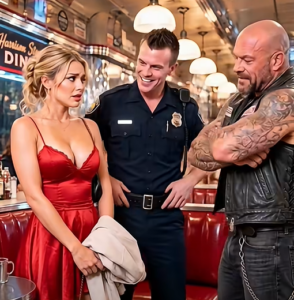
They cleared the diner down to evidence tags and the smell of onions. I signed chain-of-custody for the purse. The envelope went into a separate sleeve as if paper could infect paper. Outside, desert night came down hard and clean. Farris sat in a cage car mouthing the word frame until it bored even him.
I rode with Ruiz to a mobile command post behind the propane tanks. A lab tablet already had the authorization magnified. Date. Amount. A shell company I had flagged in year one as dormant. My father’s title under the name: liaison, county development. A job that had always sounded like fences and grants. It had been plumbing.
Ruiz spoke without looking up.
“He died in a single-vehicle crash. Your file says weather. Our older file says the same weather that blessed three other liaisons that decade.”
“I buried a closed casket and a flag they should not have given a liaison. I was sixteen. I believed the canyon. I used the belief as fuel to come back here and hunt Farris. I did not budget for his pocket to spit my bloodline onto a diner floor.”
“Can you stay on the case.”
“If I recuse, Farris wins the only hour he has left. I disclose the conflict and I finish the warrants. Then I sit in a room and let someone else decide if a daughter is contaminated. I already know I am. That is not the same as being done.”
Kane appeared at the tape with a marshal’s reluctant shadow.
“My people did not partner with cartels. We ran parts. Farris ran people. If that paper says otherwise about the old days, I want it said in front of me.”
“You will hear it in court if it is true,” Ruiz said.
“You will not hear it as a favor.”
Kane looked at me.
“The red dress was a dare.”
“The red dress was a camera. Farris looked at color instead of zippers. That was the whole method.”
He nodded once, a man closing a tab he had never agreed to open, and went back to the bikes.
They processed through dawn. Missing shipments became found in ledgers. A judge who signed off on Farris’s search warrants discovered he had also signed golf foursomes with the shell company’s lawyer. The cartel side of the plumbing was not a desert myth. It was a schedule. RICO does not need poetry. It needs patterns. We had patterns enough to fill the checkered floor.
At noon I asked to see Farris through glass because some sneers need a second meeting to finish dying.
He looked smaller without the diner’s neon to paint him official.
“Your old man taught me the first route,” he said.
“He called it economic development. I called it product. Same trucks.”
“He died on a road.”
“He died when he wanted out and still knew the names. Canyons are cheaper than pensions.”
“You kept the authorization like a relic.”
“I kept it like insurance. Daughters get noble. Paper makes them quiet. Didn’t work. You brought a purse instead of a eulogy.”
“I brought warrants. The purse was just the envelope’s uglier cousin.”
He smiled with no amusement.
“Kane really think you were his.”
“Kane thought a lot of things that were useful until the windows came in. Useful is not holy.”
I stood up before he could turn my father into a speech. Farris did not get to narrate the dead. That was the last privilege I was willing to watch him steal.
They let me go to the canyon in the late day with two agents who understood silence. The guardrail was new. The drop was not. I did not leave flowers. I left a copy of the authorization under a rock like a rude letter and then picked it back up because evidence does not live in rituals.
“You were a liaison,” I said to the air,
“and a first signature, and a man who sent a girl into the world with a story about weather. I am not here to wash the trucks. I am here to park them.”
Wind came up the draw and did not answer. Good. Answers that come from canyons are how counties stay corrupt.
The hearings began in a courthouse that still had a portrait of a sheriff who had trained Farris. They took the portrait down on day two, which was theater, and they put the routing slips on a screen, which was work. I testified about trespass sneers and flash drives and the way a badge looks when it realizes it is jewelry. When they put my father’s name up I did not blink. The defense called it a vendetta. I called it a footnote I had disclosed before I unzipped the purse.
Kane sat in the back for one afternoon, colors covered, and left before anyone could ask him to be a symbol.
Verdicts arrived in the dull way they do when the evidence is boring and fatal. Farris. Two clerks. A wholesaler who had never set foot in the diner and had still owned its freezer. The cartel names would take longer and live in other buildings. The county would elect a new star and swear this time the shine was different. I did not attend the swearing.
Ruiz found me in the parking lot with a box of my own files.
“There’s a protection offer. New byline. New coast.”
“I have a byline. It is going on the corrected obituary and the RICO wrap and then it is going on grocery lists. I am finished embedding in my own childhood.”
“The photograph of the diner is already everywhere. Red dress. Cuffs. You look like a movie.”
“Movies do not have to file FOIA on their fathers. Let them look. I am going to be elsewhere when they blink.”
I drove out of town past Harrison’s, boarded windows, neon dead. A for-sale sign that would become another shell if no one watched. I had watched long enough for one life.
At a rest stop I opened the box and took the only personal thing I had kept from the condolence crate: a photo of my father at a ribbon cutting, scissors on a grant that now read like a joke. I did not tear it. I wrote on the back, in the same kind of ink he used,
First payoff was not a ribbon.
Then I put it in the file and closed the lid.
The desert went dark in the windshield. I thought of Kane’s bark, Farris’s sneer, the waitress’s towel, the envelope’s slow drift. I thought of two years of swallowing bitter tears into a smile that sold curiosity as innocence. I thought of the moment the windows went and the badge became metal on metal.
The lesson was not that all fathers are pipelines. The lesson was that a county can teach a child a holy crash so she will never audit the road. A star can call you trespasser while standing on stolen ground. A purse can be a courthouse. A red dress can be a warrant with better lighting. Blood on an authorization line does not obligate you to bury the truth beside the man. It obligates you to put both names in the same paragraph and let a jury decide which one still gets a flag.
I crossed the county line with the box in the trunk and no one in the mirrors but headlights that did not belong to a club or a cruiser. The syndicate was in pieces. The diner was a husk. The signature was no longer a secret in a dead man’s pocket. It was a public sentence, and I was still here to finish the article without asking the canyon for a quote.