I gripped the folds of my blue dress, knowing this harsh public shaming was a calculated lie designed to conceal the encrypted land deeds hidden inside my luggage
The hooves were closer than the wind. Caleb killed the lamp with one hand and pulled the iron bar from its hooks with the other. I closed the satchel and slid it under the table’s false bottom, the one he had shown me on the drive in, the space just wide enough for the deeds and the confessions. Outside, a voice called his name. Not the sheriff’s. A younger sound, impatient.
“Stay low,” he said. “If they breach, you take the side path to the creek. The horse is tied past the woodpile. Do not wait for me.”
“I didn’t come back to run at the first riders.”
“You came back with the only clean copies. That is the job. The rest is noise.”
The knock was not a knock. It was a boot. The door held. Caleb stood to the left of it, revolver low. A second voice joined the first—older, the cadence of a man used to being answered. I recognized it from the station: one of the councilmen who had laughed when the marshal called me a stranger. They knew the cabin. They had not known we would reach it before dark.
“Morgan,” the older voice said. “We saw the wagon. The girl is with you. Open the door and the deputies stay on the road. Make us break it and the count changes.”
Caleb did not answer. He looked at me and pointed to the rear window. I shook my head. The satchel was under the table. Leaving it was the same as handing it over. He mouthed the word creek again. I stayed.
The next blow splintered the upper hinge. Caleb fired once through the gap, high, a warning that took wood and nothing else. The riders cursed and fell back. Hooves shifted. Then a new sound: more of them, coming from the tree line rather than the track. They had split. The side path would not be empty.
“Lamp,” Caleb said.
I relit it low and set it on the floor so the light would not silhouette him. He moved to the rear window, watched, and came back. “Four on the path. Two still at the door. They want the bag more than they want a shooting. That gives us a minute.”
“The minute ends when they decide the bag is worth the noise.”
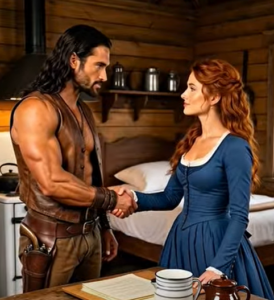
“Then we use it.” He pulled a second revolver from the mantel cache and set it on the table. “You know how to hold it. You do not have to fire it unless they come through. The deeds stay down. If they ask, we burned them. If they search, they search after.”
The older voice returned, closer. “Last offer, Morgan. The girl walks out with the satchel and we call it a misunderstanding. You keep the cabin. The council forgets the station. Otherwise the marshal rides up at dawn and finds whatever story we leave him.”
Caleb looked at me. I shook my head again. He raised his voice just enough. “The satchel is ash. The girl is not your concern. Ride back before the creek trail gets worse in the dark.”
Silence. Then the younger voice, furious. “Check the chimney. Check the woodpile. They didn’t have time to burn anything.”
We heard them moving. Caleb kept the revolver on the door. I kept my hand on the false bottom’s edge, ready to lift it if a boot came through the boards. The search was clumsy. They kicked the woodpile, circled the chimney, argued about tracks. One of them found the horse and swore. Another called that the path was empty. The older voice cut them off.
“Dawn, then. If the bag is here we will find it. If it isn’t, the marshal still has questions about who met the train.” They mounted. The hooves moved off, slower, not quite leaving. A pair stayed within earshot, watching the cabin’s smoke.
Caleb did not relax the revolver. “They will be back with more. Or with the marshal. We cannot stay till dawn.”
“The creek path is watched.”
“The ridge path isn’t. It’s longer. The horse can take it if we lead. We cache the satchel halfway and ride for the territorial office. Ellis still has the earlier copies. These are the originals. If we reach him before they reach the marshal, the station story dies.”
We waited until the watchers’ voices faded into ordinary night noise. Then we moved. I recovered the satchel. Caleb saddled the horse and led it up the ridge trail by hand, the lamp hooded, the revolvers loaded. The climb was steep and dark. Pine needles masked the sound. Twice we stopped because a stone rolled. No one called out. At the halfway shelf he buried the satchel under a cairn of rocks only he would recognize, marked the tree with a cut I could find again, and we rode double the rest of the way. The territorial office was a day’s hard travel. We made the outskirts by the time the sky grayed.
Ellis was already at his desk. He listened, sent a clerk for the earlier copies, and compared the seals on the originals when we produced them from the cairn after a second ride. The match was exact. The confessions carried the councilmen’s names and the dates of the redirected grants. Ellis filed the objection before noon and sent a rider to the marshal with a copy of the warrant request. The marshal, faced with territorial paper instead of a station rumor, held his deputies. The councilmen who had ridden to the cabin were named in the filing. Two were arrested at their own tables before supper. The third crossed the county line and was stopped at the rail spur with a carpetbag of blank deeds.
Caleb and I stayed in the room above Ellis’s office that night. The satchel was in the safe. The horse was stabled. He sat with his back to the wall and did not sleep. I asked him, finally, what he had owed my father.
“He kept a claim of mine from being folded into the same grants,” Caleb said. “Years ago. Didn’t ask for a cut. Told the council the survey marks were already recorded and walked out. They remembered. When he died they assumed I would stay quiet if they left my piece alone. I stayed quiet until the station. Then you stepped off the train with the bag and the same look he used when the numbers did not match.”
“You could have taken the deeds and ridden.”
“I could have. He wouldn’t have. So I didn’t.”
The hearings began the following week. I testified to the station, the cabin, the cairn, and the three years of hiding. Caleb testified to the earlier claim and the night the riders came. The arrested councilmen blamed one another and then blamed the dead clerk who had stamped the forgeries. The clerk’s own ledger, recovered from his house, named the payments. The marshal, under oath, admitted he had been told to watch the train and to treat any woman asking for Caleb Morgan as a fugitive. He did not admit he had known the reason. The judge did not require the admission. The grants were voided. The ranch returned to the estate. The council seats were declared vacant pending a new vote. Two of the men took pleas. The third was tried and convicted on the forgery counts. The murder charge on my father’s death remained open; the evidence was strong on motive and thin on the hand that had held the gun. Ellis said it might stay that way. I said the land was the part that could still be used.
We rode back to the ranch in the late summer. The house had been emptied and then reoccupied by a caretaker the council had installed. He left when he saw the corrected deed. Caleb helped me reset the locks and inventory what remained. The cattle were fewer. The fences needed wire. The work was ordinary and large. He stayed through the first round of repairs and then said he would ride back to his own claim.
“You don’t owe the rest of it,” I said.
“I know. I’ll be on the ridge if the new council starts asking about marks that are already recorded. You know where the cairn was. You can find it again if you need the practice.”
He left at dawn. I watched the dust until it settled. The lesson that stayed with the land was not that a public shaming at a station could be undone by a single night in a cabin. The council had held the records and the marshal for three years. The lesson was that the originals had to leave the luggage and reach a table where the seals could be compared before the riders decided the bag was worth the noise. I had carried them. Caleb had kept the door long enough. Ellis had filed them. What remained was the ranch under its own name, the fences that needed mending, and the decision to treat every new question about the old grants as something that went to the territorial office before it went to the porch. I set the satchel—empty now—on the shelf, checked the locks, and walked out to the first section of wire. The valley was the same size it had been before they tried to rename it. The work could keep it that way. That was the ending the deeds had earned.