Getting violently shoved out of a moving wagon into the dirt by a ruthless caravan leader who sneered that I was holding everyone back
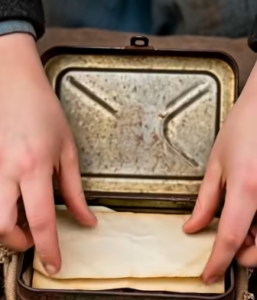
I closed the lockbox without snapping the clasps and left it in the hole like a second heartbeat.
Harold filled the doorway, revolver first, dust still on his coat from the shove he had given me.
“Stand up slow, Clara.”
“You used my name.”
“I used the name on the Pinkerton circular I lifted off a dead rider two valleys back. Cook. Mender. Slow. You almost sold it.”
I rose with my palms out. The blue wool dress was ruined. That was fine. Dresses were covers. Floorboards were not.
“You shoved me off a moving wagon.”
“I shoved a problem into the dirt. Problems that walk back toward a cabin I already searched twice make me curious.”
He stepped in. The door stayed open. Canyon light cut a hard bar across the floor and stopped at his boots.
“Kick the board shut.”
I did not.
“You want the box,” I said.
“I want the box, the journal, and the part of you that thought three months of stew made you invisible.”
A second boot sounded on the porch. Not Harold’s weight. Lighter. Then a cough I knew from the night watch.
“Boss.”
It was Ellis, the quiet teamster who never laughed at Harold’s jokes.
“Wagon’s holding at the bend. Boys want to know if we’re circling back for the girl or pushing for the rail spur by dark.”
Harold did not turn.
“Tell them the girl is accounted for. Tell them if anyone else comes up this path I will assume they like graves.”
Ellis hesitated.
“Accounted for how?”
“Ellis.”
The name was a whip. Ellis left. His steps faded toward the wash.
Harold’s eyes went to the hole.
“Open it.”
I lifted the box onto the threshold plank and raised the lid. Letters. Currency. The confession with his own phrasing in it, the sentences he used when he thought no woman was listening.
He smiled without warmth.
“You copied my hand.”
“I copied your route. The hand was already yours.”
He reached. I let him take the top letter. While he read, I measured the distance to the stove poker, the window, the overhang’s shadow. Pinkerton work was rarely a duel. It was a door left open and a man who liked to talk when he thought he had won.
“This hangs me,” he said.
“This hangs the men you framed. You are already hanging. You just have not felt the drop.”
He leveled the revolver at my chest.
“Walk.”
“Where.”
“To the wagon. You are going to tell the boys you stole from the lockbox and begged me to take you back. Then you are going to sit quiet until the spur. After that you disappear into whatever hole the agency uses for failures.”
“And if I do not.”
“Then the canyon keeps you and I keep the fortune, which was always the cleaner ledger.”
I walked. He followed close enough that I smelled powder and sweat. Outside, the cabin looked smaller under the sandstone, a lie with a porch.
At the bend the freight wagon sat like a blunt animal. Six men. Two on the box. Ellis at the rear wheel, eyes on the dirt. Harold shoved me forward the way he had shoved me off the moving bed.
“Found our thief,” he called.
“She had a box under the cabin. Agency trash. We ride.”
A few grins. One spit. Ellis did not grin.
I looked at him once. Not a plea. A count.
Harold boosted me onto the tailgate with the revolver still casual. The wagon lurched. Dust rose. Canyon walls leaned in.
I spoke just loud enough for the men nearest the canvas.
“He shoved me because I found the railway letters. Not because I was slow. Check the crate marked mill flour. The false bottom is newer than the rest.”
Harold struck me. The wagon did not stop. A man named Peck laughed until Ellis said,
“Hold.”
Harold turned on him.
“You taking orders from a cook now.”
Ellis had a carbine across his knees that had not been there at breakfast.
“I’m taking a look at a crate. Takes a minute. Costs less than riding into a spur with a federal noose in the flour.”
Two others shifted. The expedition had always been a chain of small fears. Harold had been the loudest link. Loud is not the same as first.
Peck pried the crate. The false bottom came up like a confession. Maps. Counterfeit dies. A second ledger that used the same ink as the letters in my box.
Harold raised the revolver toward Ellis.
That was the mistake Pinkerton circulars wait for. A man who points at the help to keep the fortune.
I drove my shoulder into his ribs from the tailgate. Not elegant. Enough. The shot went into canvas. The wagon bucked. Men shouted. Ellis’s carbine spoke once and Harold’s revolver hit the ruts.
Harold hit the boards on his knees, cursing the way men do when the story changes authors.
I dropped off the tailgate, retrieved the revolver with my skirt in the way, and stood where the whole line could see both hands.
“Clara Vance. Pinkerton. The cabin box is still in the floor if anyone wants to finish being surprised. Harold sabotaged the original rail survey, framed three section bosses, and has been running syndicate coin through this supply chain since Green River. You can ride with him into a spur that already has our wire. Or you can sit on the crate and wait for the marshals who have been a half day behind us since the last water.”
Peck looked at Harold.
“You said she was dead weight.”
“She was,” Harold spat.
“Weight that writes.”
Ellis bound Harold’s wrists with the same rope used for the flour sacks. No speech. The desert does not need speeches when the crate is open.
We did not race for the spur. We made a dry camp in the canyon mouth and posted two men who suddenly remembered how to watch a prisoner. I walked back to the cabin before dark because evidence that stays in a hole can grow legs.
The lockbox was where I left it. I added Harold’s revolver to the burlap, closed the floor, and sat on the threshold until my hands stopped performing.
Ellis came up the path alone.
“Marshals will take him at first light. They want you to ride in with the letters.”
“I will.”
“He would have shot you in the cabin.”
“He still might have friends at the spur.”
Ellis nodded at the holster I had taken off a dead man’s story and put on a live woman’s hip.
“You were never slow.”
“I was as slow as the lie required.”
Night dropped fast between the red walls. The wagon’s fire was a small, honest thing. Harold sat apart, mouth working on new bargains no one bought. I slept in short pieces with my back to stone.
At dawn the marshals came out of the wash like the land had been saving them. Stars on coats. Questions that already knew answers. They took the box, the crate, the dies, the man. Peck talked. Two others talked. Ellis said only what he had seen, which was enough.
A marshal with a gray mustache looked at my dress and my hands.
“Vance. Your office thought you were lost when the wagon report came through.”
“I was shoved. Lost is a different verb.”
They gave me a horse that did not love anyone. We rode the last miles to the spur in a column that no longer belonged to Harold.
The syndicate fortune was not a single chest. It was accounts, coin, and a rail contract built on dead names. Over the next days the names came back to the living in the only way paper allows. The framed section bosses walked out of a territorial jail with eyes that did not thank me, which was correct. Thanks is a luxury. Records are a tool.
Harold tried one meeting. A room with a bar on the window.
“You ate my salt for three months.”
“I ate your stew and wrote your routes. Salt was never the contract.”
“You could have taken a cut. The box had enough.”
“The box had enough to bury you. That was the assignment.”
He leaned in.
“You cried when I shoved you.”
“I hid a lockbox. People can do more than one thing with a face.”
I left him there. Some reckonings do not need a second audience.
When the reports were filed I stood once more at the cabin under the overhang. The floorboard fit. The wind still threw grit at the door. The wagon ruts were already softening.
I was not a helpless wanderer. I had not been holding anyone back. I had been holding the proof until the man who used the desert as a dump learned that dirt remembers.
The lesson sat in the heat without needing a pulpit. Cruelty on a moving wagon is cheap theater. Fortune stolen from framed men is still marked. The person you shove into the ruts may be the person who already measured your porch. And the most dangerous cache on a trail is not gold. It is a woman who can cook, mend, fall, get up, and still remember which floorboard sings.
I tied the last letter into my journal, mounted, and rode toward the telegraph that would tell Chicago the supply chain was cut. Behind me the canyon kept its red walls. Ahead, the rails that Harold had tried to own began, at last, to belong to the route on the map and not to the man who thought a shove was the end of a name.