Crying on the wooden floor of the frontier cabin while a ruthless outlaw pinned me by the chin and mocked my tears
The snow did not erase the rest of it. The lead marshal, whose coat carried the name Harlan, stayed inside long enough to look at the maps on the table and the floorboard compartment I had left open. The territorial judge stood by the hearth with his gloves still on, reading the clerk’s confession by firelight. Marcus’s voice faded down the path. The cabin smelled of wet wool and the herbs my mother had hung before she stopped coming to the valley.
“The warrant covers the deeds and the ledgers,” Harlan said. “It does not yet cover the second buyer. If the shell company has already filed in the next territory, we need the transfer records before morning. Your father’s watch is not evidence. The maps are. If you can walk me through how you found the board and who else has seen the clerk’s signature, we can keep the chain short.”
I told him. The board had been loose since the week Marcus first ate at our table. I had lifted it because the grain did not match the others and because my father used to hide the cattle counts there when the tax man rode through. The confession was in the clerk’s hand, dated three days before the alley. It named the payment and the order. Marcus had not known I could read the older survey marks. He had assumed the girl who cried would also believe the seals.
Harlan bagged the maps and the ledgers. The judge initialed a receipt and said the circuit court would see the originals before any claim was called. They left two men on the path and took me to the territorial office because the ribs Marcus had bruised needed looking at and because the statement was better given while the snow was still fresh. At the office I repeated the sequence. A clerk who was not the one in the confession copied the pages. Harlan added the alley report—closed as a robbery—and the new note that the boot prints matched a pair found in Marcus’s saddlebag. The match was enough to reopen the death. It was not enough to finish the company.
In the morning the lawyer the judge had named met me with coffee and a warning. “Marcus will say you forged the confession after the arrest. The clerk who signed it is already in custody in the next county. His statement helps. What I need is whether you want the valley grant returned to the estate or sold to cover the costs. The process is slow either way.”
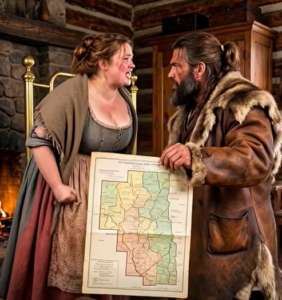
“Returned,” I said. “He meant it to stay.”
“Then we file the objection today. You stay out of the cabin until the search teams finish. If anyone from the company contacts you, you send them to me. Do not explain the maps.”
I stayed in a room above the mercantile. The snow kept falling. On the second day Harlan sent word that the clerk had confirmed the payment and the order. The shell company’s local agent was arrested at the rail depot with a satchel of blank deeds. None of it returned the two months. All of it made the forged seals harder to defend. Marcus’s first appearance was held in a room that smelled of wet coats. I watched from the side because the lawyer said presence sometimes shortened the argument. He did not look at me. His counsel claimed the maps were family papers and the confession was grief. The judge set bail beyond reach and continued the matter. Marcus left without the swagger. The absence was louder than the threats.
The grant objection moved faster than the criminal case. By the end of the month I had a provisional order and a key. I walked the cabin alone the first afternoon. The floorboard was nailed shut again. The maps were gone. The watch was still in my pocket. I lit the fire, swept the hearth, and slept there because the mercantile room had begun to feel like waiting. In the night the wind moved the herbs. I did not dream of the alley.
Customers—neighbors, really—did not come at once. One rode up to ask whether the cattle count was still open. I told him the count was with the court and the land was not for sale. He left a side of bacon and a warning that two men had been asking at the store about the old survey marks. I sent the description to Harlan. The men were the company’s remaining hands. They were advised, in writing, that further questions about the grant would be treated as contact with a witness. They rode south. The bacon cooked clean.
The trial was set for spring. I testified about the board, the confession, and the week Marcus had eaten at the table. Cross-examination suggested a daughter’s invention. The clerk’s statement and the boot-print match made the suggestion costly. Marcus did not testify. The jury returned in a day. The fraud counts were guilty. The murder count followed. Sentencing was continued to summer. I did not attend the reading. The lawyer sent the outcome by rider. I was mending a fence when the note arrived. I finished the wire before I opened it.
Summer sentencing gave him years. The company’s local filings were voided. The grant returned to the estate with a corrected deed that carried the original survey marks. I kept the cabin. I kept the watch. On the anniversary of the alley I walked the path where the report said the robbery had occurred. The snow was gone. The ground showed nothing. I did not leave a marker. The lesson that stayed was smaller than the warrant and harder to forge. A man could ride in with seals and a smile and still need the girl who found the board to stay quiet or stay gone. I had stayed. The marshals had done the rest. What remained was the land, the corrected deed, and the decision to treat every new question about the old marks as something that went to the lawyer before it went to the table. I wound the watch, set it on the mantel, and let the fire settle. The valley could keep its weather. The grant could keep its name. That was the ending the papers had earned.
The snow kept falling after the marshals left, filling the tracks on the path faster than I could count them. Harlan had taken the maps and the ledgers. The territorial judge had initialed the receipt and ridden back toward the circuit court with two men for escort. The cabin held only the fire, the herbs moving in the draft, and the watch ticking against my ribs where I had not yet put it down. Marcus’s voice was already gone. What remained was the quieter work of proving the papers had been in the floor before anyone with a badge arrived.
I did not sleep. I swept the hearth, nailed the loose board shut again so the grain would match, and wrote the sequence while it was still sharp: the week the board first shifted, the night I lifted it because the cattle counts used to live there, the clerk’s hand on the confession, the date three days before the alley. When the light grayed I banked the fire and walked to the mercantile. The owner, a woman who had sold my father coffee and said little, gave me the room above the store and a pot that was already warm. She did not ask about the cabin. She asked whether the marshals had left anyone on the path. I said two. She nodded and sent a boy with a note to the territorial office confirming I would come in for the formal statement at noon.
The statement took three hours. Harlan asked the same questions in different order so the record would show the answers did not change. A clerk who was not the one in the confession copied every page of the ledgers and marked the seals. The boot-print comparison arrived while we were still at the table: the pair in Marcus’s saddlebag matched the casts taken from the alley the morning after my father was found. The match reopened the death. It did not yet name the second buyer. Harlan set that aside and told me the shell company’s local agent had been seen at the rail depot with a satchel. Agents were already riding. I signed the statement. The lawyer the judge had named—an older man called Ellis who kept his gloves on indoors—met me afterward with coffee and the list of what the estate could claim.
“The grant can be objected to before the circuit court calls the forged deed,” Ellis said. “Marcus will argue you built the confession after the arrest. The clerk who signed it is in custody two counties over. His statement will help if he gives it. What I need today is whether you want the land returned or sold. Costs will come either way. The process is not fast.”
“Returned,” I said. “He surveyed it to keep it.”
“Then we file this afternoon. You stay out of the cabin until the search teams finish their inventory. If anyone from the company or the clerk’s office contacts you, you send them to me. Do not walk them through the maps. Do not explain the watch.”
I stayed in the room above the mercantile. The snow did not stop. On the second day a rider brought word that the clerk had confirmed the payment and the order. He had been promised a percentage of the redirected grants and had received only the first installment. The rest was supposed to arrive after the circuit court signed. It had not arrived. He was willing to say so under oath. Ellis sent the confirmation to the court with the objection. The company’s agent was arrested at the depot before dark, satchel still closed. Inside were blank deeds carrying the same seal Marcus had waved in my face. None of it returned the two months. All of it made the performance in the cabin harder to call a misunderstanding.
Marcus’s first appearance was held in a room that smelled of wet wool and stove smoke. I watched from the side bench because Ellis said the record sometimes noted who was present and because I needed to see whether the swagger survived the handcuffs. It did not. His counsel argued that the maps were family papers, the confession was a daughter’s grief, and the boot prints could have been left by any rider who used the alley. The judge—the same one who had stepped into the cabin—set bail beyond what the shell company could post overnight and continued the matter for the clerk’s statement. Marcus looked at the floor when they stood him up. He did not look at me. The absence of the amber stare was louder than the threats had been on the boards.
The search teams finished at the cabin on the fourth day. They left the herbs, the table, and the nailed board. They took the remaining cattle counts and a second set of survey marks my father had penciled on the underside of a drawer. Ellis said the marks matched the original grant and would help the objection. I was allowed back the next morning. The path was drifted. I cleared the stoop, lit the fire, and slept in the chair because the bed still held the shape of the week Marcus had eaten at the table. In the night the wind moved the herbs the way it always had. I woke once, checked the watch, and went back to sleep. The alley did not follow me into the dark.
Neighbors came slowly. A man who had run cattle with my father rode up to ask whether the count was still open and whether the land was spoken for. I told him the count was with the court and the land was not for sale. He left a side of bacon and mentioned that two riders had been asking at the store about the old survey marks—where the corners sat, whether the girl knew the numbers. I sent the description to Harlan by the mercantile boy. The riders were the company’s remaining hands, the ones who had not been at the depot. They were stopped on the territorial road and advised, in writing, that further questions about the grant or the cabin would be treated as contact with a witness. They rode south before the advice could be appealed. The bacon cooked without smoke. I ate it at the table where the maps had been and did not set a place for anyone else.
The criminal case moved on the clerk’s statement and the boot-print match. The civil objection moved on the original survey marks and the blank deeds from the satchel. Ellis filed both and kept me clear of the filings. I mended fence where the snow had bent the wire, counted the remaining cattle, and wrote the days into a book that held only weather and work. Harlan sent one more note: the second buyer, the man whose name appeared on the shell company’s distant filings, had been located in a territorial capital three days’ ride away. He would be questioned. He would likely claim he bought in good faith. The claim would be tested against the dates on the ledgers. I was not required to travel. I stayed. The watch kept its time on the mantel once I trusted the cabin enough to leave it there.
Spring arrived with mud and a trial date. I testified on the second day. The questions were the ones Harlan had already asked: the board, the confession, the week Marcus had sat at the table and spoken of corners and grants as if he were measuring them for the first time. Cross-examination suggested I had opened the floor after the arrest and written what I needed. Ellis did not object to every implication. He let the clerk’s statement answer most of them and the boot-print match answer the rest. Marcus did not testify. His counsel called a surveyor who said the marks could be read more than one way. The surveyor had not seen the penciled set from the drawer. The jury was out for six hours. They returned guilty on the fraud counts before supper and on the murder count before the lamps were lit. Sentencing was continued to summer so the second buyer’s statement could be added if it arrived. I rode home in the dark. The cabin was cold. I lit the fire, wound the watch, and sat until the ticking was the only sound.
The second buyer’s statement arrived in May. He claimed good faith and produced a receipt. The receipt was dated after the alley and before the circuit court had been scheduled to sign. Ellis used the gap. The buyer’s local agent, already in custody, confirmed the receipt had been prepared in the satchel and backdated on instruction. The instruction had come from Marcus. The detail was added to the sentencing memorandum. I did not attend the hearing. Ellis sent the outcome by rider: decades, consecutive on the murder count, the forged deeds voided, the grant restored to the estate with a corrected instrument that carried the original survey marks and the judge’s seal. I was replacing a post when the rider found me. I finished setting the post, then opened the letter. The numbers were large. The land was the same size it had been before Marcus rode in.
Summer held. The company’s remaining filings in the next territory were withdrawn after the corrected deed was recorded. Two more hands were advised and left. One sent a letter to the mercantile claiming he had only asked about grazing. Ellis answered it. I did not. The cabin stayed lived in. I kept the cattle count current and the fence mended. Neighbors bought beef and paid in coin or labor. No one asked to see the floorboard. The watch stayed on the mantel except when I carried it to the lower pasture. Its ticking was ordinary. Ordinary was the resource I had not expected to recover.
On the anniversary of the alley I walked the path the report had called a robbery. The ground showed nothing the snow and the mud had not already rearranged. I did not leave a marker. I stood long enough to hear the creek and then walked back. The lesson that had taken the full turn of seasons to settle was smaller than the warrant and harder to counterfeit with a seal. A man could ride into a valley with forged papers and a federal story and still need the person who found the board to stay quiet, stay gone, or stay convinced the signatures were real. I had stayed. I had opened the board before he could wave the deed in a courtroom that had not yet seen the clerk’s hand. The marshals had done the rest—the match, the satchel, the statement, the years. What remained was the land under its own name, the corrected deed in Ellis’s file, and the decision, repeated each time a stranger asked about corners or counts, to send the question outward before it reached the table. I wound the watch when I returned, set it on the mantel, and let the fire find its level. The valley kept its weather. The grant kept its marks. That was the ending the papers had earned, and it was the one I intended to keep by living inside it rather than recounting it. The herbs moved in the evening draft. The ticking continued. Outside, the path held only the tracks I had made walking home.