As Darius Vane ripped the antique deed from my hands in front of the packed town hall and declared my ancestral land worthless
The horses hit the last rise in a hard rhythm that the mountain already knew.
Darius’s barrel dipped a fraction, then came back up as if pride could outrun hooves.
“You’re bluffing.”
“I’m a clerk,” I said.
“I file things. I don’t bluff with federal paper.”
Lanterns broke the treeline. Tessa Renford rode first, coat dark, hair pinned like a woman who had not come to negotiate a porch. Beside her a man in a city hat held a satchel that did not bounce like luggage. Two riders in drab coats flanked them with the particular boredom of men who have already decided who leaves standing.
Darius smiled for the audience arriving.
“Miss Renford. You’ve come a long way for ash.”
Tessa dismounted without waiting for a hand.
“I came for a deed my grandfather put in a hearth because men like you read desks and not chimneys.”
The prosecutor swung down and looked at the revolver as if it were a filing error.
“Mr. Vane. Lower that. This clearing is now a scene.”
Darius did not lower it.
“This is private land.”
I held up the soot-stained stack.
“Private to the signature of your father, who granted it away. You have been collecting rent on a ghost title for thirty years.”
Tessa’s eyes found mine.
“You’re the clerk.”
“I was. He told me to void you before you arrived. I took the wagon instead.”
“And the lockbox?”
“Where your family left it when they learned Vane men prefer fireplaces to courts.”
Darius laughed, thin.
“A ribboned fairy tale. My father signed a hundred courtesy papers. None of them survive a proper survey.”
The prosecutor opened the satchel on a fallen lintel. Copies. Affidavits. A death record for Tessa’s father that listed fever and a doctor who had also signed three other convenient fevers in Vane country. A note in my grandfather’s hand, the one he had whispered about in town hall before Darius ripped the antique deed from Tessa’s predecessor and called the land worthless.
Transferred to a ghost. Meaning: transferred to a name the county could not bully because the name was already carved on a stone and still held ink.
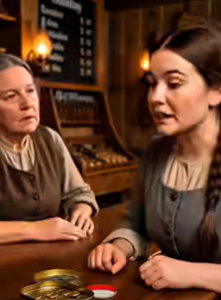
Tessa read the top sheet by lantern.
“It is not worthless,” she said.
“It was never yours to declare.”
Darius’s thumb found the hammer again.
“Dead people don’t file appeals.”
“Living clerks do,” I said.
“Living heirs do. Living prosecutors do. You cocked a gun on a federal witness in a county that already wired the capital when the town hall doors slammed.”
The flank riders stepped wider. Darius saw the geometry change and made the choice men make when a fortune is a story they have told too long.
He swung the barrel toward Tessa.
I moved because clerks also have bodies. The shot tore brick from the hearth behind her. The second shot never came. A drab-coat rider put Darius on the ash with a weight that did not care about wool lapels. The revolver skittered into the cracked chimney like a rat.
Darius spat grit.
“You have no idea what this valley runs on.”
Tessa crouched, not close enough to be kind.
“It runs on titles. Yours was a stolen signature and a clerk too frightened to say so in daylight. Tonight the daylight arrived late and on horseback.”
They bound him with a strap from his own saddle. The prosecutor tagged the lockbox, the hammer, the ledger Darius had slammed on my counter that afternoon. I stood in the smell of powder and old smoke and felt the trembling leave my mouth only to settle in my knees.
Caleb the driver appeared at the edge of the lanterns, hat in both hands.
“I heard the shot. I ain’t with him.”
“You hauled me here,” I said.
“That is with me. Stay with that.”
He nodded as if a sentence had finally been simple.
We did not linger in the ruins. Ruins are good for hiding paper and bad for holding prisoners. The ride down to town was a line of hooves and one man who kept testing the strap like history might loosen it.
Town hall was still lit. Word moves faster than wagons when a gun goes off on a mountain. Martha from the store stood on the steps with her arms folded, matches and ribbons forgotten.
“I told you he covers tracks,” she said to me.
“He covered them with clerks. That part is finished.”
Inside, under the same lamps that had watched Darius rip a deed and call a family a nuisance, the prosecutor laid out the hearth papers beside the voided filings. My grandfather’s whisper became an exhibit. The ghost was a trust in Tessa’s line, recorded off-books because on-books was how Vane ate.
Darius sat cuffed in the front bench as if the room were still his theater.
“The girl has no standing,” he said, repeating the line he had used on me.
Tessa stood.
“I have the original grant, the hearth cache, the fever that was not a fever, and a clerk who refused to finish your sentence. That is standing. You have a revolver and thirty years of other people’s acres.”
A councilman who had voted with Vane for a decade found the floor interesting. Another asked if compensation might be discussed. The prosecutor said compensation was a word for later and theft was a word for now.
I gave my statement without looking at Darius. The afternoon in my office. Void the Renford deed. The girl has no standing. The ledger slammed. The wagon. The hollow mortar. The smile when he thought a country girl and a corrupt clerk were the whole opposition.
When they asked why I had not voided it, I said,
“Because my name would have been on the lie. I have carried enough of his air.”
They held Darius in the brick room behind the hall. Lawyers would come. They always come for men with watches. Tessa walked the corridor with me after the lamps burned lower.
“You could have stayed at your desk and been safe.”
“Safe is how he got thirty years.”
“What do you want from this?”
I thought of the oak doors slamming, the bitter taste, the satchel, the chimney like a cracked monument.
“I want the books to match the ground. I want the next clerk to know a slammed ledger is not scripture. I want your name on the mountain without a man in a wool coat explaining that you do not exist.”
She nodded once.
“The estate will need an honest recorder. If you still want the work when this room stops smelling like powder.”
“I want the work. I do not want a gift that looks like a muzzle.”
“It is not a gift. It is a job you already started when you packed the satchel.”
Dawn came thin and ordinary. That was the shock. The valley did not change color because a title came home. Cows still called. The general store still opened. Martha sold coffee and said less than she knew, which was a kind of respect.
By noon a surveyor was ordered up the trail with the original deed and two witnesses who were not Vane cousins. By evening the first of the manipulated parcels grew a notice that made lesser partners suddenly remember distant travel. The federal man sent a wire that made the capital send another man. Layers. That was how engineered lies came apart: not with one speech, but with many dull pages.
Darius asked for me on the second night. I went with a deputy at the door.
“You were trembling in that office,” he said.
“I was. Then I rode.”
“You think Tessa will keep you? Heirs forget the help.”
“Then I will be a clerk in a cleaner county. Either way your watch does not set my clock.”
He leaned forward until the chain stopped him.
“My father signed that grant under duress.”
“Then he should have filed the duress. He filed the grant. You filed the silence. I filed the hearth.”
I left him the last word and did not carry it out of the room.
On the fourth day Tessa and I climbed back to the homestead without guns. The lockbox cavity was empty of paper and full of cold air. She set her hand on the split chimney.
“They killed my father on a road and called it weather. They would have killed you for a ribbon.”
“They still might have friends.”
“Friends who like surveys less than bourbon. I can live with that weather.”
We stood until the wind through the fracture sounded like a creek and not a threat.
I returned to the office that had felt like his lungs. I unlocked the drawers. I put the gold pocket watch he had left on my counter—forgotten in his haste to hunt a girl on a mountain—into an evidence envelope. I wrote VOID in the margin of his command and dated it with the night the horses came.
People came to stare. People came to file. A few came to apologize for laughing when Darius called the Renford land worthless in a packed hall. I took the filings. I let the apologies sit on the counter without stacking them into a throne.
Weeks later the court called the grant valid and the fever convenient and the revolver an admission with poor manners. Darius lost the acres, the partners, the story that he owned the air. He did not lose his voice. Men like that never do. He used it in a smaller room. The valley used the big one again.
Tessa took possession without a parade. Parades are how the next Darius measures a target. She hired hands who had been quietly underpaid on their own family’s grass. She asked me to reconstruct the true chain of title back to the first Renford who stacked those hearth stones.
I did. It was slow. Truth at a desk is slow on purpose. That is what makes it harder to steal.
On a late afternoon I stood on the town hall porch where I had been left with nothing but clothes and a bitter mouth. The oak doors opened and closed on ordinary errands. No slammed finality. A boy ran past with a newspaper that spelled Vane wrong and Renford right.
Grandfather had been right. The estate had been transferred to a ghost. The ghost was not a haunt. It was a legal name that could not be bullied in a hallway because it already belonged to the dead and therefore to the living who refused to let the dead be used as a blank.
I locked the office at dusk. The mountain held its chimney and its creek and its new notices. Darius had thought a country girl and a clerk were insects. He had not counted on a lockbox, a whispered transfer, a woman who arrived with a prosecutor, and a trembling voice that learned to carry paper through gun smoke.
The lesson did not need a carved lintel. Land declared worthless by the man holding the gun is often the only land that still has a true name. Agreements built on stolen signatures last until someone opens the hearth. And the person told she has no standing is sometimes the person who kept the standing in a satchel all the way up the trail, then held it to her ribs while history finally found a horse.