A hunter shoved me against the rough logs and tore my faded blue dress, I swallowed the bitter lump in my throat
The bolt held for the first kick. Luke killed the lantern and pulled me behind the table. The envelope went into the flour sack he had already half-filled, the one that looked like ordinary stores if they only glanced. Outside, a voice I knew from the porch—the hunter who had torn the dress—called for the door to open before the count reached ten. He did not reach ten. The second kick splintered the frame. Luke fired once through the gap, low, into the boards at their feet. The boots retreated. Someone cursed. Then the hunter’s voice again, tighter.
“Clara. We know the brother is in there. Send the grants out and the rest of you can walk. Make us burn the cabin and the walk gets shorter.”
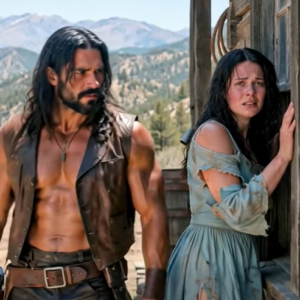
Luke looked at me. I shook my head. The sack was the only clean copy we had left after the store. He mouthed the word window. I nodded. While he kept the revolver on the door I slipped to the rear, lifted the sash the rest of the way, and dropped into the brush. The horse Luke had tied beyond the woodpile was still there. I led it, not rode it, up the narrow cut that ran behind the cabin toward the ridge. Behind me the hunter was still talking. Luke answered once, something about the grants already being with the marshal. Then a second shot, not his. I did not stop.
The cut opened onto the old survey trail. I mounted there and rode for the territorial road, the sack lashed to the saddle. The light was gone. Pine branches caught my sleeves. Twice I heard riders on the lower track and held the horse until they passed. By the time I reached the fork where the marshal’s patrol was supposed to meet any courier carrying the governor’s seal, the sky was gray. A single rider waited. Not the marshal. A deputy I did not know, young, rifle across the saddle.
“You’re the sister,” he said. “Luke sent word the cabin was hot. The marshal is at the ridge cache with the earlier pages. If you have the confession, we ride now. If you don’t, we still ride, but the morning gets harder.”
“I have it.”
We rode. The deputy did not ask to see the seal. At the cache—a line shack with a stone chimney and no sign—the marshal was already awake. His name was Harlan. He took the sack, broke the seal in front of me, and read the mayor’s hand by lamplight. The confession named the forged grants, the payment to the hunter, and the night my father had been walked into the timber and not walked out. Harlan set the pages with the others he already held and sent the deputy back down the trail with two men to find Luke.
“If your brother kept them talking,” Harlan said, “he bought the hour we needed. If he didn’t, we still have the seal. Either way you stay here until we know which.”
I stayed. Dawn came without word. Then the deputy returned with Luke on a led horse, shoulder wrapped, face the color of the trail dust. He had gone out the front after I cleared the window, fired twice more, and taken a graze that bled enough to convince them he was finished. They had searched the cabin, found the empty table, and ridden for the store. By the time they reached it the marshal’s men were already there. The hunter was in custody. The mayor was not yet.
Luke sat on the shack’s step while Harlan’s medic cleaned the graze. “You made the fork,” he said.
“You made the noise.”
“Even trade.” He closed his eyes for a moment. “The secondary ledger is still in the flour barrels. They didn’t look low enough. If we can get it to Harlan before the mayor’s clerk ‘finds’ a different version, the confession has a twin.”
Harlan heard. He sent three men with Luke’s directions. They returned before noon with the ledger, flour still in the seams. The entries matched the confession’s dates and amounts. The mayor’s clerk, faced with both, named the remaining councilmen who had signed the quiet orders. Two were arrested at their desks. The third was stopped at the county line with a carpetbag of blank grants. The hunter, already talking, added the location where my father’s watch had been taken off and thrown into the creek. Divers retrieved it. I identified the engraving because I had watched him wind it every morning for years.
The hearings ran through the next month. I testified to the porch, the cabin, the sack, and the two years of accusations. Luke testified to the barrels and the night he moved the grants. The mayor called the confession a forgery until the clerk’s statement and the watch were entered. Then he asked for a deal. The deal named the remaining hands and left the murder count open; the evidence was strong on motive and payment, thinner on which man had held the gun in the timber. Harlan said the count might stay open. I said the land could still be used. The grants were voided. The ranch returned to the estate. The council seats were declared vacant. Luke healed. The shoulder scar stayed.
We rode back to the valley in the late summer. The cabin at the edge of the woods was half-burned; the hunter’s men had set it after the search failed. The main house was standing. We reset the locks, inventoried what remained, and hired two men who had never taken the mayor’s coin to mend fence. Caleb—no, Luke—stayed through the first round of repairs and then said he would ride to the territorial office to file the final corrected deed in person.
“You don’t have to carry the rest,” I said.
“I know. I’ll be back before the first snow if the filing goes clean. If it doesn’t, you’ll see me sooner.”
He left at dawn. I watched the dust settle and then walked the creek to the place the divers had described. The water moved over stones and showed nothing. I did not leave a marker. The lesson that stayed with the work was not that a public tearing of a dress could be undone by a single night’s ride. The mayor and the hunter had held the story and the porch for two years. The lesson was that the confession and the ledger had to leave the cabin and the barrels and reach a table where the seal could be read before the riders decided the sack was worth the fire. I had carried one. Luke had kept the door. Harlan had matched them. What remained was the ranch under its own name, the fences that needed wire, and the decision to treat every new accusation as something that went to the territorial office before it went to the porch. I set the empty sack on the shelf, checked the locks, and walked out to the first section of fence. The valley was the same size it had been before they tried to rename the debts. The work could keep it that way. That was the ending the papers had earned.