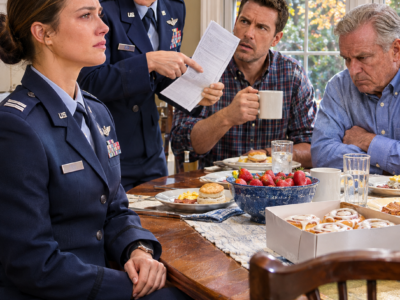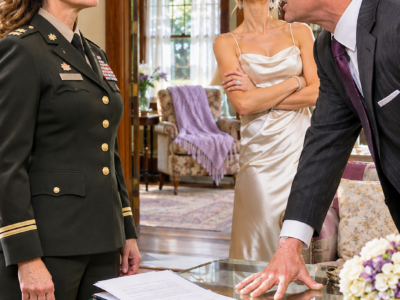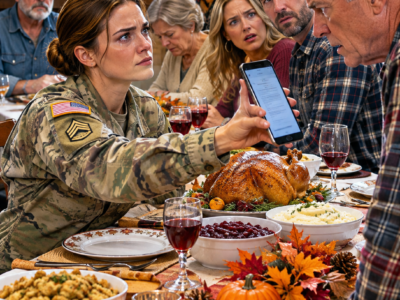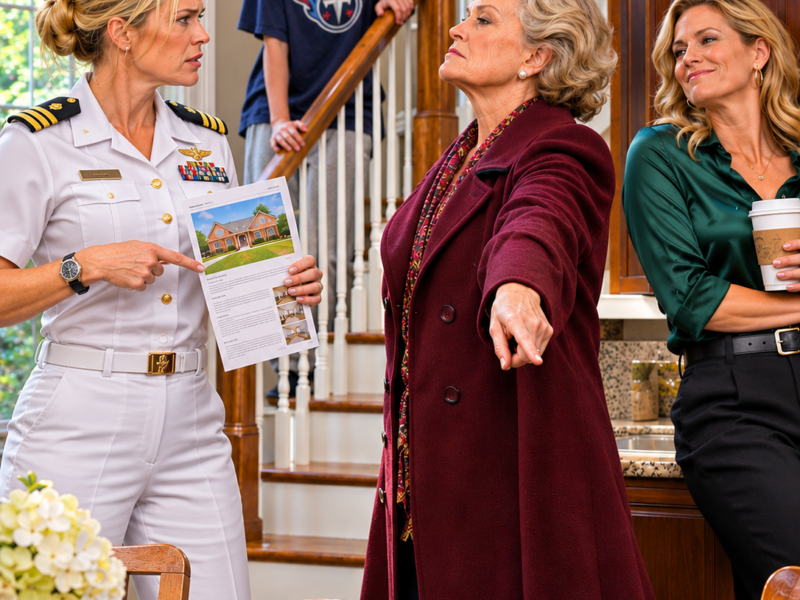
My Mother-in-Law Put My House Up for Sale Just Three Weeks After I Buried My Husband, Then Demanded We Leave. My Sister-in-Law Smiled While My Grieving Daughter Listened From the Stairs, Completely Unaware of What Was Coming Next. After 28 Years in the Army, I Thought I Understood Betrayal, Until I Found My Husband’s Hidden Envelope. But When His Attorney Locked the Conference Room Door, I Realized Our Family’s Secrets Were Far From Over.
My Mother-in-Law Put My House Up for Sale Just Three Weeks After I Buried My Husband, Then Demanded We Leave. My Sister-in-Law Smiled While My Grieving Daughter Listened From the Stairs, Completely Unaware of What Was Coming Next. After 28 Years in the Army, I Thought I Understood Betrayal, Until I Found My Husband’s Hidden Envelope. But When His Attorney Locked the Conference Room Door, I Realized Our Family’s Secrets Were Far From Over.
Part 1…
Three weeks after I buried my husband, his mother put my house up for sale and gave my 17-year-old daughter and me exactly 30 days to get out.
My sister-in-law smiled.
That smile still haunts me.
Not because it frightened me. I’ve spent 28 years in the United States Army. I’ve faced situations far more intimidating than a woman holding a Starbucks cup.
It haunts me because my husband had been gone for only 21 days.
And somehow, his family had already decided that my daughter and I no longer belonged in the home where we’d built our lives.
It happened at 10:17 on a Saturday morning.
I remember the exact time.
I’d glanced at the microwave clock when the doorbell rang. I’d been home from Fort Campbell for less than an hour.
My boots were beside the mudroom door. I was wearing an old pair of jeans and my tan Army T-shirt.
I’d planned a quiet morning.
There were insurance forms to organize, bills to review, and a growing pile of paperwork connected to my husband’s sudden passing.
I was 52 years old.
I had spent almost three decades learning how to stay calm under pressure.
But nothing in my military training had prepared me for losing Rob.
And certainly nothing had prepared me for what was waiting outside my front door.
Margaret Whitmore, my mother-in-law, stood on the porch wearing her good coat.
Behind her was her daughter, Linda.
Neither woman looked surprised to find me home.
Neither offered a hug.
Margaret walked directly into my kitchen without removing her coat.
Linda followed, carrying her coffee with the casual confidence of someone arriving for a pleasant family visit.
Then Margaret placed a sheet of paper on my kitchen table.
“We’re selling,” she announced.
I stared at her.
“Robert’s house. You and Emily have 30 days to leave.”
For a moment, I genuinely thought I’d misunderstood.
Grief does strange things to your mind.
Sometimes you hear words without understanding them. Sometimes ordinary conversations feel like they’re happening underwater.
But there was nothing unclear about the paper sitting in front of me.
It was a real estate listing.
For my house.
Our brick home on Hawthorn Drive.
The house where Rob and I had raised Emily, hosted Thanksgiving dinners, and celebrated birthdays.
The house where we’d replaced two water heaters and argued for six years about repainting the dining room.
The house where his coffee mug was still sitting on the shelf because I couldn’t bear to move it.
I picked up the listing.
“You’re selling my house?”
Margaret’s mouth tightened.
“Robert’s house.”
Two words.
That was all it took.
Twenty-eight years of military service had taught me how to recognize a confrontation before it became one.
And this wasn’t a misunderstanding.
This was deliberate.
Linda leaned against my kitchen counter, sipping her coffee.
“Be grateful Mom’s giving you 30 days.”
Then she smirked.
I looked at her.
My husband’s sister.
A woman who had stood beside us at his funeral less than a month earlier.
A woman who had watched my daughter struggle through the worst days of her young life.
And now she was enjoying this.
Something inside me went very still.
I wanted to shout.
I wanted to ask how two grown women could walk into a grieving family’s home and behave as if they were discussing furniture delivery.
But I didn’t.
I set the paper down.
“Are you finished?”
Linda blinked.
Margaret straightened.
“This property came from the Whitmore family. Robert understood that.”
I frowned.
Rob had never explained it that way.
I knew Margaret had helped him purchase the property years earlier.
Her name had been connected to the original paperwork somehow.
But Rob handled the deed, property taxes, and refinancing documents.
I handled our monthly finances.
We had divided responsibilities that way for years.
And I’d trusted him.
Completely.
Before I could ask another question, I heard a floorboard creak upstairs.
I turned.
Emily stood halfway down the staircase.
She was wearing gray sweatpants and one of Rob’s Tennessee Titans shirts.
Since the funeral, she’d been wearing his clothes almost every day.
Sometimes I’d find her asleep holding one of his sweatshirts.
Other times, she’d sit silently at the kitchen island, staring at the empty chair where he used to eat breakfast.
She looked so young that morning.
Too young.
“Grandma?”
Margaret turned.
Emily’s eyes moved toward the listing.
Then back to me.
“Mom? Are we moving?”
Nobody answered.
Not immediately.
And that silence was worse than anything Linda had said.
Because Emily understood.
She understood enough to be afraid.
I walked to the front door and opened it.
“I think you should both leave.”
Linda gave a little laugh.
“Diane, ignoring this won’t make it disappear.”
“I heard you.”
Margaret picked up her purse.
But she left the listing behind.
At the doorway, she looked back at me.
“Thirty days is reasonable.”
I closed the door.
Slowly.
My hands were steady.
That surprised me.
Emily was still standing on the stairs.
“Mom, can Grandma actually do that?”
I wanted to say no.
I wanted to promise that everything would be fine.
That’s what mothers are supposed to do, isn’t it?
Make the world feel safe.
Especially when their children have already lost so much.
But I’d spent too many years dealing with difficult realities to offer a promise I couldn’t support.
“I don’t know yet, sweetheart.”
Emily swallowed.
Then nodded.
She didn’t cry.
Somehow, that frightened me more.
For the next hour, I searched through Rob’s office.
Every drawer felt like an intrusion.
His reading glasses were still beside his keyboard.
A yellow legal pad lay open on his desk.
Written in his familiar handwriting were three reminders.
Call supplier.
Furnace motor.
Emily tires.
Ordinary things.
Painfully ordinary things.
Rob had been thinking about furnace repairs and our daughter’s car tires.
Not leaving us.
Not dying.
Not preparing me for a fight with his own family.
I sat in his chair and pressed my palms against my eyes.
For a few seconds, I couldn’t breathe normally.
Then I forced myself upright.
Emily needed me.
And I needed answers.
Around noon, I went upstairs to our bedroom.
Rob kept a gray SentrySafe behind a stack of blankets in the closet.
I knew the combination.
I was looking for our homeowner’s insurance policy.
Instead, beneath the insurance folder, I found something I had never seen before.
A sealed manila envelope.
My name was written across the front.
Diane.
Underneath, in Rob’s unmistakable block handwriting, were words that made my stomach tighten.
“If anything happens to me, take this to Tom K. Don’t open it alone.”
I sat down on the closet floor.
My hands started shaking.
Tom Keen.
Rob’s attorney.
I knew him from Christmas cards and one painfully boring business dinner that I now wished I’d paid more attention to.
Why would Rob leave something like this?
And why had he never mentioned it?
I turned the envelope over.
It was sealed.
Whatever was inside, Rob had deliberately kept it from me.
My first instinct was to open it immediately.
But something about his handwriting stopped me.
Rob wasn’t dramatic.
He wasn’t a man who left mysterious instructions for fun.
If he’d written those words, he had a reason.
So I put the envelope in my purse.
And waited until Monday.
I called Tom’s office from the parking lot at Fort Campbell.
His receptionist connected me immediately.
When I described the envelope, his voice changed.
“Don’t open it.”
“Rob already wrote that.”
“Good. Bring it to me.”
There was no hesitation.
No curiosity.
Almost as if he’d been expecting this call.
That realization made my skin prickle.
I arranged to leave work early and drove directly to his office in downtown Clarksville.
The envelope sat on my passenger seat the entire way.
I kept glancing at it.
As though the paper itself might explain something.
Tom met me in a small conference room.
He was 63, silver-haired, and usually possessed the calm confidence of someone who’d spent forty years untangling other people’s legal problems.
That afternoon, he looked different.
He turned the envelope over once.
Then looked directly at me.
“Did Rob ever mention a disagreement with Margaret about the house?”
“No.”
“What about Linda?”
“No.”
Tom exhaled.
Then carefully opened the envelope.
Inside were several documents.
A letter.
And a small USB drive.
He removed the first document and started reading.
His expression changed.
He went back to the beginning.
Read one line again.
“Tom?”
He didn’t answer.
Instead, he stood, walked across the conference room, and turned the lock on the door.
Click.
The sound seemed unusually loud.
I stared at him.
“What’s going on?”
Tom returned to the table and pulled his chair closer.
“Mrs. Whitmore, you need to sit down.”
“I am sitting.”
But the look on his face made me straighten.
He placed one hand over the document.
As if he didn’t want me reading ahead.
“What did Rob do?” I whispered.
Tom shook his head.
“Rob didn’t do anything wrong. But he knew there might be a problem after he was gone.”
“What problem?”
Tom looked at me.
“The kind that walked into your kitchen Saturday morning.”
My heart began pounding.
He separated the documents into three stacks.
The first was a warranty deed dated six years earlier.
Our address was printed at the top.
Hawthorn Drive.
Tom explained that Margaret had helped Rob with the original land purchase.
Her name had remained connected to part of the ownership longer than necessary.
“So she owns part of our house?”
“Not according to this.”
He pointed toward the deed.
I leaned forward.
Six years earlier, Margaret had transferred her remaining ownership interest to Rob.
Her signature appeared at the bottom.
Notarized.
Beneath it was a settlement statement.
And a copy of a cashier’s check.
$126,000.
Payable to Margaret Whitmore.
I stared at the amount.
“Rob paid her?”
“It certainly appears that way.”
“Then why is she trying to sell our home?”
“That’s what I intend to find out.”
For the first time since Saturday, I felt something loosen inside my chest.
Maybe Emily wouldn’t lose her home.
Maybe we could keep the only familiar place we had left.
But Tom raised one finger.
“Don’t celebrate yet.”
He needed certified county records.
He needed to verify that the deed had been recorded properly.
And he wanted to know whether anything had been filed afterward.
I nodded.
Then asked the question that mattered most.
“What do I tell Emily?”
Tom softened.
“Tell her nobody is making her pack a suitcase.”
I closed my eyes.
For one brief moment, relief washed over me.
Then Tom pulled another document toward him.
“But Diane, there’s more.”
It was a letter.
Written by Rob.
He pushed it across the table.
The first sentence nearly broke me.
“Diane, if you’re reading this, I ran out of time to explain something I should have told you myself.”
I couldn’t continue.
Three weeks earlier, I’d held my husband’s hand in a hospital room at Tenova Healthcare.
One minute, we’d been discussing whether Emily needed new tires before winter.
Then everything changed.
A ruptured cerebral aneurysm.
No long illness.
No months to prepare.
No meaningful goodbye.
And now my husband was speaking to me through a piece of paper.
“I can’t read this here.”
Tom nodded.
“Take your time.”
I folded the letter and placed it in my purse.
The USB drive stayed with Tom.
Before I left, he gave me three instructions.
Don’t sign anything.
Don’t allow anyone to inspect or photograph the house without checking with him.
And forward every message from Margaret or Linda.
The third instruction became useful immediately.
I hadn’t even reached my car when Linda texted.
“Realtor needs access Thursday at 4:00. Make sure the house is presentable.”
I stared at the screen.
She had already scheduled a showing.
Without my permission.
Without a conversation.
Without knowing whether her mother even had the legal right to sell the property.
I showed Tom.
For the first time that afternoon, he almost smiled.
“She’s efficient.”
I laughed.
Only for a second.
But it was my first real laugh since Rob died.
Then I replied.
“No one has permission to enter my home. Please direct all property questions to my attorney.”
Linda responded almost immediately.
“Your attorney? Seriously?”
I didn’t answer.
Tuesday passed in a blur of Army paperwork, insurance calls, and bills.
Rob’s business was still operating under his foreman, but payroll and supplier invoices needed attention.
His life insurance claim remained unfinished.
For the first time in years, I transferred money from savings into checking.
I hated how vulnerable that made me feel.
At work, I looked perfectly composed.
My uniform was pressed.
My hair was pinned back.
My voice remained steady.
But sometimes I stood in the grocery aisle staring at coffee because I couldn’t remember which brand Rob always bought.
Grief wasn’t always tears.
Sometimes it was forgetting the simplest things.
Wednesday evening, Emily found me at the kitchen table.
Three folders were open.
My soup had gone cold.
“Grandma texted me.”
I looked up immediately.
Emily handed me her phone.
Margaret had written:
“I’m sorry your mother is making this difficult. None of this changes how much I love you.”
Something cold settled in my stomach.
She was bringing my daughter into it.
Making me the problem.
While Emily was still grieving her father.
“She shouldn’t be putting you in the middle,” I said.
Emily looked at me.
“Is she lying?”
“I don’t know what she believes.”
“That’s not what I asked.”
She had Rob’s eyes.
Gray.
Steady.
Impossible to fool.
“I think she’s wrong about the house.”
Emily nodded.
Then deleted the message.
By Friday afternoon, I was running on coffee and exhaustion when Tom called.
“I have the county record.”
I stood up.
“And?”
“The deed was recorded properly. Margaret transferred her interest six years ago.”
I closed my eyes.
“Thank God.”
“Diane, wait.”
My stomach dropped.
There was always something else.
Tom continued.
“I found documents in Rob’s records from eight weeks before he died. Linda sent him paperwork concerning the property.”
“What paperwork?”
“Something she wanted him to sign.”
“Did he?”
“No.”
I gripped my phone.
“Why didn’t Rob tell me?”
There was a pause.
“I think the USB drive may explain that.”
Then Tom told me he’d reviewed the files.
There was a folder bearing Linda’s name.
Inside were emails, saved voicemails, and scanned documents.
I stood completely still.
Then Tom said something that made every bit of relief disappear.
“Diane, this fight over your house didn’t start after Rob died.”
I looked through my office window.
The Tennessee sky was gray.
“How long?”
“At least six months.”
Another pause.
“And your husband was keeping records.”
My husband had known.
For six months.
While we ate dinner together.
While we planned Emily’s future.
While I believed our biggest concerns were his business and my eventual retirement.
Rob had been documenting something involving his own mother and sister.
And he hadn’t told me a word.
Continue in the comments 👇…
Part 2….
Saturday morning, I sat across from Tom Keen again.
This time, he had an old laptop on the conference table.
It wasn’t connected to his office network.
Rob’s USB drive was already inserted.
Tom turned the screen toward me.
One folder caught my attention immediately.
“MOM LINDA DO NOT DELETE.”
Seventeen emails.
Four saved voicemails.
Scanned documents.
And notes Rob had written after phone calls.
My chest tightened.
The first email was from Linda, dated six months earlier.
She wanted to discuss Hawthorn Drive.
Margaret supposedly wanted the property returned to the family.
Rob’s reply was brief.
“It is in the family. My wife and daughter live here.”
I read those words twice.
Then Tom opened another message.
Linda called the house Margaret’s investment.
She insisted their mother had never intended to surrender permanent control.
But the deed said otherwise.
So did the $126,000 payment.
Then Tom clicked a voicemail.
Linda’s voice filled the room.
She was worried that I might sell the property if anything happened to Rob.
She claimed everything their father had built could disappear.
I stared at Tom.
Their father died in 1993.
Our house wasn’t built until 1998.
Something didn’t add up.
Tom opened another document.
This one proposed transferring ownership back to Margaret.
Rob had refused.
Then I saw his final sentence.
He wouldn’t risk Emily’s home to solve someone else’s money problem.
Money problem?
Whose money?
Tom opened another folder.
And suddenly, I wasn’t sure how much I actually knew about the family I’d married into.
SAY ”Full Story” IF YOU WANT TO READ THE FULL STORY ✨💕