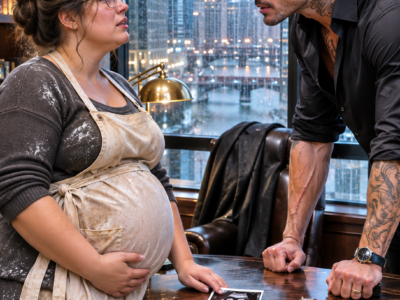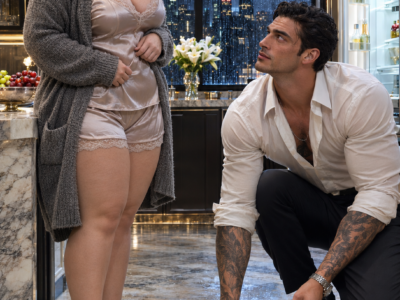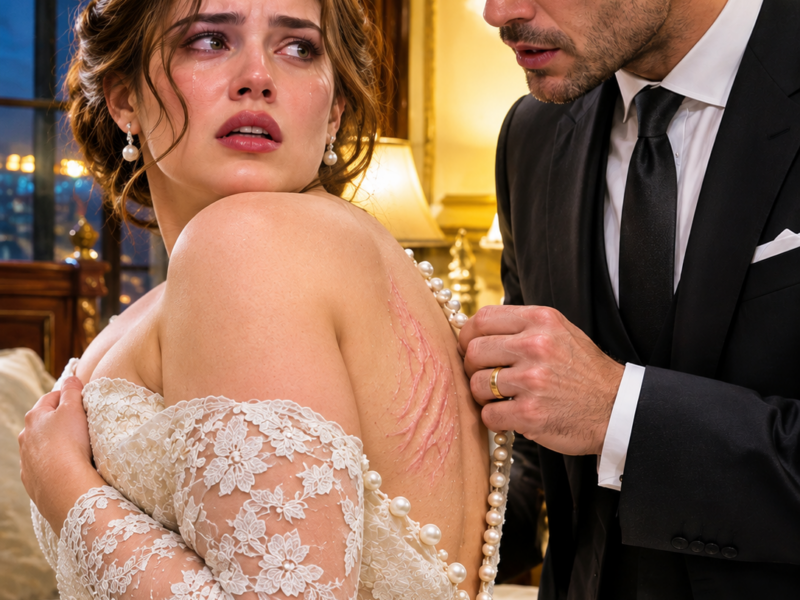
My Father Forced Me To Marry His Most Dangerous Enemy To Save His Fortune And His Political Future. On Our Wedding Night, My Husband Told Me I Was Nothing More Than The First Piece Of His Revenge. But When He Unfastened My Wedding Dress And Discovered The Secret I Had Hidden For Twenty Long Years. His Hands Suddenly Stopped Moving, And The Question He Asked Made Me Doubt Everything My Father Had Ever Told Me.
My Father Forced Me To Marry His Most Dangerous Enemy To Save His Fortune And His Political Future. On Our Wedding Night, My Husband Told Me I Was Nothing More Than The First Piece Of His Revenge. But When He Unfastened My Wedding Dress And Discovered The Secret I Had Hidden For Twenty Long Years. His Hands Suddenly Stopped Moving, And The Question He Asked Made Me Doubt Everything My Father Had Ever Told Me.
Part 1…
There were thirty-two pearl buttons running down the back of my wedding dress, and my trembling fingers couldn’t undo a single one.
Six hours earlier, I had stood before a priest and promised my life to a man who had married me for revenge.
Now, I was standing in his bedroom.
Sabino Gargano stood beside the window, dressed in the same black suit he had worn at our wedding. The gold wedding band on his finger caught the light whenever he moved.
He hadn’t spoken since the last guest left.
Then, without turning around, he broke the silence.
“Don’t mistake this for a marriage, Kathleen. Your father took everything from me. Now I’m going to take everything from him.”
He finally looked at me.
“And you’re the first thing I’ve taken.”
I swallowed hard.
I refused to cry in front of him. My father had already taken enough from me without this man witnessing what remained of my dignity disappear.
I reached behind my neck again.
The lace had caught between two buttons. My breathing grew shallow as frustration mixed with a familiar, suffocating fear.
Sabino crossed the bedroom.
“Hold still.”
He moved my hands aside and began unfastening the buttons himself.
Ten. Fifteen. Twenty.
The ivory silk loosened around my shoulders, exposing something I had spent twenty years hiding beneath carefully chosen clothing.
His fingers suddenly stopped.
Not another button moved.
The silence became unbearable.
He was staring at the old scars extending from my left shoulder blade across my back. The marks that had dictated every dress, every blouse, and every summer of my adult life.
I wanted to disappear.
Then Sabino asked a question that sounded nothing like the cold declaration he had made moments earlier.
“Who did this to you?”
His voice had changed completely.
But to understand why that question frightened me more than his threats, I need to take you back three weeks.
My name is Kathleen Emerson. I was twenty-eight years old, and I owned a tiny bakery called Little Sparrow in the Crossroads District of Kansas City, Missouri.
It had three tables, a green front door, and an unreliable oven named Gus.
It wasn’t much.
But it was mine.
I had built that business with my savings, a modest loan, and years of waking before sunrise. Inside those narrow brick walls, nobody cared whose daughter I was.
That Tuesday morning, my assistant and closest friend, Juny Okafor, arrived at 4:15 carrying two coffees.
“Your father called twice yesterday,” she told me.
My stomach tightened immediately.
“What did he want?”
“He said you’d know.”
Of course he did.
Raymond Emerson was a wealthy property developer whose name appeared on buildings throughout downtown Kansas City. He attended charity dinners, shook hands with judges, and was preparing to announce his campaign for mayor.
People admired him.
I feared disappointing him.
My mother had passed away when I was five. A year later, my father married Darla, a woman whose beautiful smile disappeared whenever we were alone.
I became an inconvenience.
I learned to speak softly, apologize quickly, and keep my sleeves buttoned even during the hottest Missouri summers.
Juny knew better than to ask about that.
I spent the morning preparing croissants and my bestselling lemon ricotta cakes. The recipe came from a childhood memory I couldn’t fully explain.
A woman with flour-covered hands.
A warm kitchen.
Yellow walls.
I remembered calling her Mrs. G, although I couldn’t remember her real name. Once, when I was a teenager, I asked my father about her.
His expression frightened me enough that I never asked again.
Around my neck hung a small gold pendant engraved with a sparrow. I had worn it since I was eight, although its origins were another mystery.
It was the inspiration behind my bakery’s name.
At six that morning, my father’s message arrived.
“Dinner. Tonight. Seven. Wear something appropriate.”
It wasn’t an invitation.
Nothing ever was.
That evening, I parked outside the Emerson mansion near Ward Parkway and sat gripping my steering wheel before forcing myself inside.
Darla opened the door.
She examined my navy dress, long sleeves, and flat shoes.
“Kathleen, you smell like butter.”
I ignored her.
My father was waiting in his dark, wood-paneled study. A glass of amber liquor sat beside him, and his normally confident face looked unusually pale.
He ordered me to sit.
Then he mentioned a name that made my stomach drop.
Sabino Gargano.
Everyone in Kansas City knew about the Garganos. Their family owned restaurants, parking garages, and trucking companies, although rumors suggested their influence extended considerably further.
Sabino had inherited control at thirty-one.
He was now thirty-six.
My father explained that Sabino had spent eighteen months purchasing every significant debt attached to Emerson Holdings.
One phone call could destroy everything.
His buildings. His company. His political ambitions.
“Why would he do that?” I asked.
My father looked away.
“Old business. His father and I were partners.”
Something about his expression unsettled me.
Then he explained Sabino’s offer.
The debts would remain untouched. My father could keep his company and pursue his political career.
There was only one condition.
I had to marry Sabino Gargano.
I stared at him.
For several seconds, I couldn’t understand how those words belonged in the same conversation.
“I’ve already accepted,” my father added.
Something inside me broke.
“You accepted for me?”
“For this family.”
Darla appeared in the doorway holding a glass of wine. She remarked that Sabino was handsome, wealthy, and that most women would consider themselves fortunate.
I wanted to laugh.
Instead, I told my father that I wasn’t property he could exchange for financial security.
He calmly informed me that he owned the holding company controlling my bakery’s building. My lease expired in August.
Then he mentioned Aunt Mave.
My eighty-four-year-old great-aunt lived at Lynenwood Gardens, where my father paid for her care.
She was the only relative who had consistently shown me kindness.
Her memory was fading.
Moving her would devastate her.
My father knew that.
And he used it.
“One year, Kathleen. Then a quiet divorce.”
I searched his face for hesitation, embarrassment, anything resembling a father’s conscience.
There was nothing.
“Why would he want me?”
My father rotated his glass.
“Because you’re mine.”
Two days later, I stood inside Sabino Gargano’s office overlooking the Missouri River.
His associate, Fausto Raldi, had escorted me upstairs. He was unexpectedly considerate, which made the man waiting inside seem even more intimidating.
Sabino stood near enormous arched windows.
Tall. Dark-haired. Impossibly composed.
He didn’t smile.
He placed a folder on his desk and outlined the arrangement.
One year of marriage. Public appearances. Separate bedrooms. Permission to continue operating my bakery.
Then came something my father hadn’t mentioned.
Sabino wanted the voting proxy for the eleven percent of Emerson Holdings my mother had left me in trust.
Suddenly, the marriage looked even more calculated.
He wasn’t simply humiliating my father.
He was positioning himself inside his company.
In exchange, Sabino offered to secure my bakery’s lease for ten years without increasing the rent.
I hadn’t expected that.
Still, I refused to sign immediately.
I demanded the right to continue working every morning, written guarantees covering Aunt Mave’s care for the remainder of her life, and complete honesty.
Especially honesty.
“If you’re going to use me against my father, I deserve to know.”
Sabino studied me.
Then he amended the agreement himself.
All three conditions.
No argument.
As I reached for the folder, I noticed a framed photograph on his desk. A dark-haired woman laughing inside a restaurant kitchen, flour dusting her cheek.
Something about her seemed strangely familiar.
Before I could look closer, Sabino turned the photograph facedown.
“What did my father do to you?” I asked.
His expression hardened.
“Ask him. And when he lies, remember that you asked.”
Two weeks later, my father walked me down the aisle of an old stone church in Columbus Park.
Darla had selected my ivory wedding dress. Its long sleeves and high back concealed everything I didn’t want the world to see.
Halfway toward the altar, my father leaned close.
“Don’t you dare cry. People are watching.”
So I didn’t.
Sabino waited beside Fausto, dressed entirely in black. When my father placed my hand in his, I was surprised by how warm his fingers felt.
The priest spoke about love and devotion.
I wondered whether anyone had ever stood beneath those beautiful stained-glass windows feeling more alone.
Sabino delivered his vows clearly.
Mine barely escaped my lips.
When he kissed me, it was brief and careful.
Then he whispered against my ear.
“Smile, Mrs. Gargano. Your father is watching.”
I smiled.
I had spent my entire life doing exactly that.
The reception took place at Sabino’s enormous brick house overlooking the river bluffs. Candlelight filled the rooms, waiters circulated with silver trays, and my father greeted influential guests like a politician celebrating another successful deal.
Darla reminded me that his future depended on keeping my husband happy.
My future apparently didn’t matter.
Later, I noticed Sabino speaking privately with my father. Whatever Sabino said drained the color from my father’s face.
My father left without saying goodbye.
Near midnight, the housekeeper introduced herself as Mena and escorted me upstairs.
She explained that I would have my own bedroom tomorrow, but tonight I was expected to appear as Sabino’s wife.
Before leaving, she gently touched my arm.
“He’s not everything people say he is.”
I wished I could believe her.
Minutes later, I was struggling with those thirty-two pearl buttons while Sabino explained that our marriage was nothing more than revenge.
Then he discovered my scars.
“Who did this to you?”
I pulled the dress against myself.
“It was an accident. I pulled a pot of boiling water off a stove when I was little.”
The explanation came automatically.
My father had taught me those exact words when I was eight. I had repeated them to doctors and nurses until they became easier to believe than my own memories.
Sabino stared at me.
“That wasn’t water.”
I froze.
Nobody had ever questioned that explanation so directly.
Nobody had ever looked at my scars with that particular expression.
I asked him to let me change.
Instead of questioning me further, he removed his jacket and carefully placed it around my shoulders.
His movements were suddenly gentle.
He told me he would sleep downstairs in his study.
At the doorway, he stopped.
“How old were you?”
“Eight.”
His shoulders became rigid.
For several seconds, he stood perfectly still, facing away from me.
Then he left.
I sat on the edge of his bed, wrapped in the jacket of the man who had married me to punish my father, and finally allowed myself to cry.
Much later, somewhere downstairs, I heard a single heavy sound against a wall.
Then silence.
I didn’t understand why my age had affected him so deeply.
But the following morning, I walked into his kitchen and baked something I had been making for years.
And without realizing it, I uncovered the first crack in a secret two powerful families had carried for twenty years.
Continue in the comments 👇…
Part 2…
I woke at 3:45 and went downstairs.
Sabino’s kitchen was magnificent, with copper pots, marble counters, and fresh lemons from the courtyard.
Without thinking, I began making my signature lemon ricotta cake.
A little cardamom. Warm lemon syrup. Ricotta folded gently, exactly as the mysterious woman from my childhood had taught me.
When Mena entered, her coffee mug slipped from her fingers and shattered.
She stared at the cake.
“Who taught you that recipe?”
Before I could answer, Sabino appeared behind her.
He stopped immediately.
Then he approached the counter, broke off a small piece, and tasted it.
His hands flattened against the marble.
His shoulders shook.
“Who taught you this, Kathleen?”
“A woman I knew when I was little. I called her Mrs. G.”
His eyes became wet.
Without another word, he left the house.
Mena sat trembling at the kitchen table.
What she told me next made my fingers turn cold.
Sabino’s mother, Graziella Gargano, had owned a restaurant with yellow kitchen walls. That lemon cake was her personal recipe, and she had never written it down.
Twenty years earlier, she had passed away in a devastating restaurant fire.
Sabino had been sixteen.
The authorities called it an accident, but his family never believed them.
Mena lowered her voice.
There had been a business partner who desperately wanted that property.
Two months after the fire, he purchased the empty lot for almost nothing.
His name was Raymond Emerson.
My father.
SAY ”Full Story” IF YOU WANT TO READ THE FULL STORY ✨💕