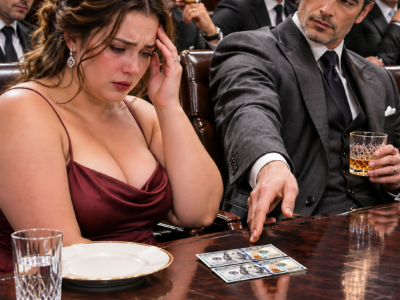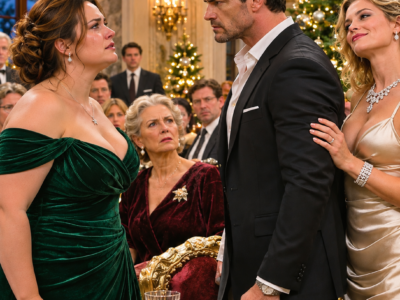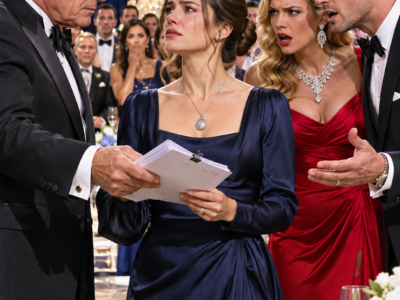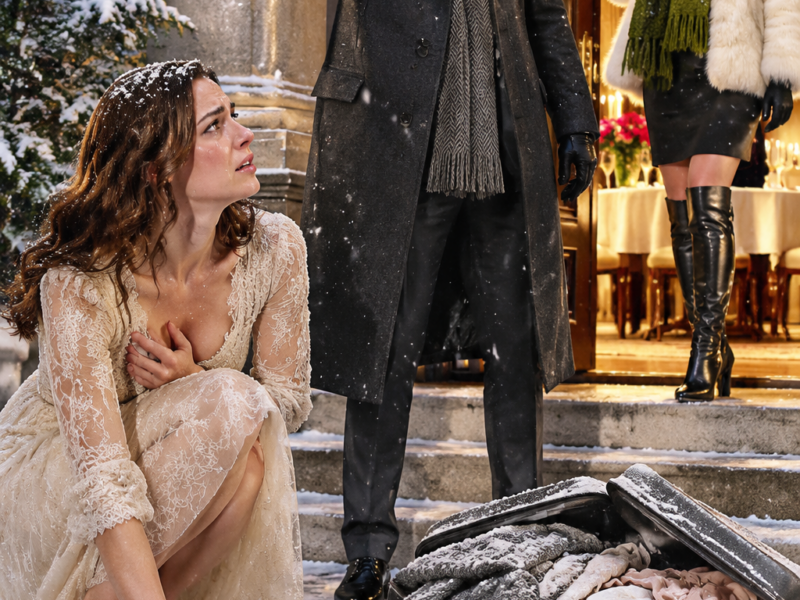
My Husband Threw Me Into the Snow on Our Seventh Anniversary While His Mistress Wore My Grandmother’s Scarf. He Said I Was Worthless Without His Money and Demanded I Sign Away Everything Before Leaving His Mansion. I Refused, Even When He Took My Coat and Left Me Shivering Outside With My Suitcase Torn Open. But One Phone Call to a Number My Grandmother Left Me Changed His Expression When Three Black Cars Appeared.
My Husband Threw Me Into the Snow on Our Seventh Anniversary While His Mistress Wore My Grandmother’s Scarf. He Said I Was Worthless Without His Money and Demanded I Sign Away Everything Before Leaving His Mansion. I Refused, Even When He Took My Coat and Left Me Shivering Outside With My Suitcase Torn Open. But One Phone Call to a Number My Grandmother Left Me Changed His Expression When Three Black Cars Appeared.
Part 1…
“Walk, Marianne. Let’s see how far you get without my name, my money, or anyone who will notice you’re gone.”
My husband said those words on our seventh wedding anniversary.
Then he dropped my suitcase onto the frozen walkway outside our home in Brookline, Massachusetts.
It hit the ground hard.
The zipper split open.
My clothes scattered across the snow. A gray sweater, two blouses, my old slippers, and a small leather notebook tumbled onto the icy stones.
I stood there in a pearl-colored dress, watching everything I owned disappear beneath the falling snow.
I wasn’t wearing a coat.
My legs were bare. My satin shoes were already soaked, and the lace sleeves of my anniversary dress offered almost no protection from the freezing wind.
Above me stood Julian Ashford.
My husband.
The man I had loved for seven years.
He wore a charcoal overcoat, expensive leather gloves, and the thick scarf I had given him for Christmas.
He looked warm. Comfortable.
And completely certain of himself.
Behind him, standing beneath the golden light spilling from our doorway, was Vivian Lang.
His chief of strategy.
The woman who had apparently replaced me.
She wore a beautiful cream-colored fur jacket and tall black boots. Around her neck was something that made my stomach tighten harder than the cold ever could.
My grandmother’s green scarf.
I recognized the uneven stitching immediately.
There was a small pulled thread near the bottom, a tiny mistake my grandmother had refused to correct when she knitted it during the last winter of her life.
I had kept that scarf for years.
Vivian wore it like an accessory.
“That belongs to me,” I said quietly.
She touched the fabric.
“Oh. I found it in the hall closet. I thought you’d forgotten about it.”
“I wore it this morning.”
Julian exhaled sharply.
“For heaven’s sake, Marianne. Stop making a scene over a scarf.”
I looked at him.
Really looked at him.
And something inside me finally understood what I had been refusing to see.
This wasn’t an argument.
It wasn’t a misunderstanding.
My husband had planned this night.
Every cruel detail.
The packed suitcase. The missing coat. The divorce papers waiting on our dining table.
He had arranged everything so that I would have only two choices.
Give him what he wanted.
Or walk into the snow.
But there was something Julian didn’t know.
Something even I had almost forgotten.
And before that night ended, one phone call would bring three black sedans to the gates of our house.
To understand why, I have to tell you what happened earlier that afternoon.
Because when I woke up that morning, I still believed I was preparing an anniversary surprise for my husband.
I had no idea I was preparing to lose him.
***
That afternoon, I drove my old gray hatchback through Somerville to a small watch repair shop.
The owner, Mr. Okafor, was an elderly watchmaker with careful hands and a gentle voice.
For three weeks, he had been restoring a gold pocket watch that once belonged to Julian’s late father.
The glass had been cracked for years.
The chain was broken.
Julian had mentioned the watch only once, long ago, during one of those rare evenings when he spoke about his childhood.
He said he wished he could hear it ticking again.
I remembered.
I always remembered the little things.
Mr. Okafor placed the watch inside a soft cloth and handed it to me.
“Runs beautifully now,” he said. “Whoever receives this is a lucky man.”
I smiled.
But I couldn’t quite bring myself to agree.
For months, I had felt something changing in my marriage.
Julian owned Ashford Hospitality, a growing business with boutique hotels stretching from Boston to Montreal.
When we first met, he had dreams bigger than his bank account.
I had helped him build those dreams.
Eight years earlier, when he leased his first struggling hotel in Cambridge, I was working as an architectural conservator.
I had a career.
A salary.
People who respected my judgment.
That first hotel needed everything.
The walls were damaged, the lobby was outdated, and the beautiful original oak staircase had been hidden beneath layers of worn carpet.
I spent nine months working evenings and weekends to restore it.
Without being paid.
When the bank threatened to withdraw Julian’s financing, I sat at our kitchen table until three in the morning, rebuilding his financial records line by line.
Eventually, the bank relented.
The hotel survived.
And Julian began to succeed.
Then he asked me to leave my job.
“Only for a little while,” he promised.
He needed someone he could trust.
Someone who would put the company first.
I thought that was what marriage meant.
Two people building something together.
So I said yes.
Six years passed.
Our business grew.
Our house became larger.
And somehow, my world became smaller.
Julian traveled constantly. Business dinners became weekly events, and weekends disappeared into meetings.
Then Vivian Lang joined his company.
She was polished, intelligent, and charming.
When I met her at an October company party, she complimented the flowers I had arranged.
I liked her.
That made what happened afterward even harder to admit.
Julian started coming home later.
His phone became something he carried everywhere.
When I asked questions, he had explanations.
When I asked too many, he accused me of being suspicious.
Eventually, I stopped asking.
I told myself silence was keeping our marriage peaceful.
Now I know better.
Silence was simply giving him room to leave.
***
I arrived home shortly after five that evening.
Snow had just begun to fall.
I carried the wrapped watch inside, already imagining Julian’s face when he opened it.
Maybe he would remember the man he used to be.
Maybe we could find our way back.
That was all I wanted.
Then I noticed the boots.
Tall black boots stood neatly beside the shoe cabinet in our front hall.
They weren’t mine.
And they weren’t positioned like someone had stopped by for a quick visit.
Then I heard laughter.
A woman’s laughter.
Relaxed. Familiar.
Coming from my dining room.
I set the watch on the hall table and walked toward the sound.
The dining table was beautifully arranged.
Candles burned beside our good china.
Champagne stood open.
There were two place settings.
But neither was for me.
Vivian was sitting in my chair.
My grandmother’s scarf hung around her neck.
Julian stood beside her, one hand resting against the chair.
When he noticed me, he didn’t look embarrassed.
He looked annoyed.
“You’re early,” he said.
I stared at Vivian.
“Why is she wearing my scarf?”
Julian rubbed his forehead.
“Of all the things to complain about.”
I couldn’t answer.
The room smelled of expensive perfume and candle wax.
The champagne had already been poured.
They were celebrating something.
And suddenly I understood that whatever they were celebrating had nothing to do with our anniversary.
Julian reached inside his jacket.
He removed a thick cream envelope and placed it on the table.
Then he set a pen beside it.
“Sit down, Marianne. We’re finishing this tonight.”
I looked at the envelope.
A law firm’s name was printed across the front.
Below it was mine.
Marianne Ashford.
Respondent.
My fingers turned cold.
“You’ve already filed for divorce?”
“I’ve prepared everything,” Julian said. “All you need to do is sign.”
Vivian gently placed her champagne glass on the table.
“Julian has been under a lot of pressure,” she said. “Making this simple would be best for everyone.”
Everyone.
I almost laughed.
Apparently, everyone included the woman sitting in my chair.
But not me.
I opened the envelope.
The settlement offered me enough money to rent a modest apartment for approximately four months.
Nothing more.
The house wasn’t included.
Neither were the cars.
Or the company accounts.
Then I reached page six.
One paragraph stopped me.
It stated that I had made no financial or professional contribution during our marriage.
I read it again.
No contribution.
Nine months restoring his first hotel.
Countless evenings reviewing contracts.
Years of managing details he didn’t have time to handle.
My abandoned career.
My unpaid work.
My life.
All erased in one sentence.
“Six years without a paycheck,” Julian said when I questioned it. “That’s simply the truth.”
“I stopped working because you asked me to.”
“I never forced you.”
“No,” I whispered. “You didn’t.”
He took that as a victory.
But I wasn’t finished reading.
On page seven, I found something stranger.
A paragraph required me to surrender any present or future interest in Ashford Hospitality and its related companies.
Including shares held in trust.
I stopped.
Shares held in trust?
Why would those words appear in my divorce settlement?
I had never been told I owned shares.
As far as I knew, everything belonged to Julian or his company.
I read the sentence three times.
Then I turned the page.
I didn’t want him to see my confusion.
“I want a lawyer to review this,” I said.
Julian’s expression changed.
“No.”
“I’m not signing something this important without legal advice.”
“You’re signing tonight.”
His voice was quiet now.
That frightened me more than shouting.
I suggested staying with a friend until the next morning.
Julian smiled.
“You don’t have any friends, Marianne.”
The words hit harder than I expected.
Because there was some truth beneath the cruelty.
Over seven years, I had slowly lost touch with people.
My old colleagues.
My cousin in Connecticut.
A friend who had moved to Denver.
Julian hadn’t explicitly forbidden those relationships.
He had simply made it difficult to maintain them.
He was always too tired for visitors.
Too busy for weekend plans.
Too stressed for family trips.
And I kept choosing him.
Until there was almost nobody left.
Vivian interrupted my thoughts.
“Your suitcase is already packed,” she said pleasantly. “It’s in the hall.”
I turned toward her.
“You packed my clothes?”
“Julian asked me to help.”
My chest tightened.
She had gone through my drawers.
My private things.
My bedroom.
And my husband had allowed it.
I thought of the small leather notebook beside my bed.
My grandmother’s journal.
The last thing she had given me before she passed away.
“I want my belongings,” I said.
“Then sign,” Julian replied.
“I want my coat.”
“After you sign.”
“And my grandmother’s scarf.”
Julian slammed his palm against the table.
“Enough.”
I stood still.
For the first time that evening, I felt something stronger than fear.
I felt clarity.
He wasn’t asking for a divorce.
He was demanding my obedience.
I pushed the papers toward him.
“No.”
One small word.
But it changed everything.
Julian stared at me.
Then he took the pen, slipped it into his pocket, and walked toward the front door.
He opened it wide.
Freezing air swept across the marble floor.
“Last chance.”
I didn’t move.
He looked toward the empty coat hook where my winter coat usually hung.
Then he looked back at me.
“Your coat is upstairs. You can collect it when you decide to be reasonable.”
“Where’s my suitcase?”
“Outside.”
I finally understood.
He hadn’t simply planned to humiliate me.
He had planned to leave me without protection from the weather until I surrendered.
I stepped toward the hall table to retrieve the watch.
Julian caught my upper arm.
“Leave it.”
“It’s your father’s.”
For one brief second, his expression changed.
Then he steered me through the doorway.
The cold struck immediately.
I grabbed the iron railing as my shoes slipped against the icy steps.
Julian carried my suitcase toward the gate.
Vivian watched from the doorway.
Still wearing my grandmother’s scarf.
Then Julian repeated those terrible words about his name, his money, and nobody noticing I was gone.
He dropped the suitcase.
My clothes scattered.
And the front door remained open behind him, glowing with a warmth I was no longer allowed to enter.
I bent down to retrieve my sweater.
My fingers barely worked.
Julian watched.
“Who are you going to call?” he asked. “Your cousin? That friend who moved away?”
I didn’t respond.
Because suddenly, I remembered something.
A promise.
One I had made to my grandmother during the final winter of her life.
She had given me a telephone number and insisted I save it.
Just one letter appeared beside it in my contacts.
I had never called.
Not once.
She had told me it wasn’t a number for ordinary problems.
Only for the moment when every other door was closed.
Standing in that snow, I finally understood what she meant.
I took out my phone.
Julian laughed.
“Calling a taxi? Good luck getting one tonight.”
I pressed the contact.
The phone rang once.
Then an elderly man’s voice answered.
“Miss Calloway?”
My maiden name.
I hadn’t heard anyone say it in years.
“Mr. Hale?” I whispered.
“Where are you, Marianne?”
“At the house in Brookline.”
His next question made me look directly at my husband.
“Are you safe?”
I looked at my bare arms.
My wet shoes.
My belongings scattered across the snow.
Then I answered.
“No.”
Silence filled the line.
Not confusion.
Not panic.
Something else.
The quiet certainty of someone who had been waiting for this exact moment.
“Stay where you are,” Mr. Hale said. “Do not sign anything.”
“I haven’t.”
“Good.”
Then he said something that made my knees feel weak.
“Your grandmother left instructions for this night, Marianne. We’ve had cars waiting for seven years.”
I stared into the darkness beyond the gate.
“Cars?”
“Three. They’re already coming.”
And just as the call ended, headlights appeared at the far end of our street.
One black sedan turned the corner.
Then another.
Then a third.
Julian stopped smiling.
But the strangest part wasn’t the cars.
It was Vivian.
The moment she saw those headlights, she stepped backward and whispered one word.
“Calloway.”
A name Julian had never mentioned to her.
A name she had no reason to know.
Continue in the comments 👇…
Part 2….
“Who was that?” Julian demanded.
I kept my eyes on Vivian.
Her face had gone pale. She touched my grandmother’s scarf as though she suddenly wanted to disappear beneath it.
“I didn’t say anything,” she whispered.
But I heard her.
And Julian had heard her, too.
The three black sedans stopped outside our gates.
A broad-shouldered man stepped from the first car, carrying a thick wool-lined coat.
He walked straight toward me.
“Miss Calloway,” he said respectfully. “Please, put this on.”
Warmth surrounded my trembling shoulders.
Then he gathered my scattered belongings.
“Thank you for finally calling.”
Julian moved forward.
“This is private property!”
Nobody answered.
The third car opened.
An elderly man with silver hair stepped out, leaning on a black cane.
“Marianne,” he said softly. “I’m Edmund Hale. Your family’s attorney.”
My heart raced.
“My grandmother had an attorney?”
“For forty-one years.”
Julian stared.
“What family? What is going on?”
Mr. Hale ignored him.
Instead, he looked directly at Vivian.
“Miss Lang. I had hoped you would be wise enough not to be here tonight.”
Vivian froze.
“You know her?” Julian asked.
Mr. Hale didn’t answer.
He turned toward me.
“Did your husband ask you to sign away shares held in trust?”
I nodded slowly.
His expression darkened.
“Then your grandmother was right.”
He looked at Julian.
“Someone wanted your wife to surrender something she doesn’t even know she owns.”
And suddenly, Vivian looked terrified.
SAY ”Full Story” IF YOU WANT TO READ THE FULL STORY ✨💕