My Husband Threw Divorce Papers At Me After Learning My Millionaire Grandfather Had Left Me Only Two Dollars. My Mother-in-Law Called Me Worthless And Ordered Me Out Of The House While My Husband Stood There Laughing. I Left Without Begging, Carrying That Single Bill Inside My Coat, And Visited My Grandfather’s Bank The Next Morning. When The Senior Trust Officer Examined The Tiny Blue Symbol, His Face Changed And He Immediately Called Someone.
My Husband Threw Divorce Papers At Me After Learning My Millionaire Grandfather Had Left Me Only Two Dollars. My Mother-in-Law Called Me Worthless And Ordered Me Out Of The House While My Husband Stood There Laughing. I Left Without Begging, Carrying That Single Bill Inside My Coat, And Visited My Grandfather’s Bank The Next Morning. When The Senior Trust Officer Examined The Tiny Blue Symbol, His Face Changed And He Immediately Called Someone.
Part 1…
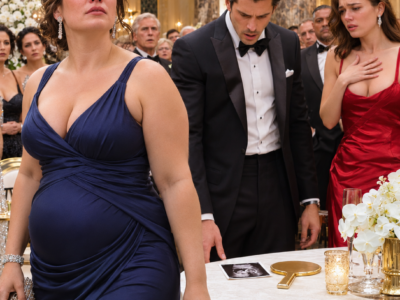
“Sign them. You’re worthless to me now.”
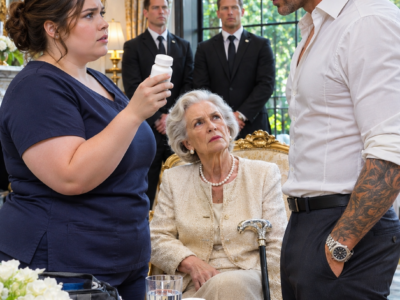
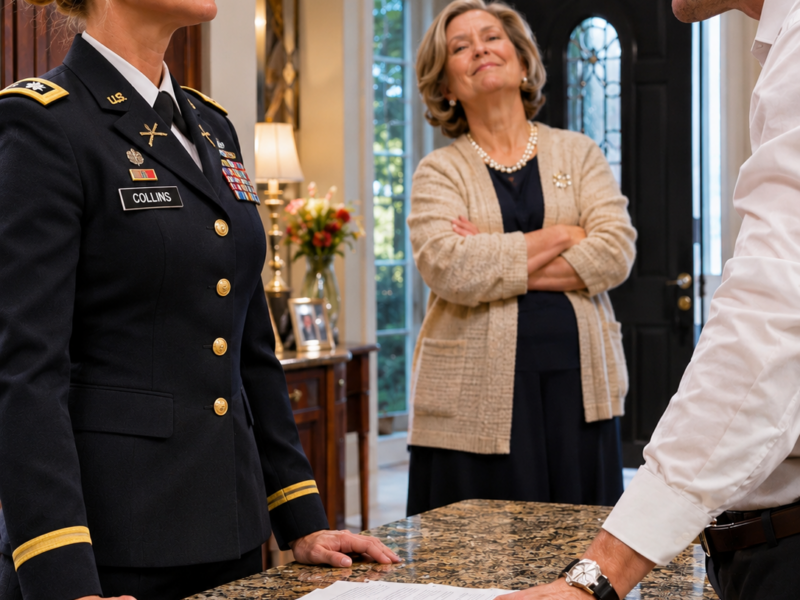
My husband, Bradley, threw a stack of divorce papers across our kitchen island. They slid over the polished granite and stopped beside the only inheritance my grandfather had left me.
A two-dollar bill.
Behind Bradley, my mother-in-law, Margaret, stood near the front door with her arms crossed. She didn’t look uncomfortable or embarrassed.
She looked pleased.
“Get out, Rebecca. We don’t need a penniless woman in this family.”
Bradley laughed.
That sound hurt more than his mother’s words. It wasn’t nervous laughter or the uncomfortable reaction of someone witnessing an unpleasant family argument.
It was the laughter of a man who no longer needed to pretend.
I stared at my husband of ten years. Then I looked at the woman who had spent years introducing me as her beloved daughter-in-law at church.
Neither looked ashamed.
“Is this really what you want?” I asked.
Bradley pushed a pen toward me.
“I’ve wanted this for months. I was just waiting to see what your grandfather left you.”
Something inside me went cold.
For ten years, I had believed our marriage was built on love, loyalty, and mutual respect. Apparently, Bradley had been waiting for a financial transaction.
And when the numbers disappointed him, so did I.
I picked up the pen.
My hand didn’t shake.
I signed the acknowledgment confirming that I had received the divorce petition. I knew it wasn’t a final settlement, and I wasn’t surrendering any legal rights.
Bradley didn’t seem to care about the distinction.
He simply wanted me gone.
I folded my grandfather’s two-dollar bill, slipped it into my coat pocket, and walked toward the front door.
Margaret stepped aside.
“Don’t expect us to come begging.”
I stopped and looked directly into her eyes.
“I won’t.”
Then I walked out of the house I had spent ten years trying to turn into a home.
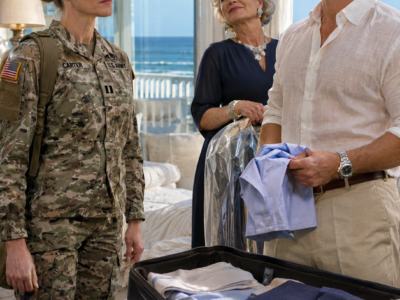
My name is Rebecca Anne Whitmore Collins. I’m a major in the United States Army, and I’ve spent sixteen years learning how to remain composed when everything around me feels uncertain.
But nothing had prepared me for that evening.
To understand why I didn’t argue, cry, or beg Bradley to reconsider, you need to understand the man who left me that seemingly insignificant piece of money.
My grandfather was Arthur Whitmore.
Throughout Central Ohio, people knew him as the founder of Whitmore Industrial Holdings, a manufacturing business worth hundreds of millions of dollars.
To me, he was Grandpa Art.
He smelled like peppermint candy, strong coffee, and the worn leather seats of his old pickup truck.
When I was eight, he taught me to fish at Alum Creek Lake. When I turned sixteen, he taught me to drive along the quiet roads outside Delaware, Ohio.
And when I announced that I wanted to join the Army, he never questioned my decision.
He hugged me.
“Then make sure you serve with honor.”
That was Grandpa.
He never measured my accomplishments against his fortune. He cared about the person I was becoming, not the salary I earned or the position I held.
Throughout deployments, exhausting training exercises, and countless missed holidays, he remained my greatest supporter.
Whenever he called, he asked the same question.
“Are you taking care of yourself, Becky?”
Bradley hated that nickname.
He claimed it made me sound childish. Looking back, I wonder whether he simply disliked anything that reminded me I had belonged somewhere before I belonged to him.
We met at a charity fundraiser in Columbus.
Bradley was handsome, ambitious, and working his way up at a commercial real estate firm. He seemed genuinely interested in my military career.
He sent flowers when I received a promotion. He drove long distances whenever my leave allowed us to spend time together.
I believed I had found someone who respected my independence.
After our wedding, however, his questions gradually changed.
How much was Grandpa’s company worth?
Had he updated his will?
Did I know which relatives would inherit his business interests?
At first, I dismissed those conversations as curiosity. Bradley worked in real estate, after all, and financial planning was part of his everyday life.
I wanted to believe he was planning our future.
I never considered that he was planning it around money that wasn’t his.
During Grandpa’s final year, his health gradually declined.
He was eighty-four, stubborn, and determined to remain in his own house. Whenever I could arrange leave, I visited him.
Sometimes we talked for hours.
Other afternoons, we sat on his back porch, watching birds gather around the feeder.
One afternoon, Grandpa turned toward me with an unusually serious expression.
“Becky, if I lost every dollar tomorrow, would you still come visit?”
I laughed.
“Grandpa, I’d bring groceries and complain about your terrible coffee.”
He smiled, but his eyes remained thoughtful.
“Good. That’s what I needed to hear.”
I didn’t understand the importance of that conversation.
Not then.
Three weeks before Grandpa passed away, Bradley asked whether we had discussed his estate.
I told him we hadn’t.
He frowned.
“You’re his favorite granddaughter. Surely he told you something.”
“He told me to get more sleep.”
Bradley didn’t laugh.
On a rainy Tuesday morning in March, I received the call I had been dreading.
Grandpa was gone.
I was preparing for a meeting on base when the news arrived. For several minutes, I sat alone in my office, staring at a photograph of us fishing together.
I couldn’t move.
I’d experienced painful losses throughout my military career, but this felt different. The person who had always made the world feel a little safer was no longer in it.
His funeral was held at a small church near Delaware.
Every seat was occupied.
Former employees, neighbors, relatives, and strangers filled the building. Afterward, an older man approached me and explained that Grandpa had helped cover his wife’s medical expenses.
Another woman told me he had paid for her son’s trade school education.
I listened with tears in my eyes.
Grandpa had never mentioned those things.
Three days later, our family gathered at his attorney’s office to discuss his will.
Bradley insisted on accompanying me.
So did Margaret.
Harold Pierce, Grandpa’s longtime attorney, sat behind his desk and began reviewing the distributions.
My aunt Evelyn received several million dollars.
Other relatives received investment accounts, property interests, and substantial financial gifts.
Beside me, Bradley squeezed my hand.
I could practically feel his excitement.
Then Mr. Pierce reached for a small envelope.
“To my granddaughter, Rebecca Whitmore Collins, I leave this two-dollar bill, together with a personal note.”
Silence.
Bradley’s fingers loosened around mine.
“Excuse me,” he interrupted. “Did you say two dollars?”
Mr. Pierce nodded.
Inside the envelope was a crisp two-dollar bill and a handwritten note.
Rebecca,
Keep this safe.
You already know what matters.
I recognized Grandpa’s handwriting immediately.
For a moment, I forgot everyone around me. Those few words felt like one final conversation with the man I missed so desperately.
Then Bradley pulled his hand away.
I turned toward him.
His expression had completely changed.
By the time we arrived home, he was furious. By evening, divorce papers were waiting on our kitchen island.
Ten years of marriage.
Ended, apparently, over two dollars.
After leaving the house, I drove straight to my friend Sarah’s place. She made me tea and showed me to her guest bedroom without demanding an explanation.
I was grateful for that.
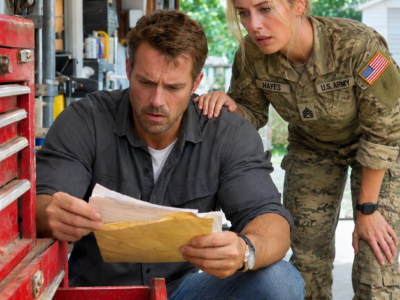
Around midnight, unable to sleep, I reached into my coat pocket and retrieved Grandpa’s bill.
I unfolded it beneath the bedside lamp.
That’s when I noticed something unusual.
Near the lower edge was a tiny blue mark.
A rose.
I leaned closer.
It was small enough to overlook unless someone examined the bill carefully.
Suddenly, I remembered something Grandpa had once told me.
“Some things aren’t worth much until you know where they belong.”
I stared at the little rose.
Why had he marked this particular bill? Why had he specifically instructed me to keep it safe?
Then another memory surfaced.
Heritage National Bank.
Grandpa had conducted business there for decades.
I decided I would visit the following morning.
I wasn’t expecting a fortune. I simply couldn’t believe that Grandpa had left me something so specific without a reason.
The next morning, I entered Heritage National Bank wearing my Army service uniform.
I had an appointment on base later that morning. My hair was secured in a neat bun, my shoes were polished, and my expression revealed nothing about the previous night’s humiliation.
A young teller greeted me.
I placed the bill on her counter.
“My grandfather left me this. There’s an unusual marking on the back.”
She examined the tiny rose.
“It looks like somebody stamped it.”
I nodded.
“My grandfather was Arthur Whitmore.”
Her smile faded slightly.
“Whitmore Industrial?”
“Yes.”
She glanced toward the offices behind her.
“Would you mind waiting a moment?”
Five minutes later, a gray-haired gentleman in a navy suit approached me.
He introduced himself as Thomas Bennett, the bank’s senior trust officer.
I handed him the bill.
He examined the front carefully before turning it over.
Then his fingers stopped moving.
He stared at the blue rose.
His expression changed so dramatically that I felt my stomach tighten.
“Mrs. Collins,” he said quietly, “would you please come with me?”
He escorted me into a private office overlooking downtown Columbus and closed the door.
After examining my military identification and driver’s license, he checked something on his computer.
Then he reached for his telephone.
“Mr. Pierce? Thomas Bennett.”
I recognized the attorney’s name.
Thomas listened briefly before looking directly at me.
“Sir, she’s here.”
Another pause.
“Yes. The original bill. I’ve verified her identity.”
He hung up.
I folded my hands in my lap.
“Mr. Bennett, what exactly is happening?”
He removed his glasses and opened a desk drawer.
“Your grandfather and I worked together for twenty-five years.”
He withdrew a thin folder.
Then he looked at the two-dollar bill lying between us.
“Mrs. Collins, your grandfather personally instructed me to contact his attorney if you ever brought that bill into this bank.”
My breath caught.
Grandpa had anticipated this moment.
And whatever was inside that folder, Bradley had thrown me out of our marriage without knowing it existed.
Continue in the comments 👇…
Part 2…
“Is the bill worth something?” I asked.
Thomas shook his head.
“Financially, it’s worth exactly two dollars. But your grandfather wanted you to bring it here.”
He explained that Grandpa had established an irrevocable trust several years earlier, separate from the assets distributed through his will.
Then he turned his computer screen toward me.
Whitmore Legacy Trust.
Directly beneath those words was my full legal name.
Rebecca Anne Whitmore Collins.
I was its principal beneficiary.
Independent professional trustees managed its assets under instructions Grandpa had established during his lifetime.
Before I could ask another question, Harold Pierce arrived carrying a leather briefcase.
He greeted me warmly, then sat beside Thomas.
“Your grandfather hoped we’d have this conversation.”
Thomas opened a financial summary containing information about the trust’s controlling interest in Whitmore Industrial Holdings, along with its investments and other assets.
He turned the document toward me.
I stared at the valuation.
My entire body went still.
Yesterday, Bradley had laughed while his mother called me worthless.
Now I was looking at a figure that would have changed everything about their behavior.
But Harold wasn’t finished.
He reached into his briefcase and removed another folder.
“Rebecca, there’s something else you need to understand. During his final year, your grandfather became concerned about Bradley.”
I looked up sharply.
Harold placed a document in front of me.
It was an email sent eleven months before Grandpa passed away.
At the bottom was my husband’s signature.
Above it was a financial promise involving my inheritance.
A promise I had never made.
SAY ”Full Story” IF YOU WANT TO READ THE FULL STORY ✨💕