The day I arrived at an Idaho lumber camp, its owner humiliated me before forty hungry men, unaware his trusted clerk was secretly selling their survival.
The voice outside my window belonged to Walter Pike, and every word he shouted felt like another shovel of dirt thrown onto my husband’s grave.
Silas Brandt held me against the wall, his hand firm on my shoulder as the last light disappeared from the room.
“Don’t answer him, Nell,” he whispered. “He’s trying to draw you outside.”
Beyond the window, horses stamped nervously in the frozen mud, and I heard the unmistakable sound of a rifle being loaded.
Then Pike called again, his voice sharp enough to cut through the darkness.
“Your husband didn’t die an innocent man, Nell, and neither did your father!”
I looked at Silas, searching his face for some reassurance that the world I had known was not falling apart.
But he would not meet my eyes.
That frightened me more than the gunshots.
“Silas,” I whispered, “what haven’t you told me?”
Before he could answer, a rifle cracked against the night, and glass exploded across the floor.
Amos Briggs threw himself into the doorway.
“They’re behind the smokehouse! Three riders, maybe four!”
Silas grabbed the shotgun hanging above my bed.
“Get the men out of the bunkhouse and keep them low.”
Amos disappeared, and suddenly the camp was alive with shouting, boots, and frightened horses.
I crouched beside the bed, clutching Thomas’s letter so tightly that its edges cut into my palm.
Outside, Pike laughed.
“Give me the papers, Nell, and nobody else has to die!”
There was something horribly familiar about those words.
Men who threatened innocent lives always seemed convinced they were offering mercy.
I stood before Silas could stop me.
“Tell him I’ll come out,” I said.
Silas turned toward me, his expression fierce.
“Absolutely not.”
“Then tell me the truth about my father.”
He looked as though I had struck him.
For a moment, the distant gunfire faded beneath the weight of his silence.
Then he spoke.
“Your father came to me nineteen years ago with proof that Harlan Voss was stealing timber from government land.”
I watched his face in the darkness.
“He trusted me because I was his friend.”
“What happened?”
Silas swallowed.
“I was young, Nell, and this mill was drowning in debt. Voss offered to save it if I kept quiet.”
The words settled between us like ashes.
“You sold my father?”
“No,” he whispered. “But I let him believe I would protect him.”
Before I could answer, a scream rose from the yard.
It was the young logger who had saved my biscuits for breakfast.
His name was Caleb Martin.
I recognized his voice instantly.
“Help! Somebody help me!”
I ran toward the doorway, but Silas caught my arm.
“Stay here!”
“That boy is eighteen years old!”
“And Pike will kill you both if you go outside.”
Another gunshot sounded.
Then came a heavy silence.
I had spent fourteen months believing grief was the worst thing a woman could survive.
I was beginning to understand that helplessness was worse.
From the yard, Pike shouted that Caleb would be next unless I surrendered the letter.
I pulled away from Silas.
“Give me your shotgun.”
He stared at me.
“Can you use it?”
“My father taught me before he disappeared.”
Something changed in his expression.
Perhaps he remembered the man who had once trusted him.
He handed me the weapon without another word.
Then I stepped toward the kitchen door.
Not because I believed myself brave.
But because I had buried one man I loved, and I refused to stand quietly while another woman’s son was murdered.
I slipped into the cookhouse through the connecting passage.
The stove still held glowing coals beneath its iron surface.
Beside it stood the enormous copper kettle we used to boil beef.
I remembered how Caleb had laughed that morning when steam filled the kitchen windows.
An idea came to me.
I opened the stove vents, stirred the coals into flame, and tipped boiling water from the kettle into the broad wash trough.
Steam surged upward.
I dragged the trough beneath the open kitchen window and threw several shovelfuls of snow into it.
A thick white cloud rolled across the yard.
Through the haze, I saw Caleb lying beside the woodpile, one hand pressed against his shoulder.
Pike stood above him with a revolver.
Two strangers waited near the horses.
I raised the shotgun.
“Walter Pike!”
He turned toward my voice.
For a heartbeat, we stared at each other through the steam.
Then I fired into the ground beside his boots.
The blast scattered frozen mud across his coat.
His horse reared violently, knocking one of the strangers backward.
That was all the distraction Amos needed.
He emerged from behind the stable with six lumberjacks carrying axes and rifles.
“Drop your guns!” he roared.
One stranger fired wildly before fleeing toward the timberline.
The second surrendered immediately.
But Pike seized Caleb by the collar and dragged him upright.
His revolver pressed against the boy’s throat.
“Another step and he dies!”
I lowered my shotgun.
“Let him go, Walter.”
Pike’s face twisted into something ugly.
“You think this is about stolen flour?”
“No,” I answered. “I think you’ve been stealing more than food for years.”
His eyes narrowed.
Then he smiled.
“Your husband was smarter than you, Nell. He knew when to take the money.”
The words struck harder than any bullet.
“What money?”
“The money Voss paid him to keep his mouth shut.”
I heard Silas step into the doorway behind me.
Pike continued, enjoying every second.
“Thomas Garrett came looking for your father, found the records, and decided a comfortable life was worth more than the truth.”
I wanted to call him a liar.
But Thomas had kept secrets from me throughout our marriage.
He had always been careful about money, always avoiding questions about the mysterious payments that arrived every autumn.
He told me they came from an old business investment.
I had believed him because love makes trust feel easier than suspicion.
“Where is my father?” I asked.
Pike’s smile faded.
“Dead, most likely.”
“That’s not an answer.”
“No,” he said coldly. “It’s the only one you’re getting.”
Then Caleb did something none of us expected.
He drove his elbow into Pike’s ribs.
The revolver discharged.
I screamed.
Pike stumbled backward as Amos rushed forward, striking him across the wrist with the wooden handle of an axe.
The gun fell into the mud.
Silas seized Pike before he could escape.
And Caleb collapsed.
I reached the boy first.
Blood soaked his coat, spreading beneath my fingers as I pressed against his wounded shoulder.
“Stay with me, Caleb.”
His lips trembled.
“Did I do all right, Miss Garrett?”
I felt tears burning my eyes.
“You did fine, sweetheart. Now let me do my part.”
We carried him into the cookhouse, where I boiled water, prepared clean cloth, and sent Amos for the camp’s medicine chest.
The bullet had torn through the flesh beneath Caleb’s collarbone.
It had missed the bone, but he had lost frightening amounts of blood.
I worked beneath the lamplight while the men waited outside.
At one point, Caleb reached for my wrist.
“If I die,” he whispered, “tell my mother I wasn’t scared.”
I bent close enough for him to see my face.
“You can tell her yourself.”
He tried to smile.
Then his eyes closed.
I worked until the wound was cleaned and bandaged, praying that the bleeding would stop.
Near midnight, his breathing finally steadied.
Only then did I allow myself to cry.
Silas found me sitting beside the stove, my apron stained dark with blood.
He placed a cup of coffee in my hands.
“Pike’s locked in the storage cellar,” he said.
I stared into the cup.
“Will Caleb live?”
“If the fever stays away, I think he has a chance.”
I nodded, but my thoughts had already returned to Thomas.
“Did my husband know you?”
Silas sat opposite me.
“I met him once, four years ago. He came asking questions about your father.”
“Why didn’t you tell me?”
“Because I was ashamed.”
I looked at him.
He did not hide from my anger.
“That’s a poor excuse,” he admitted.
“Yes,” I whispered. “It is.”
Outside, dawn was beginning to color the mountains a bruised shade of purple.
I had been at Brandt’s camp barely three weeks.
Yet everything I believed about my marriage, my childhood, and my family had begun unraveling.
At sunrise, I went down to the storage cellar.
Pike sat against a barrel, his wrists bound, one eye swollen from the struggle.
He laughed when he saw me.
“Come to hear what your saintly husband really was?”
I dragged a chair across the floor.
“I came to ask where my father is buried.”
His laughter stopped.
For the first time, I saw uncertainty in his face.
“Who told you he was buried?”
I felt my heart strike against my ribs.
“You said he was dead.”
“I said most likely.”
“Then you don’t know.”
Pike looked away.
That small movement told me more than his words.
I leaned forward.
“Tell me what happened that night.”
He stared at the floor for a long time.
Finally, he spoke.
“Voss had your father taken to the old logging settlement above Blackwater Creek.”
“Taken?”
“He was supposed to sign a statement saying he’d invented the timber theft.”
“And if he refused?”
Pike said nothing.
I could hear water dripping from the cellar ceiling.
Then he whispered, “He refused.”
My hands went cold.
“Did Voss kill him?”
“I never saw a body.”
I sat back.
For nineteen years, my mother had waited for a husband who never returned.
She had died believing he had abandoned us.
And now I was being told he might have spent his final days as a prisoner.
“Why did Thomas get involved?”
Pike rubbed his bound wrists.
“He found an old ledger your father had hidden. It listed every illegal timber shipment Voss ever made.”
“Where is it?”
“Thomas wouldn’t tell us.”
I remembered the little black Bible my husband carried everywhere.
He never attended church regularly, but he guarded that Bible like a treasure.
After his death, I had packed it inside my suitcase, unable to bear leaving any piece of him behind.
Something stirred in my memory.
Once, during our first winter together, Thomas had told me that the most important truths were often written where people never thought to look.
I rose so suddenly that the chair scraped against the floor.
Pike watched me.
“What did he give you?”
I did not answer.
His expression changed.
“You know where it is.”
I climbed the cellar stairs while he shouted after me.
By the time I reached my room, my hands were shaking.
I opened the suitcase and lifted the Bible from beneath my folded dresses.
Its leather cover was worn smooth from years of handling.
Inside, Thomas had marked the Book of Proverbs with a faded blue ribbon.
I turned the pages carefully.
At first, I found nothing.
Then I noticed a faint ridge beneath the back lining.
Someone had sewn a thin packet into the binding.
I used my sewing scissors to cut the thread.
A folded sheet of oilskin slipped into my lap.
Inside lay pages covered with numbers, dates, signatures, and timber measurements.
The names Harlan Voss and Walter Pike appeared repeatedly.
But there was another name.
Silas Brandt.
I stared at it, feeling the blood drain from my face.
Then I realized something important.
The entries bearing Silas’s name had been crossed out and marked with a single word.
“Refused.”
Beside the final entry, someone had written a sentence in Thomas’s handwriting.
“Edward Garrett was moved to the abandoned survey cabin at Eagle Ridge in October 1868.”
I pressed my fingers against the words.
Eagle Ridge.
A place, at last.
Not a grave.
Not a rumor.
A place where my father’s trail might begin again.
I took the ledger to Silas.
He studied it beneath the morning light.
When he reached the final page, his hands began trembling.
“I know that cabin,” he said.
“Is it still standing?”
“It was, the last time I went there.”
“When?”
“Six years ago.”
I waited.
Silas looked toward the mountains.
“There was somebody living inside.”
The room seemed to contract around me.
“Who?”
“I never saw his face. He disappeared into the trees before I reached the porch.”
For one wild moment, hope filled my chest.
Then I remembered the date.
Six years was a long time in the mountains.
A wounded man could survive one winter and vanish the next.
But I had lived too long without answers to turn away from the first real possibility of finding one.
“I’m going there,” I said.
Silas shook his head.
“Voss will expect that.”
“Then we’ll leave before he has time to prepare.”
We rode the following morning.
Caleb remained in the cookhouse under Amos’s care, and Pike stayed locked in the cellar with two armed men watching him.
Silas brought three trusted lumberjacks.
Ruth Bell joined us at the edge of the valley, carrying her father’s old rifle.
When I asked why she had come, she looked at me with a sadness I did not understand.
“Your father once helped my husband through a terrible winter,” she said. “I owe his family more than cattle.”
We followed a narrow trail through towering pines and frozen ravines.
The mountains rose around us like enormous sleeping beasts.
By afternoon, snow began falling.
I rode beside Silas without speaking.
There were too many questions between us, and not enough trust to make them gentle.
Near dusk, we reached an abandoned logging road.
A weathered sign leaned against a tree.
EAGLE RIDGE.
My stomach tightened.
Beyond the ridge stood a small cabin beneath a roof sagging with snow.
Smoke drifted from its chimney.
I could hardly breathe.
Silas raised one hand, signaling the others to stop.
We dismounted quietly.
Then the cabin door opened.
A thin man stepped onto the porch.
His beard was white, his shoulders bent, and he leaned heavily on a wooden cane.
He looked ancient.
But when he lifted his face, I saw something that made the world disappear.
His eyes.
The same deep gray eyes I had seen in my childhood mirror.
“Papa?” I whispered.
The man froze.
The cane slipped from his hand.
He stared at me as though I were a ghost returned from the dead.
Then his mouth opened.
“Nellie?”
Nobody had called me that since I was seventeen.
I ran.
I stumbled through the snow, climbed the broken steps, and fell into his arms.
He smelled of woodsmoke and pine needles.
His hands trembled as they touched my hair.
“My little girl,” he whispered. “My little girl came back.”
I held him so tightly that I could feel his heartbeat through his coat.
For nineteen years, I had hated him for leaving.
For nineteen years, he had apparently been waiting for someone to find him.
Neither of us could speak without crying.
Finally, he pulled back and looked into my face.
“Where’s your mother?”
The question broke something inside me.
I had imagined this reunion a thousand times.
I had never imagined having to tell him she was gone.
“She died five years ago, Papa.”
His expression collapsed.
He turned away, covering his face with both hands.
I watched him grieve a woman he had never stopped loving.
And for the first time, I understood how cruel stolen years could be.
Inside the cabin, we sat beside a small fire while he told us everything.
Voss’s men had captured him in 1868 and forced him to work at a remote timber operation.
He had escaped after nearly eleven years, but a badly healed leg injury left him unable to travel far.
He survived by trapping, mending tools, and trading with hunters who knew him only as Old Ed.
He had written letters home, but none had reached us.
“I sent them through a man who promised to post them,” he said.
Silas lowered his eyes.
“That man worked for Voss.”
My father nodded.
“I know that now.”
I held his hand.
“Why didn’t you come home after you escaped?”
His eyes filled.
“I tried, Nellie. Twice. The first time, I collapsed outside Clearwater. The second time, Voss’s men found me before I reached the valley.”
“And after that?”
He looked down at his twisted leg.
“I was afraid they’d hurt you and your mother if they knew where to find you.”
I wanted to tell him fear had stolen his courage.
But I remembered all the nights I had been frightened and alone after Thomas died.
Fear did not always make cowards.
Sometimes it made prisoners.
My father reached into a wooden chest beside his bed.
He withdrew a bundle of letters tied with string.
Every envelope carried my mother’s name.
None had ever been opened.
“Take them,” he whispered. “She should have known.”
I pressed the letters against my chest.
Then I told him about Thomas.
His expression darkened.
“Your husband came here once.”
I stared at him.
“When?”
“Four winters ago.”
My heart began racing.
“What did he say?”
“He told me he’d married my daughter.”
I could scarcely breathe.
“He knew you were alive?”
My father nodded slowly.
“He promised he’d bring you back when it was safe.”
I looked away, struggling to understand.
“Then why didn’t he?”
My father’s voice became soft.
“Because Voss found out.”
He explained that Thomas had been threatened, followed, and finally forced to choose between surrendering the ledger or seeing me harmed.
Thomas had hidden the records instead.
Then he returned to Pennsylvania and began secretly collecting evidence against Voss.
“The last letter he sent said he was going to Washington,” my father whispered.
I remembered the final weeks before Thomas became ill.
The sudden fever.
The doctor who arrived without being called.
The medicine that seemed to make him worse.
A terrible possibility opened before me.
“Papa, Thomas died fourteen months ago.”
My father closed his eyes.
“Then they reached him first.”
A gunshot shattered the cabin window.
The glass burst across the table.
Silas threw himself over my father as Ruth fired through the doorway.
Outside, a man shouted.
“Brandt! Send out the Garrett woman and the old man!”
Harlan Voss had found us.
I crawled toward the chest while bullets struck the cabin walls.
Silas returned fire from behind the stove.
Ruth dragged my father toward the rear door.
But the snow outside was too deep for him to run.
Voss called again.
“I’ve waited nineteen years to finish this business!”
I looked at the lantern hanging near the door.
Then at the stacked firewood beside the chimney.
A plan formed in my mind.
A terrible, dangerous plan.
I whispered it to Silas.
He stared at me.
“That could bring the whole cabin down.”
“Only if we stay inside.”
For a moment, he hesitated.
Then he nodded.
We helped my father through the rear window while Ruth covered our retreat.
Once everyone was outside, I tipped the lantern into a pile of dry shavings near the front door.
Flames climbed the wall.
Smoke rolled across the ceiling.
I slipped through the rear window as the fire spread.
Voss’s men continued firing at the cabin, unaware that we were already crawling toward the trees.
Then the roof timbers cracked.
A shower of sparks rose into the falling snow.
The burning cabin lit the mountainside like a warning beacon.
Voss stepped into the open, shouting orders.
Silas rose behind a fallen pine.
“Drop your rifle, Harlan!”
Voss turned.
For a moment, the two men stared at each other across the snow.
Then Voss raised his weapon.
Silas fired.
The shot struck Voss in the shoulder, spinning him into a drift.
He screamed and dropped his rifle.
His men fled into the forest.
Amos’s youngest brother, who had accompanied us, chased one rider toward the trail, while the others secured Voss.
I stood beside the burning cabin, shaking.
My father reached for my hand.
“Come away, Nellie.”
I looked toward the flames.
For years, Voss had hidden behind money, threats, and the silence of frightened men.
Now his secrets were burning in the open.
But one question remained.
What had truly happened to Thomas?
We returned to camp two days later.
Caleb was awake and asking for biscuits.
I cried when he smiled at me.
My father sat beside the stove, accepting bowls of soup from men who had never known his name.
For the first time in nineteen years, he was surrounded by people who did not want him to disappear.
When the county sheriff arrived, Silas handed over Voss, Pike, and the ledger.
The captured gunman agreed to testify in exchange for leniency.
His statement described stolen timber, bribed officials, forged deeds, and years of intimidation.
It also named a physician in Pennsylvania who had received payments from Voss shortly before Thomas died.
The sheriff promised to send the evidence east.
I never learned whether Thomas had been poisoned or whether the illness that killed him had come naturally.
The physician disappeared before investigators could question him.
That uncertainty remained with me.
But a few weeks later, the sheriff brought another letter.
It had been found among Voss’s papers.
Thomas had written it shortly before his death.
The letter was addressed to me.
I carried it to the quietest corner of the cookhouse before opening it.
“My dearest Nell,
I have made mistakes that no apology can erase.
I found your father alive, but I let fear keep me from bringing you to him.
I thought I was protecting you.
Instead, I stole years that belonged to both of you.
If I cannot make things right, I pray you will someday understand that my silence was never a lack of love.
It was a lack of courage.
And love without courage can wound as deeply as hatred.
Forgive me only if forgiveness brings you peace.
Your Thomas.”
I read it three times.
Then I folded it carefully.
For months, I had believed my husband was either a saint or a traitor.
Now I understood he had been neither.
He was a frightened man who had loved me and failed me.
That truth hurt more than a simple betrayal.
But it was a truth I could finally live with.
Spring arrived slowly that year.
The river broke free of its winter ice, carrying enormous chunks downstream beneath a gray sky.
The lumberjacks prepared for the drive.
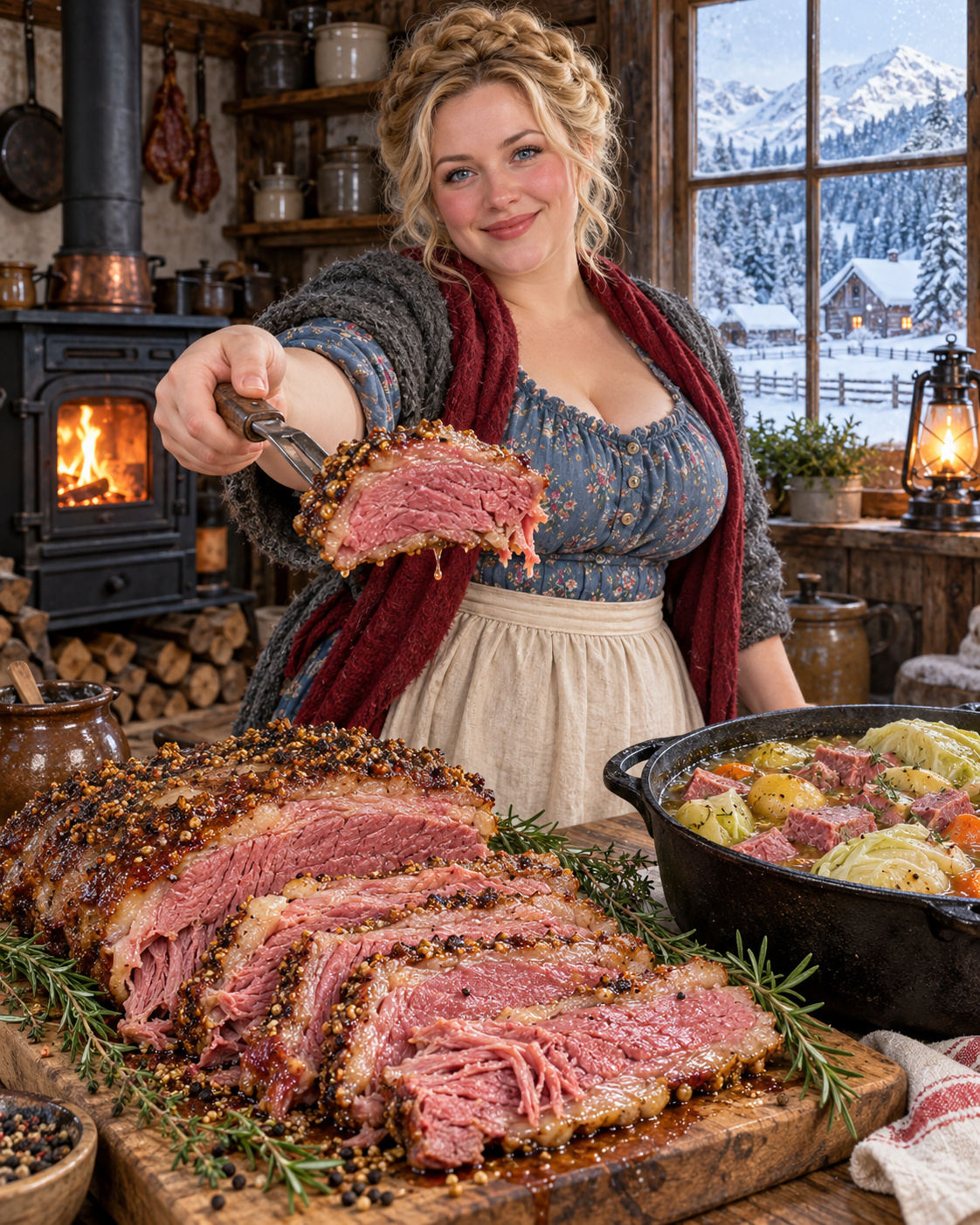
Barrels of corned beef lined the storehouse, and the men joked that my cooking would make them too heavy for the riverboats.
Caleb recovered enough to help in the kitchen.
Ruth Bell came every Sunday, often bringing my father fresh bread and pretending she had made too much.
Silas paid every debt he owed her.
Then he did something I never expected.
He placed a new agreement on my kitchen table.
It offered me a permanent position, fair wages, and a share of the profits from the camp’s food operations.
“You’ve earned more than a cook’s salary,” he said.
I read the agreement carefully.
Then I picked up the pen.
For the first time in my life, my name appeared on a business contract that belonged to me.
Not to my father.
Not to my husband.
To me.
Silas watched me sign.
“You staying, Nell?”
I looked through the window.
My father sat outside beside Caleb, teaching him how to carve a wooden whistle.
Amos was laughing near the stable.
The camp that had once tried to send me away had become the first place where I no longer felt unwanted.
“Yes,” I said. “I’m staying.”
Silas smiled.
Then his expression grew serious.
“I owe you an apology for the day you arrived.”
“You owe me more than that.”
He nodded.
“I know.”
I held out my hand.
“Then spend the rest of your life becoming the sort of man my father thought you were.”
He shook it.
“I intend to.”
That evening, I walked with my father beside the river.
The water moved swiftly beneath the fading sunlight.
He leaned on my arm, his steps slow but steady.
“Do you hate me for not coming home?” he asked.
I stopped walking.
For a moment, I saw the young girl I had once been, standing at a window, watching an empty road.
Then I looked at the old man beside me.
His face carried every year that had been stolen from us.
“No, Papa,” I whispered. “I hate what happened to us.”
He began to cry.
I rested my head against his shoulder.
“We can’t get those years back,” I said. “But we still have tomorrow.”
He kissed my forehead.
And for once, tomorrow did not frighten me.
Months later, when the river drive ended successfully, Silas held a supper for the entire camp.
Forty men gathered around long wooden tables beneath lanterns swinging from the rafters.
There was roast beef, fresh bread, potatoes, pies, and enough coffee to keep them talking until midnight.
Caleb stood and raised his cup.
“To Miss Garrett,” he said, “who came here with one suitcase and saved every fool among us.”
The men cheered.
I laughed through my tears.
Then my father rose slowly beside me.
He lifted his cup with trembling fingers.
“To my daughter,” he said, “who taught an old man that coming home isn’t always about finding the road.”
His voice broke.
“Sometimes it’s about finding someone who still wants you there.”
I held his hand beneath the table.
And in that warm, noisy room, I finally felt the ache inside my heart begin to loosen.
I had arrived at Brandt’s camp believing that survival meant earning enough money to leave.
Instead, I had found my father, uncovered the truth about my husband, and discovered a strength I had never known I possessed.
I had also learned that people could fail us terribly without being beyond redemption.
Silas could never undo his cowardice.
Thomas could never return the years his silence had stolen.
And my father could never give me back the childhood we had lost.
But I could choose what happened to the years ahead.
I could build a life from what remained.
When the supper ended, I stepped outside beneath the stars.
The mountains stood dark against the moonlit sky.
Behind me, laughter spilled from the cookhouse.
I touched the wedding ring I still wore, then gently slipped it from my finger.
For a moment, I held it against my heart.
I did not throw it into the river or bury it in the snow.
Thomas had been part of my life, and neither his love nor his mistakes needed to be erased.
Instead, I placed the ring in my pocket.
Then I turned toward the warmth of the kitchen.
My father was waiting inside.
And for the first time since I was seventeen, I was not waiting for someone to come home.
I was already there.
I learned that courage is not the absence of fear, and forgiveness is not pretending that betrayal never happened.
Courage is choosing the truth even when it threatens everything you know, and forgiveness is refusing to let another person’s wrongdoing steal the rest of your life.
Because sometimes the people who abandon us are themselves trapped, sometimes the people we trust fail us, and sometimes the place where we are told we do not belong becomes the very place where we discover our worth.
And sometimes, after losing almost everything, we discover that the most precious thing we can still give ourselves is permission to begin again.
THE END.