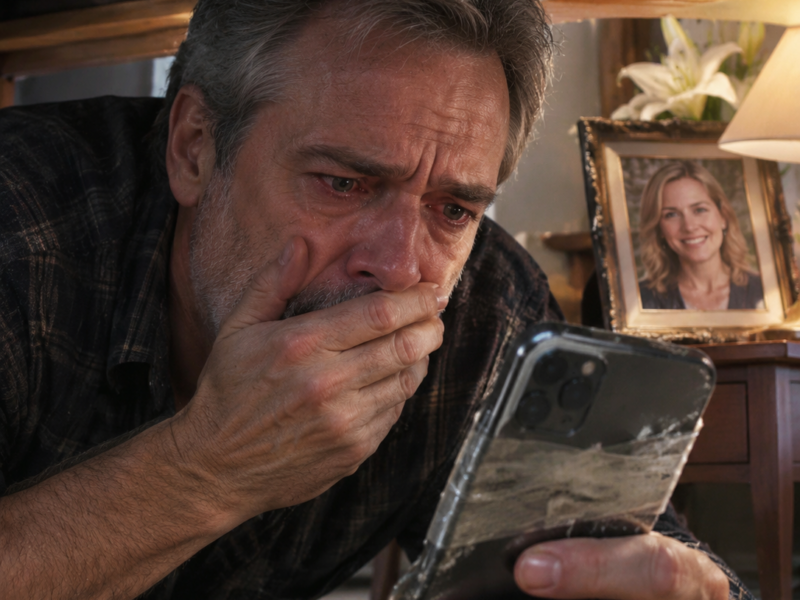
One Month After My Wife Died, I Discovered a Secret Phone Taped Beneath Our Bed With a Handwritten Warning: “Do Not Let Our Son Find Out.” Inside Were Documents Revealing That My Son Was Secretly Negotiating the Sale of Our $41 Million Hotel to My Oldest Rival. When I Confronted Him, He Claimed Grief Was Affecting My Judgment and Locked Me Out of My Own Business. But at the Hotel’s Annual Awards Ceremony, I Approached the Microphone in Front of Hundreds of Guests—and My Son’s Confident Smile Suddenly Vanished…
One Month After My Wife Died, I Discovered a Secret Phone Taped Beneath Our Bed With a Handwritten Warning: “Do Not Let Our Son Find Out.” Inside Were Documents Revealing That My Son Was Secretly Negotiating the Sale of Our $41 Million Hotel to My Oldest Rival. When I Confronted Him, He Claimed Grief Was Affecting My Judgment and Locked Me Out of My Own Business. But at the Hotel’s Annual Awards Ceremony, I Approached the Microphone in Front of Hundreds of Guests—and My Son’s Confident Smile Suddenly Vanished…
The first thing I noticed was the tape.
It was a narrow strip of gray duct tape, pressed firmly against the underside of the wooden bed frame, almost invisible in the shadows. For forty years, I had slept in that bed beside the woman I loved more than anything in the world. I knew every creak of its old oak frame, every scratch along the headboard, and every slight dip in the mattress where my wife liked to curl up with a book.
But I had never noticed the tape.
And when I reached beneath the bed and discovered what it was holding, I had no idea that the next few weeks would tear apart everything I believed about my family.
My wife had been dead for exactly one month.
Her name was Odelia Winterbourne, and until the day she died, I thought there was nothing in this world she could have kept from me.
I was wrong.
The object hidden beneath our bed was a second cellphone, wrapped in a soft cloth and secured so tightly to the frame that I needed both hands to free it. An old model, heavier than the phone I carried, with a small crack near the charging port.
I recognized it immediately.
Odelia had used it the previous summer to photograph her garden. I remembered teasing her about having more electronic devices than the front desk of our hotel.
At the time, she had laughed and told me that roses were better company than most businessmen, and that at least flowers never pretended to be something they weren’t.
Standing in our bedroom that September morning, I would eventually remember those words with a different kind of pain.
There was a yellow note attached to the screen.
Five words, written in my wife’s unmistakable handwriting.
“Do not let our son find out.”
I sat on the edge of the bed, holding the phone in my trembling hands.
Our son.
Chauncey.
The boy Odelia had carried for nine months, the child whose first steps had nearly sent me falling down the stairs in my excitement, the young man we had raised to inherit the legacy we spent our entire lives building.
What could he possibly have done that made his mother hide a telephone beneath our bed?
And why hadn’t she told me?
My name is Marcellus Winterbourne. I am an old man now, old enough to understand that the most dangerous lies rarely come from strangers.
They come from people who know exactly which words will make you trust them.
For more than four decades, Odelia and I owned and operated the Winterbourne Grand Hotel, a magnificent historic property that stood at the center of our city.
When we purchased it, the building was little more than an abandoned shell.
The roof leaked. The plumbing was unreliable. Half the windows were broken, and the ballroom had become a storage space filled with discarded furniture.
Everyone thought we were fools.
Our banker advised us to choose something smaller. My brother called the project a financial suicide mission. Even the contractor we hired walked through the property and quietly suggested demolition.
But Odelia saw something nobody else could see.
She stood beneath the cracked ballroom ceiling, looked at the dusty chandeliers, and told me that one day people would travel hundreds of miles to celebrate the happiest moments of their lives in that room.
She was right.
We spent years rebuilding the hotel. I handled construction, financing, operations, and the endless negotiations required to keep a business alive. Odelia handled everything that made the building worth visiting.
She understood hospitality as an art.
She remembered anniversaries. She knew which regular guests preferred rooms away from the elevators. She insisted that every bride receive a handwritten congratulations card, and she personally selected the flowers that greeted visitors in the lobby.
By the time our hair turned gray, the Winterbourne Grand had become one of the most respected hotels in the region.
And we believed our son would preserve it.
Chauncey was intelligent, confident, and charming. From an early age, he possessed an extraordinary talent for persuading people. He could turn an angry guest into a loyal customer, convince a skeptical investor to reconsider a proposal, and make a room full of strangers feel as though they had known him for years.
I mistook that talent for wisdom.
I would eventually learn the difference.
After Odelia died on August eighteenth, I barely functioned.
For thirty-one days, I left her side of the bed untouched.
Her slippers remained beneath the nightstand. Her favorite cardigan hung over the bedroom chair. The small silver dish where she kept her wedding ring sat beside her photograph.
Every morning, I woke expecting to hear her downstairs.
Every evening, I reached toward the empty side of the mattress before remembering.
Chauncey repeatedly told me to rest.
“Dad, you’ve carried this family long enough,” he said after the funeral. “Let me handle the hotel. You need time.”
His wife, Aurelia, agreed.
They brought food, spoke gently about grief, and assured me that the business was in capable hands.
I wanted to believe them.
Perhaps that was my first mistake.
On September eighteenth, I finally found the strength to change our bedding.
That was when I discovered the phone.
Its battery was dead, but the charger Odelia had used was still behind the nightstand. I connected it and waited.
When the screen illuminated, it requested a passcode.
I stared at the numbers until an old memory surfaced.
Years earlier, Odelia had warned me that if I ever forgot an important password, our wedding date would open every door she locked.
I entered the month and day.
The phone unlocked.
More than two hundred files filled the screen.
Photographs. Documents. Voice recordings. Videos.
My wife had organized everything into carefully labeled folders.
I opened the first.
The photograph showed Chauncey standing inside a service corridor of our hotel, shaking hands with a man named Bertram Hargreaves.
My entire body went cold.
Bertram was a rival hotelier with whom I had maintained a bitter professional disagreement since 1998.
We had once competed for the same historic property. The negotiations became vicious, and afterward Bertram made no secret of his resentment toward me.
For years, our companies remained competitors.
Chauncey knew that history.
More importantly, he had personally assured me that Bertram had never visited our hotel.
Yet there they were, smiling together beneath the service corridor lights.
The next photograph showed them reviewing documents.
Another showed Bertram standing with his hand on my son’s shoulder.
I kept scrolling.
Then I saw the document that nearly stopped my heart.
It was a power of attorney.
My name appeared as the person granting authority.
Chauncey’s name appeared as the person receiving it.
At the bottom was my signature.
Except I had never signed it.
I knew my handwriting as well as I knew my own face. The signature looked convincing, but something about it was wrong.
And I had absolutely no memory of authorizing my son to act in my name.
For several minutes, I sat motionless.
My wife had discovered secret meetings between our son and my oldest rival.
She had preserved a document bearing a signature I did not recognize as my own.
And she had hidden everything beneath our bed with a warning that specifically named our son.
The realization was unbearable.
Odelia had spent part of her final summer afraid of something happening inside our family.
She had slept beside me, cooked our dinners, tended her roses, and smiled across the breakfast table while carrying a secret she apparently believed was too dangerous to reveal.
I pressed the phone against my chest and cried.
Then, through tears, I looked at her photograph.
“All right, sweetheart,” I whispered. “You left this for a reason. I’ll find out what happened.”
The following morning, I called Lowenna Ravensworth.
Lowenna had been our attorney for decades. She helped establish Winterbourne Hospitality LLC, prepared our estate documents, and negotiated many of the agreements that transformed our struggling hotel into a thriving business.
When I explained what I had discovered, her usually cheerful voice became serious.
“Marcellus, listen carefully. Stop going through the phone. Don’t delete anything, don’t send anything, and don’t allow anyone else to handle it. Put it somewhere secure and document exactly how you found it.”
She explained that if the files became evidence in a legal dispute, we needed to preserve their integrity.
Then she told me something I would remember throughout everything that followed.
“Don’t confront your son with accusations. Ask him one simple question. Let him decide whether to tell you the truth.”
I secured the phone in our fireproof lockbox, wrote down the details of its discovery, and drove to the hotel.
The Winterbourne Grand looked exactly as it always had.
Fresh flowers decorated the lobby. Bellmen greeted guests at the entrance. The chandeliers glowed above polished marble floors.
But for the first time in forty years, I felt like a stranger walking into my own building.
At the reception desk, Daniel, our concierge, appeared startled to see me.
“Mr. Winterbourne! We weren’t expecting you.”
“Why not?”
He hesitated.
“Mr. Chauncey told everyone you would be resting for the next few months. He asked us to direct any business questions to his office.”
I nodded.
“How considerate.”
Upstairs, I found my son sitting behind Odelia’s old desk.
He rose immediately, smiling.
“Dad! What a wonderful surprise.”
He embraced me and began talking about how worried he was for my health.
I waited until he finished.
Then I asked him directly.
“Chauncey, has Bertram Hargreaves been meeting with you at this hotel?”
His smile remained.
“Bertram? His company made an inquiry about renting the ballroom for a conference. I showed his representatives around. Nothing unusual.”
“How many times?”
“Once. There may have been a few calls afterward.”
He leaned back confidently.
“Dad, you’ve worked in hospitality your entire life. You know how these things happen.”
I studied his face.
For the first time, his charm seemed less like warmth and more like a curtain carefully drawn across a window.
“Then you won’t mind if I examine the meeting records.”
A tiny pause followed.
It lasted less than a second.
But I noticed.
“Of course not,” he said. “It’s your hotel.”
I left his office without another word.
Downstairs, I visited Mabel Kitteridge, our longtime front desk supervisor.
Mabel was one of those rare employees who remembered every reservation, every complaint, and every unusual incident.
When I asked about Room 614, she immediately looked uncomfortable.
“That room has been strange all summer, Mr. Winterbourne.”
“Strange how?”
“It was repeatedly serviced without being registered to a guest. The manager’s office used it for private meetings.”
She retrieved the access records.
The printout contained entry after entry throughout June, July, and August.
Room 614 had been opened repeatedly using a key card associated with Chauncey’s office.
The records corresponded with several photographs on Odelia’s phone.
My son hadn’t shown Bertram around once.
He had been meeting with him for months.
And he had looked me directly in the eyes and lied about it.
But the meetings were only the beginning.
Two days later, Lowenna arranged for an independent hotel valuation specialist named Rosamund Kingsbury to examine the proposed transaction documents.
What she found was devastating.
An independent valuation completed in May placed the Winterbourne Grand’s value at approximately forty-one million dollars.
The proposal associated with Bertram’s company valued it at only twenty-six million.
Fifteen million dollars separated those two figures.
At first, I assumed the difference proved deliberate manipulation.
Rosamund immediately corrected me.
“A lower offer is not automatically fraudulent, Mr. Winterbourne. Buyers negotiate. Valuations vary. We need to examine the assumptions.”
She began reviewing the financial schedules.
Then her expression changed.
Revenue generated by our ballroom, weddings, conferences, and private events had been omitted from important portions of the buyer’s analysis.
Meanwhile, renovation expenses appeared dramatically inflated.
Several major repairs lacked corresponding invoices.
Others had no supporting work orders.
When Rosamund finished, she placed her pencil on the desk.
“This doesn’t establish every answer,” she said. “But it raises questions no responsible owner should ignore.”
Our chief engineer, Otis Fenner, provided the next piece.
Otis had worked at the hotel for twenty-two years.
He knew every pipe, every boiler, and every electrical panel.
When we asked about the reported renovations, he looked furious.
“Eleven items in the latest report never crossed my desk. Guest wing plumbing, ballroom ceiling repairs, replacement fixtures. My crew didn’t perform that work.”
He explained that he had personally inspected several locations and found no evidence of the reported renovations.
Then he told me something even more troubling.
Tavish Bramble, our former operations manager, had questioned similar expenses before being dismissed in July.
I remembered Chauncey explaining Tavish’s departure as a routine restructuring.
Tavish had spent fourteen years helping run our hotel.
He deserved more than a meaningless corporate explanation.
I visited him at home.
He sat across from me at his kitchen table, holding a coffee mug with both hands.
“They wanted me to certify work I couldn’t verify,” he said quietly.
He showed me copies of emails in which he had requested work orders and refused to approve questionable expense reports.
A week later, his position was eliminated.
I stared at the termination letter.
Fourteen years of service.
Ended because he asked questions.
“I should have come to you,” Tavish said.
“Why didn’t you?”
“Because everyone was told you were grieving and shouldn’t be disturbed. I thought I was protecting you.”
Those words hurt more than I expected.
My son had not merely taken control of the hotel.
He had built an entire system designed to keep information from reaching me.
Before I left, Tavish mentioned something that made my stomach tighten.
Odelia had visited him before her death.
She had asked about Room 614.
She had taken notes.
And she had specifically questioned the renovation records.
My wife had been investigating the same irregularities we were only beginning to uncover.
That evening, I called Lowenna and asked permission to hear the recordings on her phone.
She agreed, provided everything was carefully documented.
The first video began with Odelia sitting in her favorite yellow garden chair.
Her hair was pinned up.
There was dirt on her cheek.
The sight of her alive, moving, breathing, and looking directly into the camera almost broke me.
“If you’re watching this, my love,” she began, “then I didn’t have enough time to explain everything.”
I covered my mouth.
She described seeing Bertram’s car at the hotel repeatedly.
She described questioning Chauncey.
He had laughed off her concerns and suggested she was imagining conspiracies.
Then he began bringing documents to her, asking whether she could obtain my signature.
Routine papers, he called them.
Things that would make business easier.
Odelia refused.
“Your father signs his own name,” she told him.
Her voice grew quieter as she continued.
She wasn’t certain what Chauncey intended.
She wasn’t prepared to accuse her own child of a crime.
But she knew he was hiding meetings and trying to obtain signatures without explaining what those signatures would authorize.
So she began collecting evidence.
Not because she wanted to destroy him.
Because she knew I would need proof before I could believe something so painful.
When the video ended, I cried harder than I had at her funeral.
At the funeral, I had mourned the woman I lost.
Now I mourned the terrible loneliness she had endured while she was still alive.
Over the next several days, we uncovered more.
Among Odelia’s photographs was a draft consulting agreement.
It named Chauncey as a consultant to an entity associated with the Hargreaves group.
If the hotel sale closed, the document proposed paying him one million nine hundred thousand dollars.
I read the figure repeatedly.
One million nine hundred thousand dollars.
My son stood to receive a personal financial benefit from a transaction involving his own family’s hotel.
The document was unsigned.
Rosamund emphasized that distinction.
It did not prove a binding arrangement existed or that any payment had occurred.
But it revealed a proposed financial incentive that Chauncey had never disclosed to me.
I called him.
“Is there a consulting agreement promising you money if the hotel is sold?”
He immediately became defensive.
“Consultants propose things all the time, Dad. It doesn’t mean anything.”
“One million nine hundred thousand dollars is a very specific proposal.”
There was silence.
Then his voice hardened.
“Who’s giving you these numbers? Tavish? That lawyer? You’re letting outsiders manipulate you.”
I repeated the question.
He refused to answer directly.
Instead, he invited me to Sunday dinner and suggested I stop behaving like an auditor.
When he hung up, I sat alone in the kitchen.
The boy who once begged me to teach him how to balance a ledger was now furious that I wanted to examine one.
Soon afterward, the quarterly distribution I received from my ownership interest was deferred.
For decades, those payments had arrived regularly, through economic downturns, renovations, and unexpected emergencies.
Now Chauncey’s office announced a restructuring review.
Lowenna suspected financial pressure.
She immediately demanded a written explanation under the company’s operating agreement.
Then came the next discovery.
The power of attorney photographed on Odelia’s phone was dated June thirteenth, 2024.
And it had been notarized by Aurelia.
My daughter-in-law.
I remembered that date because I had spent it in the hospital.
I had been admitted the previous day and discharged on June fourteenth.
Hospital records confirmed that I remained on a monitored unit throughout June thirteenth.
Odelia was the only visitor recorded that day.
Yet the document claimed that Aurelia had witnessed and notarized my execution of the power of attorney.
Lowenna explained that the records raised serious questions about the document’s authenticity.
The hospital evidence did not, by itself, identify who had signed my name.
But it directly challenged the circumstances represented by the notarial certificate.
We demanded preservation of the original document, the witness information, and the notarial records.
The following evening, Aurelia appeared at my house carrying a lemon cake.
Odelia’s favorite.
She behaved as though she had come to comfort a lonely widower.
She made tea, arranged plates, and asked about my health.
Then she removed a document from her handbag.
It was a confirmation page.
If I signed it, I would be affirming that I had executed the power of attorney on June thirteenth, 2024.
She described it as a simple formality.
“Sign this, Dad, and the lawyers can stop making everything difficult.”
I looked at the page.
Then I looked at her.
“Where was I on June thirteenth?”
She blinked.
“I don’t remember.”
“I was in the hospital. The records prove it.”
Her smile disappeared.
I asked who had prepared the confirmation and why she had brought it to my home.
She began crying.
She said Chauncey had told her it was routine.
She claimed she merely wanted the family to stop fighting.
Then she mentioned Odelia’s will, suggesting there might be disagreements about her final wishes.
It was an astonishing attempt to change the subject.
I slid the unsigned page back across the table.
“From now on, anything requiring my signature goes through my attorney.”
Her expression changed completely.
“You’re not well, Dad,” she said softly. “Grief is affecting your judgment.”
Then she left.
I documented the visit and informed Lowenna.
Within an hour, Chauncey called.
He accused me of mistreating his wife.
Then he suggested that people were becoming concerned about my mental condition.
I understood the implication.
My grief was being transformed into a weapon against my credibility.
The following morning, my access to the hotel’s computer systems was disabled.
My email no longer worked.
My office extension had been disconnected.
When I contacted the IT department, a frightened employee confirmed that the instructions came from the manager’s office.
I called Chauncey.
He described the changes as security precautions.
“You aren’t an employee anymore, Dad.”
“No,” I replied. “I’m an owner.”
I held fifty-one percent of Winterbourne Hospitality LLC.
Chauncey held twenty-nine percent.
Odelia’s remaining twenty percent belonged to her estate and would be handled through probate.
My majority ownership had not disappeared because my son changed a password.
But he was determined to make me feel powerless.
Soon afterward, I discovered that Odelia’s portrait had been removed from the founders’ wall in the hotel lobby.
Her photograph had stood beside mine for years.
After her funeral, the staff added flowers and a memorial plaque.
Now her portrait had been moved near a service elevator.
In its former place, Chauncey’s office displayed promotional material celebrating the hotel’s supposed future.
I thought of my wife choosing flowers for the lobby.
I thought of her climbing ladders beside me during renovations.
And I thought of her photograph being pushed toward the laundry carts.
It was one of the few moments during that autumn when I genuinely wanted revenge.
Lowenna refused to let anger dictate our strategy.
She demanded preservation of Odelia’s belongings and warned everyone involved that company records must not be altered or destroyed.
She also sent formal requests for financial statements, transaction documents, member records, and internal correspondence.
Meanwhile, Chauncey announced an elaborate evening honoring me as the hotel’s founder.
The invitation was magnificent.
Black tie.
Dinner.
Music.
Photographers.
A tribute to family values.
He wanted me sitting beneath a spotlight, smiling beside him, while he used my presence to imply approval of his leadership.
I declined in writing.
My letter stated that I would accept no ceremonial honor while my access to company information remained blocked and my requests for records went unanswered.
The letter circulated among company members and senior staff.
For the first time, employees began openly questioning what was happening.
Chauncey responded by tightening his control.
He instructed staff not to communicate directly with me.
Then he began searching for Odelia’s personal belongings.
He even asked our granddaughter, Juniper, to inquire about her grandmother’s old phone.
Juniper called me, troubled by the way her father had rehearsed the question.
I told her she was not responsible for carrying messages between adults.
But her call led to another discovery.
Odelia had asked Juniper to help organize the photographs on her phone during the summer.
The girl believed they were making a family album.
When she visited, she showed me a hidden subfolder labeled “Extras.”
Inside were several videos I had never seen.
In one, Odelia described confronting Chauncey in the garden.
She had asked whether I knew about Bertram’s repeated visits.
According to her recording, Chauncey replied that I would be told what I needed to know when the time came.
He insisted the hotel needed a future, not an old man clinging to a museum.
Odelia refused to sign documents transferring control of her twenty percent interest.
She told him she would not keep secrets from her husband indefinitely.
When I heard those words, I understood that the conflict between my wife and son had become far more personal than I imagined.
She had spent her final weeks defending our life’s work against the child we raised to protect it.
The last file in the folder had a title that stopped me.
“FOR MARCELLUS — WHEN YOU ARE READY.”
I couldn’t bring myself to open it.
Not yet.
I asked Lowenna to have the device professionally preserved.
A forensic examiner created a verified copy of its contents, and the original was secured.
The files could now be examined without repeatedly handling the original phone.
Among the preserved documents was an email apparently sent from Bertram Hargreaves to Chauncey.
Its technical information was examined, and preservation notices were sent to the relevant companies.
When Lowenna finally allowed me to read it, I discovered something I had not anticipated.
Bertram’s interest in purchasing the Winterbourne Grand was not purely financial.
He still remembered our rivalry from 1998.
In the email, he discussed removing the Winterbourne name from the building after the acquisition.
The name Odelia and I had spent decades making respected.
The name our son carried.
Bertram described it as a long-delayed settling of accounts.
I stared at the message.
Chauncey knew the buyer wanted to erase our family name.
And he had continued negotiations anyway.
That realization hurt more than the financial figures.
Money could be earned again.
A reputation could sometimes be repaired.
But a son knowingly helping an old rival erase his parents’ legacy was something I didn’t know how to forgive.
Bertram eventually contacted me directly.
He claimed his group had relied on financial information supplied by hotel management.
He proposed withdrawing from the negotiations if the family agreed to resolve the dispute privately.
No public accusations.
No further questions about the documents.
A discreet ending.
I refused.
Any withdrawal, I told him, would need to be documented properly.
And I would not trade the truth for silence.
By early October, the situation was approaching a breaking point.
An awards ceremony was scheduled for October seventeenth.
The Winterbourne Grand was being recognized for excellence in hospitality.
The award belonged to decades of work by our employees and, above all, to Odelia’s vision.
I had every intention of attending.
Then Lowenna obtained the printed program.
Between the award presentation and dessert, Chauncey had arranged a ceremonial signing celebrating a new partnership between our hotel and the Hargreaves Hospitality Group.
My presence was listed as part of the ceremony.
The problem was simple.
No such partnership had been approved.
I had never consented.
And the company’s required authorization did not exist.
Lowenna immediately contacted the event organizers.
She provided a written objection explaining the lack of authorization.
The ceremony director, Priscilla Vane, reviewed the matter and requested proof of the proposed signing’s approval.
None could be produced.
The signing segment was canceled.
Chauncey’s speaking remarks remained.
Lowenna insisted that distinction mattered.
He could speak.
He could criticize me.
He could express his opinions.
But he could not use the ceremony to create the appearance of corporate approval that did not exist.
My son was furious.
He came to my house carrying another consent agreement.
This document would authorize the disputed transaction and waive my objections.
“One signature, Dad,” he said. “That’s all it takes to end this.”
I asked him what he would personally receive if the deal closed.
He stood up so abruptly that his chair scraped the floor.
He accused me of treating him like a criminal.
I reminded him of the proposed one-million-nine-hundred-thousand-dollar consulting fee.
I acknowledged that the agreement was unsigned and that no payment had been established.
Then I asked him to explain it.
He refused.
Instead, he threatened to blame me if employees lost their jobs because the transaction collapsed.
He spoke about two hundred families depending on the hotel.
He knew exactly where to strike.
I had spent forty years worrying about those employees.
I knew their spouses, their children, their illnesses, their retirement plans.
The idea that I might endanger them was almost unbearable.
But then I remembered the missing revenue, the unexplained renovation expenses, and the dismissed operations manager.
Protecting employees did not mean approving a transaction I had not been permitted to examine.
I left the consent unsigned.
Soon afterward, an article appeared in the local business newspaper claiming that our family had reached an agreement and that I would publicly bless the partnership at the awards ceremony.
The story was false.
Lowenna demanded a correction.
Then something happened that changed the legal situation entirely.
Chauncey sent a box of Odelia’s personal belongings to my home.
Inside were her desk clock, reading glasses, photographs, and folded towels.
At the bottom lay another copy of the final transaction documents.
A gold pen rested across the signature page.
It was Odelia’s pen.
The one her employees had given her on the hotel’s twenty-fifth anniversary.
Chauncey had included a handwritten note suggesting that we had reached an understanding and that I should use his mother’s pen to complete the agreement.
We had reached no such understanding.
Lowenna recognized the importance of his written representation.
The note, the photographs, the disputed documents, and the hospital records became part of an emergency court application.
On October thirteenth, I signed a sworn declaration.
I stated that I had not executed the disputed power of attorney, had not authorized my son to act for me, and had never approved the proposed transaction.
Two days later, we appeared in court.
Chauncey sat across the aisle with his attorneys.
He didn’t look at me.
The judge reviewed the evidence and made clear that she was not deciding whether anyone had committed a crime.
The immediate question was whether a disputed power of attorney should be allowed to facilitate a transaction before its authenticity could be examined.
Our attorney explained the hospital records, the disputed signature, the attempts to obtain confirmation, and the planned signing ceremony.
Chauncey’s counsel argued that I was grieving and confused.
The judge was not persuaded that those descriptions answered the documentary concerns.
She issued temporary restrictions preventing reliance on the disputed power of attorney to represent my consent or complete the transaction while the questions remained unresolved.
The hotel could continue operating normally.
The court made no final finding that the signature was forged.
But the document could not be used as though its validity had already been established.
Outside the courthouse, Chauncey passed me on the steps.
“I hope it was worth it, Dad,” he said. “I’ll still have the microphone Friday night.”
I watched him walk away.
For decades, I had taught my son that victory meant being the smartest person in the room.
Standing there, I wondered whether I had forgotten to teach him that some victories weren’t worth having.
Later that afternoon, Lowenna showed me the operating agreement Odelia and I had signed years earlier.
It allowed members holding more than half the voting interests to act through written consent on certain company matters.
I held fifty-one percent.
Enough to remove the manager under the agreement’s terms.
Enough to appoint someone new.
But understanding what I could legally do did not make the decision easy.
Chauncey was my only son.
I remembered teaching him to swim.
I remembered his graduation.
I remembered the pride in Odelia’s eyes when he first joined the hotel.
And I remembered how she used to say that one day he would become a better businessman than both of us.
Lowenna placed a resolution before me.
It removed Chauncey as manager and chief executive of the hotel.
It appointed Howard Brinsley, a respected veteran hotel operator, to oversee daily operations.
And it explicitly preserved Chauncey’s twenty-nine percent ownership interest.
I wasn’t taking away his shares.
I was removing him from a position of managerial authority.
Howard promised that employees would be paid, reservations would be honored, and the hotel would continue operating without disruption.
Then I signed.
It was the hardest signature of my life.
Not because my hand trembled.
It didn’t.
But because I understood exactly what it meant.
That evening, the resolution was formally delivered to Chauncey.
He was no longer running the Winterbourne Grand.
The next morning, he called.
His voice was colder than I had ever heard it.
He accused me of humiliating him.
Then he calmly described what he intended to do at the awards ceremony.
He would stand before hundreds of guests, announce that his grieving father had wrongfully removed him, and publicly offer forgiveness.
He would invite me onto the stage.
If I joined him, he would treat my presence as reconciliation and endorsement.
If I refused, he would portray me as a bitter old man destroying his own family.
He believed the audience would decide the dispute in his favor.
I listened without interrupting.
When he finished, I told him I would attend, accept the honor due to the hotel and its staff, sign nothing, and tell no lies.
That was all.
On Friday evening, October seventeenth, I arrived at the Winterbourne Grand wearing the dark suit Odelia had chosen for formal occasions.
The ballroom was beautiful.
Crystal chandeliers shimmered above hundreds of guests.
White flowers decorated the tables.
A string quartet played near the stage.
For a moment, I saw the room as it had been forty years earlier, abandoned and dusty, with Odelia standing beneath the broken ceiling and imagining everything it could become.
I nearly cried before the evening began.
At rehearsal, an old seating chart had placed me at a distant table near the service entrance.
Priscilla Vane corrected it.
As co-founder and majority owner, I belonged at the founders’ table.
She ensured that Odelia’s portrait was properly displayed.
Her empty chair stood beside mine.
When the ceremony began, I sat there quietly, remembering all the evenings we had shared in that room.
The award presentation was moving.
Employees received recognition.
Speakers praised the hotel’s service, history, and contribution to the community.
For a little while, the conflict seemed far away.
Then Chauncey approached the microphone.
He spoke beautifully.
That had always been his gift.
He described the sacrifices of previous generations and the importance of carrying family businesses into the future.
He praised his mother’s dedication.
He spoke about courage, change, and forgiveness.
Then his tone shifted.
He described recent disagreements as the result of grief and outside interference.
He suggested that people who cared about the hotel had allowed lawyers and documents to divide them.
Then he turned toward me.
“Dad,” he said, his voice rich with emotion, “I want us to move forward together.”
He extended his hand.
The room grew quiet.
I remained seated for a moment.
Then I rose.
But I did not walk toward him as he expected.
I approached the microphone as the hotel’s co-founder, with the event organizers aware that I would make brief factual remarks.
I could feel hundreds of eyes following me.
Chauncey smiled at first.
Then he noticed I was carrying no document and offering no embrace.
I began by thanking the employees.
I spoke about the forty years Odelia and I had spent building the hotel.
I described the nights we worried about payroll, the mornings we served breakfast ourselves, and the extraordinary people who had made the hotel successful.
Then I addressed what everyone had heard.
I explained that no partnership with Hargreaves had been approved by the company’s majority owner.
I explained that the proposed ceremonial signing had been canceled because the necessary authorization did not exist.
I explained that a court had temporarily restricted reliance on a disputed power of attorney while its authenticity remained unresolved.
And I confirmed that Chauncey had been removed as manager under the operating agreement while retaining his twenty-nine percent ownership interest.
I did not call him a criminal.
I did not claim the court had found him guilty of anything.
I did not pretend that an unsigned consulting agreement was an executed contract.
But I told the room that a draft existed proposing a personal payment of one million nine hundred thousand dollars to Chauncey if the transaction closed.
The silence was extraordinary.
I could hear the faint hum of the ventilation system.
Across the ballroom, a representative of the Hargreaves group stood and announced that discussions concerning the property were suspended pending clarification of the relevant authority.
Then he sat down.
Chauncey looked at me.
For the first time that evening, he seemed to have forgotten his speech.
The confidence drained from his expression.
“Dad,” he whispered, close enough for me to hear, “what do you want from me?”
I looked at my son.
Not the manager.
Not the man who had threatened my reputation.
Just the boy I had raised, standing in a room his mother loved.
“I want you to stop making decisions in my name,” I told him. “You don’t get to sign for me. You don’t get to decide what I believe, what I approve, or how I grieve. You must stand behind your own choices.”
He lowered his eyes.
I returned to my table.
The ceremony continued, although the atmosphere had changed.
I sat beside Odelia’s empty chair and listened to the quartet resume its music.
I felt neither triumphant nor satisfied.
I felt exhausted.
The months afterward were less dramatic than people might imagine.
There were legal letters.
There were meetings.
There were audits.
The dispute over the power of attorney continued through the appropriate process.
Nothing was magically resolved because I had spoken in a ballroom.
On October twenty-first, I convened a formal members’ meeting.
Chauncey attended with counsel.
He opposed the independent audit and challenged the management changes.
His objections were recorded.
But my fifty-one percent voting interest was sufficient for the decisions taken under our agreement.
The audit was authorized.
Howard Brinsley was confirmed as interim manager.
And the hotel continued operating.
The findings would take time.
The legal questions would take time.
Perhaps most painfully, the distance between my son and me would take time too.
On Halloween evening, Chauncey appeared at my front door.
This time, he brought no cake.
No folder.
No pen.
He stood in the living room wearing an overcoat and looking older than I remembered.
“I know I can’t get my position back,” he said. “I’m not asking for that.”
I waited.
“I want you to withdraw the evidence. End the legal fight. Let the family settle this privately.”
He promised to abandon the proposed partnership.
He said nobody else needed to suffer.
Then he used the words that had become painfully familiar.
“Do it for Mom.”
I looked at him for a long time.
The truth was that I wanted to say yes.
I wanted my son back.
I wanted Sunday dinners.
I wanted to hear Juniper laughing in the garden.
I wanted a family that didn’t communicate through lawyers.
But I could not make Odelia’s evidence disappear simply because it had become uncomfortable.
“Your mother gathered those records because she believed the truth needed protecting,” I said. “I won’t destroy what she spent her final summer preserving.”
Chauncey’s face tightened.
“You know she wouldn’t have wanted us like this.”
My eyes filled.
“No,” I answered. “She wouldn’t.”
For a moment, neither of us spoke.
Then he turned and walked out.
I watched him disappear down the street among children wearing costumes and carrying candy bags.
The sight was almost unbearably ordinary.
Families laughing.
Doors opening.
Children running between houses.
And somewhere inside that familiar world, my own family remained broken.
After he left, I knew what I had to do.
I drove to Lowenna’s office.
Clara prepared the verified working copy of Odelia’s phone archive and opened the folder I had avoided for weeks.
“FOR MARCELLUS — WHEN YOU ARE READY.”
Then she left me alone.
I sat before the screen with a glass of water and trembling hands.
I pressed play.
Odelia appeared in her yellow garden chair.
Behind her, the roses were blooming wildly.
She looked thinner than I remembered, but her eyes were bright.
And when she smiled, I felt the familiar warmth of forty years return for one impossible second.
“Well, my love,” she began, “I suppose you’re finally ready.”
I broke down immediately.
She waited in the recording, smiling gently, as though she knew I would need a moment.
Then she explained why she had preserved the documents.
Not for revenge.
Not to punish our son.
Not to turn me into a bitter old man consumed by anger.
She wanted me to understand what had happened.
She wanted me to protect myself.
She wanted to make certain nobody could ever place a document before me and persuade me to sign away something precious without understanding it.
Then she spoke about Chauncey.
“He is our son,” she said. “And he is also a grown man responsible for his choices. Both things can be true.”
I covered my face.
She told me that forgiveness was possible, but it couldn’t be forced.
She warned me not to pretend a wound had healed simply because everyone wanted the bleeding to stop.
And she reminded me that protecting the truth did not require abandoning love.
I watched the recording three times.
By the third, I was speaking back to her.
I told her how frightened I had been.
I told her how much I missed her.
I told her I wished she had trusted me enough to share her fears while she was alive.
But then I realized something.
Perhaps she hadn’t hidden the evidence because she distrusted me.
Perhaps she knew exactly how deeply I loved our son.
Perhaps she feared I would dismiss her concerns, not because I didn’t believe her, but because believing them would destroy something inside me.
She had wanted to be certain.
She had gathered facts before accusations.
And in the end, she had left me the same responsibility.
Protect yourself.
Protect the hotel.
Protect the truth.
And where forgiveness becomes possible, do not close the door forever.
Before the recording ended, she looked directly at the camera.
“Mind the name over the door, Marcellus,” she said. “It was never just paint.”
Then the screen went dark.
I sat there long after the video finished.
For the first time since finding the phone, I no longer felt as though I was carrying my wife’s final summer as a burden.
I felt as though she had handed me a responsibility I could now understand.
The next morning, November first, I returned to the Winterbourne Grand.
Howard stood near the reception desk reviewing the overnight reports.
Mabel greeted me with her familiar smile.
The Hartley wedding was scheduled in the grand ballroom, and the family had confirmed every arrangement.
A bellman carried luggage toward the elevators.
Fresh lilies filled the entrance with fragrance.
Coffee drifted from the restaurant.
The hotel was alive.
Not because of a sale.
Not because of a consulting agreement.
Not because one man stood at a microphone and persuaded an audience to believe him.
It was alive because hundreds of ordinary people came to work every morning and performed their jobs with care.
I walked slowly toward the founders’ wall.
Odelia’s portrait had been restored.
It hung beside mine in a beautiful frame, exactly where she belonged.
Someone had placed fresh roses beneath it.
I stood there for several minutes.
Then Juniper appeared beside me.
She slipped her hand into mine.
“Grandpa,” she asked quietly, “is everything going to be okay?”
I looked down at her.
I wanted to promise that everything would be fixed.
That her father and I would reconcile.
That the court proceedings would end peacefully.
That the audit would answer every question.
That our family would return to what it had once been.
But after everything that happened, I had learned the danger of making promises unsupported by truth.
“I don’t know, sweetheart,” I said. “But we’re going to do everything properly from now on.”
She nodded.
Then she looked at her grandmother’s photograph.
“She would like that.”
I smiled.
“Yes. I believe she would.”
We stood together beneath the Winterbourne name.
The name Odelia and I had painted above the entrance decades earlier.
The name Bertram wanted removed.
The name Chauncey had treated as something that could be traded away.
And I finally understood what my wife had meant.
The name was not valuable because of its letters.
It mattered because of the promises made beneath it.
The employees who trusted us.
The guests who returned.
The weddings we hosted.
The families who built their lives around the hotel.
The decades of honesty and hard work that transformed an abandoned building into something worth protecting.
Those things could not be measured entirely in dollars.
And they certainly could not be preserved by signatures obtained through secrecy.
I didn’t know whether Chauncey and I would ever become close again.
I still loved him.
That was perhaps the most painful part of the entire experience.
I loved the man who had lied to me.
I loved the son who had tried to use my grief against me.
I loved the child whose small hand I once held while teaching him to cross the street.
And I would continue loving him even while refusing to excuse what he had done.
The audit would proceed.
The disputed documents would be examined.
The courts would determine whatever questions required legal answers.
My son’s ownership interest would remain his unless changed through lawful means.
And the hotel would continue opening its doors each morning.
That was enough for the present.
As I stood in the lobby, Mabel approached with the day’s arrivals list.
“Mr. Winterbourne,” she said, “we have a returning guest who remembers you from twenty years ago. She asked whether you still come down to greet people.”
I looked toward the entrance.
An elderly woman stood beside her suitcase, smiling uncertainly.
I recognized her almost immediately.
She and her late husband had celebrated their fortieth wedding anniversary at our hotel.
Odelia had arranged flowers for their table.
I walked over and welcomed her.
She took my hands and began telling me about that wonderful evening, how beautifully the ballroom had looked, and how my wife had made them feel like the most important guests in the world.
I listened.
For once, I didn’t think about legal documents.
I didn’t think about missing invoices or private meetings.
I thought about Odelia standing among the tables with a vase of roses in her hands.
And I knew I was exactly where I needed to be.
Looking back, I understand that betrayal rarely announces itself with a slammed door.
Sometimes it arrives with a smile.
Sometimes it brings lemon cake.
Sometimes it tells you to rest while quietly removing your access to the things you own.
Sometimes it arrives disguised as concern, asking for only one small signature.
That is what frightened me most about everything I discovered.
Not simply that my son had been involved in secret negotiations.
Not even that a document bearing my disputed signature had appeared.
But that the people closest to me understood precisely how to use my trust, my grief, and my love to discourage me from asking questions.
For years, I believed trusting my family meant never demanding an explanation.
Now I know that genuine trust should survive honest questions.
A truthful person may dislike being questioned, but the truth does not become weaker when examined.
Love does not require blindness.
Forgiveness does not require destroying evidence.
And keeping a family together should never mean allowing one member to decide what everyone else is permitted to know.
Odelia taught me those lessons after her death.
She did it through photographs, recordings, careful notes, and a little old telephone hidden beneath our bed.
But the greatest thing she left me wasn’t the evidence.
It was permission to see our son clearly without pretending I had stopped loving him.
One day, perhaps, Chauncey will come to my door again.
Perhaps he will arrive without a lawyer, a prepared speech, or a document requiring my signature.
Perhaps he will sit at our kitchen table and answer the questions he has spent so long avoiding.
And perhaps I will be able to listen without remembering every wound of that terrible autumn.
I cannot promise that day will come.
But I have not locked the door.
The Winterbourne Grand still stands.
Its ballroom still fills with laughter.
The employees still greet returning guests by name.
And every morning, beneath the photograph of the woman who built it beside me, fresh flowers remind me that some things survive even the deepest betrayal.
My wife spent her final summer making sure I would not lose myself.
It took me weeks to understand the gift she left.
And when I finally did, I stopped asking what punishment my son deserved.
I began asking what kind of man I wanted to be when all the arguments were over.
That question was harder than any legal dispute.
But I believe Odelia knew I would eventually find the answer.
Because on the final afternoon we spent together in her garden, before either of us knew how little time remained, she reached across the table and took my hand.
The roses were blooming.
The hotel bells were ringing in the distance.
And she smiled at me with the confidence of a woman who had spent a lifetime understanding things before I did.
“Whatever happens, Marcellus,” she told me, “promise me you’ll never let anyone decide your life for you.”
I laughed at the time.
I thought she was teasing me.
I had no idea she was giving me the last instruction I would ever need.
Now, whenever I walk through the hotel’s entrance, I look up at our name above the door.
I remember her words.
And I keep that promise.