My Roommate of Two Years Was Getting Ready for Another Man’s Date When I Finally Said, “Don’t Go.” She Canceled Her Date, Kissed Me, and Agreed to Give Us a Chance, But Warned Me That No Man Had Ever Made It Past Her First Frost. Weeks Later, After Our First Night Together on a Montana Riverbank, I Found a Brown Paper Grocery Bag Beside Her at Midnight. Then She Asked Me, “So, Cal, Give Me Your Read on This Guy.”
My Roommate of Two Years Was Getting Ready for Another Man’s Date When I Finally Said, “Don’t Go.” She Canceled Her Date, Kissed Me, and Agreed to Give Us a Chance, But Warned Me That No Man Had Ever Made It Past Her First Frost. Weeks Later, After Our First Night Together on a Montana Riverbank, I Found a Brown Paper Grocery Bag Beside Her at Midnight. Then She Asked Me, “So, Cal, Give Me Your Read on This Guy.”
Part 1
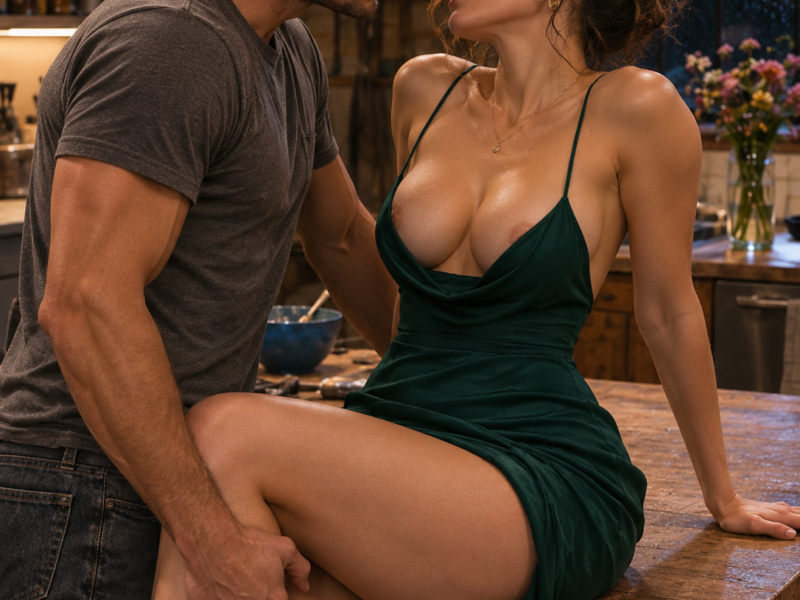
The night I finally told my roommate not to go on a date with another man, she was standing in our kitchen wearing a green dress, and I was holding the zipper that would have helped her leave me behind.
I was twenty-seven years old, reasonably competent with my hands, and completely useless when it came to admitting I was in love.
My name is Cal. I repair outdoor equipment for a living in Missoula, Montana. Torn drysuits, broken tent poles, damaged climbing gear, stubborn zippers—if something was broken, there was a good chance I could make it work again.
Except, apparently, my own heart.
For two years, I’d shared an apartment above a bicycle shop with Lena, a twenty-six-year-old middle-school orchestra teacher who could make a cello sound like it was telling secrets. She was funny, stubborn, impossible to rush, and somehow always exactly on time.
She was also the woman I had quietly loved for longer than I cared to admit.
And that evening, she was getting ready for a date with a man named Theo.
“Cal, can you help me? Theo’s going to be here in six minutes.”
I looked up from the damaged drysuit spread across our kitchen counter.
Lena stood with her back to me, one hand holding the green fabric together.
“The zipper’s stuck.”
Of course it was.
I could repair industrial waterproof seals without blinking, but the thought of touching the back of her dress made my fingers suddenly feel enormous.
I approached carefully.
“Hold still.”
“I’m holding still.”
“You’re breathing.”
“Would you prefer I stop?”
“Temporarily, yes.”
She laughed.
That laugh was one of the reasons I was in trouble.
I caught the zipper between two fingers and slowly guided it upward. Halfway up, it snagged against the fabric. I flattened the material with my fingertips, trying very hard not to notice the warmth of her skin.
Then the zipper slid smoothly into place.
“There,” I said, stepping back. “Theo’s a lucky guy.”
The words tasted terrible.
She didn’t turn around.
Instead, she stared into the dark kitchen window above the sink. Because of the light behind us, the glass reflected both our faces.
I could see her watching me.
And I realized, with a sudden uncomfortable certainty, that she had seen something I thought I’d hidden.
“Cal?”
“Yeah?”
“You could just ask me not to go.”
The apartment went silent.
Somewhere outside, a car rattled down the street. The kitchen faucet dripped once.
I stared at her reflection.
For two years, I had turned everything into a joke.
When she brought someone home, I joked.
When she came back disappointed, I joked.
When I wanted to tell her how I felt, I fixed something that belonged to her instead.
And now she was giving me the one opportunity I had always imagined and never believed would actually arrive.
“Don’t go,” I whispered.
She turned halfway.
“Say it to me, Cal. Not to the window.”
My heart started pounding so hard I could feel it in my throat.
I gently placed my hands on her arms and turned her toward me.
“Lena. Don’t go on that date.”
She searched my face.
For several seconds, neither of us moved.
Then she said, “Okay.”
Just one word.
Okay.
As though I had asked her to pass the salt.
I blinked.
“Okay?”
“Yes.”
“But Theo—”
Headlights swept across our ceiling.
She glanced toward the window.
“That’s probably him.”
I felt my stomach drop.
Lena picked up her purse and walked toward the door.
“Where are you going?”
“To tell him.”
And before I could figure out what to say, she disappeared down the stairs.
I followed her to the small outdoor landing.
Our apartment sat above a bike shop on Missoula’s north side. The wooden stairs overlooked the street, and from the top, I could see a silver Subaru waiting at the curb.
Theo climbed out holding flowers.
He was tall, wearing a flannel shirt, and looked like the kind of decent man who remembered birthdays and helped strangers push their cars out of snowbanks.
Naturally, I hated him.
Or I wanted to.
Lena approached him.
I couldn’t hear their entire conversation, but I could see her gestures. She touched her chest, then glanced toward the apartment.
Theo looked up.
Straight at me.
I stood frozen on the landing in my socks.
For some reason, I raised my hand.
He nodded.
Then I heard him say something that made my stomach twist.
“Honestly? Good for you.”
He handed her the flowers anyway, climbed back into his Subaru, and drove away.
That was the first time I realized the man I’d spent weeks resenting might actually be a good person.
It made me feel worse.
Lena climbed the stairs slowly.
Halfway up, she stopped one step below me.
Because of the difference in height, we were suddenly eye to eye.
“Well,” she said.
“Well?”
“I just canceled a perfectly good date.”
“I’m sorry.”
“Are you?”
I opened my mouth.
Then closed it.
She raised an eyebrow.
“Cal.”
“No,” I admitted. “I’m not sorry.”
Her expression softened.
“Good.”
Then she reached up, placed both hands against my face, and kissed me.
There are moments in life when the world seems to stop moving.
That wasn’t one of them.
The world kept moving. Cars kept passing. Somewhere below us, someone laughed. A dog barked from across the street.
But every thought I’d ever had about what might happen if Lena kissed me disappeared.
Because she was kissing me.
And not politely.
Not experimentally.
She kissed me like she’d been waiting for me to understand something obvious for a very long time.
When we finally separated, her hands remained against my cheeks.
“Cal, you know me.”
“I think so.”
“You know what happens every autumn.”
I did.
Of course I did.
There was a strange pattern to Lena’s relationships.
Every year, she dated someone through spring or summer. Sometimes things seemed serious. Sometimes I could almost convince myself I should get used to seeing another man’s shoes by our front door.
But when the weather cooled and the first frost approached, something always changed.
She would come home upset.
There would be a conversation at the kitchen counter.
And soon afterward, I would find myself carrying someone’s belongings downstairs in a brown paper grocery bag.
Three autumns.
Three endings.
One bag had contained a hoodie and phone charger.
Another held a pair of gloves, an old paperback, and a hiking boot.
The third had been so heavy I nearly dropped it.
I remembered every trip down those stairs.
I remembered wishing, selfishly, that one day there would be no more bags because she would finally choose me.
But now, standing in front of her, I realized there might eventually be a bag with my name on it.
“Still want this?” she asked.
I swallowed.
“Yes.”
She studied me.
“Even knowing my history?”
“Especially knowing your history.”
She smiled, but there was caution behind it.
“Then we’re going to do something different.”
“What’s that?”
“We’re actually going to talk.”
I nearly laughed.
For two years, we had talked about everything.
Groceries. Rent. School. My customers. Her students. Music. Bad dates. Family drama.
Everything except the one thing that mattered.
She glanced at her dress.
“Also, I spent forty minutes getting ready tonight.”
“Right.”
“And I did my eyeliner three times.”
“Very impressive.”
“So you’re taking me somewhere.”
She pressed Theo’s flowers into my chest.
I stared at them.
“These are his flowers.”
“Not anymore.”
“That seems unfair.”
“They’re orphan flowers, Cal. Give them a home.”
I laughed despite myself.
“Where are we going?”
“The taco truck by the river closes at eight.”
I ran inside, stuffed the flowers into a pint glass, grabbed my shoes, and hurried back out.
By the time we reached the Clark Fork River, the sky was turning pink above Mount Sentinel.
Lena had taken off her heels and was carrying them by their straps. Her bare feet made soft sounds against the warm sidewalk.
I wanted to hold her hand.
I also wanted to ask whether this was really happening.
Instead, I walked beside her in silence.
The taco truck had two servings of carnitas left.
We bought both, found a place on the rocks beneath the footbridge, and watched the river roll past.
Lena tucked the green dress under her knees.
Then she stole my lime.
“March,” she said suddenly.
“What?”
“Remember March? When I went to the movies with Brandon?”
I frowned.
“Unfortunately.”
“When I came home, my bike chain had been fixed.”
“It was skipping.”
“It had been skipping for months.”
“That’s why I fixed it.”
She smiled knowingly.
“April. Wes, the climbing guy.”
“What about him?”
“My boot zipper. The one I told you was ruined.”
“Mostly ruined.”
“You repaired it while I was out with him.”
I looked at the river.
“Coincidence.”
“June. Marcus. The night he took me to dinner.”
I already knew where this was going.
“My college lamp,” she continued. “You rewired it while I was gone.”
“It was flickering.”
“Cal.”
I looked at her.
She had stopped smiling.
“You only fix my things when I’m on dates with other men.”
I opened my mouth to argue.
Nothing came out.
“How long have you known?” I asked.
“Since the bike chain.”
My heart seemed to stumble.
“You knew?”
She nodded.
“And I wanted you to say something.”
The river rushed past us.
“You wanted me to?”
“Yes.”
“For how long?”
She looked down at the lime wedge in her hand.
“Longer than you think.”
I felt two years of missed opportunities settle between us.
“Why didn’t you say anything?”
She gave me a look.
“Why didn’t you?”
Because I was afraid.
Because living with her was better than losing her.
Because every time she brought home another man, I told myself she had already made her choice.
But I didn’t say any of those things.
Instead, I admitted the simplest truth.
“I kept waiting for you to stop going on dates.”
“And I kept coming home hoping you’d ask me not to.”
She laughed quietly.
“Two idiots.”
“Two very committed idiots.”
She held out her hand.
“New rule.”
I took it.
“What’s the rule?”
“From now on, we say what we want. Out loud. No hidden messages. No repairing lamps at midnight and hoping someone understands.”
“That sounds difficult.”
“It might be.”
She squeezed my fingers.
“But I’m willing to try.”
I looked at our joined hands.
“Can I hold your hand on the walk home?”
Her smile returned.
“See? You’re learning.”
I didn’t know it then, but that rule would eventually force both of us to confront something much more uncomfortable than unspoken love.
Because the first frost was coming.
And neither of us understood what it really meant.
Part 2
When we returned home, Lena stopped between our bedroom doors.
Hers was on the left. Mine was on the right.
For two years, that hallway had separated friendship from everything we were too afraid to admit.
“Separate bedrooms,” she said.
I tried not to look disappointed.
“Okay.”
“Until the first frost.”
My stomach tightened.
“You’re putting an expiration date on us?”
“No,” she replied. “I’m giving myself a chance to break an old pattern.”
She walked into the kitchen, found a marker, and wrote one word across October on our calendar.
FROST?
Then she kissed me goodnight.
For eleven days, happiness felt almost embarrassingly simple.
I kissed her before school. We cooked dinner together. She held my hand while watching terrible television.
Every evening, however, she returned to her own bedroom.
And every evening, I worried.
I remembered everything that had supposedly ruined her previous relationships.
Brandon’s strange obsession with organizing spices.
Wes never showing enough interest in her cello.
Marcus complaining about her practicing.
I began carefully avoiding every mistake.
Then, one afternoon, I announced I’d canceled my annual October rafting trip.
Lena stared at me.
“Cal,” she said quietly. “You’re not dating me. You’re trying to survive a test.”
And suddenly, I knew she was right.
Part 3
I remember exactly where we were when Lena said those words.
My old truck was crawling through downtown Missoula, and the afternoon sunlight was bouncing off the windshield. Her cello case lay across the back seat, and a stack of ungraded music-theory quizzes rested on her lap.
I’d picked her up after school because her car was making a noise she described as “a dying goose playing the trombone.”
Ordinarily, diagnosing that kind of problem would have been my responsibility.
But recently, I’d been so obsessed with avoiding mistakes that I barely trusted myself to touch anything she owned.
“I thought you’d be happy,” I said.
She turned toward me.
“Happy about what?”
“That I’m staying home.”
“Cal, you’ve done that rafting trip every October since you were nineteen.”
“I know.”
“You talk about it all year.”
“It’s just four days.”
“It’s four days on the Blackfoot with your friends. You love it.”
I tightened my hands around the steering wheel.
“I love you more.”
The words slipped out before I could stop them.
She went quiet.
I had never said them before.
Not directly.
Not without some sarcastic remark attached.
But rather than smiling, Lena looked almost sad.
“That’s not what I’m asking you to prove.”
I stopped at a red light.
“Then what are you asking?”
“To be yourself.”
“That’s what I’m doing.”
“No. You’re doing whatever you think will keep me from leaving.”
I started to protest.
She continued before I could.
“You’ve been studying me like I’m an exam you can’t afford to fail.”
I stared through the windshield.
“That’s not fair.”
“Isn’t it?”
She gestured toward the apartment buildings across the street.
“Every time I practice, you sit outside my room and listen like you’re being graded. You ask about every student because Wes didn’t ask enough questions. You’ve stopped complaining about the mess because Brandon was too particular. And now you’re canceling something you love because Marcus traveled during October.”
I had no defense.
She knew.
Of course she knew.
Lena was the person who noticed when my coffee tasted different, when I hadn’t slept enough, when a customer had upset me even though I claimed everything was fine.
Why had I imagined she wouldn’t notice me turning myself into somebody else?
“I don’t want to be another grocery bag,” I finally admitted.
Her expression changed.
The joke was gone.
The irritation too.
“Cal.”
“I’ve carried three of them down those stairs. I know what happens when you decide someone’s wrong for you.”
She looked away.
For a moment, the only sound was my truck’s engine.
Then she said something I hadn’t expected.
“Don’t cancel the trip.”
“Lena—”
“Ask me to come.”
I glanced at her.
“You hate camping.”
“I hate camping with men who spend six hours explaining how to tie knots.”
“That’s a very specific distinction.”
“It’s an important one.”
She folded her arms.
“I have Thursday and Friday off for MEA break. That’s four days, right?”
“Right.”
“Then ask.”
I let out a slow breath.
“Lena, would you come rafting with me?”
She smiled.
“Yes.”
“Seriously?”
“Seriously.”
“There’s no electricity.”
“I know.”
“The nights get cold.”
“I own socks.”
“We’ll be sleeping in a tent.”
“I’m familiar with the concept.”
I laughed for the first time that afternoon.
She reached across the seat and placed her hand over mine.
“Cal, I don’t want someone who changes himself into whatever he thinks I need.”
“What do you want?”
She squeezed my hand.
“Someone who lets me choose him honestly.”
That evening, I called Jordan and told him to put us both back on the trip.
He laughed so hard I had to hold the phone away from my ear.
“You’re bringing Lena?”
“Yes.”
“Your roommate Lena?”
“Yes, Jordan.”
“The one you’ve been pretending you’re not in love with since we were practically children?”
“Goodbye, Jordan.”
He was still laughing when I hung up.
The days leading up to the trip felt different.
I stopped pretending to enjoy every single minute of cello practice.
One evening, when she repeated the same difficult passage for nearly an hour, I walked to her doorway.
“Lena?”
She stopped.
“Yes?”
“Can you please practice something else for ten minutes? I’m starting to hear that piece in my dreams.”
She stared at me.
Then burst out laughing.
“Oh, thank God.”
“What?”
“I was wondering how long you’d pretend you loved every note.”
I leaned against the doorframe.
“I love hearing you play.”
“But?”
“But I also love having functional ears.”
She laughed again, and something inside me relaxed.
It was such a small thing.
Yet it felt like the first genuine disagreement we’d allowed ourselves.
She played something different.
I went back to repairing a customer’s broken backpack.
And for the first time since we’d started dating, I wasn’t counting mistakes.
We put the raft into the Blackfoot River on the second Thursday of October.
The morning air was cold enough to sting my cheeks. Cottonwood trees lined the banks, their yellow leaves shimmering against the water.
Lena stood beside the raft wearing my spare drysuit.
It was several sizes too large.
She had rolled the sleeves four times, and the legs bunched awkwardly around her boots.
“You look ridiculous,” I told her.
“You look like a man who’s about to lose his girlfriend over poor fashion commentary.”
“Noted.”
She grinned.
I helped her into the raft and watched her settle into the front seat.
For the first hour, she barely spoke.
Not because she was unhappy.
Because she was looking at everything.
The sunlight through the trees.
The mountains rising beyond the river.
The way the water moved around submerged rocks.
Eventually, she turned around.
“Cal?”
“Yeah?”
“I think I understand why you love this.”
I felt an unexpected warmth in my chest.
“Really?”
“Yeah.”
Then she pointed ahead.
“Although if that rapid flips us over, I’m haunting you.”
The river stayed manageable.
We laughed.
We got splashed.
She accused me of steering directly into cold water on purpose, and I admitted that once, perhaps, I had.
By late afternoon, we found a gravel bar beneath a canyon wall.
I pitched the tent while Lena gathered firewood.
When she returned, she watched me securing the final line.
“You’re doing it again,” she said.
“What?”
“Preparing to explain the knots.”
“I haven’t said anything.”
“Your face has.”
I lifted both hands in surrender.
“No knot lecture.”
“Excellent.”
She disappeared inside the tent.
A moment later, her head poked through the opening.
“Cal?”
“Yes?”
“I’ve discovered something.”
“What?”
“A tent isn’t a bedroom.”
“Groundbreaking.”
“So technically, our separate-bedroom rule doesn’t apply.”
I stopped moving.
She held the flap open.
“Come here.”
There are details about that night that belong only to us.
What I will say is that we laughed more than I expected.
That she kept stealing the blanket.
That the sleeping pad made an embarrassingly loud noise whenever either of us moved.
And that somewhere between the laughter and the quiet, I stopped worrying about the first frost.
For a little while.
Later, we sat beside the fire wrapped in the same blanket.
She leaned against my chest.
The canyon was dark, the stars bright enough to make the sky look impossibly deep.
I held her hand beneath the blanket.
And without planning to, I said it.
“I love you.”
She went completely still.
The fire crackled.
The river continued moving beyond the gravel bar.
I waited.
Finally, she whispered, “Ask me after the frost.”
I felt those words settle heavily inside me.
“Why?”
She didn’t answer immediately.
Then she turned slightly, her cheek brushing my shoulder.
“Because I need to know I can still say it when I’m scared.”
I wanted to understand.
I wanted to ask more.
But she squeezed my hand.
And somehow that made me afraid to push.
We slept together beneath the thin nylon roof.
I woke shortly before sunrise.
Something about the light seemed wrong.
It was too white.
Too still.
I reached for the tent zipper and opened the flap.
My breath caught.
The entire gravel bar glittered silver.
Frost covered the rocks, the raft, the tent ropes, even the dead leaves along the riverbank.
The first frost.
I sat motionless.
Behind me, Lena stirred.
“Cal?”
She leaned forward and looked outside.
Her face changed.
Neither of us spoke.
The frost she’d warned me about was no longer a distant date on a calendar.
It was everywhere.
And suddenly I felt as though the most important test of my life had begun without anyone explaining the rules.
Part 4
By ten that morning, the frost had disappeared.
Sunlight warmed the riverbank, melted the white crystals on the tent, and restored the world to something almost ordinary.
But Lena was different.
Not dramatically.
She didn’t cry or announce anything terrible.
She simply grew quiet.
She helped me pack the gear, rolled her sleeves, and carried the smaller bags toward the truck.
When I asked whether she was okay, she smiled.
“Tired.”
I wanted to believe her.
On the drive home, she fell asleep with her forehead against the passenger window.
I glanced at her every few miles.
The spare drysuit lay across her lap, and her hair was tangled from two days outdoors.
I loved her so much that the thought of losing her made my chest hurt.
And that frightened me.
Because I had finally said the words aloud.
I had finally stopped hiding.
And the first frost had arrived anyway.
When we reached the apartment, Lena carried her cello case inside.
She paused beside her bedroom door.
“My fall concert is Thursday,” she said. “I’ve got early sectionals every morning. I’m going to be impossible this week.”
“You could be impossible in my room.”
She smiled faintly.
“Ask me Thursday.”
Then she closed her door.
I stood in the hallway longer than I should have.
For two weeks, I had imagined that crossing the first-frost boundary would mean something dramatic.
Maybe we’d laugh about her strange superstition.
Maybe she’d tell me she loved me.
Maybe we’d move beyond the careful rules that had governed our relationship.
Instead, we were back where we’d begun.
Two bedrooms.
One hallway.
And a silence neither of us seemed capable of crossing.
Sunday night, I heard her practicing the Elgar cello concerto.
Monday, she played the same passage over and over.
Tuesday, the music stopped unusually early.
Wednesday, she barely spoke during dinner.
I tried to give her space.
I tried not to turn every quiet moment into evidence that she was preparing to leave.
But fear can make a person see patterns everywhere.
I noticed that she wasn’t wearing my old sweatshirt.
That she hadn’t kissed me before leaving for school.
That when I asked how rehearsal had gone, she’d answered with one word.
“Fine.”
I knew she was exhausted.
I knew her concert was approaching.
Still, every small thing felt enormous.
Late Wednesday night, I woke thirsty.
The apartment was quiet except for the refrigerator humming in the kitchen.
I walked down the hall and noticed the light above the counter was on.
Lena sat there in pajama pants, eating cereal from her big blue bowl.
And beside her stood a brown paper grocery bag.
I stopped walking.
My red flannel shirt was folded across the top.
Underneath it, I recognized the book I’d lent her and the small zipper-repair kit I’d given her after fixing her hiking boot.
Everything inside me went cold.
For several seconds, I couldn’t move.
Three autumns.
Three grocery bags.
Now mine.
“Lena?”
She kept looking at the cereal.
“I packed it around ten.”
I held an empty drinking glass.
“Why?”
She stirred the milk slowly.
“Then I sat here waiting for you.”
My mouth felt dry.
I wanted to ask whether she was breaking up with me.
I wanted to pick up the bag and carry it downstairs before she could see how much it hurt.
But she looked up.
And she asked the question I’d heard so many times before.
“So, Cal. Give me your read on this guy.”
It was our old ritual.
Whenever a relationship started going wrong, Lena sat at the counter with that same blue bowl and asked for my opinion.
I always had something ready.
A sarcastic observation.
A clever criticism.
A reason the man she was dating wasn’t good enough.
Brandon alphabetized his spices by color.
Wes talked endlessly about climbing but didn’t understand her music.
Marcus sighed whenever she practiced.
I’d delivered each judgment with the casual confidence of someone who believed he was protecting his best friend.
And Lena had listened.
Every time.
But tonight, the man she wanted me to judge was me.
I set my glass on the counter.
“I don’t understand.”
She put down her spoon.
“I never stayed with anyone you didn’t like.”
I looked at her.
“What?”
“Think about it. Two years, Cal. Every man I dated seriously came through this kitchen. Every time things started getting complicated, I asked what you thought.”
She swallowed.
“And every time, you gave me a reason to leave.”
I felt my stomach turn.
“They weren’t right for you.”
“Maybe.”
“Brandon was controlling.”
“He liked organizing his kitchen.”
“Wes never cared about your cello.”
“He asked about my concert. You were there.”
I remembered.
Of course I remembered.
Wes had asked what she was performing.
He’d listened as she described the program.
Later, I’d told her he was only pretending to be interested.
Because I hadn’t liked the way he looked at her.
Because I wanted her to think he wasn’t good enough.
Because I wanted her to come home alone.
“I told you he didn’t really care,” I said quietly.
“I know.”
“I wasn’t sure.”
“I know that too.”
The room seemed to shrink around us.
Lena wrapped both hands around her cereal bowl.
“I used to think there was something wrong with me,” she said.
“Every autumn, I’d get close to someone, and then I’d suddenly find something unbearable about him.”
She looked toward the calendar still hanging on the refrigerator.
FROST?
The word remained there, written in her neat teacher handwriting.
“I blamed the season. The cold. The feeling that things were becoming serious.”
Her eyes returned to mine.
“But it wasn’t just the frost.”
I felt the realization coming.
Slowly.
Painfully.
“I kept waiting for you to tell me not to go,” she whispered.
My throat tightened.
“Every time I dated someone, I wondered whether you’d finally say what you wanted. And when you didn’t, I came home and asked what you thought of him.”
“Because you trusted me.”
“Because I wanted you to choose me without making myself vulnerable enough to ask.”
I stared at her.
She gave a small, miserable laugh.
“Pretty terrible system, wasn’t it?”
I couldn’t answer.
“And you,” she continued, “you always found something wrong with them.”
I remembered the jokes.
The little comments.
The supposedly harmless observations.
I had told myself I was being honest.
But honesty was a convenient disguise for jealousy.
I had criticized men for not understanding her interests while refusing to acknowledge that she had chosen to spend time with them.
I’d repaired her belongings while she was away, not purely out of kindness, but because I wanted her to return and notice what I could do for her.
I had been competing without ever admitting I was competing.
And somehow, I had convinced myself that made me better than the others.
“Lena,” I whispered, “I was jealous.”
She nodded.
“I know.”
“I was jealous of all of them.”
“I know.”
“I told you things that weren’t completely fair.”
A tear slipped down her cheek.
“I know.”
We sat in silence.
Then she glanced toward the grocery bag.
“So,” she said quietly. “What’s your verdict on this one?”
For the first time in two years, I understood what she was actually asking.
She wanted me to tell her whether I was worth keeping.
She wanted me to make the decision easier.
If I said I was a terrible boyfriend, she could leave and blame my judgment.
If I said I was wonderful, she could stay because I’d reassured her.
Either way, I would be making another decision that belonged to her.
I took a slow breath.
“I’m not giving you a verdict.”
She looked startled.
“What?”
“I’m not telling you whether this guy deserves you.”
Her eyes filled.
“Cal—”
“I’ll tell you what he did.”
I stared down at my hands.
“He spent two years pretending his jealousy was wisdom. He made jokes about men he didn’t know well enough to judge. He repaired your belongings because it was easier than admitting he wanted you to choose him.”
She was crying now.
I continued.
“He finally asked you not to go. He finally got everything he wanted. And then he spent the next few weeks trying so hard not to lose you that he forgot how to be himself.”
I looked directly at her.
“He’s scared, Lena. He’s scared because he knows what those stairs look like when someone’s carrying a bag.”
She wiped her cheek.
“And he loves you?”
“Yes.”
My voice shook.
“He loves you. More than he’s ever loved anyone.”
She closed her eyes.
“But that’s not a verdict,” I said. “That’s just the truth.”
I glanced at the paper bag again.
“I want you to stay. Not because I’m better than the others. Not because I know how to fix your things. Not because you need me to tell you what to do.”
She watched me.
“I want you to choose me because you want a life with me.”
My chest tightened.
“Past this frost. Past the next one. Past every winter we’re lucky enough to get.”
She covered her mouth.
“But you can say no,” I whispered.
The silence stretched.
Then she said, “I need tonight.”
Every instinct in me wanted to argue.
To ask why.
To tell her that love shouldn’t require another night of uncertainty.
But we’d promised to speak honestly.
And she had.
“Okay,” I said.
I left the grocery bag untouched.
Then I walked down the hallway, entered my bedroom, and closed the door.
I lay awake for hours.
At some point after midnight, I heard Lena’s footsteps.
They stopped outside my door.
I held my breath.
But she didn’t knock.
Eventually, the footsteps moved away.
Around four in the morning, I heard them again.
Back and forth along the hallway.
Then silence.
I had no idea what she was doing.
All I knew was that when morning came, one of us might be leaving.
And this time, there would be nobody else to blame.
Part 5
At six-fifteen the next morning, I opened my bedroom door.
A brown paper grocery bag sat directly outside.
For one terrible second, I thought Lena had left my belongings there for me to carry downstairs.
I stared at it.
Then I noticed something strange.
The fabric folded across the top wasn’t my red flannel.
It was green.
I crouched down.
Inside the bag was Lena’s striped pillowcase.
Her toothbrush.
A small cloth pouch containing cello rosin.
And the green dress she’d worn the night I finally asked her not to go on a date.
I looked up.
Lena was sitting on the hallway floor beside her own bedroom door.
She wore my red flannel over her black concert clothes.
Her cello case leaned against the wall.
She looked exhausted.
Her eyes were red, and her hair was pulled into a hurried knot.
But when she saw me, she smiled nervously.
“I have to be at school in twenty-five minutes.”
I couldn’t speak.
“So I’m going to say this quickly,” she continued. “And probably badly.”
I sat down across from her.
“Okay.”
She took a breath.
“I’m sorry.”
My chest tightened.
“For what?”
“For making you responsible for decisions that should have been mine.”
I looked at the bag.
She followed my gaze.
“Every time I dated someone, I made you my judge. I’d bring them home, wait for your opinion, and then use whatever you said as permission to leave.”
Her voice trembled.
“I told myself I was afraid of commitment. That relationships somehow stopped feeling right when the weather turned cold.”
She shook her head.
“But the truth is, I was afraid to choose.”
I listened.
“I wanted you, Cal. I wanted you for so long that I started turning every other relationship into a test.”
“A test?”
She nodded.
“If you were jealous enough, maybe you’d finally admit it. If I brought home someone wonderful, maybe you’d realize you could lose me.”
I felt something twist in my stomach.
“And when you didn’t say anything, I found reasons to leave those men.”
She looked down.
“It wasn’t fair to them. And it wasn’t fair to you.”
I reached toward her, then stopped.
“No,” I said. “I helped create that.”
She nodded.
“You did.”
“I wanted you to think those men weren’t good enough.”
“I know.”
“I should have told you how I felt.”
“Yes.”
We looked at each other.
Then Lena let out a tiny laugh.
“Look at us. Finally having the conversation we should have had two years ago.”
I smiled faintly.
“Maybe three.”
“Definitely three.”
She reached for the grocery bag.
“I spent all night thinking about what you said.”
I waited.
“You told me you wanted me to stay. Not because you could convince me to. Because you wanted me to choose you.”
My heartbeat quickened.
“Yeah.”
“So I made a decision.”
She pushed the bag toward me.
“I want to move into your room.”
I stared at her.
“What?”
“Your room. Our room, if you’ll let me.”
I glanced toward her bedroom.
“But you already live here.”
“I know.”
“You’re literally across the hallway.”
“I know that too.”
She smiled.
“But I’ve been using that hallway as an escape route.”
I said nothing.
“When things got serious, I could always retreat behind my own door. I could tell myself we were only roommates who happened to be dating.”
She gestured toward the bag.
“I don’t want to do that anymore.”
I looked inside again.
The green dress.
The toothbrush.
The pillowcase.
It wasn’t a bag packed for someone leaving.
It was a bag packed by someone choosing to stay.
“I want to turn my old room into a music room,” she said. “I can practice there. Teach my Saturday students there. We can put my cello by the window.”
I swallowed.
“And you want to share my room?”
She nodded.
“Not until winter. Not until I stop being scared. For real.”
I looked down at my hands.
I wanted to say yes immediately.
Of course I did.
But something about the moment demanded the same honesty she’d just given me.
“Lena?”
“Yeah?”
“If this goes wrong, I don’t just lose a girlfriend.”
Her expression softened.
“I know.”
“I lose my roommate. My best friend. Maybe this apartment.”
I glanced toward the kitchen.
“The place where we drink coffee. Where we argue about dishes. Where you leave your sheet music all over the counter.”
She smiled through fresh tears.
“And where you leave broken camping equipment.”
“Exactly.”
I took a shaky breath.
“This is the only place in Missoula that’s ever really felt like home.”
She reached across the hallway and took my hand.
“Me too.”
We sat quietly for a moment.
Then she whispered, “I’m still asking.”
I looked into her eyes.
“Then yes.”
The breath left her chest in a rush.
“Yes?”
“Yes, Lena.”
She laughed and started crying at the same time.
I pulled her toward me.
She wrapped her arms around my neck, and for several seconds we stayed there on the hallway floor.
No dramatic speech.
No perfect music.
Just two people who had wasted years being afraid of the same thing.
When we finally pulled apart, I held her face between my hands.
“One condition.”
She raised an eyebrow.
“Already?”
“Already.”
“What is it?”
“If you’re unhappy, tell me.”
She nodded.
“If you’re angry, tell me.”
“Okay.”
“If you ever want to leave, tell me that too.”
Her eyes filled again.
“Even if it hurts?”
“Especially if it hurts.”
She pressed her forehead against mine.
“Out loud.”
“Out loud.”
Then she pulled back.
“Cal?”
“Yeah?”
“Ask me again.”
I knew immediately what she meant.
The words I’d spoken beside the river.
The ones she’d asked me to repeat after the frost.
I smiled.
“I love you.”
Her face changed.
Not with fear this time.
With relief.
“I love you too.”
I closed my eyes.
For a moment, I couldn’t breathe.
I had imagined hearing those words from her hundreds of times.
In the kitchen.
On the stairs.
In the truck.
Beside the river.
But I’d never imagined hearing them while sitting on an old hallway floor with a grocery bag full of her belongings between us.
She kissed me.
Then she reached for the bag and pressed it into my arms.
“Here.”
I laughed.
“What’s this?”
“Your first official moving assignment.”
I looked inside.
“You’re making me carry your toothbrush six feet?”
“Yes.”
“That’s exploitation.”
“Get used to it.”
I stood, offering her my hand.
She took it.
And as we walked into my bedroom together, she stopped.
“Cal?”
“Yeah?”
“The frost came.”
I looked at her.
She smiled.
“And I’m still here.”
For years afterward, I would remember that moment more clearly than almost anything else.
Not because it was dramatic.
But because it was simple.
We had spent so long imagining what love was supposed to look like.
Grand gestures.
Perfect timing.
Someone knowing what the other person needed without ever being asked.
Yet the thing that finally brought us together was much less romantic and much more difficult.
We had told the truth.
All of it.
Even the ugly parts.
Lena was four minutes late to her school sectionals that morning.
Four minutes.
For a woman who treated punctuality like a sacred obligation, that was practically a scandal.
When I asked her about it later, she laughed.
“I told the kids I had a very good reason.”
“What did they say?”
“They wanted to know whether I’d overslept.”
“And?”
“I said no.”
She grinned.
“I told them sometimes being late is worth it.”
Apparently, one seventh-grader immediately asked whether she had a boyfriend.
She refused to tell me what she’d answered.
But the following week, three of her students began referring to me as “Mr. Zipper.”
I suspected the truth had gotten out.
Our lives didn’t suddenly become perfect.
That mattered.
Because for a while, I had expected that once we admitted everything, the difficult parts would disappear.
They didn’t.
Lena still got frustrated when I left gear scattered around the apartment.
I still found it impossible to concentrate when she practiced the same cello passage for two hours.
She hated the way I folded towels.
I couldn’t understand why she owned seventeen nearly identical black sweaters.
We disagreed about groceries, heating bills, laundry, and whether a half-empty coffee mug qualified as a decorative object.
Sometimes we hurt each other’s feelings.
Sometimes one of us needed time alone.
But the difference was that we stopped treating ordinary disagreements like signs of approaching disaster.
When Lena was upset, she told me.
When I felt insecure, I admitted it.
And when we disagreed, we tried to solve the actual problem instead of searching for hidden meanings.
One evening in November, I came home exhausted after spending nearly ten hours repairing equipment for customers preparing for winter.
Lena was practicing in the living room.
The same passage.
Again.
And again.
I dropped my keys on the counter and sighed.
She stopped.
“Too loud?”
I hesitated.
The old version of me would have said no.
He would have sat down, smiled, and pretended he was delighted to hear another hour of music.
Because the old version of me had believed being lovable meant never being inconvenient.
Instead, I said, “A little. Today was rough.”
She lowered her bow.
“Want me to move into the music room?”
“Would you mind?”
“Not at all.”
She studied me.
“Was that difficult?”
“What?”
“Admitting you didn’t want to hear the Elgar for another hour.”
I smiled.
“Terrifying.”
She laughed.
“You’re getting better.”
“So are you.”
By December, the first snow had settled over Missoula.
The mountains turned white.
The streets grew quiet in the mornings.
And Lena’s old bedroom became exactly what she’d imagined.
We moved the bed out, brought in a secondhand chair, and placed her cello stand near the window.
I repaired an old wooden music stand for her Saturday students.
She hung framed concert programs on the wall and arranged her books along a shelf we’d bought from a thrift store.
One Saturday morning, I walked past the doorway carrying coffee.
Inside, a ten-year-old girl named Maisie was attempting a G major scale.
It sounded like someone trying to persuade a rusty gate to sing.
Maisie stopped suddenly.
“That was squeaky,” she announced.
Lena laughed.
“A little.”
The girl noticed me standing in the doorway.
She narrowed her eyes.
“Are you the zipper guy?”
I almost dropped my coffee.
Lena burst into laughter.
I looked at Maisie.
“Depends. Do you have something broken?”
She considered that.
“My backpack zipper sticks.”
“Then yes. I’m the zipper guy.”
Lena laughed so hard she had to put down her bow.
For the rest of the morning, every time I walked past the room, she smiled at me.
And I realized something strange.
For years, I had thought happiness would arrive as a single extraordinary event.
A confession.
A kiss.
A dramatic moment when everything changed.
But actual happiness looked more like this.
A little girl practicing badly in the next room.
Coffee cooling on the counter.
A broken backpack waiting to be repaired.
Lena laughing.
And knowing I didn’t have to hide how much I loved her.
We kept the old kitchen calendar.
Even after October passed, neither of us could bring ourselves to erase the word she’d written there.
FROST?
Eventually, Lena tore off the October page and pinned it to the side of the refrigerator.
I asked why.
She shrugged.
“Reminder.”
“Of what?”
“That weather isn’t destiny.”
I looked at her.
She smiled.
“And that sometimes we’re both idiots.”
“That’s definitely worth remembering.”
One snowy Friday evening, I was back at the kitchen counter repairing a damaged tent pole.
It was almost eight.
Outside, snow drifted past the dark window.
I heard Lena approaching behind me.
“Cal?”
“Yeah?”
“Can you help me with something?”
I turned.
She stood in the kitchen wearing the same green dress.
The one she’d worn the night Theo arrived with flowers.
The one that had changed everything.
She held the fabric closed behind her back.
“Zipper.”
I stared at her.
Then smiled.
“Again?”
“Again.”
I set down my tools and walked behind her.
This time, my hands didn’t shake.
I guided the zipper upward, past the small freckle between her shoulder blades.
It slid smoothly into place.
“There.”
She looked at our reflection in the dark kitchen window.
The same window where she’d first seen my feelings written across my face.
Only now, there was nothing to hide.
“I made reservations,” she announced.
“Reservations?”
“Eight-fifteen. Somewhere nice.”
“Where?”
“Not telling.”
“Is there food?”
“Obviously.”
“Expensive food?”
“Potentially.”
I laughed.
She turned around.
Then, with that familiar mischievous expression, she said, “You could just ask me to stay home.”
For a moment, I remembered the first night.
The fear.
The green dress.
Theo’s flowers.
The way I’d stood behind her, convinced that asking for what I wanted might ruin everything.
Now I looked at the woman standing in front of me.
My best friend.
My roommate.
My girlfriend.
The person who had chosen me after seeing the parts of me I was least proud of.
And I smiled.
“Not a chance.”
She raised an eyebrow.
“No?”
“No. You got dressed up, and I’m hungry. Take me somewhere.”
She laughed and grabbed my hand.
We hurried downstairs into the snow.
The streetlights glowed against the wet pavement, and somewhere in the distance, a car rolled past with its tires hissing through the slush.
At the bottom of the stairs, Lena stopped.
“Cal?”
I turned.
She slipped her arms around my waist.
“I really do love you.”
I kissed her forehead.
“I know.”
Then I paused.
“And I love you too.”
She smiled.
“Good.”
We started walking again.
And somewhere between the apartment and the car, I realized I had finally stopped counting the days until something might go wrong.
I wasn’t watching the weather anymore.
I wasn’t measuring myself against the men she’d dated.
I wasn’t trying to become the perfect boyfriend.
I was simply a man walking through the snow with the woman he loved.
And for the first time, that felt like enough.
Later that night, after dinner, we returned home and sat at the kitchen counter with the familiar blue cereal bowl between us.
Lena rested her head against my shoulder.
“Can I ask you something?”
“Always.”
“Do you ever think about what would’ve happened if I hadn’t asked you to stop me that night?”
I looked toward the window.
“Sometimes.”
“And?”
I considered it.
“I think I would’ve kept fixing your things.”
She laughed softly.
“And I would’ve kept going on dates.”
“Probably.”
“And we’d have kept waiting.”
I nodded.
“For something that wasn’t going to happen unless one of us was brave enough to say it.”
She lifted her head.
“That’s sad.”
“A little.”
She studied my face.
“But we did say it.”
I smiled.
“Eventually.”
She took my hand beneath the counter.
Outside, snow continued falling.
Inside, our apartment was warm.
And there were no grocery bags waiting by the door.
Only two people who had finally learned that love wasn’t about predicting what the other person wanted.
It wasn’t about quietly influencing their choices.
It wasn’t about never making mistakes.
Sometimes, love meant looking someone directly in the eyes, admitting the truth, and giving them the freedom to decide what came next.
I had spent years afraid that asking Lena to stay would make her leave.
But the truth was, she had been waiting for that question all along.
And when the first frost finally came, it didn’t end our story.
It was the beginning of the life we’d been too afraid to choose.
Because the most important words I ever said to Lena weren’t a joke, a compliment, or even the first time I told her I loved her.
They were two words spoken in a kitchen while another man waited outside.
“Don’t go.”
And the most important words she ever said to me came weeks later, on a cold morning, with a grocery bag in her hands.
“I’m still here.”
Sometimes I wonder how many people spend years waiting for someone they love to read their minds.
How many friendships hide feelings nobody dares confess.
How many relationships end because someone allows fear, pride, jealousy, or another person’s opinion to make decisions that should belong to their own heart.
I know how easily it happens.
I lived that way for years.
But if there’s one thing Lena and I learned, it’s that the right person can’t always hear the things you’re too afraid to say.
Sometimes you have to risk changing everything.
You have to be willing to hear no.
And sometimes, when you finally find the courage to ask someone to stay, they surprise you by admitting they’ve been waiting for you to ask all along.