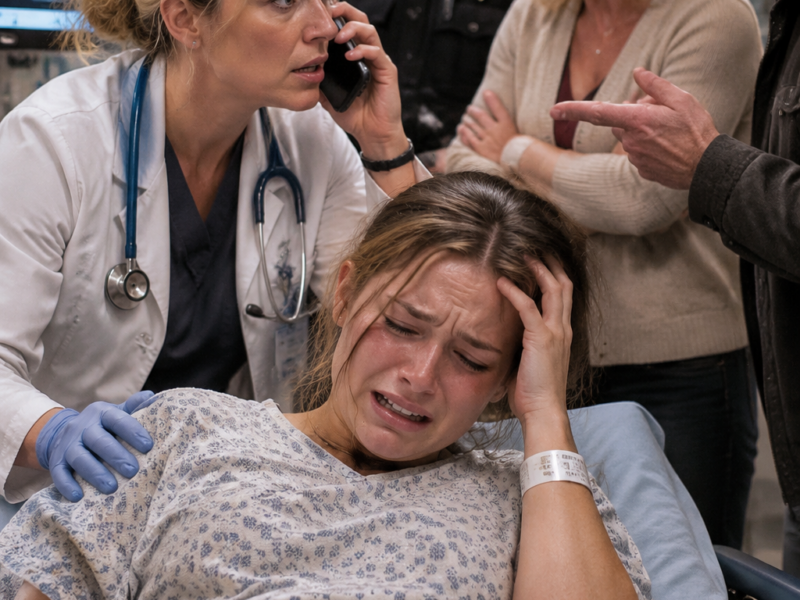
My Parents Called My Headaches “Attention-Seeking” — The ER Doctor Called The Police
My Parents Called My Headaches “Attention-Seeking” — The ER Doctor Called The Police
My mother had a particular way of handing me medication. Every morning, she would slide a small white pill across the kitchen counter with two fingers, as though she were passing me a piece of candy. She never smiled when she did it, but she always watched until I swallowed it. For five years, that had been our routine. Five years of trusting her without question, five years of believing she was helping me manage a medical condition that had slowly taken control of my life.
“You always need attention, Susie,” she said one Friday morning, pushing the pill toward me.
I was sitting at the kitchen table, hunched forward with one hand pressed against my forehead. My head felt as though someone had driven a metal spike through the space behind my left eye. My stomach had been empty for hours, yet I kept vomiting whenever I tried to drink water. Even lifting my head from the table made the room spin.
“Mom, I think something is seriously wrong. I need to see Dr. Fenwick.”
She didn’t even turn around. She continued arranging the grocery receipts beside her purse.
“You’ve been stressed. That’s all. Your sister has been through a difficult time, your father has been working constantly, and now you’re making everything about yourself again.”
I stared at her.
“I threw up water this morning.”
“Then drink less water.”
She pushed the pill closer.
I swallowed it.
That was the part I would struggle to forgive myself for later. Not because I hadn’t known better, but because I had spent so many years believing that questioning my parents was somehow worse than whatever they might be doing to me.
My father made things even simpler.
“No hospital,” he announced that Monday afternoon when I finally told him I couldn’t stand without holding onto the wall. “End of discussion.”
Then he walked out of the house, slammed the front door, climbed into his truck, and drove away.
I was thirty-two years old, lying on the bathroom floor of my childhood home, unable to stand, and somehow still felt like a little girl who had disappointed her parents.
Seven days later, I walked into an emergency room alone.
The doctor examined the medication bottles I had brought with me. He turned one of the pills over in his palm, glanced at the label, and then looked at the computer screen beside him.
His expression changed so suddenly that I thought I had misunderstood something.
“Who gave you these?” he asked.
“My mother.”
He stood so quickly that his rolling stool slammed backward into the wall.
“Call the police,” he told the nurse. “And make sure nobody from her family comes back here.”
I had gone to the hospital expecting to hear that I was seriously ill.
I had no idea that the people who had spent years telling me I could handle anything were the reason I had nearly ended up dead.
My name is Susie Hamlin, and to understand what happened that spring, you need to understand the family I grew up in.
I was twelve years old the first time my mother told me I was the strong one.
My younger sister, Brooke, was seven at the time and had developed a severe case of pneumonia. She was hospitalized for nine days, and my parents practically moved into the hospital room with her.
My mother slept in the chair beside Brooke’s bed. My father brought her meals, coffee, and clean clothes. They called relatives every evening with updates, and whenever I visited after school, they spoke about how brave Brooke was being.
I was happy she was getting better.
I really was.
But I was also twelve, and I was spending most evenings alone in our house.
I learned how to make dinner using whatever I could find in the freezer. I washed my own school clothes, packed my lunch, and walked to the bus stop every morning. When permission slips needed signing, I learned to imitate my mother’s handwriting.
I remember one particular afternoon when a field trip permission slip came home from school. It needed to be signed by the following morning, and nobody was there to sign it.
I sat at the kitchen table with an envelope, practicing my mother’s signature until I could reproduce the little loops and curves.
When I finally finished, I felt strangely proud.
I had managed to solve a problem without bothering anyone.
A few days later, my mother came home to shower and change clothes. She found the permission slip on the counter and studied it for a long time.
Then she pulled me into a hug.
“You’re fine, Susie. You can handle it. That’s what I love about you.”
I remember smiling.
I thought she had just given me the nicest compliment a mother could give her daughter.
It took me twenty years to understand what she had actually taught me.
She had taught me that my needs were optional.
Brooke, meanwhile, grew up in a completely different version of our family.
She was loved fiercely, protected constantly, and forgiven repeatedly. When she was seventeen, she injured her knee during a softball game. She slid into second base awkwardly, and the resulting damage required surgery.
The surgery itself went well.
The pain medication afterward became a different story.
At first, my parents believed Brooke was simply struggling with recovery. Then she began asking for additional prescriptions. Eventually, she was taking medication even when she no longer needed it for pain.
By twenty, she was dependent on prescription drugs.
At twenty-three, she entered her first treatment program.
At twenty-five, she entered her second.
My parents handled her addiction as though it were an emergency that required the entire family to reorganize its existence around her.
My father, Ray, gave instructions. My mother, Connie, explained the situation to anyone willing to listen.
She talked about Brooke at church, at the grocery store where she worked as a cashier, and during family gatherings.
She always emphasized how difficult things had been for their family and how much they had sacrificed to help their daughter.
I rarely appeared in those stories except when money was needed.
I remember one evening when my father stood in the kitchen and announced that Brooke needed another four thousand dollars for treatment.
“Your sister needs the money by Friday,” he said. “I’m not asking twice.”
I had been saving for my own future, but I wrote the check anyway.
My father picked it up from the kitchen table and walked away.
He didn’t thank me.
I didn’t expect him to.
For as long as I could remember, that was my role. I was the daughter who could manage her own problems, contribute when necessary, and never demand anything in return.
Then, in the spring of 2021, I developed migraines.
At first, they were occasional. A painful pressure behind my eyes, followed by sensitivity to light and a strange disturbance in my vision.
Eventually, they became severe enough that I sometimes couldn’t drive.
I worked as a veterinary technician at Prairie Paws Animal Clinic in Lincoln, Nebraska. I loved my job. Animals couldn’t explain what hurt, so you had to pay attention to their behavior, their breathing, their movements, and the smallest changes in their condition.
I was good at noticing things.
Unfortunately, I wasn’t nearly as good at noticing what was happening to myself.
My doctor, Dr. Fenwick, prescribed a daily preventive medication and a second controlled medication for particularly severe migraine attacks.
He gave me thirty rescue tablets each month.
I usually needed around six.
The first time I brought the prescriptions home, my mother offered to organize them.
She already sorted her own medication every Sunday evening into a blue seven-day organizer that she kept on the kitchen counter.
“Just leave yours here,” she said. “I do mine anyway. One more box won’t make any difference.”
I agreed.
It seemed harmless.
For five years, our medication organizers sat beside each other. Hers was blue. Mine was white.
Every morning, she opened my organizer and slid the appropriate pill toward me.
I worked around medication all day. I knew how to read labels, identify dosage instructions, and recognize the imprint codes on tablets.
Yet I never examined my own pills.
I didn’t think I needed to.
You don’t question what your mother hands you.
Or at least, that’s what I had convinced myself.
The trouble began quietly.
In October, Brooke entered her third treatment program, this time in Omaha. My parents told me she needed thirty days of intensive care and then would move into a sober-living arrangement.
I didn’t visit her.
I was exhausted, and after years of financial and emotional involvement in her addiction, I didn’t have the energy to start another cycle.
My parents said that was probably for the best.
“She needs space,” my mother explained. “She isn’t ready to talk to you.”
So I didn’t call.
For the next several months, everything I knew about my sister came from my mother.
Then, in November, my father did something unusual.
He offered to help me.
I had mentioned that I needed to stop at the pharmacy after work, but he interrupted me.
“I can handle that. I updated the contact number, so they’ll call me if there’s a problem. You don’t need to worry about those calls anymore.”
I remember feeling touched.
My father had never been particularly affectionate. He was a practical man who believed that problems were solved through instructions, hard work, and sometimes intimidation.
His offer felt like a small change.
Perhaps he was finally becoming more considerate.
I didn’t ask why he needed to change the contact number.
That was my first mistake.
The next change came in December.
I went looking for my rescue medication in the kitchen drawer where I had kept it for years, but the bottle was gone.
My mother was preparing dinner when I asked about it.
“I moved it into the bathroom cabinet,” she said. “The one with the lock.”
“Why?”
“Your sister might visit. You know how things are with Brooke. We can’t leave medication lying around.”
That explanation made sense.
We had hidden medication from Brooke for years. My mother had a small brass padlock on the cabinet, and the key hung from a chain around her neck beside her reading glasses.
Whenever I needed a rescue pill, I asked her.
She unlocked the cabinet and gave me one.
I thanked her.
Brooke never came to visit.
I didn’t notice that either.
By January, my parents needed money again.
It happened on a Friday evening. I had just returned from work when I found my mother sitting at the kitchen table, crying.
My father stood at the sink with his back toward us.
“Brooke has relapsed,” my mother said.
I froze.
“What happened?”
“The program in Omaha will take her back, but there’s a balance that needs to be paid. Nine thousand dollars.”
My father turned around.
“The joint account is already gone. Hospital bills, treatment expenses, everything. She needs help.”
I asked for Brooke’s phone number.
I wanted to hear what had happened directly from her.
My mother shook her head.
“She is humiliated. Don’t make things worse by calling her.”
My father stepped closer.
“The money goes through me. The program needs one payer. Don’t contact her. You’ll only upset her.”
I had approximately forty thousand dollars saved toward buying a house.
I had spent years building that savings account, carefully setting aside money from every paycheck.
But my parents were telling me my sister was in danger.
So I transferred nine thousand dollars into my father’s account while sitting at the kitchen table.
In the payment description, I typed one word.
Brooke.
My father watched the transfer complete.
Then he put his phone away.
My mother squeezed my shoulder as I got up.
“You’re fine, Susie. You can handle it.”
I nodded.
I always nodded.
In late February, my mother borrowed my phone.
She said she needed a photograph of my insurance card for paperwork connected to my father’s work at the agricultural cooperative.
She asked for my passcode, and I gave it to her.
She carried my phone into her bedroom and returned it twenty minutes later.
I thought nothing of it.
On March 4, an email arrived confirming a telehealth appointment I hadn’t scheduled.
I glanced at it, assumed it was spam, and deleted it.
I would spend the next two months wishing I had opened that email.
Around the same time, my father began driving to Iowa twice a week.
He said the cooperative was collecting equipment in Council Bluffs. It was about an hour away, and he usually returned late on Tuesdays and Fridays.
One afternoon, I found a gas station receipt from across the state line in his jacket pocket.
I put it back.
My coworker Hadley, however, noticed something unusual when I mentioned his trips during lunch.
“Twice a week?” she asked. “For a grain cooperative?”
I laughed.
“What, you think he’s secretly hauling slot machines?”
She laughed too.
Neither of us understood how close that joke was to the truth.
During March, my mother also became unusually interested in my work schedule.
She wanted to know which days I worked late, when I would be home before three, and whether I planned to work the weekends around Easter.
I assumed she was planning something.
Then came Sunday, April 5.
I was standing in the kitchen doorway while she filled our medication organizers.
She always did it the same way.
First her blue organizer, then my white one.
She counted the tablets beneath her breath, checked the bottles, and snapped the lids closed.
Click.
Click.
Click.
When she reached my daily preventive medication, she paused briefly and looked into the bottle.
Then she continued.
I watched her finish and thought nothing of it.
Two days later, on Tuesday morning, I took the pill from my organizer and went to work.
By lunchtime, I felt a familiar pressure behind my left eye.
I assumed a migraine was beginning.
By two o’clock, the pain had spread across my forehead, and I felt nauseated.
I took one of the rescue tablets my mother had handed me the previous evening and finished my shift.
The following morning was worse.
I was checking an intravenous line on a dog recovering from surgery when the examination room suddenly tilted.
I grabbed the edge of the surgical table.
The room kept moving.
I barely made it to the supply room before vomiting.
Dr. Witcomb, who owned the clinic, found me gripping the stainless-steel sink.
“Susie, you’re gray. Go home.”
My mother picked me up.
During the drive, she explained that I was probably exhausted.
“You’ve been worrying about Brooke for months,” she said. “Your body is finally telling you to slow down.”
By Thursday, I couldn’t keep breakfast down.
By Friday, I had stopped going to work.
I spent most of the day on the couch with a bucket beside me, trying to keep my head still.
I asked my mother to drive me to Dr. Fenwick.
Instead, she slid my morning medication across the counter.
“You always need attention, Susie. The minute things aren’t about you, you get sick.”
I looked at her.
“I’m not trying to get attention. I feel terrible.”
“Then take your medication.”
I swallowed it.
Saturday morning, I decided to drive myself to urgent care.
My keys were missing.
I searched my purse, the kitchen counter, and the hook beside the front door.
Eventually, my mother appeared wearing her grocery store apron.
“I have your keys.”
“Why?”
“Because you’re dizzy. You’re not driving anywhere like this.”
“Then take me.”
“I have things to do. We’ll see how you feel Monday.”
That afternoon, she brought a blood pressure cuff into my bedroom.
She wrapped it around my arm and pressed the button.
The machine began displaying numbers.
I didn’t understand what they meant, but I noticed my mother’s expression.
Her face went pale.
She removed the cuff.
“The machine is broken,” she said.
Then she walked into the kitchen, removed its batteries, and placed it on top of the refrigerator.
I watched her from the hallway.
Something about the way she moved made me uncomfortable.
But I was so exhausted that I couldn’t bring myself to ask questions.
That night, I tried drinking water.
My hands shook so badly that I needed both of them to hold the glass.
By Monday, April 13, I had spent most of the afternoon lying on the bathroom floor.
Hadley sent me a message.
I’m coming over after work. I’m taking you to the ER. Don’t argue.
I wanted to answer, but before I could, I heard my father’s truck pulling into the driveway.
His boots crossed the hallway.
Then he appeared in the bathroom doorway.
He didn’t enter.
He simply stood there, looking down at me.
My mother explained that Hadley was coming to take me to the hospital.
My father shook his head.
“No hospital. End of discussion.”
“Dad,” I whispered, “I can’t stand up.”
“Then lie down. Your mother’s got your pills.”
He looked at me for another moment.
“Nobody is coming over either. This family handles its own business. You live under my roof. You don’t bring strangers into it.”
Then he walked away.
The front door slammed.
His truck started, backed out of the driveway, and disappeared.
I lay on the bathroom floor listening to the silence.
I wanted to call Hadley.
Instead, I typed a message telling her not to come.
I was ashamed.
I didn’t want her seeing how helpless I had become.
That night, sometime around midnight, I managed to get up by holding onto the wall.
I made my way downstairs.
The two medication organizers were still sitting on the kitchen counter.
I opened the Tuesday compartment of my white organizer and tipped the pill into my hand.
Something looked wrong.
There was a line across the tablet, a score mark that allowed it to be divided in half.
I turned it over beneath the kitchen light.
I had been taking medication for five years.
I knew what my usual preventive pill looked like.
It had never had that line.
My mother appeared behind me in her robe.
“Did the pharmacy change brands?” I asked.
“Generic manufacturers change all the time.”
“Are you sure?”
“Go to bed, Susie.”
I placed the pill back in the organizer.
Then I heard voices coming from the kitchen.
I had started toward the stairs when my father’s voice stopped me.
“If she goes in, they’ll pull everything.”
My mother answered quietly.
“How much longer?”
“Until it’s paid.”
I sat down on the stairs.
I didn’t understand what they were discussing.
But I understood one thing.
They were afraid of the hospital.
And whatever they were waiting to be paid was somehow connected to me.
The following morning, April 14, I waited.
My mother left for her early shift at the grocery store while it was still dark.
My father’s alarm sounded at 6:45.
I heard him make coffee, put on his boots, and walk through the front door.
His truck started.
I listened until the engine disappeared.
Then I counted to one hundred.
Twice.
I had no idea how long I would have before someone returned.
I needed to get out.
My mother’s apron was gone, and my keys were still in her possession.
I opened the ride-share application on my phone.
Before leaving, I went into the kitchen and gathered three things.
My medication organizer.
The empty bottle of my preventive prescription.
And the rescue medication bottle my mother had left on the counter.
I placed everything inside a large plastic storage bag.
I couldn’t explain why I did it.
But something I had learned at the veterinary clinic came back to me.
Whenever an animal arrived with suspected poisoning, we brought everything it had been given.
The bottle, the packaging, the medication itself.
We didn’t rely on descriptions.
We brought the evidence.
I ordered a ride.
While waiting, I opened the family location-sharing application my mother had installed when I moved back home.
I disabled location sharing.
The button turned gray.
It was a strange feeling, being thirty-two years old and feeling as though I was running away from home.
The driver arrived four minutes later.
He was young, perhaps twenty, with a university parking permit hanging from his rearview mirror.
When he saw me struggling to get into the car, he asked whether I needed someone to help me.
“No,” I said.
Then I added quietly, “That’s the problem.”
He didn’t ask anything else.
When we reached the emergency entrance, my mother had already called twice.
I ignored both calls.
A triage nurse took my blood pressure.
She checked it once, then repeated the measurement.
Her expression became serious.
“Are you taking any medications?”
I handed her the plastic bag.
“My mother organizes them every Sunday.”
She stopped writing.
“Your mother?”
“Yes.”
“Who fills the organizer?”
“She does.”
The nurse placed the bag beside her computer.
“When did these symptoms begin?”
“Last Tuesday.”
She looked at the clock, then at me.
Instead of sending me to the waiting room, she personally escorted me to an examination bay.
A doctor named Kirby arrived shortly afterward.
He listened while I described the headaches, dizziness, nausea, and shaking.
Then he examined the bottles.
He read the labels, opened the organizer, and tipped one of the tablets into his palm.
He turned it over.
His expression changed.
He looked at the tablet again, then at the computer screen.
For several seconds, he didn’t move.
Finally, he looked directly at me.
“Who gave you these?”
“My mother.”
He stood so quickly that the stool slammed into the wall.
“Call the police,” he told the nurse. “And make sure nobody from her family comes back here.”
I was terrified.
“Doctor, what’s wrong?”
He returned a moment later and sat beside my bed.
“I want to explain exactly what I know. I don’t want to make assumptions about anything that happened in your home.”
He held up the tablet.
“This is a blood pressure medication. It isn’t listed among your prescriptions. Taking it regularly when your blood pressure is already normal can cause severe dizziness, nausea, weakness, and other complications.”
I stared at him.
He continued.
“You’ve also been without your prescribed preventive medication. That explains why your migraines have returned so aggressively.”
I looked at the pill.
A blood pressure medication.
I had never been prescribed one.
The doctor turned his computer screen toward me.
“This is the state’s prescription monitoring report. Your controlled rescue medication has been picked up every month since December. Thirty tablets each time.”
“That sounds right,” I said.
He shook his head.
“There’s something else. Since March, another prescriber has issued a second prescription under your name.”
I looked at him.
“What?”
“A doctor you’ve never seen appears in the system as having prescribed the same medication.”
I couldn’t speak.
The doctor folded his hands.
“You told the nurse your mother fills your organizer. You also told me your father prevented you from coming here when you became seriously ill. Those details, combined with what we’ve found, require us to report this.”
I looked down at my hands.
“Can you seal that bag?”
He paused.
“Why?”
“I work at a veterinary clinic. We use controlled medication logs. I don’t want anyone claiming I switched the tablets.”
His expression softened.
“Of course. We’ll document everything.”
A nurse brought an evidence seal.
She signed it.
The doctor signed it.
Then I signed beneath their names.
For the first time in seven days, my hand was steady.
A police officer arrived approximately forty minutes later.
Her name was Whitlock.
She asked me to explain what had happened, and I told her everything I knew.
I was careful to distinguish what I had personally witnessed from what I merely suspected.
I didn’t know what my father owed.
I didn’t know who the second prescriber was.
I didn’t know how long the medication had been changed.
She wrote everything down.
Then she asked a question nobody in my family had ever asked me.
“Do you have somewhere to stay that isn’t your parents’ house?”
I thought about Hadley.
“I think I do.”
She wrote her name in her notebook and underlined it.
Dr. Kirby admitted me overnight for observation and intravenous fluids.
Later that afternoon, my phone rang.
My father.
I answered.
“What did you tell them?” he demanded.
I told him the truth.
“That Mom gives me my medication.”
“You’ve just put your mother in a police report.”
His voice changed several times during the conversation. First angry, then softer, then angry again.
“Do you understand what you’ve done to her? I hope it was worth all the attention.”
He never asked how I was feeling.
He never asked what the doctor had found.
He simply hung up.
That evening, Dr. Kirby returned with preliminary laboratory results.
They confirmed the presence of a medication I had never been prescribed.
My prescribed preventive medication was absent.
Then he showed me another piece of information.
“My regular pharmacy placed a hold on your file on March 31. They identified duplicate prescriptions and attempted to contact you.”
I stared at him.
“They called my father,” I whispered.
He looked at the report.
“The contact number on file is your father’s.”
I remembered November.
My father’s offer to handle the pharmacy calls.
I remembered how grateful I had been.
The patient had supposedly been contacted.
But the patient had been lying on a bathroom floor.
Hadley picked me up the following Wednesday.
She didn’t ask me to explain what had happened.
She simply opened her car door and said, “What do you need?”
I needed clothes, my laptop, my birth certificate, and several important documents.
My father was at work until four.
My mother was home.
Hadley drove me to the house.
When I entered the kitchen, my mother was still wearing her grocery store apron.
Before saying anything, she picked up her blue medication organizer and placed it inside her purse.
It was a small movement.
Almost automatic.
I never forgot it.
“The hospital called me,” she said. “They asked me to confirm your medication as though I were some kind of criminal.”
“The pill in my organizer was yours, Mom.”
She sat down.
“I might have mixed up the boxes. They’re right next to each other. I’m fifty-eight years old, Susie. I get tired.”
I looked at her.
“Every single compartment?”
She didn’t answer immediately.
Then her expression changed.
“You’ve been taking extra medication. I’ve seen you going into the cabinet at night.”
I stared at her.
“The cabinet you keep locked?”
She touched the chain around her neck.
“You’re blaming me because you don’t want to admit what you’ve done.”
I went upstairs and packed.
I had spent my entire childhood learning to solve problems quietly.
That day, I finally understood that no amount of careful explanation would make my mother tell the truth.
My father called while Hadley was driving away.
His voice sounded almost reasonable.
“Your sister needed it,” he said.
I didn’t understand.
“Needed what?”
“The stronger pills. The ones you don’t even use. Brooke has been in bad shape. A few of those pills helped keep her off the street.”
I held the phone tightly.
“Are you telling me you took my medication and gave it to Brooke?”
“You want to put your sister in jail over a few headache pills? Family handles family.”
For the first time, Brooke’s name had been connected directly to my missing medication.
I felt sick.
I had been suffering for months, and my father was telling me that the medication prescribed to control my pain had been given to my sister.
But something still didn’t make sense.
The blood pressure pills were different.
I asked him about them.
Silence.
Then he said, “Your mother handles that.”
He hung up.
Two days later, Detective Gentry called.
He had spoken to my parents.
Their version of events was predictable.
They claimed I had been taking more medication than prescribed for months. They said I regularly ran out early and had asked my father to collect additional prescriptions because I was embarrassed to visit the pharmacy.
My mother admitted she might have mixed up the medication organizers.
The detective wasn’t accusing me, but he needed more evidence.
“On paper,” he explained, “both prescriptions are under your name. Your insurance paid for them. The signatures appear to be yours. I need something beyond the sealed medication bag.”
I understood.
My parents had spent years controlling the story about me.
Now they were trying to use paperwork to make that story official.
I decided to find out what else existed on paper.
The first place I visited was my pharmacy.
I had used the same independent pharmacy since 2021.
The pharmacist, Megan Alder, knew my name and had filled almost every prescription I had ever received.
I requested a complete dispensing history.
She studied the request.
Then she looked at me.
“Give me a minute.”
When she returned, she brought the records and explained what had happened.
On March 31, she had discovered that another prescriber had issued the same controlled medication under my name at a different pharmacy.
The prescriptions overlapped.
She placed a hold on my file and called the contact number.
A man answered.
He identified himself as my father and promised to pass along the information.
The number had been changed the previous November.
I looked at the dispensing records.
One prescription every month.
Thirty tablets.
December 1.
January 2.
February 2.
March 2.
In the signature column, the same handwriting appeared every time.
It wasn’t mine.
I had been taking approximately six tablets per month.
Someone had been collecting the remaining twenty-four.
I sat in the pharmacy looking at the records.
Then I started doing the math.
December: twenty-four missing.
January: twenty-six.
February: twenty-three.
March: twenty-five.
More than one hundred tablets.
And that didn’t include the additional prescription issued by the unknown doctor.
That evening, Hadley sat beside me at her kitchen table while I organized the information.
She pointed to the second prescriber’s name.
“Do you recognize this person?”
“No.”
“Have you ever had an appointment with them?”
“Never.”
I opened my phone and searched my emails.
The March 4 telehealth confirmation was still somewhere in my deleted messages.
I remembered my mother borrowing my phone.
I remembered her taking it into her bedroom.
I remembered the insurance card.
I felt a cold sensation spreading through my chest.
Someone had used my identity to obtain another prescription.
I was beginning to believe my father had been stealing my medication to supply Brooke’s addiction, while my mother had helped him conceal it.
For a few days, I was angry at my sister.
I even wrote a message to her in my notes application.
I have been throwing up for a week so you could have my pills. Did you know? Did you even ask whose they were?
I read it twice.
Then I deleted it.
I decided not to contact her until I knew more.
Meanwhile, my mother began telling everyone that I was having a breakdown.
She called her sister in Grand Island.
She called two cousins.
She contacted the woman responsible for the prayer chain at church.
She even contacted Prairie Paws Animal Clinic.
The story she told was simple.
Susie was struggling with prescription medication.
Susie had accused her own mother.
Susie had not been mentally well since Brooke entered treatment.
Within days, relatives I hadn’t spoken to in months were sending me messages.
Your mother says you’re having a breakdown. We love you. We’re praying for you.
Nobody asked what the hospital had found.
Nobody asked why I had been admitted.
They simply accepted my mother’s version.
On April 22, Detective Gentry called again.
The full laboratory results had arrived.
“The medication in your blood matches what was found in the organizer,” he said. “And the pharmacy signature records do not match your work schedule.”
He had also obtained additional records.
He no longer believed the story about me taking extra medication.
I sat on Hadley’s kitchen floor and cried.
Not because the investigation was over.
Because somebody had finally believed me.
But being believed didn’t immediately restore my life.
That afternoon, Dr. Witcomb called me into her office.
She explained that someone had contacted the clinic claiming to be my mother.
The caller said I was under investigation for prescription drug abuse and suggested that I might have been stealing controlled medications from work.
Dr. Witcomb believed I was innocent.
She had watched me work for eight years.
But she couldn’t keep me responsible for controlled medication while an investigation involving prescription drugs remained open.
She placed me on administrative leave without pay.
Before I left, I asked her to count the controlled medication inventory with me.
We went through every vial, every tablet, and every entry in the log.
It took an hour.
Everything matched.
She signed the inventory report.
I signed beneath her name.
It was the only thing I could do to protect myself professionally.
That Friday, the official letter arrived.
I was suspended pending written confirmation from the police.
I sat at Hadley’s kitchen table and calculated my finances.
Thirty-one thousand dollars remained in my savings.
Nine thousand had disappeared into my father’s account.
I had no paycheck.
I had no home.
And I still didn’t know the full extent of what my parents had done.
But I had one question that wouldn’t leave me alone.
Who had arranged the telehealth appointment?
The answer was waiting in the records from the second pharmacy.
Before I could obtain those records, I needed to understand something else.
My father had told me Brooke needed the medication.
But had she actually relapsed?
Had she really been in Omaha?
Had there really been a nine-thousand-dollar treatment balance?
I called the treatment center.
The woman who answered was polite but cautious.
I explained who I was and said I wanted to verify whether the outstanding balance my parents had described had been paid.
She paused.
“I’m sorry, ma’am. I can’t discuss another person’s treatment.”
“I understand. I only want to know whether your center bills family members for treatment.”
“We don’t bill families. We never have.”
I felt my stomach tighten.
“And is there an outstanding balance under the Hamlin name?”
“No. There has never been a balance under that name.”
I asked her to repeat it.
She did.
There had never been a nine-thousand-dollar debt.
I opened my banking application.
The transfer was still there.
Nine thousand dollars.
Recipient: Ray Hamlin.
Memo: Brooke.
I stared at the screen.
My father had taken my money using a story that had never been true.
The following morning, I borrowed Hadley’s car and drove to Omaha.
I had an address for the sober-living house from an email sent months earlier.
The house was ordinary, with a small front porch and a neatly maintained lawn.
A woman answered the door.
When I introduced myself, her expression changed.
“Brooke is at work,” she said.
“Work?”
“She works at a coffee shop three blocks away. She’s been working there every day.”
I stood silently.
My parents had told me my sister had relapsed, lost her treatment placement, and was in danger of ending up on the street.
Instead, she had been working every day.
I found the coffee shop.
A schedule was taped inside the front window.
Brooke Hamlin.
Six in the morning until two in the afternoon.
I sat in the car for ten minutes before entering.
When my sister looked up from the espresso machine, the color disappeared from her face.
She thought someone had died.
We sat at a small table in the corner.
She had fifteen minutes before her next shift.
“I thought Mom said you didn’t want to talk to me,” she whispered.
I shook my head.
“She told me you weren’t ready.”
Brooke reached into her apron pocket and placed a small coin on the table.
It was a six-month sobriety chip.
“I’ve been clean since October sixth,” she said. “I’ve been going to meetings. I’ve been working. I haven’t relapsed.”
I looked at the chip.
Then I looked at my sister.
For six months, we had both been living inside separate lies created by the same two people.
I told her about the medication, the hospital, and the nine thousand dollars.
She began crying when I described the pill organizer.
Not because she was frightened of the police.
She cried because she understood what it meant that I had been suffering while nobody in our family had bothered to help.
Then she showed me a message from our mother.
It had been sent during the week I was hospitalized.
Susie’s not well. She needs space right now. Please don’t call her. It will only stress her out. We’ll let you know when she’s ready.
I looked at the message.
My mother had told Brooke not to contact me while telling me that Brooke didn’t want to speak to me.
We had been deliberately separated.
Brooke told me something else.
In January, our father had called her.
He hadn’t asked her for money.
He had simply told her not to contact me.
He said I was struggling emotionally and that hearing from her would make things worse.
We had both believed him.
That afternoon, we decided to stop allowing our parents to speak for either of us.
Over the following week, we assembled a folder containing evidence from people who had never lived in our parents’ house.
The first section contained a certified copy of Dr. Fenwick’s medical notes.
On February 10, my father had called his office requesting an increase in my rescue medication.
He claimed I was running out early.
Dr. Fenwick had refused to change the prescription without seeing me in person.
I had never known about the call.
The second section contained my work time sheets.
I placed them beside the pharmacy signature records.
On December 1, someone had signed for my prescription while I was working during surgery.
On February 2, I had been attending a staff meeting.
On March 2, I had been drawing blood from a Labrador.
I could not possibly have collected those medications.
The third section contained Brooke’s treatment records.
She had requested her own account summary.
It showed that her treatment had been paid for through a state assistance program.
There had been no family payment.
No January readmission.
No nine-thousand-dollar balance.
The fourth section was the most important.
Two weeks after requesting my records, the second pharmacy finally sent me its documentation.
I opened the envelope at Hadley’s kitchen table.
The prescription had been issued following a telehealth appointment on March 4.
I remembered the email immediately.
Under the contact information was a phone number.
My mother’s cell phone number.
I read it twice.
Then I looked at Hadley.
“My mother arranged it.”
The woman who had been handing me pills every morning had used my identity and insurance information to obtain another prescription.
I had finally found the connection.
But I still needed my father’s own words.
Brooke believed she knew how to get them.
“He tells the truth when he thinks you need him,” she explained. “He wants to feel like he’s protecting someone.”
She called him on the evening of May 6.
I sat across from her at the table.
Her phone was placed between us.
The recording function was active.
Brooke didn’t pretend anything.
She simply told him she had heard about the police investigation and asked whether the stolen medication had been connected to her.
My father’s voice came through the speaker.
Warm.
Calm.
Almost affectionate.
“They were your sister’s. I moved a few.”
Brooke asked what he meant.
He sighed.
“Twenty-two thousand dollars doesn’t pay itself, Brooke. All you have to say is that you took them. Nobody’s going to jail for that.”
Brooke went quiet.
Then she said, “Okay, Dad.”
She ended the call.
For several minutes, neither of us spoke.
My father had been stealing my medication, and now he was asking my sister to accept responsibility for it.
He had used me to pay money I never owed.
He had used Brooke as the justification for stealing medication she had never requested.
He had spent months creating two separate versions of reality so that neither of his daughters could compare notes.
Four days later, my mother sent me a message.
Come Sunday. It’s Mother’s Day. Your father is grilling. Let’s be a family again.
I read it several times.
Then I agreed.
“I’ll be there at six.”
I didn’t tell her what I had planned.
I would arrive in Hadley’s car.
Brooke would travel from Omaha and get off a bus four blocks from our parents’ house.
And I would bring the folder.
When I arrived, my mother had set three places at the table.
I walked into the kitchen and took a fourth plate from the cabinet.
I placed it at the empty end of the table.
My father looked at it.
He didn’t ask who it was for.
Instead, he began delivering the speech he had clearly prepared.
He said the police report needed to be withdrawn.
He said I needed to come home.
He said families handled their own business and that he could call my clinic to clear everything up.
When he finished, I reached into my bag.
I placed a new seven-day medication organizer on the table.
It was empty.
Then I placed the folder beside it.
“February tenth,” I said.
My father looked at me.
“You called Dr. Fenwick requesting an increase in my rescue medication. He documented the conversation.”
He didn’t answer.
I opened the second section.
“These are my work schedules. These are the dates somebody signed for my prescriptions. I was at work every single time.”
He leaned back.
“Anybody can sign a name.”
I opened the fourth section.
“This is the telehealth appointment on March fourth. The second prescription issued under my name. The contact number belongs to Mom.”
My mother stared at the page.
She looked down at her plate.
Then she spoke softly.
“You’re fine, Susie. You can handle it.”
I had heard those words my entire life.
For the first time, I didn’t nod.
“You decided I could handle it,” I said. “You never asked.”
The doorbell rang.
My father turned toward the hallway.
My mother stood first.
When she opened the door, Brooke was standing outside with her backpack and coffee shop apron folded over one arm.
“Hi, Mom,” she said. “Happy Mother’s Day.”
She walked into the kitchen and sat at the fourth place setting.
Then she placed her phone beside the empty medication organizer.
She pressed play.
My father’s voice filled the room.
“They were your sister’s. I moved a few. Twenty-two thousand dollars doesn’t pay itself.”
My father stood up.
“Turn that off.”
Brooke didn’t move.
“End of discussion,” he said.
I looked at him.
“Yes,” I replied. “It is.”
Nobody spoke.
My mother was staring at the empty organizer.
Then she began explaining.
“I only put them there so you wouldn’t go to the pharmacy,” she said.
My father turned toward her.
“Connie.”
She continued.
“They had called. They called your father, and he said if you went in, they would see everything. Your bottle was empty. I didn’t want you discovering that and going down there yourself.”
I felt my stomach tighten.
“So you replaced my medication?”
“I thought it would only be for a few days.”
“With your blood pressure pills?”
“I thought you’d just be tired. I didn’t think you’d get that sick.”
My father stepped forward.
“Shut up.”
But she didn’t.
For once, my mother kept talking.
She admitted that she had placed her own medication into my organizer because my prescriptions had been disappearing.
She had known that I was no longer receiving the medication my doctor had prescribed.
She had known the pharmacy was investigating.
She had known my father was worried about what would happen if I went to the hospital.
And she had decided that keeping me at home was more important than getting me medical care.
I closed the folder.
Brooke picked up her phone.
We stood up and walked out.
My father remained beside the table.
My mother sat with her hands resting on the edge of her plate.
For once, nobody followed us.
The following Monday, Brooke and I met Detective Gentry.
We placed the folder on his desk.
He examined every section, listened to the recording, and reviewed the pharmacy records.
When he finished, he asked Brooke whether she was willing to provide a formal statement.
She agreed immediately.
Then he looked at me.
“You didn’t need to prove your innocence to me,” he said. “You needed to prove it to the people who sign your paycheck. Now you have the documentation.”
He prepared a letter for my clinic.
Two days later, my father was arrested at the agricultural cooperative.
I didn’t witness it.
Detective Gentry sent me a message informing me that he had been taken into custody.
The investigation revealed that my father had been communicating with a man named Denny Kroll, a relative of someone connected to the cooperative.
That man had been purchasing my stolen medication for cash since December.
My father had been selling the pills.
The money explained the strange trips to Iowa and the twenty-two-thousand-dollar figure he had mentioned during Brooke’s recorded call.
He had been taking medication prescribed for my pain and turning it into a source of income.
The charges included distribution of a controlled substance and forgery.
The cooperative dismissed him immediately.
My mother was charged on Friday.
She faced charges related to substituting medication in my organizer and using my identity and insurance information to obtain an unauthorized prescription.
She was released that afternoon.
A few days later, I received a letter from her.
She had given it to a woman at church who knew Hadley.
The envelope carried my mother’s handwriting.
The same handwriting I had practiced when I was twelve years old.
Inside, she wrote that she had been afraid of my father.
She said she had never intended to make me sick.
She asked me to tell the police that she hadn’t known about the money.
There were several paragraphs about how difficult the family situation had been and how much responsibility she had carried.
She apologized for the organizer.
She called it a mistake she would regret forever.
But she didn’t ask how my head was feeling.
She didn’t ask whether I had recovered.
And she didn’t ask whether I was sleeping.
I placed the letter on Hadley’s kitchen table.
I didn’t throw it away.
I didn’t write back either.
That was the first time in my life I had refused to give my mother the response she wanted.
On May 21, Dr. Witcomb called me at eight in the morning.
She asked me to come to the clinic.
When I arrived, she had gathered the staff in the breakroom.
She explained that the Lincoln Police Department had provided written confirmation that I was the victim in an ongoing investigation, not a suspect.
My administrative leave was over.
It would also be paid.
Then she looked directly at me.
“I counted that medication inventory with you the day the allegation came in. I should have trusted what we saw. Welcome back.”
I clipped my name badge onto my scrubs.
My head was mostly back to normal by then.
Dr. Fenwick had restarted my prescribed preventive medication, and it had taken almost four weeks for my symptoms to settle.
I still experienced some fatigue in the afternoons, so Dr. Witcomb adjusted my schedule to morning shifts.
My first patient that day was a beagle that had swallowed several tablets from someone else’s medication bottle.
I examined the dog, checked the packaging, and helped prepare the treatment plan.
For a moment, I remembered the emergency room.
Then I laughed.
Not because it was funny.
Because I was finally back where I belonged.
After work, I stopped at the pharmacy.
I handed Megan Alder my new prescription personally.
She filled it, turned the signature log toward me, and pointed to the empty space.
“Sign here.”
I looked at the page.
My father’s handwriting appeared several times above the line.
I took the pen.
Then I signed my own name.
“Yours this time,” Megan said.
“Mine this time,” I answered.
She handed me the medication.
Before letting go of the bag, she read the prescription label aloud.
I read it again myself.
It took eleven seconds.
It had taken five years for me to understand how important those eleven seconds were.
On the last Saturday in May, Brooke and I moved into a two-bedroom apartment on the north side of Lincoln.
It wasn’t particularly impressive.
The dishwasher only worked if someone leaned against the door, the living room was small, and the kitchen cabinets had several scratches.
But the lease had two names on it.
Neither belonged to our parents.
Brooke transferred to a coffee shop closer to the apartment and found a recovery meeting she liked on Tuesday evenings.
Hadley helped us move.
The final box carried the word KITCHEN in Brooke’s handwriting.
When we reached the apartment, Brooke pointed toward the bedroom with the larger window.
“You take that one.”
“Why?”
“Because you’re the one who has been sick.”
I looked at her.
“We’re both going to stop saying that.”
She smiled.
We carried the boxes inside.
For the first time, neither of us was waiting for our parents to tell us what to do.
I had approximately twenty-two thousand dollars left in savings.
The house I had planned to buy was further away than it had been in January.
But it wasn’t gone.
And for the first time, I wasn’t willing to sacrifice my health or my future simply because someone else insisted their needs were more important.
I kept my job.
I kept my sister.
I kept my name badge.
I kept the folder containing every document that had helped prove what happened.
I also kept my mother’s first letter.
It remained in a drawer.
A second letter arrived a few weeks later.
I haven’t opened it.
Perhaps I will next year.
Perhaps I never will.
For the first time in my life, that decision belongs entirely to me.
My father is still waiting for his court date.
My mother remains in the house where I grew up, writing letters I may never answer.
People sometimes ask whether I hate them.
I don’t.
Hatred would require me to keep carrying them around in my thoughts every day.
I simply don’t take anything from them anymore.
Not medication.
Not money.
Not guilt.
And certainly not their version of who I am.
I no longer consider myself the strong one.
I used to think strength meant never asking for help, never complaining, and finding a way to survive whatever other people placed in front of me.
I know better now.
Sometimes strength means admitting that you cannot handle something alone.
Sometimes it means accepting a ride from a friend when your own family refuses to help.
Sometimes it means walking into an emergency room, carrying a bag of medication bottles, and telling a stranger that the people who gave you those pills might be hurting you.
And sometimes it means leaving a house even when the people inside have spent your entire life convincing you that you owe them everything.
The first Sunday evening in our new apartment, Brooke and I sat at the kitchen table.
She brought out her blue medication organizer.
I placed my white one beside it.
We read every label carefully.
We checked the dosage instructions.
We examined each bottle before filling the compartments.
Then we sorted our own medication.
Click.
Click.
Click.
Seven compartments.
Seven days.
Nobody was standing over us.
Nobody was watching to make sure we swallowed anything.
Nobody was deciding what we were allowed to know about our own health.
Brooke finished filling her organizer and looked across the table.
“Mom would be proud,” she said quietly.
I glanced at the two organizers.
“Mom isn’t here.”
Brooke nodded.
I closed the lid of my white organizer.
“That’s the point.”
The pills were still white.
But now I knew exactly what was written on them.
And I knew who had put them there.
For the first time in my life, I was taking responsibility for my own health, my own choices, and my own future.
It wasn’t the future I had imagined when I was twelve years old, practicing my mother’s signature on the back of an envelope.
It wasn’t the house I had planned to buy or the family I had believed I could depend on.
But it was mine.
And that was enough.
THE END