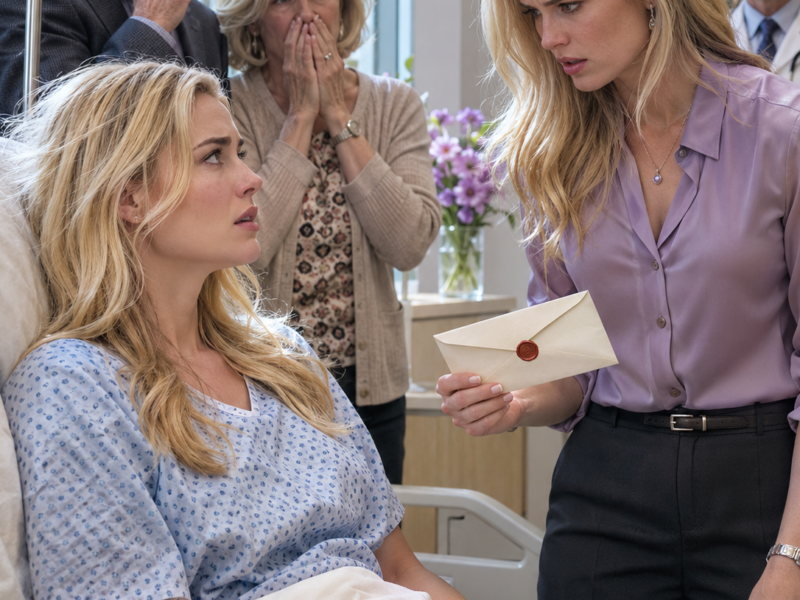
My 31-Year-Old Twin Sister Was Fighting for Her Life in a Seattle Hospital When I Heard Three Wealthy Law Students Laughing About Her Suicide Attempt. “At Least We Won’t Have to See Her Pathetic Face Again,” One Sneered, Unaware I Was Standing Behind Him. That Night, I Cut My Hair to Look Exactly Like My Sister and Walked Into Their Elite Law School Pretending to Be Her. They Thought Their Helpless Victim Had Returned—Until I Whispered One Secret About a Senator’s Hidden Offshore Accounts, and His Son Turned Deathly Pale…
My 31-Year-Old Twin Sister Was Fighting for Her Life in a Seattle Hospital When I Heard Three Wealthy Law Students Laughing About Her Suicide Attempt. “At Least We Won’t Have to See Her Pathetic Face Again,” One Sneered, Unaware I Was Standing Behind Him. That Night, I Cut My Hair to Look Exactly Like My Sister and Walked Into Their Elite Law School Pretending to Be Her. They Thought Their Helpless Victim Had Returned—Until I Whispered One Secret About a Senator’s Hidden Offshore Accounts, and His Son Turned Deathly Pale…
Part 1
My twin sister was lying unconscious in a Seattle hospital when I overheard three people laughing about her suicide attempt. One of them complained that she had ruined their evening. Another joked that she was too weak to survive law school. The third tossed a cheap bouquet onto a waiting room chair and said he was relieved he wouldn’t have to see her face in class anymore.
They had no idea I was standing behind them.
My name is Cassidy. I’m 31 years old, and I work as a corporate crisis manager. When powerful executives face scandals, financial investigations, or billion-dollar disasters, I’m the person they hire to protect their interests. I’ve spent years learning how wealthy people conceal their secrets and exploit institutions.
But my twin sister, Callie, was completely different.
She was compassionate, intelligent, and determined to become a public defender. She believed the law existed to protect vulnerable people. Unfortunately, at Sinclair Academy of Law, her kindness had made her a target.
For six months, three wealthy students had systematically destroyed her confidence.
Braden was the arrogant son of a powerful senator. Sloan was the vicious heiress to a commercial real estate empire. Trent was their aggressive enforcer, always ready to intimidate anyone who challenged them.
Together, they spread rumors, sabotaged assignments, humiliated Callie publicly, and made her believe nobody would ever help her.
Eventually, she couldn’t endure the torment any longer.
At two in the morning, her husband, DeAndre, called me. His voice was trembling as he explained that Callie had attempted suicide and was now on life support.
I drove straight to Seattle General Hospital.
When I arrived, DeAndre was being restrained by security guards after confronting the three students responsible for his wife’s suffering.
I approached him, placed my hand against his chest, and spoke quietly.
“Go sit with your wife. I’ll handle them.”
He looked into my eyes, recognized the determination in my expression, and stepped away.
I watched Braden, Sloan, and Trent disappear into an elevator, still laughing.
They believed their victim was powerless.
They were about to discover how wrong they were.
Inside an empty hospital bathroom, I found a pair of scissors and cut my long hair until it matched Callie’s shoulder-length hairstyle. I removed my makeup and examined my reflection.
We had always been identical.
Now, wearing her clothes, I could become her.
The following morning, I walked onto Sinclair Academy’s campus wearing Callie’s oversized beige cardigan and carrying her textbooks.
Students immediately began whispering.
Everyone knew about her hospitalization. Nobody understood how she could have returned so quickly.
Near the courtyard fountain, Trent approached me holding a steaming cup of coffee.
“Need something to keep you awake this time?” he mocked.
Then he threw the coffee toward my chest.
I stepped aside, grabbed his extended wrist, and used his momentum to force him onto the pavement. His scream echoed across the courtyard.
The surrounding students froze.
Braden rushed forward, threatening to have me expelled.
I leaned close and whispered information about his father’s secret offshore transactions and an illegal political fundraiser.
His expression instantly changed.
“How do you know about that?” he demanded.
I smiled.
“That’s the wrong question, Braden.”
Later that morning, Sloan tried to destroy Callie’s academic presentation by corrupting the digital files.
When the projector displayed an error message, Sloan smiled triumphantly.
She expected me to panic.
Instead, I switched off the screen and delivered Callie’s entire research presentation from memory.
For twenty minutes, I explained corporate accountability, environmental misconduct, and constitutional law with the confidence of someone accustomed to confronting powerful executives.
The visiting dean listened in astonishment.
Then I revealed evidence that Sloan’s award-winning thesis contained plagiarized material and fabricated legal precedents.
Her face turned pale as the professors examined the documents.
By lunchtime, her academic reputation was collapsing.
But Braden wasn’t finished.
The following day, security officers discovered stolen examination answers inside my bag. Trent had planted them there under Braden’s instructions.
The disciplinary dean threatened immediate expulsion.
I calmly produced a recording exposing their conspiracy.
Within minutes, Trent was being questioned, and Braden was desperately searching for another way to destroy me.
His next move was more dangerous.
Using his father’s political influence, he convinced the administration to revoke Callie’s scholarship.
Without it, my sister would lose everything she had worked for.
That evening, DeAndre and I reviewed financial records connected to Braden’s family. We uncovered suspicious offshore transfers, shell companies, and evidence suggesting serious campaign-finance misconduct.
I found Braden sitting alone in the law library.
Without speaking, I placed a thick red folder on his desk.
He opened it.
His hands began trembling.
“Your father’s political career depends on what you do next,” I told him. “You have one hour to restore my sister’s scholarship.”
Forty-two minutes later, my phone received an official reinstatement notice.
Braden had surrendered.
But as I left the library, another message appeared on my screen.
Professor Higgins, Sinclair’s most influential academic adviser, wanted to see me immediately.
And what I discovered about him would expose something far bigger than three cruel students.
Part 2
Professor Higgins believed his position made him untouchable. Sitting behind his enormous desk, he demanded that I withdraw from the national mock trial competition or risk failing my final thesis.
He didn’t know DeAndre had uncovered financial records linking him to suspicious research-grant payments and gambling debts allegedly covered by Sloan’s family.
When I placed the evidence before him, his threats stopped.
Within hours, he submitted his resignation.
But Sloan refused to surrender.
She hired a private investigator who discovered that the woman attending Sinclair wasn’t Callie.
It was me.
The following morning, she stormed into a crowded lecture hall and accused me of impersonating my sister.
I stepped toward the microphone.
“You’re right,” I announced. “I’m Cassidy.”
The room erupted.
Then I revealed the harassment, the attempted framing, the financial misconduct, and the institutional corruption that had allowed three privileged students to torment my sister.
Meanwhile, DeAndre had submitted extensive financial evidence to federal investigators.
Days later, authorities launched investigations into Braden’s father’s political finances and Sloan’s family businesses.
Bank accounts were frozen. Executives faced questioning. Sinclair Academy’s reputation collapsed.
The people who once believed money could protect them from consequences were suddenly fighting for their futures.
Then my phone rang.
It was DeAndre.
Callie had finally awakened.
Part 3
When I entered the hospital room, Callie stared at my shortened hair and immediately understood.
“You pretended to be me?” she whispered.
I nodded and placed her Sinclair Academy identification card beside her.
“They can’t control your future anymore.”
She began crying, and I held her hand until she finally fell asleep.
Recovery wasn’t immediate. She needed medical care, counseling, and time to rebuild the confidence her tormentors had stolen.
But gradually, the fear loosened its grip.
Months later, I watched Callie walk across Sinclair Academy’s graduation stage wearing the gold sash of the valedictorian.
Her speech was about justice, courage, and protecting vulnerable people from unchecked power.
When she finished, thousands of people rose to applaud.
DeAndre cried with pride.
I stood quietly beneath a stone archway, watching my sister smile.
Then my phone vibrated.
A medical research startup in Silicon Valley was facing destruction after a powerful investment firm allegedly stole confidential clinical data.
The founders needed someone who understood corporate predators.
Someone who could uncover secrets powerful people believed would remain buried.
I looked toward Callie one final time.
She had reclaimed her life.
Now it was time for me to return to mine.
I turned toward my waiting car, knowing another battle was beginning.
And somewhere in Silicon Valley, another group of powerful people was about to learn the danger of underestimating the wrong woman.