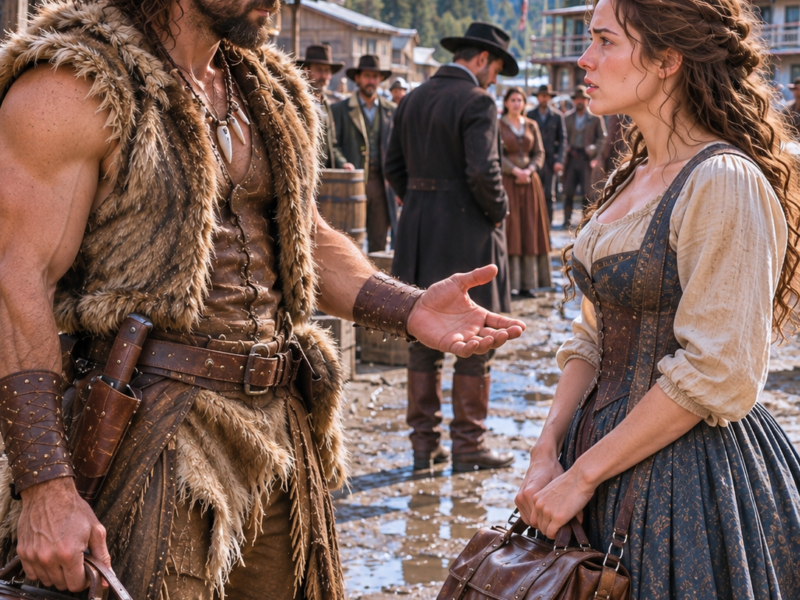
I Was 31 When I Traveled Nearly 3,000 Miles to Marry a Man Who Rejected Me at the Dock, Saying, “You’re Too Old to Be My Wife.” With Only 7 Cents Left, I Sat Alone Until a Mountain Rancher Offered Me Work Caring for His 7-Year-Old Son, Who Hadn’t Spoken Since His Mother Died 8 Months Earlier. I Thought He Was Simply Offering Me a Way to Survive, but When His Silent Boy Began Leaving Strange Little Gifts for Me, I Had No Idea What Was About to Happen…
I Was 31 When I Traveled Nearly 3,000 Miles to Marry a Man Who Rejected Me at the Dock, Saying, “You’re Too Old to Be My Wife.” With Only 7 Cents Left, I Sat Alone Until a Mountain Rancher Offered Me Work Caring for His 7-Year-Old Son, Who Hadn’t Spoken Since His Mother Died 8 Months Earlier. I Thought He Was Simply Offering Me a Way to Survive, but When His Silent Boy Began Leaving Strange Little Gifts for Me, I Had No Idea What Was About to Happen…
Part 1
The man who had promised me a new life looked me up and down for less than ten seconds before deciding I wasn’t worth keeping.
“Thirty-one?” he repeated, as though I had confessed to some terrible crime. “Good heavens, woman. You’re far too old to be my wife.”
I stood on the wooden dock at Coldwater Landing, five weeks and nearly three thousand miles from everything I had ever known, with seven cents hidden in the lining of my coat.
Behind me, the ferry was already pulling away.
In front of me stood the man who had invited me across the country.
And suddenly, I understood that I had made the greatest mistake of my life.
My name is Verity Whitcomb. I was thirty-one years old that autumn, unmarried, almost penniless, and in possession of a medical bag that had cost me nearly as much trouble as it had saved lives.
For six years, I had worked as a midwife in Dartmouth County, Nova Scotia. I had delivered forty-three babies, sat beside women dying of fever, and crossed frozen roads in the middle of January because someone needed me.
I had never lost a mother during childbirth.
But none of that mattered to the provincial medical board.
According to them, I had practiced medicine without the proper license.
The fine consumed my savings. The investigation destroyed my reputation. People who had once invited me into their homes began crossing the street when they saw me approaching.
Even the women whose children I had delivered stopped speaking to me in public.
Then, three months after the hearing, I received a letter from a man named Richard Colby.
He was a merchant in a remote settlement in British Columbia. He described himself as prosperous, established, and in need of a capable woman who could manage a household and perhaps become his wife.
His letter mentioned my practical experience.
He wrote that the frontier appreciated skills that established society sometimes failed to recognize.
I read that sentence so many times the paper nearly wore through.
For the first time in months, someone seemed interested in what I could do instead of what I had supposedly done wrong.
I sold most of my furniture, packed my clothes and medical instruments, and purchased a ticket west.
During the journey, I imagined a modest house, a respectable husband, and perhaps even children.
I did not expect romance.
I simply wanted somewhere I could be useful without apologizing for it.
And now Richard Colby stood before me, looking offended that I had taken his invitation seriously.
“I made my expectations clear,” he said.
“You said you wanted a practical woman.”
“A practical young woman.”
“The word young wasn’t in your letter.”
He adjusted his waistcoat.
“Surely you understood what a gentleman expects from a prospective bride.”
I studied his flushed face, his expensive pocket watch, and the way he kept glancing toward the men unloading freight.
He was embarrassed to be seen speaking to me.
That realization hurt more than his words.
“I crossed an entire country because of your letter,” I said quietly.
“That was your decision.”
“You encouraged it.”
“I encouraged a possibility. Unfortunately, you aren’t suitable.”
Then he said something I would remember for the rest of my life.
“A woman of your age should be grateful anyone considered marrying her at all.”
I felt the blood drain from my face.
He continued speaking, explaining that younger women were better suited to marriage and that my professional interests suggested an undesirable independence.
But I barely heard him.
I was thinking about all the nights I had spent imagining this place.
All the promises I had made to myself.
All the money I had spent getting here.
When he finally finished, I asked, “And what am I supposed to do now?”
He shrugged.
“There’s a boardinghouse on the main road. Perhaps the church can assist you.”
“I have no money.”
“Then I suggest you find employment.”
He turned and walked away.
Just like that.
No apology. No explanation beyond the fact that I had disappointed him by existing at the age of thirty-one.
I remained on the dock until the workers began carrying freight past me.
Eventually, I sat on my trunk.
The mountains rose around the valley like enormous stone walls. Spruce trees covered their slopes, and somewhere beyond them, snow was already settling on the higher peaks.
I had never seen anything so beautiful.
I had never felt so completely alone.
I took the seven cents from my coat lining and placed the coins in my palm.
Seven cents.
Everything I owned, aside from my clothes and medical bag, was now inside a battered wooden trunk.
I was considering whether sleeping beneath the dock might be safer than approaching the boardinghouse when a man’s voice interrupted my thoughts.
“Colby turned you away.”
I looked up.
The stranger stood several feet from me, holding the reins of two enormous brown horses.
He was tall, broad-shouldered, and dressed in a dark wool coat stained with pine pitch. A short beard covered his jaw, and his eyes were the unusual gray-green color of river water beneath a cloudy sky.
He looked as though he belonged to the mountains more than the settlement.
“News travels quickly,” I said.
“I saw him leave.”
“Then you witnessed a rather unsuccessful introduction.”
The man’s expression barely changed.
“He’s a fool.”
I blinked.
“That’s a remarkably direct opinion.”
“Usually saves time.”
Despite everything, I almost smiled.
He glanced at the medical bag resting beside my boots.
“You’re the woman from Halifax. The one who knows medicine.”
“I know enough to have been fined for practicing it.”
“Can you help children?”
The question caught me off guard.
“Sometimes. Why?”
He looked toward the mountains.
“My son’s seven. His name is Owen.”
He paused, and for the first time, something changed in his face.
“His mother died last November.”
“I’m sorry.”
“He hasn’t spoken since.”
The sounds of the dock seemed to fade.
“Not a single word?”
“Eight months. The doctor says there’s nothing wrong with his throat. Says the boy will speak when he’s ready.”
“And you disagree?”
“I don’t know what to think anymore.”
He rubbed one hand across his beard.
“My name is Leith Mercer. I raise cattle fourteen miles north of here. I need someone to keep house, cook meals, and spend time with Owen.”
He looked directly at me.
“I can offer a room, food, and wages. Nothing fancy.”
“Why me?”
“Because you came all this way with that medical bag, and you haven’t thrown it into the river yet.”
I stared at him.
“That’s your qualification?”
“Part of it.”
“And the rest?”
He glanced toward the road where Colby had disappeared.
“You stood there while that man insulted you, and you didn’t beg him to change his mind.”
I lowered my eyes.
It was an odd thing to notice.
“Perhaps I was too shocked to beg.”
“Maybe.”
He lifted my trunk before I could protest and carried it to his wagon.
“Either way, I’ve got a boy who needs patience. And a house that needs someone who knows what they’re doing.”
He placed the trunk among several sacks of grain.
Then he turned back.
“You’d have your own room. Your wages would be yours. If you decide to leave when spring comes, I’ll take you back to town.”
I studied him carefully.
“You don’t know anything about me.”
“I know enough to ask. The rest takes time.”
There was something unsettling about his honesty.
Richard Colby had written beautiful promises and abandoned me within minutes.
This man offered no promises at all.
Only work.
And somehow, that seemed more trustworthy.
I looked once toward the boardinghouse.
Then at my seven cents.
Then at the mountains.
“Your son,” I said. “Does he understand what’s said to him?”
“Every word.”
“Does he respond in other ways?”
“Sometimes. Mostly he watches.”
“And you aren’t expecting me to force him to speak?”
Leith’s jaw tightened.
“No. I’m hoping you can help him remember he wants to.”
That answer decided me.
I picked up my medical bag.
“Very well, Mr. Mercer. I’ll come.”
He nodded once.
“Leith.”
“Verity.”
And with that, I climbed into a wagon beside a stranger and left the only settlement for miles behind me.
The journey took nearly three hours.
The road narrowed as we climbed, winding through dense forests and alongside streams that rushed over black stones.
The temperature dropped sharply.
I tried not to shiver, but Leith noticed anyway.
Without looking at me, he reached behind the seat and placed a thick canvas jacket across my knees.
“Put that on.”
“I’m perfectly capable of enduring a little cold.”
“The mountains don’t care what you’re capable of.”
I put it on.
It smelled of smoke, leather, and pine.
For a long time, we traveled in silence.
Eventually, I asked about Owen’s mother.
“Celia,” Leith said.
He spoke the name carefully.
“She was twenty-nine. Took a fever just before winter. By the time I got the doctor up from the valley, it was too late.”
His hands tightened around the reins.
“Owen was there?”
“He watched her die.”
I closed my eyes briefly.
“That explains a great deal.”
Leith looked at me.
“Can you fix him?”
“No.”
The answer seemed to strike him.
I continued gently.
“He’s not a broken clock, Leith. He’s a grieving child. I can care for him. I can help him feel safe. But I won’t promise something neither of us can control.”
For several minutes, he said nothing.
Then he nodded.
“Fair enough.”
We reached the homestead shortly before dark.
A sturdy log cabin stood in a clearing surrounded by tall spruce trees. Beyond it lay a barn, a fenced pasture, and a neglected kitchen garden.
The house looked solid.
But something about it felt abandoned.
Not physically.
Emotionally.
As though the people living there had stopped expecting tomorrow to be different from yesterday.
The front door opened before we climbed down.
A small boy stood on the porch.
Dark hair. Pale face. Gray-green eyes identical to his father’s.
He looked at Leith.
Then at me.
And didn’t say a word.
I approached him without smiling too widely or reaching for him.
“Hello, Owen. I’m Verity.”
He watched me.
“I’ve come to help your father keep this place from falling apart.”
His eyes moved toward my medical bag.
I noticed.
“There are interesting things in here,” I said. “Dried plants, little bottles, and a few instruments. Perhaps I’ll show you someday.”
His expression remained unchanged.
But his eyes followed the bag as I entered the house.
Inside, I found a kitchen table buried beneath harness straps, dirty dishes, and pieces of rope.
The stove was cold.
A layer of dust covered the windowsill.
On a shelf stood two tin cups.
There was space for a third.
I looked at that empty space longer than I should have.
Then I rolled up my sleeves.
“Well,” I announced, “I suppose we’d better start with supper.”
I found potatoes, salt pork, onions, and a little dried thyme.
Within an hour, the stove was burning, the table was clear, and a pot of soup simmered over the fire.
Owen watched me from a stool.
When I couldn’t find the ladle, I asked the room where people usually kept such things.
He quietly climbed down, opened a cupboard, and pointed.
“Thank you, Owen.”
He returned to his stool.
When Leith came inside, he stopped in the doorway.
His eyes traveled from the clean table to the warm stove.
Then to his son, who was sitting close enough to watch me cook.
For a moment, the large man looked unable to move.
Finally, he removed his hat.
“Smells good.”
“It’s soup,” I replied. “Don’t expect a miracle.”
But later that night, when Owen finished every spoonful, I saw something in Leith’s expression that made me understand exactly how desperately he had been hoping for one.
And I realized that the real reason I had come to this mountain had very little to do with finding a husband.
Part 2
Nine days after I arrived, Owen did something his father hadn’t seen him do in months.
He helped someone without being asked.
I was kneeling in Celia’s neglected herb garden, pulling weeds from around the surviving sage plants, when I noticed his shadow beside mine.
I didn’t look up.
“Your mother knew where to plant these,” I said. “They’re tougher than they look.”
For several minutes, Owen stood silently.
Then he knelt beside me and began removing weeds.
His little hands worked carefully around the roots.
“Some things survive winter better than we expect,” I continued.
He stopped.
When I finally looked at him, his eyes were filled with tears.
But he didn’t cry.
He simply reached for another handful of weeds.
I worked beside him until sunset.
Neither of us spoke.
That evening, Leith watched his son wash dirt from his hands.
Something like gratitude crossed his face, but he said nothing.
The following morning, I discovered a fresh pile of chopped firewood outside the kitchen door.
Leith had stacked it neatly before sunrise.
I smiled to myself.
Apparently, the Mercer men preferred communicating through actions.
I had no idea then that silence would become the most important language I ever learned.
Or that, before winter ended, one terrible night would force Leith to open the cedar box containing everything his dead wife had left behind.
Part 3
The first time I saw the cedar box, I knew I wasn’t supposed to touch it.
It sat on a shelf in Leith’s sleeping loft, polished and perfectly clean despite the dust that seemed to settle over everything else in the cabin.
A small brass lock secured its lid.
Whenever Leith climbed upstairs at night, his eyes passed over it.
He never opened it.
I didn’t ask about it.
By the third week of September, I had learned that grief lived in that house as quietly as the wind slipping between the logs.
Celia’s blue shawl still hung behind the bedroom door.
Her favorite chipped teacup sat inside a cupboard where nobody used it.
A pair of small gardening gloves remained beneath the kitchen sink.
Nothing had been thrown away.
Nothing had been properly put back into life, either.
Leith had preserved his wife’s belongings because he couldn’t bear to lose another piece of her.
Owen avoided them because looking at them hurt.
And I moved carefully among those things, trying to restore the home without erasing the woman who had made it.
It wasn’t easy.
There were mornings when I found Leith standing motionless outside the garden, staring at the place where Celia had once worked.
There were evenings when Owen sat near the fire holding a wooden horse that his mother had carved.
Sometimes the boy would trace the little horse’s mane with his thumb for an hour.
I never asked him to put it away.
Instead, I developed a routine.
Each morning, I prepared breakfast while Owen sat beside the stove.
Afterward, we checked the chickens, gathered eggs, and worked in the garden.
I spoke as I worked, explaining what I was doing without demanding answers.
“This is yarrow. It grows almost everywhere if you know where to look.”
“This knot is called a clove hitch.”
“That bird is a gray jay. They’re clever creatures, though I suspect they know it.”
Owen listened.
Sometimes he watched me.
Sometimes he pretended not to.
One afternoon, I found a smooth white stone on the kitchen windowsill.
The following day, there were three.
A week later, a small bundle of dried flowers appeared beside my medical bag.
I understood.
Owen was speaking.
Just not with words.
I began leaving little things in return.
A pinecone with unusually perfect scales.
A feather I found near the barn.
A small sketch of the mountain ridge.
We never discussed our exchanges.
But each morning, he checked the windowsill.
And each morning, I found myself looking forward to whatever he might leave.
Leith noticed, of course.
He noticed everything concerning his son.
One evening, after Owen had gone to bed, Leith lingered beside the stove instead of climbing to the loft.
“He’s different around you.”
I continued mending a torn shirt.
“Different how?”
“He eats more. Goes outside. Doesn’t hide in his room all day.”
“He’s finding reasons to be curious again.”
Leith stared at the fire.
“Eight months,” he murmured. “Eight months I’ve been trying.”
I set down my needle.
“Leith, grief isn’t a door you can force open.”
His expression hardened.
“I wasn’t trying to force him.”
“I know.”
“Then why won’t he talk to me?”
The question came out so quietly that I almost missed it.
I looked at him.
For the first time, I didn’t see the imposing mountain man who had lifted my trunk as though it weighed nothing.
I saw a father who feared his child had somehow stopped loving him.
“Perhaps,” I said, “because you’re the person he feels safest being silent with.”
Leith frowned.
“What does that mean?”
“It means he trusts you to remain even when he has nothing to say.”
He lowered his eyes.
“I don’t feel like I’m doing enough.”
“Most people who care deeply don’t.”
That night, he stayed beside the fire longer than usual.
And when I finally rose to go to bed, I noticed he had quietly repaired the broken handle on my medical bag.
October arrived with freezing rain.
The mountains disappeared behind gray clouds, and the creek began carrying thin sheets of ice along its edges.
I had lived through bitter winters in Nova Scotia.
But mountain cold was different.
It came down from the peaks like a living thing.
Leith spent longer hours preparing the ranch.
He repaired fences, moved cattle to sheltered pasture, and stacked enough firewood to survive a siege.
Meanwhile, I preserved vegetables, dried herbs, and patched wool blankets.
Owen followed me almost everywhere.
Sometimes, while I worked, I told him stories about my childhood.
I told him about the ocean near Halifax, the sound of gulls over the harbor, and the smell of rain on the old wooden docks.
I told him how my father had taught me to read using newspapers rescued from a shopkeeper’s rubbish.
I told him that I had once wanted to become a proper physician.
And how I had learned that wanting something very badly didn’t always make the world willing to give it to you.
One evening, while we were peeling potatoes, Owen pushed a scrap of paper toward me.
On it, he had drawn three figures standing beside a house.
One was tall.
One was small.
The third wore a long skirt.
My hands went still.
“That’s a fine drawing,” I said.
He watched my face carefully.
“May I keep it?”
He nodded.
It was the first time he had answered one of my questions directly.
I placed the drawing inside my medical bag.
Then I continued peeling potatoes because I understood instinctively that making too much of the moment might frighten him back into silence.
That evening, I showed Leith the picture.
He stared at it for a long time.
“That’s you,” he said finally.
“Perhaps.”
He looked toward the closed bedroom door.
“He’s never drawn anyone besides his mother before.”
I didn’t know what to say.
Neither did he.
So we sat together in the warm kitchen, listening to the wind strike the windows.
Three nights later, Owen became ill.
It began shortly after midnight.
I woke to the sound of coughing.
Not the ordinary cough of a child with a cold.
This was deeper.
Wet and strained.
The kind of sound I had heard beside too many sickbeds.
I pulled on my boots and hurried to his room.
Owen lay curled beneath his blankets, his cheeks flushed and his breathing too rapid.
His forehead was hot.
I took his pulse, listened to his chest, and checked the color of his lips.
He was frightened.
His eyes followed every movement I made.
“Easy, sweetheart,” I whispered. “I’m here.”
I brought water and helped him sit upright.
Then I went to wake Leith.
He was downstairs almost before I finished explaining.
“How bad?”
“I don’t know yet. His fever is rising, and his chest is congested. We need to watch him closely.”
Leith looked toward the window.
“There’s no way to get the doctor here tonight.”
“I know.”
“Tell me what to do.”
That was the first time I heard real fear in his voice.
I instructed him to build up the fire, bring clean water, and prepare the wagon in case we needed to leave at first light.
Then I remembered the cedar box.
“Leith, there’s something upstairs.”
He froze.
“Your wife’s medicine chest.”
His face changed.
“No.”
“I need to see what’s in it.”
He shook his head.
“Celia kept her things there.”
“I understand.”
“That box hasn’t been opened since she died.”
I stepped closer.
“Leith, listen to me. I’m not asking you to surrender your memories of her. I’m asking whether she might have left something useful for Owen.”
He stared at me.
Then toward the room where his son lay coughing.
For several terrible seconds, he seemed unable to choose.
Finally, he turned and climbed the stairs.
I heard a key scraping in a lock.
Then silence.
When he returned, he carried the cedar box as carefully as if it contained something alive.
He placed it on the kitchen table.
His hands trembled.
I opened the lid.
Inside were small medicine bottles, neatly wrapped packets of dried herbs, cotton cloth, and an old notebook.
There was also a folded letter.
The handwriting on its outside read:
For whoever needs to care for my family.
My throat tightened.
Leith stared at the words.
I unfolded the letter slowly.
It contained practical instructions about Owen’s health, the household medicines, and where Celia had stored additional supplies.
Near the bottom, one sentence stood out.
Owen catches cold easily. Always remember to keep his feet warm.
I read it aloud.
Leith made a sound I had never heard from him.
Not quite a sob.
Not quite a breath.
He turned away and pressed one hand against the kitchen wall.
I left him there.
I used the available supplies for comfort, kept Owen hydrated and warm, and watched his breathing throughout the night. I knew that if his condition worsened, the absence of a doctor could become dangerous.
At four in the morning, Leith entered the room and sat beside me.
Neither of us spoke.
He took Owen’s little hand between both of his.
And I saw a tear fall onto the blanket.
By dawn, the fever had begun to ease.
Owen’s breathing gradually settled.
When he finally opened his eyes, he looked first at his father.
Then at me.
I smiled.
“You’re giving us quite a fright, young man.”
He reached toward my hand.
I held it.
Leith watched us from across the bed.
His eyes were red.
Later that morning, when Owen was sleeping comfortably, Leith stood beside the kitchen table looking at the open cedar box.
“I couldn’t touch it,” he said.
I waited.
“Eight months. Every time I thought about opening it, I felt like I was admitting she was never coming back.”
I carefully closed the notebook.
“She isn’t coming back, Leith.”
He flinched.
I continued softly.
“But the love she left behind is still here.”
He looked toward Owen’s room.
Then at the letter.
For a long time, he said nothing.
Finally, he placed the medicine chest on the kitchen shelf instead of returning it to the loft.
It was a small decision.
But I knew what it meant.
And that night, for the first time since arriving, I heard Leith laugh when I complained that his cattle seemed considerably better behaved than the chickens.
The sound surprised both of us.
It surprised me most of all when I realized how much I wanted to hear it again.
Part 4
Winter settled over Coldwater Bench like a heavy white blanket.
By November, snow had buried the garden fences, the mountain paths had nearly disappeared, and the nearest neighbor lived six difficult miles away.
I had never experienced isolation quite like it.
There were days when the only sounds came from the stove, the wind, and Leith’s boots crossing the porch.
Yet, strangely, I was no longer lonely.
I had spent years surrounded by people in Halifax who made me feel unwanted.
Now I lived on a mountain with a grieving man and a silent child, and somehow, I had begun to feel at home.
Every morning, Owen helped me feed the chickens.
Every afternoon, I taught him something new.
Sometimes we practiced reading.
Sometimes I showed him how to recognize animal tracks in the snow.
And sometimes we simply sat together near the stove while I knitted and he carved small pieces of wood.
His silence stopped feeling like an absence.
It became part of our daily rhythm.
Leith changed too.
He began coming home before dark whenever possible.
At supper, he asked about my day.
He listened when I spoke about medicines and the patients I had cared for back east.
Once, he even asked whether I missed my old life.
I considered the question.
“I miss being useful without having to defend myself.”
He frowned.
“You’re useful here.”
“That’s different.”
“How?”
“Because you never asked me to prove I deserved to be.”
He looked at me for a long moment.
Then he said quietly, “You never needed to.”
I lowered my eyes before he could see my expression.
Something had begun growing between us.
Not suddenly.
Not in the dramatic way I had imagined love when I was younger.
It arrived in ordinary moments.
The way he left hot water ready when I came in from the cold.
The way I saved him the largest portion of supper without thinking.
The way his eyes searched the room for me when he returned from the pasture.
And the way my heart settled whenever I heard his footsteps.
We never spoke of it.
Perhaps we were both afraid that naming something fragile would make it disappear.
One afternoon in December, Leith came home carrying a small wooden box.
He placed it on the kitchen table.
“Found this in town.”
Inside was a beautiful set of steel sewing needles.
Not extravagant.
But considerably finer than the bent ones I had been using.
I stared at them.
“Leith, these must have cost—”
“Your old ones kept breaking.”
“That doesn’t mean you needed to buy new ones.”
He shrugged.
“Seems to me broken tools make poor work.”
I looked up.
His expression was completely serious.
Yet I could see the faintest suggestion of a smile.
“Thank you,” I whispered.
He nodded and began removing his boots.
That night, I placed the needles beside Owen’s drawing in my medical bag.
I had received gifts before.
Flowers from grateful fathers.
A ribbon from a woman whose child I had delivered.
A secondhand book from my employer.
But I couldn’t remember the last time someone had noticed what I needed without being asked.
Christmas arrived quietly.
We had no elaborate decorations, only evergreen branches tied above the windows and a small fir tree Owen and Leith brought from the forest.
I baked bread with dried apples and the last of our cinnamon.
Leith carved a wooden train for Owen.
I made the boy a pair of wool mittens.
And for Leith, I repaired his father’s old leather Bible, carefully stitching its damaged cover.
He held it for a long time.
“My mother gave me this when I left home.”
“I know.”
“How?”
“You told me once.”
He looked at me with an expression that made my breath catch.
“You remember everything, don’t you?”
“Only things worth remembering.”
For a moment, I thought he might reach for my hand.
Instead, Owen dropped his wooden train, and we both turned toward him.
The moment passed.
But I carried it with me for days.
January was the hardest month.
A storm trapped us inside for nearly a week.
The snow rose above the lower windows, and the wind rattled the roof through every long night.
On the fourth evening, Leith came inside carrying an injured lamb rescued from a sheltered corner of the barn.
Its leg had been cut against a broken board.
He wrapped it in a blanket and placed it near the stove.
“Can you help?”
“I can try.”
Owen immediately knelt beside the frightened animal.
I cleaned and dressed the wound while Leith held the lamb steady.
Owen watched every movement.
When I finished, the lamb struggled to rise.
Its injured leg trembled.
“Easy,” I murmured. “You don’t need to walk tonight.”
Owen placed his hand gently against its back.
Then, without warning, his mouth opened.
No sound came.
His face changed, and he looked frightened.
I pretended not to notice.
Instead, I continued speaking softly to the lamb.
“You’re safe now.”
Owen swallowed.
His lips moved again.
Still nothing.
Then he lowered his head.
I knew better than to encourage him too eagerly.
So I simply covered his hand with mine for a moment.
And together, we watched the little animal fall asleep.
Later, when Leith and I were alone, he asked whether I thought Owen had tried to speak.
“Yes.”
His face brightened.
“Then he’s getting better.”
“He is.”
“How much longer?”
“I don’t know.”
Leith sighed.
“Sometimes I think I’m losing my patience.”
“With Owen?”
“With myself.”
I looked at him.
He stood beside the window, his shoulders carrying more weariness than any man deserved.
“I was there when Celia died,” he said suddenly.
I remained still.
“She asked me to tell Owen something.”
His voice grew rough.
“She wanted him to know she wasn’t leaving because she wanted to. That she’d stay if she could.”
He swallowed.
“I promised her I would.”
“What happened?”
“I couldn’t.”
He turned toward me.
“Every time I tried, I saw her lying there. I saw Owen standing beside the bed. And all I could think was that I should have done something sooner.”
“Leith—”
“I should have ridden for the doctor the first day she was sick. I should have taken her down to the valley before the snow.”
His voice broke.
“Instead, I told her she’d be all right.”
I crossed the room.
“You didn’t know what would happen.”
“I should have.”
“You loved her.”
“That wasn’t enough.”
The words filled the kitchen with unbearable sadness.
I reached for his hand.
He looked down, startled.
“Listen to me,” I said. “You cannot measure love by whether it manages to defeat death.”
His jaw trembled.
“You stayed beside her. You cared for her. You raised the boy she loved. None of that disappears because you couldn’t save her.”
For the first time, Leith didn’t turn away from his grief.
He sat down.
Covered his face.
And wept.
I remained beside him.
I didn’t tell him to be strong.
I didn’t insist that everything happened for a reason.
I simply held his hand until he could breathe normally again.
When he finally looked up, his eyes were wet.
“I’m sorry.”
“Don’t be.”
“I haven’t cried like that since the funeral.”
“Then perhaps you’ve been carrying too much alone.”
He studied my face.
“Why are you so good to us?”
The question startled me.
I thought about Richard Colby, the dock, and the seven cents that had once represented everything I possessed.
Then I looked toward Owen’s bedroom.
“Because you gave me somewhere to go when I had nowhere left.”
Leith shook his head.
“That isn’t why.”
I could have lied.
Instead, I whispered, “No. It isn’t.”
He reached toward me.
His rough fingers brushed mine.
For one suspended moment, the cabin seemed perfectly still.
Then a log shifted in the stove.
We both looked away.
Neither of us spoke about what had almost happened.
But after that night, something changed.
Leith no longer treated my presence as temporary.
He began speaking about spring as though I would naturally be there to see it.
He asked where I wanted new shelves.
Whether the garden needed another fence.
Whether the kitchen window should be replaced.
Small questions.
Ordinary questions.
Questions that quietly included me in his future.
And I found myself answering without hesitation.
Then March arrived.
The snow began melting from the roof.
The creek emerged from beneath the ice.
And one bright morning, Owen followed me outside to watch two gray jays fighting over a nest beneath the eaves.
I laughed softly.
“They seem determined to rebuild that old thing.”
Owen looked up.
The birds hopped along the roof.
“Your mother liked them, didn’t she?” I asked.
He nodded.
“She must have enjoyed watching them return every year.”
His lips parted.
I kept my eyes on the birds.
And then I heard a voice so small I almost mistook it for the wind.
“Mom liked them.”
My heart stopped.
I didn’t turn.
I didn’t gasp.
I didn’t call for Leith.
I simply said, “She had very good taste.”
Owen stepped closer.
His shoulder rested against my arm.
“She said they always come back.”
His voice was rough and uncertain.
But every word was clear.
I felt tears sting my eyes.
“She was right.”
For several minutes, we stood together.
Then Owen whispered something I will never forget.
“I thought if I talked, I’d forget her voice.”
I slowly knelt beside him.
“Oh, sweetheart.”
His eyes filled.
“I can’t remember exactly how she sounded anymore.”
I placed my hand gently against his cheek.
“That doesn’t mean you’re forgetting her.”
He began to cry.
Not loudly.
Just the quiet, broken sobs of a child who had carried a sorrow too enormous for his little heart.
I held him.
And for the first time in eight months, Owen let his grief come out.
That evening, Leith walked in from the barn.
Owen looked up from his wooden train.
“Dad, the jays came back.”
Leith froze in the doorway.
His hat slipped from his hand.
“Owen?”
“The birds. They fixed the nest.”
Leith crossed the room in three long strides.
He knelt before his son.
“Say that again.”
Owen looked frightened.
I shook my head gently.
Leith understood.
He took a trembling breath.
Then he pulled Owen into his arms.
And without another word, father and son held each other while I stood beside the stove, crying into my apron.
Later that night, Leith found me washing dishes.
He stood close enough that I could feel the warmth of him.
“Verity.”
I turned.
His eyes were shining.
“Thank you.”
I smiled through my tears.
“Don’t thank me yet. He may talk so much you regret wishing for it.”
Leith laughed.
Then, for the first time, he reached out and tucked a loose strand of hair behind my ear.
His hand lingered for one brief second.
I looked up at him.
And I knew, with a certainty that frightened me, that I had fallen in love with a man who had never once asked me to become someone else.
But I didn’t know whether he could ever love me without feeling that he was betraying the woman he had lost.
Part 5
By April, Owen had become the most talkative child I had ever known.
He talked while eating breakfast, while collecting eggs, while tying his boots, and occasionally while sleeping.
He asked endless questions.
Why did stars disappear during daylight?
Could cattle recognize their own names?
Did birds remember where they had been born?
And, most importantly, why did grown men insist on wearing uncomfortable collars when perfectly good scarves existed?
Leith answered as many questions as he could.
When he didn’t know, he sent Owen to me.
I pretended to be annoyed.
But secretly, I treasured every word.
The house had changed completely.
Where silence once pressed against the walls, laughter now wandered from room to room.
The kitchen smelled of bread and fresh herbs.
The garden was ready for planting.
Celia’s photographs stood openly on the mantel rather than hidden inside drawers.
And the cedar medicine chest remained on the shelf, its contents carefully organized and available whenever they were needed.
Nothing about Celia had been erased.
We had simply learned how to remember her without surrendering the rest of our lives.
Yet, as the spring thaw deepened, a new worry began troubling me.
My agreement with Leith had always been temporary.
He had promised wages and transportation back to the settlement when winter ended.
And now winter was over.
I hadn’t asked whether he still wanted me to stay.
He hadn’t mentioned it.
I told myself that he was busy with the cattle and the coming planting season.
But every evening, as we sat beside the stove, I became more aware of the question neither of us dared to ask.
What happened to me now?
One morning, Leith announced that he needed to make a supply trip to Coldwater Landing.
“I’ll be gone two days,” he said.
Owen frowned.
“Can I come?”
“Not this time.”
“Why?”
“Because somebody needs to keep the chickens from escaping.”
Owen considered that responsibility seriously.
Then he looked at me.
“Verity can do that.”
“Verity has enough to do.”
I raised an eyebrow.
“Thank you for recognizing my extraordinary workload.”
Leith smiled.
He had begun doing that more often.
And each time, I found myself wondering how I had ever thought his face severe.
Before he left, he paused beside the wagon.
“Anything you need from town?”
“Window glass for the kitchen, if you can find it.”
“Anything else?”
I almost said, An answer.
Instead, I shook my head.
“Nothing important.”
He watched me for a moment.
Then he climbed onto the wagon.
“I’ll be back before dark on Thursday.”
I nodded.
“Travel safely.”
He hesitated.
“Verity?”
“Yes?”
His expression softened.
“Keep the fire going.”
I smiled.
“I always do.”
The moment he disappeared between the trees, the yard felt strangely empty.
I told myself I was being foolish.
Leith had made this trip dozens of times.
He would return.
There was no reason to feel abandoned.
Yet my hands trembled while I prepared breakfast.
Owen noticed immediately.
“Are you sad?”
“No, sweetheart.”
“Then why are you looking down the road?”
I stopped wiping the table.
Because seven-year-old boys are remarkably skilled at asking questions adults spend months avoiding.
“I’m just making sure your father remembered his coat.”
“He did.”
“Then there’s nothing to worry about.”
Owen studied me.
Finally, he said, “Dad looks down the road when you’re gone too.”
I turned toward him.
“What?”
“When you go to the creek. He watches until you come back.”
I stared at the boy.
He continued eating his porridge as though he hadn’t just revealed the greatest secret in the world.
That afternoon, I worked in the garden until my back ached.
The next day, I scrubbed the floors, washed every blanket, and reorganized the pantry.
I kept myself busy because whenever I stopped moving, I remembered the way Leith had touched my hair.
The way he listened when I spoke.
The way his face softened whenever Owen called my name.
And the terrifying possibility that I had mistaken gratitude for love.
On Thursday evening, the wagon finally returned.
I heard the wheels before I saw the horses.
Owen raced outside, shouting for his father.
I followed more slowly.
Leith looked tired.
Dust covered his coat, and his beard had grown rougher during the journey.
But when he saw us on the porch, something in his expression changed.
His eyes found mine first.
Then Owen’s.
For a moment, he simply sat on the wagon, looking at us.
Finally, he climbed down.
“Everything all right?”
“Perfectly,” I said.
Owen immediately began explaining a lengthy disagreement between two chickens.
Leith listened patiently.
Then he sent the boy to check whether the barn doors were secure.
When we were alone, Leith reached inside his coat.
“I brought something for you.”
He handed me a thick leather packet.
I frowned.
“What is it?”
“Your wages.”
I stared at him.
“All of them?”
“With extra.”
“Why?”
“Cattle prices were good. You’ve earned it.”
I opened the packet.
Inside were banknotes.
More money than I had seen together in years.
Enough to return east.
Enough to establish myself somewhere new.
Enough to leave the mountain forever.
My stomach sank.
Leith watched me carefully.
“There’s a hospital in Victoria looking for women with practical experience,” he said. “I asked about it while I was in town.”
I looked up sharply.
“You asked?”
“They might take you. With your experience, you’d have a chance.”
I couldn’t speak.
He continued, each word seeming more difficult than the last.
“You could live somewhere warmer. Somewhere with proper roads and doctors and people who understand your work.”
I looked down at the money.
Suddenly, the porch beneath my feet felt like the dock at Coldwater Landing all over again.
A man standing before me.
A future being decided.
A place I had begun to believe belonged to me slipping away.
“So,” I said slowly, “you want me to leave.”
Leith’s face tightened.
“That’s not what I said.”
“Then what are you saying?”
“I’m giving you a choice.”
I laughed once, without humor.
“How generous.”
He looked wounded.
“Verity—”
“You brought me here because your son needed help. Now he’s speaking again, and you’ve found somewhere to send me.”
“That’s not fair.”
“No,” I whispered. “It isn’t.”
I turned toward the house.
But his voice stopped me.
“You came here because you had nowhere else to go.”
I closed my eyes.
He continued.
“You didn’t choose this mountain. You didn’t choose me or Owen. You were stranded, and I offered work.”
“That’s true.”
“And I won’t let you stay because you feel obligated.”
I turned around.
He stood beneath the porch steps, looking more frightened than I had ever seen him.
“Leith, do you think I’ve spent the last seven months here out of obligation?”
He didn’t answer.
“Do you think I sit beside Owen when he’s frightened because I’m being paid? That I worry when you’re late coming home because it’s part of my duties?”
His jaw tightened.
“I don’t know what you feel.”
“Then why haven’t you asked?”
The question hung between us.
Leith looked away.
For the first time since meeting him, I felt truly angry.
Not because he had offered me freedom.
But because he had decided what freedom meant without allowing me to speak.
“I have spent my entire life being told what I should want,” I said. “The medical board told me what work I was allowed to do. Richard Colby told me I was too old to be worth marrying. And now you’re telling me I’d be happier somewhere else.”
“That’s not—”
“Yes, it is.”
I stepped closer.
“You keep saying I deserve a choice. Then let me make one.”
He looked directly at me.
The silence stretched.
Finally, he whispered, “I’m afraid.”
The words startled me.
Leith Mercer was afraid of very little.
I had watched him ride through snowstorms, repair fences above steep ravines, and approach injured cattle twice his size without hesitation.
Yet now his hands were trembling.
“Of what?” I asked.
He swallowed.
“Of asking you to stay.”
My anger softened.
“Why?”
“Because I asked Celia to stay here.”
I remained silent.
He looked toward the mountains.
“She could have lived in town. Her sister wanted her to. But she loved this place, and she loved me, so she stayed.”
His voice faltered.
“And then she died.”
I reached toward him, but he shook his head slightly.
“After the funeral, I kept thinking that if we’d lived somewhere else, perhaps the doctor would have reached her sooner. Perhaps she would still be here.”
“Leith…”
“I can’t bear the thought of you giving up another life for this mountain.”
I felt tears gathering.
“You think loving this place means sacrificing myself?”
He looked at me.
“I don’t know.”
“Then listen carefully.”
I took his hand.
“When I came west, I thought I was running away from everything I’d lost. I thought marriage was the only way to begin again.”
I glanced toward the house.
“But you gave me work. You gave me respect. You never made me apologize for knowing things or speaking my mind.”
His expression changed.
“And Owen…” My voice trembled. “Owen gave me a reason to wake up every morning and believe I mattered to someone.”
Leith’s fingers tightened around mine.
“I didn’t stay because I had nowhere else to go,” I whispered. “I stayed because, somewhere along the way, this became the place I wanted to be.”
He stared at me.
“Verity…”
I smiled through my tears.
“And I am not afraid of winter.”
A faint, broken laugh escaped him.
“I know.”
“I am not afraid of hard work.”
“I know.”
“And I am certainly not afraid of living with a stubborn man who thinks he can solve every problem by chopping enough firewood.”
He laughed again.
This time, tears stood in his eyes.
Then he grew serious.
“I love you.”
Three words.
Spoken so quietly I almost didn’t hear them.
For a moment, I could only stare.
“I’ve loved you since January,” he continued. “Maybe before that. I didn’t want to admit it.”
“Why?”
“Because I thought loving you meant I hadn’t loved Celia enough.”
My heart ached.
I stepped closer.
“Love doesn’t work like that, Leith.”
He closed his eyes.
“I know that now.”
I placed my free hand against his cheek.
“Then tell me what you want.”
He opened his eyes.
“I want you to stay.”
I smiled.
“That sounds like a reasonable beginning.”
“I want you here next winter.”
“Then we’d better fix that kitchen window.”
“I want you here next spring.”
“I’ll need more room for the herb garden.”
He laughed softly.
Then his expression became completely serious.
“And I want you beside me for whatever years I’ve got left.”
My breath caught.
He took both my hands.
“Verity Whitcomb, I don’t have much to offer beyond this house, this land, and a boy who talks enough for ten men.”
“Eleven,” I whispered.
He smiled.
“But if you’ll have us, I’d like to make you my wife.”
For several seconds, I couldn’t speak.
I thought about Richard Colby.
About the humiliation on the dock.
About the nights I had spent believing that thirty-one was too old to begin again.
And about the enormous, unexpected journey that had brought me to this moment.
Then I answered.
“Yes.”
Leith stared at me.
“Yes?”
“Yes, you impossible man. I’ll marry you.”
He pulled me into his arms.
And for the first time in my life, I was kissed by someone who made me feel as though nothing about me needed changing.
Not my age.
Not my opinions.
Not my stubbornness.
Not the roughness of my hands or the scars left by disappointment.
When he finally released me, Owen stood in the doorway.
His eyes were enormous.
“Does this mean Verity isn’t leaving?”
I laughed.
“No, sweetheart. I’m not leaving.”
He considered that.
Then he asked, “Does it mean she’ll be my mother?”
My smile softened.
I knelt before him.
“Owen, you already have a mother. Her name was Celia, and she loved you very much.”
His eyes filled.
“I know.”
“Nobody can replace her.”
He nodded slowly.
“But if you’d like, I can be someone who loves you too.”
For a moment, he looked at me without speaking.
Then he threw his arms around my neck.
“I already do.”
I held him tightly.
Behind us, Leith made a small, broken sound.
When I looked up, he was wiping his eyes.
That evening, we celebrated with apple bread and the last jar of preserved peaches.
Owen insisted that weddings required cake.
Leith informed him that weddings required a minister.
I suggested that, before either could happen, someone ought to finish repairing the barn roof.
The argument continued through supper.
And I loved every moment of it.
We married six weeks later in the small church at Coldwater Landing.
There were only fourteen people present.
Owen carried the rings in a little wooden box he had made himself.
Leith wore a dark coat he had borrowed from a neighbor.
I wore a simple blue dress that I had sewn during the winter.
It wasn’t an expensive wedding.
There were no grand decorations.
No elaborate feast.
No fine carriage waiting outside.
But when Leith took my hands before the minister, he looked at me with such certainty that I felt wealthier than I ever had in my life.
After the ceremony, we stepped outside into the afternoon sunshine.
And there, standing beside the church gate, was Richard Colby.
For one terrible moment, I felt myself become the frightened woman on the dock again.
He looked surprised.
Then uncomfortable.
“Miss Whitcomb?”
I met his eyes.
“Mrs. Mercer.”
His gaze moved toward Leith.
Then toward Owen, who was holding my hand.
“I hadn’t realized…”
He stopped.
Leith said nothing.
He simply stood beside me.
Colby cleared his throat.
“Well. Congratulations, I suppose.”
“Thank you.”
His eyes lingered on my wedding ring.
“I must admit, I didn’t expect you to find such an arrangement.”
I almost laughed.
There it was again.
The same cold judgment.
The same assumption that a woman like me should be grateful for whatever scraps life offered.
But something had changed.
I no longer needed to defend myself.
“Neither did I,” I replied.
Then I smiled.
“Fortunately, Mr. Mercer has excellent judgment.”
Leith squeezed my hand.
Colby’s face reddened.
He muttered another congratulation and walked away.
I watched him disappear down the road.
For a moment, I considered all the things I could have said.
I could have reminded him of his cruel words.
I could have demanded an apology.
I could have told him that the woman he rejected had found a happiness he would never have imagined.
But I realized I didn’t need to.
His opinion no longer had any power over me.
Leith leaned closer.
“You all right?”
I looked up at him.
“Perfectly.”
“That man still bothers you?”
I considered the question.
Then I shook my head.
“No. Not anymore.”
We returned to the mountain that evening.
The garden was beginning to grow.
The gray jays had returned to their nest.
And Owen spent the entire journey explaining how he intended to build a second bedroom when he was old enough to use his father’s tools.
Years passed.
Some were kind.
Some were difficult.
There were harsh winters, sick cattle, failed crops, and nights when I worried we might lose everything we had built.
But there were also warm summers, healthy calves, neighbors who became friends, and more laughter than I had ever thought possible.
Eventually, word of my experience spread through the surrounding settlements.
Women began coming to our home for advice.
I assisted during difficult births when a physician wasn’t available and worked alongside licensed doctors whenever possible.
Over time, I helped establish a small community clinic that brought needed medical care closer to the isolated families of the valley.
Leith built the shelves.
Owen painted the sign.
And I finally had a place where my knowledge was welcomed rather than treated as something shameful.
One autumn afternoon, several years after our wedding, I found my old coat tucked inside a wooden chest.
The lining had torn near the pocket.
As I repaired it, something small fell into my palm.
Three old coins.
The seven cents I had carried to Coldwater Landing.
I had forgotten them.
For a long time, I sat holding those coins.
Then Leith came through the doorway.
“What have you got there?”
I showed him.
He smiled.
“Your fortune.”
“My entire fortune.”
He sat beside me.
“Still think you made a mistake coming west?”
I looked out the window.
Owen, taller now, was leading a young horse across the yard.
The herb garden was flourishing.
Smoke rose gently from the chimney.
And the mountains stood around our home just as they had on the evening I first arrived.
“No,” I said.
“Not even a little?”
I leaned against him.
“Only one.”
He raised an eyebrow.
“What’s that?”
“I should have asked you to carry my medical bag that first day. It was terribly heavy.”
Leith laughed.
Then he kissed my forehead.
I placed the seven cents inside a small wooden frame and hung it beside Owen’s first drawing.
People sometimes asked why I kept such a worthless collection on the wall.
I always told them the same thing.
Those coins reminded me of the day I thought my life was over.
And that drawing reminded me of the day I discovered it had only just begun.
Richard Colby had looked at a thirty-one-year-old woman and seen someone too old to love.
Leith Mercer had looked at that same woman and seen someone worth knowing.
But the most important change wasn’t in the way those men saw me.
It was in the way I finally learned to see myself.
I had spent so many years measuring my worth through other people’s approval that I had almost forgotten something essential.
I was never too old to begin again.
Never too stubborn to be loved.
And never too damaged by disappointment to build something beautiful.
I arrived at Coldwater Landing with seven cents and a broken dream.
I found a grieving child who needed someone patient enough to understand his silence.
I found a lonely man who needed to learn that loving again did not mean forgetting.
And somewhere between the bitter winter nights, the quiet kitchen conversations, and the first hopeful mornings of spring, I found something I had stopped believing existed.
A home where I was wanted exactly as I was.
Sometimes, when the evening wind moves through the spruce trees, I remember Richard Colby’s voice telling me I was too old to be his wife.
And I smile.
Because he was right about one thing.
I was never meant to be his wife.
I was meant to come to that mountain.
To meet that little boy.
To love that stubborn man.
And to discover that the happiest chapter of my life was waiting on the other side of the worst day I had ever known.
The world may tell a woman that her best years are behind her.
But I learned that sometimes the greatest love of your life doesn’t arrive when you’re young, beautiful, and full of possibilities.
Sometimes it arrives when you’re exhausted, frightened, and carrying everything you own in one battered trunk.
Sometimes it doesn’t arrive with flowers or promises.
Sometimes it arrives driving a wagon, wearing a coat that smells of pine smoke, and asking whether you know how to care for a child who has forgotten how to speak.
And sometimes, if you’re brave enough to climb aboard, that unexpected journey takes you exactly where you were always meant to belong.