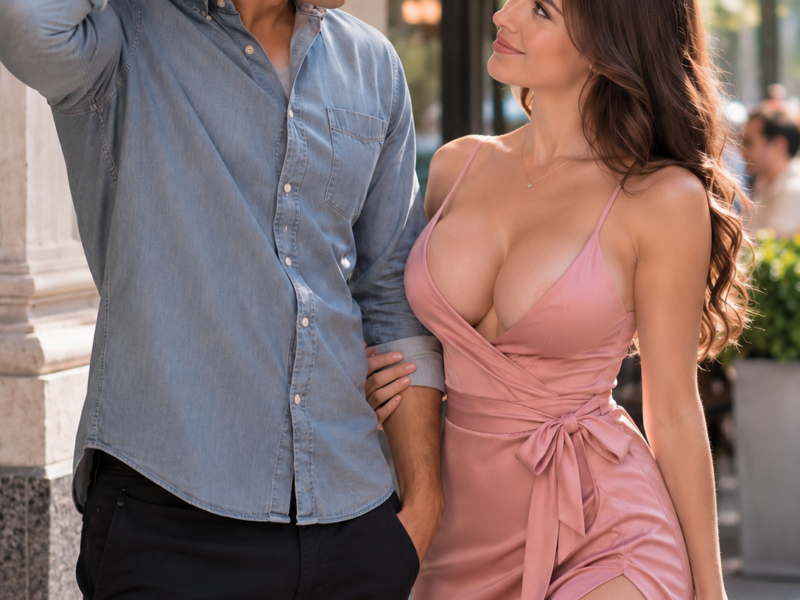
I Mistook Her For My Blind Date—She Said, “Stay—Mine Never Showed Anyway.”
I Mistook Her For My Blind Date—She Said, “Stay—Mine Never Showed Anyway.”
PART 1
The first time I met Amanda Johnson, I made two spectacular mistakes. The first was assuming she was my blind date. The second was thinking that ten minutes with her would be enough to forget her.
I was standing outside Blue Bonnet Table in Fredericksburg, Texas, on a bright Thursday afternoon, wearing a faded blue work shirt that smelled like roasted coffee beans. I’d spent the morning unloading deliveries at Lone Star Coffee, and I was already questioning why I’d agreed to let Norma Brown arrange a date for me.
Norma owned the bakery next door. She was sixty-two, aggressively cheerful, and convinced that every unmarried person in town represented a problem she was personally responsible for solving.
Three days earlier, she’d cornered me while I was buying a cinnamon roll.
“Kenneth George, you’re thirty-four years old. You work too much, you live alone, and the closest thing you have to a relationship is that ridiculous coffee machine.”
“It’s a very dependable machine,” I’d replied.
She’d ignored me.
“Her name is Abby James. She’s a dog groomer. Lovely girl. Everyone calls her A.J. Thursday. Noon. Blue Bonnet Table. Don’t embarrass me.”
And somehow, that was how I’d ended up standing on a crowded restaurant patio, looking for a woman I’d never met.
Then I noticed the little white reservation card.
A. Johnson.
Close enough, I figured.
The woman sitting beside it wore a soft pink dress, her brown hair falling loosely around her shoulders. She was beautiful in a way that made me suddenly conscious of the coffee stain on my sleeve.
I approached with the confidence of a man who had absolutely no idea what he was doing.
“Hi. I’m Kenneth. You must be my blind date.”
She looked up.
For one brief second, confusion crossed her face. Then she glanced toward the empty chair opposite her.
Something changed in her expression.
“Oh,” she said quietly.
I smiled awkwardly.
“Norma told me to look for A.J., so I figured—”
“I’m Amanda Johnson.”
My stomach dropped.
“Right. Of course. Which would make you not Abby James.”
“Correct.”
“Wonderful. Well, I’ve successfully introduced myself to a complete stranger. I’ll just go find a hole in the ground.”
I started backing away.
That’s when she reached out and caught the cuff of my shirt.
“Don’t leave yet.”
Her voice wasn’t loud. It barely carried over the restaurant chatter.
But something about it stopped me immediately.
I looked at her hand.
Her fingers were trembling slightly.
She glanced at the empty chair.
“Stay,” she said, forcing a small smile. “Mine never showed anyway.”
I followed her gaze.
The second place setting was untouched. A glass of water sat beside a folded napkin. The chair had been pulled out slightly, as though she’d expected someone to occupy it at any moment.
And around us, several people were pretending not to watch.
Fredericksburg was the kind of town where privacy was more of a polite suggestion than an actual possibility. If someone spilled soup at lunch, half the town would know by dinner.
Through the bakery window, I could see Norma staring at Amanda with an expression of unmistakable pity.
Suddenly, I understood.
Amanda wasn’t asking me to stay because she wanted company.
She was asking because being publicly abandoned was bad enough without having to walk away while everyone watched.
I looked back at her.
“Are you requesting a fake date or an emergency witness to your graceful escape?”
For the first time, her smile almost reached her eyes.
“Start by sitting down and not looking heroic.”
“Excellent. Heroic isn’t really my specialty.”
I pulled out the chair and sat.
Amanda immediately straightened the napkin beside her plate. Then she adjusted the tiny vase of bluebonnets in the center of the table.
She seemed like someone who could organize an entire wedding during a thunderstorm without losing her composure.
Except her purse was still sitting on her lap, its strap hooked over her shoulder.
She was ready to run.
“So,” I said, “you’re definitely not a dog groomer?”
“No. I’m the event coordinator at the Hill Country Boutique Hotel.”
“Impressive.”
“And you?”
“Kenneth George. Assistant coffee roaster at Lone Star Coffee. Professional bean enthusiast. Occasional victim of Norma Brown’s matchmaking operation.”
Her lips twitched.
“That explains the smell.”
I glanced down at myself.
“Coffee?”
“Overwhelmingly.”
“Medium roast, actually. Notes of pecan, chocolate, and poor romantic judgment.”
She laughed.
It was brief, almost accidental, but I noticed how her shoulders relaxed afterward.
“Your apology is currently a six out of ten,” she informed me.
“Harsh.”
“Fair.”
“Could I improve my score by buying you lemon cake?”
She glanced toward the bakery.
“Absolutely not.”
“That bad?”
“If Norma sees us eating cake together, she’ll come over here and ask how I’m doing. And if one more person asks me how I’m doing today, I might throw a fork into the street.”
I nodded solemnly.
“No cake. Public safety comes first.”
She smiled again.
For a moment, we just sat there while restaurant conversations continued around us.
Then Amanda looked directly at me.
“Why did you stay?”
The question surprised me.
“Because you asked.”
“That’s it?”
I considered giving her some clever answer.
Instead, I shrugged.
“And because my actual blind date hasn’t arrived either. Which means Norma’s matchmaking success rate is currently zero percent.”
Amanda lowered her eyes.
“I only need ten minutes,” she said. “Long enough for everyone to think I handled this gracefully instead of getting abandoned and running away.”
“Ten minutes,” I agreed.
She checked her watch.
And that was how our first conversation began.
I told her about the coffee roastery, where my mornings started at four and the air smelled like toasted nuts and possibility. I told her how green coffee beans smelled surprisingly grassy before roasting, and how I’d once spilled five pounds of coffee chaff over my boots.
She listened with increasing amusement.
In return, she told me about the Porchlight Supper she was organizing at the hotel that Saturday.
It was her first major event since being promoted.
A hundred and twenty guests. Local wineries. Live jazz. A carefully planned dinner featuring regional ingredients.
Everything had to be perfect.
“That sounds exhausting,” I said.
“It’s exciting.”
“Those aren’t mutually exclusive.”
She looked at me thoughtfully.
“No,” she admitted. “I suppose they aren’t.”
At exactly ten minutes, she stood.
I noticed because she’d been checking her watch.
She picked up the reservation card with her name on it and slipped it into her purse.
“Thank you, Kenneth.”
Her voice had changed. It was polished again, professional, the kind of tone people used when closing meetings.
“Anytime, Amanda.”
She walked away without looking back.
I stayed seated.
I could have followed her, asked for her number, offered to see her again.
But she’d asked for ten minutes, and giving her more than she’d requested felt like taking something that wasn’t mine.
Still, when I looked at the empty chair across from me, I experienced an uncomfortable feeling.
Disappointment.
Which was ridiculous.
I’d known her for ten minutes.
Yet somehow, I’d already started wishing for eleven.
The next morning, I arrived at Lone Star Coffee before sunrise.
The industrial roaster was humming, the cooling tray spinning beneath the harsh warehouse lights. Pete, our senior roaster, was checking invoices while I packed fresh beans into delivery bags.
“Hotel delivery today,” he said.
I looked up too quickly.
“Hill Country Boutique?”
“Yeah.”
“I can take it.”
Pete raised an eyebrow.
“You hate hotel deliveries.”
“I don’t hate them.”
“Last week you called their loading dock a medieval punishment.”
“People change.”
He stared at me for a moment.
Then he grinned.
“Must be a woman.”
I grabbed the delivery box.
“Must be excellent customer service.”
By seven-thirty, I was walking onto the hotel’s stone patio.
Amanda stood near a stack of folded chairs, studying a clipboard covered in red markings.
Her hair was pulled into a tight bun. She wore black trousers, a white blouse, and the expression of someone mentally calculating seventeen disasters at once.
“Mr. George,” she said without looking up.
“Ms. Johnson.”
She raised her eyes.
“What are you doing here?”
“Delivering coffee. Apparently interrupting a military operation.”
“It’s not an operation.”
I glanced at the clipboard.
“Then those red marks are an unusual decorating choice.”
She sighed.
“Logistical adjustments.”
“Sounds dangerous.”
“Christopher Jones hasn’t sent his wine pairing notes.”
I set the delivery box down.
“Christopher?”
“The distributor handling Saturday’s wine service.”
She paused.
Then, almost reluctantly, added, “He’s also the man who didn’t show up yesterday.”
I went still.
So the man who’d left her waiting was also responsible for part of her biggest professional event.
That explained why she looked exhausted.
“That’s an interesting way to manage professional relationships,” I said carefully.
“Christopher believes everyone should accommodate his schedule.”
“Does his schedule usually involve disappointing people?”
Amanda gave me a sharp look.
Then she looked away.
“I need those notes before noon, or the printer can’t finalize the menus.”
I glanced at the coffee station marked on her floor plan.
“Well, I can’t help with wine. But we’re supplying the coffee course, right?”
“Yes.”
“Then I can write the coffee pairing notes now. At least that section will be finished.”
She hesitated.
I could almost see her arguing with herself.
Accept help, or maintain control?
I kept my voice calm.
“Only if you want. I’m offering assistance, not organizing a takeover.”
After several seconds, she handed me a blank sheet of paper.
“One column. Keep it professional.”
“That eliminates most of my personality.”
“Good.”
I leaned against a stone pillar and began writing.
“What’s for dessert?”
“Peach cobbler. Local peaches, brown sugar, oat crust.”
“Perfect. Medium roast. The pecan finish balances the sweetness, and the lighter acidity works with the peaches.”
I wrote a clean description, added the roast details, and handed it back.
She read it twice.
“That’s actually useful.”
I placed a hand over my chest.
“I’ll treasure that compliment forever.”
“Don’t make me regret it.”
I smiled and picked up my empty box.
As I turned to leave, she called my name.
“Kenneth?”
I stopped.
“Yes?”
Her expression softened.
“Thank you.”
This time, it didn’t sound like she was dismissing me.
And for reasons I couldn’t yet explain, that mattered more than it should have.
By Wednesday afternoon, after several brief encounters around town, I had learned three things about Amanda Johnson.
She was brilliant at her job.
She had a strange habit of straightening objects whenever she felt anxious.
And she always positioned herself close to an exit.
At first, I thought it was coincidence.
Then I noticed that every conversation ended the same way.
She would smile, check her watch, find a reason to leave, and disappear before anyone could ask her to stay.
I recognized that behavior.
Because in my own way, I’d been doing the same thing for years.
I buried myself in work. I volunteered for extra shifts. I convinced myself that independence meant never needing anyone.
Amanda controlled her exits.
I controlled my schedule.
Different methods.
Same fear.
And neither of us had yet realized how much one mistaken meeting was about to change our lives.
PART 2
On Wednesday afternoon, I found Amanda outside the post office, sorting envelopes beside her car.
“Did your mysterious wine expert finally send his notes?” I asked.
She sighed. “At midnight. He described a Pinot Noir as an autumn evening waiting for a lover.”
“Sounds expensive.”
“I changed it to cherry and oak.”
“Much safer. Coffee descriptions are basically dating profiles for exhausted people.”
She looked amused.
“Really?”
“Absolutely. Our dark roast is dependable, slightly nutty, and emotionally available after six in the morning.”
She laughed.
Not the polite laugh she’d given me at the restaurant.
A real one.
And suddenly, I wanted to hear it again.
“The supper is coming together,” she said. “I’ve assigned your coffee station.”
“Good location?”
“Near dessert.”
“Excellent. Have I earned permanent placement?”
She smiled.
“You’re still written in pencil.”
I pretended to be wounded.
“Brutal.”
“You’ll survive.”
For a moment, neither of us moved.
I wanted to ask her to dinner.
But she was still holding her keys, and I remembered how carefully she guarded her freedom.
So I simply smiled.
“See you Friday, Amanda.”
I walked away first.
Behind me, she called, “Kenneth?”
I turned.
“Don’t be late.”
And somehow, those four words sounded remarkably like an invitation.
PART 3
Friday morning arrived with the kind of cool Texas air that disappeared the moment the sun climbed over the hills.
I woke at four, as usual, but instead of going straight to the roastery, I packed three boxes of tasting cups, a large water dispenser, several bags of coffee, and a bundle of handwritten labels into my truck.
Then I drove to the Hill Country Boutique Hotel.
The patio was almost deserted.
A few wooden tables were stacked beside the garden wall. Strings of lights hung loosely between stone pillars. Lanterns waited to be positioned along the walkways, and a crew had left several crates near the outdoor kitchen.
I knew Amanda would be arriving soon.
I also knew how much work she still had to finish.
So I started preparing our coffee station.
I stacked the cups, checked the brewing equipment, organized the spoons, and filled the dispenser with filtered water.
But I deliberately left the final labels blank.
Amanda had already explained where she wanted the coffee cart. I wasn’t about to change her plan without permission.
I was wiping down the counter when the patio doors opened.
She appeared carrying a large canvas tote bag and a clipboard.
Her hair was loosely tied back, and dark circles beneath her eyes betrayed how little sleep she’d gotten.
She stopped when she saw me.
Then she looked at the coffee station.
At the cups.
The water dispenser.
The neatly arranged supplies.
Her shoulders dropped.
For several seconds, she said nothing.
Finally, she walked toward me and picked up one of the blank labels.
“You didn’t finish these.”
“Nope.”
“Why?”
“Because I don’t know exactly where you’re putting the dessert table. It’s your event, Amanda. I figured I’d prepare everything I could without making decisions that belong to you.”
She looked at the labels again.
Then back at me.
Something in her expression changed.
“You have no idea how many people have spent the last week telling me what I should do.”
“I can imagine.”
“Christopher wants different lighting. The hotel manager keeps suggesting changes to the seating arrangement. The florist thinks the centerpieces should be taller. Everyone has an opinion.”
“And yours?”
She blinked.
“What?”
“Your opinion. That’s the one I’m interested in.”
Her eyes suddenly looked brighter.
For the first time since we’d met, Amanda seemed unsure how to answer.
Eventually, she smiled.
“Thank you for not taking over.”
“You’re welcome. Besides, I’m still trying to earn ink instead of pencil.”
She laughed softly.
“The vendor walkthrough is at three. Christopher will be here. I’d appreciate it if you attended.”
“As your coffee supplier?”
She considered the question.
“As my coffee partner.”
Something warm spread through my chest.
“I’ll be there.”
At three o’clock, the patio was crowded with vendors.
The hotel manager stood near the garden entrance. Rebecca Mejia, Amanda’s assistant, carried a folder thick with schedules. The florist was discussing arrangements with the catering team.
Then Christopher Jones arrived.
I recognized him immediately, even though we’d never been introduced.
He wore an expensive linen blazer, perfectly polished loafers, and a smile suggesting he’d never seriously considered the possibility of being wrong.
He greeted the hotel manager enthusiastically.
He greeted Rebecca politely.
Then he turned toward Amanda.
“There’s my favorite event planner.”
Amanda’s smile was professional.
“Good afternoon, Christopher. We’re ready to begin.”
“Always working, aren’t you, sweetheart?”
I watched her shoulders stiffen.
She ignored the comment.
For the next twenty minutes, Amanda guided everyone through her carefully designed floor plan.
She explained the lighting cues, serving times, pedestrian pathways, emergency access points, and coordination between the kitchen and entertainment.
She was extraordinary.
Not because she spoke loudly.
Because she didn’t have to.
Everyone listened.
Until Christopher decided he knew better.
“Actually,” he interrupted, walking toward the south terrace, “I think the wine display should go here.”
Amanda looked at him.
“The south terrace is reserved for dessert and coffee.”
“Yes, but wine should be the centerpiece. That’s where people gather. Move the coffee cart near the garden wall.”
He gestured dismissively toward my station.
“People who really want coffee will find it.”
My jaw tightened.
I was used to distributors treating coffee as an afterthought, but this wasn’t about my business.
It was about the way Christopher spoke to Amanda.
As though she’d spent weeks planning an event simply to have him arrive and improve it in thirty seconds.
I wanted to argue.
I wanted to tell him exactly what I thought of his ideas.
Then I saw Amanda watching me.
And I realized something.
She didn’t need another man fighting to control her event.
She needed someone willing to trust her judgment.
So I turned toward her.
“Amanda, it’s your floor plan. Where do you want the coffee cart?”
The patio became quiet.
Christopher looked at me as if I’d interrupted a royal decree.
Amanda held my gaze.
Then she straightened her shoulders.
“The coffee station remains beside dessert. The wine table remains on the north terrace. That’s the arrangement we’ve approved, and that’s the arrangement we’ll use tomorrow.”
Christopher’s smile thinned.
“Of course. Your event.”
“Exactly,” she replied.
Rebecca looked down to hide a smile.
The manager nodded.
And just like that, the conversation moved on.
I hadn’t rescued Amanda.
I’d simply refused to become another obstacle.
After the walkthrough, I was packing away my notes when she approached my cart.
She placed a small white reservation card on the counter.
It was blank.
I looked at it.
“Am I supposed to fill out a customer satisfaction survey?”
She smiled faintly.
“There’s an extra chair at my table tomorrow night.”
I looked up.
“The coordinator’s table?”
“Yes.”
“And?”
“And I haven’t decided whose name belongs on the card.”
She hesitated.
Then added, “I thought you should know.”
Before I could answer, Rebecca called her from across the patio.
Amanda stepped away.
“See you tomorrow, Kenneth.”
I watched her leave.
The blank card remained beside my tasting cups.
I picked it up carefully.
For the first time since that disastrous blind date, I wondered whether Amanda was finally ready to let someone stay for more than ten minutes.
But Saturday morning taught me how fragile that possibility still was.
I stopped at Norma’s bakery to deliver a final bag of decaf coffee.
The place was crowded.
Norma stood behind the counter, entertaining several customers with her usual enthusiasm.
“Oh, it’s practically a romance novel!” she declared.
I slowed near the doorway.
“Amanda gets stood up by that Christopher fellow, and Kenneth just appears out of nowhere! A proper gentleman. A definite upgrade!”
My stomach tightened.
Then I saw Amanda standing beside the pastry display.
And directly behind her stood Christopher.
He’d heard everything.
His expression shifted into a smug smile.
“Well, Mandy,” he said, leaning closer, “seems you found yourself a replacement rather quickly.”
Amanda went pale.
Several customers turned to watch.
Then she noticed me holding the coffee bag.
For one terrible moment, our eyes met.
I saw embarrassment.
Anger.
And fear.
“Norma,” she said sharply, “Kenneth is a coffee vendor working with the hotel. He is providing a professional service. That’s all. Please stop inventing stories about my staff.”
The bakery fell silent.
I stood completely still.
A vendor.
That’s all.
Five days of conversations.
The quiet Friday morning.
The blank reservation card.
Apparently, none of it mattered.
Christopher looked pleased.
Norma looked mortified.
And I felt as though someone had punched a hole straight through my chest.
I could have said something cruel.
I could have reminded Amanda about the invitation she’d practically placed in my hands the evening before.
I could have embarrassed her just as she’d embarrassed me.
But then I noticed her hands.
They were shaking.
She wasn’t looking at Christopher anymore.
She was staring at the pastry box she held, struggling to keep her composure.
I suddenly understood that this wasn’t really about me.
Amanda had spent years building a professional reputation in a small town where people loved turning women’s personal lives into public entertainment.
Now the man who had humiliated her was standing inches away while everyone discussed whether she’d found a replacement.
She’d panicked.
And I’d become collateral damage.
Understanding that didn’t make it hurt less.
But it changed what I decided to do next.
I walked to the counter and placed the coffee bag down.
“Best-smelling vendor in three counties, Norma,” I said lightly. “Let’s keep the attention on the beans.”
A few people chuckled.
The tension eased.
I didn’t look at Christopher.
And I didn’t ask Amanda for an explanation.
I simply walked out.
Back at the roastery, I spent the afternoon cleaning equipment that was already clean.
Pete watched me scrub the same counter three times.
“You planning to remove the paint?”
“Just working.”
“Uh-huh.”
I said nothing.
At five o’clock, my phone vibrated.
An unfamiliar number appeared.
The message was short.
Kenneth, I shouldn’t have called you a vendor like that. I’m sorry.
I stared at it.
An apology.
Not an excuse.
Not an explanation blaming Norma or Christopher.
Just an apology.
I started typing, It’s fine.
Then deleted it.
Because it wasn’t fine.
And pretending otherwise wouldn’t help either of us.
Instead, I wrote:
I’ll be there at six to start brewing.
I set the phone down.
I didn’t know whether Amanda wanted me in that extra chair anymore.
I wasn’t even sure whether I wanted to sit there.
But I’d made a professional commitment.
And whatever happened between us, I wasn’t going to abandon her event just because my feelings were hurt.
At least, that was what I told myself.
The truth was more complicated.
Because even after everything she’d said, I still wanted to see her.
And I was beginning to realize that wanting someone meant risking the possibility that they might hurt you.
PART 4
By the time I arrived at the hotel, the evening sky had turned the color of warm honey.
The patio looked completely different from the chaotic construction site I’d seen that morning.
Hundreds of tiny lights glowed above the tables. White linen covered every surface. Candles flickered inside glass lanterns, and bluebonnets decorated the centerpieces.
Soft jazz drifted from a corner stage while waiters moved between the dining area and the outdoor kitchen.
It was beautiful.
More than beautiful.
It felt welcoming.
Amanda had transformed an ordinary hotel patio into a place where people would remember spending a summer evening.
I stood beside the coffee cart for a moment, quietly admiring her work.
Then I noticed something sitting in the center of the counter.
A cardboard coffee sleeve.
Folded into a neat triangle.
I picked it up.
“That’s for you.”
Amanda stood a few feet behind me.
She wore a deep blue dress, her hair pinned back loosely, and despite the exhaustion in her eyes, she looked breathtaking.
I swallowed.
“Creative decoration?”
She stepped closer.
“I brought you decaf cold brew. It’s in the cooler.”
“Decaf?”
“I’ve noticed your hands shake a little toward the end of your shifts. I think you’re drinking too much caffeine.”
I stared at her.
She’d noticed that?
During a week when she’d barely had time to sleep?
“Decaf isn’t coffee,” I said. “It’s water with memories.”
“Then drink your memory water, Kenneth.”
I laughed despite myself.
She pointed toward the folded sleeve.
“If I leave one of those on your counter, it means you can come sit with me when you have a minute.”
I looked at her.
“And if you put your clipboard facedown?”
“It means I need five minutes before someone asks me another question.”
“Understood.”
She hesitated.
Then her voice softened.
“I know what happened this morning hurt you.”
I said nothing.
She looked down at her hands.
“I’ve worked very hard for this promotion. Christopher knows the hotel manager. He knows half the vendors. When everyone started talking about us, I felt like my entire professional life was becoming a joke.”
“I understand.”
“But I made you feel small to protect myself.”
I met her eyes.
“Yes. You did.”
She nodded.
“I know.”
For several moments, neither of us spoke.
Then she asked, “Are you still angry?”
“A little.”
“That’s fair.”
“But I’m here.”
She looked up.
“Why?”
I glanced around the patio.
“Because I promised I’d be. And because you worked too hard for tonight to have one more person disappear on you.”
Her eyes grew shiny.
“Kenneth…”
“Don’t cry,” I said quickly. “I’ve got absolutely no training for emotional emergencies.”
She laughed shakily.
Then she took a breath.
“About the second chair—”
I raised my hand gently.
“You don’t have to explain it now.”
“But I want to.”
“Then tell me tomorrow. Tonight, run your event. You’re good at it.”
She studied my face.
Then she nodded.
“Tomorrow.”
The guests began arriving at six-thirty.
By seven, the patio was buzzing with conversation.
The first dinner course went out exactly on schedule.
Christopher stood beside the wine station, smiling for photographs and describing expensive bottles to anyone willing to listen.
I concentrated on brewing.
At seven-forty-five, Amanda passed my station and silently set a folded coffee sleeve beside the grinder.
I glanced up.
She pointed toward the cooler.
Inside was another decaf cold brew.
I smiled.
She smiled back.
And for a brief moment, the tension between us disappeared.
Then, shortly after eight, my phone rang.
The screen displayed a name I hadn’t expected.
Henry Nelson.
Henry organized major corporate events in Austin. I’d known him for years, and he’d occasionally hired Lone Star Coffee for private gatherings.
I stepped behind the cart and answered.
“Henry, what’s happening?”
“Ken, I’ve got a situation.”
Music and voices roared in the background.
“My coffee supplier backed out of tonight’s showcase. I’ve got three hundred corporate clients here, including several hotel chains. I need someone who knows what they’re doing.”
I straightened.
“Tonight?”
“Right now. Bring your equipment and whatever beans you’ve got. I’ll pay double. More importantly, I’ll introduce you to three buyers who’ve been looking for regional coffee suppliers.”
My heartbeat quickened.
For years, I’d dreamed of moving beyond assistant roaster.
I wanted to create blends under my own name, manage wholesale accounts, maybe eventually open a small roastery.
But opportunities like that rarely came to people who spent their lives loading trucks before sunrise.
Henry continued.
“You pull this off, Ken, and Lone Star could land an account worth serious money. Your boss would be crazy not to promote you.”
I looked toward my coffee cart.
There was enough equipment to move.
The hotel already had plenty of brewed coffee.
I could probably leave someone else in charge.
Then I looked across the patio.
Amanda was standing beside the kitchen entrance, reviewing a serving schedule with Rebecca.
She was smiling, but I could see how exhausted she was.
The event was nearly perfect.
And I suddenly remembered the empty chair at Blue Bonnet Table.
Her quiet request.
Stay. Mine never showed anyway.
Henry was still talking.
“Ken? You coming?”
I closed my eyes for a second.
A month earlier, I wouldn’t have hesitated.
I would have packed the truck and driven straight to Austin.
I had spent my entire adult life believing that success meant never passing up an opportunity.
But somewhere between that first disastrous introduction and this beautiful evening, I’d started questioning whether success was only about what I could gain.
“I can’t make it, Henry.”
Silence.
“What?”
“I’m already working an event.”
“A little hotel dinner? Ken, this is three hundred corporate clients.”
“I know.”
“This could change your career.”
I looked at Amanda again.
She paused beside the dessert station and checked whether everything was ready.
She never checked on herself.
“I understand,” I said. “But I made a commitment here.”
Henry sighed.
“You’re making a mistake.”
“Maybe.”
“Call me tomorrow.”
The line went dead.
For a moment, I stood motionless.
I wasn’t pretending the decision was easy.
I’d just turned down the biggest professional opportunity I’d been offered in years.
I felt sick.
Part of me wondered whether I’d regret it.
Then the kitchen doors opened, and a waiter approached to collect coffee for the dessert service.
I put my phone away and went back to work.
I didn’t tell Amanda about the call.
I didn’t want her gratitude.
I didn’t want her to feel responsible for my decision.
And I certainly didn’t want to turn my choice into some grand romantic gesture she was expected to repay.
I stayed because I’d decided to.
That had to be enough.
At eight-thirty, the peach cobbler arrived.
The aroma of butter, cinnamon, and baked fruit filled the patio.
Guests lined up at my cart, and I poured cup after cup of medium roast coffee, explaining how its pecan finish complemented the dessert.
From the corner of my eye, I watched Amanda.
She was speaking with the hotel manager.
He smiled broadly and shook her hand.
Rebecca gave her a thumbs-up from beside the kitchen.
Everything was working.
Then Christopher walked toward Amanda’s table.
He carried a glass of red wine and looked perfectly comfortable with the idea of sitting down beside her.
Amanda noticed him.
For a moment, she hesitated.
Then she walked past him.
She approached the small coordinator’s table near the center of the patio.
The second chair stood empty.
She looked at it.
Then slowly, deliberately, she moved it closer to her own.
Not across from her.
Beside her.
Facing the guests.
Facing the evening.
Away from the exit.
I stopped wiping the coffee counter.
Amanda reached into the pocket of her dress.
She removed a white reservation card.
The same kind she’d picked up at Blue Bonnet Table.
She placed it in front of the empty chair.
Even from where I stood, I could see the large black letters.
Kenneth George.
My chest tightened.
Christopher stopped walking.
Rebecca glanced toward me.
Norma, who had attended the supper with several bakery friends, looked as if she might explode with excitement.
Amanda didn’t look at any of them.
She looked directly at me.
Then she waited.
I set down my towel.
Took one breath.
And walked across the patio.
Half the town seemed to be watching.
I reached the table and looked at the card.
Then at Amanda.
“Are you sure?” I asked quietly.
She nodded.
“Yes.”
“I don’t want to be another way of proving something to Christopher.”
Her expression changed.
“You’re not.”
“Or a convenient replacement for someone who didn’t show up.”
She took a shaky breath.
“Kenneth, I don’t want a replacement.”
I waited.
“I want you.”
The words hit harder than I’d expected.
She looked frightened, but she didn’t look away.
“I want the man who made me laugh when I wanted to disappear. The man who helped without taking over. The man who kept his promises even after I hurt him.”
My throat tightened.
“And tomorrow?” I asked.
She smiled nervously.
“Tomorrow, I’d like you to take me on a real date.”
I looked at the chair.
Then back at her.
“I’d like that.”
For the first time since we’d met, Amanda reached for my hand without trying to stop me from leaving.
And for the first time in years, I wasn’t thinking about where I needed to go next.
I was thinking about how much I wanted to stay.
PART 5
I sat down beside Amanda, and beneath the heavy white tablecloth, her fingers found mine.
At first, the touch was uncertain.
Just the tips of her fingers brushing against my knuckles.
Then I opened my hand.
She slipped hers into it and held on.
I looked at her.
She wasn’t watching the exit anymore.
She wasn’t checking her watch.
And her purse wasn’t hooked over her shoulder, ready for an emergency escape.
For once, Amanda Johnson was simply sitting beside someone because she wanted to be there.
“You realize half the town is staring at us,” I whispered.
She glanced around.
“I noticed.”
“Norma looks like she’s about to announce an engagement.”
Amanda laughed.
“Give her five minutes. She’ll probably start planning the wedding.”
“Should I be worried?”
“Terrified.”
We both laughed, and something inside me finally loosened.
The tension of the past week.
The embarrassment.
The uncertainty.
All of it seemed to fade beneath the patio lights.
Then, inevitably, Norma appeared.
She approached carrying a small plate of lemon cake and wearing the expression of a woman who had just witnessed the successful completion of a lifelong mission.
“Everything all right over here?” she asked sweetly.
Amanda looked at her.
I braced myself.
Then Amanda smiled.
A full, genuine smile.
“Everything’s wonderful, Norma. Have you met Kenneth? He’s the man I’m seeing.”
Norma’s mouth fell open.
For approximately two seconds, she was speechless.
It was the longest silence I’d ever experienced in her presence.
Then she clapped her hands.
“Oh, I knew it!”
I groaned.
“Norma, you absolutely did not.”
“Nonsense. I have a gift.”
“You arranged a date with someone who never showed up.”
“Details.”
Amanda laughed so hard she had to cover her mouth.
Norma placed the lemon cake on the table.
“On the house, lovebirds.”
Then she hurried away, presumably to inform every living resident of Gillespie County.
Across the patio, Christopher watched us with an expression I almost felt sorry for.
Almost.
He looked at the card with my name on it.
Then at Amanda’s hand holding mine.
Finally, he set his wineglass down and walked back toward the north terrace.
He didn’t cause a scene.
He didn’t apologize.
He simply left the moment to us.
And strangely, that felt like the best possible ending to his role in our story.
Amanda squeezed my hand.
“I should probably check on the kitchen.”
“Probably.”
She didn’t move.
“Rebecca can handle it for five minutes.”
“Then I guess you have five minutes.”
She smiled.
“Maybe ten.”
I laughed.
“Careful. That’s how this whole disaster started.”
Her eyes softened.
“I know.”
We sat together while the last guests finished dessert.
The jazz band played something slow and gentle. Lanterns flickered in the evening breeze, and somewhere behind us, a waiter laughed at a joke I couldn’t hear.
For the first time in a very long time, I felt completely content doing nothing.
Eventually, Amanda turned toward me.
“Kenneth, can I ask you something?”
“Anything.”
“Why are you so patient with me?”
The question caught me off guard.
I considered making a joke.
But something about her expression made me answer seriously.
“Because I know what it’s like to be afraid of needing someone.”
She watched me carefully.
I took a breath.
“Three years ago, I was engaged.”
Amanda’s eyes widened.
“You were?”
I nodded.
“Her name was Sarah. We were together almost five years.”
“What happened?”
I looked down at our hands.
“I thought being a good partner meant working harder. Earning more. Making sure we never had to worry about money.”
Amanda remained quiet.
“So I worked overtime. Took extra shifts. Missed dinners. Canceled weekends. Every time Sarah asked me to spend more time with her, I told her I was doing everything for our future.”
I paused.
“One evening, she told me she didn’t want a future with someone who was never present for the life we already had.”
Amanda’s grip tightened.
“She left?”
“Yeah.”
“I’m sorry.”
“So was I.”
I looked across the patio.
“For a long time, I convinced myself she’d been unfair. Then I started realizing she had been asking me to show up, and I kept offering her money instead.”
Amanda said nothing.
“I promised myself I’d never make someone feel like they were an inconvenience again.”
She studied my face.
“Is that why you stayed at the restaurant?”
“Partly.”
“And why you didn’t push me when I kept walking away?”
“Maybe.”
She looked down.
“I’m not very good at letting people stay.”
“I noticed.”
She smiled sadly.
“My parents divorced when I was fourteen. My father used to promise he’d visit every weekend. Sometimes he did. Sometimes he didn’t.”
I turned toward her.
“I learned to sit near the front window and watch for his car. Eventually, I stopped waiting.”
She swallowed.
“And after that, whenever someone disappointed me, I made sure I was the first person to leave. It felt safer.”
Her voice grew smaller.
“I thought if I never depended on anyone, no one could disappoint me.”
I was quiet for a moment.
Then I said, “That sounds exhausting.”
She laughed softly.
“It is.”
“You don’t have to trust me all at once, Amanda.”
“I know.”
“And I’m not going to promise I’ll never make mistakes.”
“Good. Because that would be a ridiculous promise.”
“But I can promise that if something goes wrong, I’ll talk to you before I disappear.”
She looked at me for a long moment.
Then she nodded.
“I think I can try that too.”
We sat there quietly until Rebecca approached.
“Sorry to interrupt,” she said, smiling. “Amanda, the manager wants to congratulate you.”
Amanda stood.
Her hand slipped from mine.
Then she paused.
“Will you still be here when I get back?”
I smiled.
“Unless there’s an emergency involving coffee beans.”
She grinned.
“Try not to have one.”
I watched her walk toward the hotel manager.
She looked different.
Not because she’d stopped being professional or careful.
But because there was something lighter in the way she moved.
And when the manager shook her hand, I could see the pride in her face.
She’d earned this success.
Every carefully arranged table, every lighting cue, every adjusted schedule represented hours of effort.
I was grateful I’d been there to witness it.
By ten-thirty, the final guests were leaving.
The jazz band packed away its instruments.
Rebecca began checking the vendor invoices.
And Amanda finally removed her heels beneath the coordinator’s table.
I glanced down.
“Long night?”
“My feet are filing a formal complaint.”
“Have you considered negotiating?”
“They’ve rejected all offers.”
I laughed.
Then I stood and offered her my hand.
“Come on.”
“Where?”
“Somewhere you don’t have to organize anything.”
We walked through the hotel garden and stopped near a low stone wall overlooking the quiet street.
The air smelled of jasmine and warm earth.
For several minutes, we simply watched the town settle into its nighttime silence.
Then Amanda leaned her shoulder against mine.
“Tonight was the most important event of my career,” she whispered.
“And you were incredible.”
She smiled.
“I was terrified.”
“You hid it well.”
“Not from you.”
I shook my head.
“No. Not from me.”
She looked up.
“Will you still want to see me when I’m not wearing a pretty dress and organizing a beautiful event?”
I pretended to consider the question.
“Depends.”
Her eyebrows rose.
“On what?”
“Whether you still insult my coffee.”
She laughed.
“Your coffee is wonderful.”
“That’s better.”
“But decaf is still necessary.”
“Now you’re pushing it.”
She laughed again.
And under the quiet Texas sky, I leaned down and kissed her.
It wasn’t dramatic.
There were no fireworks.
No cheering crowd.
Just a soft, hesitant kiss that became a little more certain when she reached up and rested her hand against my cheek.
When we pulled apart, she smiled.
“That was nice.”
“Seven out of ten?”
“Eight.”
“Progress.”
“Don’t get arrogant.”
“I wouldn’t dream of it.”
A week later, Norma finally confessed something that made the entire situation even more ridiculous.
I was at her bakery collecting breakfast when she pulled me aside.
“Kenneth, honey, there’s something I should tell you.”
I looked suspiciously at her.
“Did you arrange another blind date?”
“Of course not!”
“Norma.”
“Well, not for you.”
I sighed.
She lowered her voice.
“Abby James canceled that Thursday morning.”
I stared at her.
“What?”
“Your original blind date. She called me around nine. Something came up with her family, and she couldn’t make it.”
“And you didn’t tell me?”
Norma winced.
“I meant to. But I burned a batch of scones, then the delivery truck arrived, and everything got terribly busy.”
I blinked.
“So I wasn’t actually being stood up?”
“No.”
“And Amanda wasn’t expecting me?”
“Good heavens, no. She was supposed to meet Christopher about the supper menu. He was late and never bothered to show up.”
I leaned against the counter.
Then I started laughing.
I laughed until my eyes watered.
Norma looked concerned.
“Kenneth? Are you all right?”
“Norma, I walked up to the wrong table because you forgot to tell me my date was canceled.”
“Well, when you put it that way…”
“And Amanda asked me to stay because she didn’t want everyone to know Christopher had abandoned their meeting.”
“That does sound unfortunate.”
I laughed harder.
Everything that had happened between us had begun because of a missed message, an empty chair, and my inability to read a reservation card properly.
No grand plan.
No careful matchmaking.
Just two people who happened to be in the wrong place at exactly the right time.
When I told Amanda later that afternoon, she laughed even harder than I had.
We were back at Blue Bonnet Table.
This time, it was a real date.
She wore jeans, a soft sweater, and no makeup beyond a little lip gloss.
Her hair fell freely around her shoulders.
There was no clipboard.
No walkie-talkie.
No stack of invoices.
Just Amanda.
And she was even more beautiful than I’d remembered.
“So,” she said after I’d finished explaining Norma’s confession, “you were never supposed to be there?”
“Apparently not.”
“And I wasn’t supposed to meet you?”
“Nope.”
She shook her head.
“That’s unbelievable.”
“I prefer to think of it as extraordinary incompetence leading to unexpected happiness.”
She laughed.
“That’s the least romantic thing anyone has ever said to me.”
“Give me time. I’m still developing my technique.”
The hostess approached with two menus.
“Where would you like to sit?”
I looked at Amanda.
We both remembered the first time.
The reservation card.
The empty chair.
The ten-minute arrangement.
Near the back of the patio stood a quiet table beside the exit.
The same kind of table Amanda always chose.
She noticed it.
I could see her considering it.
Then she looked toward the center of the patio.
There was a small table surrounded by people, with no convenient escape route and a clear view of the restaurant.
She pointed toward it.
“Right there.”
I smiled.
“Are you sure?”
She looked at me.
“Very.”
We followed the hostess.
When we arrived, Amanda did something unexpected.
She pulled out one chair.
For me.
I stared at her.
“That’s new.”
“I’m practicing being unpredictable.”
“You’re succeeding.”
She took the other chair.
Then she reached into her purse and placed a blank white reservation card between us.
I looked at it.
“Where did you get that?”
“I kept one.”
“Why?”
She smiled.
“Because it reminds me that sometimes the best things happen when plans go wrong.”
I borrowed a pen from the hostess.
Then I wrote two names on the card.
Amanda Johnson and Kenneth George.
I turned it toward her.
“Too much?”
She studied it with mock seriousness.
Then she took the pen and added one small word underneath.
Staying.
I looked up.
Her eyes were warm.
“Now it’s accurate,” she said.
I reached across the table and took her hand.
There was something else I hadn’t told her.
For the past week, I’d been experimenting with a new small-batch coffee blend.
A medium roast with notes of pecan, caramel, and dark chocolate.
I’d called it Stay Anyway.
It wasn’t on the official menu yet.
I wanted her to be the first person to taste it.
Later that afternoon, after lunch, I took her to the roastery.
She watched me prepare two cups.
When I handed one to her, she noticed the handwritten label.
“Stay Anyway?”
I nodded.
“Named after a very stubborn woman who once kidnapped a stranger for ten minutes.”
She smiled.
“Sounds like a dangerous woman.”
“Extremely.”
She took a sip.
Then another.
“Kenneth, this is really good.”
“Nine out of ten?”
She pretended to think.
“Ten.”
I placed a hand over my heart.
“Historic moment.”
She laughed.
Then she looked around the roastery.
“What about that opportunity you mentioned wanting? Becoming head roaster?”
I hesitated.
“Still working toward it.”
What I hadn’t told her was that Henry had called again that morning.
He’d apologized for pressuring me to leave the hotel event and said one of his corporate buyers wanted to visit Lone Star the following month.
The opportunity hadn’t disappeared.
It had simply taken a different shape.
For the first time, I was beginning to understand that ambition and commitment didn’t always have to be enemies.
Sometimes showing up for one thing meant trusting another opportunity to come later.
Amanda set down her cup.
“I hope you get everything you’ve been working for.”
I smiled.
“Me too.”
Then she stepped closer.
“And I hope you know that you don’t have to choose between having a career and having someone who loves you.”
I stared at her.
She blushed.
“I mean… someone who might eventually…”
I laughed softly.
“Amanda.”
“What?”
“You don’t have to organize the sentence perfectly.”
She covered her face.
“Oh, that’s embarrassing.”
I gently lowered her hands.
“Not even a little.”
Then I kissed her.
Over the following months, we learned each other’s habits.
She learned that I became quiet when I was worried about money.
I learned that she cleaned her apartment when she was anxious.
She stopped automatically choosing seats near exits.
I stopped treating every invitation as another demand on my time.
We argued sometimes.
About schedules.
About my tendency to work too late.
About her habit of planning every detail of a weekend before Friday had even arrived.
But we learned something important.
An argument didn’t have to end with someone leaving.
Sometimes it could end with an apology.
Sometimes with laughter.
Sometimes with two people sitting quietly until they found the right words.
And every time things became difficult, I remembered our first meeting.
A woman in a pink dress.
An empty chair.
A reservation card with the wrong name.
And five simple words.
Stay. Mine never showed anyway.
I’d spent years believing love arrived when you were finally successful enough, secure enough, or prepared enough to deserve it.
Amanda had spent years believing the safest way to avoid heartbreak was to never let anyone close enough to cause it.
Neither of us had been particularly good at love.
But that mistaken Thursday afternoon had taught us something neither of us knew we needed.
Love wasn’t always about arriving at the right moment.
Sometimes it was about recognizing when someone needed you to stop walking away.
Sometimes it was about choosing to stay without demanding anything in return.
And sometimes, the person you were never supposed to meet became the person you couldn’t imagine living without.
I didn’t find Amanda because I knew where I was going.
I found her because I walked up to the wrong table.
But every day afterward, staying beside her became a choice I made deliberately.
And of all the decisions I’ve made in my life, that was the one I’d never regret.