I Collapsed on My Kitchen Floor at 32, Bleeding Internally, While My Parents Watched and My Sister Stepped Over My Legs. “Call Us When You’re Done Performing,” She Laughed Before They Drove Away, Leaving Me Unable to Move. I Nearly Died and Lost an Ovary, but Nine Days Passed Before My Mother Finally Called—Only to Demand I Work at Her Flower Shop. Then a Nurse Who Remembered My Mother From 16 Years Earlier Answered My Phone and Said One Sentence That Left Her Speechless…
I Collapsed on My Kitchen Floor at 32, Bleeding Internally, While My Parents Watched and My Sister Stepped Over My Legs. “Call Us When You’re Done Performing,” She Laughed Before They Drove Away, Leaving Me Unable to Move. I Nearly Died and Lost an Ovary, but Nine Days Passed Before My Mother Finally Called—Only to Demand I Work at Her Flower Shop. Then a Nurse Who Remembered My Mother From 16 Years Earlier Answered My Phone and Said One Sentence That Left Her Speechless…
PART 1: MY FAMILY LEFT ME DYING ON THE KITCHEN FLOOR
I was 32 years old when I discovered that my own family would rather accuse me of being dramatic than save my life.
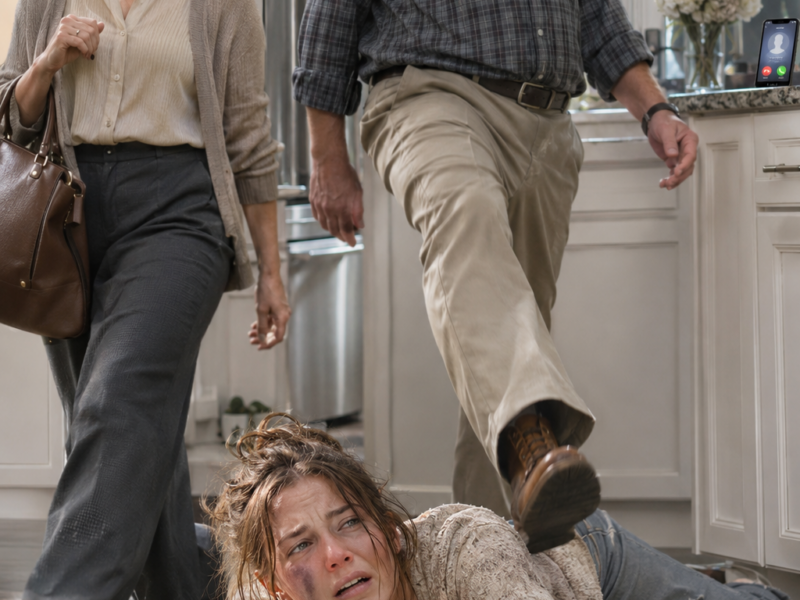
It happened during Labor Day dinner. My parents and my sister, Tamsin, were at my house when a sudden, unbearable pain tore through my lower abdomen. Within minutes, I was lying on the kitchen floor, barely able to breathe or move.
I begged them to call an ambulance.
Instead, my mother, Charlotte, insisted I was exaggerating. Tamsin treated the entire situation like another one of my attention-seeking performances. My father stood there, watching, but did nothing to help.
Then they left.
I remember hearing the door close while I lay helplessly on the floor, wondering whether I would die before anyone returned.
What saved me wasn’t my family. It was my cat, Biscuit.
Biscuit’s frantic behavior attracted the attention of my neighbor, Nora. She knew something was wrong, used the spare key I had given her, and discovered me barely conscious. She immediately called an ambulance.
At Three Rivers Memorial Hospital, doctors rushed me into emergency surgery. I had suffered ovarian torsion, a ruptured hemorrhagic cyst, and dangerous internal bleeding.
I needed two blood transfusions, and surgeons had to remove my right ovary.
When I finally woke up, I was devastated by what I had lost. But the most painful realization was that my parents and sister had watched me collapse and simply walked away.
I thought surviving that night would be the most shocking part of my story.
Then a nurse entered my hospital room, looked at my name, and asked a question that made my blood run cold.
“Were you treated here when you were sixteen?”
I had no idea that the answer would expose something my family had hidden from me for sixteen years.
PART 2: THE NURSE WHO REMEMBERED WHAT MY MOTHER DID 16 YEARS AGO
The nurse’s name was Ingrid Lindquist.
When she recognized me, she explained that she had been working at the same hospital on October 19, 2010.
I was only sixteen then.
I vaguely remembered suffering terrible abdominal pain as a teenager. My mother had taken me to the emergency room, but we had gone home without completing the examination. For years, I believed the pain had been nothing serious.
Ingrid remembered something very different.
According to her, the medical staff had been concerned that I might have ovarian torsion. They wanted an ultrasound and further evaluation because delaying treatment could permanently damage an ovary.
But my mother refused to wait.
Despite being warned about the potential consequences, she signed the paperwork and took me home before the doctors could finish investigating.
I was stunned.
Ingrid helped me understand how to obtain my old medical records. When I finally read them, I discovered that her memories were accurate.
The warnings had been documented.
My mother had been informed that I could lose an ovary if the condition wasn’t treated.
Even worse, my father had spoken to the nurse about the risks before driving us home.
For sixteen years, my parents had allowed me to believe that my teenage medical emergency was insignificant. Whenever I complained about pain afterward, my mother treated me as though I were weak or desperate for attention.
Now I was lying in a hospital bed after losing my right ovary, reading proof that my parents had once ignored a warning about the very same danger.
And while I was recovering from emergency surgery, my family remained silent.
Nine days passed before my mother finally called.
She didn’t ask whether I was recovering or whether I needed help.
Instead, she wanted to know when I would be available to help with the flower arrangements for the Thornberry wedding.
I was still recovering from major surgery, yet all she cared about was getting free labor.
That was when Ingrid took the phone.
She identified herself as the nurse my mother had walked away from sixteen years earlier.
For the first time, my mother was confronted by someone who remembered exactly what had happened.
But I wasn’t finished.
I had the medical records, I knew what my parents had concealed, and I was finally ready to confront them face-to-face.
PART 3: I EXPOSED THE TRUTH AT FAMILY DINNER—THEN MY SISTER REVEALED ANOTHER SECRET
I had spent my entire life being told that I was too sensitive, too dramatic, and too demanding.
Whenever something went wrong, my mother found a way to make me feel responsible.
But after nearly dying on my kitchen floor, I could no longer pretend our family was normal.
I gathered my medical records, including the documents from October 2010, and prepared to confront my parents.
At a family dinner, I finally told them everything.
I reminded them that I had begged for help during Labor Day dinner and that they had abandoned me. I explained the emergency surgery, the blood transfusions, and the loss of my ovary.
Then I brought out the old hospital records.
My mother tried to dismiss the situation, but the documentation made it impossible to pretend the warnings had never existed.
I confronted my father, too.
He had known about the medical risks when I was sixteen. He had heard the nurse’s concerns. Yet he had still driven me home and spent the next sixteen years allowing my mother to dismiss my pain.
Eventually, my father admitted his role in what happened.
My aunt Maureen supported me, refusing to let my mother turn the confrontation into another accusation against me.
But my mother still wouldn’t give me the apology I had waited so long to hear.
Then Tamsin revealed something I hadn’t expected.
In February 2024, she had experienced an ovarian cyst herself.
She had been frightened, but instead of telling our parents, she had kept it secret.
Why?
Because she had watched our mother ridicule me for my pain for years, and she was terrified of being treated the same way.
That revelation changed the entire atmosphere.
Tamsin, the sister who had mocked me while I lay helpless on the kitchen floor, had secretly feared the very same judgment.
I realized that my mother’s cruelty hadn’t only affected me. It had taught both of her daughters that admitting pain could make them targets.
My father’s confession and Tamsin’s revelation exposed just how deeply our family’s behavior had damaged us.
But my mother continued resisting responsibility.
And I faced a choice I had avoided my entire life.
Would I keep sacrificing my dignity to preserve a family that had nearly cost me my life—or finally walk away from the role they had forced me to play?
PART 4: AFTER 16 YEARS OF BEING CALLED DRAMATIC, I FINALLY STOPPED APOLOGIZING
For most of my life, I believed that if I explained myself clearly enough, my mother would eventually understand.
I thought that if I worked harder, complained less, and became the daughter she wanted, she might finally treat me with kindness.
But nearly dying taught me something I should have learned years earlier.
I couldn’t force my mother to care.
Even after seeing the medical evidence, hearing what happened during my emergency surgery, and learning how deeply her behavior had affected both daughters, she still refused to take full responsibility.
For once, I stopped chasing an apology.
I began setting boundaries instead.
I refused to keep giving my family unlimited access to my time, energy, and emotions. I stopped accepting the idea that being someone’s daughter meant enduring whatever treatment they chose to give me.
My relationship with my father also began changing.
For months, I had been asking him to repair the flickering light in my kitchen. It was a small problem he had repeatedly ignored.
After everything that happened, he finally fixed it.
The repair couldn’t undo sixteen years of silence or erase the memory of him leaving me on the floor.
But it was a small sign that he was beginning to understand that showing up mattered more than making excuses.
Meanwhile, I focused on rebuilding my own life.
I returned to my job at the library, where I found a sense of purpose that had nothing to do with earning my family’s approval.
My manager, Vivian, supported my ambitions and offered to recommend me for graduate school.
With $6,200 in savings, I began pursuing a degree in library science.
For the first time, my future wasn’t centered on what my mother expected from me.
It was centered on what I wanted for myself.
My relationship with Tamsin remained complicated. Her confession helped me understand why she had hidden her own medical problems, but it didn’t erase the fact that she had abandoned me when I needed help most.
And my mother?
She never became the loving, apologetic parent I had spent decades hoping she would be.
I had to accept that.
The most important change wasn’t that my family finally understood what they had done.
It was that I no longer needed their permission to recognize how badly they had hurt me.
I survived the night they left me dying. I survived the surgery, the betrayal, and the discovery that my parents had concealed a medical warning for sixteen years.
And somewhere along the way, I stopped believing that my pain was something I needed to apologize for.
My family had spent sixteen years convincing me that I was the problem. But after everything I uncovered, I finally understood the truth: I had never been wrong for asking them to care whether I lived or died.