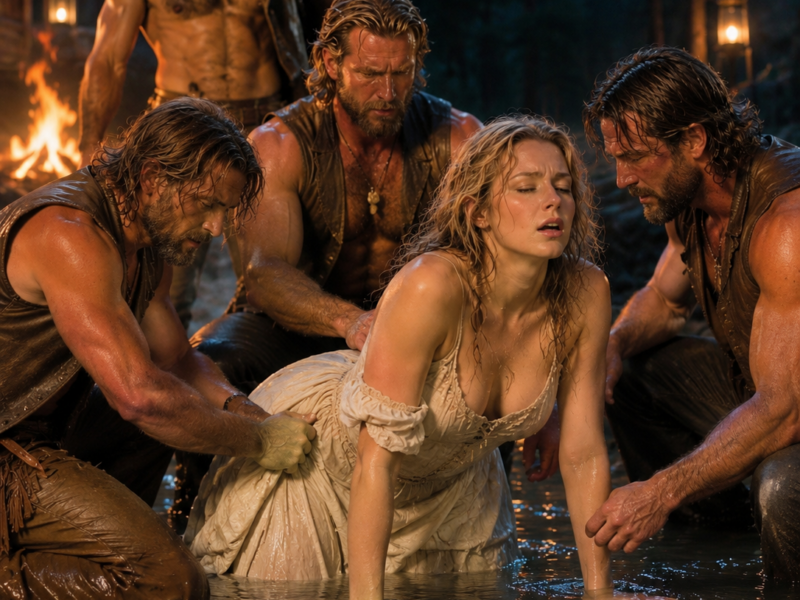
I Arrived in Montana at 26 With Just $43, My Father’s Mysterious Trunk, and a Marriage Contract With a Cold-Hearted Rancher Who Warned Me, “No Romance, No Touching.” But After I Nearly Drowned Saving His Horses, He Held Me Like He Couldn’t Bear to Lose Me—Only to Throw Me Out Days Later When a Mining Company Accused Me of Betrayal. I Walked Alone Into the Freezing Wilderness, Heartbroken, Until Two of His Men Found Me With a Letter Hidden Inside My Father’s Trunk… and What It Revealed Changed Everything.
I Arrived in Montana at 26 With Just $43, My Father’s Mysterious Trunk, and a Marriage Contract With a Cold-Hearted Rancher Who Warned Me, “No Romance, No Touching.” But After I Nearly Drowned Saving His Horses, He Held Me Like He Couldn’t Bear to Lose Me—Only to Throw Me Out Days Later When a Mining Company Accused Me of Betrayal. I Walked Alone Into the Freezing Wilderness, Heartbroken, Until Two of His Men Found Me With a Letter Hidden Inside My Father’s Trunk… and What It Revealed Changed Everything.
PART 1
The night Maeve Hollister nearly drowned beneath a burning barn, four hardened mountain men discovered something more terrifying than gunfire, blizzards, or death itself.
They discovered what it felt like to lose a woman they had never intended to love.
Gideon Blackwood was the first to reach her. He plunged into freezing water without hesitation, dragged her from the darkness, and collapsed onto the snow with her trembling body pressed against his chest.
“Dear God, she’s soaked through!” he shouted, his voice breaking. “Jasper, get the fire ready! NOW!”
Jasper Mercer, a giant of a man who had faced danger without blinking, stood frozen for one terrible second. Thorn reached for Maeve’s wrist, searching desperately for a pulse. Rett Montgomery tore off his coat and wrapped it around her.
None of them noticed that the barn was still burning.
None of them cared.
Because the woman lying motionless in Gideon’s arms had somehow become the center of their entire world.
And only a few weeks earlier, she had arrived in Montana with forty-three dollars, a battered trunk, and a marriage contract that specifically forbade love.
Her story began on a bitter November afternoon in 1872.
The train whistle screamed across the frozen landscape as Maeve pressed her hand against the window and stared at the frontier town beyond the glass.
Black Moccasin, Montana.
She had imagined majestic mountains, golden sunlight, and the promise of a new beginning. Instead, she saw crooked wooden buildings, muddy streets, and sleet falling from a colorless sky.
When she stepped onto the platform, her boot sank ankle-deep into the mud.
Her mother’s white wedding dress, altered twice to fit her smaller frame, immediately became stained along the hem.
Maeve looked down, sighed, and continued walking.
She had already survived worse than ruined clothing.
At twenty-six, she had buried both parents, discovered debts that threatened everything her father had worked for, and accepted an arrangement that respectable Boston society would have considered scandalous.
She was traveling west to marry a stranger.
His name was Gideon Blackwood.
According to the contract, he owned Timber Ridge Ranch and needed an educated woman to manage the accounts and teach the children of nearby settlers. In exchange, he would provide financial protection and help secure the property connected to her father’s estate.
It was a practical arrangement.
Nothing more.
At least, that was what Maeve kept telling herself.
“Miss Hollister?”
The voice came from behind her.
She turned.
The man standing before her was enormous, broad-shouldered, and dressed entirely in dark clothing. His pale gray eyes studied her with an intensity that made her straighten instinctively.
An old scar disappeared beneath his collar.
His expression suggested that smiling was an activity he had abandoned years ago.
“Mr. Blackwood?”
He nodded once.
“Your luggage?”
“One trunk.”
“That’s all?”
“Everything worth bringing.”
Something flickered in his eyes, but he said nothing.
Three other men stood beside the wagon.
The largest was Jasper Mercer, a blacksmith with powerful arms and unexpectedly gentle eyes.
The quietest was Thorn, a lean, weathered tracker whose left leg dragged slightly when he walked.
The youngest was Rett Montgomery, a sharp-minded former legal clerk whose polite smile could not completely conceal the calculations taking place behind his eyes.
Maeve had seen their names in the agreement.
What the contract had not prepared her for was the strange understanding between them.
They moved like men who had survived something terrible together.
Jasper lifted his hat.
“Welcome to Montana, ma’am.”
“Thank you.”
Rett stepped forward.
“Was the journey difficult?”
“Only the parts involving the train, the weather, and the passengers.”
His mouth twitched.
Jasper laughed softly.
Even Thorn appeared mildly amused.
Gideon simply collected her trunk.
The ride to Timber Ridge took nearly two hours.
Mountains rose against the horizon, their peaks buried beneath snow. Pine forests stretched across the slopes, and the road twisted through land that seemed beautiful and unforgiving in equal measure.
Maeve watched everything.
Her father had taught school in Boston for thirty years. He believed observation was the beginning of understanding.
“Look carefully,” he used to tell her. “The truth is usually visible to those patient enough to notice.”
She thought of him now.
Of his gentle voice.
Of his last months, when illness had gradually stolen his strength.
Of the debts she discovered after his death.
And of the mysterious survey maps hidden among his books.
She still did not understand why he had left them to her.
But she intended to find out.
“Mr. Blackwood,” she said eventually, “I would like to clarify our arrangement.”
Gideon kept his eyes on the road.
“The contract is clear.”
“Documents can be clear while people remain confusing.”
Rett coughed into his glove.
Gideon glanced at her.
“What do you want to know?”
“What kind of marriage are you expecting?”
His answer came immediately.
“A business partnership. You manage the accounts and teach the children. I provide security and financial support.”
“And personally?”
“There will be no romantic expectations.”
He paused.
“No touching. No affection. No obligations beyond the contract.”
Maeve considered him carefully.
“Excellent. Then you won’t object to my condition.”
That made him turn.
“Condition?”
“I intend to establish a schoolhouse.”
“We discussed teaching.”
“Not merely teaching your workers’ children. I mean a proper schoolhouse, open to every child in this valley.”
Gideon’s expression hardened.
“Every child?”
“Poor children. Mining families. Homesteaders. Native children. Anyone who wishes to learn.”
The wagon fell silent.
Maeve continued.
“My father taught me that education is not a privilege reserved for those who can afford it. That is something I refuse to compromise.”
For a long moment, Gideon studied her.
Then he faced forward.
“Fine.”
One word.
But Maeve recognized reluctant respect when she heard it.
Timber Ridge Ranch appeared at dusk.
Its stone foundation and heavy timber walls gave it the appearance of a fortress. The barn stood beyond the main house, with a forge nearby and dark pine woods surrounding everything.
Inside, the atmosphere was equally severe.
There were sturdy chairs, practical furniture, a large fireplace, and very little decoration.
Gideon showed Maeve to a clean bedroom.
“Breakfast is at five-thirty,” he said.
“Then I shall be ready at five.”
He nodded and left.
That night, Maeve discovered that Timber Ridge was full of ghosts.
Just after midnight, she heard a strangled cry from another bedroom.
She followed the sound and stopped outside Thorn’s door.
There was another muffled shout, followed by silence.
A nightmare.
She did not enter.
Instead, she brought a cup of water and left it outside his door.
Later, looking through her window, she noticed Jasper sitting alone beside the forge.
His head was bowed.
His massive shoulders trembled.
He was grieving something she could not yet understand.
By morning, Maeve had discovered another mystery.
On a shelf near the fireplace, she found a child’s reading primer.
Inside its cover, someone had carefully written:
Clara. Age six.
Nearby stood a locked room. Through a narrow gap beneath the door, she glimpsed a small rocking horse and the corner of a faded quilt.
She did not touch the lock.
But she remembered.
Then she found Gideon’s ledger.
Instead of ordinary ranch expenses, several pages contained names of struggling families, their outstanding debts, and records of payments made anonymously.
Gideon Blackwood had quietly saved several neighbors from losing their homes.
The cold, intimidating rancher was secretly paying other people’s mortgages.
Maeve closed the book before anyone entered.
She was beginning to suspect that all four men were hiding broken hearts beneath their formidable appearances.
Over the following days, she learned their habits.
Gideon worked relentlessly, speaking only when necessary.
Jasper repaired anything damaged before anyone could ask.
Thorn silently monitored the surrounding wilderness.
Rett spent evenings studying property records and territorial law.
They were different men, bound together by loyalty and memories they seldom discussed.
And slowly, they began making room for her.
Jasper built benches for her classroom.
Thorn repaired the storage building’s door and installed a secure latch.
Rett obtained a writing board.
Even Gideon arranged for firewood to be delivered every morning.
None of them asked for thanks.
On the first Tuesday, Maeve opened her schoolhouse.
Seven children arrived.
Among them was a nine-year-old Native boy named Kaya, who entered cautiously and sat apart from the others.
Maeve smiled.
“You’re welcome here, Kaya. Choose whichever seat you like.”
He did not smile back.
But he stayed.
Forty minutes later, the door burst open.
A red-faced rancher named Dale Cutter stormed inside.
His eyes immediately found Kaya.
“What the devil is that boy doing here?”
Maeve rose calmly.
“This is a classroom, Mr. Cutter. Please watch your language.”
“You’re the new Blackwood woman?”
“My name is Maeve Hollister.”
“I don’t care what your name is. That boy doesn’t belong in a classroom with white children.”
The room went silent.
Maeve stepped between Cutter and the students.
“Every child who enters this school will be treated with dignity.”
Cutter laughed harshly.
“That’s not how things work around here.”
“Then perhaps things need to change.”
His face darkened.
“You’re making enemies, woman.”
“No,” Maeve replied. “I’m teaching children. You seem determined to make those two things incompatible.”
He stepped closer.
She did not move.
“Understand something, Mr. Cutter. A person’s worth is not determined by their ancestry, their wealth, or the circumstances of their birth. Every child in this room deserves an education.”
“You’ll regret speaking to me like that.”
“Perhaps. But I would regret allowing you to frighten my students far more.”
For several seconds, neither moved.
Then Cutter turned and stormed outside.
Maeve waited until his horse disappeared before returning to the blackboard.
“Now,” she said, picking up her chalk, “who remembers how to divide twelve by three?”
The children laughed nervously.
Kaya looked at her differently now.
For the first time, he smiled.
What Maeve never knew was that all four men had overheard the confrontation.
Jasper had nearly bent an iron bar in his fist.
Thorn had watched from the trees with one hand resting on his rifle.
Rett was already considering which laws might protect the school.
And Gideon stood outside the building long after Cutter had gone.
He had spent years believing strength meant the ability to overpower an enemy.
Yet a woman half his size had just defeated a dangerous man without raising her voice.
Something about that unsettled him.
More unsettling still was the realization that he had begun looking forward to hearing her voice every morning.
That evening, Rett warned her.
“Cutter won’t forget what happened.”
“I know.”
“He has powerful connections. Particularly with the Ironclad Mining Syndicate.”
Maeve looked up.
“Ironclad?”
“Yes. They want control of this valley’s water rights.”
The name disturbed her.
She had seen it written in one of her father’s journals.
Rett noticed her expression.
“What is it?”
“Nothing I’m certain of yet.”
Outside, thunder rolled across the mountains.
The temperature was falling.
A storm was approaching Timber Ridge.
And somewhere beyond the eastern ridge, men employed by Ironclad were preparing to make certain that Maeve Hollister never uncovered the secret her father had carried to his grave.
PART 2
The blizzard struck after sunset.
Wind battered Timber Ridge so violently that the walls shuddered. Snow erased the road, buried the fences, and swallowed the distant mountains.
Then Rett discovered fresh tracks near the eastern boundary.
Someone had entered the property.
While the four men searched the perimeter, Maeve noticed an orange glow beside the barn.
Fire.
She grabbed her coat and ran into the storm.
Inside, flames raced across the hayloft. Terrified horses kicked against their stalls.
Maeve freed four animals before hearing Jasper’s pregnant mare screaming near the rear.
She reached the frightened horse and guided her toward an old storm cellar beneath the building.
Then the roof collapsed.
Burning timber crashed down, blocking the cellar entrance.
Freezing meltwater began pouring through the debris.
Within minutes, it reached Maeve’s knees.
She pushed against the hatch.
Nothing moved.
She screamed.
The storm swallowed her voice.
As the water climbed toward her waist, she thought about her father’s books, Kaya’s hopeful smile, and the four lonely men who had quietly begun to feel like family.
Then the hatch burst open.
Gideon jumped into the freezing water.
“MAEVE!”
He caught her before she collapsed.
Above them, Jasper, Thorn, and Rett pulled together.
When they finally lifted her into the snow, Gideon felt how dangerously cold her body had become.
“She’s soaked through! Get her inside!”
He had faced death before.
But never had he been so frightened of surviving without someone.
PART 3
By the time Gideon carried Maeve into the ranch house, her lips had turned pale, her eyelashes were coated with ice, and her trembling had become frighteningly weak.
Jasper threw open the fireplace grate and fed the flames until the room blazed with heat. Thorn hurried through the bedrooms, gathering blankets. Rett prepared warm drinks while speaking in a calm, continuous voice, as though keeping the air filled with words might somehow prevent Maeve from slipping away.
Gideon remained beside her.
He had removed his gloves, but his hands were still shaking.
Maeve opened her eyes and found him staring down at her with an expression she had never seen before.
Not anger.
Not suspicion.
Fear.
“Mr. Blackwood,” she whispered.
“Don’t speak.”
“I need to tell you—”
“You need to get warm.”
“The mare…”
“Jasper will find her.”
“She’s in the cellar.”
“We know.”
Maeve tried to smile.
“Then I suppose everything is under control.”
Gideon closed his eyes.
For one terrible moment, he looked almost defeated.
“Nothing was under control when I thought you were dead.”
The admission startled everyone.
Even Gideon seemed surprised that he had said it.
Hours later, after Maeve had recovered enough to sit comfortably near the fire, Jasper returned with news that the pregnant mare had been rescued unharmed.
Maeve thanked him.
The enormous blacksmith merely nodded, then walked outside again.
She would later learn that he had spent half an hour sitting beside the mare, crying quietly where nobody could see him.
That night, Maeve finally understood something important about the men of Timber Ridge.
They were not incapable of love.
They were terrified of it.
Three days later, Gideon announced that he and Rett would be traveling to Black Moccasin for a hearing about the valley’s water rights.
The Ironclad Syndicate had petitioned the county land office, claiming that the principal river and its tributaries legally belonged to the mining company.
If successful, Ironclad could demand payment from every rancher and homesteader who depended on that water.
Families would lose their farms.
Livestock would die.
The valley would become economically dependent on one ruthless corporation.
Maeve immediately reached for her father’s trunk.
“I may have something that can help.”
Rett leaned forward.
“The survey journals?”
“Yes.”
For several evenings, they had been examining the strange maps Robert Hollister had left behind.
The handwritten notations were intricate, recording elevations, river sources, drainage routes, and old property markers.
At first, Maeve assumed they represented an unfinished academic project.
Then Rett discovered discrepancies between her father’s maps and the newer surveys submitted by Ironclad.
Whole sections of the river had apparently changed ownership without any corresponding change in the land.
Several original boundary markers had been removed from official records.
And some of Ironclad’s claimed filing dates preceded the company’s arrival in Montana.
“These documents are impossible,” Rett said one evening.
Maeve frowned.
“My father’s?”
“No. Ironclad’s. Your father recorded what actually existed. Their survey describes boundaries that couldn’t have existed at the dates they claim.”
She looked down at the papers.
“Then someone altered the records.”
Rett met her eyes.
“Someone committed fraud.”
The possibility transformed everything.
Her father had traveled west during the final years of his life, supposedly conducting survey work for an eastern land company.
He had never told Maeve precisely where he had gone.
Now his maps suggested he had spent months investigating Ironclad.
But why conceal it?
Why hide the documents beneath a false bottom in her trunk?
And why had his debts appeared so suddenly before his death?
Maeve could not shake the feeling that the answers were connected.
At the land office, the Ironclad representatives arrived wearing expensive coats and expressions of absolute confidence.
Their attorney, a polished man named Mr. Bellamy, introduced the company’s claims with elaborate legal arguments.
Rett listened carefully.
Then he began exposing the inconsistencies.
He compared filing dates.
He challenged signatures.
He questioned the origin of several documents.
For nearly an hour, the proceedings appeared to be turning in Timber Ridge’s favor.
Then Bellamy opened a leather folder.
“There is another matter the court should consider.”
He withdrew two sworn statements.
“We have evidence that Miss Maeve Hollister was employed by Ironclad Mining six months before her arrival in Montana.”
Silence spread across the room.
Maeve stared at him.
“That is a lie.”
Bellamy continued smoothly.
“According to these witnesses, Miss Hollister was sent to Timber Ridge under the false pretense of marriage, specifically to recover confidential survey documents belonging to our company.”
Rett rose.
“These statements are fraudulent.”
“Then prove it.”
Bellamy placed the papers on the clerk’s desk.
“We request immediate seizure of the documents in her possession.”
Maeve turned toward Gideon.
She expected anger at the accusation.
Instead, she saw something far worse.
Doubt.
It entered his expression slowly, like darkness spreading through water.
She recognized the moment his mind began connecting the accusation with the strange maps, her sudden arrival, and the fire at his barn.
“Gideon,” she whispered.
He did not answer.
“Look at me.”
He did.
“I have never worked for Ironclad.”
He studied her face.
For a heartbeat, she believed he would trust her.
Then he looked away.
Before she could say another word, a rider arrived outside the building.
He was covered in snow and mud, and his horse was nearly exhausted.
The message he brought shattered the room’s fragile calm.
Thorn had been ambushed along the eastern perimeter.
He had been shot.
Jasper had brought him back to the ranch, but his condition was uncertain.
Gideon’s face became unreadable.
Within minutes, he had loaded Maeve’s trunk into the wagon and ordered everyone to return home.
The journey was silent.
Maeve sat beside Rett, watching Gideon’s rigid shoulders.
She understood the accusation had been timed deliberately.
Ironclad wanted to turn Gideon against her.
And the attack on Thorn had made that cruelty terribly effective.
When they reached Timber Ridge, Thorn was alive but pale from blood loss.
Jasper sat beside his bed, pressing clean cloth against the wound.
Maeve approached.
Thorn looked up at her.
He gave his familiar, quiet nod.
It nearly broke her heart.
She helped prepare fresh bandages, then returned to the main room.
Gideon was waiting.
“Maeve.”
Something in his voice warned her.
“You need to leave.”
For several seconds, she thought she had misunderstood.
“What?”
“You can’t stay here.”
Rett stepped forward.
“Gideon, don’t do this.”
“Stay out of it.”
Maeve stared at the man who had carried her out of freezing water only days earlier.
“The accusations are false.”
“Then you should have no difficulty proving that.”
She felt as if the floor had disappeared beneath her.
“You believe them?”
“I don’t know what to believe.”
“Then believe what you’ve seen with your own eyes.”
His jaw tightened.
“Thorn could have died.”
“And you think I arranged that?”
Gideon remained silent.
His silence answered her.
Something inside Maeve became terribly still.
“Very well.”
She walked to her bedroom, gathered a few clothes, her mother’s photograph, and a small notebook.
When she returned, Gideon stood beside her father’s trunk.
“That stays,” he said.
Maeve looked at it.
Her father’s books.
His life’s work.
The evidence he had trusted her to protect.
“You have no right.”
“If those maps are involved in this dispute, they remain here until everything is settled.”
Rett looked furious.
But Maeve raised her hand.
“No. Let him.”
She picked up her bag.
At the doorway, she stopped.
“Gideon, you once told me that this ranch was built on loyalty.”
He said nothing.
“Loyalty means very little when it disappears the moment someone tells a convincing lie.”
His expression changed.
But she continued.
“I will prove my innocence. Not because I need your permission to be an honest woman, but because my father’s name deserves better than this.”
Then she stepped outside.
No one stopped her.
The door closed.
And Maeve Hollister walked alone into the frozen Montana wilderness.
She did not know where she would sleep.
She did not know whether Ironclad’s men were watching.
She only knew that turning back would mean surrendering the dignity her father had spent a lifetime teaching her to defend.
Three miles northeast of Timber Ridge stood an abandoned trapper’s cabin.
Maeve remembered seeing it marked on one of her father’s maps.
She followed the old trail until the building emerged between snow-covered pines.
Its stone walls were intact.
The roof appeared sound.
Inside, she found a rusted stove, some dry firewood, and a tin of matches.
She lit a fire.
Then she sat on the floor and finally allowed herself to cry.
Not delicate tears.
Not silent, beautiful grief.
She cried until her chest hurt and her breathing became uneven.
She cried for Thorn, lying wounded because someone wanted to steal a valley.
She cried for the father whose final secrets had brought danger into her life.
And she cried because Gideon Blackwood had looked into her eyes and chosen fear instead of faith.
After several minutes, she wiped her face.
Her father’s voice returned to her memory.
Feel what you must, Maeve. Then stand up and decide what comes next.
So she stood.
She opened her notebook.
And she began reconstructing the maps from memory.
For hours, she copied the river measurements, boundary descriptions, and dates she remembered from her father’s journals.
Slowly, a pattern emerged.
Ironclad had not merely altered a few property records.
The company had built an entire network of fraudulent claims designed to seize control of the valley’s water.
Her father had discovered it.
He had been gathering proof.
And the documents hidden in her trunk were not random survey notes.
They were the foundation of a criminal case.
As dawn approached, Maeve made a connection that sent a chill through her.
Her father’s sudden illness had begun shortly after his final journey west.
He had returned frightened, exhausted, and strangely unwilling to discuss his work.
She had always believed the strain of travel had weakened him.
Now she wondered whether someone had deliberately harmed him.
She had no proof.
But she knew one thing.
Ironclad had been willing to burn a barn, shoot Thorn, and destroy her reputation.
What might they have done to a schoolteacher who had uncovered their fraud?
At sunrise, horses approached the cabin.
Maeve grabbed the iron poker beside the stove.
Then she recognized the riders.
Rett.
And Jasper.
She opened the door.
Rett dismounted so quickly that he nearly slipped on the frozen ground.
“Maeve!”
“Is Thorn alive?”
“Yes. His fever broke this morning.”
She exhaled shakily.
Jasper approached.
For a moment, the big man seemed unable to speak.
Then he whispered, “We thought we’d lost you.”
Maeve looked between them.
“Why are you here?”
Rett withdrew a folded letter.
“Because Gideon found something.”
The handwriting was unmistakable.
Her father’s.
Maeve unfolded the paper with trembling fingers.
At the top were five words.
To whoever discovers this letter.
What followed explained the forged deeds, the stolen water claims, and Ironclad’s campaign against unsuspecting settlers.
Robert Hollister had documented everything.
He had hidden copies of the evidence.
And he had left specific instructions.
My daughter knows nothing of these crimes. She has never worked for the people responsible. If she comes west carrying my papers, protect her. She is innocent, and she is the most honest person I have ever known.
Maeve pressed the letter against her chest.
For a moment, she could not speak.
“Where was it?”
“Inside the lining of your trunk,” Rett answered. “Gideon found it last night.”
Jasper looked down.
“He’s been sitting by the front door ever since.”
“Why?”
“Because he knows what he did.”
Maeve folded the letter carefully.
For the first time since leaving Timber Ridge, she felt the possibility of something other than grief.
Not forgiveness.
Not yet.
But justice.
“Then take me home,” she said.
“And bring my notes. We’re going to finish what my father started.”
PART 4
Gideon Blackwood was standing on the porch when the riders returned.
He looked as though he had aged ten years overnight.
His beard was unshaven, his coat hung open despite the cold, and the hard certainty that usually defined his face had disappeared.
When Maeve dismounted, he came down the steps.
Then he stopped.
For the first time since she had met him, Gideon seemed unable to decide what to do with his hands.
“Maeve.”
She waited.
“I was wrong.”
The words came quietly.
No excuses.
No attempt to blame Ironclad, the forged documents, or the attack on Thorn.
“I had no right to accuse you. And I had even less right to send you into the wilderness.”
Maeve looked at him for a long moment.
“Yes,” she said. “You were wrong.”
He accepted the words without protest.
“I don’t expect you to forgive me.”
“That’s fortunate, because I haven’t decided whether I can.”
Pain crossed his face.
She continued.
“Trust is not the absence of fear, Gideon. It’s the decision not to let fear make every judgment for you.”
He lowered his eyes.
“I know.”
“Do you?”
He looked up again.
And something about the broken honesty in his expression made her understand that he truly did.
“I spent years believing that the only way to protect people was to keep strangers away,” he said.
“What happened to you?”
The question surprised him.
Maeve had never asked directly before.
This time, he answered.
“Seven years ago, I trusted a business partner with information about our supply routes. He sold it to men who wanted this land.”
Gideon’s voice grew rough.
“They ambushed us. Several good men died. One was Jasper’s brother.”
Maeve went still.
“That’s why you never trust anyone.”
“That’s why I thought I couldn’t afford to.”
“And yesterday?”
“Yesterday I discovered that suspicion can destroy someone just as surely as betrayal.”
Neither spoke for several moments.
Then Maeve stepped past him.
“I’m going to check on Thorn.”
Gideon moved aside.
But as she reached the door, he spoke again.
“Maeve?”
She turned.
“I don’t know how to make this right.”
“Then start by helping us protect the valley.”
It was not absolution.
But it was a beginning.
Inside, Thorn was resting against several pillows.
His face brightened almost imperceptibly when Maeve entered.
“You came back,” he murmured.
“I said I would.”
He nodded.
“I knew.”
She pulled a chair beside his bed.
“Who attacked you?”
“Three men. Eastern ridge. One carried a rifle marked with Ironclad’s insignia.”
“Did they say anything?”
Thorn hesitated.
Then he reached beneath his pillow and produced a small piece of folded paper.
“One dropped this.”
Maeve opened it.
It contained several numbers, a rough drawing of the river, and a name.
Hollister.
Her father’s name.
Rett examined the paper that afternoon.
His expression became increasingly grim.
“These are survey coordinates.”
Maeve leaned closer.
“From my father’s maps?”
“Not exactly. They’re locations of records Ironclad tried to remove from the county archives.”
He spread several documents across the table.
“I’ve been checking their filings. The same names appear repeatedly, always connected to questionable transfers.”
“Who signed them?”
Rett pointed to the bottom of one page.
“Deputy Clerk Samuel Briggs.”
Maeve stared at the signature.
Briggs had been the nervous official at the land office.
The man who had looked terrified whenever Bellamy spoke.
“Do you think he’s involved?”
“I think he knows more than he’s admitted.”
Rett paused.
“And I think he’s afraid.”
The following morning, they traveled to Black Moccasin.
Rett entered the land office alone while Gideon and Maeve waited across the street.
Twenty minutes later, he emerged carrying a thick envelope.
Briggs had confessed.
He had not originated the fraudulent claims, but he had been pressured into processing them after Ironclad threatened to ruin his family.
More importantly, he had secretly retained copies of several original records.
Those copies confirmed Robert Hollister’s findings.
Rett held the envelope like a man carrying dynamite.
“This is enough to challenge their entire operation.”
Maeve looked toward the mountains.
“Then we should make certain the entire valley hears about it.”
Five days later, the town hall filled beyond capacity.
Ranchers arrived wearing worn coats and muddy boots.
Mining families crowded onto narrow benches.
Widows, laborers, and merchants gathered along the walls.
Several Native families from settlements north of the valley came to present their own historical evidence of occupation and water use.
For years, Ironclad had told each family that its troubles were isolated.
A missing deed.
An unexpected fee.
A poisoned well.
An impossible debt.
Now the people were beginning to understand that their suffering had a common source.
Maeve sat at the front beside Rett.
Her father’s maps were spread across the table.
Gideon, Jasper, and Thorn remained nearby.
Thorn still moved painfully, but he refused to stay home.
“Some things are worth attending,” he had said.
Rett began the hearing by presenting the original surveys.
He explained the river’s course, the historical boundary markers, and the dates recorded by Robert Hollister.
Then he presented Ironclad’s documents.
One by one, he demonstrated the alterations.
The room grew increasingly restless.
A farmer rose from the third row.
“Are you saying they never owned the water they charged us for?”
“That’s exactly what I’m saying,” Rett replied.
A miner shouted, “Then why have our children been drinking from that contaminated channel?”
Rett pointed to another map.
“Because Ironclad redirected waste into a tributary while claiming the main water source was legally under its control.”
Anger erupted.
Maeve stood.
“Please.”
The room quieted gradually.
“My father spent the final years of his life documenting these abuses. He believed evidence could accomplish what threats and violence never would.”
She looked across the crowd.
“He believed ordinary families deserved protection from those who treated land, water, and human lives as things to be purchased and discarded.”
Near the back, Cora Mills began crying softly.
Maeve recognized her from Gideon’s ledger.
“My father died before he could bring this information before you,” Maeve continued. “But his work survived. And today, every person in this valley deserves to understand what he found.”
She unfolded his letter.
Then she read.
When she finished, the hall was silent.
Several people lowered their heads.
Gideon watched her with an expression of profound regret and admiration.
He had once believed her presence threatened everything he had built.
Now he understood she was fighting for the very things he had been unable to protect alone.
The Ironclad representatives arrived late.
Bellamy entered confidently, accompanied by three armed men.
He listened to Rett’s presentation with thinly concealed irritation.
Then he demanded permission to speak.
“These allegations are reckless,” he declared. “The documents presented here are incomplete and unreliable.”
Rett calmly raised one of the original deeds.
“Then perhaps you’d care to explain why your client’s filing contains a signature dated eleven years before the company was incorporated?”
Bellamy’s face changed.
“And why,” Rett continued, “does this record bear the name of a witness who had already been dead for four years?”
A murmur swept through the crowd.
Bellamy looked toward his armed companions.
Maeve saw it.
So did Thorn.
The largest of the hired men rose.
“This hearing is over.”
He reached for his revolver.
What happened next lasted only seconds.
Gideon moved first, seizing the man’s wrist before the weapon cleared its holster.
Jasper stepped between the second gunman and the crowd.
Thorn, despite his wound, intercepted the third.
A chair overturned.
Someone screamed.
Then it was finished.
Three revolvers lay on the floor.
Three hired gunmen stood disarmed.
Not a shot had been fired.
Rett turned toward Briggs.
“Please record that Ironclad’s representatives attempted armed intimidation during a public legal proceeding.”
Briggs hesitated.
Bellamy glared at him.
Then the clerk straightened.
For once, he did not look away.
He began writing.
The hearing continued.
By midday, Ironclad’s immediate water claim had been rejected, and the disputed documents were formally referred to territorial authorities for criminal investigation.
The company would still have opportunities to contest the evidence elsewhere.
But its grip on the valley had been broken.
Outside the town hall, people gathered in small groups, talking with the excited disbelief of those who had expected defeat and discovered they were not powerless.
Cora Mills approached Maeve.
“Your father came to my house once,” she said.
Maeve turned.
“He did?”
“Stayed nearly an afternoon. Asked about the creek, about my husband’s old land papers. I thought he was just a curious teacher.”
She smiled sadly.
“I didn’t know he was trying to save us.”
Maeve’s throat tightened.
“He never told me.”
“Sometimes good people do their greatest work quietly.”
Cora took her hand.
“He would be proud of you.”
After the widow departed, Gideon appeared beside Maeve.
For a while, they watched the crowd without speaking.
Then he said, “You were right.”
“About what?”
“Strength.”
She looked at him.
“I always thought strength meant being willing to fight.”
“And now?”
“Now I think it also means being willing to trust someone who’s earned it.”
Maeve considered him.
“That’s a difficult lesson.”
He almost smiled.
“I’ve never been an easy student.”
“Fortunately, I’m a very patient teacher.”
He laughed.
It was a low, surprised sound.
And it was the first time Maeve had ever heard him laugh without restraint.
They rode home beneath a clear winter sky.
For the first time, Timber Ridge did not feel like a fortress built to keep the world away.
It felt like a place preparing to welcome life back inside.
Over the next several weeks, changes appeared everywhere.
The schoolhouse filled with children.
Families who had once feared sending their sons and daughters began arriving from distant homesteads.
Kaya no longer sat alone.
He became one of Maeve’s most enthusiastic students, especially when lessons involved maps and geography.
Thorn started visiting the classroom twice a week.
At first, he sat silently in the back.
Then one afternoon, a student asked why mountain streams sometimes disappeared underground.
Thorn explained the answer so precisely that Maeve invited him to teach another lesson.
He reluctantly agreed.
The children adored him.
And slowly, the nightmares that had once haunted his sleep became less frequent.
Rett continued preparing the criminal case against Ironclad, corresponding with other communities that had suffered similar exploitation.
But he also developed a habit of sitting beside Maeve in the evenings while she graded schoolwork.
Sometimes they discussed legal arguments.
Sometimes books.
Sometimes they simply shared the silence.
Jasper spent much of his time rebuilding furniture for the schoolhouse.
One afternoon, Maeve found him carving a small wooden horse.
“For Kaya,” he explained.
She smiled.
“He’ll treasure it.”
Jasper looked down at the carving.
“My daughter loved horses.”
Maeve became still.
“Clara?”
His hands stopped moving.
“You know her name?”
“I saw it in a primer.”
Jasper nodded slowly.
“She was six.”
Maeve waited.
“Fever took her. My wife died the following winter.”
He stared at the tiny wooden horse.
“I thought I’d never make something for a child again.”
Maeve reached across the workbench and gently covered his hand.
“You don’t have to stop loving Clara to care about another child.”
His eyes filled.
For a long time, neither spoke.
Then Jasper continued carving.
And Maeve understood that healing did not always mean forgetting.
Sometimes it meant discovering that a broken heart still had room for something beautiful.
Meanwhile, Gideon rebuilt the barn.
He worked through snow, freezing rain, and the first muddy days of spring.
Maeve brought him water, helped organize supplies, and occasionally challenged his stubborn refusal to rest.
He had begun smiling more often.
And one evening, standing among the freshly completed stalls, he finally asked the question she had sensed approaching for weeks.
“Maeve, when all this is settled, will you stay?”
She looked around the barn.
At the place where fire had nearly killed her.
At the man who had saved her.
At everything they had lost and regained.
“I haven’t decided,” she answered.
Gideon nodded.
“I understand.”
She took a step closer.
“But I think you should know something.”
“What?”
“The decision is becoming easier.”
For the first time, Gideon allowed himself to reach for her hand.
He stopped halfway.
Waiting.
Maeve looked at his outstretched fingers.
Then she placed her hand in his.
And neither of them wanted to let go.
PART 5
Spring came suddenly to Montana.
One morning, the valley was still gray with melting snow. A week later, wildflowers spread across the hillsides, the creek ran clear, and the forests seemed to awaken from a winter that had lasted forever.
At Timber Ridge, the transformation was even more remarkable.
The new schoolhouse stood proudly beside the ranch, its freshly finished timber walls glowing beneath the morning sunlight.
It had four large windows, sturdy benches, shelves full of books, and a proper iron stove.
For Maeve, it was everything she had hoped to build.
But the building itself was only part of the miracle.
The greater miracle was the community that had raised it.
The Henderson family contributed lumber.
The Pruitts brought tools and food.
Several mining families helped construct the roof.
Craftsmen from the northern Native community built reinforced joints strong enough to withstand Montana’s fiercest winters.
Even Cora Mills insisted on sewing curtains for the windows.
On the day the schoolhouse opened, Maeve stood at the doorway and watched twenty-three children file inside.
Some were nervous.
Some were excited.
Several had never held a proper book.
Kaya arrived carrying the little cedar horse Jasper had carved for him.
He approached Maeve proudly.
“Miss Hollister, I taught my grandmother to write her name.”
Maeve knelt beside him.
“Did you?”
He nodded enthusiastically.
“She said she wants to learn the rest of the alphabet too.”
Maeve felt tears threaten.
“Then perhaps we should begin evening lessons for adults.”
Kaya grinned.
“I told her you’d say that.”
From the doorway, Jasper watched the exchange.
His enormous hands rested against the frame.
For a moment, Maeve saw the shadow of his grief.
Then Kaya ran toward him.
“Mr. Jasper! Look what I wrote!”
The boy held up a piece of paper.
Jasper bent down to examine it.
And when he smiled, it was the smile of a man who had finally discovered that his future did not have to remain buried with his past.
Later that afternoon, Maeve found Thorn standing outside the classroom.
He was studying a hand-drawn map one of the older students had made.
“That’s an excellent piece of work,” she told him.
“The north ridge is misplaced.”
“Then perhaps you should explain why.”
He frowned.
“I’m not a teacher.”
“You already are.”
His expression became thoughtful.
“I’ve spent most of my life learning how to find danger before it finds me.”
“And now?”
He looked through the window at the children.
“Now I suppose I could teach someone how to find their way home.”
Maeve smiled.
“That sounds like a wonderful lesson.”
Thorn returned the following Tuesday.
And the next.
Eventually, he began teaching the children about terrain, weather patterns, navigation, and the plants growing in the valley.
He rarely spoke about his own experiences.
But Maeve gradually learned that he had served as a scout during violent frontier conflicts, witnessing suffering that had never truly left him.
He carried memories of people he had been unable to save.
The nightmares had begun there.
One evening, after a particularly difficult night, she found him standing near the creek.
“You don’t have to tell me what happened,” she said.
He kept his eyes on the water.
“Sometimes I think I should have done more.”
“Perhaps you did everything you could.”
“Sometimes that isn’t enough.”
Maeve stood beside him.
“No. Sometimes it isn’t.”
He looked at her, surprised by the answer.
She continued.
“But the people you couldn’t save aren’t honored by your refusal to live.”
For a long while, Thorn said nothing.
Then he nodded.
It was his familiar single nod.
Only this time, Maeve understood how much it meant.
Rett’s transformation was quieter.
He continued corresponding with legal authorities about Ironclad’s fraudulent deeds.
Additional communities joined the complaint, and the territorial marshal began investigating company officials connected to the stolen water rights.
The process would take time.
No single hearing could repair years of corruption.
But families were finally recovering control of their land, and the poisoned waterways were receiving proper attention.
One evening, Rett spread several letters across the kitchen table.
“Three more settlements have agreed to testify,” he announced.
Maeve looked up from a stack of student exercises.
“That’s wonderful.”
“Wonderful?”
“Certainly.”
He smiled.
“I spent years believing that laws were merely weapons used by men wealthy enough to hire lawyers.”
“And now?”
“Now I’ve seen what happens when ordinary people understand their rights.”
Maeve leaned back.
“My father would have liked you.”
Rett became unexpectedly quiet.
“That means more than you know.”
Then he reached into his pocket.
“I found something else.”
He placed a small leather-bound notebook in front of her.
Maeve recognized the handwriting immediately.
Her father’s.
“Where did you find this?”
“In the county archive. It was filed among the survey records.”
She opened it carefully.
Inside were observations about the valley, its geography, and the families living there.
But the final pages were different.
They contained personal reflections.
Her father had written about the importance of education, the courage of ordinary settlers, and his hope that Montana might one day become a place where children of different backgrounds could learn together.
Near the end, she found a paragraph addressed to her.
If Maeve ever reads these pages, I hope she understands that I never wanted to leave her a burden. I wanted to leave her a purpose. Wealth can disappear, land can be taken, and even our names can be forgotten. But the good we teach others has a way of surviving us.
Maeve closed the notebook.
Tears slipped down her cheeks.
Rett quietly moved closer.
“He knew what kind of woman you would become,” he said.
She shook her head.
“I think he hoped.”
“Then he hoped correctly.”
Maeve laughed through her tears.
For the first time since her father’s death, the grief did not feel like an empty room.
It felt like a door opening.
As the weeks passed, Timber Ridge became a place filled with laughter.
The men still worked hard.
Gideon remained stubborn.
Jasper still preferred making things to talking about them.
Thorn was quiet.
Rett argued with legal documents as though they were unreasonable people.
But something essential had changed.
They no longer treated every unfamiliar feeling as a danger.
They began speaking about their losses.
About their fears.
About the futures they had once considered impossible.
And Maeve found herself becoming attached to each of them in a different way.
Gideon offered strength that was learning to become tenderness.
Jasper offered gentleness hidden beneath enormous physical power.
Thorn offered a quiet, steadfast presence.
Rett offered companionship, understanding, and a mind that delighted in meeting hers.
What had begun as a contractual arrangement was becoming something none of them had anticipated.
One afternoon, Rett invited Maeve to visit a place in the mountains.
“There’s a spring,” he explained. “A warm one. We’ve gone there during difficult winters.”
“A hot spring?”
“More or less.”
“Why haven’t you told me about it before?”
He smiled.
“Perhaps we weren’t ready to share it.”
The following morning, all five traveled up a narrow mountain trail.
The path ended at a cave partially concealed by pine trees.
Inside, warm steam rose from a natural pool surrounded by ancient stone.
Torchlight flickered across the walls.
For the first time in months, there was no wind.
No snow.
No urgent work demanding attention.
Only warmth and the quiet sound of water.
Maeve stood near the pool, astonished.
“It’s beautiful.”
Jasper sat on a stone ledge and removed his boots.
“Best place in the territory when your bones are aching.”
Thorn settled nearby, looking more relaxed than Maeve had ever seen him.
Rett leaned against the cave wall.
And Gideon approached her.
“May I speak with you?”
Maeve turned.
“Of course.”
For a moment, he seemed to struggle with the words.
Then he said, “When you first arrived, I thought you were going to disrupt everything.”
“I believe I succeeded.”
He smiled.
“You did.”
His expression became serious.
“I built Timber Ridge because I wanted somewhere nobody could hurt the people I cared about.”
Maeve listened.
“But somewhere along the way, I forgot that keeping danger outside isn’t the same thing as letting happiness inside.”
She reached for his hand.
He held it gently.
“You changed that.”
“Not by myself.”
“No,” he agreed.
His eyes moved toward the others.
“We all had to choose it.”
Maeve looked at the four men.
At Jasper, whose grief was finally making room for joy.
At Thorn, who was learning that his memories did not have to imprison him.
At Rett, who had rediscovered the purpose behind his knowledge.
And at Gideon, who had learned that love could not survive where trust was forbidden.
She felt a warmth deeper than anything rising from the spring.
They spent the afternoon talking.
Sometimes they laughed.
Sometimes they sat in comfortable silence.
At one point, Gideon drew Maeve gently into his arms, and she rested her head against his chest.
His heartbeat was steady.
So different from the frantic pounding she remembered on the night of the fire.
“Do you remember the cellar?” she whispered.
“Every moment.”
“You thought I was going to die.”
“I did.”
She looked up.
“And now?”
“Now I’m trying to imagine how I ever lived before you came here.”
He bent his head and kissed her forehead.
It was a simple gesture.
But it carried all the tenderness he had once sworn he would never offer.
Later, as they returned down the mountain, Maeve realized the marriage contract had become almost meaningless.
Its conditions had been written by frightened people trying to protect themselves from attachment.
The life they were building could not be contained by such rules.
And yet one question remained.
What would become of the arrangement when spring turned to summer?
The answer began revealing itself in small ways.
Jasper started working with an unusually beautiful piece of mahogany.
He kept it covered whenever Maeve entered the forge.
Thorn repaired the fence surrounding the meadow and planted wildflowers along the path.
Rett began asking peculiar questions about ceremonial wording and marriage law.
And Gideon spent several evenings staring at a small object hidden inside his desk drawer.
Maeve noticed everything.
But she said nothing.
She had learned that some surprises deserved the patience required to let them unfold.
One evening in late May, Gideon found her sitting beneath the pine trees near the schoolhouse.
The sun was beginning to set.
She had her father’s notebook open in her lap.
“Maeve?”
She looked up.
He sat beside her.
For several moments, neither spoke.
Then he reached into his pocket.
“I need to ask you something.”
Maeve smiled faintly.
“That sounds serious.”
“It is.”
He opened his hand.
Resting in his palm was a simple copper ring.
Its surface had been carefully polished.
The edges were perfectly smooth.
“Jasper made it,” Gideon explained.
Maeve stared at the ring.
“Gideon…”
“I know we already have a contract. I know we made promises before we understood what they meant.”
He paused.
“But I don’t want you bound here because of a debt or because you need protection.”
His voice grew unsteady.
“I want you here because you choose us.”
Maeve looked at him.
“Us?”
Gideon nodded.
“Not merely me. This family. This life. Everything we’ve built.”
She thought of the ranch.
The classroom.
The four men who had given her their trust, their stories, and their love in ways that no legal agreement could have demanded.
“I’ve already chosen this place,” she whispered.
His eyes searched hers.
“Then would you marry me? Properly. Because we want to?”
Maeve laughed softly.
Then she began crying.
“Yes.”
Gideon exhaled as though he had been holding his breath for months.
“Yes?”
“Yes, Gideon.”
He slipped the ring onto her finger.
And when he kissed her, it was not with desperation or fear.
It was with the quiet certainty of a man who had finally found his way home.
The wedding took place on a Saturday in late May.
Lupines covered the meadow.
The mountains glittered beneath the last traces of winter snow.
Families arrived from every corner of the valley.
Cora Mills brought flowers.
The Hendersons contributed food.
The Pruitts arrived with all their children.
Kaya came beside his grandmother, carrying the little wooden horse Jasper had made.
Even Briggs attended, looking considerably less nervous than he had at the land office.
Maeve wore her mother’s wedding dress.
It had been cleaned and altered one final time.
This time, it fit perfectly.
As she stood before the mirror, she touched the fabric and remembered the day she had arrived in Montana.
The mud.
The cold.
The forty-three dollars.
The stranger who had told her there would be no romance.
She had believed she was traveling west to survive.
Instead, she had found a reason to live more fully than ever before.
Outside, Jasper waited near the meadow.
He wore his best coat, with a tiny blue wildflower tucked into its pocket.
When he saw Maeve, his eyes filled.
“You look beautiful,” he whispered.
She embraced him.
“Thank you for everything.”
He shook his head.
“You gave us more than we ever gave you.”
Thorn stood nearby, his hat in his hands.
“You ready?” he asked.
Maeve smiled.
“Are you?”
He gave that familiar nod.
“Been ready a while.”
Rett conducted the ceremony.
He had obtained the appropriate authority and prepared the vows with a precision that amused everyone who knew him.
But when he began speaking, his voice was unexpectedly warm.
“We are gathered here today not merely to witness a marriage, but to celebrate a choice.”
He looked toward Maeve.
“A choice to believe in one another. To stand together when circumstances are difficult. To respect not only the strengths of those we love, but also their wounds.”
Gideon took Maeve’s hands.
The crowd fell silent.
“I once believed the most important thing a man could do was protect what belonged to him,” he began.
His voice carried clearly across the meadow.
“But Maeve taught me that people do not belong to one another.”
He looked into her eyes.
“They choose one another.”
A tear slipped down Maeve’s cheek.
“She came here with almost nothing,” Gideon continued. “And somehow, she gave this valley more than men with fortunes ever managed to give it.”
He glanced toward the schoolhouse.
“She gave children a place to learn. She gave families a reason to stand together. She gave four men who had forgotten how to hope a future worth believing in.”
Jasper lowered his head.
Thorn looked away toward the mountains.
Rett smiled.
Gideon turned back to Maeve.
“I cannot promise that life will always be easy. But I promise that I will never again let fear speak louder than the truth I know about you.”
Maeve squeezed his hands.
“And I promise that I will never stop asking questions, challenging your stubbornness, or reminding you that the world is larger than the walls of this ranch.”
Laughter swept across the meadow.
Gideon smiled.
“I was counting on that.”
When Rett pronounced them husband and wife, the valley erupted in applause.
Gideon kissed Maeve.
And for a moment, everything else disappeared.
The mountains.
The crowd.
The years of grief and fear that had brought them to this unlikely beginning.
There was only the warmth of his hands and the certainty that she was exactly where she wished to be.
Later, as the celebration continued, Maeve noticed Jasper standing beside a carefully wrapped object near the barn.
He beckoned her over.
“I made something,” he said.
Maeve smiled.
“You’re always making something.”
“This one’s different.”
He removed the covering.
Beneath it stood a beautifully crafted mahogany cradle.
The wood had been polished until it glowed in the afternoon light.
Along the side, Jasper had carved a delicate pattern of mountain flowers.
Maeve stared.
“Jasper…”
He looked embarrassed.
“For the future,” he said softly.
She ran her fingers along the smooth wooden rail.
It was sturdy, beautiful, and made to last.
“Do you think we’ll need it?”
Jasper looked toward the meadow, where Gideon was laughing with Rett and Thorn while several children played nearby.
“I don’t know,” he answered.
Then he smiled.
“But I think it’s good to believe in a future again.”
Maeve wrapped her arms around him.
For a moment, he held her as though she were something fragile and precious.
Then he gently released her.
“Come on,” he said. “They’ll wonder where we’ve gone.”
As evening settled over Timber Ridge, the five of them stood together at the edge of the meadow.
Below them, the creek reflected the fading sunlight.
The schoolhouse windows glowed warmly.
The newly rebuilt barn stood strong against the mountain winds.
Farther away, families were returning home along roads that no longer seemed quite so lonely.
The valley was not perfect.
Ironclad’s remaining legal troubles had not all been resolved.
There would still be harsh winters, difficult harvests, and ordinary arguments about ordinary things.
But the people now understood that they could stand together.
And Maeve understood something her father had tried to teach her all her life.
The greatest inheritance was not money.
It was not property.
It was the courage to build something good, even when the world insisted that goodness could not survive.
She looked toward the schoolhouse.
Kaya was standing near the entrance with his grandmother, proudly pointing out the words he had written on the blackboard.
She watched Jasper smile at the sight.
She watched Thorn carefully help an elderly neighbor into a wagon.
She watched Rett discussing the next stage of the water-rights case with two farmers.
And beside her, Gideon gently intertwined his fingers with hers.
“Happy?” he asked.
Maeve looked at the man who had once told her he had no intention of loving her.
Then she looked at the valley they had saved together.
“More than I imagined possible.”
Gideon kissed her temple.
“Good.”
The wind moved softly through the meadow.
Somewhere behind them, a child laughed.
And Maeve remembered a line from her father’s final letter.
The good we teach others has a way of surviving us.
She finally understood what he meant.
Her father had never left her a fortune.
He had left her knowledge, courage, and an unshakable belief that every person deserved dignity.
She had carried those gifts across a continent in a battered trunk.
And somehow, they had become a schoolhouse, a community, and a family.
She tightened her hand around Gideon’s.
Jasper came to stand beside her.
Thorn joined them a moment later.
Rett followed, leaving his legal discussion unfinished for once.
Together, the five watched the last sunlight disappear behind the mountains.
No one spoke.
They didn’t need to.
Because the woman who had arrived in Montana with forty-three dollars and a contract forbidding love had discovered something none of them expected.
She had not come west to be rescued.
She had come west to discover the life she was capable of building.
And in the process, she had helped four broken men find their way back to hope.
The copper ring caught the last light of sunset.
The creek continued flowing.
The schoolhouse stood strong.
And the future, which had once seemed as cold and uncertain as the Montana winter, now stretched before them full of possibility.
For the first time in years, none of them was afraid to believe in it.
Because home had never truly been the ranch, the land, or the mountains.
Home was the place where they had finally learned to trust, to forgive, and to love without allowing fear to decide what they deserved.
And that was something no fire, no storm, and no enemy could ever take from them again.