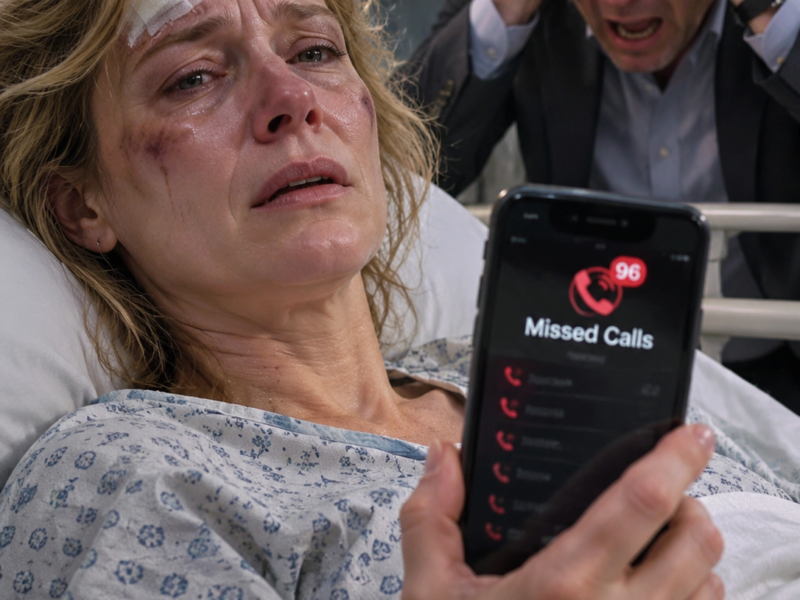
At 38, I Nearly Died From a Ruptured Appendix While My Husband Ignored the Hospital’s Emergency Calls to Enjoy a $485 Steak Dinner With His Mother. She Posted, “Finally Enjoying Some Peace Without the Parasite,” and He Replied, “Heaven.” Four Days Later, I Discovered $24,500 in Secret Bank Transfers and Woke Up to 96 Missed Calls From Him. When He Demanded That I Fix His Mother’s Housing Crisis, I Calmly Arranged a Meeting—and Brought a Folder Neither of Them Was Prepared to Open…
At 38, I Nearly Died From a Ruptured Appendix While My Husband Ignored the Hospital’s Emergency Calls to Enjoy a $485 Steak Dinner With His Mother. She Posted, “Finally Enjoying Some Peace Without the Parasite,” and He Replied, “Heaven.” Four Days Later, I Discovered $24,500 in Secret Bank Transfers and Woke Up to 96 Missed Calls From Him. When He Demanded That I Fix His Mother’s Housing Crisis, I Calmly Arranged a Meeting—and Brought a Folder Neither of Them Was Prepared to Open…
The first thing I noticed when I woke up was the sound of a heart monitor.
Beep. Beep. Beep.
It was a sound I had heard thousands of times during my career as an intensive care nurse, but hearing it from a hospital bed instead of standing beside one was an entirely different experience.
My mouth was painfully dry. My abdomen felt as though someone had dragged a knife through it and then stitched it back together with fishing line. There was an IV attached to my left hand, a blood pressure cuff around my arm, and a thin blanket covering my legs.
For several seconds, I couldn’t remember how I had gotten there.
Then everything came rushing back.
The excruciating pain at the nurses’ station. The floor rushing toward me. My coworker Sarah shouting for help. The emergency department. The surgeon telling me that my appendix had ruptured and that the infection was spreading through my body.
And the phone calls.
Three desperate phone calls to my husband, Brian, while I lay on a hospital gurney, shaking with fever and wondering whether I would survive the next few hours.
He hadn’t answered a single one.
I turned my head toward the visitor’s chair.
It was empty.
No husband. No flowers. No worried family member waiting to tell me everything would be okay.
Just an empty chair and the faint smell of disinfectant.
I didn’t cry. At least, not then.
I reached for my phone and discovered that, during the most dangerous hours of my life, my husband had apparently found something far more important to do.
He had gone out for an expensive steak dinner with his mother.
And they had celebrated my absence.
Four days later, when I finally checked my phone at a hotel near the hospital, I would discover ninety-six missed calls from Brian.
Not because he was worried about me.
Not because he had finally discovered that his wife had almost died.
He was calling because his mother had found a legal notice on the door of the condominium where I had allowed her to live rent-free.
And suddenly, the woman they had called a parasite was the only person they wanted to speak to.
But to understand why I let that phone ring ninety-six times, you need to understand what my marriage had become long before I ended up on an operating table.
My name is Nicole. I was thirty-eight years old, and for more than a decade, I had worked in critical care at Harborview Medical Center in Seattle.
I loved my job.
That probably sounds strange to anyone who has never worked in an intensive care unit. There are days when you witness more suffering than most people will see in an entire year. You watch families receive devastating news. You hold the hands of patients who are frightened, confused, or barely conscious. You make decisions under pressure, sometimes knowing that a few seconds could determine whether somebody lives or dies.
But there is also something deeply meaningful about being useful when another human being is at their most vulnerable.
I took that responsibility seriously.
Perhaps too seriously.
By the time I became a charge nurse, I had developed a reputation for being calm during emergencies. I could coordinate a team, solve complicated problems, recognize subtle changes in a patient’s condition, and manage several competing priorities without raising my voice.
Unfortunately, I had started bringing that same mentality home.
Every problem was something I could fix.
Every crisis was something I could manage.
Every responsibility was something I could absorb if the person beside me refused to carry it.
That was how my marriage to Brian survived for five years.
Not because we were particularly compatible.
Not because we supported each other equally.
But because I had become extraordinarily good at compensating for everything he refused to do.
Brian worked in software sales when we first married. He was charming, confident, and ambitious. He could walk into a room full of strangers and leave with five new friends and three potential business contacts.
I had admired that about him.
After years of spending my days in hospital corridors, his energy felt refreshing.
He could make me laugh when I was exhausted. He planned spontaneous weekend trips. He remembered my favorite restaurants and occasionally surprised me with flowers.
During our first year together, I genuinely believed I had found a partner.
Then, little by little, the partnership disappeared.
It happened so gradually that I didn’t recognize it.
First, Brian stopped helping with the grocery shopping because his workdays were supposedly unpredictable.
Then he stopped cooking because I was better at it.
Then he stopped handling bills because he found finances stressful.
Eventually, even remembering his mother’s birthday became my responsibility.
He still called us a team.
But somehow, I was always the one doing the work.
Our house was in a pleasant neighborhood north of downtown Seattle. It wasn’t enormous, but it had three bedrooms, a spacious kitchen, and a small backyard where I had planted lavender and rosemary.
I paid most of the mortgage.
I paid the utilities.
I paid for groceries, household repairs, car insurance, and the unexpected expenses that always seemed to appear whenever Brian announced that his latest business opportunity was about to take off.
His income became increasingly unreliable.
Two years before my hospitalization, Brian had left his software sales position, claiming he was ready to build something of his own.
He spoke constantly about entrepreneurship, networking, investment capital, and financial freedom.
What he rarely discussed was actual revenue.
Whenever I asked for details about his business plans, he accused me of being negative.
“Nicole, successful people take risks,” he would say.
“And successful people usually have a budget,” I would answer.
He hated that response.
According to Brian, I was too practical. Too cautious. Too focused on numbers.
Yet those numbers were what kept our electricity connected and our mortgage current.
I had entered the marriage with financial stability that I had built long before meeting him.
Five years before our wedding, I purchased a two-bedroom condominium in Kirkland, overlooking a small stretch of Lake Washington.
It wasn’t luxurious when I bought it.
The kitchen cabinets were outdated, the flooring needed work, and the previous owner had painted the living room a particularly unpleasant shade of yellow.
But it was mine.
I spent weekends renovating it. I refinished the hardwood floors myself, replaced the kitchen hardware, and gradually turned it into a comfortable home.
When I eventually moved in with Brian, I kept the property.
By then, it was worth approximately $650,000.
I had always considered it my personal safety net.
I never imagined that the greatest threat to that safety net would come from the people I was trying to help.
Two years into our marriage, Brian’s mother, Susan, called him in tears.
Her landlord had decided not to renew her lease.
She said she couldn’t afford the increasing rents around Seattle and had no idea where she would go.
Brian immediately turned the problem over to me.
“Mom is terrified,” he told me one evening. “She’s getting older, Nicole. I can’t just let her end up somewhere unsafe.”
I understood his concern.
Susan wasn’t a particularly warm woman, but she was his mother.
My Kirkland condominium happened to be empty between tenants.
So I offered a solution.
She could live there without paying rent, provided she covered the monthly homeowners association fee of $450.
It was an extraordinarily generous arrangement.
A comparable apartment in that area would have cost several thousand dollars a month.
Susan acted grateful at first.
She hugged me, told me I was an angel, and promised she would never forget what I had done.
Brian volunteered to organize the payments.
“Mom gets confused with online banking,” he explained. “I’ll handle the HOA. She can reimburse me every month.”
I agreed.
It seemed simple.
I had no reason to believe my husband would mishandle something so straightforward.
That decision would eventually cost me thousands of dollars.
But the money was only part of the problem.
Once Susan settled into the condominium, her attitude changed.
She began acting as though my generosity had somehow created an obligation for me to serve her son even more devotedly.
Whenever Brian complained about me, she reinforced his grievances.
If I worked late, I was neglecting my marriage.
If I came home exhausted, I was bringing negativity into the house.
If I questioned his spending, I was controlling.
And if I asked him to contribute more financially, I was undermining his confidence.
I remember one Sunday dinner at the Kirkland condo particularly clearly.
Susan had invited us over for roast chicken.
I had finished a fourteen-hour shift the night before and had slept approximately five hours.
My neck hurt. My feet were swollen. I was trying desperately not to fall asleep at the dining table.
Susan looked at Brian with exaggerated concern.
“Sweetheart, you look exhausted.”
Brian sighed.
“It’s been a stressful week.”
Susan turned toward me.
“Nicole, you know a man needs a peaceful home. Brian has enough pressure trying to build his career. He shouldn’t have to deal with a wife who’s always miserable.”
I stared at her.
I had spent the previous night helping resuscitate a patient who had suffered a massive cardiac arrest.
Brian had spent much of his week researching business ideas from our sofa.
But somehow, he was the exhausted one.
“I’ve just been working a lot,” I explained.
Susan shook her head.
“That’s exactly the problem. You care more about that hospital than your marriage.”
Brian said nothing.
He simply continued eating.
I remember looking around the dining room.
The table belonged to me.
The chairs belonged to me.
The condominium belonged to me.
Even the cleaning service that kept Susan’s home immaculate was something I paid for.
And there I was, being lectured about failing to support my husband.
I should have said something.
I should have reminded them how much I was doing.
Instead, I apologized for seeming tired.
That was who I had become.
A woman who apologized for being exhausted while providing financial support for two adults who considered her an inconvenience.
Over the next several months, Brian’s criticism became more direct.
One evening, I arrived home after a particularly difficult shift and found him watching television.
There were dirty dishes in the sink, laundry overflowing from the basket, and three empty coffee mugs on the living room table.
I set down my bag and began cleaning.
Brian watched me for several minutes.
Then he said, “You know what your problem is?”
I didn’t turn around.
“What?”
“You make everything feel heavy.”
I stopped rinsing a plate.
He continued.
“You come home looking miserable. You barely smile. You’re always talking about being tired. This house is supposed to be a sanctuary, Nicole.”
I looked at him.
“Brian, I’ve been at work for fourteen hours.”
“And there it is again. Another excuse.”
I felt something tighten in my chest.
“What exactly do you want from me?”
He shrugged.
“The woman I married used to be fun.”
For a moment, I wanted to ask whether the man I married was still somewhere inside him.
Instead, I said nothing.
That night, I lay awake beside him, listening to his steady breathing.
I wondered when I had become so difficult to love.
I wondered whether he was right.
Maybe I had changed.
Maybe I had allowed my job to consume too much of my energy.
Maybe I wasn’t giving enough to my marriage.
Looking back, that was the most heartbreaking part.
I was so busy questioning whether I was doing enough that I never stopped to ask why everything depended on me.
Then came the Tuesday that changed my life.
I had been experiencing abdominal discomfort since Sunday evening.
At first, it was mild.
A dull ache that seemed to come and go.
I assumed I had strained a muscle while helping reposition a patient.
By Monday, the pain had become more persistent.
I took ibuprofen and continued working.
Medical professionals are notoriously poor at recognizing when they need medical attention themselves.
We spend so much time treating other people that we become strangely dismissive of our own symptoms.
Tuesday morning, I woke up feeling nauseated.
Brian was standing in the kitchen, making coffee.
“Could you pick up my dry cleaning tonight?” he asked.
I pressed a hand against my abdomen.
“I’m not feeling great.”
He glanced at me.
“You’re always not feeling great.”
Then he walked away.
I stood there for several seconds, waiting for the familiar feeling of guilt.
It came.
Of course it came.
I promised I would try to collect his clothes after work.
By three o’clock that afternoon, I was standing at the nurses’ station reviewing a patient’s medication chart.
Sarah, one of my closest colleagues, was beside me.
We had worked together for six years.
She knew my habits, my moods, and the exact expression I wore when something was wrong.
“Nicole, you look awful,” she said.
“Thank you. That’s exactly the encouragement I needed.”
“I’m serious.”
“Just a stomachache.”
She frowned.
“How long?”
“Couple of days.”
“Have you had anyone look at it?”
I opened my mouth to answer.
And then the pain hit.
There is no elegant way to describe what a ruptured appendix feels like.
One moment, I was standing upright.
The next, it felt as though someone had driven a burning metal spike through my lower abdomen.
My knees weakened.
The clipboard slipped from my hand.
I remember hearing it strike the floor.
Then the room began tilting.
Sarah caught me before my head hit the counter.
“Nicole!”
Her voice sounded distant.
I tried to tell her I was fine.
But my mouth wouldn’t cooperate.
Within minutes, I was lying on a gurney being rushed into the emergency department.
The transition from nurse to patient was almost surreal.
People I had worked beside for years were suddenly taking my vital signs, drawing blood, and asking me questions.
My temperature was dangerously high.
My blood pressure was dropping.
When Dr. Evans examined my abdomen, the pain was so severe that I nearly screamed.
He ordered immediate imaging and laboratory tests.
The results confirmed what everyone feared.
My appendix had ruptured.
The infection had spread into my abdominal cavity, and I was developing sepsis.
I knew exactly what that meant.
Sepsis can progress rapidly. It can damage organs, cause circulatory collapse, and become fatal even with aggressive treatment.
For the first time in years, I felt genuinely frightened in a hospital.
Not for a patient.
For myself.
“We need to operate immediately,” Dr. Evans told me.
I nodded.
Then I asked, “Can somebody call my husband?”
Sarah already had my phone.
“Of course.”
She dialed Brian.
I watched her face as she listened.
After several seconds, she lowered the phone.
“Voicemail.”
“Try again,” Dr. Evans said.
She did.
Another rejection.
I stared at the ceiling.
Perhaps he was on a business call.
Perhaps his phone was in another room.
Perhaps he would see the missed calls and immediately call back.
Sarah tried a third time.
The call went directly to voicemail.
She left a message explaining that I had been admitted to the emergency department and that he needed to contact the hospital urgently.
Then she called from the hospital desk.
No answer.
I remember whispering, “He’ll call back.”
Sarah squeezed my hand.
But she didn’t say anything.
A few minutes later, they wheeled me toward surgery.
I was shaking uncontrollably.
The overhead lights passed above me in long, bright rectangles.
I remember wondering whether Brian would arrive before the anesthesia took effect.
He didn’t.
The last thing I saw was the clock above the operating room door.
It read 4:15 p.m.
When I regained consciousness, the first person I recognized was Sarah.
She was sitting beside my bed eating a salad from a plastic container.
Her hair was pulled into a messy bun, and she looked exhausted.
When she noticed my eyes opening, she immediately set down her fork.
“Well, look who’s decided to rejoin us.”
I tried to smile.
My throat hurt.
“How long?”
“More than a day. You gave us a pretty serious scare.”
She offered me some ice chips.
I let one dissolve slowly in my mouth.
Dr. Evans had successfully removed my appendix and cleaned the infected material from my abdomen, but the infection had been severe enough to require close monitoring and intravenous antibiotics.
I was fortunate.
I knew that.
People sometimes didn’t survive what I had just experienced.
After Sarah explained my condition, I asked the question that had been sitting in the back of my mind.
“Where’s Brian?”
She looked away.
That was when I knew.
“We tried him several more times,” she said. “He hasn’t returned any calls.”
I looked toward the empty chair.
“Did he get the messages?”
“We left them.”
I nodded.
For some reason, I wasn’t surprised.
I was disappointed, certainly.
But surprise would have meant that some part of me still expected him to behave differently.
I asked Sarah for my phone.
There were no messages from Brian.
No calls.
Nothing.
I stared at the dark screen for several seconds.
Then I put it down.
Sarah watched me carefully.
“Do you want me to try him again?”
“No.”
“Nicole—”
“Please don’t.”
She hesitated.
Then she nodded.
And for the first time in my marriage, I stopped chasing my husband’s attention.
The following morning, I woke to a gray Seattle sky and the quiet movements of nurses beginning their rounds.
My condition was improving, but I remained weak.
Every movement reminded me that my abdomen had recently been opened and repaired.
A nurse helped me sit upright.
Another checked my temperature.
I was still receiving antibiotics through the IV.
Breakfast consisted of apple juice, gelatin, and crackers.
I barely touched it.
What bothered me most wasn’t the pain.
It was the silence.
I had been missing from home for more than thirty-six hours.
My car was still parked at the hospital.
I hadn’t cooked dinner.
I hadn’t picked up Brian’s dry cleaning.
I hadn’t cleaned the kitchen or organized his schedule.
Yet he apparently hadn’t found my disappearance concerning enough to contact me.
I started wondering whether he even knew where I was.
Then I realized something worse.
He probably didn’t care enough to find out.
I reached for my iPad, connected to the hospital’s wireless network, and opened Facebook.
I didn’t know exactly what I expected to find.
Perhaps I simply wanted proof that Brian was alive and well.
Instead, I found a photograph that destroyed the last excuses I had been making for him.
My cousin Emily had tagged me beneath a post from Susan.
The photograph showed Brian and his mother sitting in an elegant restaurant.
I recognized it immediately.
El Gaucho.
Dark wood paneling. White tablecloths. Expensive wine. The sort of restaurant Brian always claimed we couldn’t afford whenever I suggested celebrating our anniversary somewhere special.
Susan was smiling broadly, holding a martini.
Brian sat opposite her with a glass of red wine.
Between them was an enormous Tomahawk steak.
The caption made my stomach turn.
“Finally enjoying some peace without the parasite.”
Underneath it, Brian had commented with a single word.
“Heaven.”
I looked at the timestamp.
Tuesday.
4:30 p.m.
I stared at it for a long time.
At 4:15 p.m. Tuesday, I had been taken into emergency surgery.
Fifteen minutes later, my husband was apparently enjoying a luxury dinner with his mother.
The hospital had been trying to reach him.
He had been ignoring those calls.
And while I was fighting an infection that could have killed me, he was publicly celebrating the fact that I wasn’t there.
I read the caption again.
Parasite.
That was what Susan called me.
The woman who paid her son’s household expenses.
The woman who allowed her to live rent-free in a property worth hundreds of thousands of dollars.
The woman who worked exhausting shifts to maintain the financial stability they both enjoyed.
I had been called many things during difficult moments in my career.
But that word, coming from someone who depended on my generosity, struck me differently.
I didn’t feel the anger I expected.
Instead, something inside me became very quiet.
It was as though a switch had been turned off.
I no longer wanted to convince Brian that I was a good wife.
I no longer wanted Susan to appreciate what I had done.
I didn’t even want an apology.
I wanted to understand exactly how much of my life they had been consuming.
So I opened our banking application.
And that was when I discovered the dinner was the smallest problem.
The first thing I found was the restaurant charge.
$485.
Brian had paid for the celebration of my absence using our joint credit card.
A card whose balance I routinely cleared from my paycheck.
I downloaded the transaction record.
Then I examined the checking account.
Because I handled our finances, I was familiar with most recurring payments.
The mortgage.
Utilities.
Insurance.
Subscriptions.
Groceries.
But as I scrolled through the previous six months, I noticed several transfers to an unfamiliar external account.
The first was $2,000.
Another was $3,500.
Then $1,250.
Then more.
I opened a spreadsheet and began recording every suspicious transaction.
Twelve transfers.
Twenty-six weeks.
A total of $24,500.
For several seconds, I simply stared at the number.
I remembered Brian mentioning a possible software startup with a former colleague.
He had wanted to invest some money.
I told him we needed to review the business plan before committing our savings.
He had agreed.
At least, I thought he had.
Apparently, agreement meant something different to Brian.
He had simply started transferring money without telling me.
The account receiving those transfers wasn’t one I recognized or controlled.
I couldn’t determine from the bank records alone exactly how the money had been spent, but I knew something essential.
My husband had been taking substantial amounts from the joint account while concealing the transactions from me.
I felt physically sick.
Not from the surgery.
From realizing how deliberately he had exploited my trust.
Then another thought occurred to me.
Susan’s condominium.
I searched for the monthly HOA payments.
There should have been a $450 payment every month.
There wasn’t.
I checked the previous month.
Nothing.
Then the month before that.
Still nothing.
Four consecutive months were missing.
A total of $1,800.
I opened my email and searched the name of the condominium association.
Several unread notices appeared.
They had been filtered into a folder I rarely checked.
The most recent email had an urgent subject line.
The association was preparing to pursue collection action and potentially file a lien against my property because of the unpaid dues.
My property.
The condominium I had purchased before meeting Brian.
The one asset I had always considered secure.
I stared at the message until the words blurred.
Then I remembered Brian telling me the HOA payments were automated.
I remembered Susan praising him for handling the arrangement.
I remembered how confidently he assured me everything was taken care of.
There were cash withdrawals around the same dates the HOA payments should have been made.
Those records alone didn’t prove exactly where the withdrawn money had gone, but they were enough to make me question everything.
I saved the statements.
I downloaded the HOA notices.
I preserved the restaurant charge and Susan’s Facebook post.
Then I organized the documents into a folder.
It felt almost ridiculous.
I was lying in a hospital bed recovering from a potentially fatal infection, and I was creating a financial evidence file.
But organizing information was what I knew how to do.
In the ICU, when a patient deteriorates, you don’t waste valuable time arguing with the monitor.
You identify the source of the problem.
You stop whatever is causing harm.
And you stabilize what remains.
For years, I had been treating the symptoms of my marriage.
The unpaid bills.
The emotional manipulation.
The constant exhaustion.
The financial emergencies.
Now I finally understood the underlying problem.
My husband did not see me as his partner.
He saw me as a resource.
And his mother had become accustomed to that resource being available without limits.
I wasn’t going to continue providing it.
The next morning, I called Jessica.
Jessica was an attorney who had helped me purchase the Kirkland condominium years earlier.
She was precise, practical, and not easily intimidated.
When she answered, I explained the situation.
At first, I focused on the property.
The verbal arrangement with Susan.
The unpaid association fees.
The collection notices.
Jessica listened without interrupting.
Then she asked, “Nicole, are you calling because you want to collect the overdue payments, or because you want her to move out?”
I looked at the pale hospital ceiling.
“Both, if possible. But I want everything handled legally.”
“Then we need to examine the tenancy arrangement and the applicable Washington requirements before serving anything.”
I appreciated that answer.
I wasn’t interested in making threats that could create problems later.
I wanted proper documentation.
Jessica agreed to review the notices, communicate with the association, and arrange the appropriate legal steps.
Then I told her about Brian.
The hidden transfers.
The dinner.
The ignored emergency calls.
The fact that I was speaking to her from a hospital bed after emergency surgery.
She was silent for several seconds.
“Nicole, have you spoken to a divorce attorney?”
“No.”
“I think you should.”
I looked toward the window.
“Could you recommend someone?”
“Yes.”
That conversation was the beginning of the end of my marriage.
I spent the rest of the morning protecting my finances.
With professional guidance, I opened an individual checking account and changed my payroll deposit instructions so future wages would go there.
I also contacted the bank to discuss the joint account, the credit card, and what safeguards were available while I pursued a formal separation.
I was careful not to interfere with legitimate obligations or assume that moving money would automatically determine who legally owned it.
I simply wanted to stop giving Brian unrestricted access to my future income.
My next paycheck would no longer arrive in the account he had been quietly draining.
I cannot describe how strange that felt.
For years, every financial decision had been organized around keeping Brian comfortable.
Now, for the first time, I was considering what I needed.
Security.
Rest.
A home where I didn’t dread walking through the front door.
And enough money to take care of myself without subsidizing two people who openly resented me.
By my fourth day in the hospital, the doctors were satisfied that my infection was responding to treatment.
I was still weak and sore, but I no longer needed continuous intravenous medication.
Dr. Evans explained the warning signs I needed to watch for and emphasized the importance of rest.
“No lifting, no unnecessary strain, and don’t try to return to work early,” he instructed.
I almost laughed.
Rest had never been one of my strengths.
Then my phone vibrated.
Brian.
For one brief moment, I wondered whether he had finally listened to the hospital’s messages.
I opened the text.
“Taking Mom to Snoqualmie for a spa weekend. You can stay with a friend or get a hotel until you calm down. We need positive energy in the house. Don’t make this into a huge drama.”
I read it twice.
Then a third time.
My husband had not seen me for four days.
He had ignored emergency messages.
He had no idea I had nearly died.
And his response to my absence was to tell me not to come home because I was apparently disrupting the household’s positive energy.
I sat on the edge of the bed, feeling the tightness of my surgical incision.
Then I laughed.
It hurt.
I had to press a pillow against my abdomen.
But I couldn’t stop.
The absurdity was overwhelming.
Brian had constructed an entire explanation for my disappearance without asking a single question.
In his mind, I was sulking.
I was being dramatic.
I was trying to punish him by staying away.
Not once had he considered that something might actually be wrong.
He simply assumed that whatever happened in my life was ultimately about inconveniencing him.
I typed one word.
“Okay.”
Then I sent it.
No explanation.
No argument.
No medical update.
Nothing.
When Sarah arrived to help me gather my belongings, I told her I wasn’t going home.
She looked concerned.
“Nicole, where are you going?”
“An extended-stay hotel near the hospital.”
“Are you sure that’s a good idea? You need somebody around while you’re recovering.”
I nodded.
“I know. I’ll arrange help if I need it. And you’re officially allowed to check on me.”
She studied my face.
“What happened?”
I showed her the Facebook post.
Then Brian’s message.
She read both in silence.
Finally, she handed the phone back.
“Do you want me to say what I’m thinking?”
“Probably not.”
“Good, because it would get me fired if I said it at work.”
For the first time in days, I smiled without forcing it.
Sarah drove me to the hotel and helped carry my bag upstairs.
Before leaving, she made me promise to call if I developed a fever or worsening pain.
Then she hugged me.
It was a simple gesture.
But after everything that had happened, I nearly cried.
My coworker had shown me more concern in four days than my husband had shown me in months.
The hotel room was ordinary.
Beige walls.
A small kitchenette.
A desk near the window.
A television mounted above a narrow dresser.
There was nothing luxurious about it.
But when I closed the door, I experienced something I hadn’t felt in years.
Peace.
Nobody complained that I was tired.
Nobody asked what was for dinner.
Nobody expected me to collect clothes, organize appointments, or explain why I wasn’t smiling.
I changed into pajamas, took my prescribed medication, and carefully settled onto the bed.
Then I slept.
When I woke later that evening, I checked the legal updates Jessica had sent.
The HOA arrears were being addressed to protect the property, and the appropriate notice regarding Susan’s occupancy had been arranged after reviewing the tenancy situation.
I knew Susan would eventually receive the paperwork.
I also knew Brian would be furious.
What I didn’t expect was the sheer volume of his fury.
My phone had been on silent while I slept.
When I picked it up, the screen was covered with notifications.
Ninety-six missed calls.
All from Brian.
There were also dozens of messages.
“CALL ME.”
“What did you do?”
“Mom is freaking out.”
“There’s a legal notice on her door.”
“Are you seriously trying to throw my mother out?”
“This is insane.”
“Fix it immediately.”
And then:
“You are being completely irresponsible. There’s no dinner at home, my dry cleaning is still sitting at the cleaners, and now you’re ignoring my calls.”
I stared at that last message.
No dinner.
Dry cleaning.
Those were the things that had finally made my husband notice my absence.
Not love.
Not concern.
Not fear.
Household inconvenience.
I looked at the missed-call counter again.
Ninety-six.
Apparently, Brian was perfectly capable of making repeated phone calls when something mattered to him.
I allowed myself one minute to absorb that realization.
Then the phone rang again.
I answered.
Before I could speak, Brian exploded.
“Nicole, what the hell is wrong with you?”
I held the phone slightly away from my ear.
“Hello, Brian.”
“Don’t ‘hello Brian’ me! Do you have any idea what you’ve done?”
“What have I done?”
“Mom came home and found a legal notice on her door! The neighbors saw it! She’s humiliated!”
I glanced around my quiet hotel room.
“That’s unfortunate.”
“Unfortunate? Are you serious?”
He was practically shouting.
“You’re trying to make an elderly woman homeless because you’re angry with me!”
I closed my eyes.
There it was.
The familiar tactic.
Take something he had done wrong, rearrange the circumstances, and make me responsible for everyone else’s suffering.
“Brian,” I said, “has your mother paid the HOA fees?”
Silence.
Then, “That’s not the point.”
“It is one of the points.”
“It’s a few hundred dollars!”
“It’s four months of unpaid fees, plus penalties and collection concerns.”
“You’re obsessed with money.”
I almost smiled.
That accusation had become his favorite weapon.
Whenever I asked where money had gone, I was obsessed.
Whenever I wanted a budget, I was controlling.
Whenever I expected him to contribute, I was unsupportive.
But when he needed money, my responsibility to provide it was apparently unquestionable.
“Nicole, you need to call your lawyer and cancel this nonsense.”
“No.”
There was a pause.
“What?”
“No, Brian.”
He sounded genuinely confused.
I couldn’t remember the last time I had refused one of his demands without immediately explaining myself.
“Then what exactly are you planning to do?”
I looked at the folder on the desk.
“Meet me tomorrow at ten.”
“Where?”
“Panera Bread on Mercer Street.”
“I’m not meeting you for coffee!”
“Then don’t come.”
“Nicole—”
“Bring the joint credit card.”
I ended the call.
Then I turned off my phone and went back to bed.
The following morning, I arrived at the café fifteen minutes early.
I moved carefully because my abdomen still hurt.
I chose a table near the back, ordered black tea, and placed a thick folder beside my cup.
Inside were the documents I had spent the previous days collecting.
The restaurant receipt.
The bank transfers.
The HOA statements.
Copies of the legal correspondence.
And the preliminary divorce paperwork my family-law attorney had prepared for review and service.
For the first time in years, I was not going into a conversation with Brian hoping he would understand my feelings.
I was going in knowing exactly what I needed to say.
At ten o’clock, he walked through the entrance.
Susan followed.
Of course she did.
Brian spotted me and approached with the expression of a man prepared to deliver a lecture.
He sat across from me without greeting me.
Susan lowered herself into the seat beside him, clutching a tissue.
“Nicole,” she began, “I haven’t slept properly since finding that terrible notice.”
I took a sip of tea.
“I’m sorry you’ve had trouble sleeping.”
She looked relieved, apparently mistaking politeness for surrender.
“Then you understand how cruel this has been.”
Brian leaned forward.
“This is what I mean when I say you use money to control people.”
I looked at him.
He continued.
“You get upset, disappear for days, and then attack my mother. It’s vindictive.”
Susan nodded.
“We’re family, Nicole. Family doesn’t behave this way.”
I waited until they stopped speaking.
Then I opened the folder.
“Brian, I want you to look at something.”
He frowned.
“What?”
I slid the first document across the table.
He glanced at it.
“A credit card statement?”
“Look at the highlighted transaction.”
His eyes moved down the page.
I watched his expression change slightly.
“El Gaucho,” he read.
“$485,” I said.
“So?”
“Tuesday afternoon. Four-thirty.”
He shifted in his chair.
“What’s your point?”
I opened my phone and showed him Susan’s Facebook photograph.
“That looks like a nice dinner.”
Susan stiffened.
Brian looked at the screen.
“Nicole, don’t start making a scene.”
“I’m not making a scene.”
I placed the phone beside the receipt.
“I just have one question.”
He folded his arms.
“Fine.”
“Did you enjoy celebrating my absence?”
His face tightened.
“That’s ridiculous.”
“Your mother called me a parasite.”
Susan looked away.
“And you commented that being without me was heaven.”
Brian exhaled sharply.
“It was a joke.”
“A joke.”
“Yes.”
I nodded slowly.
Then I asked, “Do you know where I was at four-thirty that afternoon?”
He rolled his eyes.
“Probably working. Which is apparently more important to you than your marriage.”
I looked directly at him.
“At four-fifteen, I was being taken into emergency surgery at Harborview.”
His expression went blank.
I continued.
“My appendix had ruptured. I had a serious abdominal infection. I was developing sepsis.”
Susan lowered her tissue.
“Nicole…”
“The surgeon needed to operate immediately. The hospital called my emergency contact three times before surgery.”
Brian stared at me.
“Your emergency contact,” I repeated.
“Me?” he whispered.
“Yes, Brian. You.”
His mouth opened.
Nothing came out.
“They called again after surgery. And the next morning. And while I was recovering.”
He looked down at the table.
“I didn’t know.”
“I know.”
His eyes shot back toward mine.
“I thought you were angry with me!”
“I know that too.”
“I thought you were staying away to prove a point.”
I leaned back.
“Did you ever ask?”
Silence.
“Did you ever call the hospital?”
He swallowed.
“Nicole, I—”
“Did you ever send me one message asking whether I was safe?”
He couldn’t answer.
I watched him struggle to find an explanation that would make his behavior seem reasonable.
For years, I had helped him find those explanations.
This time, I didn’t.
Susan finally spoke.
“Well, surely Brian would have come if he’d understood.”
I turned toward her.
“He was informed by the hospital, Susan. More than once.”
She looked uncomfortable.
“Perhaps there was a misunderstanding.”
I picked up the Facebook screenshot.
“Was this a misunderstanding too?”
Neither of them answered.
I moved to the next document.
“Now, let’s discuss your condominium.”
Brian’s jaw tightened.
“Here we go.”
I placed the HOA statement between them.
“Four months of unpaid association dues. $1,800.”
Susan blinked.
“That can’t be right.”
“It is.”
She turned to her son.
“Brian, you told me everything was being paid automatically.”
He rubbed his forehead.
“There was a small cash-flow issue.”
Susan stared at him.
“What cash-flow issue?”
He didn’t answer.
I laid down the next page.
“These are withdrawals and transfers from our joint account.”
Brian went very still.
I watched his eyes move over the highlighted lines.
“Over six months, $24,500 was transferred to an account I don’t recognize. You never disclosed those transfers to me.”
He looked up.
“It’s business money.”
“For what business?”
“My startup.”
“The startup you agreed we wouldn’t fund without reviewing a plan?”
He looked away.
“I was going to tell you.”
“When?”
He remained silent.
I let the question hang between us.
Then I said, “I worked extra shifts to build those savings. I skipped vacations. I postponed repairs. I paid our bills because I believed we were building a stable future together.”
Brian glanced toward the windows.
People were drinking coffee, checking their laptops, and chatting quietly.
Nobody appeared particularly interested in our table.
I appreciated that.
I wasn’t there to humiliate him.
I was there to end his ability to manipulate me.
“You took that money without telling me,” I continued. “And when I was in the hospital, you spent another $485 celebrating the fact that I wasn’t home.”
Susan whispered, “Brian, is that true?”
He snapped, “Mom, stay out of it.”
She recoiled.
For the first time, I saw a crack in the alliance they had built.
Susan had always defended her son.
But suddenly, his behavior was threatening something she valued more than his pride.
Her housing.
I looked at her.
“Susan, I gave you a place to live because I believed you needed help. I asked for one thing in return: that the association fees be covered. That arrangement has not been honored.”
She clasped her hands together.
“I didn’t know he wasn’t paying them.”
“I understand that’s what you’re telling me.”
“Then surely we can work something out.”
“Any arrangement will need to go through my attorney.”
Her face fell.
“Nicole, please.”
I felt a familiar tug of guilt.
For years, that single word had been enough to make me surrender.
Please.
Please pay this.
Please handle that.
Please forgive him.
Please understand.
Please don’t make things difficult.
I had spent so much of my life responding to other people’s needs that I had forgotten my own were allowed to matter.
I took a slow breath.
“The overdue balance has to be resolved. My attorney will handle the property issues and any lawful termination of the tenancy.”
Brian slammed his hand against the table.
“This is unbelievable.”
Several people glanced toward us.
He lowered his voice.
“You’re really going to destroy our family over money?”
I looked at him for a long moment.
“No, Brian.”
I reached into the folder again.
“This isn’t about money anymore.”
I placed the divorce documents in front of him.
He stared at the title.
Petition for Dissolution of Marriage.
The color disappeared from his face.
“Nicole.”
His voice was suddenly very quiet.
“You’re not serious.”
“I am.”
He stared at the papers.
“You’re divorcing me?”
“Yes.”
“Because of one dinner?”
I almost laughed.
“Because of five years, Brian.”
He shook his head.
“This is insane. Couples have problems. You don’t just throw away a marriage.”
“You’re right.”
For a second, he looked hopeful.
“You don’t throw away a marriage because of one bad day,” I continued. “You throw it away little by little when you stop respecting the person you’re married to.”
He said nothing.
“You threw away our marriage every time you treated my work as an inconvenience while spending the money it earned.”
His face tightened.
“Nicole—”
“You threw it away every time you allowed your mother to insult me in a home I provided for her.”
Susan looked down.
“You threw it away when you hid those transfers.”
I paused.
“And you threw away whatever was left when the hospital called to tell you I was in danger, and you couldn’t be bothered to answer.”
His eyes were wet now.
I didn’t know whether he was crying because he finally understood what he had done or because he realized the consequences were real.
Perhaps it was both.
“Please,” he whispered. “Don’t do this.”
There was that word again.
Please.
I stood carefully, supporting myself against the edge of the table.
My abdomen protested the movement.
Brian noticed.
For the first time since the meeting began, his gaze moved toward my body rather than the documents.
“Are you still hurt?”
I looked at him.
“Yes.”
He stared at me.
“How bad was it?”
“Bad enough that I might not have survived.”
He lowered his head.
I picked up my folder.
“Your attorney can contact mine. The financial issues will be handled through the proper process.”
“Nicole, wait.”
I stopped.
He looked up.
“What am I supposed to do now?”
That question almost broke my heart.
Not because it was sad.
Because it was so revealing.
Even now, facing the end of our marriage, Brian’s first concern was how he would manage without me.
I looked at the man I had loved.
The man I had supported.
The man I had defended to my friends, my family, and sometimes even myself.
Then I answered.
“You’re going to have to take care of yourself.”
I walked out of the café.
And I didn’t look back.
I wish I could tell you that everything became easy after that.
It didn’t.
Real life rarely offers a clean ending immediately after a dramatic confrontation.
I still had a surgical wound to heal.
I still had legal bills to pay.
I still had a marriage to untangle.
And Brian wasn’t prepared to let go of the financial stability I had provided.
Within days, he hired an attorney.
His first attempt was to claim that he was entitled to a substantial share of the Kirkland condominium.
He argued that the property’s value had increased during our marriage and that he deserved compensation.
My attorneys reviewed the ownership history, mortgage records, and financial contributions.
They made it clear that the property had been purchased before the marriage and that the final treatment of its value would depend on Washington law, the tracing of funds, and the court’s overall division of assets.
Brian quickly discovered that demanding half of something was not the same as being legally entitled to it.
The unexplained transfers also became a major subject of the divorce negotiations.
My attorney requested documentation concerning the external account.
Brian initially resisted.
Then his attorney apparently explained that refusing to disclose financial records would create problems rather than solve them.
Eventually, we obtained a clearer picture.
Much of the money had been used to support a speculative software project that had produced almost no revenue.
Some had gone toward business subscriptions, networking expenses, and personal spending.
His grand entrepreneurial future had largely consisted of moving my earnings into an account where he could spend them without answering questions.
The discovery hurt more than I expected.
I had wanted him to succeed.
I had encouraged him to pursue a career he found meaningful.
I would have supported a realistic business plan.
But he hadn’t wanted a partner.
He had wanted access to money without accountability.
Meanwhile, the situation with Susan continued.
Jessica worked with the association to resolve the outstanding property obligations and protect the condominium from further collection action.
Susan and Brian were informed through counsel about the amounts owed and the legal process governing her continued occupancy.
It was not as simple as forcing someone out overnight.
There were notice requirements, deadlines, and rules that had to be followed.
I insisted that everything be documented properly.
I was angry, but I wasn’t interested in creating unnecessary legal problems.
Brian eventually arranged payment of the outstanding HOA amount and the other disputed charges we had agreed to resolve.
I later learned that he had borrowed some of the money from former colleagues.
That information didn’t make me happy.
It simply confirmed something I had suspected for years.
He was capable of finding solutions when I stopped providing them.
Susan’s occupancy eventually ended through the proper process.
The property manager handled the final inspection, key return, and change of locks.
I didn’t go to watch.
I didn’t want a confrontation.
I didn’t need to see Susan carrying boxes to feel victorious.
A few weeks later, I heard that she and Brian had rented a modest apartment in Kent.
It was far smaller than the condominium she had occupied.
It lacked the lake views, the elegant kitchen, and the convenient location.
For the first time in years, they were living within the financial limitations of their own resources.
I wondered occasionally whether Susan regretted calling me a parasite.
I wondered whether Brian remembered that restaurant photograph.
But I never asked.
Their opinions had stopped controlling my life.
My recovery took longer than I expected.
I had underestimated how much an abdominal infection could drain a person.
For weeks, I moved slowly.
I tired easily.
Simple activities required patience.
Sarah visited often, bringing groceries and occasionally sitting with me while we watched terrible television.
One afternoon, she found me staring at a stack of divorce paperwork.
“What’s wrong?” she asked.
I shrugged.
“I keep thinking about how much time I wasted.”
She sat beside me.
“You loved him.”
“I know.”
“That doesn’t mean you were foolish.”
I looked at her.
“I should have noticed sooner.”
“Maybe,” she said. “But you noticed eventually.”
That stayed with me.
For a long time, I had viewed the collapse of my marriage as a personal failure.
I had promised to love Brian.
I had promised to support him.
And somehow, leaving felt like breaking those promises.
But over time, I began to understand something.
A marriage cannot survive on one person’s promises alone.
Love is not supposed to require the complete disappearance of your own needs.
Support is not the same as endless sacrifice.
And loyalty does not mean allowing someone to harm you indefinitely.
When I eventually returned to work, the hospital felt different.
The monitors still beeped.
The patients still needed care.
The shifts were still exhausting.
But I had changed.
I no longer volunteered for every extra hour simply because more money would make life easier for Brian.
I no longer felt compelled to solve every problem immediately.
I began saying no.
At first, it felt uncomfortable.
Then it felt liberating.
Sarah noticed.
“You’re different,” she told me one evening as we walked toward the parking garage.
“Different good or different bad?”
She smiled.
“Different peaceful.”
I thought about that for a long time.
Peaceful.
It was not a word anyone had used to describe me in years.
Six months after the surgery, I made another major decision.
I sold the Kirkland condominium.
It was difficult to let go of a property I had worked so hard to purchase and renovate.
But I was ready for a new beginning.
The sale went well, and after accounting for the expenses and legal considerations involved, I used the proceeds and my own savings to purchase a smaller townhouse in Queen Anne.
It wasn’t as spacious as the house I had shared with Brian.
The kitchen was compact.
The stairs were narrow.
There wasn’t much storage space.
But it had beautiful windows, a small rooftop deck, and a view of the Space Needle.
More importantly, it felt like mine.
Not simply because my name was associated with the property.
Because I could walk through the door without anticipating criticism.
I could leave a coffee mug on the counter without worrying that someone would accuse me of being a bad wife.
I could spend an evening reading instead of cooking an elaborate dinner for someone who never thanked me.
I could sleep after a difficult shift without apologizing for being tired.
The first night I stayed there, I ordered takeout, sat on the floor among unpacked boxes, and watched the city lights flicker through the windows.
I remember feeling unexpectedly emotional.
I had spent years trying to create a home that would make Brian happy.
Now I had a home where my happiness was finally allowed to matter.
Our divorce was finalized in late December.
The process involved negotiations, financial disclosures, and more legal paperwork than I ever wanted to see again.
Brian eventually stopped contesting the separation.
The settlement addressed our remaining shared assets and the disputed financial transfers.
It wasn’t a spectacular courtroom victory.
Nobody stood up and delivered a dramatic speech.
There was no moment when a judge publicly condemned Brian for everything he had done.
Instead, there were signatures.
Orders.
Final statements.
And a legal document confirming that our marriage had ended.
I expected to feel triumphant.
Instead, I felt tired.
Then relieved.
Then, slowly, free.
Brian tried contacting me a few times afterward.
At first, he apologized.
He said he had been under enormous pressure.
He claimed he had never intended to hurt me.
He insisted that he hadn’t understood how serious my medical emergency had been.
I didn’t respond.
Later, he sent a longer message describing how difficult his life had become.
His business venture had stalled.
Money was tight.
His mother was unhappy in their apartment.
He missed the house.
He missed our routine.
And, he said, he missed me.
I stared at that message for a while.
Then I realized something.
Almost everything he described missing was something I had provided.
The house.
The money.
The routine.
The stability.
He didn’t mention the way we used to laugh during our first year together.
He didn’t mention our long conversations or the dreams we once shared.
He didn’t ask how my health was.
He didn’t ask whether I had fully recovered.
He missed the life I had built around him.
I deleted the message.
Not because I hated him.
I didn’t.
Hatred would have required an emotional investment I no longer wanted to make.
I simply understood that returning to him would mean returning to a version of myself I had worked too hard to escape.
By February, my life had settled into a rhythm that would have seemed almost boring to the woman I had been a year earlier.
I worked my scheduled shifts.
I paid my bills.
I met friends for dinner.
Sometimes I spent entire Sunday afternoons reading on my sofa while rain tapped against the windows.
I discovered that I enjoyed cooking when nobody was demanding it.
I began taking walks after work.
I bought flowers for my own kitchen.
Small things.
Ordinary things.
But they mattered.
One Sunday morning, I sat beside the living room window with a cup of black coffee.
The Seattle sky was dark and heavy with rain.
On the glass coffee table in front of me were my annual tax documents, the final divorce settlement, and an invoice from my attorney.
The legal fees were substantial.
I studied the amount for a moment.
Then I wrote the payment.
Years earlier, spending that much money would have made me anxious.
I would have imagined Brian’s reaction.
He would have questioned whether it was necessary.
He would have complained about the expense.
He might even have suggested that the money could be better used to support one of his business ventures.
But there was no Brian sitting across from me.
No Susan calling to explain why her son deserved more consideration.
No one demanding that I justify my decisions.
Just the rain.
My coffee.
And a room filled with quiet.
I thought back to the hospital.
To the cold ceiling tiles above my bed.
To Sarah placing ice chips into my mouth.
To the empty visitor’s chair.
To the Facebook photograph of Brian raising a glass while I lay unconscious in surgery.
I thought about the ninety-six missed calls.
For a long time, that number had seemed almost unbelievable.
Ninety-six attempts to contact me after he learned that his mother’s comfortable living arrangement was threatened.
Yet not one answered call when the hospital was trying to tell him his wife was in danger.
That contrast told me everything I needed to know.
I had spent years believing that if I gave enough, worked enough, sacrificed enough, and loved enough, Brian would eventually recognize my value.
I had been wrong.
Some people don’t become more grateful when you give them more.
They simply become more accustomed to receiving.
They begin to see your generosity as an obligation.
Your patience becomes something they expect.
Your sacrifices become invisible.
And eventually, the moment you ask for something in return, they accuse you of being selfish.
I used to think revenge meant making someone suffer the way they had made you suffer.
I imagined it required confrontation, humiliation, or some dramatic act that would force them to understand what they had lost.
But my experience taught me something different.
Sometimes the most powerful consequence you can give someone is to stop protecting them from the results of their own choices.
You stop paying for the things they refuse to pay for.
You stop cleaning up the messes they deliberately create.
You stop accepting cruelty just because it comes from someone you once loved.
You stop confusing being needed with being valued.
And then you allow people to live the lives they can actually sustain without your constant intervention.
Brian and Susan had wanted peace without me.
They had made that perfectly clear.
So I gave it to them.
They no longer had to deal with my exhaustion after long hospital shifts.
They no longer had to listen to me discuss budgets.
They no longer had to tolerate my supposedly negative energy.
They were free to make their own decisions, handle their own responsibilities, and pay their own expenses.
I hoped they would eventually find happiness.
But whether they did was no longer my responsibility.
I took another sip of coffee.
The rain intensified against the windows.
Somewhere in the distance, traffic moved through the wet streets of Seattle.
I had an afternoon shift scheduled the following day.
There were groceries in the refrigerator, clean clothes in the laundry basket, and a new novel waiting on my bedside table.
Nothing extraordinary.
Nothing dramatic.
Just a life that belonged to me.
I walked upstairs to the rooftop deck and opened the door.
The cold February air brushed against my face.
Across the city, the Space Needle rose above the buildings, partially obscured by low clouds.
I stood there for several minutes, breathing in the damp air.
Then I placed a hand over the faint scar on my abdomen.
It had healed into a thin, uneven line.
A permanent reminder of the day my body nearly failed me.
And the days immediately afterward, when I finally stopped allowing other people to fail me.
I had survived a ruptured appendix, a dangerous infection, and the collapse of a marriage I once believed would last forever.
But what stayed with me wasn’t the pain.
It wasn’t the betrayal.
It wasn’t even the satisfaction of watching Brian discover that my financial support had limits.
It was the realization that I no longer had to earn the right to be treated with kindness.
I didn’t need to be cheerful after a fourteen-hour shift.
I didn’t need to provide someone else with a luxury lifestyle to deserve respect.
I didn’t need to exhaust myself trying to prove that I was worthy of love.
I already was.
And the people who genuinely cared about me had shown it when I needed them most.
Sarah had sat beside my hospital bed.
My colleagues had checked on me.
My friends had helped me recover.
They hadn’t needed access to my bank account to be kind.
They hadn’t demanded dinner in exchange for concern.
They had simply been there.
That was the difference.
I had spent five years confusing dependency with devotion.
Now I finally understood what real care looked like.
I returned inside and closed the rooftop door.
My coffee was still warm.
My phone lay on the kitchen counter.
For once, there were no angry messages demanding that I solve someone else’s emergency.
And if Brian called again, I knew I wouldn’t need ninety-six missed calls to make a decision.
I already knew my answer.
The woman they had called a parasite had finally walked away.
And without the people who had spent years feeding on her time, her labor, her money, and her peace, she discovered something extraordinary.
She could finally breathe.
She could finally rest.
And for the first time in a very long time, she could come home without feeling like she was walking into another shift.
That woman was me.
And I never went back.