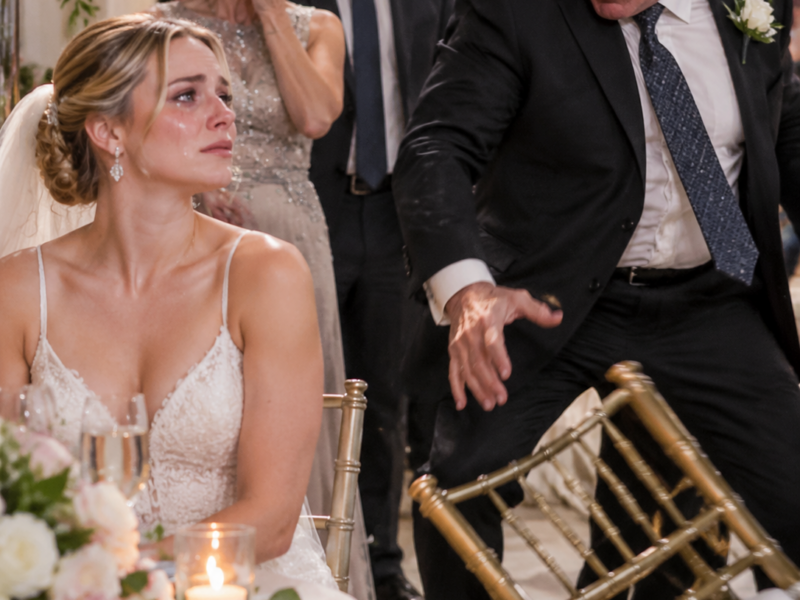
At 28, My Mother Banned Me From Thanksgiving Because I Refused to Give Her Best Friend Six Oxycodone Pills, Saying, “Your Sister Doesn’t Want Drama.” I Spent the Holiday Alone Until an Elderly Ranching Couple Pulled Out a Chair for Me. Five Years Later, They Were Listed as My Parents on My Wedding Program, and My Father Suddenly Realized Something Was Very Wrong. Then the Judge Asked One Question That Changed Everything…
At 28, My Mother Banned Me From Thanksgiving Because I Refused to Give Her Best Friend Six Oxycodone Pills, Saying, “Your Sister Doesn’t Want Drama.” I Spent the Holiday Alone Until an Elderly Ranching Couple Pulled Out a Chair for Me. Five Years Later, They Were Listed as My Parents on My Wedding Program, and My Father Suddenly Realized Something Was Very Wrong. Then the Judge Asked One Question That Changed Everything…
Part 1
The phone rang at 11:40 on a Monday night in November, just as I was finishing my third hour of a night shift at the hospital pharmacy in Emporia, Kansas. I was twenty-eight years old, exhausted, and reviewing a nurse’s medication order when my mother’s name appeared on my screen.
My mother almost never called during my shifts. She had always believed working nights was something people did when they couldn’t find respectable daytime employment. So when I saw her name, I immediately stepped into the hallway, expecting bad news.
Instead, she said something that would change the next five years of my life.
“Tova, don’t come home for Thanksgiving this year.”
I stood beneath the fluorescent lights, holding my phone against my ear.
“Is someone sick?”
“No. Your sister’s fiancé’s family is coming. The Bellocks. They’re very nice people, and we want everything to go smoothly.”
I waited for her to explain why that had anything to do with me.
Then she delivered the sentence that would stay in my memory for years.
“Your sister doesn’t want drama.”
I asked what drama she was talking about.
My mother sighed as if I had deliberately misunderstood something obvious.
“You know exactly what drama, Tova.”
Then she hung up.
I remained in that hallway for several seconds, staring at the dark screen. In one hand, I held my phone. In the other, I held a medication order that still needed verification.
I eventually returned to work, checked the dosage, approved the prescription, and finished my shift.
That was what I did. I kept things functioning even when something inside me was breaking.
I was a pharmacist. I had worked nights and weekends for six years to pay for pharmacy school, first as a technician at a grocery store in Wichita and later wherever I could find additional hours. By the time I graduated from the University of Kansas with my doctorate, I had accumulated approximately $160,000 in student loans.
I was paying them down at $1,100 every month.
I understood responsibility. I understood consequences. Most importantly, I understood that some rules existed for a reason, even when following them made someone unhappy.
Unfortunately, my family had never appreciated that last part.
The drama my mother mentioned had happened two months earlier.
Her name was Phyllis Moberly, her closest friend since their sorority days. Phyllis had known our family for decades, attended every major celebration, and considered herself practically another member of the household.
One Saturday afternoon, she came into the grocery store pharmacy with my mother.
Phyllis had run out of her prescription pain medication. Her doctor was away until Tuesday, and she wanted me to give her a few pills from my mother’s prescription.
My mother leaned across the counter and spoke as though she were asking me to lend someone a cup of sugar.
“Just six pills, Tova. You know what medication I take.”
I explained that I couldn’t do that.
Oxycodone was a controlled substance. Giving someone another person’s prescription medication was illegal, and it could cost me my professional license.
I offered to contact Phyllis’s doctor’s on-call service. I also suggested an urgent care clinic if she needed immediate attention.
Phyllis seemed embarrassed but accepted my answer.
My mother did not.
She walked out of the pharmacy without another word.
That evening, she called me.
“You humiliated me in front of my oldest friend.”
“I didn’t humiliate anyone, Mom. I followed the law.”
“You made me look like a criminal.”
“I was trying to make sure nobody became one.”
She went silent.
Then she said, “You always have to make everything a production.”
I didn’t argue. I had learned that arguing with my mother rarely changed anything. She could turn an ordinary disagreement into a family crisis and somehow make the person who refused her request responsible for everyone’s feelings.
By October, she had begun describing me to relatives with one particular word.
Difficult.
My aunt heard it. My cousins heard it. And my younger sister, Chelsea, who had recently become engaged, apparently heard it too.
In my mother’s vocabulary, difficult and dramatic meant the same thing.
I tried calling my mother the following afternoon.
I asked to speak with Chelsea.
“She’s busy,” she answered.
I asked for my sister’s new phone number. Chelsea had changed it after her engagement, and I had only discovered that when my messages suddenly stopped going through.
“I’m not giving you her number so you can upset her.”
“Mom, I just want to talk to my sister.”
“Don’t make this worse.”
My father briefly took the phone.
“Listen to your mother, Tova.”
Then he disappeared from the conversation.
That was when I understood the problem. My mother had become the only door between Chelsea and me, and she had locked it from the inside.
Thanksgiving morning arrived with a pale November sky and the sound of my neighbor’s television playing the parade through the apartment wall.
I woke up alone.
There was no family dinner waiting for me, no invitation from friends, and no reason to stay in my small apartment all day.
I put on my thickest green cardigan, climbed into my little Honda, and started driving west.
I had no destination in mind.
The Kansas Flint Hills were beautiful that time of year. The tall prairie grass had turned the color of golden wheat, stretching across rolling hills beneath an enormous pale sky. Limestone fences and old farmhouses appeared occasionally along the road, but most of the landscape seemed untouched.
Thirty-five minutes later, I reached a little town called Elm Creek.
Its population was approximately four hundred people.
On the main street, outside a brick building, stood a chalkboard sign.
JUNCTION CAFE.
THANKSGIVING BUFFET — $12.99.
TRUCKERS, WIDOWS, AND STRAYS WELCOME.
I sat in my car for a moment, reading those words.
Then I went inside.
The cafe had a pressed-tin ceiling, a long counter, and eight booths beside the windows. The smell of sage stuffing, roasted turkey, and strong coffee filled the room.
A woman with silver braids and a flowered apron greeted me.
“Thanksgiving special, honey?”
I nodded.
She pointed me toward the buffet, where I filled a plate with turkey, potatoes, vegetables, and gravy.
I chose a booth by the window.
There were about twenty people inside, mostly older men wearing seed caps, a few truck drivers, and a group of teenagers sharing a table.
I ate slowly, checking my phone every few minutes.
Nothing.
Then I looked at a photograph my mother had sent to the extended family group.
It showed her dining room in Andover. Every leaf of the dining table had been extended. My father was carving the turkey, Chelsea was sitting beside her fiancé, and the Bellock family was gathered around them.
The caption read:
“Peaceful Thanksgiving this year. Sometimes a little peace is all a family needs.”
A minute later, my mother sent me a private message.
“Thank you for understanding. Your sister doesn’t want drama.”
I turned my phone facedown.
That was when the woman at the neighboring table noticed me.
She was small, with short white hair, sharp eyes, and reading glasses hanging from a beaded chain. Her husband was a tall man with a sunburned neck and enormous hands. He was carefully cutting her turkey into small pieces because her right wrist was in a cast.
She watched me push my potatoes around for a few minutes.
Then she spoke.
“Honey, nobody eats alone on my watch.”
I smiled politely.
“I’m fine. Thank you.”
She gave me the look of someone who had spent a lifetime recognizing children who claimed they weren’t crying.
“I taught third grade for thirty-four years. I know the difference between fine and not fine from forty paces.”
Her husband stood without saying anything. He pulled an empty chair from the neighboring table and placed it beside them.
“Pull up a chair,” he said.
I hesitated.
Every instinct told me not to inconvenience strangers. I was accustomed to taking care of myself, paying my own bills, and never asking anyone for anything.
But something about that little gesture broke through my defenses.
I picked up my plate and moved to their table.
The woman introduced herself as Marian Horton. Her husband was Joe.
They owned a cattle ranch about ten minutes south of town, where Joe’s family had raised cattle for generations.
Their only son, Caleb, was serving in the Navy and stationed in Japan.
It was their first Thanksgiving in years spent outside their own kitchen. Marian had broken her wrist in October, and Joe had decided that neither of them would attempt the usual holiday preparations.
“Besides,” Marian said, “Bonnie’s stuffing is better than mine. Don’t tell anybody.”
Joe discussed cattle prices, the weather, and the condition of the ranch roads. Marian asked what I did for a living.
When I told her I was a pharmacist, she immediately produced a bottle of her medication and asked whether it was safe to take alongside her blood pressure pills.
I checked the ingredients and explained that it was fine.
She looked at Joe with the satisfaction of someone who had just won an argument.
For the first time in months, I laughed.
It wasn’t a particularly remarkable conversation. We talked about ordinary things, and nobody asked me why I wasn’t spending Thanksgiving with my family.
Nobody suggested I should apologize to my mother.
Nobody called me difficult.
When I went to the register, Bonnie, the cafe owner, told me Joe had already paid for my meal.
I turned around to thank him, but he was helping Marian put on her coat.
He simply waved.
I left the cafe owing two strangers more than the price of a turkey dinner.
I didn’t like owing people.
So the following Sunday, I drove back to Elm Creek, asked Bonnie for directions, and followed a gravel road south until I reached a white farmhouse with a red machine shed and an old limestone barn.
Joe was repairing a fence near the driveway.
I got out of my car and held out an envelope containing fifteen dollars.
“I wanted to pay you back for Thanksgiving.”
He looked at the envelope, then at me.
Instead of taking it, he removed his leather gloves and handed them to me.
“Fence won’t fix itself.”
I stared at him.
“I’m a pharmacist.”
“Good. Then you probably know how to follow instructions.”
I had never stretched barbed wire in my life.
By four o’clock, I had hay in my hair, a scratch on my forearm, and a new appreciation for anyone who worked with livestock.
Marian called us inside for pot roast.
I tried leaving the envelope on the kitchen counter, but she secretly slipped it into my coat pocket before I left.
I discovered it on the drive home.
I didn’t tell them much about my family that day. I didn’t mention the Thanksgiving photograph or the phone call. I told myself I was simply returning a favor.
But the following Sunday, I drove back.
And the Sunday after that.
By Christmas, I had become a familiar presence at the Horton ranch.
I had a pair of muddy boots beside their back door, a chipped coffee mug from a feed store in Strong City, and a toothbrush in their spare bathroom.
Marian taught me how to make her pie crust. Joe showed me the different pastures and explained why certain sections of land had names that sounded like people.
One Sunday, while we were washing dishes, Marian finally asked why a woman with a doctorate was spending so much time with two old ranchers instead of her own parents.
I told them everything.
The pharmacy incident. Phyllis. The six pills. My mother’s phone call. The Thanksgiving photograph.
I even told them about the word difficult.
Joe dried a plate for a long time before answering.
“Sounds like you did your job.”
Marian nodded.
“Sounds like you got punished for doing it.”
I continued scrubbing the roasting pan because my hands needed something to do.
That Christmas, my parents sent me a card with a photograph of Chelsea and her fiancé on the front.
Inside, my mother had written:
“Hope you’re doing well. Love, Mom and Dad.”
There was no mention of Thanksgiving.
No apology.
No explanation.
And no phone number for my sister.
I placed the card in a drawer and drove to the Horton ranch on Christmas Eve.
When I arrived, Marian had set a place at the table with a little paper name card.
It said Tova.
I stared at it longer than I should have.
It was the first time in a long while that someone had written my name on a place card and expected me to stay.
I didn’t know then that another place card existed somewhere, bearing my name, from a wedding I had never been allowed to attend.
The following spring, Joe taught me how to burn the prairie.
If you have never lived in the Flint Hills, the idea might sound ridiculous. Ranchers deliberately set their pastures on fire every spring. The controlled burns remove old grass, clear unwanted cedar trees, and allow fresh prairie growth to emerge.
Joe handed me a drip torch and explained how to follow the firebreak.
“You burn the old grass so the new can come up,” he said. “You don’t have to be scared of fire. You just have to respect it and pay attention.”
I watched orange flames move across the darkening horizon.
For some reason, I thought about my mother’s dining room, the extended table, and the photograph of everyone gathered around it.
I wondered how many times I had mistaken being excluded for being unwanted.
That spring, I began keeping a toothbrush at the ranch. Joe sometimes refused to let me drive back to Emporia after a late burn, especially when the gravel roads were dark and slippery.
My mother called once in May.
“Chelsea’s wedding will be small,” she announced. “Just immediate family. She wants it intimate. You understand?”
I said I understood.
Then I wrote my sister a card and included a check as a wedding gift. I mailed both to my parents’ house, trusting my mother to pass them along.
I never heard whether Chelsea received either one.
It would take another three years before I learned what had really happened to them.
By the following autumn, Joe’s left knee had deteriorated badly. After fifty years of climbing in and out of pickup trucks, he needed a replacement.
He had the surgery at my hospital in Emporia.
I switched to day shifts for three weeks so I could drive him to physical therapy and help Marian manage the household.
Joe was a terrible patient. He tried feeding cattle with a walker, ignored his recovery instructions, and complained whenever Marian reminded him to rest.
Marian wasn’t much better as a nurse. She worried constantly and sometimes gave him medications without checking whether they were appropriate.
One afternoon, I noticed a bottle of naproxen on the kitchen counter.
Joe had been discharged with a blood thinner to prevent dangerous clots after surgery. Marian had been giving him the over-the-counter pain medication at night because he couldn’t sleep.
The combination could significantly increase his risk of serious bleeding.
I immediately removed the bottle, called his surgeon’s office, and helped arrange a safer pain-management plan.
Marian sat at the kitchen table with her hands covering her face.
“I could have hurt him,” she whispered.
“You didn’t,” I told her. “That’s why we check.”
She looked at me, her eyes wet.
“You keep track of our medicine better than we do.”
I smiled.
“Keeping track is what I’m good at.”
She shook her head.
“No, sweetheart. That’s not the only thing you’re good at.”
I didn’t understand what she meant until much later.
Part 2
The second Thanksgiving passed without a phone call from my parents. My mother sent one brief message wishing me well, and I drove to the Horton ranch instead.
That afternoon, Joe carried a wooden chair into the dining room. He had made it from oak salvaged from their old barn. A single letter was carved into the back.
T.
He placed it beside Marian.
“Yours this time,” he said.
I sat down, unable to find the words to thank him.
Over the next few years, the ranch became my home. I moved to Elm Creek, paid off my student loans, and eventually met Sawyer, a large-animal veterinarian who could deliver a calf in the middle of a snowstorm.
Then, when I was thirty-one, Marian experienced a minor heart problem.
After her appointment, she and Joe asked me to sit with them.
They had visited a lawyer.
“Did you know Kansas allows adults to adopt other adults?” Marian asked.
I nodded.
Joe took my hand.
“We’d like you to be our daughter. Not just at this table. On paper, too.”
I couldn’t answer immediately.
For three months, I considered every possible consequence.
Then I realized something.
I had spent years worrying about the family that might be offended by my choices.
I had forgotten to ask myself which people had actually been there when I needed them.
And I knew my answer.
Part 3
The idea of being adopted as an adult seemed almost impossible at first.
I had known Joe and Marian for years by then, and I loved them deeply. But becoming their legal daughter was something entirely different from spending Sundays at their ranch or celebrating Christmas at their kitchen table.
It meant changing something permanent.
It meant acknowledging that the people who had raised me biologically were no longer the only people I considered my parents.
And, perhaps most frighteningly, it meant allowing myself to believe that I deserved a family that chose me.
Joe and Marian didn’t pressure me.
They understood that I needed time, and they gave it to me without making me feel guilty.
I spent three months thinking about the decision.
One evening, I sat at my kitchen table and wrote two columns on a sheet of paper.
The first contained every reason not to do it.
My biological parents might be hurt. Relatives might accuse me of abandoning my family. My decision might be misunderstood as an attempt to replace my parents with wealthier people.
I worried that one day I might regret it.
The second column contained only one question.
Who had been there?
I thought about Thanksgiving at the Junction Cafe. I remembered Joe pulling out that first chair when he barely knew my name.
I remembered Marian putting fresh pie in front of me.
I remembered the Christmas place card, the muddy boots by their back door, and the way they had cared for me without expecting anything in return.
I remembered Joe’s knee surgery and Marian’s frightened face when she realized she might have given him the wrong medication.
Most importantly, I remembered the wooden chair with my initial carved into it.
I had spent most of my adult life proving that I could survive without help.
The Hortons had shown me that I didn’t have to.
In March, I gave them my answer.
“Yes,” I said. “I’d like to be your daughter.”
Marian immediately began crying.
Joe stood up, walked around the table, and hugged me so tightly that I could barely breathe.
Then he stepped back and cleared his throat.
“Good. Because I’ve already told Caleb he’s getting a little sister.”
Their son, Caleb, had returned to Japan after visiting the previous Christmas. They had called him before making the formal offer, and he had apparently responded with enthusiasm.
“About time,” he had said. “I’ve always wanted a little sister to boss around.”
I laughed.
The legal process was surprisingly straightforward.
In Kansas, adults can legally adopt other adults through a petition in district court. The person being adopted must give written consent, and a judge reviews the petition before issuing a decree.
I also decided to change my last name.
Not because I wanted to erase the first twenty-eight years of my life, but because I wanted the name I carried into the future to reflect the family I had chosen.
On a bright morning in April, I sat between Joe and Marian in the old limestone courthouse in Cottonwood Falls.
Joe wore his best boots. Marian wore lipstick, something she usually reserved for funerals and weddings.
The judge was Margaret Ostrander, a district judge who had known the Horton family for years.
She asked me whether anyone was pressuring me.
“No, Your Honor. This is my decision.”
She asked whether I understood that the adoption would have permanent legal consequences.
I said I did.
She reviewed the paperwork, asked a few additional questions, and signed the decree.
The entire hearing took eleven minutes.
When the clerk handed me the form to sign with my new legal name, I held the pen for a moment.
Then I wrote:
Tova Horton.
My hand trembled slightly when I reached the H.
Joe leaned over and looked at the paper.
“Looks good,” he said.
Marian took my hand.
“Welcome home, sweetheart.”
I didn’t tell my biological parents.
The law didn’t require their permission, and I didn’t want the adoption to become a weapon in an argument.
I wasn’t doing it to hurt anyone.
I was doing it because I had finally found somewhere I belonged.
For the next several months, life continued normally.
I managed the pharmacy at the small hospital near Elm Creek. Sawyer and I grew closer. Joe complained about cattle prices, Marian continued experimenting with pie recipes, and Caleb called every Sunday from Japan.
Then, one afternoon in October, an envelope arrived at my hospital office.
It was addressed by hand.
Tova Vance.
Pharmacy Department.
I recognized the handwriting immediately.
Chelsea.
My sister’s handwriting had always been distinctive. She made the capital T unusually large, with a little loop at the top, something she had done since we were children.
I opened the envelope.
There was no letter inside.
Instead, there was a small cream-colored place card, the kind used at formal wedding receptions. A thin silver ribbon passed through a hole in one corner.
On the front, elegant calligraphy read:
Tova, Table One.
I turned it over.
On the back, in blue ink, were the words:
“I saved your seat all night. Where were you?”
Beneath that sentence, in newer black ink, Chelsea had written:
“Mom told me you refused to come. Did you?”
I stopped breathing for a moment.
Table One.
My sister’s wedding.
The wedding that had supposedly been limited to immediate family.
The wedding my mother had told me was too intimate for me to attend.
I looked at the card again.
Chelsea had saved me a seat.
She had expected me to be there.
She had spent her wedding day believing I had refused to come.
Meanwhile, I had spent the same day believing she didn’t want me there.
I sat at my desk holding that tiny card while one of my pharmacy technicians asked me twice about an insulin order.
Eventually, I finished my work, placed the card in my coat pocket, and drove straight to the Horton ranch.
Marian was preparing dinner when I walked into the kitchen.
I placed the card on the table.
She read the front, turned it over, and read the back.
Then she removed her glasses.
“Well,” she said quietly. “Now we know who’s been keeping the door closed.”
There was a phone number written on the inside flap of the envelope.
It was small, almost hidden, as though Chelsea wasn’t entirely certain she wanted me to find it.
I called that evening from my car in the driveway.
She answered on the first ring.
“Tova?”
Her voice sounded older than I remembered.
For several seconds, neither of us spoke.
Then we both started talking at once, stopped, and laughed.
It was the same laugh I remembered from when we were children.
And suddenly, I felt as though the years between us had become a little less enormous.
We spent the next two hours putting together what had happened.
My mother had told Chelsea that I was angry about her engagement. She had claimed I called the wedding a circus and said I refused to attend.
Chelsea told me she had repeatedly asked Mom whether I had received the invitation.
My mother always answered that I knew about the wedding and had chosen not to come.
Meanwhile, my mother had told me Chelsea wanted a small ceremony and didn’t want any drama.
Neither of us had questioned her enough.
My card and wedding check had never reached Chelsea.
She had never received them.
“I wanted you there,” Chelsea whispered.
I closed my eyes.
“I wanted to be there.”
“I cried at my reception because your chair was empty.”
I felt something twist painfully inside my chest.
For years, I had believed my sister had deliberately excluded me. She had believed I had rejected her.
Our mother had stood between us, telling each of us a different story.
Chelsea told me about her husband, Connor, and their two-year-old son, Milo.
She sent me a photograph.
He was a sturdy little boy with my father’s chin and Chelsea’s stubborn mouth.
I stared at the picture.
I had a nephew I had never met.
I told Chelsea about Elm Creek, the Junction Cafe, and the people who had become my family.
I told her about Sawyer, the veterinarian I was going to marry in June.
I didn’t tell her about the adoption.
Some things deserved to be said face-to-face.
Before we hung up, Chelsea asked a question that made me pause.
“Are you going to invite them?”
I knew who she meant.
Our parents.
“If you invite me,” she continued, “they’ll come. You know how Mom is.”
I thought about that for two weeks.
I wanted my sister at my wedding. I wanted Milo there. I wanted to meet the little boy whose face I had only seen on a phone screen.
But inviting Chelsea meant accepting that my parents would probably come too.
I could have avoided that possibility by excluding all of them.
Instead, I decided something.
I had spent five years living inside a story my mother had written about me.
I was tired of being the villain in a story I had never been allowed to tell.
If my parents wanted to come, they could.
I sent invitations to Roger and Sandra Vance, Chelsea and Connor Bellock, and little Milo.
Inside each invitation, I wrote one sentence.
“Seats reserved for you in row four.”
Sawyer read the invitations at our kitchen table.
“You’re sure about row four?”
I nodded.
“Row one is for the people who raised me.”
He looked at me for a moment.
Then he kissed the top of my head.
Sawyer was not a man who wasted words. He had spent years delivering calves in storms, treating injured horses, and handling emergencies in the middle of the night.
Very little surprised him.
The wedding would take place on the hill behind the Horton barn, beneath an enormous burr oak.
Joe and Caleb would arrange the chairs. Bonnie would prepare the food. Marian would help me with my dress.
We planned everything carefully.
The wedding programs arrived from the printer in Emporia during the first week of June.
There were 150 copies, printed on cream-colored paper and folded into thirds.
The front showed a small drawing of the old limestone barn.
Beneath it were the names of the bride and groom.
Tova Horton and Sawyer Quinlan.
Inside, under the heading “Family of the Bride,” were three lines.
Joe and Marian Horton, Parents.
Caleb Horton, Brother.
Chelsea Bellock, Sister.
That was all.
I read the program once, folded it, and placed it in Marian’s front room.
It was true.
That was the only thing that mattered.
Two weeks before the wedding, my father called.
It was the first time I had heard his voice in almost five years.
He didn’t say hello.
“Your mother says you’re getting married on some ranch.”
“Yes, Dad. That’s right.”
“I’ll walk you down the aisle.”
I looked through my kitchen window toward the pasture.
“That’s already been decided. I’m walking myself.”
There was a pause.
“Vances do things right.”
I chose my words carefully.
“You’re welcome to attend as guests.”
“Decided by who?”
I didn’t answer.
My father had spent thirty years working as a sales manager at a car dealership in Wichita. He was accustomed to controlling conversations, especially when someone came into his office intending to say no.
I knew better than to give him two weeks to argue with me.
“I’ll see you on the twenty-first, Dad.”
Then I ended the call.
I took the warning seriously.
I spoke with Tucker, Bonnie’s nineteen-year-old grandson, who had agreed to serve as an usher.
I told him that Joe and Marian were to occupy the first row. If anyone else tried to sit there, he should politely direct them to row four.
I also told Sawyer what my father had said.
Finally, I called Judge Ostrander.
She had retired that winter and had agreed to officiate our wedding.
I explained that my biological parents were attending and that they didn’t know about the adoption.
She listened without interrupting.
Then she said something I remembered throughout the following week.
“Families show up the way they are, Tova. You just stand there and tell the truth.”
Part 4
The morning of the wedding arrived with a steady southern wind moving across the Flint Hills.
It was late June, and the prairie was so green that the hills seemed almost unreal.
The section behind the Horton barn had been burned black in April. Now fresh grass covered the ground, stretching toward the enormous oak where the ceremony would take place.
Joe and Caleb had arranged 140 white wooden chairs in neat rows.
Bonnie had spent two days preparing food in the Junction Cafe kitchen.
The four teenagers who had been eating Thanksgiving dinner together five years earlier were now adults, helping park cars in the hayfield.
I dressed inside the old limestone barn.
Marian had cleaned it from top to bottom and decorated the rafters with small lights.
My wedding dress was simple ivory, with long sleeves to protect against the evening wind.
Marian stood behind me, carefully fastening the buttons.
Then she reached into a small jewelry box.
Inside was a gold bar pin that had belonged to her mother in 1946.
She fastened it near the neckline of my dress.
“Something old,” she said.
“Something borrowed,” I replied.
She shook her head.
“No, sweetheart. That one’s yours to keep.”
I looked at her in the mirror.
For a moment, neither of us spoke.
Then I hugged her.
My hands were steady that morning. I had slept well, eaten breakfast, and taken a few moments to breathe before the guests arrived.
At 1:40, I looked through the small window in the barn loft.
A silver SUV was coming down the gravel driveway.
My parents had arrived.
My mother stepped out first, wearing a powder-blue dress and matching jacket.
My father followed in a navy suit.
He had pinned a white rose to his lapel.
Nobody had given it to him.
Chelsea climbed out of the back seat carrying Milo. Connor came around the other side with a diaper bag and a wrapped wedding gift.
My sister looked up toward the hill.
She saw the white chairs, the oak tree, and the old barn.
Then she covered her mouth with one hand.
My parents were looking at something else.
My mother was studying the guests, measuring the crowd as she always did at church gatherings.
My father was searching for whoever appeared to be in charge.
Tucker met them at the edge of the grass.
He was wearing a borrowed suit and carrying a stack of wedding programs.
He handed one to each guest.
I watched my mother open hers.
She read the front.
Then she turned to the inside.
Her steps stopped.
She placed one hand against my father’s arm.
He took the program from her and read it.
He held the paper at arm’s length, refusing to wear reading glasses even though he needed them.
Then he turned it over, apparently expecting to find an explanation on the back.
There wasn’t one.
The program clearly listed Joe and Marian Horton as the bride’s parents.
Caleb as her brother.
Chelsea as her sister.
My mother stared at the page.
My father folded the program once, then again, and slipped it into his jacket pocket.
Marian came up the loft ladder behind me.
“They’ve read it,” I said.
She looked through the window.
“Yes.”
“Are you all right?” she asked.
I nodded.
I was nervous, but I wasn’t afraid.
Down on the grass, my father began walking toward the house with my mother beside him.
The first person my mother approached was Bonnie Kerr.
Bonnie was carrying a tray of lemonade glasses across the yard.
My mother stopped her.
“Excuse me. Who are Joe and Marian Horton?”
Bonnie looked at her for a moment.
Then she answered simply.
“Her folks.”
And continued walking.
My father caught up with my mother.
He pulled the folded program from his pocket.
“Horton,” he said loudly. “Her name is Vance. Who printed this?”
Nobody answered.
Most of the guests knew me as Tova Horton.
They knew me as the pharmacist who had helped Joe recover from surgery, who drove out to the ranch every spring to help burn the prairie, and who sat in the carved oak chair at Marian’s kitchen table.
Some knew about my adoption.
Others didn’t.
But nobody there was confused about who had raised me over the previous five years.
My father decided to solve the problem in the way he always did.
He took my mother by the elbow and walked straight down the center aisle.
He passed dozens of guests who were already seated.
At the front row, he found two chairs with small paper signs attached to their backs.
Mother of the Bride.
Father of the Bride.
The signs had been written in Marian’s careful teacher handwriting.
My father removed both signs, handed them to my mother, and sat down.
My mother placed the signs in her purse.
Tucker approached them.
“Sir, those seats are reserved. Your seats are in row four.”
My father didn’t look at him.
“I’m the father of the bride.”
Tucker politely repeated the instruction.
My father ignored him.
Tucker glanced toward the barn.
I didn’t signal him.
I had told him to be polite, and he had done exactly that.
The rest was not his responsibility.
My mother turned around and began speaking to the people seated behind her.
“We didn’t even know about this,” she said, pressing a tissue against her eyes. “Our own daughter is getting married, and she does this to us.”
A few guests exchanged uncomfortable looks.
Then Marian came down from the house.
She wore a lavender dress and the lipstick she reserved for weddings and funerals.
Joe walked beside her, still favoring his replaced knee.
They stopped near the front row.
Marian looked at my mother.
“Sit where you like, Sandra,” she said pleasantly. “I’ve already got my place.”
Then she walked toward row two with Joe beside her.
They stood together at the end of the row.
I was watching from the barn when someone knocked on the door.
It was Chelsea.
She came inside alone.
Connor had taken Milo, giving her a few minutes.
She stood in the doorway, looking at me in my wedding dress.
Her face crumpled.
We hadn’t been in the same room for almost five years.
She crossed the barn and hugged me so tightly that Marian’s gold pin pressed into my collarbone.
“You look like Grandma Vance,” she whispered.
Then she stepped back.
She was holding the folded wedding program.
“Horton,” she said.
She looked at me.
“Tova, what is this?”
I explained everything.
The adoption. The courthouse. The legal petition. The hearing. Joe and Marian.
I told her I had planned to explain it in person.
“I didn’t want you to find out through a text message.”
Chelsea wiped her eyes.
“They’re sitting in the front row,” she said.
“I know.”
“Dad took the signs off the chairs. Mom is telling everyone you did this to hurt them.”
I looked toward the window.
“I know.”
“Are you going to tell them?”
“Yes. Right after the judge asks her question.”
Chelsea frowned.
“What question?”
I smiled but didn’t answer.
Instead, I asked her to do something for me.
“Go back outside and sit in row four. Please.”
She nodded.
At the door, she turned around.
“I still have the card,” she said.
“The place card from your wedding?”
She nodded.
“Keep it close.”
Then she left.
At two o’clock, the fiddler began playing an old waltz Marian had chosen.
The guests stood.
I walked out of the barn alone.
Nobody accompanied me down the aisle.
That was intentional.
I had walked myself through pharmacy school, licensing examinations, student loans, night shifts, and five years of family silence.
I could walk myself up a hill.
The grass felt soft beneath my shoes.
The wind moved through my sleeves.
One hundred and forty faces turned toward me.
Sawyer stood beneath the oak tree with his hands folded in front of him. Caleb stood beside him in his Navy dress uniform.
Judge Ostrander waited between them, holding a small leather book.
I walked slowly between the white chairs.
Chelsea sat in row four with Milo on her lap.
Connor held her hand.
Joe and Marian stood in row two, their shoulders touching.
Joe winked at me.
Marian was already crying, despite having promised she wouldn’t.
My biological parents sat in the front row.
My father had his arms crossed. The white rose remained pinned to his lapel.
As I passed them, I turned my head and gave them a small nod.
My mother looked away.
My father stared straight ahead.
I reached Sawyer and took his hands.
He squeezed them once.
Judge Ostrander waited until everyone was seated.
Then she opened her book.
“Friends,” she began, her voice carrying clearly across the hill, “before we begin, I’ll ask the question we always ask in this part of Kansas.”
She paused.
“Who presents this bride?”
For one second, nobody moved.
I looked toward row two.
Joe released Marian’s hand, then took it again.
Together, they stepped into the aisle.
Joe’s knee caught slightly on the first step. Marian steadied him without looking, the way she had done countless times during their marriage.
They walked toward the oak tree.
A tall rancher in his good boots.
A small retired teacher in lavender.
When they reached me, Marian placed one hand on my arm.
Joe cleared his throat.
“Her mother and I do,” he said.
In the front row, my father stood up so quickly that his chair fell backward onto the grass.
“I’m her father!”
Every head turned.
His face had become dark red.
He pointed directly at Joe.
“I’m her father! Who are these people?”
My mother stood beside him.
“They stole our daughter!” she cried.
The guests stared.
Sawyer tightened his hands around mine.
Caleb shifted his weight, but Joe gently placed a hand on his son’s arm.
I let go of Sawyer’s hands.
Then I turned toward the front row.
I didn’t raise my voice.
I had learned something during my years at the pharmacy counter.
When everyone is waiting to hear what you have to say, the quietest voice often carries the farthest.
“Dad,” I said, “please sit down. I’ll answer you.”
He didn’t sit.
“Her name is Tova Vance,” he announced. “I named her. Not these people. Me.”
I took one breath.
Then I began.
Part 5
“Five Thanksgivings ago,” I said, “my mother called me at work at 11:40 at night.”
My mother’s head moved sharply.
I continued.
“She told me not to come home for Thanksgiving. She said my sister didn’t want drama.”
My father opened his mouth, but I raised one hand slightly.
“Please let me finish.”
The hill became silent.
“The drama was six oxycodone pills. My mother’s best friend had run out of her prescription medication, and my mother wanted me to give her some of my mother’s pills. I refused because doing so would have been illegal. I offered to help her find medical care instead.”
A murmur moved through the hospital staff.
Some of the nurses nodded.
“My mother told me I had humiliated her. She said I always made everything difficult. And then she told me not to come home.”
I looked at my parents.
“So I didn’t.”
I turned toward the crowd.
“I drove into the Flint Hills that Thanksgiving morning and stopped at the Junction Cafe in Elm Creek. I was eating alone when the couple at the next table pulled out a chair for me.”
I looked at Joe and Marian.
“That’s all they did. They pulled out a chair.”
Joe lowered his head slightly.
“After that, I came back every Sunday. I helped repair fences. I learned how to burn the prairie. I cooked with Marian. I helped Joe recover from surgery. I became part of their lives, and they became part of mine.”
My father shook his head.
“That’s ridiculous.”
Joe spoke before I could answer.
His voice was low, calm, and strong enough to reach the back row.
“Mr. Vance, five years ago, you had a chair at her table.”
He paused.
“You pulled it away. I just pulled one out.”
For a moment, nobody moved.
My father looked as though he couldn’t decide whether to argue or shout.
Then he chose both.
“You don’t get to talk to me! You don’t know anything about my family!”
Joe didn’t answer.
He didn’t need to.
My father turned toward Judge Ostrander.
“You can’t just take somebody’s child. There are laws in this state.”
The judge removed her reading glasses and folded them.
“You’re right, Mr. Vance. There are laws.”
She paused.
“And you can’t take somebody’s child.”
My father looked almost relieved.
Then she continued.
“Tova is thirty-three years old. Nobody took her. She chose.”
My mother stopped moving her tissue toward her eyes.
Judge Ostrander continued.
“I signed the adoption decree myself in open court in Cottonwood Falls last April. There was a petition, a hearing, and her written consent. Everything was completed according to Kansas law.”
She looked directly at my father.
“She is Joe and Marian Horton’s daughter. Her legal name is Tova Horton.”
A quiet sound moved through the guests.
It wasn’t quite a gasp.
It was the sound of people finally understanding what they were witnessing.
My mother stared at me.
“You did all that without even telling your own mother?”
I looked at her.
“I wanted you to hear it from me, Mom. In person. In daylight.”
She opened her mouth.
“The law didn’t need your permission,” I continued. “Neither did I.”
My mother looked at me as if I had slapped her.
I hadn’t.
I had simply said no again.
This time, there were witnesses.
Then she turned toward the guests.
“We never pushed her away,” she said. “Never. She pushed us. She wouldn’t even come to her own sister’s wedding. Ask anyone. She refused.”
A chair moved in row four.
Chelsea stood.
She handed Milo to Connor and stepped into the aisle.
In her fingers was a small cream-colored card with a silver ribbon.
She held it up.
“She never got invited, Mom.”
My mother’s face changed.
Chelsea continued.
“You told her my wedding was small. You told her it was immediate family only. You told me she refused to come.”
She turned the card so the people around her could see the writing.
“This was her place card. Table One. I saved her seat all night.”
My mother shook her head.
“Chelsea, sit down. You’re upset.”
“I’m not upset,” my sister replied. “I’m done.”
Her voice trembled, but she didn’t stop.
“You told her I didn’t want drama. I never said that, Mom. Not once. Not ever.”
My father stepped toward her.
“That’s enough.”
But Chelsea wasn’t finished.
“You told me she called my wedding a circus. She didn’t. You told me she refused the invitation. She never even received one.”
She looked at me.
“I waited for you all night, Tova.”
I nodded.
“I know.”
She returned to row four.
Then another person stood.
It was Bonnie Kerr.
She wore her best church dress, and there were still small flower patterns on one sleeve.
She had served coffee to the ranchers of Chase County for decades. She had seen people come into her cafe with broken marriages, empty pockets, and nowhere else to go.
She looked directly at my father.
“Every burn season, every calving season, every time Joe’s knee went bad,” she said. “Where were you?”
Then Clarence Ostrander, the judge’s brother-in-law, stood.
One of my pharmacy technicians stood.
Then two of the young people from the Junction Cafe rose from their chairs.
Nobody made a speech.
Nobody shouted.
They simply stood.
My father looked around at the people who had witnessed the entire story.
Then he kicked the fallen chair.
It skidded across the grass and struck the leg of another chair with a sharp wooden crack.
“This is a circus!” he shouted.
His face was bright red.
“You planned this! You arranged this whole thing to humiliate us in front of strangers!”
He pointed at me, then at Joe, then at Judge Ostrander.
“I’ll get a lawyer. I’ll have this undone. Do you hear me? I’ll have every bit of it undone!”
Judge Ostrander didn’t raise her voice.
“You can call any lawyer you like, Mr. Vance.”
She paused.
“It can’t be undone.”
My mother began crying.
This time, the tears seemed real.
She turned toward the guests, sobbing loudly.
“After everything we did for her! We raised her! We fed her! And this is how she thanks us on her wedding day!”
Nobody came to rescue her.
The wind moved across the hill, lifting the edge of her powder-blue jacket.
I stood beside Sawyer, wearing my ivory dress and Marian’s grandmother’s gold pin.
My heart was racing.
But my voice remained steady.
“You told me not to come home, Dad.”
He stared at me.
“So I didn’t. I came here instead.”
I looked at Joe and Marian.
“And I stayed.”
I let the silence settle.
Then I said the final thing I had prepared.
“You’re welcome to stay as our guests. Your seats are in row four, next to Chelsea and Milo. Or you can leave. Either way, I’m getting married in about five minutes.”
My father looked toward row four.
He saw Chelsea standing beside her husband.
He saw Milo sitting on Connor’s lap.
He looked at the 140 guests who had remained standing.
For a moment, I thought he might finally sit down.
Instead, he took my mother by the elbow.
He turned and walked back up the aisle, the same way he had entered.
My mother looked over her shoulder once.
I couldn’t read her expression.
Perhaps she couldn’t understand it herself.
Then they disappeared down the hill toward the silver SUV.
The wind caught the white rose pinned to my father’s lapel.
It fell into the grass and rolled away.
Chelsea didn’t follow them.
She stood in the aisle until my parents reached the hayfield.
Then she returned to row four, took Milo from Connor, and sat down.
She placed the little cream-colored place card in her lap.
Bonnie sat.
Clarence sat.
The pharmacy staff sat.
One by one, the guests returned to their chairs.
Caleb picked up the fallen chair from the front row and placed it upright.
Then he looked at Marian.
Marian looked at Joe.
Together, they walked toward the front and took their places.
I turned back to Judge Ostrander.
“Go ahead, Your Honor.”
She smiled.
She opened her little leather book again as though nothing extraordinary had happened.
“Friends,” she said, “who presents this bride?”
Joe and Marian stood once more.
This time, Marian spoke alongside her husband.
“Her mother and I do.”
Someone in the back laughed warmly.
Sawyer took my hands.
The fiddler raised his bow.
And I finally got married.
The ceremony was beautiful.
The wind moved through the oak leaves above us. The sunlight filtered through the branches, and the green prairie stretched toward the horizon.
Sawyer promised to love me through ordinary days and difficult ones.
I promised to stand beside him through every storm, every calving season, and every unexpected turn life might bring.
When Judge Ostrander pronounced us husband and wife, the guests stood and applauded.
Joe wiped his eyes with the back of his hand.
Marian didn’t bother hiding her tears.
Chelsea was holding Milo, who clapped because everyone else was clapping.
For the first time in five years, I looked around at a gathering of people and didn’t wonder whether I belonged there.
I knew I did.
The reception began inside the old limestone barn.
Bonnie had prepared enough food for twice the number of guests, and nobody went hungry.
Caleb gave a short speech about how he had finally acquired the little sister he had always wanted.
He also warned Sawyer that marrying into the Horton family meant accepting unsolicited advice about cattle, weather, and machinery for the rest of his life.
Sawyer laughed.
Marian danced with Joe.
Chelsea introduced me properly to Milo, who immediately decided that the gold pin on my dress was more interesting than his mother’s face.
I held him for nearly an hour.
I had missed two years of his life.
I couldn’t get those years back, but I could begin making new memories.
Later that evening, I walked down toward the hayfield to get some fresh air.
The silver SUV was still there.
The engine was off.
My father sat behind the steering wheel, staring at his phone.
My mother stood beside the vehicle.
She had removed her powder-blue jacket.
For a moment, she looked smaller than I remembered.
When she saw me, she approached.
“Do they feed you?” she asked quietly.
I stopped.
“You were always too thin.”
It was such an ordinary question.
Such a familiar sentence.
For a moment, I almost answered the way I would have when I was younger.
I almost told her that Marian made excellent pot roast, that Bonnie had prepared enough food for everyone, and that I was perfectly happy.
Then my mother raised her chin.
“You did this to embarrass us,” she said. “You’ve always had to make everything a production.”
I looked at her.
I had imagined this conversation many times over the previous five years.
I had imagined apologies. Explanations. Perhaps even a moment when she would acknowledge that what she had done was wrong.
But standing there, I realized I no longer needed those things to enjoy the life I had built.
“Goodbye, Mom,” I said.
Then I walked back up the hill to my wedding.
My father hired a lawyer the following Monday.
The lawyer explained what Judge Ostrander had already told him. The adult adoption had been legally completed, and there was no simple way to reverse it simply because my biological parents disliked the decision.
Three of my mother’s cousins had attended the wedding.
By August, the story had spread through the women’s circle at her church.
My mother eventually stepped down as head of the welcome committee.
She told people she needed a break.
Chelsea and Connor began driving to the ranch once a month with Milo.
It was a long drive, nearly an hour and forty-five minutes, but they came regularly.
Milo became particularly attached to Joe.
He started calling him Grandpa Boots because of the enormous leather ranch boots Joe wore everywhere.
Joe pretended to dislike the nickname.
He secretly loved it.
Caleb returned to Japan and continued calling every Sunday, usually to give me advice about things I had never asked him about.
He became exactly the kind of annoying older brother he had promised to be.
Sawyer and I settled into married life.
I continued managing the hospital pharmacy, and he continued treating animals across the surrounding counties.
Sometimes he came home covered in mud.
Sometimes I came home exhausted after an emergency medication consultation.
We argued about ordinary things, laughed about even more ordinary things, and built a home where nobody had to earn their place at the table.
My parents remained distant.
At Christmas, a card arrived.
It contained a photograph of their decorated tree and a short message written in my mother’s handwriting.
“Hope you’re doing well.”
There was no apology.
No mention of the wedding.
No acknowledgment of Chelsea’s discovery.
I read it twice and placed it on the kitchen counter.
I didn’t feel angry.
I didn’t feel particularly sad.
I simply understood that some people could spend their entire lives standing beside an open door and still refuse to walk through it.
I eventually wrote back.
I didn’t send a long letter explaining everything they had done.
I didn’t list every Thanksgiving, every missed phone call, or every lie.
I wrote one sentence.
“There’s a chair at the Junction Cafe every Thanksgiving at noon. It comes with one rule. Nobody speaks for anybody else.”
Then I signed my name.
Tova Horton.
I haven’t received a reply.
Maybe I will someday.
Maybe I won’t.
But the chair will be there either way.
That Thanksgiving, we returned to the Junction Cafe.
Bonnie had pushed together the longest table she could manage.
Joe and Marian sat near the middle.
Sawyer sat beside me.
Caleb joined us through a video call propped against a coffee mug.
Clarence and Bonnie occupied the other end.
Chelsea arrived at noon with Milo on her hip.
She stopped in the doorway and looked around.
There were no empty seats immediately beside us.
I smiled.
Then I stood, walked to the neighboring table, pulled out a chair, and placed it beside mine.
“Pull up a chair,” I said.
Chelsea laughed.
She sat down.
Milo immediately reached for the bread basket.
Marian passed him a roll, and Joe began telling him a story about a calf that had escaped from the south pasture.
The cafe smelled of roasted turkey, pumpkin pie, and fresh coffee.
Outside, the Flint Hills stretched beneath the November sky.
I looked at the people around me.
Five years earlier, I had driven into that little town believing I had nowhere to go.
I had thought the absence of an invitation meant I had lost my family.
I had been wrong.
I had simply been looking at the wrong table.
For years, I believed family meant the people who shared your last name, your childhood photographs, and your holiday traditions.
But the people who truly became my family were the ones who noticed I was sitting alone.
They didn’t demand an explanation.
They didn’t ask me to prove I deserved kindness.
They simply pulled out a chair.
And when I finally sat down, they made room for me.
That is what I learned in Elm Creek.
Family isn’t always the table you were born at.
Sometimes it’s the table where someone notices the empty space beside you and decides it shouldn’t stay empty.
Sometimes it’s the people who stand beside you when the rest of the world is telling you that you don’t belong.
And sometimes, the greatest act of love isn’t a grand speech, an expensive gift, or a promise made in front of a hundred people.
Sometimes, it’s just a chair.
A simple wooden chair.
A place where you are welcome to sit, where nobody makes you feel like a burden, and where you never have to wonder whether you’re allowed to stay.
I still have Joe’s first carved chair in my kitchen.
The letter T on its back has become smooth with age, and the wood is worn where I rest my hand.
Every Thanksgiving, when I sit in it, I remember that cold afternoon at the Junction Cafe.
I remember the woman with the silver braids.
I remember the man who stood up without being asked.
And I remember the words that changed my life.
“Nobody eats alone on my watch.”
Five years ago, my parents told me not to come home.
I listened.
And somewhere along a quiet gravel road in the Kansas prairie, I found a home I never knew I was allowed to have.