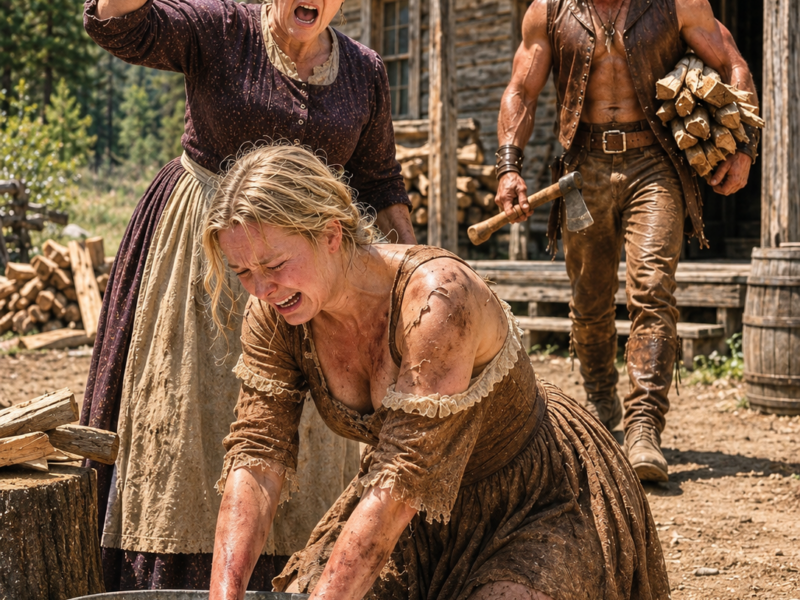
At 25, I Discovered My Mother Had Secretly Sold the 12 Acres My Late Father Left Me for $430, Then Told Me, “You’re Worthless Without This Family.” I Walked Away With Just $18 and Found Work on a Lonely Mountain Ranch, Where a Quiet Widower Finally Treated Me With Respect. But When His Barn Was Deliberately Set on Fire, My Mother Helped the Powerful Man Threatening His Land Discredit Me. Then the Sheriff Opened My Little Leather Journal—and What He Found Inside Changed Everything…
At 25, I Discovered My Mother Had Secretly Sold the 12 Acres My Late Father Left Me for $430, Then Told Me, “You’re Worthless Without This Family.” I Walked Away With Just $18 and Found Work on a Lonely Mountain Ranch, Where a Quiet Widower Finally Treated Me With Respect. But When His Barn Was Deliberately Set on Fire, My Mother Helped the Powerful Man Threatening His Land Discredit Me. Then the Sheriff Opened My Little Leather Journal—and What He Found Inside Changed Everything…
Part 1
The day my mother sold the land my father left me, she looked me straight in the eyes and told me I should be grateful.
I was twenty-five years old, standing in the kitchen of the Colorado farmhouse where I had spent my entire life, holding a document that proved the woman who raised me had betrayed me for $430.
Twelve acres. That was what my father had left me when he died. Twelve beautiful acres along the eastern boundary, with a narrow creek, a stand of cottonwood trees, and enough fertile ground for the small farm I had dreamed of building.
My mother had sold every inch of it without asking me.
“You had no right,” I whispered.
Margaret Whitmore sat at the kitchen table, calmly folding a dishcloth.
“I had every right, Clara. Someone in this family has to make sensible decisions.”
“Papa specifically left that land to me.”
“And your father was a sentimental fool when it came to you.”
Those words hurt more than the deed itself.
My father had been dead for six years, but I could still remember him teaching me to read financial ledgers when I was nine. He used to tell me that a woman with a sharp mind could accomplish anything, provided she never allowed someone else to convince her otherwise.
My mother had spent the years since his death trying to prove him wrong.
She controlled the money. She decided whom I could visit. She criticized everything I cooked, every dress I wore, every idea I expressed.
And whenever I suggested leaving, she reminded me that no respectable employer would hire a woman who had never lived independently.
“You wouldn’t survive a week without me,” she said that afternoon.
Something inside me finally snapped.
“Then I suppose we’ll find out.”
I walked into my bedroom and pulled my traveling bag from beneath the bed.
I packed two dresses, my father’s pocket watch, a photograph of him standing beside our barn, and the leather journal where I recorded every expense and transaction I could remember.
I had $18 hidden inside the lining of an old coat.
That was all.
When I returned to the hallway, my mother was waiting.
“Where are you going?”
“Away.”
She laughed.
“You’re being ridiculous.”
I reached for the door.
Her voice hardened.
“If you walk out of this house, don’t expect me to welcome you back.”
I turned toward her.
For one terrible moment, I wanted her to stop me. I wanted her to apologize, to tell me she had been frightened, to admit that selling my inheritance was wrong.
Instead, she folded her arms.
“You’re worthless without this family.”
I looked at her for a long moment.
Then I said, “Goodbye, Mama.”
And I left.
I walked three miles into Ridgerest beneath the enormous blue Colorado sky.
It was 1884, and a woman traveling alone attracted attention. I could feel people watching as I entered the trading post with my battered bag.
Mr. Harris, the elderly shopkeeper, glanced up.
“Heading somewhere, Miss Whitmore?”
“I hope so.”
While purchasing bread, I noticed a handwritten advertisement pinned beside the door.
Capable person wanted for ranch management assistance. Remote mountain property. Room and board provided. Fair wages. Inquire with Ethan Harland.
I read it three times.
I knew nothing about Ethan Harland, except that his ranch stood several miles north of town.
But I knew how to manage livestock, organize supplies, repair fences, keep financial records, and work from sunrise until long after sunset.
I had been doing those things since childhood.
I borrowed paper from Mr. Harris and wrote a short letter describing my experience.
Then I asked whether anyone could carry it north.
“The mail rider leaves tomorrow morning,” Harris said. “You could ride with him as far as the mountain road.”
I looked at my bag.
For the first time that day, I smiled.
“I’ll be here before sunrise.”
I spent the night in a rented room above the trading post.
I barely slept.
Every creak of the floorboards reminded me that I had no home to return to. Every unfamiliar sound made me question whether my mother had been right.
But whenever fear threatened to overwhelm me, I took out my father’s pocket watch.
He had placed it in my hand shortly before he died.
“Time belongs to you, Clara,” he had whispered. “Don’t spend your whole life living by someone else’s clock.”
I held that watch until morning.
The mail rider was a weather-beaten man named Pete who spoke so little I wondered whether he disliked conversation or simply considered words expensive.
We traveled north through rolling fields and pine-covered hills.
By afternoon, the mountains rose around us like enormous stone walls.
When I asked about Harland Ranch, Pete finally offered more than two words.
“Widower runs it. Good man. Quiet.”
“Is he fair?”
Pete considered.
“Never heard otherwise.”
That was enough for me.
He left me at a narrow mountain track four miles below the ranch.
I walked the remaining distance alone.
By the time I reached the property, my boots had rubbed blisters into both heels, my shoulders ached, and the sun was disappearing behind the peaks.
Then I saw the house.
It stood beneath towering pines, surrounded by fenced pastures, outbuildings, and an enormous weathered barn.
A dog barked.
A tall man emerged from the barn doorway.
His dark hair was untidy, his sleeves were rolled to his elbows, and he carried himself with the quiet confidence of someone accustomed to handling problems without complaint.
He studied me.
“Can I help you?”
“My name is Clara Whitmore. I wrote about your position.”
His gaze dropped to my bag.
“You came all the way up here?”
“Yes, sir.”
“Alone?”
“Yes.”
He was silent for a moment.
Then he stepped aside.
“Come inside. You look like you need coffee.”
His kitchen was clean enough, but the disorder was obvious.
Unpaid invoices covered one end of the table. An open ledger contained numbers written in several different directions. A supply list had been crossed out so many times it was nearly unreadable.
I noticed everything.
Ethan noticed me noticing.
“You really know accounts?”
“Since I was ten.”
He pushed the ledger toward me.
“Tell me what you see.”
I spent several minutes studying the entries.
Then I pointed to three columns.
“You’ve been paying too much for cattle feed. Approximately sixty dollars over three years, possibly more.”
His expression changed.
“How can you tell?”
“Your purchases don’t match your herd numbers. Either the deliveries were short or the invoices were inflated.”
He leaned forward.
“Can you prove it?”
“Give me two days.”
For the first time, he smiled slightly.
“Fifteen dollars a month. Room and board. You start tomorrow.”
“I can start tonight.”
He stared at me.
Then he laughed quietly.
“Miss Whitmore, I think we’ve made ourselves a deal.”
That evening, he showed me a small bedroom overlooking the northern pasture.
There was a wooden bed, a washstand, a narrow wardrobe, and a window facing the mountains.
It was the simplest room I had ever called my own.
Yet when Ethan closed the door and left me alone, I sat on the mattress and cried.
Not because I was frightened.
Because nobody had told me I was useless.
Nobody had criticized my appearance or questioned my intelligence.
A stranger had examined my abilities and offered to pay me for them.
The next morning, I woke before dawn and prepared biscuits, eggs, and coffee.
Ethan entered the kitchen just as I placed breakfast on the table.
“You didn’t need to do all this.”
“I know.”
He sat down and took a bite.
Then another.
“These are excellent.”
“My father taught me.”
“He sounds like a good man.”
“He was.”
For a while, we ate without speaking.
Then I opened his ledger.
“I found something else.”
Over the following week, I reconstructed three years of ranch accounts, created an inventory system, identified unnecessary expenses, and negotiated better terms with two suppliers.
Ethan never interfered.
He asked questions, listened to my answers, and let me work.
On my fifth evening, I discovered a newborn calf lying weakly in a corner of the barn.
I spent nearly two hours warming her, feeding her water, and encouraging her to stand.
When Ethan found me, I was sitting in the hay with my dress covered in dirt.
The calf was standing beside her mother.
He looked from the animal to me.
“You saved her.”
“She just needed someone to stay.”
His expression softened.
“Thank you, Clara.”
It was the first time he had used my given name.
I remembered it long afterward.
Two weeks later, a terrible storm brought down forty feet of fencing.
Six cattle escaped into the forest.
Ethan and I spent three hours searching through freezing rain before bringing every animal home.
That night, while we warmed ourselves beside the stove, he studied me over his coffee.
“You’re not what I expected.”
“What did you expect?”
“Someone who needed looking after.”
I raised an eyebrow.
“And now?”
He looked toward the window, where the rescued cattle stood safely beyond the rain.
“Now I reckon I was lucky you found that advertisement.”
For the first time in years, I felt something I had almost forgotten.
Pride.
But three weeks after my arrival, three riders appeared at the ranch.
Their leader was a well-dressed man with silver at his temples and a smile that never reached his eyes.
Ethan met them in the yard.
I watched from the kitchen window.
“Harland,” the stranger called. “I’ve come with another offer.”
“Then you’ve wasted your journey.”
The man smiled.
“Every property has a price.”
“Not mine.”
The stranger looked toward our house.
His gaze settled on me.
“And who’s the young woman?”
Ethan’s voice became cold.
“That’s none of your concern.”
The man continued smiling.
“Careful, Harland. Mountain life can be dangerous for people without family nearby.”
Ethan took one deliberate step forward.
“Get off my land.”
The riders eventually left.
When Ethan returned inside, I was waiting.
“Who was that?”
He removed his hat slowly.
“Silas Caldwell. A man who’s been trying to buy this ranch for three years.”
“Why?”
Ethan looked toward the mountains.
“Because whoever controls my creek controls the water supply for half this valley.”
I opened my journal.
“Then we should start documenting every conversation.”
He looked at me.
“Every conversation?”
“Every offer. Every threat. Every witness.”
Ethan considered the idea.
Then he pulled out a chair.
“All right, Clara. Where do we begin?”
I wrote Caldwell’s name on a fresh page.
Neither of us knew that the little journal would soon become the most dangerous thing Silas Caldwell had ever encountered.
And we certainly didn’t know that someone from my past was about to help him destroy us.
Part 2
The first letter arrived four weeks later.
It was addressed to Ethan, but I recognized the handwriting immediately.
My mother.
She accused me of stealing family property, abandoning my obligations, and living improperly with an unmarried man.
She demanded that Ethan dismiss me and send me home.
My hands shook as I read it.
“I understand if you want me to leave,” I whispered.
Ethan took the letter.
“Did you steal anything?”
“No.”
“Then you’re staying.”
He placed the paper beside my journal.
“Add it to the record.”
I stared at him.
“You believe me?”
“I’ve watched you work every day for a month, Clara. I know who you are.”
I nearly cried.
But my mother’s letter was only the beginning.
When I visited Ridgerest, Mr. Harris warned me that she had been spreading rumors throughout town.
People were questioning my character.
Some believed I was a thief.
Others said Ethan was foolish for employing me.
I returned to the ranch humiliated.
Ethan listened quietly.
“Does any of it change what’s true?” he asked.
“No.”
“Then it changes nothing here.”
Two nights later, our dog began growling at the door.
I looked through the window.
Orange flames were climbing the eastern wall of the barn.
“ETHAN!”
I ran outside screaming.
The fire spread with terrifying speed.
And as I approached the burning wall, I noticed something lying in the grass.
A broken lantern.
Its glass was still warm.
Someone had deliberately set our barn on fire.
And I already suspected who.
Part 3
I will never forget the smell of burning timber.
Even now, years later, the scent of smoke sometimes carries me straight back to that terrible night when I thought everything Ethan and I had built together was about to disappear.
The flames climbed the barn wall like living creatures.
Inside, the horses screamed.
I grabbed the nearest water bucket and ran toward the doors, but Ethan caught my arm.
“Stay back!”
“The horses!”
“I’ll get them. Bring water!”
There was no time to argue.
I ran to the well, filled two buckets, and dragged them toward the flames.
Ethan disappeared into the barn.
For several seconds, I couldn’t see him through the smoke.
Then he emerged leading our oldest mare, followed by two frightened horses.
A moment later, he went back for the remaining livestock.
I shouted his name.
He didn’t answer.
My heart pounded so violently I could hear it above the crackling flames.
Then a familiar voice called from behind me.
“Clara! Where’s Ethan?”
Thomas Webb, our nearest neighbor, had seen the smoke from his ranch six miles away.
He jumped from his horse and immediately joined the effort.
We formed a water line.
Buckets passed from hand to hand.
Water struck burning wood, turning into clouds of steam.
When part of the roof collapsed, I thought Ethan was still inside.
I screamed.
Then he appeared through the smoke, coughing violently, carrying a terrified calf across his shoulders.
I had never felt relief like it.
We fought the fire until after midnight.
By the time the final flames died, the eastern wall was destroyed, several storage shelves had burned, and a portion of the roof had collapsed.
But the main structure still stood.
So did every animal.
My hands were blistered. My left forearm bore an angry burn where an ember had landed.
Ethan noticed it immediately.
“You’re hurt.”
“So are you.”
“Clara.”
“Ethan.”
He almost smiled despite our exhaustion.
Then Thomas approached us carrying the broken lantern I had seen earlier.
He placed it on a barrel.
“Found this near the east wall.”
Ethan examined it.
His expression darkened.
“That doesn’t belong here.”
“No,” Thomas said. “And it didn’t break itself.”
I felt a terrible chill.
Then I remembered something.
I ran into the house, found my journal, and turned to an entry dated several weeks earlier.
There it was.
During Caldwell’s first visit, one of his men had spent several minutes standing beside the eastern barn wall.
I had thought his behavior strange.
So I had written it down.
I brought the journal outside.
“Look.”
Ethan read the entry.
Thomas leaned closer.
“Good Lord,” he whispered. “You recorded where the man was standing?”
“I record things that don’t make sense.”
Thomas looked toward the ruined wall.
“Then tomorrow morning, we’re taking this to Marshal Holt.”
I didn’t sleep that night.
Instead, I arranged every page of my journal into chronological order.
Caldwell’s offers.
His visits.
The threats disguised as friendly warnings.
The strange discrepancies in Ethan’s feed invoices.
My mother’s letter.
And now the fire.
By dawn, I had forty-three pages of organized evidence.
Marshal Samuel Holt listened without interrupting when we arrived at his office.
He was a compact man with graying hair and the watchful eyes of someone who had spent years distinguishing honest mistakes from deliberate lies.
I placed my journal before him.
For nearly an hour, I explained everything.
When I finished, he remained silent.
Then he turned several pages backward.
“You kept all this yourself?”
“Yes, sir.”
“From the beginning?”
“Yes.”
He looked at Ethan.
“She’s your employee?”
“She manages my ranch.”
Holt studied me again.
“Miss Whitmore, this is unusually thorough documentation.”
“Thank you.”
“I’m going to need copies.”
“You may have them.”
He leaned back.
“Caldwell has powerful friends. If we pursue this, he’ll fight.”
“I understand.”
“He may attempt to destroy your reputation.”
I thought about my mother.
“He’ll have to find something I haven’t already survived.”
Holt gave me a long, considering look.
Then he nodded.
“I’ll speak with the county attorney.”
We rode home that afternoon beneath a gray sky.
For several miles, neither Ethan nor I spoke.
Finally, I asked him something that had been troubling me.
“Have other families sold land to Caldwell?”
“Several.”
“Did they want to sell?”
Ethan hesitated.
“I don’t believe all of them did.”
That answer changed everything.
I asked about the families, the prices they received, and the circumstances surrounding their sales.
The Henry family had lost cattle before accepting Caldwell’s offer.
The Porters had suffered an unexplained boundary dispute.
Another rancher had experienced repeated problems with his water supply.
Different families.
Different disasters.
The same buyer.
I turned toward Ethan.
“This isn’t about your ranch alone.”
“I know.”
“No. I mean he may have been creating the problems that forced those families to sell.”
Ethan stared ahead.
Then he said quietly, “We need to find them.”
Thomas Webb helped us.
Over the following week, he contacted former ranch owners scattered across several counties.
Two families agreed to meet us.
George Becker arrived first.
He was a broad-shouldered man in his sixties whose hands trembled slightly as he held his coffee.
His wife sat beside him.
“We didn’t want to sell,” he admitted.
“What happened?” I asked.
“Someone diverted the creek feeding our south pasture. We lost cattle. The bank started demanding payment. Then Caldwell offered exactly enough to settle the debt.”
“Did anyone else know how much you owed?”
George shook his head.
“Only the bank.”
The second family told a different story.
Their boundary records had been mysteriously altered.
They spent months paying legal fees to defend land they already owned.
Then Caldwell appeared with an offer.
I recorded everything.
When both families had finished, I asked whether they would sign statements describing their experiences.
George looked at Ethan.
“Are you truly taking this to the authorities?”
“Yes,” Ethan answered.
George turned back toward me.
“Then give me the paper.”
The case was growing.
So was the danger.
Three days later, Mr. Harris sent an urgent message.
Caldwell had arrived in Ridgerest with two lawyers.
They were asking questions about me.
More specifically, they had obtained a copy of my mother’s letter.
That evening, I read Harris’s message aloud to Ethan.
When I finished, the kitchen seemed unnaturally quiet.
My mother had accused me of theft.
Caldwell was now using her accusation to undermine my credibility.
I wanted desperately to believe their cooperation was accidental.
But the timing suggested otherwise.
Ethan sat across from me.
“You think Caldwell contacted her?”
“Either that or she contacted him.”
“Why would she help a man like that?”
I looked down at the journal.
“Because if I succeed here, everything she told me about myself becomes a lie.”
Ethan said nothing.
I continued.
“She always said I was incapable of surviving without her. If I build a life here, she’ll have to face what she did to keep me dependent.”
I swallowed.
“She would rather see me fail than admit she was wrong.”
Ethan reached across the table and gently covered my hand.
“Clara, whatever your mother believes, it doesn’t determine your worth.”
I looked at his hand resting over mine.
It was a simple gesture.
Yet my heart reacted in a way that frightened me more than Caldwell ever could.
I had begun to love this man.
And I had absolutely no idea whether he felt the same.
Before I could say anything, someone knocked at the door.
Three sharp knocks.
Ethan stood immediately.
Thomas Webb was outside, breathing hard from the ride.
“Marshal Holt sent me,” he said.
My stomach tightened.
“What happened?”
Thomas stepped inside.
“The county clerk who altered those boundary records has disappeared.”
Ethan’s expression darkened.
“Disappeared?”
“Left town yesterday. His office is empty.”
I gripped my journal.
Thomas looked directly at me.
“And there’s something else.”
“What?”
“Caldwell has been telling people he intends to have you arrested for stealing from your mother.”
For a moment, I couldn’t breathe.
Thomas lowered his voice.
“He says he has proof.”
I looked toward Ethan.
The fire had failed to frighten us.
Our evidence had begun exposing Caldwell’s scheme.
Now he was coming after me personally.
But what none of us understood was that my mother was already on her way to Ridgerest.
And she was carrying a secret that could either destroy my reputation forever or bring Caldwell’s entire operation crashing down.
Part 4
I expected the next attack to come from Caldwell.
Instead, it came from Marshal Holt.
Not because he was against us, but because he arrived at the ranch three mornings later with news that turned my stomach.
“Your mother is in Ridgerest,” he announced.
I froze.
Ethan, standing beside the stove, set down his coffee.
“Why?”
“She came to my office yesterday. Says she wants to speak with her daughter.”
I stared at the marshal.
“Did Caldwell send her?”
“She claims he misled her.”
I laughed bitterly.
“My mother has spent twenty-five years refusing to admit she’s wrong. Forgive me if I find that difficult to believe.”
Holt didn’t argue.
He simply placed a folded note on the table.
“She asked me to give you this.”
I recognized the handwriting.
Clara, I have made a terrible mistake. Please allow me to explain. There are things you need to know.
There was no signature.
She didn’t need one.
I read the note twice.
Then I folded it carefully.
“I’ll meet her.”
Ethan looked at me.
“Are you sure?”
“No. But I need answers.”
We agreed to meet at Holt’s office the following morning.
I barely slept.
For years, I had imagined confronting my mother about the things she had done.
I had rehearsed speeches while washing dishes, repairing fences, and lying awake in my childhood bedroom.
Yet now, with the opportunity finally before me, I couldn’t remember a single one.
When I entered Holt’s office, Margaret Whitmore was sitting beside the window.
She looked older.
Her face seemed thinner, and there were deep shadows beneath her eyes.
For the first time in my life, she appeared uncertain.
“Clara.”
“Mama.”
Her gaze shifted toward Ethan, who had accompanied me.
Then she looked down at her hands.
“I didn’t know what Caldwell was doing.”
I sat opposite her.
“Tell me exactly what happened.”
She explained that Caldwell had approached her after learning I was working for Ethan.
He claimed I was causing trouble, making false accusations, and embarrassing the Whitmore family.
He told her that my records were dishonest.
Then he asked whether she could provide something demonstrating my supposed unreliability.
“And you gave him your letter,” I said.
She nodded.
“I thought I was protecting you.”
“No, Mama. You were protecting your control over me.”
Her eyes filled with tears.
I had never seen my mother cry.
Not when Papa died.
Not when our harvest failed.
Not even when she believed we might lose the farmhouse.
But now she covered her mouth with one trembling hand.
“I was afraid,” she whispered.
“Of what?”
“Of being alone.”
The answer stunned me.
She looked at me through her tears.
“After your father died, everything frightened me. The farm. The debts. The future. You were the only person I had left.”
“So you made sure I couldn’t leave.”
She closed her eyes.
“Yes.”
I felt a terrible mixture of anger and sadness.
For the first time, I could see the frightened woman beneath the controlling mother.
But understanding her fear did not erase what she had done.
“You stole my inheritance,” I said quietly. “You told people I was dishonest. You tried to ruin the only life I’ve ever chosen for myself.”
“I know.”
“And when Caldwell offered you a way to hurt me, you helped him.”
She lowered her head.
“Yes.”
The room fell silent.
Finally, I leaned forward.
“If you’re truly sorry, there’s something you can do.”
She looked up.
“Anything.”
“Tell Marshal Holt everything. Every conversation with Caldwell. Every request. Every promise. Sign a statement.”
Her expression changed.
“You want me to testify?”
“I want you to tell the truth.”
She hesitated only a moment.
Then she turned toward Holt.
“Where do I begin?”
Her statement took nearly two hours.
She described Caldwell’s meeting with her, the questions he had asked, and the way he had encouraged her to make damaging accusations about me.
She admitted that she had no evidence I had stolen anything.
More importantly, she revealed that Caldwell had asked about my journal before the barn fire.
That detail made Holt sit forward.
“Before the fire?” he repeated.
Margaret nodded.
“He said the little book was causing problems. He wanted to know whether she kept it with her.”
My skin went cold.
Caldwell had known about the journal.
He had known I was documenting his activities.
The barn fire had not simply been a warning to Ethan.
It might also have been an attempt to frighten me into destroying my records.
When my mother finished signing her statement, Holt looked at me.
“Miss Whitmore, this changes several things.”
I nodded slowly.
Margaret rose to leave.
At the door, she turned.
“Your father would be proud of you.”
I looked at her.
“He told me that himself.”
She flinched slightly.
Then she nodded and walked away.
I did not embrace her.
I did not promise forgiveness.
But for the first time, I believed she might genuinely understand the damage she had caused.
On the ride home, Ethan asked whether I regretted meeting her.
“No.”
“Do you forgive her?”
“Not yet.”
He nodded.
I looked toward the mountains.
“Maybe someday. But forgiveness doesn’t mean pretending something never happened.”
“No,” he said. “It doesn’t.”
Over the next month, the investigation expanded.
The missing county clerk was located in another county.
A bank employee admitted passing confidential financial information to one of Caldwell’s associates.
Former landowners came forward with statements describing suspicious accidents, altered records, and threats.
The pattern was unmistakable.
Caldwell had identified struggling property owners, increased their difficulties through calculated interference, and purchased their land when they were desperate.
Our ranch was simply the latest target.
In early December, Holt arrived with the news we had been waiting for.
A formal hearing had been scheduled.
I would testify.
Caldwell’s lawyers would question my credibility.
And my journal would become the center of the case.
For the next week, Ethan helped me prepare.
Every evening, he sat across from me at the kitchen table, pretending to be Caldwell’s attorney.
“Miss Whitmore, why should anyone believe a woman accused of stealing from her own family?”
“Because accusations are not evidence.”
“Your mother says you’re dishonest.”
“My mother has signed a statement explaining why her accusation was false.”
“Are you claiming Mr. Caldwell deliberately targeted your employer?”
“I’m presenting dated records showing a pattern of threats, financial interference, and suspicious activity.”
Ethan leaned back.
“You’re ready.”
I closed the journal.
“I hope so.”
He studied me for a long moment.
Then he said something I had not expected.
“Clara, whatever happens in that courtroom, I’m proud of you.”
My throat tightened.
I looked down, suddenly unable to meet his eyes.
“Thank you.”
He reached across the table.
His hand rested beside mine.
Neither of us moved.
For a moment, the only sounds were the fire and the wind against the windows.
Then he spoke quietly.
“You’ve changed this place.”
I smiled.
“Hopefully for the better.”
“More than you know.”
I looked at him.
There was something in his expression I had never seen so clearly before.
Something warm.
Something almost frightening in its tenderness.
But before either of us could speak again, the dog barked outside.
A rider had arrived.
It was Thomas Webb.
He carried an urgent letter from Holt.
Caldwell’s attorney had filed a formal challenge to my evidence.
He claimed my journal was fabricated.
He wanted every page excluded from the hearing.
I read the letter slowly.
Then I looked at Ethan.
For months, Caldwell had tried to frighten us with threats, rumors, and fire.
Now he was using the courts.
But I had spent my entire life preparing for people who believed they could silence me.
And this time, I would have an entire courtroom listening.
Part 5
The morning of the hearing was so cold that frost covered the inside corners of my bedroom window.
I stood before the small mirror wearing the dark blue dress I had packed when I left my mother’s house.
It was the nicest dress I owned.
I braided my hair carefully, pinned it behind my head, and fastened my father’s pocket watch inside my coat.
Then I picked up the leather journal that had accompanied me through everything.
The cover was scratched.
Several pages were stained with coffee.
One corner had been scorched during the barn fire.
But inside were the records that might finally bring Silas Caldwell to justice.
Downstairs, Ethan was waiting.
He wore a clean white shirt and his best dark jacket.
When I entered the kitchen, he looked up.
For several seconds, he said nothing.
“What?” I asked nervously.
He shook his head.
“Nothing. You look beautiful.”
I felt my cheeks warm.
“Thank you.”
Thomas Webb arrived with his wagon shortly afterward.
We rode down the mountain together, speaking very little.
As Ridgerest came into view, I remembered the frightened young woman who had passed through town months earlier carrying everything she owned.
That woman had believed she was running away.
Now I understood she had been running toward something.
The courthouse was crowded.
Former ranch owners sat along the back benches.
Local merchants stood near the windows.
Marshal Holt waited beside County Attorney Greer, who had spent weeks reviewing my documentation.
And at the opposite table sat Silas Caldwell.
He wore an expensive black coat and the same pleasant smile he had displayed during his first visit to our ranch.
But something was different.
His fingers tapped nervously against the table.
When he saw me, his smile disappeared.
I sat beside Ethan.
“You all right?” he whispered.
“Yes.”
He gave my hand a brief squeeze.
“Then let’s finish this.”
The proceedings began with testimony from the bank employee.
He admitted providing financial information to Caldwell’s associates.
Next came George Becker, who described how his water supply had been deliberately diverted before Caldwell offered to purchase his property.
Other witnesses followed.
Then Margaret Whitmore was called.
I held my breath as my mother walked forward.
She looked toward me once.
Then she faced the officials and repeated the statement she had given Holt.
She admitted making false accusations against me.
She explained how Caldwell had encouraged her to question my integrity.
And she revealed that he had been unusually interested in my journal.
Caldwell’s attorney objected repeatedly.
But Margaret did not change her account.
For once in her life, my mother told the truth without trying to control what happened afterward.
When she finished, she walked past me.
Our eyes met.
I nodded slightly.
She returned the gesture.
That was all.
Then County Attorney Greer called my name.
“Miss Clara Whitmore.”
I stood.
My knees felt weak, but I walked steadily to the front of the room.
I placed the journal on the table.
Greer asked me to explain its contents.
So I began at the beginning.
I described Caldwell’s first visit.
The threats.
The suspicious behavior near the eastern barn wall.
The financial discrepancies.
The letters.
The fire.
The conversations with families who had lost their properties.
I explained how each entry had been dated, how witnesses corroborated important details, and how the evidence formed a timeline of calculated intimidation.
I spoke for nearly forty minutes.
When I finished, the courtroom was completely silent.
Then Caldwell’s attorney stood.
“Miss Whitmore, isn’t it true that your own mother accused you of theft?”
“Yes.”
“And isn’t it true you left your family home without her permission?”
“I was twenty-five years old. I didn’t require permission.”
A few people shifted in their seats.
The attorney frowned.
“Would you agree that your relationship with your mother was troubled?”
“Very.”
“Then why should anyone trust your judgment?”
I looked directly at him.
“Because my relationship with my mother has nothing to do with the dates, invoices, witness statements, or physical evidence contained in this journal.”
He hesitated.
“Are you suggesting your personal character is irrelevant?”
“I’m suggesting that evidence should be evaluated according to whether it is accurate.”
He changed direction.
“Isn’t it possible you misunderstood Mr. Caldwell’s intentions?”
“Certainly.”
He smiled.
“Then you admit you could be wrong?”
“About his intentions, yes. Not about what he said, when he said it, who witnessed it, or what happened afterward.”
The attorney’s smile faded.
I continued.
“My journal doesn’t ask anyone to believe my feelings. It asks them to examine the facts.”
A quiet murmur spread through the courtroom.
The attorney attempted several more questions.
I answered each as carefully as I could.
Finally, he sat down.
When I returned to my seat, Ethan reached for my hand.
He didn’t speak.
He didn’t need to.
The hearing continued for another hour.
Then the officials withdrew to consider the evidence.
We waited outside in the freezing December air.
Thomas produced a paper bag filled with hard candy.
I laughed when he offered me one.
“How can you possibly think about candy right now?”
“Because worrying won’t change what happens inside.”
Ethan accepted a piece.
“Tom’s got a point.”
We sat together on a wooden bench.
For the first time all day, I allowed myself to breathe.
Nearly three hours passed before Marshal Holt emerged.
I stood immediately.
His expression told me something had changed.
“Miss Whitmore.”
“Yes?”
“The findings support the fraudulent acquisition allegations involving four properties. The remaining cases will require further proceedings.”
My heart began pounding.
“And the fire?”
“The evidence supports the arson allegation. The county attorney is moving forward with formal charges.”
I pressed a hand against my mouth.
Holt continued.
“Caldwell will be held pending further legal proceedings. His financial arrangements and land purchases are being examined.”
Thomas let out an enormous breath.
Ethan closed his eyes briefly.
I looked at Holt.
“What about the families who already lost everything?”
“They’ll have grounds to pursue their own claims. I can’t promise all the land will be returned, but they finally have documented evidence to support their cases.”
He paused.
“Because of you.”
I shook my head.
“Because people were willing to tell the truth.”
Holt smiled.
“And because someone was willing to write it down.”
The journey home felt unreal.
For months, I had imagined the moment Caldwell would finally face consequences.
I expected triumph.
Perhaps excitement.
Instead, I felt an enormous quiet settling inside me.
The kind of peace that comes when a terrible burden has finally been lifted.
When we reached the ranch, Thomas continued toward his own property.
Ethan and I walked up the last stretch of mountain road together.
Snow had begun falling.
Small white flakes drifted between the pines.
Inside, our dog greeted us enthusiastically.
Ethan built up the fire while I filled the kettle.
Everything looked exactly as it had that morning.
The wooden table.
The shelves of preserved vegetables.
The neatly organized ledgers.
The blue curtains that had belonged to Ethan’s late wife.
Yet something felt different.
I stood beside the stove, suddenly overwhelmed.
Ethan noticed.
“Clara?”
I turned toward him.
“I think I’m finally home.”
He went very still.
Then he approached slowly.
“I’ve wanted to tell you something for a long time.”
My heart began racing.
“What?”
“When my wife died, I thought the best part of my life had died with her.”
I listened silently.
“I kept the ranch running because I didn’t know what else to do. Every day looked like the one before it. I stopped expecting anything good to happen.”
His voice softened.
“Then one evening, a stubborn young woman walked four miles up my mountain carrying a bag and a journal.”
I laughed through sudden tears.
“She sounds exhausting.”
“She was the best thing that ever happened to this place.”
He stepped closer.
“You didn’t just save my ranch, Clara. You reminded me that life could still be worth looking forward to.”
I could barely speak.
“Ethan…”
“I don’t want you to stay because you work here.”
He took my hands.
“I want you to stay because I love you.”
For several seconds, I simply stared at him.
Then the tears came.
Not the frightened tears I had cried in my mother’s house.
Not the exhausted tears I had swallowed after the fire.
These were different.
These came from a place inside me that had finally learned it was safe to hope.
“I love you too,” I whispered.
He smiled.
Then he pulled me gently into his arms.
Outside, the snow continued falling.
Inside, the kettle began to whistle.
And for the first time in my life, I understood that love was not supposed to make me feel smaller.
It was supposed to give me room to become myself.
The months that followed brought changes throughout the valley.
George Becker and his wife received financial compensation after further proceedings.
The Henry family returned from Denver to pursue their claim.
Other families began challenging the circumstances under which Caldwell had acquired their properties.
Not every wrong was corrected.
Some land was never recovered.
Some families had already built new lives elsewhere.
But Caldwell’s network was exposed, and the people he had intimidated no longer had to face him alone.
Marshal Holt occasionally sent letters requesting clarification about my records.
I answered every one.
In February, he offered me a position assisting with county documentation.
I was deeply flattered.
But I declined.
My future was on the mountain.
Ethan and I had begun planning improvements to the ranch.
We expanded the north pasture, repaired the remaining storm damage, and negotiated new livestock contracts.
For the first time in years, the property was operating without financial confusion.
Then, in early spring, another letter arrived.
This one came from my mother.
I recognized her handwriting immediately, but my hands no longer shook when I opened it.
She wrote about the farmhouse, the approaching planting season, and the repairs she had finally arranged.
Then she mentioned the twelve acres.
Clara, I have contacted an attorney concerning the land your father left you. I cannot promise that the sale can be reversed, but I have begun taking steps to determine what I owe you and how I might make restitution.
I sat quietly for a long time.
It was not an apology that erased the past.
It was not a promise that everything could be repaired.
But it was the first time my mother had attempted to correct something without demanding forgiveness in return.
I wrote back.
I thanked her for taking responsibility.
I told her about the ranch.
And I explained that I would need time before I could consider visiting.
She did not argue.
When her next letter arrived, she simply said she understood.
That mattered more than I expected.
By April, Ethan and I had rebuilt the barn’s eastern wall.
We worked side by side for three days, fitting new boards into place and reinforcing the roof.
When the final nail was driven, Ethan stepped backward to admire our work.
“Better than before.”
I smiled.
“Some things are.”
He wrapped an arm around my shoulders.
We stood together looking across the pastures.
The calf I had saved during my first week had grown strong and healthy.
The garden was beginning to bloom.
Beyond the fences, the mountains stretched endlessly beneath the blue sky.
I thought about the woman I had been when I first arrived.
She had been frightened, exhausted, and certain she had nothing valuable to offer except hard work.
Now I knew better.
I had built a life.
I had helped expose a man who had destroyed families for profit.
I had found friends who respected me.
And I had fallen in love with someone who never once tried to make me doubt myself.
That summer, Ethan asked me to marry him.
He didn’t prepare an elaborate speech.
He simply sat beside me on the porch one evening, took my hand, and said, “Clara, I’ve never been particularly good at making promises. But I know I want to spend whatever years I have left making a life with you. Will you marry me?”
I looked at him.
Then I smiled.
“I walked four miles up a mountain to find you, Ethan Harland. Did you really think I was planning to leave?”
He laughed.
And I said yes.
We married in the autumn, surrounded by the small community that had become our family.
Thomas Webb stood beside Ethan.
His wife, Cora, helped me prepare.
Marshal Holt attended, wearing a suit that looked considerably less comfortable than his usual coat.
And my mother came.
I had invited her after months of careful letters and several difficult conversations.
When she entered the little church, she looked uncertain.
I walked toward her.
For a moment, we simply stood facing each other.
Then she whispered, “You look happy.”
“I am.”
Her eyes filled.
“Your father would have loved this.”
I smiled.
“I think he would.”
She reached for my hand.
I allowed her to hold it.
We were not the mother and daughter we might have been.
Too much had happened for that.
But perhaps we could become something healthier.
Something honest.
And when the ceremony began, I walked toward Ethan without hesitation.
A year later, I was sitting at our kitchen table writing in a new journal when he came inside.
He placed a cup of coffee beside me.
“What are you recording today?” he asked.
I considered the question.
The accounts were balanced.
The animals were healthy.
The winter supplies were ready.
My husband was standing beside me, smiling.
And outside, the mountain that had once frightened me had become the most beautiful place I knew.
I looked down at the blank page.
Then I wrote one sentence.
Today, my life finally feels like it belongs to me.
Ethan read it over my shoulder.
He kissed the top of my head.
“That’s a good thing to write down.”
I closed the journal and took his hand.
My mother had taken my inheritance.
Caldwell had tried to take our home.
For years, fear had taken my confidence.
But none of them had managed to take the one thing that mattered most.
My right to decide who I would become.
And sometimes, when I looked across the valley at sunset, I thought about my father and the words he had spoken before he died.
“Time belongs to you, Clara. Don’t spend your whole life living by someone else’s clock.”
I still carried his pocket watch.
But I no longer checked it to count the hours until another difficult day was over.
I checked it to remind myself how precious every ordinary, peaceful moment could be.
Because I had finally learned something my mother never taught me.
A person does not become worthy when someone else chooses to love them.
They were worthy all along.
And sometimes the bravest thing a person can do is walk away from the place where they are constantly told otherwise.
I had left home with eighteen dollars, a battered traveling bag, and a little leather journal.
I had climbed a mountain with no guarantee that anyone would welcome me.
And on the other side of that journey, I had found something far greater than the twelve acres my mother stole.
I had found the freedom to build a future of my own.
And that was an inheritance nobody could ever sell.