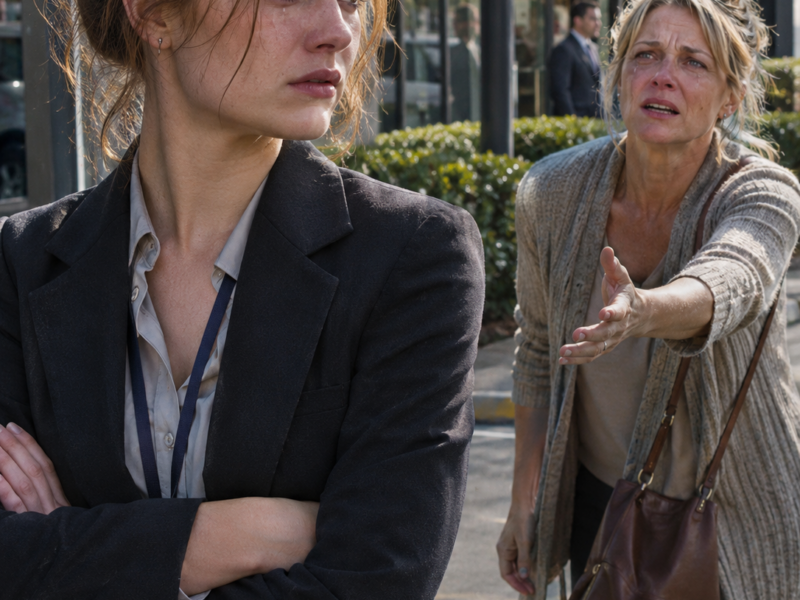
At 18, My Parents Abandoned Me at a Truck Stop 90 Miles From Home With Just $62 Because I Refused to Give My Brother the $23,900 I’d Saved for Nursing School. My Mother Smiled and Said, “Don’t Come Crawling Back,” Before They Drove Away. Exactly One Year Later, She Showed Up Outside My Workplace With My Seriously Ill Father, Asking for Something Far More Valuable Than Money. But When I Discovered What They’d Been Hiding About My Brother and Dad’s Illness, I Made Them Meet Me at That Same Truck Stop…
At 18, My Parents Abandoned Me at a Truck Stop 90 Miles From Home With Just $62 Because I Refused to Give My Brother the $23,900 I’d Saved for Nursing School. My Mother Smiled and Said, “Don’t Come Crawling Back,” Before They Drove Away. Exactly One Year Later, She Showed Up Outside My Workplace With My Seriously Ill Father, Asking for Something Far More Valuable Than Money. But When I Discovered What They’d Been Hiding About My Brother and Dad’s Illness, I Made Them Meet Me at That Same Truck Stop…
PART 1
The night my parents abandoned me at a truck stop ninety miles from home, I had sixty-two dollars in my wallet, a phone with barely thirty percent battery, and almost twenty-four thousand dollars in savings that I couldn’t access.
My mother looked directly into my eyes before they drove away.
“Don’t come crawling back, Kelly.”
She was smiling when she said it.
For the next twenty minutes, I stood beneath the fluorescent lights, watching the highway and convincing myself that any moment, our silver Chevrolet Equinox would return. My father would roll down his window, tell me I’d learned my lesson, and order me back into the car.
But the car never returned.
What I didn’t know that night was that my parents would eventually come looking for me. Exactly one year later, my mother would appear outside my workplace wearing that same familiar smile.
This time, however, she wouldn’t be asking for my savings.
She would be asking for something no amount of money could replace.
And by then, I would know a secret about my family that would change everything.
My name is Kelly Lenhardt, and I grew up in Kettering, Ohio, in a family where love was measured by how much you were willing to sacrifice for someone else.
At least, that’s what my parents taught me.
The strange thing was that the sacrifices always seemed to flow in one direction.
Toward my older brother, Brandon.
Brandon was six years older than me, charming, ambitious, and, according to our mother, destined for extraordinary things. By the time he was twenty-four, he was selling real estate near Cleveland and talking about investment properties, commissions, and the expensive lifestyle he intended to build.
My parents spoke about him like he was already a millionaire.
I was simply Kelly.
The responsible daughter.
The girl who never caused trouble.
The child who supposedly didn’t need anything because she was strong enough to handle everything herself.
There were thirteen framed school photographs of Brandon hanging in our hallway. One for every year from kindergarten through graduation.
There were three photographs of me.
When I was twelve, I asked my mother why.
She barely looked away from the dishes.
“Brandon needs encouragement, sweetheart. He’s our investment. You’re different. You’ve always been able to take care of yourself.”
At twelve, I thought she was complimenting me.
At eighteen, I finally understood.
Being independent in our family didn’t mean being respected.
It meant being expected to survive whatever everyone else decided to take from me.
My father, Dale, worked as a delivery driver for a beverage distributor. My mother, Carol, worked at the front desk of a dental office. We weren’t wealthy, but we weren’t struggling to keep the lights on either.
We lived carefully.
Unless Brandon needed something.
When he needed money for his real estate licensing course, my school trip to Washington, D.C., suddenly became an unnecessary expense.
When his car transmission failed, I lent him six hundred dollars from my savings.
He sent me a thumbs-up emoji and promised to repay me.
Three years later, I was still waiting.
When he wanted expensive birthday dinners, my mother somehow found room in the budget.
When I needed new shoes for work, she told me to wait until payday.
Eventually, I stopped asking.
At fifteen, I started working at Willow Creek Senior Living, a nursing home about ten minutes from our house.
My first job involved delivering meals, collecting trays, cleaning tables, and helping residents with small things that made their days easier.
It wasn’t glamorous.
Some evenings, my feet hurt so badly that I could barely walk upstairs after getting home.
But something about the work made sense to me.
The residents remembered my name.
They thanked me for things my family considered ordinary obligations.
Sometimes, they noticed when I was tired.
One woman named Mrs. Patterson, a retired bookkeeper in her eighties, became particularly fond of me.
She was sharp, opinionated, and impossible to fool.
One evening, she caught me counting my earnings during a break.
“What are you saving for, Kelly?”
“Nursing school.”
She smiled.
“Good. Then remember something.”
She leaned forward and tapped the table.
“Don’t let anybody spend your future for you.”
I laughed because it sounded like something from a movie.
I didn’t know those words would eventually save my life.
By the summer I graduated high school, I had saved $23,900.
Every dollar represented something.
A weekend I had worked instead of going shopping.
A holiday shift.
A summer morning when my friends were sleeping in and I was already helping residents get ready for breakfast.
I had been accepted into an eleven-month practical nursing program near Dayton, scheduled to begin August 25.
My plan was straightforward.
I would continue living with my parents, pay my tuition myself, finish my training, and become a licensed practical nurse before turning twenty.
For the first time, my future felt close enough to touch.
There was only one problem.
The savings account holding my money had been opened when I was fourteen.
My mother’s name was on it.
I hadn’t worried about that until a nurse at Willow Creek noticed my banking app one afternoon.
“Is that a joint account with your mother?”
I nodded.
She frowned.
“Kelly, you’re eighteen now. You need an account that belongs only to you.”
“Why?”
“Because if her name is on that account, she may be able to withdraw everything without asking you.”
The thought made my stomach tighten.
Two days later, I opened an account at a local credit union.
I moved all $23,900.
I placed $20,000 into a twelve-month certificate of deposit and kept the remaining $3,900 in savings.
The certificate would mature the following summer, when I expected to need money for the later portion of my education.
I felt proud walking out of that credit union.
I had made an adult decision entirely on my own.
I didn’t tell my parents.
Not because I believed I was doing anything wrong.
Because I had learned that announcing good news in our house sometimes meant giving someone else an opportunity to destroy it.
A week later, my mother discovered the transfer.
The old bank had mailed a confirmation letter.
When I returned from work, the envelope was sitting open on the kitchen table.
My mother stood beside it.
“I see you’ve moved your money.”
I swallowed.
“I’m eighteen. I thought it should be in my own name.”
She studied me.
“Interesting.”
Then she smiled.
“We’ll talk about it later.”
But we didn’t.
For nearly three weeks, she acted unusually pleasant.
She asked about my shifts.
She made my favorite dinners.
She even mentioned how exciting nursing school would be.
Looking back, I realize she wasn’t accepting my decision.
She was planning how to reverse it.
Around that time, I noticed another troubling detail.
My father’s medical paperwork had been left on the refrigerator.
One number was circled in red.
eGFR: 34.
I didn’t fully understand what that meant, but I knew it had something to do with kidney function.
Dad had lived with type 2 diabetes for more than a decade.
Recently, his ankles had started swelling, and he seemed constantly exhausted.
I also noticed a pharmacy bag containing an expensive new medication.
The price was $460.
“Dad, is everything okay with your kidneys?”
He grabbed the paperwork and shoved it into a drawer.
“Doctors like making people worry. I’m fine.”
I wanted to believe him.
Then something odd happened.
My new debit card never arrived.
The credit union confirmed that it had been mailed to our house.
They sent another.
That one disappeared too.
I suspected something wasn’t right, but I couldn’t imagine my own mother deliberately interfering with my ability to access money I’d earned.
I was still capable of being that naive.
On August 12, Brandon announced that his offer on a condominium in Lakewood had been accepted.
The place cost $215,000.
My mother was ecstatic.
She spent the next two days talking about his success and how proud everyone should be.
Then she announced we were driving north to celebrate with him.
“Friday afternoon,” she said. “We’re having dinner together.”
I hesitated.
School was starting soon, and I had paperwork to finish.
But she insisted.
“Your brother wants his whole family there.”
That sentence worked on me.
Despite everything, some part of me still wanted to belong.
The night before the trip, Brandon called.
He almost never called me.
“Hey, Kel. Mom said you might be willing to help with the closing costs.”
I sat up on my bed.
“What?”
“Just a loan. Nothing permanent.”
“What closing costs?”
He hesitated.
“Mom said she’d explain.”
Then he quickly ended the conversation.
I should have refused to go.
Instead, I packed a small duffel bag.
Two changes of clothes.
My phone charger.
My wallet.
I thought we were going away for one night.
I had no idea that when I left my bedroom that Friday, I would never sleep there again.
We departed at 1:30 in the afternoon.
Dad filled the gas tank and reset the trip odometer to zero, something he always did because of his delivery routes.
Mom sat in the passenger seat, holding a canvas tote bag.
I sat behind her.
The first hour passed in uncomfortable silence.
Then, somewhere north of Columbus, Mom turned down the radio.
She removed a sheet of paper from her bag and handed it to me.
It was Brandon’s closing estimate.
The purchase price was listed at $215,000.
Below it were figures for his down payment, taxes, fees, and other expenses.
One amount had been underlined.
Approximately $23,000.
“Your brother is short,” Mom explained.
I stared at the number.
She continued before I could respond.
“You have almost twenty-four thousand dollars saved. He needs twenty-three thousand. Sometimes things happen for a reason.”
I looked up.
“That money is for nursing school.”
“School isn’t going anywhere.”
“My classes start in ten days.”
“Then start next year.”
I thought I had misheard her.
“You want me to postpone my education so Brandon can buy a condo?”
She sighed.
“Don’t be dramatic, Kelly. You’re eighteen. One year won’t ruin your life.”
“But it’s my money.”
“Money belongs to the family when the family needs it.”
I looked at Dad.
He kept driving.
“Dad?”
He finally spoke.
“Brandon will pay you back.”
Those words brought back the six hundred dollars Brandon had borrowed for his transmission.
I still hadn’t received a cent.
“No,” I said.
Mom turned around.
“Excuse me?”
“I said no. I’ve worked three years for that money. I’m going to nursing school.”
Her expression hardened.
“After everything we’ve done for you?”
I felt my heartbeat accelerate.
“I’m grateful for having a home, but that doesn’t mean you get to decide what happens to my savings.”
“You’ve become incredibly selfish.”
“I’m not trying to hurt Brandon.”
“Then help him.”
“I can’t.”
She turned toward Dad.
“Dale, are you hearing this?”
My father said nothing.
Then he activated his turn signal.
At first, I thought we were stopping for gas.
We exited the highway and entered a large truck stop surrounded by diesel pumps, parked semitrailers, and bright overhead lights.
Dad pulled into a parking space.
He put the car in park.
The trip odometer read 90.2 miles.
My mother turned to face me.
“I’m giving you one last opportunity to make the right decision.”
I stared at her.
“My answer is still no.”
Dad reached back and unlocked my door.
“Then you can survive without us.”
I laughed nervously.
“What?”
“Get your bag.”
For several seconds, I couldn’t move.
Then he opened the trunk.
I stepped outside and retrieved my duffel bag.
The trunk slammed shut.
Mom lowered her window.
“Your $23,900 belongs to this family, Kelly. If you’re too selfish to understand that, maybe you need to learn what being alone feels like.”
I could barely breathe.
“Please don’t do this.”
She gave me a thin smile.
“Don’t come crawling back.”
I looked at Dad.
“Dad?”
He stared through the windshield.
The engine accelerated.
Their car rolled toward the highway.
And I watched the two people who had raised me disappear into traffic.
PART 2
For twenty minutes, I waited for them to return.
They didn’t.
I had $62, a useless debit card, and a phone at thirty-one percent. My new bank cards had never arrived, and my savings might as well have been on another planet.
I called my best friend, Haley.
Voicemail.
Then my phone buzzed.
Mom.
Your father changed the garage code. Don’t come home until you’re ready to apologize.
I read the message repeatedly.
That was when I understood they hadn’t abandoned me in anger.
They had abandoned me deliberately.
They expected hunger, fear, and desperation to accomplish what their arguments couldn’t.
I bought a six-dollar sandwich and spent the night sitting upright inside the truck stop restaurant.
At midnight, the manager explained I couldn’t sleep there.
So I stayed awake.
At 5:20 the next morning, a woman in navy scrubs approached my booth.
She was carrying two coffees.
“You’ve been here all night, haven’t you?”
I nodded.
Her name was Gail.
She was a charge nurse at a dialysis clinic in Delaware, Ohio.
When I told her I had worked in a nursing home, she studied me carefully.
“We’re hiring patient care technicians. Apply Monday.”
Then she offered me a ride into town.
That stranger couldn’t solve everything.
But she changed the direction of my life.
And without knowing it, she placed me on a path that would eventually expose the terrible secret my family had been hiding.
PART 3
Gail dropped me outside the public library in Delaware shortly before ten that Saturday morning.
Before leaving, she wrote her phone number on the cardboard sleeve of my coffee cup.
“Apply online,” she instructed. “Then call me Monday evening. Not before.”
I held the cup like it was something precious.
“Why are you helping me?”
She considered the question.
“Because someone helped me once.”
Then she drove away.
I sat on the library steps until the doors opened.
Inside, I used a public computer to submit applications to Gail’s dialysis clinic, a grocery store, and two restaurants.
Afterward, I approached the librarian.
I must have looked terrified, because she lowered her voice before I spoke.
“Can I help you, honey?”
“Is there somewhere nearby where I could stay for a couple of nights?”
She didn’t demand an explanation.
She simply wrote down the address of an emergency shelter for women.
That night, I slept on cot number twelve.
There were nine other women in the room.
Some were much older than me. Some looked exhausted. One cried quietly into her pillow after the lights went out.
I lay awake wondering how my life had changed so completely in less than twenty-four hours.
Three years of working.
Almost twenty-four thousand dollars saved.
A nursing school acceptance letter.
And somehow I was homeless.
By Monday morning, things became worse.
My phone showed “SOS Only.”
My father had canceled my service.
For a moment, panic swallowed me.
Then I remembered something I’d read on the credit union’s website.
My credit union belonged to a shared-branch network.
I found a participating branch, walked there, and explained my situation.
The teller asked for identification and my account information.
I provided both.
A few minutes later, she counted fifteen hundred dollars into an envelope.
“Everything looks fine,” she said.
I nearly cried.
My money was still there.
My future hadn’t been stolen.
Not completely.
I immediately reported both missing debit cards and requested that replacements be held until I had a safe mailing address.
Then I bought a prepaid phone plan and activated a new number.
For the first time, my parents had no direct way to reach me.
That afternoon, however, I received devastating news.
The nursing school couldn’t hold my place.
Classes were beginning too soon.
I could apply again during the following admission cycle, but my original enrollment was gone.
I sat on a bench outside the library and stared at the email until the words blurred.
That was when the loss finally became real.
I had protected my savings, but my parents had still managed to destroy the future I’d planned.
My original education schedule depended on living at home.
Without that arrangement, I couldn’t afford full-time classes and independent living expenses simultaneously.
I would need a different plan.
At six that evening, I called Gail.
She answered immediately.
“Kelly?”
“I’m still in Delaware.”
“Good. My neighbor rents a room. Want to meet her?”
Her neighbor was Joan Albrecht, a seventy-two-year-old retired English teacher.
Joan lived in a white two-story house with a porch swing and flowerpots lining the steps.
Her upstairs bedroom was available for six hundred dollars a month, utilities included.
She invited me into her kitchen and explained the rules.
Rent was due on the first.
No overnight guests.
No smoking indoors.
And absolutely no lying.
“I taught ninth graders for thirty-four years,” she said. “I can detect dishonesty from across a classroom.”
I smiled for the first time in days.
“I won’t lie to you.”
Joan studied me for another moment.
Then she slid a key across the table.
It was attached to a small brass tag.
That evening, I paid the deposit and first month’s rent.
When I entered my room, I closed the door and turned the lock.
Then I unlocked it.
And locked it again.
Nobody could change a garage code and keep me out.
Nobody could demand twenty-three thousand dollars before allowing me to sleep.
It was the smallest room I’d ever called mine.
It felt like a mansion.
Three days later, I interviewed at the dialysis clinic.
The manager, Nancy Fulton, offered me a trainee position paying $17.50 per hour, pending routine hiring checks.
I would need to learn the equipment, complete supervised training, and eventually earn professional certification.
I accepted immediately.
The job required additional identification, so I obtained a certified copy of my birth certificate from the health department.
At eighteen, it was the first time I’d handled that sort of paperwork without my mother.
When Nancy asked me to complete my emergency contact information, I paused.
For my entire life, I’d automatically written my parents’ names.
This time, I wrote Joan Albrecht.
I stared at the page for several seconds.
I was beginning to understand that family wasn’t always the same thing as safety.
Before the clinic position started, I worked at a diner to earn extra money.
Then, in September, I put on my first set of clinic scrubs.
Gail greeted me at the entrance.
“Ready?”
I nodded.
I wasn’t.
Not entirely.
Training was challenging.
I learned how dialysis machines worked, how to monitor blood pressure, how to recognize signs of distress, and how to assist patients receiving treatment under the nurses’ supervision.
Many patients visited three times every week.
Some were exhausted.
Some were angry.
Some joked because laughter was easier than thinking about their illness.
One of them was Walt Hennessy, a sixty-eight-year-old retired electrician.
He had been receiving dialysis for six years.
On my first day, he watched me struggle with a blood pressure cuff.
“First week, kid?”
“Yes.”
“Try not to kill me before lunch.”
I stared at him.
Then he laughed so loudly that the nurse beside us turned around.
Over the following months, Walt became one of my favorite patients.
He had a thick, raised blood vessel along his forearm.
A fistula.
I learned that surgeons created these connections between an artery and a vein to provide reliable access for dialysis treatments.
Once I understood what a fistula looked like, I began noticing them everywhere.
And every time I saw one, I remembered my father’s medical paperwork.
eGFR: 34.
I researched the number and learned it indicated significantly reduced kidney function, consistent with stage 3b chronic kidney disease.
My father wasn’t necessarily facing immediate kidney failure.
But his condition was serious.
Combined with years of diabetes, it meant he needed careful treatment and monitoring.
I wondered whether he was following his doctor’s advice.
I wondered whether his swelling had worsened.
Sometimes I opened his contact information and considered calling.
Then I remembered the locked garage.
The truck stop.
His refusal to look at me.
And I put my phone away.
In late September, Brandon posted a photograph on Instagram.
He stood outside a condominium with a red front door, holding up his new keys.
His caption read:
Couldn’t have done it without Mom and Dad.
I stared at the photograph.
Something didn’t make sense.
My parents didn’t have twenty-three thousand dollars sitting around.
If they had, they wouldn’t have tried so desperately to take my savings.
Where had the money come from?
I didn’t know.
At Thanksgiving, I celebrated with Joan, Gail, and Gail’s family.
Joan prepared an enormous turkey and insisted that everyone share something they were grateful for.
When my turn came, I said, “A bedroom door that locks.”
They initially laughed.
Then Gail noticed my expression.
The laughter faded.
Joan reached across the table and squeezed my wrist.
Nobody demanded an explanation.
It was the first Thanksgiving I could remember when I didn’t feel responsible for managing somebody else’s happiness.
Later that evening, I saw a picture my mother had posted online.
Brandon and his parents were celebrating inside his condo.
The caption read:
Blessed to have our family together.
Dad stood near the edge of the photograph.
He looked terrible.
His face was swollen, particularly around his eyes. His skin had a grayish tone.
I recognized those signs from work.
I typed a message.
Dad, please get your kidneys checked.
Then I deleted it.
For weeks afterward, I wondered whether that choice made me cruel.
In January, something happened at the clinic that strengthened my confidence.
A patient began answering questions unusually slowly during treatment.
Her face changed.
Her hand stopped moving across the word-search puzzle she’d been completing.
I checked her blood pressure.
Seventy-eight over forty.
I immediately called Gail.
The clinical team intervened, and the patient stabilized.
Afterward, Gail found me organizing supplies.
“You noticed something was wrong before the machine alarmed.”
I shrugged.
“She just didn’t look right.”
Gail smiled.
“That’s what a good healthcare worker does. She pays attention.”
Nobody in my family had ever praised me for noticing something important.
They usually expected me to notice problems quietly and solve them without asking for help.
At the clinic, those same instincts were becoming strengths.
In February, Walt told me something personal.
His daughter had once offered to donate a kidney.
She had undergone testing and appeared to be a suitable match.
“Why didn’t you accept?” I asked.
He took a photograph from his wallet.
Three little boys wearing matching baseball caps.
“My grandsons,” he said proudly.
Then he looked back at me.
“My daughter has three children. She offered because she loves me. But I wasn’t comfortable asking her to take that risk for me.”
I considered his words.
After a moment, I told him about my parents.
About the savings.
The argument.
The truck stop.
The ninety miles.
He listened without interrupting.
When I finished, he sat quietly.
Then he said something I would never forget.
“Kelly, if I’d ever left my daughter alone beside a highway, I wouldn’t have the right to demand a glass of water from her.”
I looked down because my eyes were filling.
In March, I bought a used Honda Civic for $5,600 in cash.
It wasn’t beautiful.
The paint was scratched, and the driver’s seat had a small tear.
But it belonged to me.
That same month, I applied to a part-time evening nursing program.
It would take twenty months instead of eleven, but it would allow me to continue working while studying.
During the financial aid process, I learned that students under twenty-four were generally considered dependent for federal aid unless they qualified for an exception.
Because of my circumstances, the school reviewed documentation of my family estrangement.
Gail and Joan both wrote supporting letters.
Joan allowed me to read hers.
One sentence broke me.
Kelly has paid her rent early every month and consistently demonstrated responsibility beyond her years.
I went upstairs and cried.
It wasn’t a dramatic sentence.
But an adult had finally described me as responsible without treating my reliability as permission to exploit me.
In May, I received my acceptance.
My independent status was approved for financial aid purposes.
In June, I passed my certification exam and received a raise to $19.25 per hour.
My coworkers surprised me with a cake.
Someone took a photograph, and I posted it online.
I didn’t know that photograph would eventually lead my family straight to my workplace.
A few days later, Walt received life-changing news.
After six years of waiting, a kidney from a deceased donor had become available.
He called the clinic from the hospital.
Gail put him on speakerphone.
Every technician gathered around.
For the first time, I heard Walt cry.
In July, I turned nineteen.
My twenty-thousand-dollar certificate matured, with a balance of $20,820.
I stared at the number on my screen.
Every cent still belonged to me.
And then, on August 15, almost exactly one year after my parents abandoned me, the receptionist stopped me as I was leaving work.
“Kelly, there’s a woman outside asking for you.”
I stepped through the doors.
My mother was standing on the sidewalk.
She had her familiar canvas tote bag over one shoulder.
Her sunglasses were pushed onto her head.
And she was smiling.
The same small smile she’d worn at the truck stop.
“Hello, sweetheart.”
Before I could react, she hugged me.
I stood motionless.
“You look wonderful,” she said. “So grown up.”
I looked past her.
Across the parking lot sat our silver Equinox.
Dad was in the passenger seat.
That alone frightened me.
My father never let anyone else drive his car.
I walked toward him.
He lowered the window.
“Hey, kiddo.”
I almost didn’t recognize him.
His face had become thin and hollow.
His skin looked gray.
And when he rested his left forearm against the window, I saw something that made my blood run cold.
A thick, raised fistula.
There was a small piece of medical tape near the access site.
I knew immediately.
“How long have you been on dialysis?”
Dad stared at me.
Mom approached from behind.
“Since March.”
For a moment, I couldn’t speak.
My father was fifty-four years old.
He looked twenty years older.
Then Mom touched my shoulder.
“We’d like to take you to dinner, Kelly. Just to talk.”
I knew I should be suspicious.
But a small part of me still wanted to hear an apology.
I agreed to meet them the following Wednesday at six.
I chose a public restaurant.
I would drive myself.
And I gave them exactly one hour.
When I told Gail, she looked troubled.
“Kelly, people don’t usually disappear for a year and suddenly show up with transplant access on their arm because they miss family dinners.”
I looked at her.
“What are you saying?”
She hesitated.
“I’m saying you should prepare yourself for the possibility that they want something.”
I already knew what my mother had wanted the last time.
But I couldn’t imagine what she might want now.
Not until Wednesday evening, when she opened her canvas bag and placed a folder on the restaurant table.
PART 4
The folder contained information from a transplant center in Columbus.
Living kidney donation.
Medical screening.
Surgical recovery.
A health questionnaire.
My name had already been written across the top.
In my mother’s handwriting.
I stared at it, unable to speak.
She leaned forward with an encouraging smile.
“You and your father have the same blood type, Kelly. O positive. The doctors say family members can sometimes be wonderful donors.”
I looked from the paperwork to Dad.
He was staring into his water glass.
“Are you asking me to give him one of my kidneys?”
Mom tilted her head.
“Don’t make it sound so frightening. People donate kidneys all the time.”
I knew enough from the clinic to understand that living donation could help someone with kidney failure.
I also knew it involved major surgery, medical risks, recovery, and a lifelong commitment to monitoring one’s health.
It wasn’t like lending someone money.
It wasn’t something anyone should be pressured into doing.
“Being the same blood type doesn’t automatically make me a match,” I said.
“Well, that’s why they do tests.”
“And what about Brandon?”
Mom answered immediately.
“He wasn’t a suitable candidate.”
My father lowered his head.
Something about his expression bothered me.
“Was he tested?”
“He wasn’t a suitable candidate,” she repeated.
Then she moved forward as though the question were settled.
“The recovery is usually manageable. You’re young and healthy. Your school can wait another semester if necessary.”
I felt a familiar coldness spread through my chest.
“My classes start September eighth.”
She smiled.
“School will still be there.”
The exact same sentence.
One year earlier, she’d used it to demand my savings for Brandon’s condo.
Now she was using it to justify asking for one of my kidneys.
For several seconds, all I could hear was the clattering of dishes behind us.
I wanted to stand up.
I wanted to scream.
Instead, I closed the folder.
“I’ll attend the information session Monday,” I said. “To learn about the process. I’m not agreeing to donate.”
Mom practically beamed.
“Of course, sweetheart. That’s all we’re asking.”
But I recognized the expression.
She believed the decision had already been made.
That night, I told Gail and Joan everything.
We sat around Joan’s kitchen table while she prepared tea.
When I repeated what Mom had said about Brandon not being a suitable candidate, Gail grew thoughtful.
“Sometimes transplant programs use confidential explanations when potential donors decide not to proceed,” she said.
“What do you mean?”
“If someone withdraws, the medical team protects their privacy. The family may simply be told that person isn’t a candidate.”
I stared at her.
“So Brandon could have decided not to donate?”
“Possibly. But there are legitimate medical reasons someone might be ruled out. You can’t know which without him telling you.”
Then I mentioned Dad’s medication.
The expensive diabetes pill.
The one that had cost $460 a month.
At dinner, Dad had listed his current medications and casually mentioned that he’d stopped taking it the previous autumn.
Months before dialysis began.
Gail frowned.
“Some newer diabetes medicines can help protect kidney function. But whether he should have continued taking that specific one depends on his medical situation.”
“Why would he stop?”
“There could be several reasons. Cost is one possibility.”
I remembered Brandon’s condominium.
The down payment.
The amount my parents had apparently found after I refused.
I felt something shifting into place.
The next morning, Mom posted a photograph of Dad receiving dialysis.
Her caption said he desperately needed a living kidney donor.
Then came the sentence that made my stomach twist.
We are praying that our daughter finds it in her heart to help him.
Within hours, relatives began contacting me.
People I hadn’t spoken to in years.
An old neighbor.
A cousin.
An aunt.
One message read:
Your father is dying, and you’re worried about school?
I realized Mom had given them my new phone number.
She was using the family to apply pressure.
Just as she had done with my savings.
When Aunt Diane called, I finally asked the question nobody else had bothered asking.
“What did Mom tell you about why we haven’t spoken for a year?”
Diane sounded confused.
“She said you moved out because you wanted independence.”
I closed my eyes.
“She left me at a truck stop, Aunt Diane.”
Silence.
“What?”
“Ninety miles from home. They demanded my school savings. When I refused, they drove away.”
I told her about the locked garage.
The missing debit cards.
The shelter.
The nursing program I’d lost.
By the time I finished, Diane was crying.
“She never told us any of that.”
“I know.”
She promised not to confront Mom until I was ready.
The following day, I called the transplant center.
I asked to speak with an independent living donor advocate.
Her name was Ellen Brandt.
She explained that donation was voluntary and that potential donors could withdraw from evaluation at any stage.
Their reasons would remain confidential.
Her responsibility was to protect the donor’s interests.
Not the recipient’s.
Nobody had ever explained a decision involving my family that way.
Then I asked what relatives would be told if a potential donor declined.
She confirmed that programs could communicate that the individual was not proceeding as a donor without disclosing private reasons.
I thanked her.
On Saturday evening, I called Brandon.
He answered cautiously.
“Kelly?”
“Were you tested as a kidney donor?”
He didn’t answer.
“Brandon.”
“Who told you?”
My stomach tightened.
“Nobody. Were you?”
He sighed.
“Yes.”
“Were you a match?”
“I passed the initial screening. The crossmatch looked good.”
“Then why did Mom tell me you weren’t a candidate?”
Another silence.
Finally, he spoke.
“Because I withdrew.”
I gripped my phone.
“Why?”
“Kelly, I’m a real estate agent. I work on commission. I can’t just disappear from work for weeks. And Lauren and I are getting married in October.”
I stared at the wall.
“So you said no.”
“Yes.”
“And Mom knows?”
“Of course she knows. She said she’d handle everything.”
I almost laughed.
She had handled everything.
By finding the daughter she’d abandoned.
Then Brandon said something else.
“Dad already did enough for me.”
“What does that mean?”
He hesitated.
Then he admitted that Dad had borrowed approximately $24,000 from his retirement plan to help cover the condominium purchase.
After Dad became too ill to continue working, the outstanding loan created additional tax consequences.
Brandon estimated that his father now owed thousands of dollars in taxes and penalties.
I remembered the prescription price.
The timing.
“Brandon, did Dad stop taking any medication because of that loan?”
“What medication?”
He sounded genuinely confused.
I realized Mom had been protecting him from the consequences of the decisions made for his benefit.
Just as she’d done throughout his entire life.
On Monday, I attended the transplant information session.
My parents sat in the second row.
Mom waved enthusiastically when she saw me.
Brandon wasn’t there.
The medical team explained testing, surgery, possible complications, and recovery expectations.
I asked detailed questions.
Mom seemed delighted.
She interpreted every question as proof that I was preparing to donate.
During a break, I walked toward the restroom.
Then I heard her voice coming from a small alcove.
She was speaking on the phone.
“I told you she’d come back.”
I stopped.
“She always comes back. Just stay out of it until she signs.”
My entire body went cold.
I knew those words.
When I was fifteen, after my Washington, D.C., trip was canceled to help pay for Brandon’s licensing course, I’d overheard Mom telling Dad:
She’ll get over it. She always does.
Now I understood.
When she’d told me not to come crawling back at the truck stop, she hadn’t been drawing a boundary.
She’d been making a prediction.
She believed she could hurt me as badly as necessary because eventually, I would return and do whatever she wanted.
I walked back into the conference room without saying anything.
I finished the session.
I took notes.
I smiled politely when appropriate.
Then I went home and sent a group message to Mom, Dad, and Brandon.
You’ll get my answer Saturday at ten in the morning. All three of you. At the truck stop off I-71 where you left me.
Mom replied almost immediately.
Why there?
I typed:
Because that’s where this started.
Brandon complained about the drive.
Mom ordered him to come.
Joan offered to accompany me.
I asked her to remain in my car, somewhere I could see her.
Saturday morning, I arrived thirty minutes early.
The truck stop looked almost identical to the night my parents abandoned me.
The fluorescent lights.
The diesel pumps.
The enormous trucks idling outside.
Inside, I found the same booth.
The red vinyl seat was cracked down the middle.
I sat facing the entrance.
At ten, my parents arrived.
Dad walked slowly, using the backs of chairs for support.
Mom carried her canvas tote.
Brandon entered a few minutes later.
He looked uncomfortable.
Mom glanced around the restaurant and smiled.
“This is actually beautiful, Kelly. Coming back to where everything ended.”
I looked directly at her.
“It didn’t end here.”
She frowned.
“It started here.”
She removed the transplant forms from her bag.
Then she placed a photograph on the table.
It showed Dad holding me as a newborn.
“He was the first person to hold you,” she said softly. “Before anyone else.”
I looked at the photograph.
Then at the man sitting across from me.
“I know what dialysis does to people,” I said. “I see it every day.”
Mom nodded eagerly.
“Exactly.”
“But before I make any decision, I have some questions.”
“Ask anything.”
I turned to Brandon.
“Why did you withdraw from donor testing?”
His face drained of color.
Mom’s smile vanished.
“What are you talking about?”
I looked at her.
“Brandon passed the initial screening. He told me himself.”
Brandon stared into his coffee.
Mom leaned toward me.
“Your brother has responsibilities, Kelly. His wedding is in October.”
I nodded.
“So he gets to keep both kidneys because he has a wedding.”
“Don’t be cruel.”
“And I should give up one because I’m young and apparently don’t have anything important to lose?”
Brandon finally spoke.
“It’s my body, Kelly. I have the right to decide.”
I turned toward him.
“Yes, Brandon. You do.”
He seemed surprised.
“And so do I.”
Mom slapped her palm lightly against the table.
“We’re talking about your father’s life!”
I took a breath.
“Then let’s talk about what happened to his health.”
I turned to Dad.
“Last year, you were taking a diabetes medication that cost $460 a month. When did you stop?”
He stared at me.
“October.”
“Why?”
Mom interrupted.
“That’s private medical information.”
Dad shook his head.
“Carol.”
She stopped.
He looked at me.
“The retirement loan payment was $490 a month. The medication was $460. We couldn’t afford both.”
My heart seemed to stop.
“So you stopped taking it?”
He nodded.
“My doctor later told me that stopping it may have contributed to how quickly things got worse. My blood sugar wasn’t well controlled either.”
Nobody spoke.
Dad had taken out a retirement loan to buy Brandon a condo.
Then he’d stopped paying for medication because the loan consumed the money he needed.
And now my parents wanted me to undergo major surgery to help repair the damage.
Brandon looked horrified.
“Dad, I didn’t know.”
Mom immediately reached for him.
“We didn’t want to burden you, sweetheart.”
I stared at her.
There it was.
The entire story of my childhood in one sentence.
Brandon couldn’t be burdened.
Not with money.
Not with inconvenience.
Not even with the full truth about his father’s illness.
But I could be asked for everything.
Then I asked Mom about my missing debit cards.
She immediately became defensive.
“I never touched your money.”
“I didn’t ask about the money. I asked about the cards.”
“They came in the mail.”
The table fell silent.
I leaned forward.
“What?”
She realized her mistake.
Dad closed his eyes.
“Both envelopes are still in the kitchen drawer,” he admitted quietly.
I stared at him.
For an entire year, those debit cards had been hidden in my parents’ house.
On the night they abandoned me, Mom knew I couldn’t access my money.
She knew I had only sixty-two dollars.
She knew exactly how frightened I’d be.
And she’d done it anyway.
I turned back to Dad.
“One last question.”
He nodded slowly.
“After you left me here, did you ever consider coming back?”
His eyes filled.
“At Mansfield,” he whispered.
“About forty miles farther north.”
“What happened?”
“I thought about turning around.”
I waited.
He lowered his head.
“But I kept driving.”
For the first time, I told him everything.
The dead phone.
The sandwich.
The sleepless night.
The shelter.
Cot number twelve.
The stranger who bought me coffee.
The nursing school I’d lost.
Dad began crying.
I didn’t raise my voice.
“You’re asking me to trust you with the inside of my body,” I said, “when you couldn’t be trusted to bring me home from a truck stop.”
He covered his face.
Mom reached for him.
“Dale, don’t let her manipulate you.”
He pushed her hand away.
“I’m not asking her anymore, Carol.”
She stared at him.
“What?”
“I’m not asking Kelly for a kidney.”
I looked down at the paperwork.
Then I finally gave them my answer.
PART 5
“I’m not going through donor evaluation.”
My voice trembled, but I forced myself to continue.
“I’m not doing the tests. I’m not postponing nursing school. And I’m not agreeing to surgery because everyone at this table thinks my future matters less than Brandon’s.”
My mother stared at me as if I’d spoken another language.
“Kelly, your father could die.”
“I know.”
“Then how can you sit there and refuse?”
I looked at Dad.
His face was wet with tears.
“I don’t want anything bad to happen to you,” I told him. “But I cannot be the solution to every decision this family makes.”
He nodded.
Mom turned toward Brandon.
“Say something!”
He looked from her to me.
Then back at the forms.
For the first time, he seemed to understand what it felt like when our mother decided someone else’s body, time, and future were available for family use.
He said nothing.
I turned to him.
“You were right earlier. It’s your body. You get to decide whether to donate.”
He swallowed.
“Kelly—”
“But that right belongs to me too. You can’t keep your choice private while Mom forces me to make the opposite one.”
He looked away.
Mom’s expression hardened.
“You’ve become so cold.”
I almost smiled.
“No, Mom. I’ve become someone who can say no.”
She reached for the photograph of Dad holding me as a baby.
“What happened to the sweet little girl who loved her family?”
I studied the photograph.
For years, I’d believed love meant sacrificing whatever someone demanded.
If Brandon needed money, I should give it.
If Mom needed someone to blame, I should accept it.
If Dad wanted peace, I should remain quiet.
And if my entire family required me to suffer so everyone else could be comfortable, apparently I should do that too.
But the past year had taught me something different.
Gail had helped me without demanding anything in return.
Joan had given me a home without expecting control over my decisions.
My coworkers had supported my education.
Walt had shown me that even a potentially lifesaving gift had to be freely offered.
I looked directly at Mom.
“That little girl spent eighteen years trying to make you proud. You taught her that she’d never be enough unless she gave you everything.”
Mom opened her mouth.
I continued.
“And when she finally refused, you left her here.”
For once, Mom had no answer.
I reached into my pocket and removed a small card.
I’d written a few notes on it the night before.
I slid it toward Dad.
“These are questions for your transplant team. Ask about your waiting-list status, other donor options, and whether paired kidney exchange could be relevant. And please speak to the clinic social worker about financial assistance with your medications.”
He picked up the card.
“Thank you,” he whispered.
“Take care of yourself, Dad.”
I placed five dollars on the table to cover my coffee.
Then I stood.
Mom reached for my wrist.
“Kelly, please.”
I looked down at her hand.
She let go.
“I am not coming home,” I said.
Then I walked away.
Through the front windows, I saw all three of them sitting motionless.
Mom had the transplant paperwork spread across the table.
Brandon stared at his father.
Dad was looking at the photograph of himself holding me.
It was strange to see them like that.
For so long, I’d been the person responsible for fixing every uncomfortable situation.
Now they would have to face one without me.
Joan was waiting in my car.
She leaned over and opened the passenger door.
“Are you okay?”
I nodded.
Then I shook my head.
“I don’t know.”
She didn’t ask what happened.
She just waited until I was ready to drive.
We made it four miles before my hands started shaking uncontrollably.
I pulled into the parking lot of a small church.
Turned off the engine.
And cried.
Not the quiet tears I’d shed over Joan’s letter.
Not the tears I’d fought while watching my nursing classmates begin without me.
These were deep, painful sobs that seemed to come from somewhere I’d kept sealed shut for years.
I cried for the girl who had stood outside that truck stop waiting for her parents.
For the eighteen-year-old sleeping in a shelter.
For the daughter who still loved her father even after he’d abandoned her.
And for the terrible realization that refusing to sacrifice myself didn’t automatically make the guilt disappear.
“What if he dies?” I whispered.
Joan put a hand on my back.
“What if he dies because I said no?”
She waited until I looked at her.
“Kelly, your father’s health is affected by many things. Years of diabetes, medical complications, treatment decisions, and choices he made himself. His illness isn’t something you caused by protecting your body.”
I stared through the windshield.
“I still love him.”
“I know.”
“Doesn’t that mean I should help?”
“You did help. You told him the truth. You gave him information. You encouraged him to seek care. But loving someone doesn’t mean surrendering your right to choose.”
I looked down at my hands.
For the first time, I considered the possibility that caring and sacrificing weren’t the same thing.
When we returned home, my phone was full of messages.
Fourteen from Mom.
The first accused me of humiliating the family.
The second called me selfish.
Another listed everything she’d sacrificed while raising me.
Then came:
I’m sorry if you felt abandoned.
I stared at those words.
If.
As though my parents hadn’t physically abandoned me.
As though the locked garage and the hidden debit cards had been misunderstandings.
Her last message asked what I’d told Aunt Diane.
I typed one response.
I’m not coming back. Please stop contacting me.
Then I blocked her number.
For the rest of that evening, I sat on Joan’s porch swing watching the streetlights come on.
I expected to feel triumphant.
Instead, I felt exhausted.
Sometimes the right decision doesn’t feel like victory.
Sometimes it just feels like finally putting down something you’ve been carrying for too long.
Three days later, I received a call from an unfamiliar number.
The woman introduced herself as Lauren Whittaker.
Brandon’s fiancée.
I had met Lauren only a handful of times.
She always seemed kind, but we’d never developed a close relationship.
“Kelly, I hope it’s okay that I’m calling.”
“Of course.”
She hesitated.
“Brandon told me what happened Saturday.”
I said nothing.
“He told me about the kidney testing. And the condo. And your father’s medication.”
Her voice tightened.
“He lied to me.”
I frowned.
“About what?”
“He told me in June that he wasn’t a match. He never said he’d chosen to withdraw.”
I closed my eyes.
Lauren continued.
“And he never told me his father had borrowed retirement money to help buy our condo. I thought his parents were comfortable making that contribution.”
I could hear her struggling to control her emotions.
“I don’t want you to think I pushed him to refuse donation.”
“I don’t.”
“I told him the decision was his. But I expected him to tell me the truth.”
I understood exactly what she meant.
She took a breath.
“I’ve postponed the wedding.”
I sat upright.
“Lauren, you don’t have to do that because of me.”
“I’m not doing it because of you.”
Her tone became firm.
“I’m doing it because I need to know the person I’m marrying. If I’m ever seriously ill, I need to know he won’t lie to me because honesty is inconvenient.”
I didn’t know what to say.
Then she told me something surprising.
“Brandon called the transplant center this morning. He asked to restart his evaluation.”
After we hung up, I sat quietly for a long time.
Brandon had spent his entire life protected from uncomfortable choices.
Maybe, for the first time, he was beginning to understand their consequences.
Two days later, he called me.
“Hey, Kel.”
“Hi.”
He sounded nervous.
“I wanted to tell you I’m doing the testing again.”
“Lauren mentioned it.”
“I’ll have to repeat some bloodwork. The team also made sure nobody was pressuring me.”
“What did you tell them?”
“The truth. That I’m making the decision myself.”
I nodded, although he couldn’t see me.
“Good.”
He hesitated.
“I’m also planning to put the condo on the market.”
That surprised me.
“Why?”
“Dad’s tax bill. The loan. I can’t keep living in a place he damaged his finances to help me buy.”
“Brandon, you don’t have to sell it to prove anything to me.”
“I’m not trying to prove anything to you.”
He paused.
“I saw Dad’s face at the truck stop. I’ve never really looked at him before. Not like that.”
For a moment, I heard something different in his voice.
Not entitlement.
Not defensiveness.
Shame.
Then he asked, “If the transplant happens, would you come to the hospital?”
I thought carefully.
“I don’t know.”
“Okay.”
He didn’t argue.
He didn’t pressure me.
It was the first conversation we’d ever had in which he accepted my answer without trying to change it.
A few days later, a handwritten letter arrived at Joan’s house.
My name was on the envelope.
I recognized the handwriting immediately.
Dad.
Inside were two sealed credit union envelopes.
My missing debit cards.
He had finally returned them.
There was also a letter written across several sheets of lined paper.
He began by saying Mom didn’t know he’d contacted me.
Then he described the drive after leaving me at the truck stop.
He wrote that he’d reset the car’s trip odometer before we left Kettering.
The number had read 90.2 when he abandoned me.
When he returned home that Sunday, he wrote 90.2 on a sticky note and attached it to the dashboard.
He had looked at that number every time he entered the car.
For an entire year.
I wiped my eyes and kept reading.
He explained that when the retirement loan payments began, he and Mom had faced difficult financial choices.
Instead of asking Brandon to repay the money immediately, they chose to reduce other expenses.
Dad stopped filling his expensive prescription without obtaining a safe alternative plan from his medical team.
His health deteriorated.
He acknowledged that he had made that decision and that nobody else should be forced to pay for it.
Then I reached a sentence that made me stop breathing.
I didn’t turn around at Mansfield because I was more afraid of confronting your mother than I was of leaving you alone.
I read it three times.
It was the first time Dad had admitted something I’d always suspected.
He hadn’t abandoned me because he believed it was right.
He’d abandoned me because standing up to Mom required courage he didn’t have.
Near the end, he wrote:
I’m not asking you for a kidney. I’m not asking you to come home. I know I don’t deserve either.
I should have protected you that day.
Instead, I watched you get out of the car and drove away.
I’m sorry, Kelly.
I folded the letter carefully.
Then I put it in my nightstand.
I didn’t respond.
Not yet.
An apology couldn’t erase what happened.
But at least, for once, Dad had told the truth without demanding something in return.
On Labor Day, Aunt Diane hosted the annual family cookout.
Mom usually organized the entire gathering.
This year, things went differently.
That evening, Diane sent me a message.
Your father stood up in the backyard and told everyone what happened.
I stared at the screen.
She continued.
He told them about the money, the truck stop, the bank cards, and the medication.
Apparently, Mom had tried to interrupt him.
But Dad had continued.
He admitted leaving me ninety miles from home.
He acknowledged that he had driven away knowing I had no reliable way to access my savings.
He told everyone that my refusal to donate was my own decision and that nobody had the right to harass me over it.
For the first time, the extended family heard the story without Mom controlling it.
The cousin who had accused me of letting Dad die sent me a message.
I’m sorry.
Two other relatives apologized before the night ended.
Mom left the cookout early.
According to Diane, nobody followed her to the car.
I didn’t celebrate that detail.
I knew what it felt like to be left alone.
But I also understood that Mom was finally facing consequences she couldn’t shift onto me.
That evening, I unblocked Dad’s number.
I wrote a message.
Deleted it.
Wrote another.
Then finally sent:
I read your letter. Please follow your medical team’s instructions and ask for help if you can’t afford your prescriptions. I’m not ready to see you. If that changes, it will be my choice.
Ten minutes later, he replied.
I understand. Thank you, Kelly.
I sat looking at the screen.
For the first time in my life, I’d expressed concern for someone in my family without agreeing to give them something they demanded.
And nothing terrible happened because of that boundary.
The following morning, September 8, my nursing program began.
I woke early, even though classes weren’t until evening.
I organized my textbooks.
Checked my notebooks.
Prepared my new scrubs.
Then I took out the tuition receipt.
I’d paid for my first semester using money from the certificate of deposit.
The same savings my mother had insisted belonged to Brandon.
I held the receipt for a long moment.
Three years of weekend shifts had led to this.
Not in the way I’d planned.
Not on the timeline I’d expected.
But I was finally going to nursing school.
That evening, I walked into the classroom carrying a backpack and a nervous smile.
The instructor began taking attendance.
When she reached my name, she paused.
“Kelly Lenhardt?”
“Here.”
Such a small word.
But it felt enormous.
For most of my life, my last name had represented a family whose expectations I could never satisfy.
Now it belonged to a student building her own future.
During the break, Gail sent me a photograph of two coffees sitting on a hospital cart.
How’s your first day?
I took a picture of my anatomy textbook.
A minute later, she replied.
Proud of you.
I smiled at my phone.
Then I went back to class.
The following Saturday, Walt visited the clinic.
He was three months into recovery from his transplant.
His color had returned.
He looked healthier than I had ever seen him.
He carried two boxes of doughnuts and announced that he was treating everyone.
When he found me, he grinned.
“Not bad for an old electrician, huh?”
I laughed.
“Not bad at all.”
He asked how things had gone with my family.
I told him the truth.
About the restaurant.
The confrontation.
My father’s letter.
My decision.
Walt listened thoughtfully.
Then he told me he’d received a letter through the transplant program from the donor’s family.
He didn’t know their names.
He knew only that someone had made a decision that had given him another chance at life.
“That’s what makes it special,” he said.
“What?”
“That somebody gave freely.”
He looked directly at me.
“A gift stops being a gift when someone believes they’re entitled to take it.”
I thought about those words for days.
At the end of September, I drove back to the truck stop alone.
The highway looked different from behind the wheel of my own car.
I wasn’t trapped in the back seat.
Nobody was holding paperwork in front of me.
Nobody was deciding whether I deserved a ride home.
I could stop whenever I wanted.
I could turn around.
I could keep going.
When I pulled into the parking lot, the same bright lights illuminated the diesel pumps.
The restaurant windows glowed.
The trucks idled in the distance.
I sat for a moment with my hands resting on the steering wheel.
Then I went inside.
A young woman was working the register.
She looked about seventeen.
Her name tag was crooked, and she seemed exhausted.
I bought two coffees.
One for myself.
And one for her.
She looked surprised.
“What’s this for?”
I smiled.
“Just something to make your shift a little easier.”
She thanked me.
I didn’t tell her my story.
I didn’t sit in the booth where I’d spent that terrible night.
I simply walked back outside and stood beneath the lights.
A year earlier, I’d stood in almost the same spot with sixty-two dollars, convinced that my life was over.
I’d believed my parents had taken everything.
My home.
My security.
My education.
My family.
But standing there now, I realized something.
They hadn’t taken my future.
They had forced me to build it differently.
And along the way, I’d discovered people who cared about me without expecting me to purchase their affection.
I returned to my Civic.
Before leaving, I reset the trip odometer.
0.0.
Then I drove home.
Past the library where I’d applied for jobs.
Past the clinic where Gail had given me my first opportunity.
Down a quiet street lined with old trees.
Finally, I pulled into the driveway of a white two-story house with a porch swing.
I glanced at the dashboard.
10.3 miles.
That was how far I’d traveled.
Ten miles.
Not ninety.
My father was still receiving dialysis.
Brandon was continuing his donor evaluation, and I didn’t know whether he would ultimately be approved or undergo surgery.
My mother hadn’t contacted me again.
Some days, that silence hurt more than I expected.
Other days, it felt peaceful.
I still didn’t know whether I would ever rebuild a relationship with my parents.
I didn’t know what would happen to Brandon’s wedding or whether Dad would receive a transplant.
Those parts of the story remained unfinished.
But one thing was certain.
I no longer believed my value depended on what I could provide.
At eighteen, my parents had abandoned me beside a highway because I refused to surrender twenty-three thousand dollars.
One year later, they drove ninety miles to find me because they wanted something infinitely more valuable.
They believed I would always come back.
They believed that eventually, guilt would make me surrender whatever they demanded.
But they had misunderstood the daughter they’d raised.
I had survived without them.
I had found work, a home, an education, and people who treated me with dignity.
And when they finally returned, asking for a piece of my body, I discovered that the most important thing I’d gained wasn’t money or independence.
It was my own voice.
My mother once told me I would come crawling back.
She was wrong.
I did return to that truck stop.
But I arrived in my own car.
I brought my own keys.
And when it was time to leave, I drove toward a home where nobody had to sacrifice their future to earn the right to stay.
For the first time in my life, I wasn’t trying to become the daughter my parents wanted.
I was finally becoming the woman I wanted to be.
And that was something nobody could take from me.