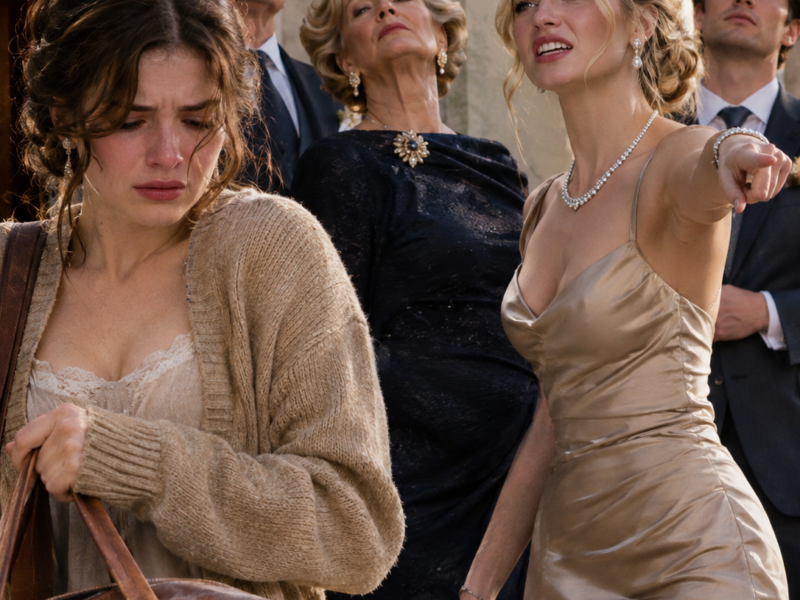
After Paying My Younger Sister’s College Tuition and Helping Her for 24 Years, I Discovered She Had Secretly Married Into a Wealthy Family Without Inviting Me or My Son. “His Family Is Old Money, Sweetheart. You Understand,” My Mother Said, Before Demanding I Clear Out My Beach House for the Newlyweds to Live Rent-Free. I Quietly Changed Every Lock and Moved Their 28 Boxes Outside. Eleven Days Later, My Sister Returned From Hawaii With Her Wealthy Father-in-Law—and He Asked One Question She Was Terrified I Would Answer.
After Paying My Younger Sister’s College Tuition and Helping Her for 24 Years, I Discovered She Had Secretly Married Into a Wealthy Family Without Inviting Me or My Son. “His Family Is Old Money, Sweetheart. You Understand,” My Mother Said, Before Demanding I Clear Out My Beach House for the Newlyweds to Live Rent-Free. I Quietly Changed Every Lock and Moved Their 28 Boxes Outside. Eleven Days Later, My Sister Returned From Hawaii With Her Wealthy Father-in-Law—and He Asked One Question She Was Terrified I Would Answer.
PART 1
The morning after my younger sister’s wedding, my mother called me and said something I would remember for the rest of my life.
“His family comes from old money, sweetheart. Surely you understand why certain things had to be handled differently.”
I was standing in the kitchen of my beach house, staring at twenty-eight cardboard boxes stacked against the living room wall. Every box belonged to my sister and her new husband.
They had already decided they would spend their honeymoon in Hawaii, return to Oregon, and move into my house without paying a penny.
There was just one small detail.
Neither my son nor I had been invited to their wedding.
And apparently, I was supposed to understand.
I didn’t scream. I didn’t cry. I didn’t even ask my mother why she thought that was acceptable.
I simply said, “Congratulations. I hope they’re happy.”
Then I hung up, found a locksmith’s number, and made an appointment.
By sunset, every lock on my property had been changed.
What happened eleven days later, when my sister arrived with her millionaire father-in-law, would change our family forever.
But to understand why I did it, you need to understand the kind of woman I had spent forty-six years becoming.
My name is Karen Hail. I’m a hospice nurse in Portland, Oregon, and I’ve spent most of my adult life caring for people who needed more than they could give back.
I don’t regret that work.
What I regret is bringing the same habit home and convincing myself that love meant never saying no.
My younger sister, Brin, was ten years behind me. When our father died, I was twenty-two, struggling through nursing school and raising my three-month-old son, Cole.
His father had disappeared before he was born.
Our mother, Sharon, barely functioned after the funeral. She spent weeks behind her bedroom door while unpaid bills accumulated and food spoiled in the refrigerator.
I became the person who kept everything moving.
I worked nights, studied between shifts, took care of my baby, cooked dinner, paid what bills I could, and helped Brin with her homework.
I was exhausted almost all the time.
But I loved my sister.
And back then, she loved me in a way that made every sacrifice seem worthwhile.
I remember one evening when I came home after a sixteen-hour shift. Brin was twelve, barely tall enough to hold Cole comfortably. She walked him up and down the hallway because he wouldn’t stop crying.
“Go to sleep, Karen,” she whispered. “I’ve got him.”
I watched her through my half-open bedroom door.
She was so small. He was so heavy.
Yet she carried him until he finally fell asleep.
That memory stayed with me for decades.
Whenever Brin disappointed me, whenever she asked for something unreasonable, whenever I felt taken advantage of, I remembered that little girl carrying my baby.
I told myself family was about showing up for one another.
Unfortunately, somewhere along the way, I became the only person expected to show up.
I paid for Brin’s college tuition when our mother said she couldn’t afford it.
I bought her first dependable car.
I covered her orthodontic bills, helped with rent, paid emergency expenses, and gave her money whenever she found herself between jobs.
I never asked her to repay me.
When Cole was twelve, I purchased a small foreclosed beach house in Rockaway Beach.
It wasn’t beautiful.
The roof leaked, the kitchen floor was soft near the sink, and the porch needed replacing. The paint was peeling so badly that our neighbor joked the house looked like it was shedding its skin.
But it belonged to me.
Every dollar came from years of nursing shifts, overtime, and careful saving.
The first day we visited, rain poured down so hard we could barely see the ocean.
Cole stood in the driveway holding our new house key above his head like he’d won a championship.
Brin wrapped an arm around his shoulders, laughing.
Our neighbor, Peggy Dolan, came across the street carrying a pie and took a photograph of the three of us.
That picture hung in my living room for twelve years.
It was my favorite photograph in the world.
At first, the beach house was our little escape.
Cole and I spent weekends repairing things, painting walls, and watching storms roll across the water.
Then Brin started visiting every summer.
She loved the smaller bedroom with the ocean-facing window.
The first summer, Cole had been using it, but he immediately moved his belongings onto the porch couch when his aunt arrived.
I told him he didn’t have to.
“It’s fine, Mom,” he said.
He was twelve. Sleeping outside under blankets seemed like an adventure.
The following summer, the same thing happened.
Then again.
And again.
Eventually, nobody even discussed it.
Brin had her room. Cole had the couch.
And I had convinced myself everybody was happy.
Brin started referring to the property as “my beach house” on social media.
She posted photographs of sunsets from my porch, holiday dinners in my kitchen, and summer mornings overlooking the water.
I noticed.
Of course I noticed.
But correcting her felt petty.
She loved the house. Wasn’t that a good thing?
Then she met Graham Thorne.
Graham came from a wealthy Oregon family whose fortune had started in timber generations earlier. His father, Russell Thorne, owned property in some of the most expensive neighborhoods in the state.
The Thornes weren’t flashy people.
They were the kind of wealthy people who didn’t need to announce it.
Their family had traditions, expectations, and financial rules that Graham had apparently struggled to satisfy.
One rule mattered more than anything else.
Before receiving full access to his family inheritance at thirty-two, Graham had to demonstrate that he could support himself independently.
His father had already rescued him from one failed business venture.
This was his final opportunity.
Brin found the entire arrangement fascinating.
Suddenly, her vocabulary changed.
She stopped saying “I” and started saying “we.”
“We summer in Gearhart.”
“We prefer intimate gatherings.”
“We don’t discuss money openly.”
She spoke as though she had been born into that lifestyle.
At Christmas, I met Graham for the first time.
He was polite, handsome, and careful with his words. But I noticed the way his eyes lingered on Cole when my son came downstairs wearing an old sweatshirt.
Brin had apparently told him something about our family.
I didn’t know what.
I only knew that his smile became uncomfortable whenever Cole entered the conversation.
That spring, Brin called with exciting news.
They were getting married.
The ceremony would be in Gearhart, at a family property overlooking the dunes.
“Small wedding,” she told me. “Nothing fancy. I’ll send details soon.”
I was delighted.
Despite everything, she was still the little sister I remembered walking my baby through our mother’s hallway.
Years earlier, after a painful breakup, she’d sat beside me on the beach house steps and made a promise.
“When I get married, you’re walking me down the aisle, Karen. Not Mom. You.”
I had never forgotten those words.
So I bought a dark blue dress.
I requested a week off work, something I rarely did because hospice schedules are difficult to rearrange.
I even booked a hair appointment.
Then Brin called again.
She asked whether she and Graham could store a few belongings at the beach house and stay there temporarily after the honeymoon.
“Just until we get settled,” she explained.
“Of course,” I said.
She arrived with a trailer.
Not a few suitcases.
Twenty-eight boxes.
One was labeled Master Bedroom Bedding.
I noticed the words.
I noticed that she was already planning to use my bedroom.
And still, I said nothing.
A week before the wedding, I asked for the venue address.
No response.
Three days before, I asked what time she wanted me there.
Nothing.
The night before, I sent one final message.
Do you still need anything from me tomorrow?
She didn’t answer.
Saturday morning, I woke at six.
I pressed my blue dress, hung it on my closet door, placed my car keys beside my phone, and waited.
By noon, I was worried.
By two, I was embarrassed.
By four, I understood something was wrong.
But I kept finding explanations.
Perhaps the ceremony had been postponed.
Perhaps there had been an emergency.
Perhaps my sister had lost her phone.
Sunday morning, my mother called.
“Brin and Graham had a beautiful wedding yesterday,” she announced cheerfully.
My stomach dropped.
“Yesterday?”
“Yes, sweetheart. At the Thorne property. Very elegant.”
I gripped the kitchen counter.
“Was Cole invited?”
A pause.
“No, dear. It wasn’t really appropriate.”
“Appropriate?”
My mother sighed.
“Karen, please don’t make this difficult. Graham’s family has standards. They wanted everything to look a certain way.”
I stood perfectly still.
Then my phone buzzed.
She had sent a photograph.
There was my sister in an ivory wedding gown, walking across an immaculate green lawn.
Beside her stood our mother.
Her hand rested on Brin’s arm.
She was walking my sister down the aisle.
The place Brin had promised me belonged to someone else.
And I hadn’t even been important enough to receive an explanation before the ceremony.
“His family is old money, sweetheart,” my mother repeated. “You understand.”
For the first time in my life, I realized those words weren’t asking for my understanding.
They were demanding my silence.
I ended the call.
Twenty minutes later, I contacted a locksmith.
When he arrived, he asked whether I’d lost my keys.
“No,” I answered. “I know exactly where they are.”
He changed all three exterior locks.
I paid the weekend rate without complaining.
Then I stood inside my front door, turned the new deadbolt, and listened to the unmistakable click.
For twelve years, I had allowed everyone else to decide who belonged in my home.
That afternoon, I made my first decision without consulting anybody.
But I still didn’t know the worst part.
My sister hadn’t simply excluded me from her wedding.
She had built an elaborate lie around my house.
And she was counting on me to help her maintain it.
PART 2
Three days after the wedding, Brin posted a honeymoon photograph from Maui.
The caption read:
Can’t wait to come home to our beautiful little blue house on the Oregon coast.
I stared at those words.
Our house?
I had bought that property. I had paid the mortgage, replaced the roof, painted the siding, and spent twelve years repairing it with Cole.
Then my mother texted.
Russell will inspect the house when they return. Please clear out the master bedroom, tidy the porch, and make sure everything looks respectable. It might be better if you aren’t there.
I read the message twice.
They weren’t planning a temporary visit.
They were planning to take over my home.
And they expected me to disappear before Graham’s wealthy father arrived.
I didn’t respond.
The next morning, Brin sent another message.
If Graham’s dad calls, just confirm we’re renting the house for $1,800 a month. It’s only paperwork. I’ll explain later. Love you!
I stared at my screen.
There was no rental agreement.
There had never been any rent.
Yet someone had apparently been told that my sister and her husband were responsible tenants paying eighteen hundred dollars every month.
Then my phone rang.
A stranger introduced himself as an assistant from Russell Thorne’s office.
“Ms. Hail, we’re calling to verify the lease arrangement.”
I felt my heart begin to pound.
And before I could answer, another voice came onto the line.
“Karen? Russell Thorne speaking. I’d like to ask you one question.”
PART 3
Russell Thorne spoke with the measured confidence of someone accustomed to receiving direct answers.
“My son and your sister have indicated that they’re renting your coastal property for eighteen hundred dollars per month. Is that correct?”
I sat in my parked car outside the hospice facility, still wearing my nursing uniform.
Through the windshield, I could see employees entering the building with coffee cups and lunch bags.
Everything around me looked ordinary.
But inside that car, something had shifted.
I thought about the twenty-eight boxes.
I thought about Brin’s wedding photograph.
I thought about my mother telling me to clear out my own bedroom.
Most of all, I thought about the message instructing me to confirm a payment I had never received.
“Mr. Thorne,” I said carefully, “you’ll need to speak with Brin about whatever arrangement she’s described.”
Silence.
It lasted only a few seconds, but I could almost hear him reconsidering everything he had been told.
“I see,” he finally replied.
Then he thanked me and ended the call.
My phone immediately lit up with a message from Brin.
Karen, please. I just need you to say yes.
Another message appeared.
You’re making this harder than it has to be.
I didn’t respond.
For years, I had been the dependable sister who could solve any problem with one phone call, one check, or one quiet sacrifice.
Now she wanted me to lie to her father-in-law.
And the extraordinary thing was that she hadn’t even bothered to ask whether I would agree.
She had simply assumed I would.
That afternoon, I found myself thinking about a patient named Walter Brennan.
Walt was seventy-eight and had spent forty years operating rental cabins along a river.
He was terminally ill, stubborn, and sharper than most healthy men half his age.
Above his bed hung a ring of old brass keys.
He loved the sound they made whenever the air conditioning turned on.
When I entered his room carrying medication, he looked at my face.
“Who’s got your key, nurse?”
He often asked strange questions.
That day, I understood exactly what he meant.
I told him about the wedding, the beach house, the boxes, and the false rental agreement.
He listened without interrupting.
“Have they paid you anything?” he asked.
“No.”
“Signed a lease?”
“No.”
“Actually moved into the property?”
“No. Their belongings are there, but they haven’t moved in.”
Walt nodded.
“Then don’t let anybody convince you that cardboard boxes give them ownership.”
He pointed toward his old keys.
“People can promise themselves whatever they want. That doesn’t mean you have to open the door.”
I laughed unexpectedly.
Then, without planning to, I started crying.
Not loudly.
Just one exhausted tear after another.
Walt looked away, giving me the privacy I would have offered him.
When I finally stopped, he asked another question.
“Why are you really upset?”
I opened my mouth to talk about Brin.
Instead, I told him about Cole.
I told him how my son had slept on the porch couch every summer since he was twelve.
I told him how he always surrendered the ocean bedroom to his aunt.
I told him how he’d driven two hours to find me after learning we weren’t invited to the wedding.
And I told him about the way he’d said, “It’s fine, Mom,” when I offered him the bedroom again.
Walt watched me carefully.
“You’ve spent your whole life teaching everybody that you don’t need anything,” he said. “Looks like your boy learned the lesson.”
Those words hurt more than anything my mother had said.
Because they were true.
I had spent years congratulating myself on raising a thoughtful, undemanding son.
But what if he wasn’t naturally undemanding?
What if he had simply learned that other people’s comfort mattered more than his?
For the rest of that shift, I couldn’t stop thinking about him.
Cole had never complained about Brin.
Not when she borrowed money.
Not when she occupied his room.
Not when she forgot his birthdays.
Not even when he learned he wasn’t invited to her wedding.
He had always been the person who stepped aside.
Just like me.
That night, I called him.
“Can you come to the beach house tomorrow?”
“Sure, Mom. Everything okay?”
“Yes,” I answered.
Then I hesitated.
“Actually, no. But I think it will be.”
He arrived the following evening carrying groceries and a bag of tools.
We ate dinner in the kitchen while the ocean wind rattled the windows.
For a while, we discussed ordinary things.
His truck.
The weather.
A loose porch board.
Then my mother called.
I put the phone on speaker because my hands were covered in dishwater.
“Karen, Brin says you haven’t been cooperating.”
I dried my hands.
“Cooperating with what?”
“Don’t start. Russell is coming to inspect the house tomorrow, and everything needs to look proper.”
“Mom, it’s my house.”
“Yes, sweetheart, everybody knows that. You don’t have to keep reminding us.”
I looked at Cole.
His expression didn’t change.
Then my mother continued.
“And please take that old photograph of Cole down from the living room. Graham’s family doesn’t need to know all the details of your situation.”
My breath caught.
“What situation?”
“You know what I mean.”
“No,” I said. “Explain it.”
She made an irritated noise.
“Karen, must you turn everything into an argument? The photograph just raises questions. They don’t need to know about Cole’s father or how things were when you were younger.”
There it was.
The truth beneath all those polite explanations.
My son embarrassed her.
The same child I had raised alone while supporting the rest of our family was now something to conceal.
I ended the call.
When I turned around, Cole was standing beneath the photograph.
He had already picked up a screwdriver.
“I’ll take it down,” he said quietly.
“No.”
He looked surprised.
“It’s okay, Mom. Seriously.”
I walked toward him.
“Why would you even offer?”
He gave a small shrug.
“I’m used to getting out of the way.”
I felt something break inside my chest.
He looked embarrassed by his own answer.
Then he said, “I’ve been doing it since I was twelve. I’m pretty good at it.”
I stared at my son.
He was twenty-four, broad-shouldered, hardworking, and kinder than most people deserved.
And he was talking about making himself invisible in his own family.
I reached for the screwdriver.
“The picture stays.”
“Mom—”
“The picture stays, Cole.”
He finally looked directly at me.
I could see he wasn’t accustomed to hearing that tone from me.
Then he said something else.
He had recently accepted a full-time position with the county power company, less than half an hour from the beach house.
He’d been planning to ask whether he could live there temporarily while saving for an apartment.
But he hadn’t mentioned it because he knew Brin expected to move in.
“I figured it was already taken,” he admitted.
I couldn’t speak.
My son had been willing to pay rent for a room in the house I owned.
Meanwhile, my sister had planned to occupy the entire property for free.
“Why didn’t you tell me sooner?” I whispered.
He smiled sadly.
“Because you always say Aunt Brin needs things more.”
That sentence changed everything.
Until that moment, I had been angry about being excluded from a wedding.
Now I understood how much bigger the problem was.
For twelve years, I had allowed my sister to take whatever she wanted because I believed generosity made me a good person.
But generosity at someone else’s expense isn’t generosity.
And my son had been paying a price I never intended him to pay.
I looked at the boxes lining my living room.
Then I looked at the photograph of the three of us standing in the rain.
Finally, I turned to Cole.
“Get your truck.”
He blinked.
“Why?”
“Because we’re clearing the house.”
He studied my face.
Then, slowly, he smiled.
It wasn’t a happy smile.
It was the expression of someone realizing he had finally been given permission to stop pretending.
“Okay,” he said.
We began moving boxes.
I photographed every one before it left the house.
Cole photographed them again after we placed them outside.
We didn’t open anything.
We didn’t damage anything.
We carefully stacked the belongings on the lawn, arranged them on pallets, and covered them with waterproof tarps.
By midnight, twenty-eight boxes formed a neat square beside the driveway.
Across the street, Peggy Dolan appeared on her porch wearing a robe.
She watched silently for several minutes.
Then she called, “Everything all right, Karen?”
I looked at the boxes.
“Yes, Peggy.”
She nodded.
“Good. Just making sure.”
She stayed outside until we finished.
Later, I realized she understood exactly what was happening.
And she wanted to make sure someone had witnessed how carefully we handled everything.
When the final tarp was secured, Cole stood beside me.
“Are you sure?” he asked.
I looked at my house.
The blue siding.
The repaired porch.
The windows glowing warmly against the darkness.
Then I looked at my son.
For twelve years, I had been afraid that setting boundaries would make people stop loving me.
But standing there, I realized something much more frightening.
Some people had only loved me while I had no boundaries at all.
“Yes,” I said.
Then I handed Cole the new key.
“Your room is ready.”
He stared at it.
“The ocean room?”
I nodded.
“It’s yours.”
For a moment, he looked twelve years old again.
Then he closed his fingers around the key.
The next afternoon, Brin’s flight landed in Portland.
And at exactly three o’clock, Russell Thorne was scheduled to arrive at what he believed was his son’s rented beach house.
I wasn’t going to be there.
My mother had specifically requested that I stay away.
For once, I intended to give her precisely what she wanted.
PART 4
I was halfway through my afternoon shift when my phone started vibrating.
The first call came at 2:47.
The second at 2:51.
By three o’clock, I had six missed calls from Brin, four from Graham, and three from my mother.
I kept working.
One of my patients needed pain medication, another needed assistance, and a family was waiting for an update about their father’s condition.
Those people deserved my attention.
My sister could wait.
At 3:08, a voicemail appeared.
I stepped into the supply closet and played it.
“Karen! What the hell have you done?”
Brin’s voice was almost unrecognizable.
“The keys don’t work! Our belongings are outside! Graham’s father is coming, and you’re embarrassing us! Call me immediately!”
I listened again.
Behind her shouting, I could hear seagulls and a car engine.
Then Graham’s voice.
“Brin, Dad’s here.”
The recording ended.
I leaned against the shelves and closed my eyes.
For one moment, I imagined what was happening at my house.
Brin would have driven up expecting an immaculate home ready for her arrival.
She would have imagined Graham carrying her luggage into the master bedroom.
She would have expected my belongings to be gone, my photograph removed, and the porch prepared for Russell’s inspection.
Instead, she had found a locked door and a lawn covered with her own boxes.
And for the first time, I wasn’t there to solve her problem.
Later, Peggy told me what happened.
Brin arrived wearing an expensive white linen outfit she’d bought for her honeymoon.
She walked up the steps with her old key already in her hand.
When it wouldn’t turn, she tried again.
Then she tried the sliding door.
Then the side entrance.
Every lock had been changed.
Finally, she noticed the boxes.
Peggy said Brin stood completely motionless for several seconds.
Then she ripped back the corner of a tarp.
On top was the box labeled Master Bedroom Bedding.
“This is unbelievable!” she screamed.
Graham remained beside his SUV.
He apparently hadn’t understood how much of their plan depended on my willingness to cooperate.
Then Russell’s black sedan pulled into the driveway.
According to Peggy, the older man stepped out, surveyed the lawn, and asked one simple question.
“Who owns this property?”
Brin answered immediately.
“Karen does. My sister.”
Russell looked toward the locked house.
“And where is Karen?”
Brin hesitated.
“She couldn’t be here.”
Russell took out his phone.
At 3:12, my screen lit up with an unfamiliar Portland number.
I answered.
“Ms. Hail? Russell Thorne.”
“Good afternoon, Mr. Thorne.”
He was silent for a moment.
“I’m standing outside your beach house.”
“Yes, sir.”
“I believe there’s been some confusion regarding my son’s living arrangements.”
I looked at the shelves of medical supplies.
“I believe so too.”
He cleared his throat.
“I need to ask you directly. Is there a rental agreement between you and my son?”
“No.”
“Was there ever a verbal agreement for eighteen hundred dollars monthly?”
“No, Mr. Thorne.”
“Have they paid you anything?”
“Not a dollar.”
Another silence.
Then he asked, “Did you give them permission to live here?”
I considered the question carefully.
“I offered my sister temporary accommodation for a few weeks. I did not agree to surrender my home, move out of my bedroom, or pretend they were paying rent.”
I could hear the wind through his phone.
Then Russell said, “Thank you for clarifying.”
But he didn’t hang up.
Instead, I heard Brin shouting in the background.
“She agreed! She told me it was my house too!”
Russell apparently handed her the phone.
“Karen!” she snapped. “What is wrong with you?”
“Nothing.”
“You’ve humiliated us in front of Graham’s father!”
I looked down at my nursing shoes.
“Did you tell him I was renting you the house?”
She hesitated.
“That’s not the point.”
“Did you?”
“Yes, but—”
“Did you tell him I couldn’t attend your wedding because I was working?”
Silence.
That was answer enough.
“You knew I took the entire week off,” I continued.
“Karen, please. We had to keep the wedding small.”
“Was it small enough to exclude everyone who knew who owned the house?”
Her breathing changed.
“You’re doing all this because you weren’t invited?”
I thought about the dark blue dress in my closet.
I thought about the woman who had promised I would walk her down the aisle.
But then I remembered Cole standing beneath his photograph with a screwdriver.
“No,” I said. “I’m doing this because you wanted me to erase my son from my own living room.”
Brin didn’t answer.
For the first time, I heard uncertainty in her voice.
“Mom shouldn’t have said that.”
“But she did.”
“Karen, we can fix this. We’ll pay rent. Real rent. Eighteen hundred dollars starting today.”
I almost laughed.
Now she wanted to pay.
Not when she thought she could have the house for free.
Not when she told her husband it was practically hers.
Only when her father-in-law was standing in the driveway demanding answers.
“No,” I said.
“Two thousand, then!”
“No.”
“Karen, please!”
I heard Graham say something quietly.
Then Brin’s tone changed.
She spoke softly, using the affectionate voice she had used when we were younger.
“Come on, Karen. It’s me. I’m your little sister.”
I closed my eyes.
For a moment, I saw that twelve-year-old girl carrying Cole through our mother’s hallway.
The memory still hurt.
But I finally understood something.
Loving who someone used to be doesn’t mean you have to surrender your life to who they’ve become.
“I know who you are, Brin,” I whispered. “That’s why this hurts.”
My mother suddenly joined the call.
She must have been on Graham’s phone.
“Karen Hail, you open that door right now!”
I had heard that voice my entire life.
The voice that ordered me to work harder, understand more, complain less.
But I was no longer standing in her kitchen.
I was forty-six years old, inside a supply closet, holding the phone I had purchased with my own money, discussing a house that belonged entirely to me.
“Mom,” I said, “I’m at work.”
“I don’t care!”
“I know.”
She started speaking again, but I interrupted.
“His family is old money, Mom. You understand.”
Nobody answered.
I ended the call.
Then I returned to my patients.
That should have been the end of it.
But the consequences were only beginning.
Russell Thorne wasn’t furious because his son had limited money.
He was furious because Graham and Brin had submitted false information during the final year of his financial independence test.
The eighteen-hundred-dollar rent had been listed as a real monthly expense.
They had apparently presented themselves as responsible adults supporting their own lifestyle.
In reality, they had expected to live rent-free in a property belonging to a woman they had deliberately excluded from their wedding.
Russell had already bailed Graham out of one failed business.
He had made it clear there wouldn’t be another rescue.
And now Graham had knowingly allowed another deception.
Peggy later told me Russell spoke to his son without raising his voice.
“I don’t punish people for having less money than I do,” he said. “I punish dishonesty.”
Graham tried to explain.
Russell stopped him.
“You had an opportunity to show me you could stand on your own. Instead, you built an arrangement around somebody else’s generosity and called it independence.”
Brin reportedly began crying.
She said it was a misunderstanding.
Russell looked at the locked house.
“Then why is the owner not here?”
Nobody answered.
He told Graham that access to the family trust would remain suspended until he demonstrated genuine financial independence.
Then he left.
No screaming.
No threats.
Just one decision.
Suddenly, my sister and her husband had no free coastal home and no immediate financial rescue.
By evening, Graham had rented a moving truck.
He loaded every box himself.
Brin remained in the passenger seat of the SUV while he worked.
Peggy watched from her porch.
When the truck finally pulled away, the only evidence that they’d been there was a flattened square of grass.
Two days later, I learned that Brin and Graham had moved into my mother’s basement in Beaverton.
The room had no windows.
My sister had gone from posting photographs of luxury resorts to living beneath the same roof she’d spent years trying to escape.
And she blamed me for everything.
My mother sent furious messages.
Brin sent accusations.
For several days, my phone never seemed to stop.
Then an envelope arrived.
It contained a handwritten letter from Graham.
Four short sentences.
Ms. Hail,
I knew what the paperwork said. I knew you hadn’t agreed to it. I allowed the lie because it benefited me, and I am sorry.
Graham Thorne.
I read it twice.
He wasn’t asking for the house.
He wasn’t asking me to call his father.
He wasn’t even asking for forgiveness.
For the first time since the wedding, someone had acknowledged what actually happened.
I placed the letter in the drawer with my property deed.
Then I went outside.
Cole was repairing the loose porch board.
He looked up.
“Everything okay?”
I considered my answer.
For years, I would have said, “It’s fine.”
Instead, I said, “I’m still hurt. But I think I’m getting better.”
He nodded.
Then he handed me a cup of coffee.
And for the first time, I didn’t feel obligated to fix anybody else’s life before enjoying my own.
PART 5
A week after the confrontation at the beach house, my mother called again.
I almost let it go to voicemail.
But something told me I needed to hear what she had to say.
“Karen,” she began, “we need to put this unpleasant business behind us.”
I was sitting at my kitchen table in Portland.
Outside, rain was tapping against the window.
“What business, Mom?”
She sighed.
“Don’t be difficult. You know perfectly well what I’m talking about.”
I waited.
“Graham and Brin are having a terrible time. Russell has cut off their financial assistance, and they’re living in my basement. This situation has gone far enough.”
I didn’t respond.
Then she revealed why she was calling.
“I’ve come up with a solution.”
Of course she had.
My mother always had solutions.
They just usually required someone else to make the sacrifice.
“You’re going to call Russell,” she explained, “and tell him there was a verbal rental arrangement. Say you and Brin had a family disagreement and the paperwork wasn’t completed. That’s all.”
I stared at the rain.
“You want me to lie.”
“Don’t be dramatic. It’s a small correction.”
“There was no rental agreement.”
“There could have been!”
“But there wasn’t.”
Her voice hardened.
“Your sister’s marriage could suffer because of this.”
“Then perhaps she and Graham should discuss why they lied.”
“Karen, you’re being selfish.”
That word was familiar.
I’d heard it whenever I couldn’t lend money.
Whenever I needed rest.
Whenever I had plans that interfered with someone else’s needs.
Selfish.
For forty-six years, I’d been terrified of earning that label.
Now I found it strangely unthreatening.
“What happens if I refuse?” I asked.
My mother paused.
Then she lowered her voice.
“You know Christmas is going to be awkward after all this.”
I almost smiled.
She wasn’t offering an apology.
She was offering me my place at the family table in exchange for one more sacrifice.
“You and Cole will always be welcome,” she added, “provided we can put this nonsense behind us.”
There it was.
The price.
Tell a lie and you can belong again.
I looked toward the family photograph on my bookshelf.
Cole was twelve in that picture, standing in the rain with the beach house key raised above his head.
“Mom,” I said quietly, “I don’t need to buy a seat at your Christmas table.”
“That’s a cruel thing to say.”
“No. What’s cruel is asking your daughter to pretend her own child is something shameful.”
She didn’t answer.
I continued.
“I raised Cole. I supported Brin. I helped you after Dad died. I spent decades trying to make sure everyone had enough. And somehow, whenever there wasn’t enough space, I was the person expected to disappear.”
My voice trembled.
But I didn’t stop.
“You asked me to remove my son’s photograph from the house I bought. You didn’t even seem ashamed.”
My mother exhaled heavily.
Then she said something I will never forget.
“Karen, you’ve never really been the daughter I could take anywhere.”
I sat frozen.
For a moment, I was twenty-two again, standing in a hallway with a baby in my arms, wondering how I was going to get through another day.
I remembered nursing school, unpaid bills, and the endless responsibility of keeping our family together.
I’d spent so much of my life trying to become someone my mother would be proud of.
And now she was telling me that none of it had ever mattered.
Not my education.
Not my career.
Not my independence.
Not the home I’d purchased.
Not the child I’d raised into a good man.
I had never been the daughter she wanted to display.
I was merely the daughter she knew she could depend on.
“Thank you for telling me,” I whispered.
She sounded confused.
“What?”
“Goodbye, Mom.”
I ended the call.
I didn’t cry immediately.
Instead, I washed the dishes.
I wiped the kitchen counter.
I folded a towel.
Then I sat down in the chair beside the window and cried until I couldn’t anymore.
Not because I had lost my mother’s approval.
Because I finally understood I had been chasing something she was never going to give me.
For the next several days, I kept my distance.
I went to work.
I drove to the coast.
I helped Cole move his belongings into the ocean bedroom.
The first time he placed his work boots beneath that bed, he looked uncomfortable.
“You sure you don’t want this room for guests?” he asked.
I smiled.
“You are not a guest.”
He looked at me for a long moment.
Then he carried his final box inside.
We didn’t discuss Brin.
We didn’t discuss Graham.
We simply began arranging the house around the people who actually lived there.
A week later, Brin called.
It was nearly midnight.
I was sitting on the porch listening to the waves when her name appeared on the screen.
I considered ignoring it.
Then I answered.
“Hello?”
For several seconds, neither of us spoke.
Finally, she said, “Karen?”
Her voice sounded different.
Smaller.
Exhausted.
“I’m not calling to ask for the house,” she continued.
I waited.
“I’m not asking you to speak to Russell either.”
“Okay.”
She took a shaky breath.
“I’ve spent the last week thinking about what happened.”
I could hear a television somewhere behind her.
She must have been sitting in my mother’s basement.
“Graham is barely speaking to me,” she said. “He’s looking for another job. Mom keeps telling everyone you ruined our lives.”
I looked out at the ocean.
“And what do you think?”
Silence.
Then she whispered, “I think I ruined mine.”
I didn’t know what to say.
She started crying.
Not the angry, dramatic crying I’d heard when she wanted something.
This sounded different.
“I was ashamed, Karen.”
“Of what?”
“Of where I came from.”
I closed my eyes.
She continued.
“When I met Graham, I saw how his family lived. They had houses that had belonged to them for generations. Everybody went to private schools. Everybody knew the right people. Nobody worried about bills.”
Her voice cracked.
“And then there was us.”
I felt something cold settle in my stomach.
“Us?”
“You working nights. Mom struggling. Cole growing up without a father. That old house we lived in after Dad died.”
She swallowed.
“I hated feeling like the poor girl who only survived because her older sister sacrificed everything.”
I gripped the phone.
“So you decided to pretend we didn’t exist?”
“I told myself I was protecting my future.”
“From what, Brin? The people who loved you?”
She started crying harder.
“I know how awful it sounds.”
I remembered buying her textbooks when I could barely afford groceries.
I remembered driving her to college in the used car I’d purchased for her.
I remembered standing outside her dormitory while she hugged me and promised she’d make me proud.
Then I remembered the wedding photograph.
My mother walking her across the lawn.
My son and I erased from the picture before it was even taken.
“Did Graham know about Cole?” I asked.
Another silence.
“Brin?”
“Yes.”
“What did you tell him?”
She hesitated for so long that I almost repeated the question.
Finally, she admitted she’d described Cole in a cruel, outdated way that reduced him to the circumstances of his birth.
My chest tightened.
Years earlier, a teenage boy had insulted Cole at school using that same word.
Brin had punched him.
She’d come home with a split lip.
I’d taken her out for a milkshake, secretly proud that she’d defended my child.
And now she had used the very insult she’d once fought against.
I looked through the sliding door.
Inside, the old photograph still hung above the living room couch.
A little boy.
A laughing aunt.
A tired mother.
All three standing beneath the rain.
The girl in that photograph had once loved us fiercely.
But the woman on the phone had decided we were reminders of a past she wanted to erase.
“Brin,” I said, “do you remember what you told me when you were twenty-six?”
She sniffled.
“What?”
“We were sitting on these porch steps after your breakup. You told me I would walk you down the aisle when you got married.”
She didn’t answer.
“I believed you.”
“I know.”
“I bought a dress.”
Her breathing became uneven.
“I know, Karen.”
“I took a week off work. I waited all Saturday for you to tell me where to go.”
“Please stop.”
“No,” I whispered. “You need to hear this.”
She grew quiet.
“You didn’t just forget to invite me. You made a decision that the woman who raised you wasn’t respectable enough to stand beside you.”
“I was wrong.”
“Yes,” I said. “You were.”
For a while, the only sound between us was the ocean outside my house.
Then she asked a question I hadn’t expected.
“Is the photograph still hanging?”
I looked through the window again.
“Yes.”
She began crying softly.
I could imagine her remembering the day Peggy had taken it.
The rain.
The broken-down house.
Cole’s grin.
How happy we’d been simply because we had somewhere that belonged to us.
“I’m glad,” she whispered.
I didn’t tell her everything was forgiven.
I didn’t invite her back.
I didn’t say we could return to the way things were.
Because we couldn’t.
And I no longer wanted to.
“I believe you’re sorry,” I told her. “But the door is staying locked.”
She let out a long breath.
“I understand.”
For the first time, those words sounded like understanding rather than a demand.
After we ended the call, I sat on the porch for almost an hour.
Then I went inside and opened my bedroom closet.
The blue dress was still hanging where I’d left it.
Its price tag remained attached.
I took it down.
For several minutes, I held it against myself and looked in the mirror.
I’d imagined wearing that dress while standing beside my little sister on the happiest day of her life.
Instead, it had become a reminder of how easily she could discard me.
I found a pair of scissors.
I removed the tag.
Then I folded the dress carefully and placed it in a donation bag.
Somewhere, another woman might wear it to a wedding.
Someone might dance in it.
Someone might be photographed in it beside people who were genuinely happy to have her there.
I wanted that for the dress.
And, unexpectedly, I realized I wanted something similar for myself.
A life where I didn’t have to earn the right to be included.
A home where nobody had to apologize for taking up space.
A family where love wasn’t measured by how much one person was willing to surrender.
By the end of August, Cole had fully settled into the beach house.
He paid toward groceries and utilities because he wanted to contribute, not because I demanded it.
He repaired the porch boards.
He organized the garage.
He installed a small brass hook beneath our family photograph and hung his new key on it.
One Saturday morning, I arrived after a night shift.
The sky was pale gray, and the air smelled of salt.
Cole was already making coffee.
“Sit down, Mom,” he called. “I’ve got breakfast.”
Normally, I would have insisted on helping.
I would have started washing dishes, preparing food, or finding some task to make myself useful.
But that morning, I sat.
I sat on the old porch couch where my son had slept for twelve summers.
The cushions were faded.
One armrest was slightly crooked.
There was still a small coffee stain from a summer years earlier.
But it was comfortable.
And for the first time, I noticed how beautiful the ocean looked from that exact spot.
Cole came outside carrying two mugs.
He handed me the one with the chipped handle because he knew it was my favorite.
Then he sat on the steps.
The same steps where his aunt had once promised me a place at her wedding.
We watched the waves without speaking.
After a few minutes, he said, “You know, Mom, I used to think this was Aunt Brin’s house.”
I turned toward him.
“Really?”
He nodded.
“Not legally. I knew you owned it. But everything always seemed to belong to her.”
I felt a familiar pang of guilt.
“I’m sorry, Cole.”
He looked surprised.
“For what?”
“For making you believe your needs came second.”
He was quiet for a moment.
Then he shook his head.
“You were doing your best.”
“Maybe. But I can do better.”
He smiled.
“You already are.”
My phone buzzed on the arm of the couch.
A message from my mother.
Thinking of you, sweetheart. Hope you’re well.
I looked at the screen.
There was no apology.
No acknowledgment of what she’d said.
Just another message that pretended nothing had happened.
For years, I would have answered immediately.
I would have reassured her.
I would have asked whether she needed anything.
Instead, I turned the phone facedown.
The coffee was still hot.
The ocean was beautiful.
My son was sitting beside me.
And nobody needed anything from me.
I looked through the kitchen window at the photograph on the wall.
In it, twelve-year-old Cole was holding up the first key to our beach house.
He looked so proud.
So certain that the world was full of wonderful possibilities.
For twelve years after that photograph, he had surrendered his room every summer without complaint.
Now, beneath the picture, a new key hung on a brass hook.
His name was written on the tag.
For the first time, he had a place in that house nobody expected him to give up.
I thought about Brin.
I thought about the little girl who had carried my baby through a dark hallway.
I thought about the woman who had excluded us from her wedding.
Both versions of her were real.
I could love the memory of one without allowing the other to hurt us again.
Perhaps someday we would rebuild a relationship.
Perhaps she would genuinely change.
Perhaps my mother would learn to apologize.
I didn’t know.
And for once, I didn’t feel responsible for making those things happen.
Cole stood and stretched.
“Want another coffee?”
I held out my mug.
“Yes, please.”
He grinned and went inside.
I listened to his footsteps across the boards we’d repaired together.
Then I leaned back against the couch and watched the horizon.
For most of my life, I’d believed being a good daughter, sister, and mother meant always opening the door.
I thought love meant giving people whatever they needed, even when there was nothing left for myself.
But I had finally learned something.
A locked door doesn’t always mean you’ve stopped loving someone.
Sometimes it means you’ve finally started loving yourself.
And sometimes, the most important person you can welcome home is the person who’s been standing quietly outside, waiting for permission to belong.
For me, that person was my son.
And, in a way, it was also me.
I heard the kitchen door open.
Cole returned with fresh coffee and sat beside me.
Neither of us said anything for a while.
We didn’t need to.
The house was ours.
The photograph was still hanging.
The key was on the hook.
And the coffee was hot.
For the first time in forty-six years, I let myself enjoy it before taking care of anything else.