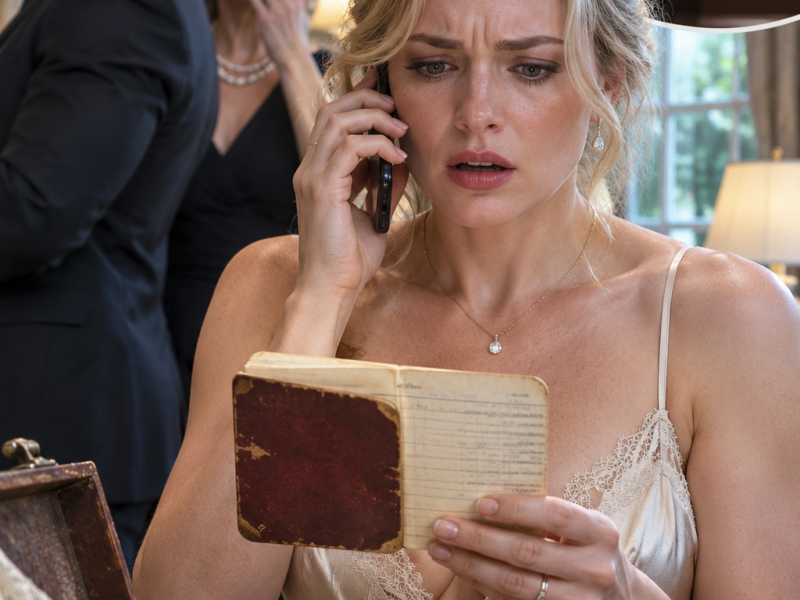
After My 16-Year Marriage Ended, I Found My 74-Year-Old Ex-Mother-in-Law’s Hidden Passbook Showing $112 Million, Even Though She Believed Her Savings Were Empty. Then I Discovered My Ex-Husband Had Secretly Withdrawn Over $47 Million for Seven Years. When I Called the Bank, Its President Warned Me, “Don’t Tell Anyone You Found This.” But Days Before My Ex Planned to Make His Mother Sign New Financial Papers, I Found a Suppressed Fraud Report—and the Woman Who Wrote It Revealed Something That Made My Blood Run Cold…
After My 16-Year Marriage Ended, I Found My 74-Year-Old Ex-Mother-in-Law’s Hidden Passbook Showing $112 Million, Even Though She Believed Her Savings Were Empty. Then I Discovered My Ex-Husband Had Secretly Withdrawn Over $47 Million for Seven Years. When I Called the Bank, Its President Warned Me, “Don’t Tell Anyone You Found This.” But Days Before My Ex Planned to Make His Mother Sign New Financial Papers, I Found a Suppressed Fraud Report—and the Woman Who Wrote It Revealed Something That Made My Blood Run Cold…
PART 1
The day I discovered my ex-mother-in-law had $112 million in a bank account she believed was empty, I was standing in my tiny Brooklyn apartment, holding a faded bank passbook I had found inside an old coat.
Six weeks earlier, my sixteen-year marriage to Garrett Prescott had ended. At forty-three, I was starting over on a third-grade teacher’s salary. Garrett had kept our beautiful house, our car, and most of our possessions. I had walked away with a few boxes and a broken heart.
But there was one person I refused to leave behind: his mother, Vera.
Vera was seventy-four, a retired postal clerk living alone in Framingham, Massachusetts. She saved coupons, reused tea bags, and recorded every purchase in a little leather notebook. Throughout my marriage, she had treated me like her own daughter.
Even after the divorce, she called every Sunday to make sure I was eating properly.
A week earlier, I had visited Vera to collect my remaining belongings. Somehow, her old wool coat had ended up in one of my boxes.
When I checked its pockets before returning it, I discovered the passbook.
Commonwealth Heritage Bank.
Account holder: Vera M. Prescott.
I opened it, expecting to find a few thousand dollars.
Instead, the balance showed approximately $112 million.
I read the number three times.
It couldn’t be right.
Only days earlier, Vera had told me her savings were gone and that she survived entirely on her pension.
Then I noticed something more disturbing.
The most recent withdrawal was $9,800.
The signature belonged to Garrett.
I turned backward through the pages.
There were dozens of withdrawals, many just under $10,000, stretching back years.
Every signature looked like my ex-husband’s.
I immediately called the bank.
After explaining what I had found, I was unexpectedly transferred to its president, Nolan Ashford.
When I mentioned Vera’s name, his voice became serious.
“Miss Langley, where did you find that passbook?”
“In her coat. Is something wrong?”
He hesitated.
“The account is active. And I need you to come to the bank personally.”
“Why?”
“Because there are serious questions about recent activity.”
Before hanging up, he added something that made my blood run cold.
“Until we meet, please don’t tell anyone you found this.”
That night, I couldn’t sleep.
I remembered Garrett’s mysterious trips to Atlantic City, his unexplained financial problems, and the way he became furious whenever I offered to help Vera with her banking.
For sixteen years, I had believed I knew my husband.
Now I wondered whether I had ever known him at all.
PART 2
Two days later, I sat across from Nolan Ashford inside Commonwealth Heritage Bank.
He had silver hair, a serious expression, and a thick folder waiting on his desk.
“Your former husband held power of attorney over his mother’s account,” he explained. “That allowed him to conduct certain transactions on her behalf.”
He opened the folder.
What I saw made my stomach twist.
For seven years, Garrett had been withdrawing money under that authority.
The bank’s investigation had identified more than $47 million in withdrawals.
Then Nolan showed me another document.
Six weeks earlier, on the exact day our divorce became final, Garrett had attempted to withdraw $1.4 million.
The unusual request had triggered a compliance review.
But that wasn’t the most frightening discovery.
In 2021, a bank employee had already reported suspicious activity.
Her warning had disappeared from the system.
“Someone tried to raise the alarm,” Nolan said. “And the report was buried.”
The employee’s name was Bridget Callahan.
She no longer worked at the bank.
I left the meeting feeling as though the ground had disappeared beneath me.
That evening, memories from my marriage returned with painful clarity.
Garrett’s expensive dinners in Atlantic City.
The mysterious charges connected to a company called Coastal Capital Partners.
The arguments whenever I questioned our finances.
I had mistaken secrecy for stress.
A few days later, I visited Vera.
She welcomed me with tea and proudly showed me her notebook of household expenses.
“I don’t have millions, sweetheart,” she laughed. “I just know how to stretch a dollar.”
My heart nearly broke.
As I prepared to leave, I noticed a folder beside the toaster.
Written across the front were the words:
Power of Attorney Renewal.
A yellow note attached to it read:
“Mom signs November 14.”
Garrett was planning to renew his authority over her finances.
I contacted an elder-law attorney named Hugh Mercer.
After examining the documents, he advised me to preserve the evidence and contact Adult Protective Services.
But he also warned me that, as Vera’s former daughter-in-law, I had no automatic right to control her affairs.
I needed her cooperation.
And I needed stronger evidence.
That was when I found Bridget Callahan.
We met at a small café.
The moment I mentioned Vera Prescott, Bridget’s expression changed.
“I’ve been waiting three years for someone to ask about that account,” she whispered.
She explained that she had noticed suspicious withdrawals in 2021 and called Vera directly.
But eleven seconds into their conversation, Garrett had picked up another telephone and ordered her to stop contacting his mother.
Two days later, he filed a complaint.
Bridget was reprimanded.
Her fraud warning disappeared.
Eventually, she resigned.
Then she reached into her handbag.
“I kept a copy.”
She placed the original report on the table.
It was the evidence I had been searching for.
Before leaving, Bridget warned me, “Be careful. Garrett knows how to make the person telling the truth look like the villain.”
Three days later, I discovered exactly what she meant.
PART 3
Garrett was waiting outside my school beside his expensive Audi.
“Elaine,” he said pleasantly. “You look good.”
I stopped walking.
“What are you doing here?”
“Just checking in. Mom says you’ve been visiting a lot.”
His smile never reached his eyes.
“I think we need some boundaries now that we’re divorced.”
I understood immediately.
He wasn’t there because he missed me.
He wanted to know what I had discovered.
That evening, Vera called.
“Garrett says I need to sign some financial papers on November fourteenth.”
My heart pounded.
The deadline was approaching.
I took the documents to Adult Protective Services, where caseworker Reena Thornton opened an investigation.
But Garrett had already begun turning Vera against me.
When I visited her two days later, she refused to let me inside.
“Garrett says you’re angry about the divorce,” she told me. “He thinks you’re trying to turn me against him.”
“Vera, please. Just ask the bank for your statements.”
“My son takes care of me.”
Then she closed the door.
I sat in my car and cried.
For sixteen years, Vera had been the only person in Garrett’s family who never made me feel unwanted.
Now I was losing her too.
The following morning, Nolan called.
The bank had frozen transactions under Garrett’s existing authority while the investigation continued.
But there was a problem.
Garrett had already attempted another withdrawal.
When the teller refused, he asked where he could find a notary.
He was looking for another way to regain control.
The next day, Vera called me again.
Her voice trembled.
“Garrett was furious last night. He says the bank made a mistake. He wants me to sign papers somewhere else.”
“Please don’t sign anything until we talk.”
After a long silence, she agreed.
That evening, I arrived at her house carrying the evidence.
Garrett was sitting in the living room.
I spread the documents across the kitchen table.
“Can you explain these withdrawals?” I asked him.
He barely blinked.
“Management fees.”
“What?”
“I manage Mom’s investments and bills. That takes work.”
I turned toward Vera.
“Did you agree to pay him these fees?”
She shook her head.
Garrett stood abruptly.
“Mom, don’t let Elaine confuse you.”
Then he left.
Vera stared at the records.
Finally, she whispered, “How much did he take?”
“Approximately forty-seven million dollars.”
Her hands began trembling.
“Seven years?”
I nodded.
She remembered the missing bank statements, the telephone calls Garrett dismissed as scams, and the bank card he had taken for safekeeping.
Then she reached for my hand.
“What do we do?”
Those words changed everything.
But Garrett wasn’t finished.
Two nights later, he appeared at my apartment.
His shirt was wrinkled, and his eyes were bloodshot.
“I’m drowning, Elaine,” he said.
“How much do you owe?”
“Enough that people don’t send letters anymore. They send people.”
I stared at him.
“Is that where your mother’s money went?”
He didn’t answer.
Then he said something I will never forget.
“It was going to be mine eventually anyway. She’s seventy-four. I’m her only child. I just started spending the inheritance early.”
I pointed toward the door.
“Get out.”
For the first time, I understood exactly how little he valued his mother.
PART 4
The next morning, Vera called me in tears.
“Elaine, I found something.”
She had spent the night searching through Garrett’s old paperwork.
Inside a folder, she discovered a handwritten note about settling a casino debt using money from “Mom’s account.”
Beneath it was a reminder to repay the money.
He never had.
When I arrived, Vera was sitting at the kitchen table, surrounded by documents.
“Thirty-two years I worked at the post office,” she whispered. “And to him, I was just a bank account.”
I sat beside her until she stopped crying.
Then she straightened her shoulders.
“Call the bank. I’m ready.”
The following morning, Nolan arranged a formal meeting at Commonwealth Heritage Bank.
Reena Thornton attended.
Bridget Callahan agreed to provide her evidence.
Garrett had been summoned for an account review, but he didn’t know his mother would be waiting.
Nolan began presenting the records.
“Mrs. Prescott, the amount withdrawn under your son’s authority between 2017 and 2024 totals $47,312,000.”
Vera looked at the documents.
“Show me the next one.”
He presented the earlier fraud warning.
Then the call records.
Then the handwritten casino note.
Each time, Vera repeated the same request.
“Show me the next one.”
At 9:15, Garrett entered.
His expression changed when he saw us.
“What is this?”
Nolan invited him to sit.
Garrett immediately turned toward his mother.
“Mom, Elaine is trying to punish me because of the divorce.”
Vera said nothing.
He insisted the withdrawals were legitimate management fees.
But when Nolan asked for evidence that Vera had approved those payments, Garrett couldn’t provide any.
Finally, he pointed at me.
“Happy now? You just destroyed my family!”
Vera slowly raised her head.
“No,” she said quietly. “You did that a long time ago.”
For once, Garrett had no answer.
Then Bridget entered the room with her original report.
Garrett went pale.
She explained how she had warned the bank in 2021, how Garrett had interrupted her call with Vera, and how her report had disappeared after his complaint.
Vera looked directly at her son.
“I remember that telephone call. You told me it was a scam.”
Garrett opened his mouth.
Nothing came out.
He abruptly left the meeting.
Nobody followed him.
With professional assistance, Vera revoked Garrett’s power of attorney.
The bank placed her accounts under independent oversight, and the suspected fraud was referred for further investigation.
For the first time in years, Garrett no longer controlled her financial life.
As we left the bank, Vera squeezed my hand.
“You came back for me,” she whispered.
“Of course I did.”
She began crying.
And so did I.
PART 5
A week later, Vera invited me to dinner.
The kitchen smelled of tea and blueberry crumble, just as it had throughout my marriage.
After we ate, she handed me a letter.
Inside, she explained that she wanted me to manage her fortune, her house, and everything she owned.
“You’re the only person I trust,” she said.
I was deeply moved.
But I shook my head.
“Vera, I can’t.”
Her expression fell.
I explained that accepting control of her money could create another conflict and allow Garrett to question my motives.
She needed someone independent to protect her finances.
“I didn’t do this for your money,” I told her. “I did it because I love you.”
Vera held my hands.
Then she smiled through her tears.
“Then let me call you my daughter, even if the papers say otherwise.”
That was the moment I finally broke down.
In the following weeks, an independent professional named Patricia Hobbes began overseeing Vera’s accounts.
The criminal investigation continued.
Garrett hired an attorney.
I returned to teaching.
Life slowly became peaceful again.
But one evening in December, Vera showed me something unexpected.
It was the back section of her little leather notebook.
The same notebook where she recorded grocery bills and postage stamps.
Except these pages contained something different.
The first entry was dated June 2017.
“Something is wrong, but I don’t know how to say it out loud.”
I turned the pages.
Vera had quietly recorded the missing bank card, the statements Garrett refused to show her, and the suspicious calls he dismissed.
For years, she had sensed something was wrong.
But she couldn’t bear to believe her own son was stealing from her.
“I suspected it,” she admitted. “I just didn’t want it to be true.”
I understood.
Sometimes the most painful betrayal is the one our hearts recognize long before our minds are ready to accept it.
That evening, we cooked dinner together.
For the first time in months, Vera laughed.
Afterward, she opened her notebook to a clean page.
She wrote the date.
Then she added one sentence.
“Dinner with my daughter — priceless.”
She pushed the notebook toward me.
I read it twice.
No amount of money could have meant more.
By February, Vera had started visiting me in Brooklyn every Wednesday.
We ate grilled cheese sandwiches, talked about my students, and laughed about ordinary things.
Her money was protected.
Her decisions were her own.
And our relationship had survived the divorce that should have ended it.
One afternoon, while we sat together on her porch, Vera smiled.
“You know, Elaine, that divorce might have been the best thing that ever happened to us.”
I laughed.
“How do you figure?”
“Because Garrett took himself out of our lives. And look what we still have.”
“What do we have?”
She reached for my hand.
“Family. The real kind.”
I thought about the old passbook, the hidden fortune, and the man who had spent years treating his living mother as an inheritance waiting to be collected.
Garrett believed money was the most valuable thing his mother possessed.
He was wrong.
Because the greatest thing I found after my divorce wasn’t $112 million.
It was a mother.
THE END